
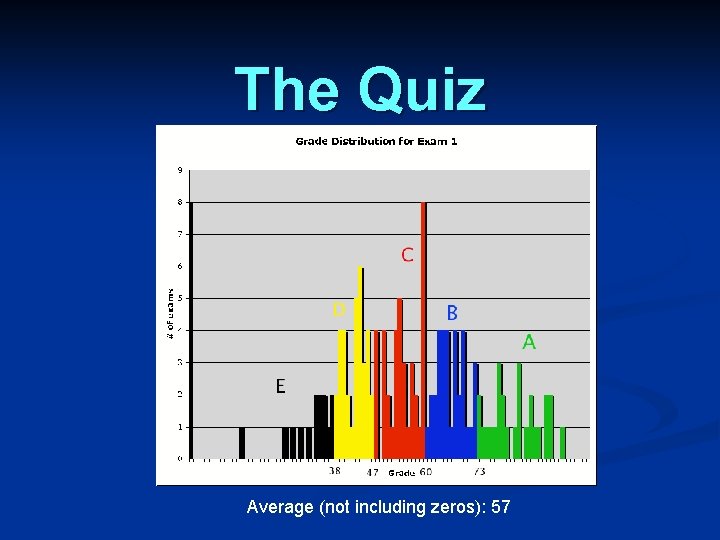
The Quiz Average not including zeros 57 How

![Examples N = 2, m = 3: = [10. 97 (1/4 - 1/9) ]](https://slidetodoc.com/presentation_image/197d74402504d2eaa7e4fa5c074614fd/image-11.jpg "Examples N = 2, m = 3: = [10. 97 (1/4 - 1/9) ]")
- Slides: 42
The Quiz Average (not including zeros): 57
How to improve 1) Review Quiz and mistakes in Quiz. 2) Notice correlation between Quiz & Study Guide 3) Do the homework
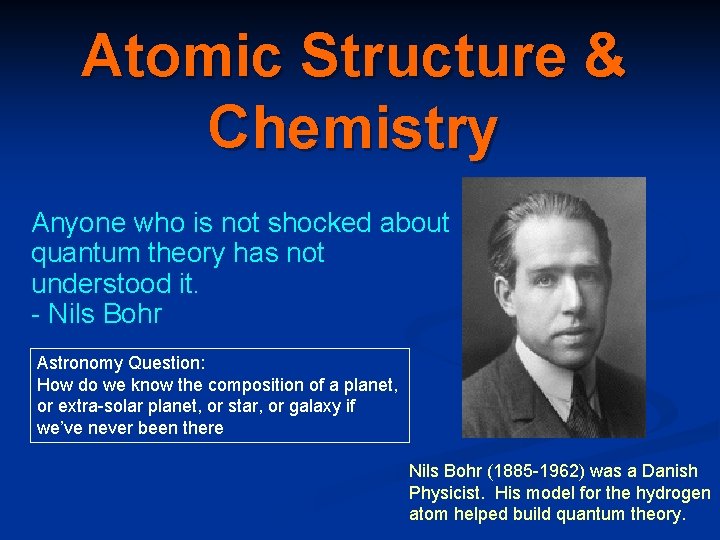
Atomic Structure & Chemistry Anyone who is not shocked about quantum theory has not understood it. - Nils Bohr Astronomy Question: How do we know the composition of a planet, or extra-solar planet, or star, or galaxy if we’ve never been there Nils Bohr (1885 -1962) was a Danish Physicist. His model for the hydrogen atom helped build quantum theory.
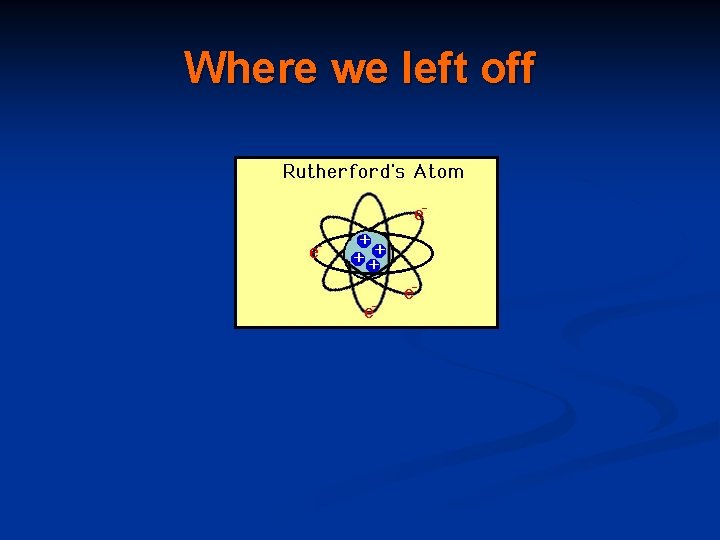
Where we left off
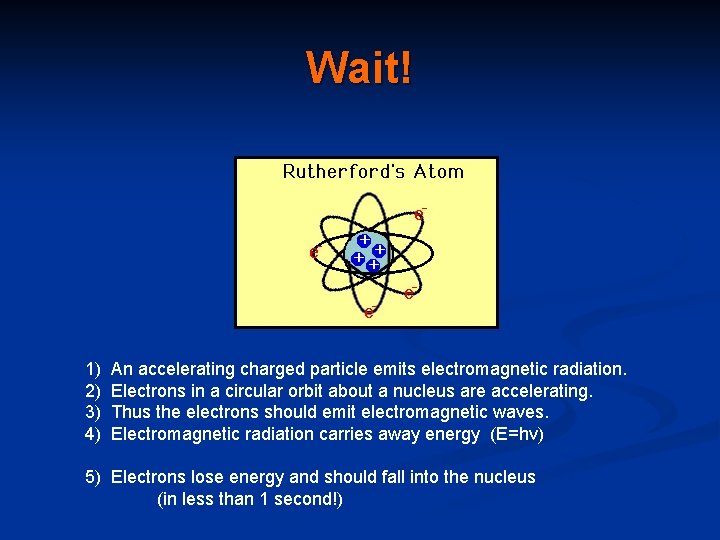
Wait! 1) 2) 3) 4) An accelerating charged particle emits electromagnetic radiation. Electrons in a circular orbit about a nucleus are accelerating. Thus the electrons should emit electromagnetic waves. Electromagnetic radiation carries away energy (E=hv) 5) Electrons lose energy and should fall into the nucleus (in less than 1 second!)
You’re a physicist in 1830, maybe working with John Herschel You decide to try to figure out what happens to an atom when you give it energy. So… Let’s excite the atomic electrons
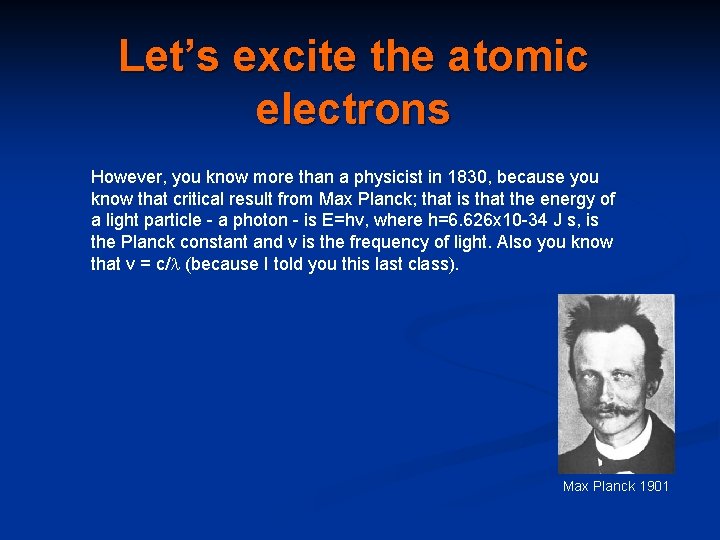
Let’s excite the atomic electrons However, you know more than a physicist in 1830, because you know that critical result from Max Planck; that is that the energy of a light particle - a photon - is E=hv, where h=6. 626 x 10 -34 J s, is the Planck constant and v is the frequency of light. Also you know that v = c/ (because I told you this last class). Max Planck 1901
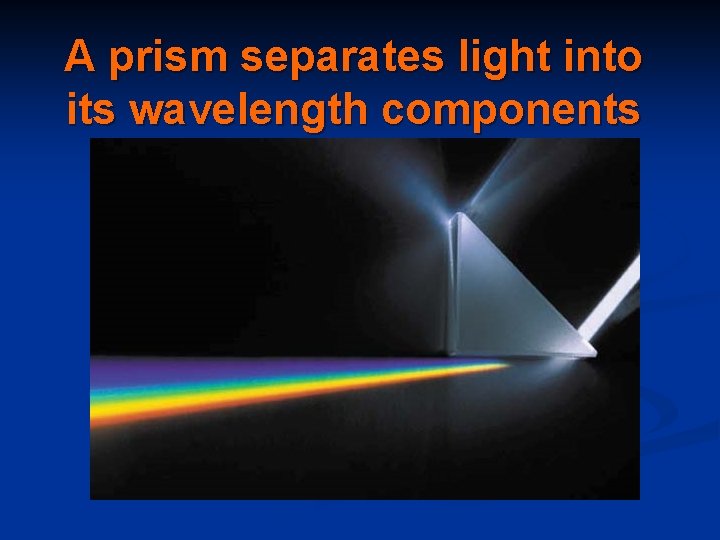
A prism separates light into its wavelength components However, you know more than a physicist in 1830, because you know that critical result from Max Planck; that is that the energy of a light particle - a photon - is E=hv, where h=6. 626 x 10 -34 J s, is the Planck constant and v is the frequency of light. Also you know that v = c/l (because I told you this last class).
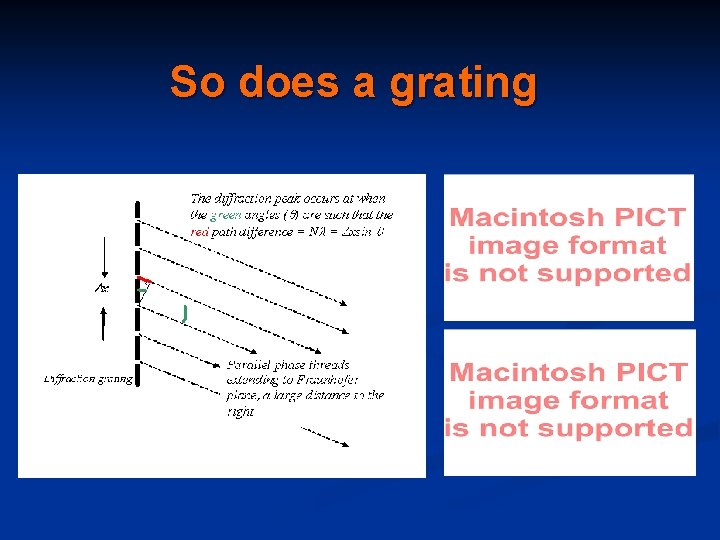
So does a grating
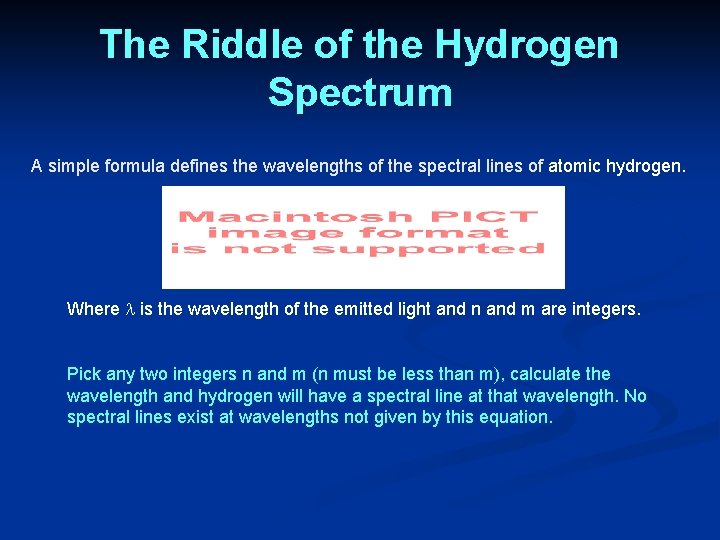
The Riddle of the Hydrogen Spectrum A simple formula defines the wavelengths of the spectral lines of atomic hydrogen. Where is the wavelength of the emitted light and n and m are integers. Pick any two integers n and m (n must be less than m), calculate the wavelength and hydrogen will have a spectral line at that wavelength. No spectral lines exist at wavelengths not given by this equation.
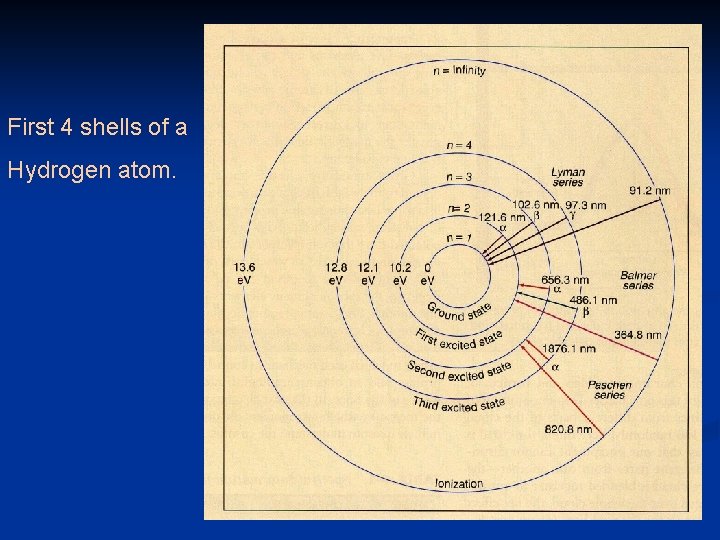
Examples N = 2, m = 3: = [10. 97 (1/4 - 1/9) ] -1 = 0. 656 microns = 656 nm N = 2, m = 4: = [10. 97 (1/4 - 1/16) ] -1 = 0. 486 microns = 486 nm N = 2, m = 5: = [10. 97 (1/4 - 1/25) ] -1 = 0. 365 microns = 365 nm NOTE: units of length 1 micron = 10 -6 meters 1 nm = 10 -9 meters
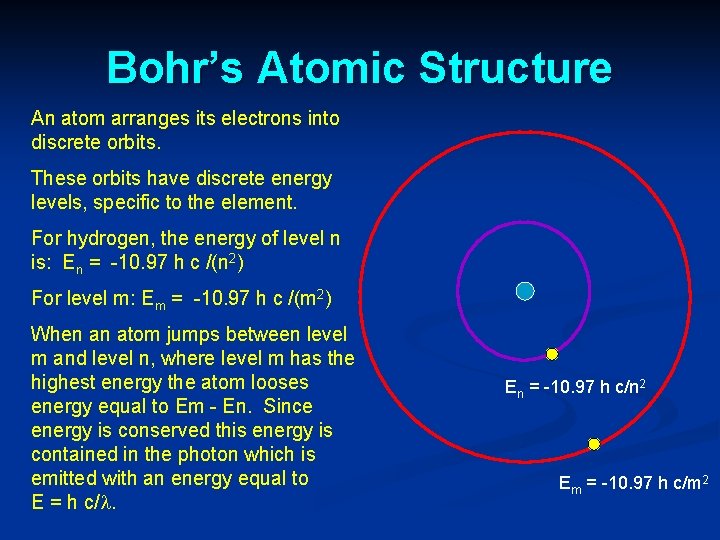
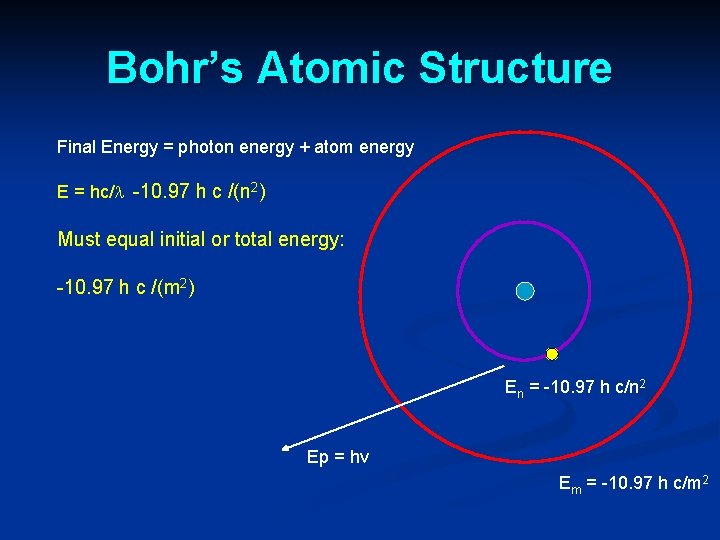
Bohr’s Atomic Structure An atom arranges its electrons into discrete orbits. These orbits have discrete energy levels, specific to the element. For hydrogen, the energy of level n is: En = -10. 97 h c /(n 2) For level m: Em = -10. 97 h c /(m 2) When an atom jumps between level m and level n, where level m has the highest energy the atom looses energy equal to Em - En. Since energy is conserved this energy is contained in the photon which is emitted with an energy equal to E = h c/. En = -10. 97 h c/n 2 Em = -10. 97 h c/m 2
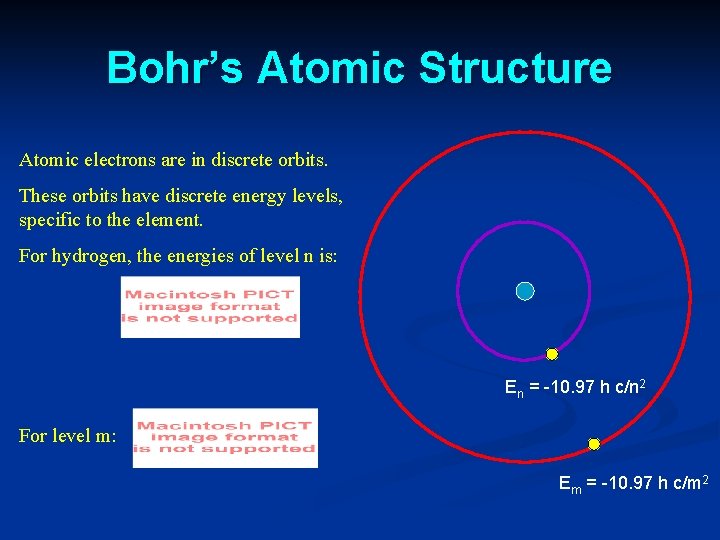
Bohr’s Atomic Structure Atomic electrons are in discrete orbits. These orbits have discrete energy levels, specific to the element. For hydrogen, the energies of level n is: En = -10. 97 h c/n 2 For level m: Em = -10. 97 h c/m 2
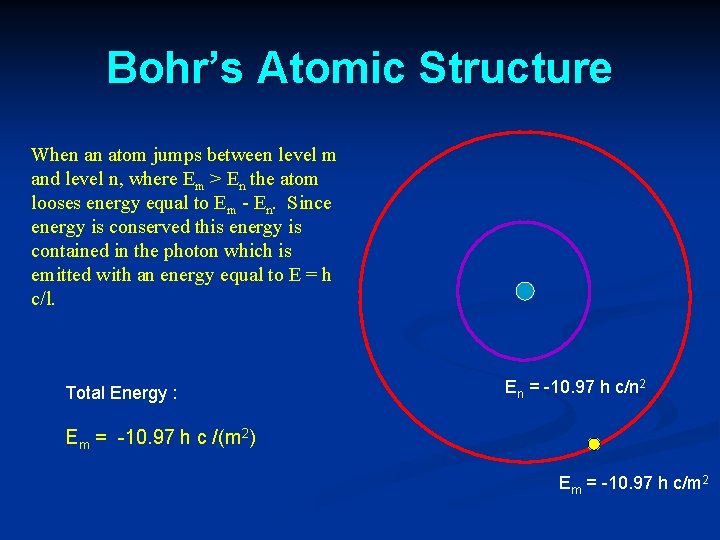
Bohr’s Atomic Structure When an atom jumps between level m and level n, where Em > En the atom looses energy equal to Em - En. Since energy is conserved this energy is contained in the photon which is emitted with an energy equal to E = h c/l. Total Energy : En = -10. 97 h c/n 2 Em = -10. 97 h c /(m 2) Em = -10. 97 h c/m 2
Bohr’s Atomic Structure Final Energy = photon energy + atom energy E = hc/ -10. 97 h c /(n 2) Must equal initial or total energy: -10. 97 h c /(m 2) En = -10. 97 h c/n 2 Ep = hv Em = -10. 97 h c/m 2
First 4 shells of a Hydrogen atom.
Is the quantum nature of atomic states a little odd?
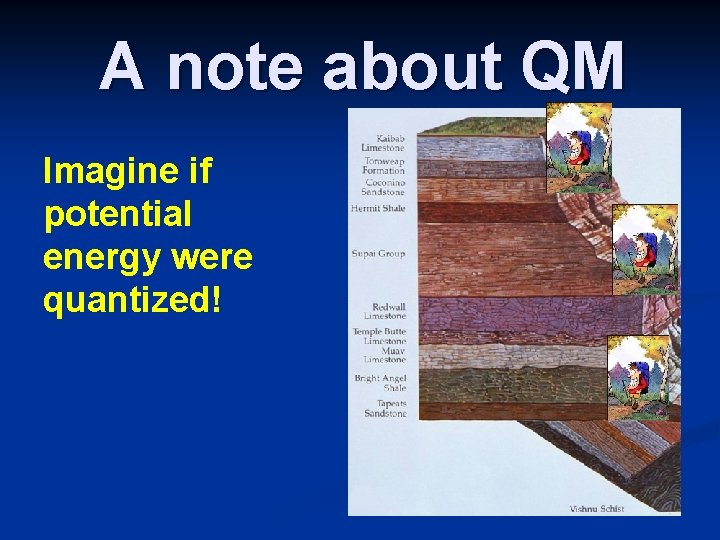
A note about QM Imagine if potential energy were quantized!
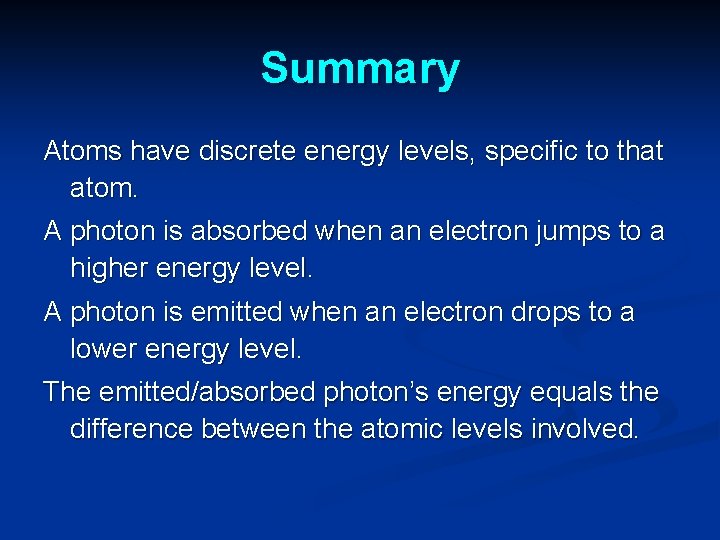
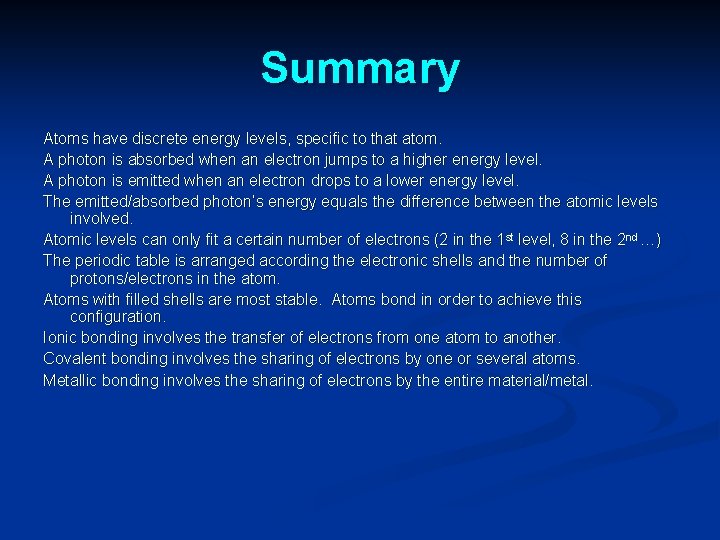
Summary Atoms have discrete energy levels, specific to that atom. A photon is absorbed when an electron jumps to a higher energy level. A photon is emitted when an electron drops to a lower energy level. The emitted/absorbed photon’s energy equals the difference between the atomic levels involved.
Astronomy Question How do we measure the composition of a planet, or extra-solar planet, or star, or galaxy if we’ve never been there
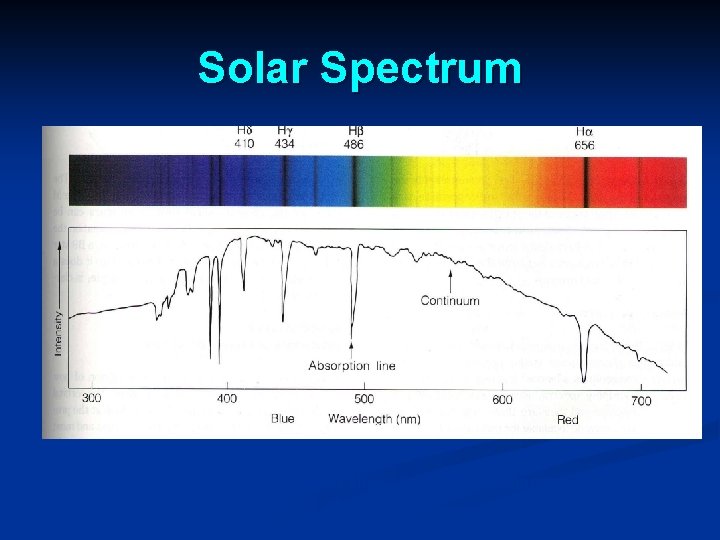
Solar Spectrum Absorption lines appear as hydrogen atoms in the Sun’s atmosphere capture photons and jump to more excited atomic levels.
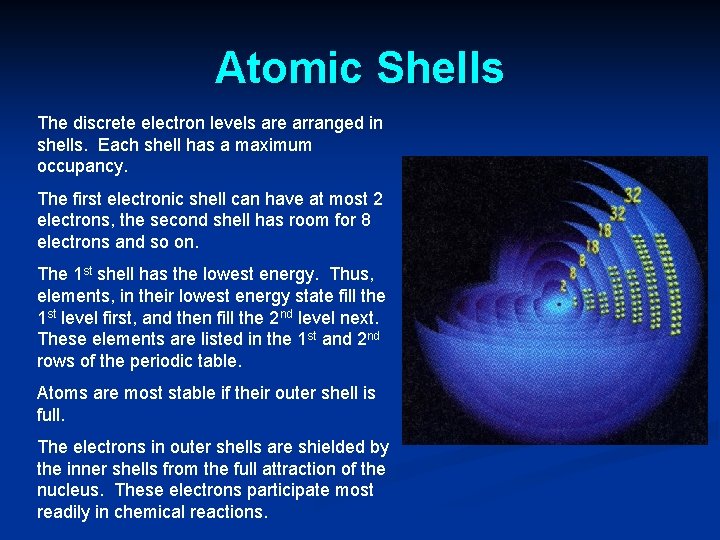
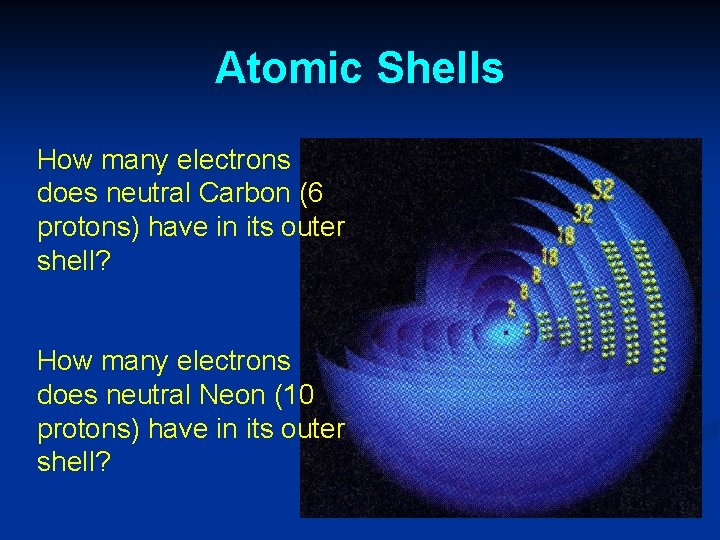
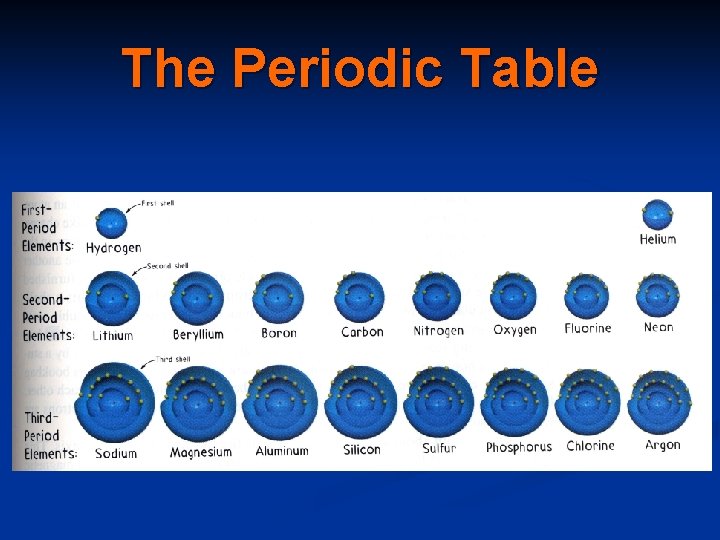
Atomic Shells The discrete electron levels are arranged in shells. Each shell has a maximum occupancy. The first electronic shell can have at most 2 electrons, the second shell has room for 8 electrons and so on. The 1 st shell has the lowest energy. Thus, elements, in their lowest energy state fill the 1 st level first, and then fill the 2 nd level next. These elements are listed in the 1 st and 2 nd rows of the periodic table. Atoms are most stable if their outer shell is full. The electrons in outer shells are shielded by the inner shells from the full attraction of the nucleus. These electrons participate most readily in chemical reactions.
Atomic Shells How many electrons does neutral Carbon (6 protons) have in its outer shell? How many electrons does neutral Neon (10 protons) have in its outer shell?
The Periodic Table
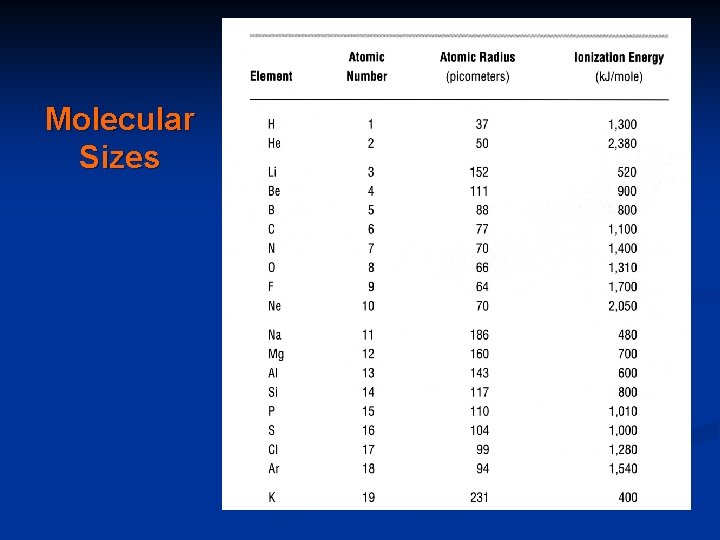
Molecular Sizes
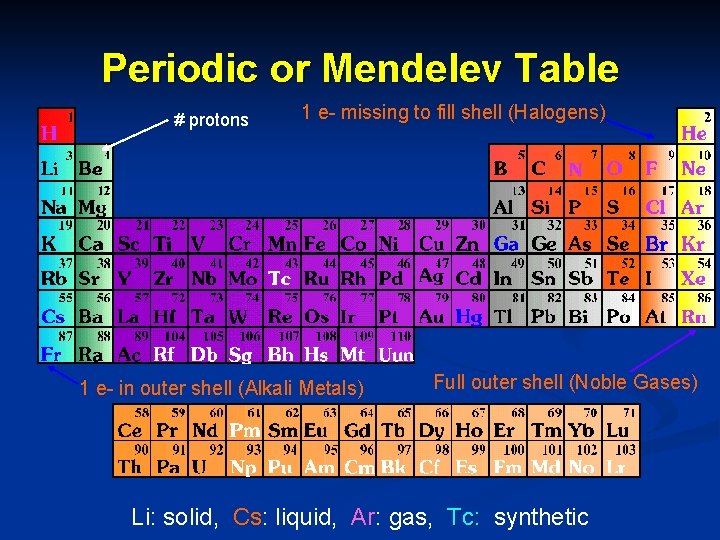
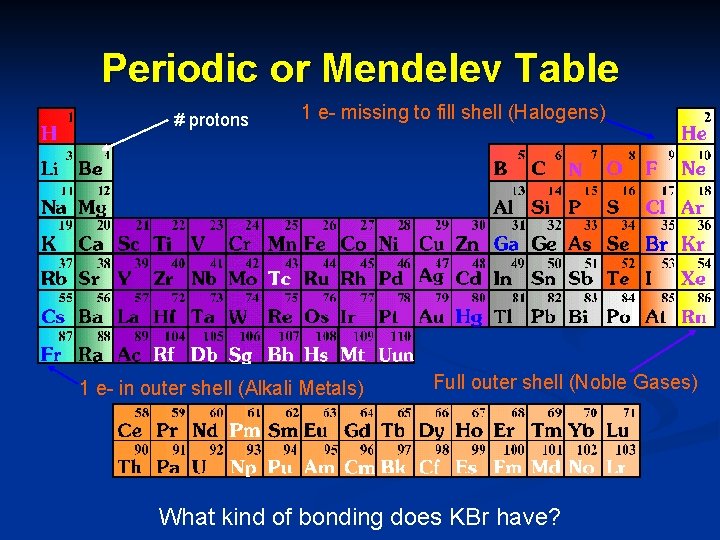
Periodic or Mendelev Table # protons 1 e- missing to fill shell (Halogens) 1 e- in outer shell (Alkali Metals) Full outer shell (Noble Gases) Li: solid, Cs: liquid, Ar: gas, Tc: synthetic
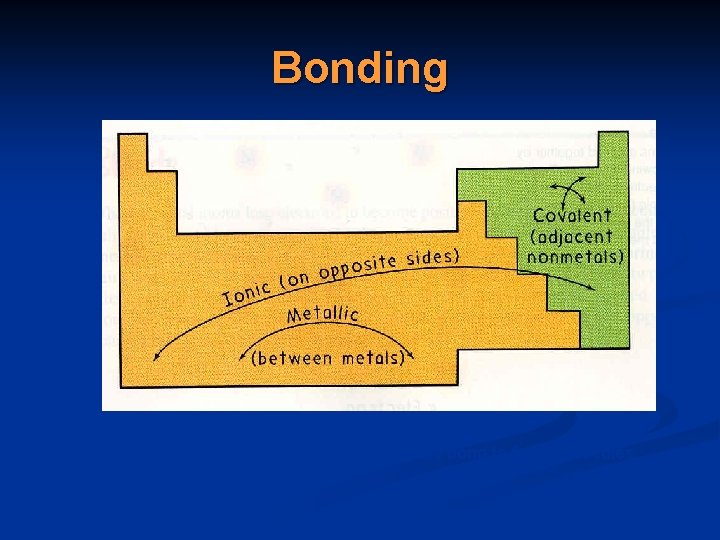
Bonding There are three major ways that elements bond to form molecules.
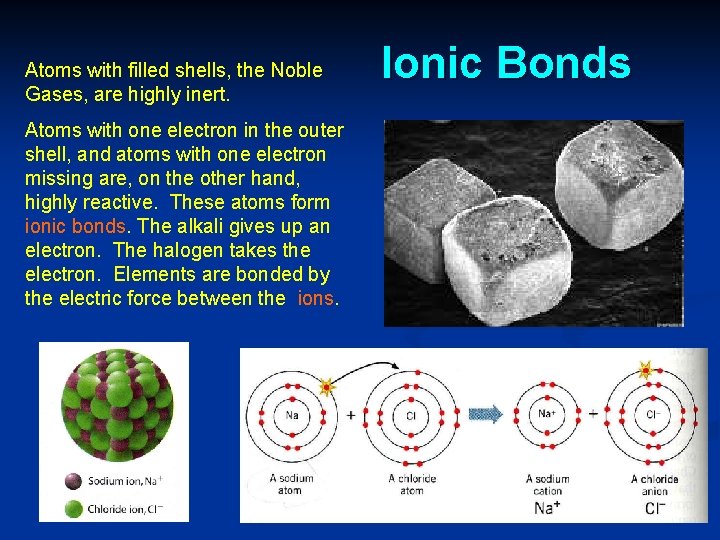
Atoms with filled shells, the Noble Gases, are highly inert. Atoms with one electron in the outer shell, and atoms with one electron missing are, on the other hand, highly reactive. These atoms form ionic bonds. The alkali gives up an electron. The halogen takes the electron. Elements are bonded by the electric force between the ions. Ionic Bonds
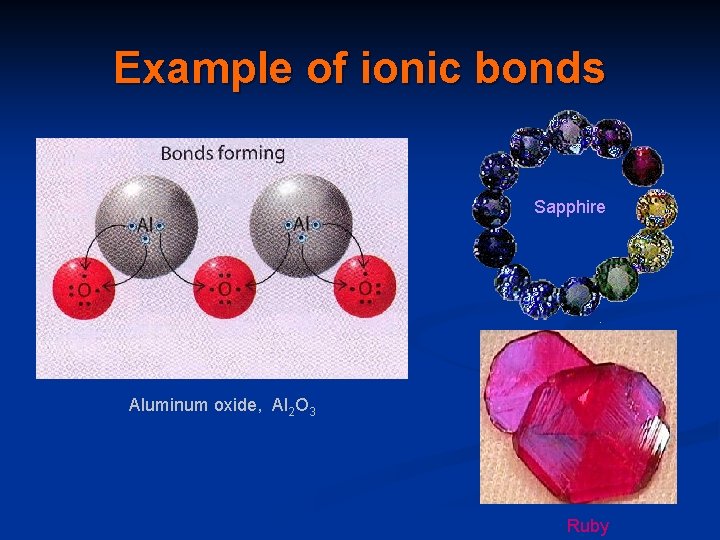
Example of ionic bonds Sapphire Aluminum oxide, Al 2 O 3 Ruby
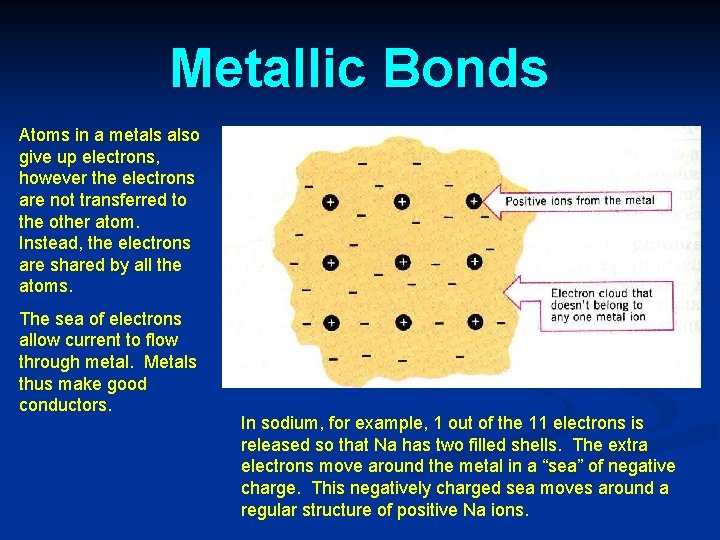
Metallic Bonds Atoms in a metals also give up electrons, however the electrons are not transferred to the other atom. Instead, the electrons are shared by all the atoms. The sea of electrons allow current to flow through metal. Metals thus make good conductors. In sodium, for example, 1 out of the 11 electrons is released so that Na has two filled shells. The extra electrons move around the metal in a “sea” of negative charge. This negatively charged sea moves around a regular structure of positive Na ions.
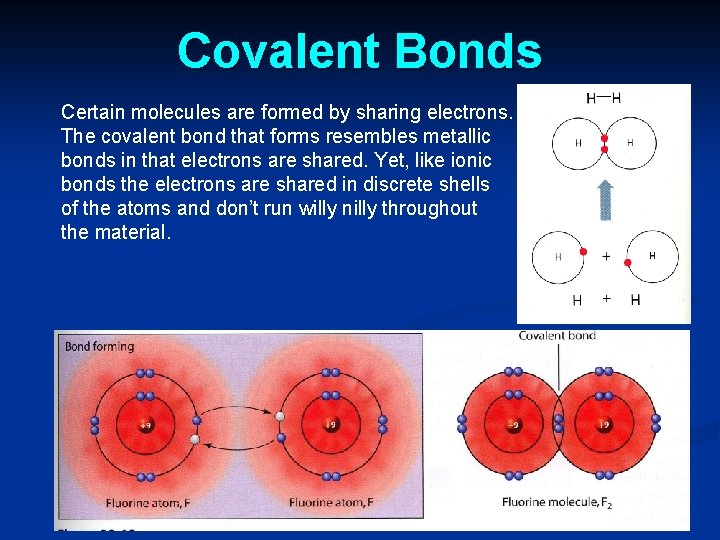
Covalent Bonds Certain molecules are formed by sharing electrons. The covalent bond that forms resembles metallic bonds in that electrons are shared. Yet, like ionic bonds the electrons are shared in discrete shells of the atoms and don’t run willy nilly throughout the material.
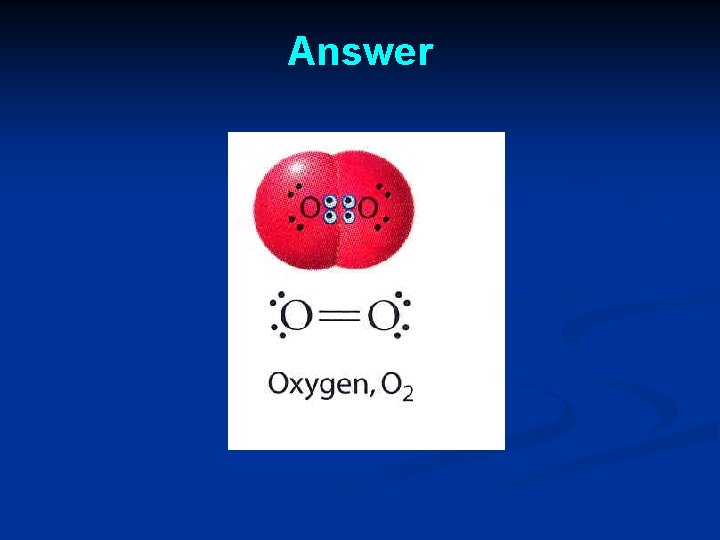
Question How would you covalently bond two oxygen atoms to make O 2? Oxygen has 8 protons & electrons. How many electrons would each O have to share with the other?
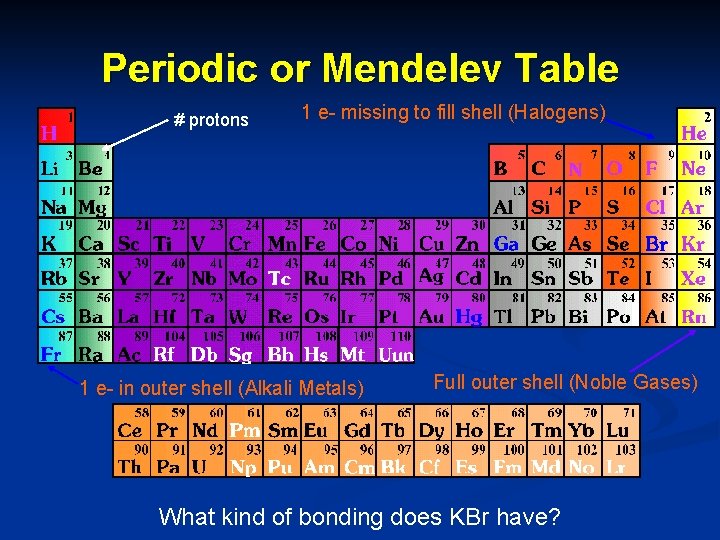
Periodic or Mendelev Table # protons 1 e- missing to fill shell (Halogens) 1 e- in outer shell (Alkali Metals) Full outer shell (Noble Gases) What kind of bonding does KBr have?
Answer
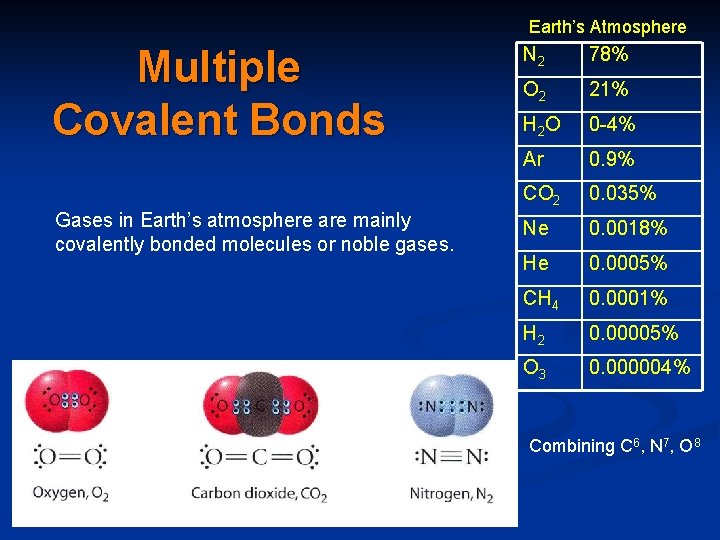
Earth’s Atmosphere Multiple Covalent Bonds Gases in Earth’s atmosphere are mainly covalently bonded molecules or noble gases. N 2 78% O 2 21% H 2 O 0 -4% Ar 0. 9% CO 2 0. 035% Ne 0. 0018% He 0. 0005% CH 4 0. 0001% H 2 0. 00005% O 3 0. 000004% Combining C 6, N 7, O 8
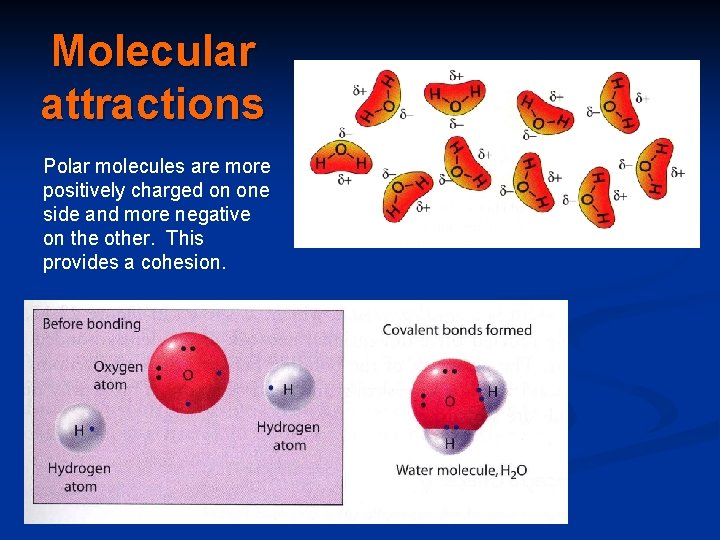
Molecular attractions Polar molecules are more positively charged on one side and more negative on the other. This provides a cohesion.
Question How would you expect KF to be bonded?
Periodic or Mendelev Table # protons 1 e- missing to fill shell (Halogens) 1 e- in outer shell (Alkali Metals) Full outer shell (Noble Gases) What kind of bonding does KBr have?
Summary Atoms have discrete energy levels, specific to that atom. A photon is absorbed when an electron jumps to a higher energy level. A photon is emitted when an electron drops to a lower energy level. The emitted/absorbed photon’s energy equals the difference between the atomic levels involved. Atomic levels can only fit a certain number of electrons (2 in the 1 st level, 8 in the 2 nd …) The periodic table is arranged according the electronic shells and the number of protons/electrons in the atom. Atoms with filled shells are most stable. Atoms bond in order to achieve this configuration. Ionic bonding involves the transfer of electrons from one atom to another. Covalent bonding involves the sharing of electrons by one or several atoms. Metallic bonding involves the sharing of electrons by the entire material/metal.
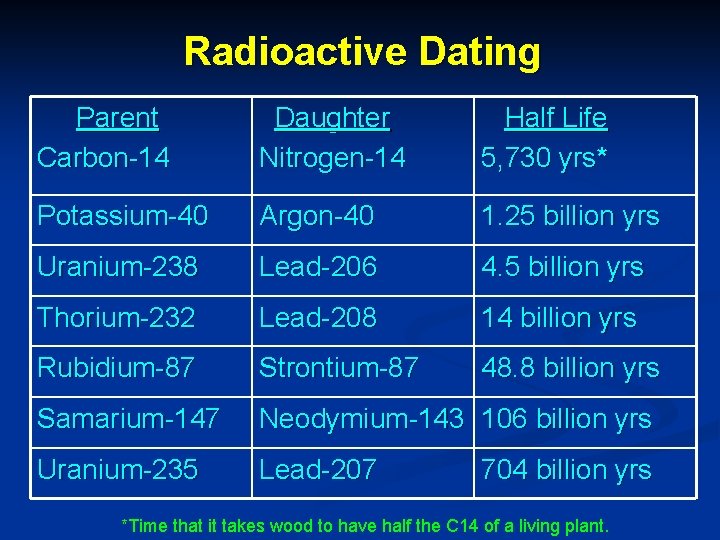
Radioactive Dating Parent Carbon-14 Daughter Nitrogen-14 Half Life 5, 730 yrs* Potassium-40 Argon-40 1. 25 billion yrs Uranium-238 Lead-206 4. 5 billion yrs Thorium-232 Lead-208 14 billion yrs Rubidium-87 Strontium-87 48. 8 billion yrs Samarium-147 Neodymium-143 106 billion yrs Uranium-235 Lead-207 704 billion yrs *Time that it takes wood to have half the C 14 of a living plant.
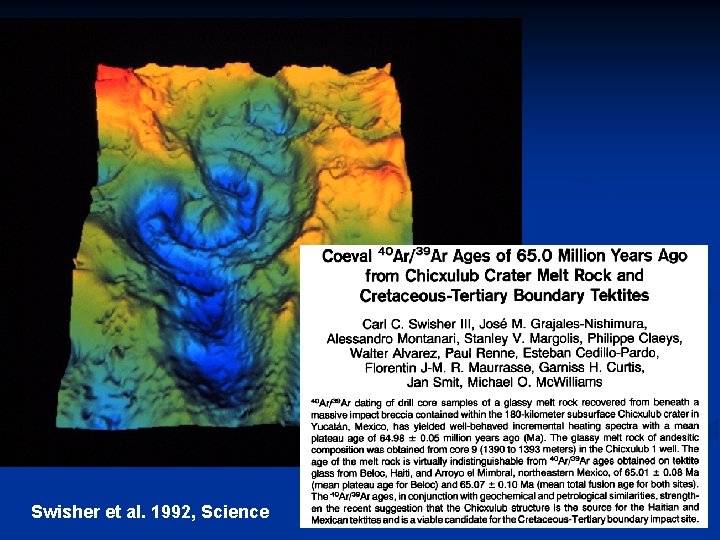
Swisher et al. 1992, Science
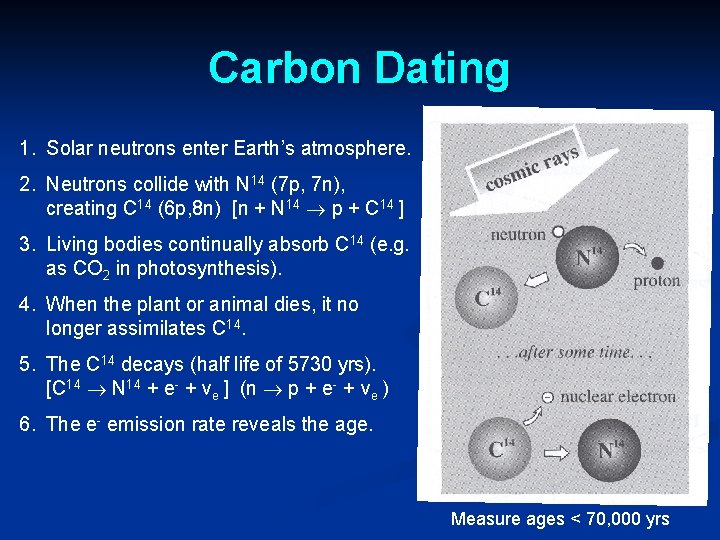
Carbon Dating 1. Solar neutrons enter Earth’s atmosphere. 2. Neutrons collide with N 14 (7 p, 7 n), creating C 14 (6 p, 8 n) [n + N 14 p + C 14 ] 3. Living bodies continually absorb C 14 (e. g. as CO 2 in photosynthesis). 4. When the plant or animal dies, it no longer assimilates C 14. 5. The C 14 decays (half life of 5730 yrs). [C 14 N 14 + e- + ve ] (n p + e- + ve ) 6. The e- emission rate reveals the age. Measure ages < 70, 000 yrs