
The Quick and Dirty Evolution Review The Earth
- Slides: 16
The Quick and Dirty Evolution Review
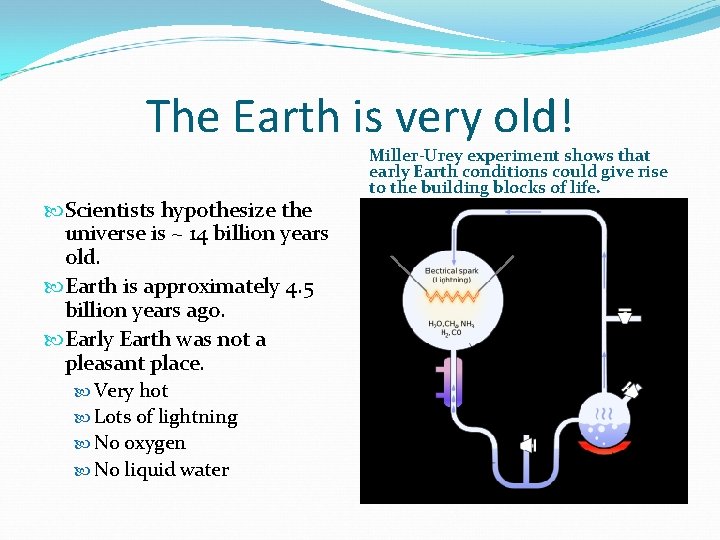
The Earth is very old! Scientists hypothesize the universe is ~ 14 billion years old. Earth is approximately 4. 5 billion years ago. Early Earth was not a pleasant place. Very hot Lots of lightning No oxygen No liquid water Miller-Urey experiment shows that early Earth conditions could give rise to the building blocks of life.
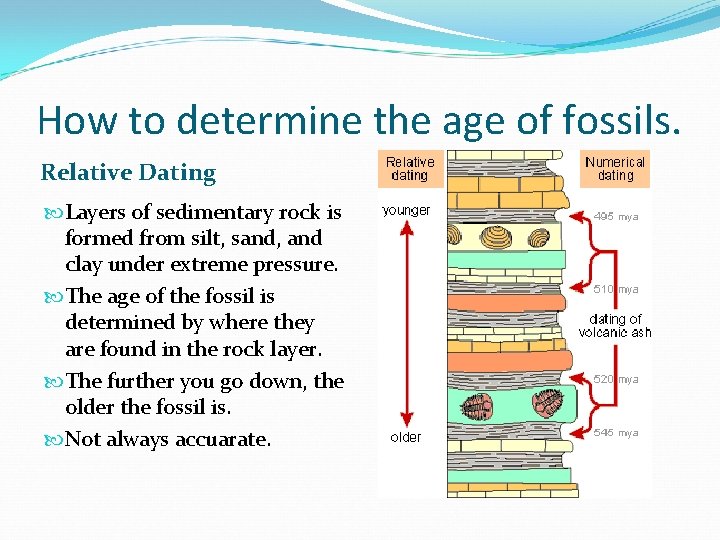
How to determine the age of fossils. Relative Dating Layers of sedimentary rock is formed from silt, sand, and clay under extreme pressure. The age of the fossil is determined by where they are found in the rock layer. The further you go down, the older the fossil is. Not always accuarate.
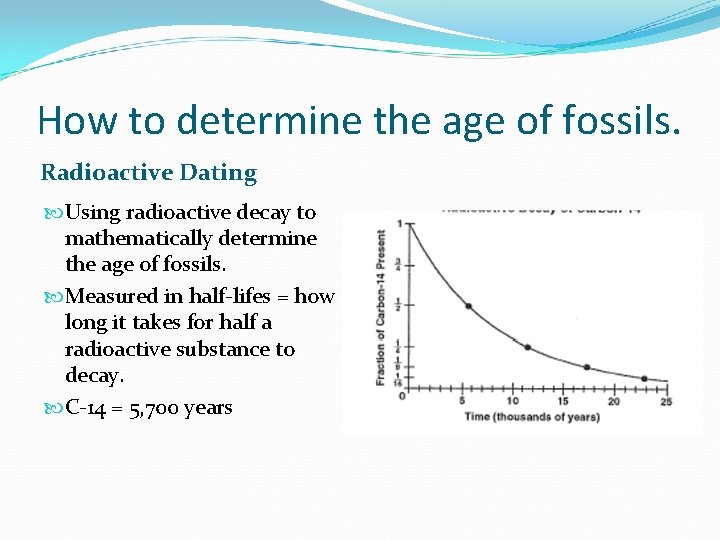
How to determine the age of fossils. Radioactive Dating Using radioactive decay to mathematically determine the age of fossils. Measured in half-lifes = how long it takes for half a radioactive substance to decay. C-14 = 5, 700 years
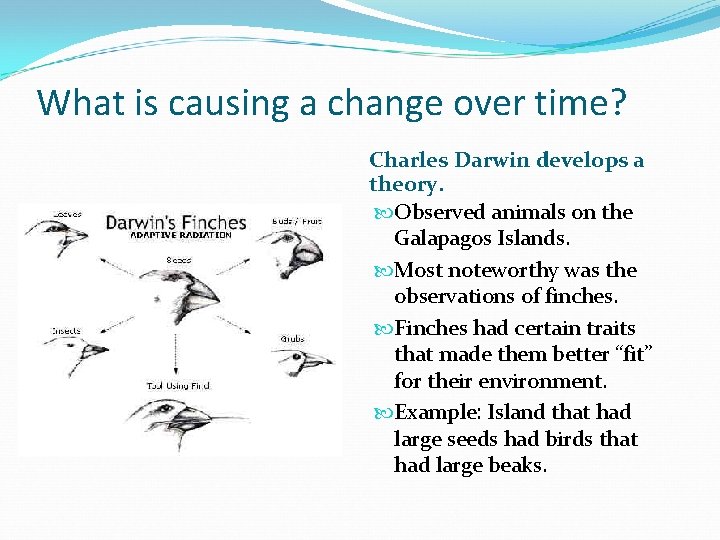
What is causing a change over time? Charles Darwin develops a theory. Observed animals on the Galapagos Islands. Most noteworthy was the observations of finches. Finches had certain traits that made them better “fit” for their environment. Example: Island that had large seeds had birds that had large beaks.
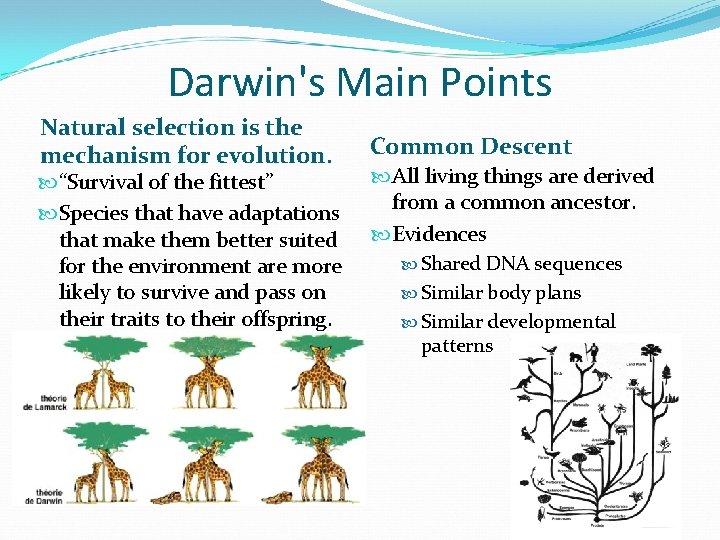
Darwin's Main Points Natural selection is the mechanism for evolution. “Survival of the fittest” Species that have adaptations that make them better suited for the environment are more likely to survive and pass on their traits to their offspring. Common Descent All living things are derived from a common ancestor. Evidences Shared DNA sequences Similar body plans Similar developmental patterns
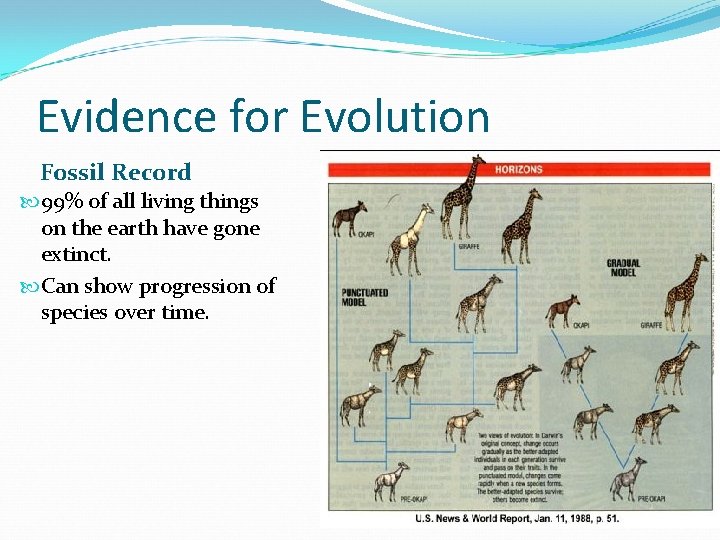
Evidence for Evolution Fossil Record 99% of all living things on the earth have gone extinct. Can show progression of species over time.
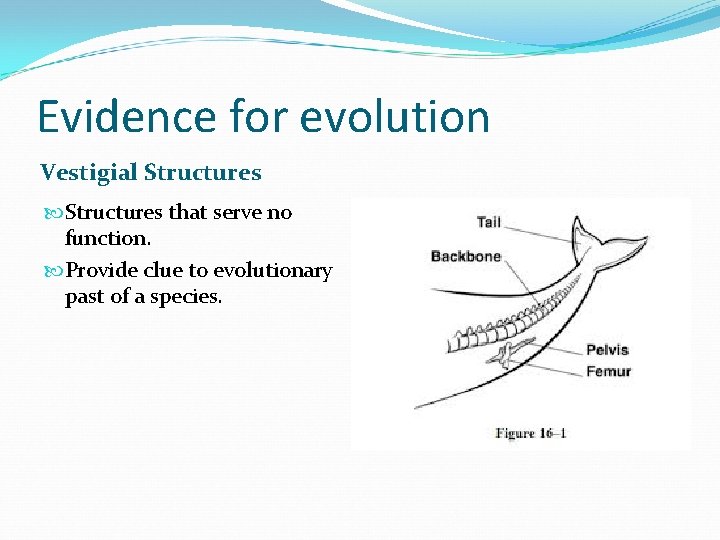
Evidence for evolution Vestigial Structures that serve no function. Provide clue to evolutionary past of a species.
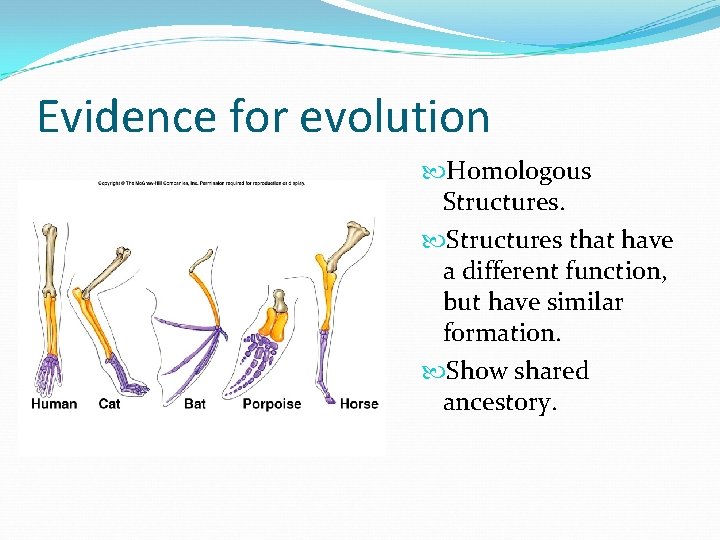
Evidence for evolution Homologous Structures that have a different function, but have similar formation. Show shared ancestory.
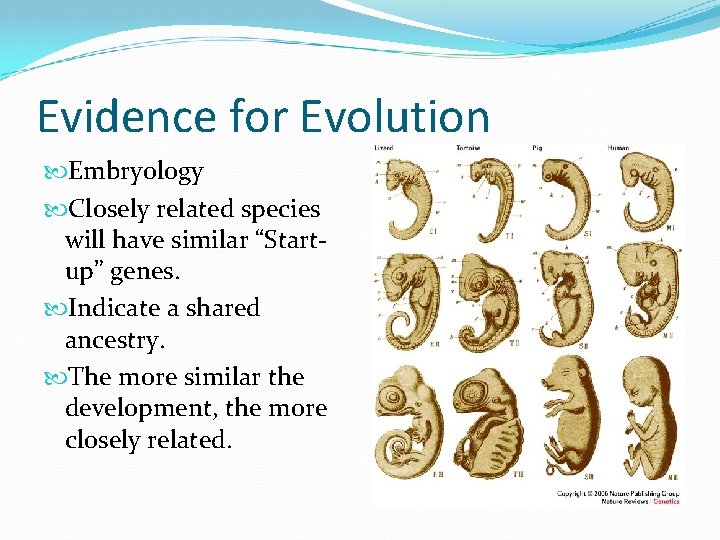
Evidence for Evolution Embryology Closely related species will have similar “Startup” genes. Indicate a shared ancestry. The more similar the development, the more closely related.
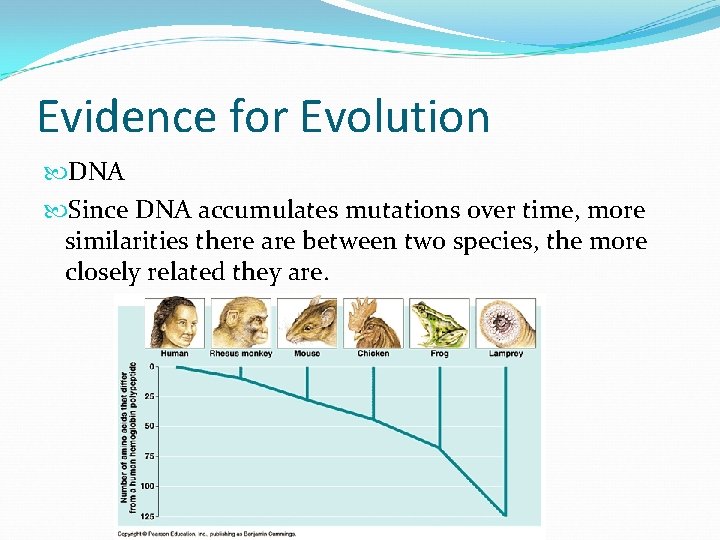
Evidence for Evolution DNA Since DNA accumulates mutations over time, more similarities there are between two species, the more closely related they are.
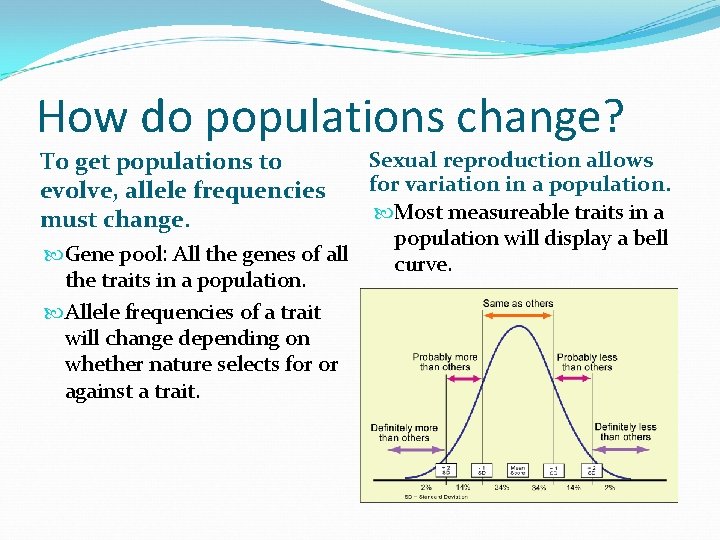
How do populations change? Sexual reproduction allows for variation in a population. Most measureable traits in a population will display a bell Gene pool: All the genes of all curve. the traits in a population. Allele frequencies of a trait will change depending on whether nature selects for or against a trait. To get populations to evolve, allele frequencies must change.
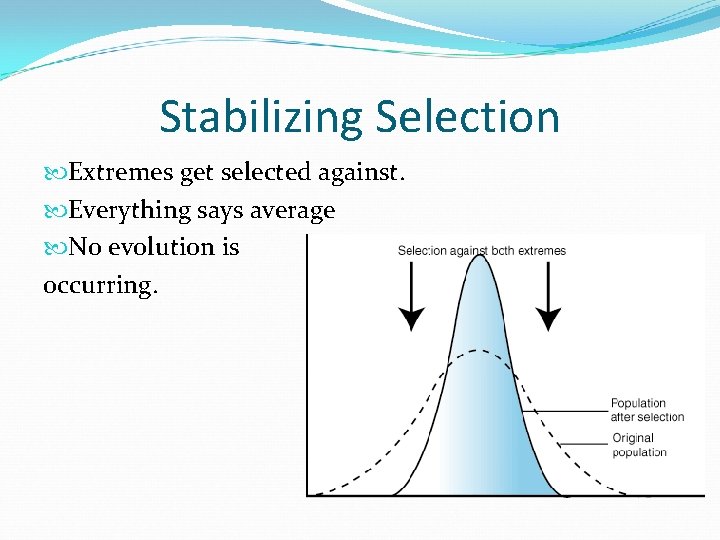
Stabilizing Selection Extremes get selected against. Everything says average No evolution is occurring.
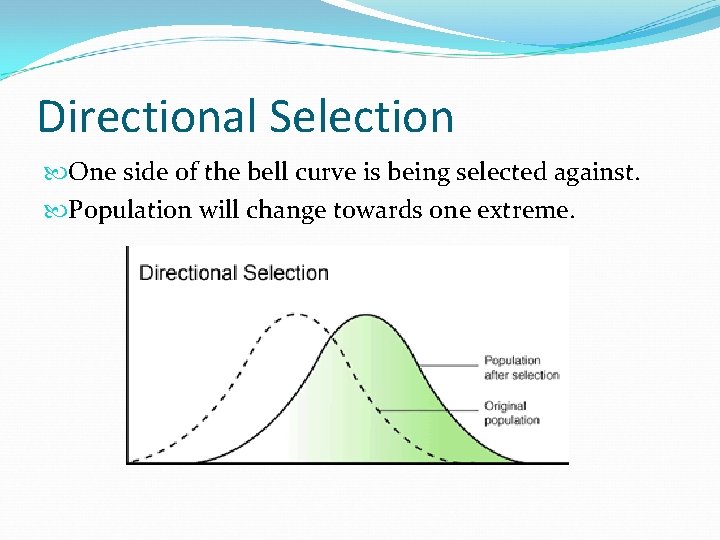
Directional Selection One side of the bell curve is being selected against. Population will change towards one extreme.
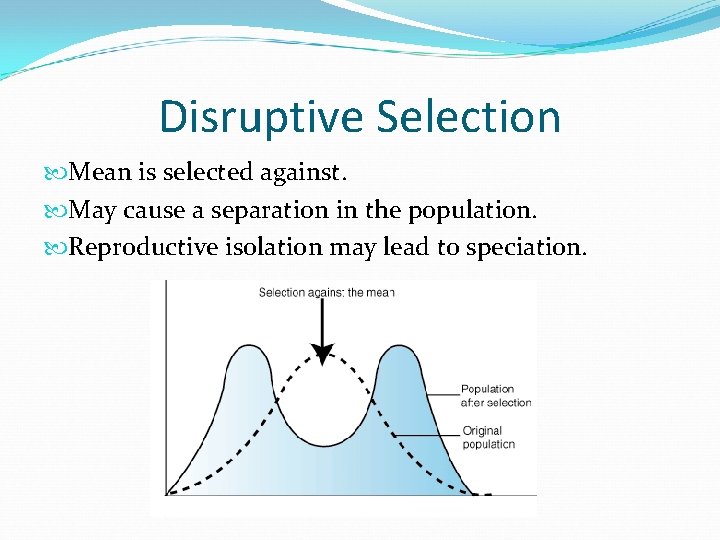
Disruptive Selection Mean is selected against. May cause a separation in the population. Reproductive isolation may lead to speciation.
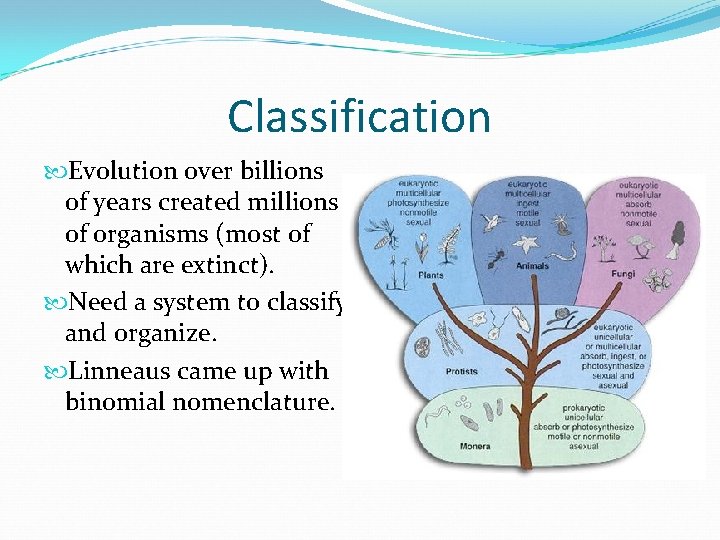
Classification Evolution over billions of years created millions of organisms (most of which are extinct). Need a system to classify and organize. Linneaus came up with binomial nomenclature.