
The Qin Dynasty Main Idea Qin Shihuangdi used
- Slides: 22
The Qin Dynasty Main Idea: Qin Shihuangdi used harsh methods to unify and defend China.
The Qin State n n n The local states of China fought one another during the “Period of the Warring States. ” The ruler of the state of Qin took over the neighboring states. He declared himself Qin Shihuangdi, the first Qin Emperor. n n n (T) Qin was a strong ruler who based his ideas on Legalism (23). Anyone who opposed him was punished or killed. (T) Qin Shihuangdi means “the first emperor (22).
Qin Government n n Qin made the central government stronger than ever. He appointed censors to make sure officials did their job. Qin unified China by creating one type of currency, or type of money. He also built roads and a huge canal that connected central China to southern China.
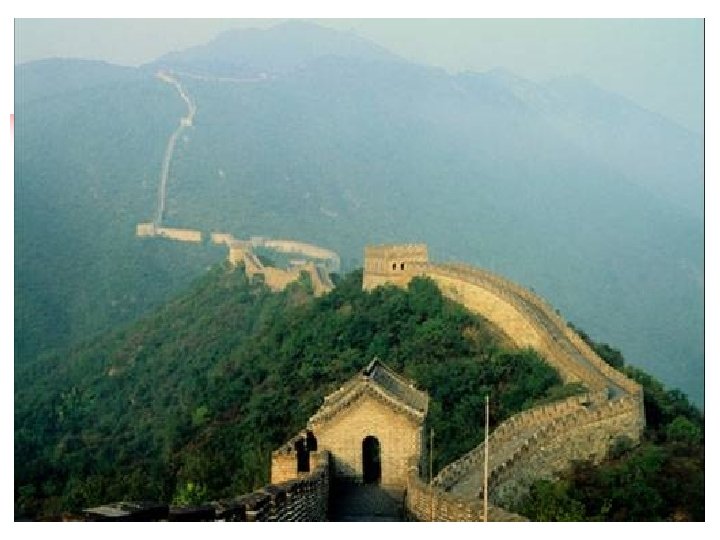
The Great Wall n n n Nomads from northern China often attacked Chinese farms and villages. Several Chinese rulers built walls to keep them out. Qin forced farmers to work on strengthening and connecting the walls.
Why Did People Rebel? n n n Aristocrats were angry because Qin reduced their power. Scholars hated him for burning their books. Farmers hated him forcing them to build roads the Great Wall.
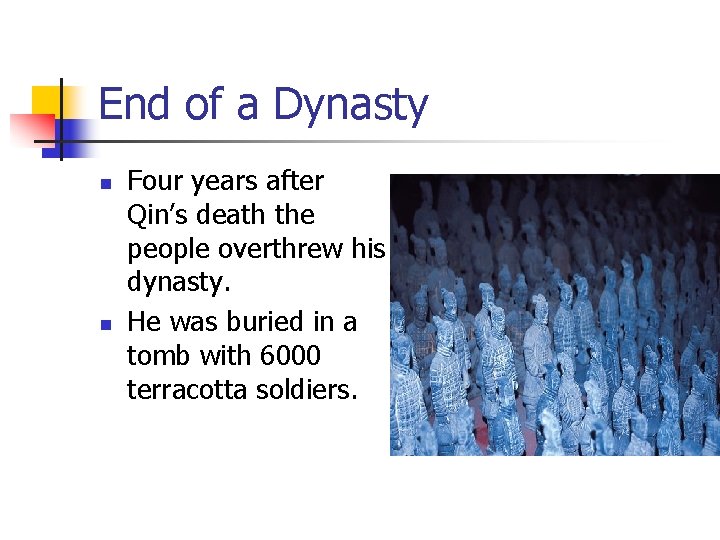
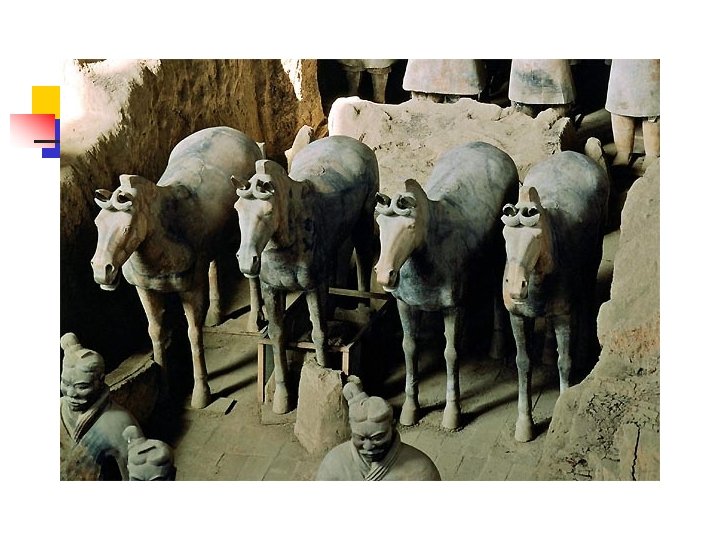
End of a Dynasty n n Four years after Qin’s death the people overthrew his dynasty. He was buried in a tomb with 6000 terracotta soldiers.
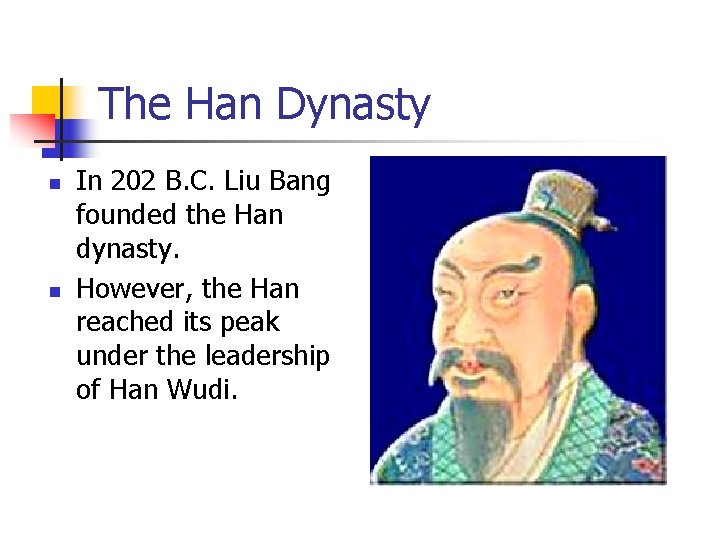
The Han Dynasty n n In 202 B. C. Liu Bang founded the Han dynasty. However, the Han reached its peak under the leadership of Han Wudi.
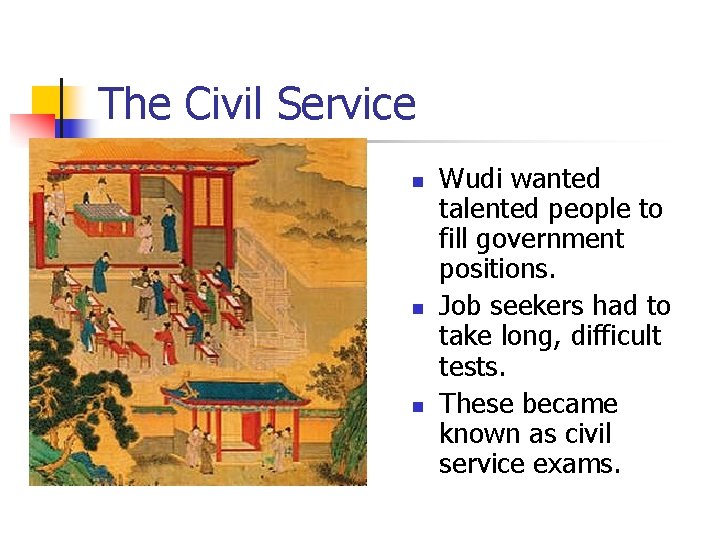
The Civil Service n n n Wudi wanted talented people to fill government positions. Job seekers had to take long, difficult tests. These became known as civil service exams.
Tenant farmers n n The average farmer owned only about one acre of land. They could not raise enough for their families. Many sold their land to aristocrats and became tenant farmers. (T) A tenant farmer works land owned by someone else and pays rent in crops (24).
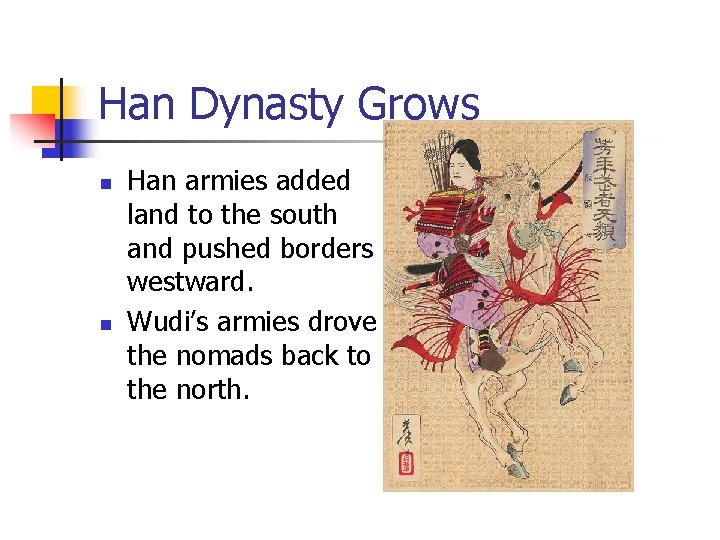
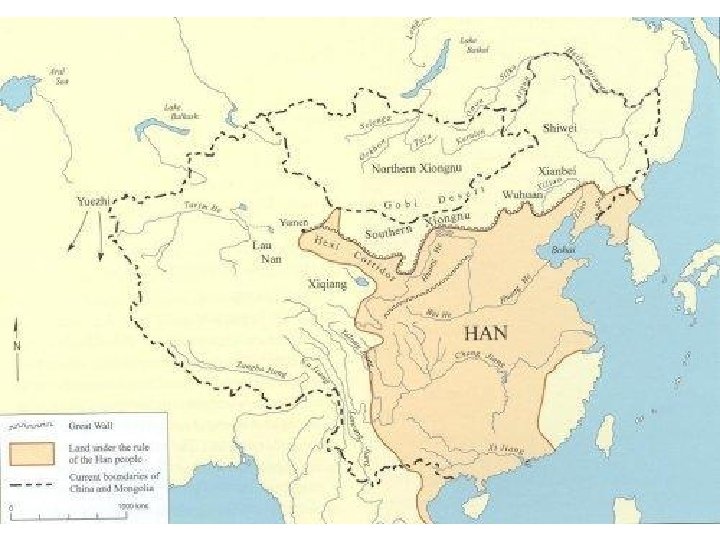
Han Dynasty Grows n n Han armies added land to the south and pushed borders westward. Wudi’s armies drove the nomads back to the north.
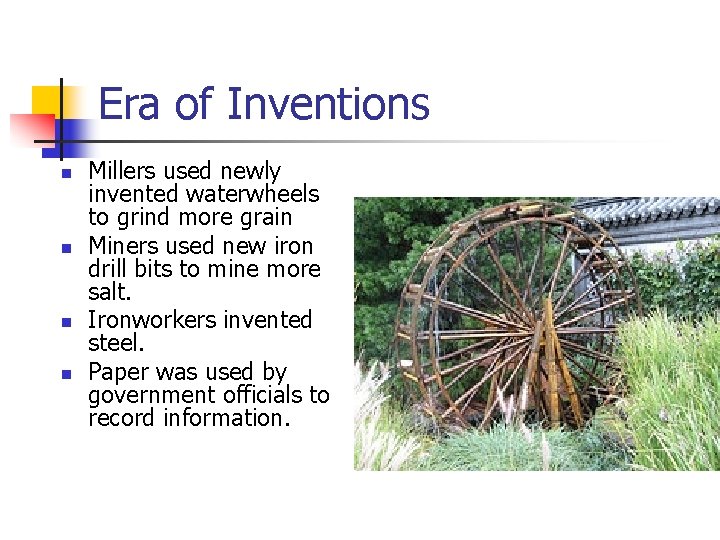
Era of Inventions n n Millers used newly invented waterwheels to grind more grain Miners used new iron drill bits to mine more salt. Ironworkers invented steel. Paper was used by government officials to record information.
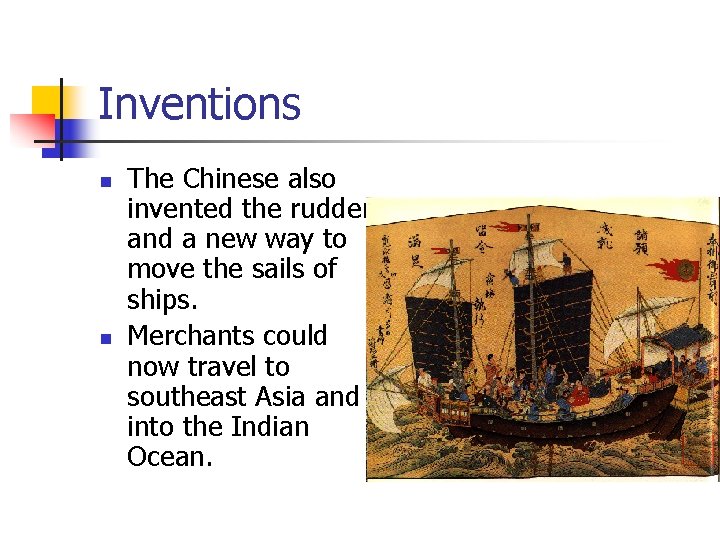
Inventions n n The Chinese also invented the rudder and a new way to move the sails of ships. Merchants could now travel to southeast Asia and into the Indian Ocean.
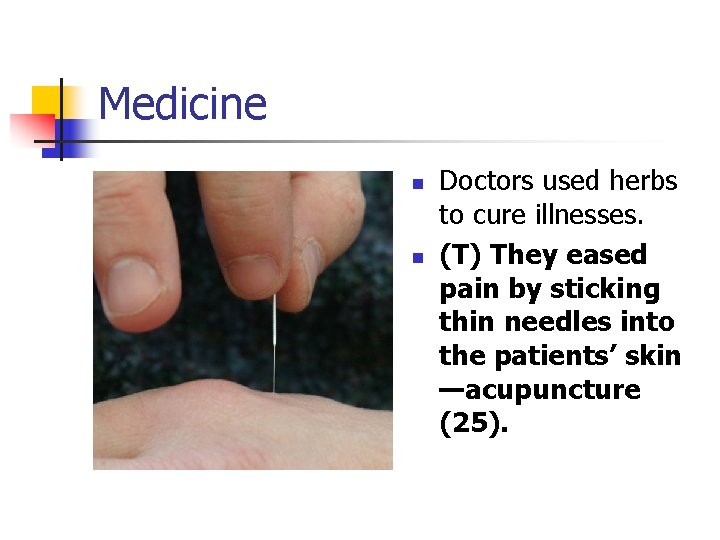
Medicine n n Doctors used herbs to cure illnesses. (T) They eased pain by sticking thin needles into the patients’ skin —acupuncture (25).
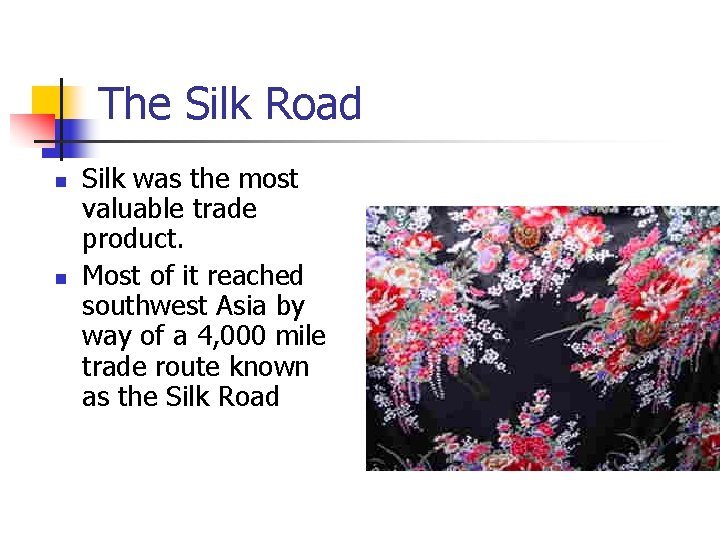
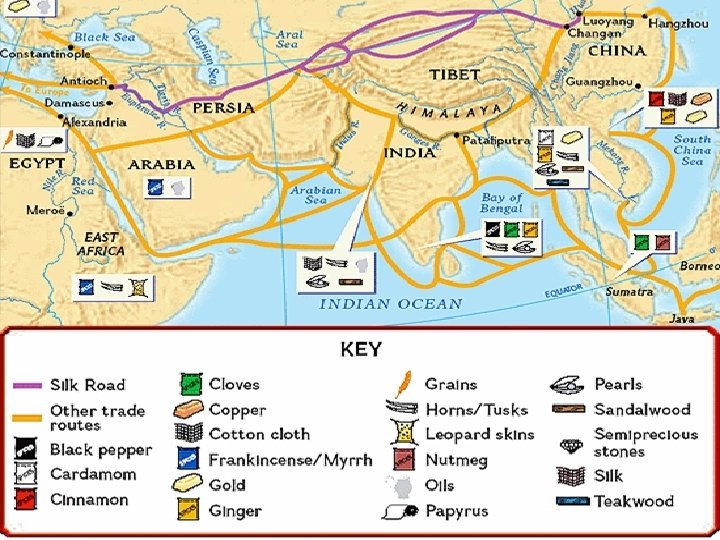
The Silk Road n n Silk was the most valuable trade product. Most of it reached southwest Asia by way of a 4, 000 mile trade route known as the Silk Road
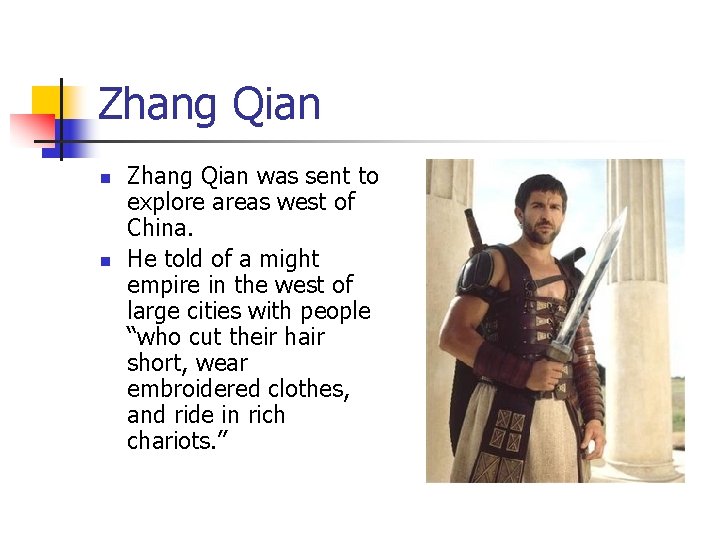
Zhang Qian n n Zhang Qian was sent to explore areas west of China. He told of a might empire in the west of large cities with people “who cut their hair short, wear embroidered clothes, and ride in rich chariots. ”
Buddhism in China n n After the fall of the Han dynasty many Chinese began to adopt Buddhism. It helped them deal with stress and fear of civil war which broke out.