
The Punic Wars Roman Territory Model of Rome
- Slides: 14
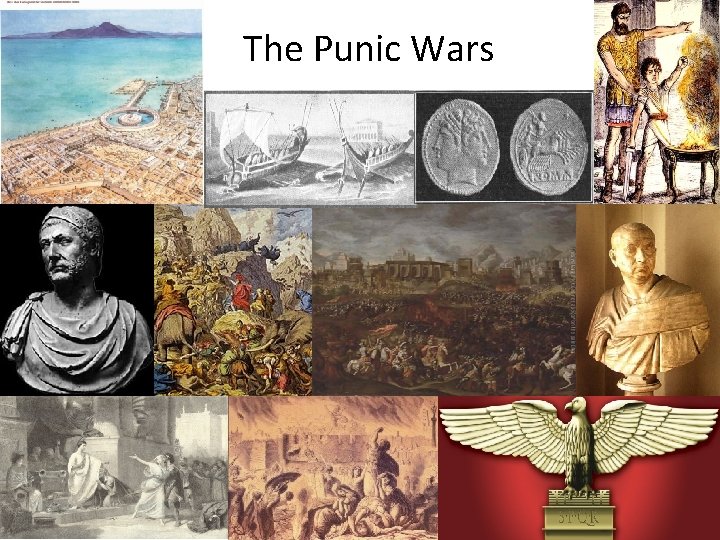
The Punic Wars
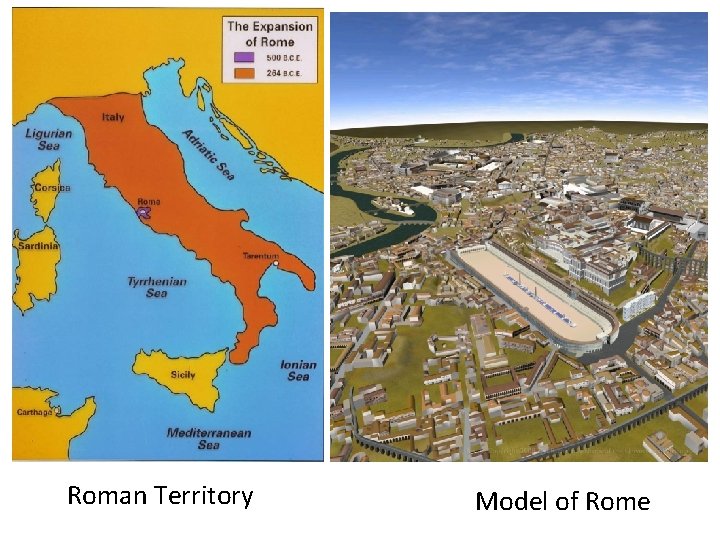
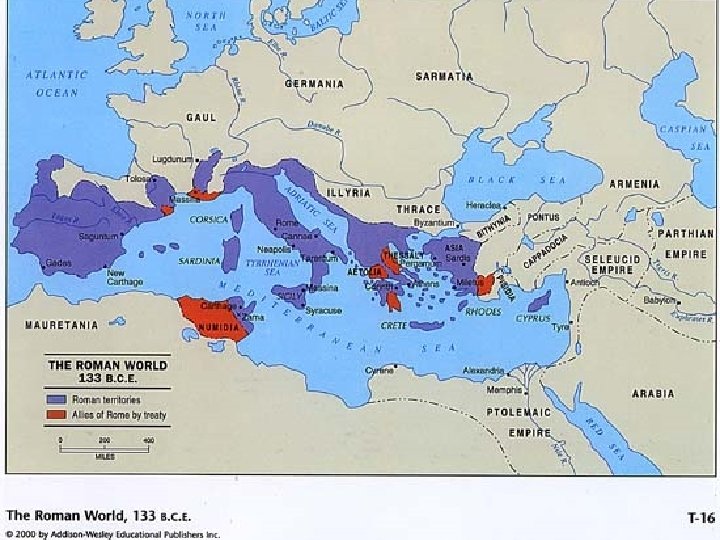
Roman Territory Model of Rome
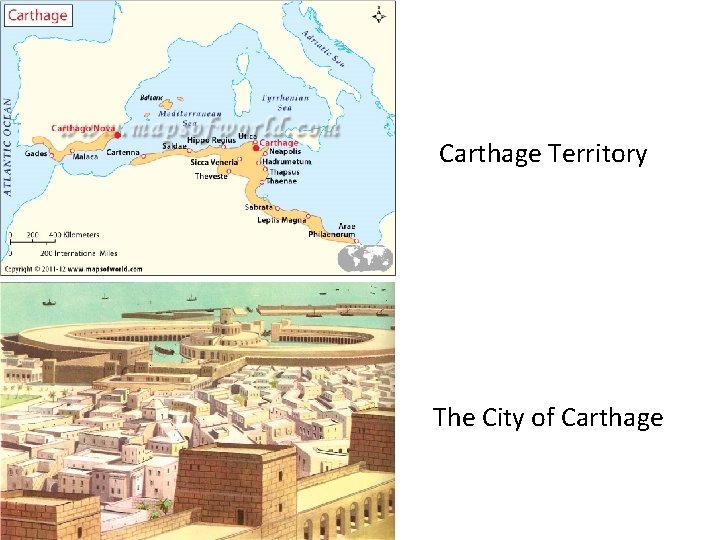
Carthage Territory The City of Carthage
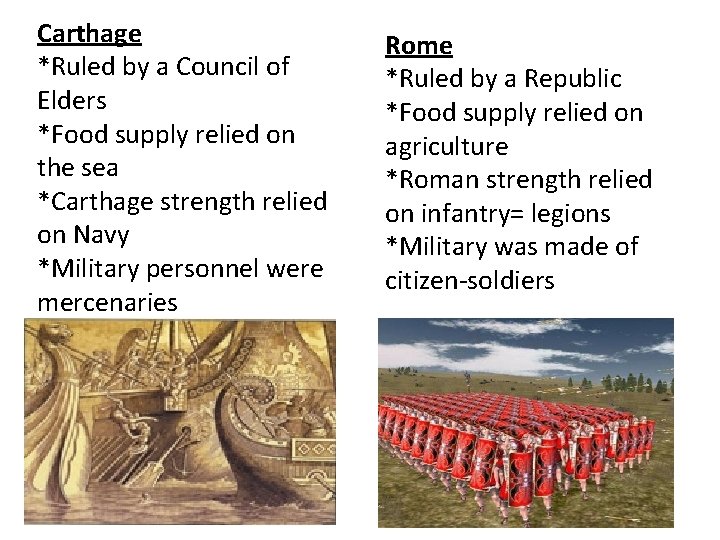
Carthage *Ruled by a Council of Elders *Food supply relied on the sea *Carthage strength relied on Navy *Military personnel were mercenaries Rome *Ruled by a Republic *Food supply relied on agriculture *Roman strength relied on infantry= legions *Military was made of citizen-soldiers
Two Superpowers Collide First Punic War 264 BC-241 BC • The Sicilian king hired pirates to put down a revolt in his kingdom. However, once the war was won the pirates refused to leave. • At first, Rome respected Carthage rights over Sicily. However, the skirmishes in Sicily provide an opportunity to seize more control over the Mediterranean Sea trade. • The Sicilian king asks Carthage and Rome to help remove the mercenaries. • Carthaginian and Roman soldiers meet on the island of Sicily and soon begin fighting for control. • Roman soldiers force the Carthaginians off the island of Sicily. • The Carthaginian admiral was sentenced to death by Carthage leaders for retreating. A larger military force was sent back to Sicily and the Romans were forced out of Sicily. • Rome responded by sending a larger army and won an easy victory--so easy, in fact, that the consul decided to absorb Sicily into the Roman Empire. • The war escalated. Carthage enjoyed early victories at sea, but Rome soon captured a Carthaginian warship and copied its design. This balanced the two opponents at sea. • Finally, after more than 20 years of fighting, Rome won a major naval battle that destroyed or captured most of the Carthage fleet. Peace terms required Carthage to leave Sicily and pay Rome tribute for 20 years.
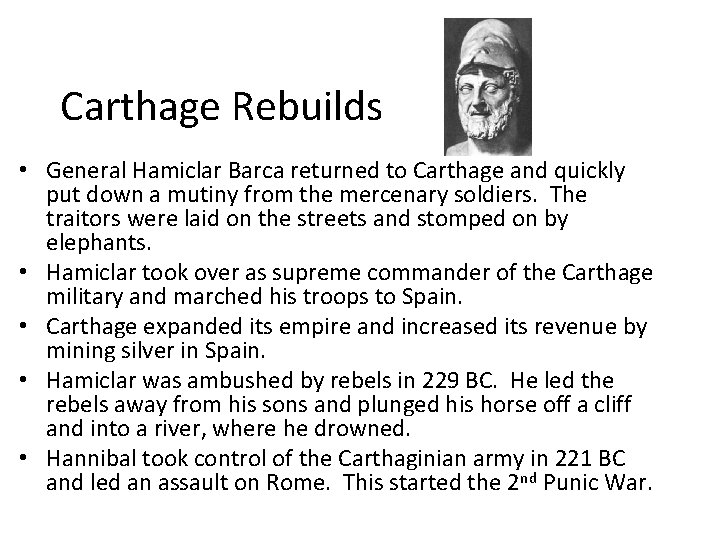
Carthage Rebuilds • General Hamiclar Barca returned to Carthage and quickly put down a mutiny from the mercenary soldiers. The traitors were laid on the streets and stomped on by elephants. • Hamiclar took over as supreme commander of the Carthage military and marched his troops to Spain. • Carthage expanded its empire and increased its revenue by mining silver in Spain. • Hamiclar was ambushed by rebels in 229 BC. He led the rebels away from his sons and plunged his horse off a cliff and into a river, where he drowned. • Hannibal took control of the Carthaginian army in 221 BC and led an assault on Rome. This started the 2 nd Punic War.
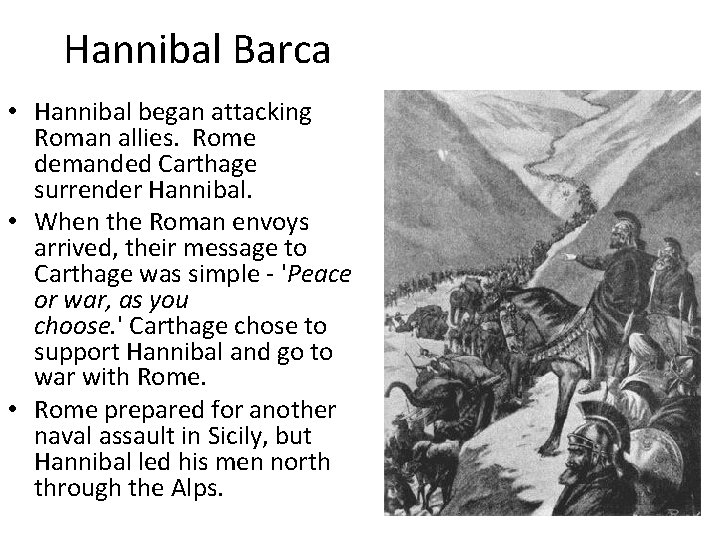
Hannibal Barca • Hannibal began attacking Roman allies. Rome demanded Carthage surrender Hannibal. • When the Roman envoys arrived, their message to Carthage was simple - 'Peace or war, as you choose. ' Carthage chose to support Hannibal and go to war with Rome. • Rome prepared for another naval assault in Sicily, but Hannibal led his men north through the Alps.
War of Attrition • Hannibal led his army from Spain, through southern France and the Alps, into northern Italy • He defeated Roman armies sent to stop him several times but was unable to attack the heavily fortified city of Rome. • Hannibal decided to begin a war of attrition in hope of destroying Roman economic base. He attacked neighboring cities and set fire throughout the countryside.
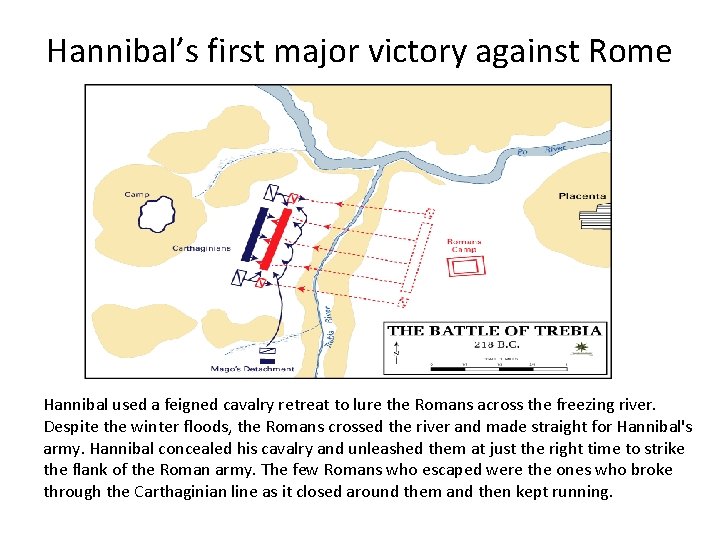
Hannibal’s first major victory against Rome Hannibal used a feigned cavalry retreat to lure the Romans across the freezing river. Despite the winter floods, the Romans crossed the river and made straight for Hannibal's army. Hannibal concealed his cavalry and unleashed them at just the right time to strike the flank of the Roman army. The few Romans who escaped were the ones who broke through the Carthaginian line as it closed around them and then kept running.
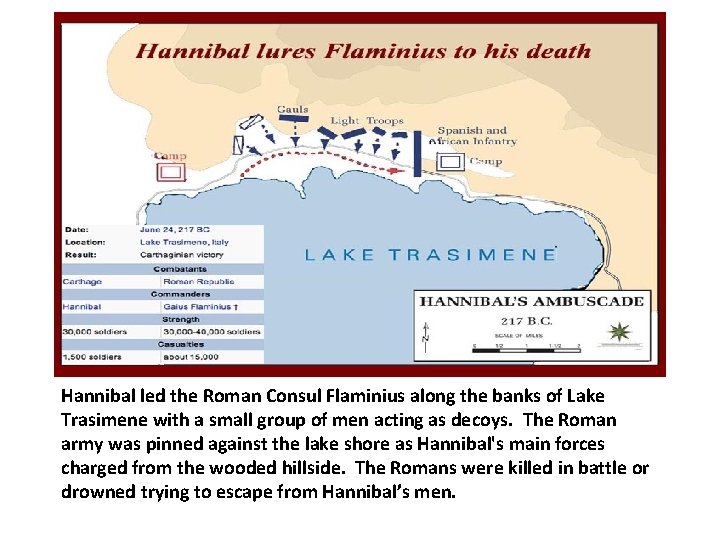
Hannibal led the Roman Consul Flaminius along the banks of Lake Trasimene with a small group of men acting as decoys. The Roman army was pinned against the lake shore as Hannibal's main forces charged from the wooded hillside. The Romans were killed in battle or drowned trying to escape from Hannibal’s men.
Rome transitions from defense to offense • Rome continued to replace losses, but Hannibal was unable to convince the Council of Elders to send more men or supplies. • Unable to defeat Hannibal in Italy, a Roman army sailed across the Mediterranean, landed in North Africa, and headed for Carthage – The Romans were led by a patrician general named Scipio Aemilius Africanus. – Hannibal forced to leave Italy to protect Carthage. • The Battle of Zama was Hannibal’s first defeat. Scipio did not fall for Hannibal’s tricks in battle. Eventually, Hannibal was outflanked and surrounded by the Romans. • Hannibal escaped with a few horsemen back to Carthage. He accepted peace terms from Scipio in 201 BC. – Carthage gave up all lands outside of Africa – Its navy was reduced and limited to 20 ships – All border disputes with Roman allies were to be settled in Roman court – 5, 000 talents of silver for tribute (355, 000 lbs of silver)
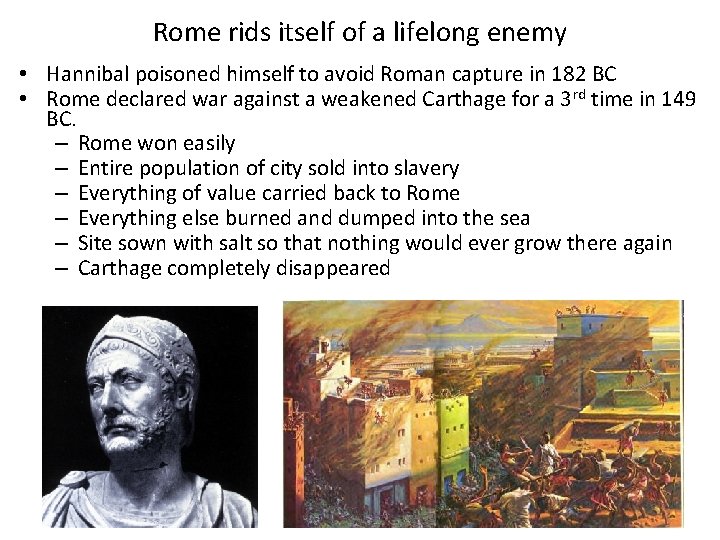
Rome rids itself of a lifelong enemy • Hannibal poisoned himself to avoid Roman capture in 182 BC • Rome declared war against a weakened Carthage for a 3 rd time in 149 BC. – Rome won easily – Entire population of city sold into slavery – Everything of value carried back to Rome – Everything else burned and dumped into the sea – Site sown with salt so that nothing would ever grow there again – Carthage completely disappeared