
The Pulmonary System Structure and Function Lungs l
- Slides: 24
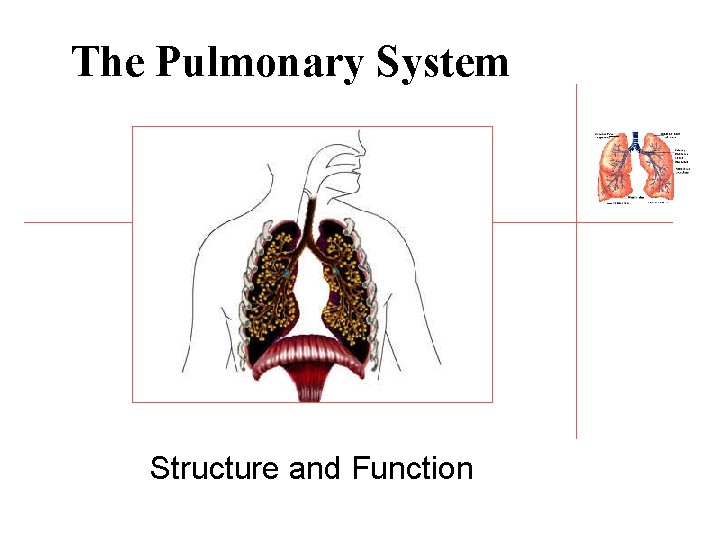
The Pulmonary System Structure and Function
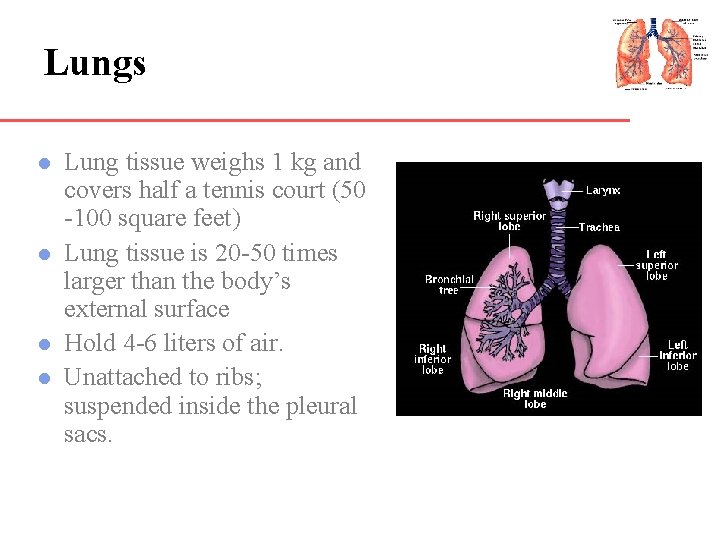
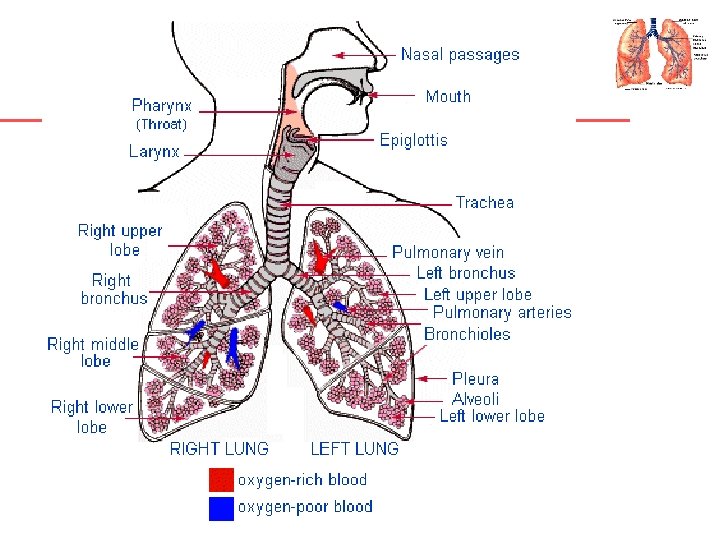
Lungs l l Lung tissue weighs 1 kg and covers half a tennis court (50 -100 square feet) Lung tissue is 20 -50 times larger than the body’s external surface Hold 4 -6 liters of air. Unattached to ribs; suspended inside the pleural sacs.
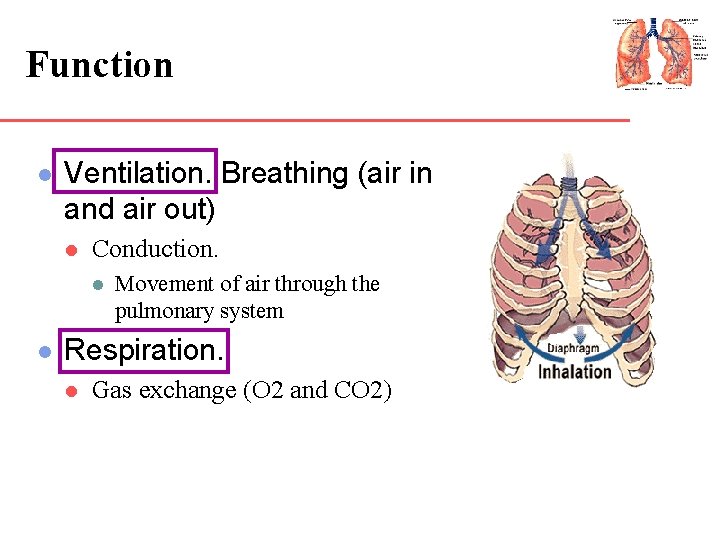
Function l Ventilation. Breathing (air in and air out) l Conduction. l l Movement of air through the pulmonary system Respiration. l Gas exchange (O 2 and CO 2)
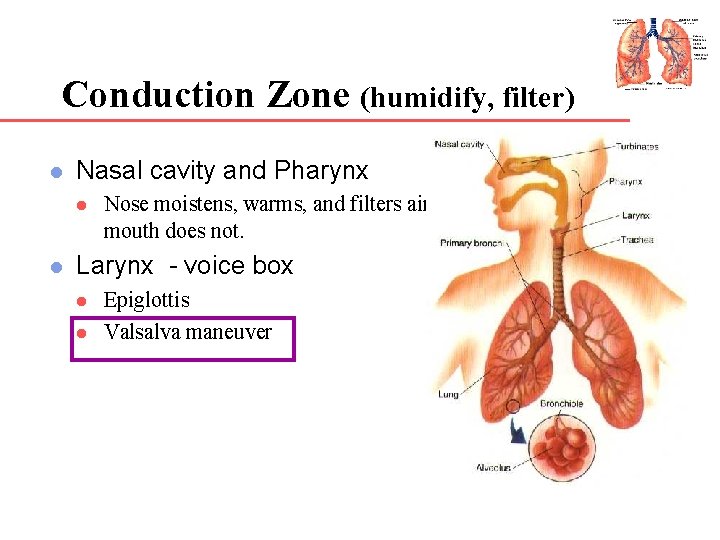
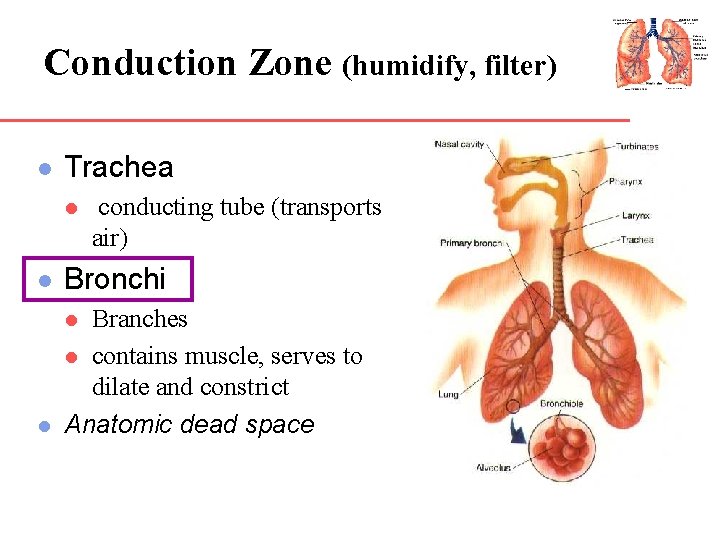
Conduction Zone (humidify, filter) l Nasal cavity and Pharynx l l Nose moistens, warms, and filters air; mouth does not. Larynx - voice box l l Epiglottis Valsalva maneuver
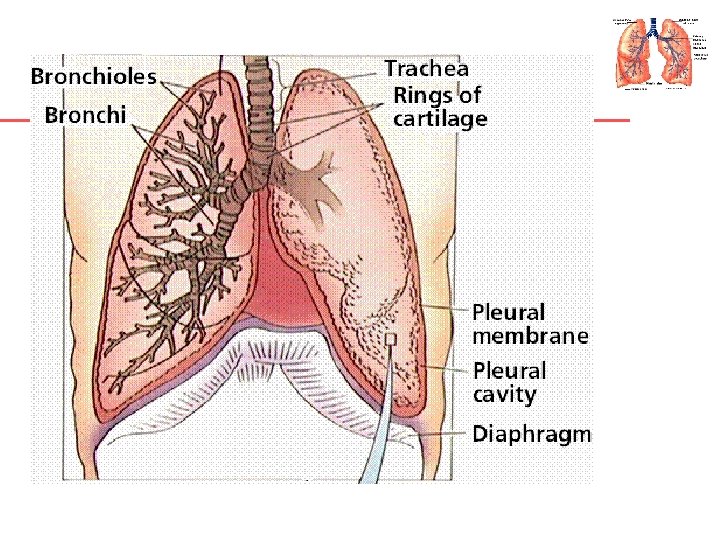
Conduction Zone (humidify, filter) l Trachea l conducting tube (transports air) l Bronchi l Branches l contains muscle, serves to dilate and constrict Anatomic dead space l
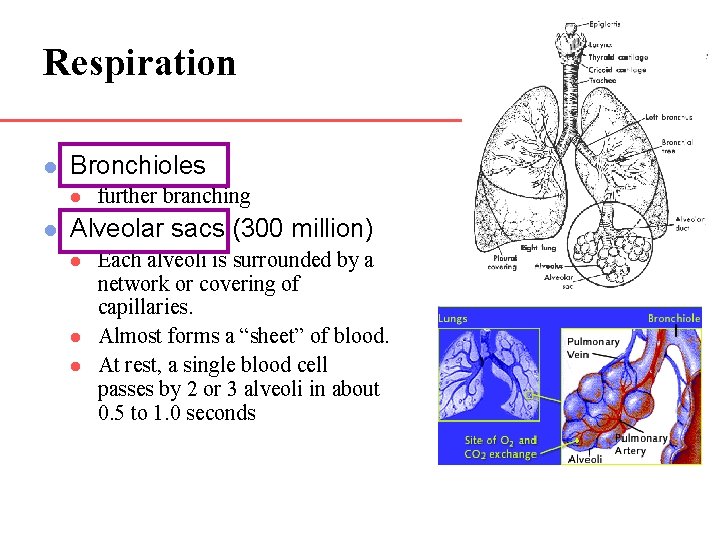
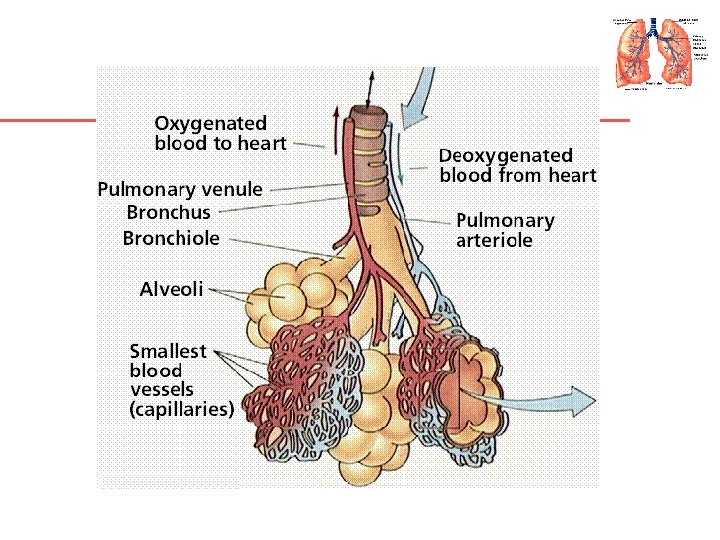
Respiration l Bronchioles l l further branching Alveolar sacs (300 million) l l l Each alveoli is surrounded by a network or covering of capillaries. Almost forms a “sheet” of blood. At rest, a single blood cell passes by 2 or 3 alveoli in about 0. 5 to 1. 0 seconds
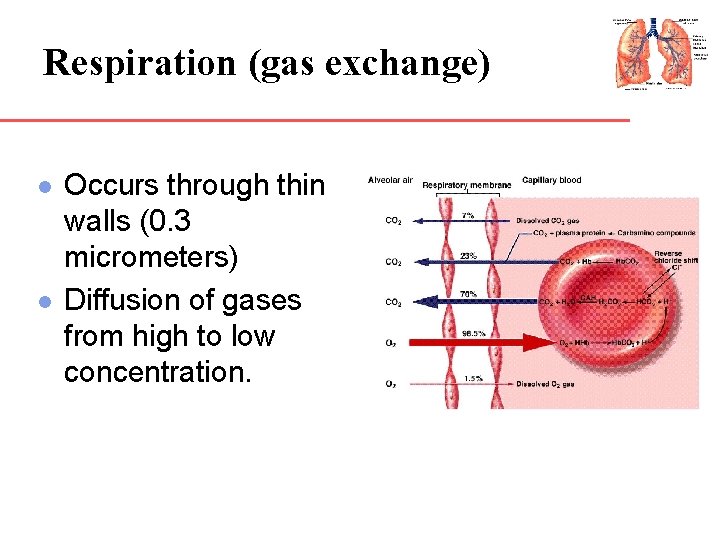
Respiration (gas exchange) l l Occurs through thin walls (0. 3 micrometers) Diffusion of gases from high to low concentration.
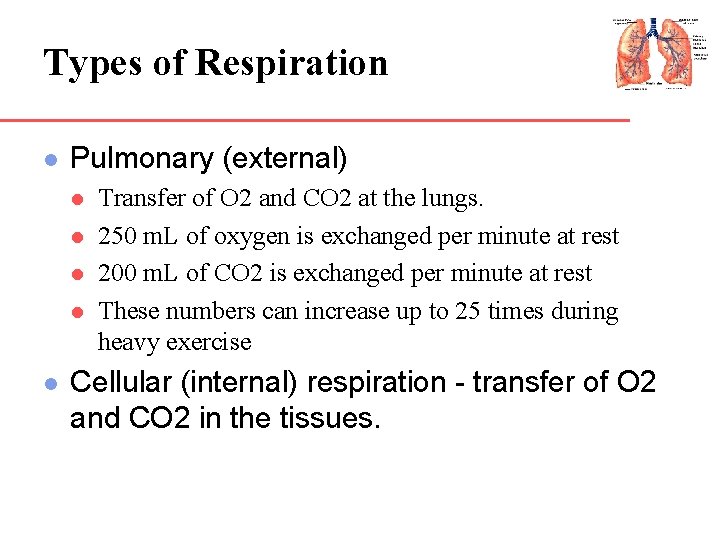
Types of Respiration l Pulmonary (external) l l l Transfer of O 2 and CO 2 at the lungs. 250 m. L of oxygen is exchanged per minute at rest 200 m. L of CO 2 is exchanged per minute at rest These numbers can increase up to 25 times during heavy exercise Cellular (internal) respiration - transfer of O 2 and CO 2 in the tissues.
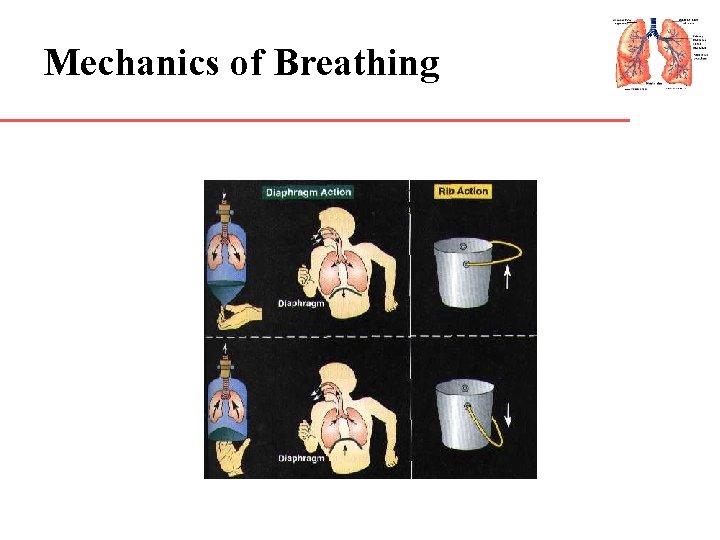
Mechanics of Breathing
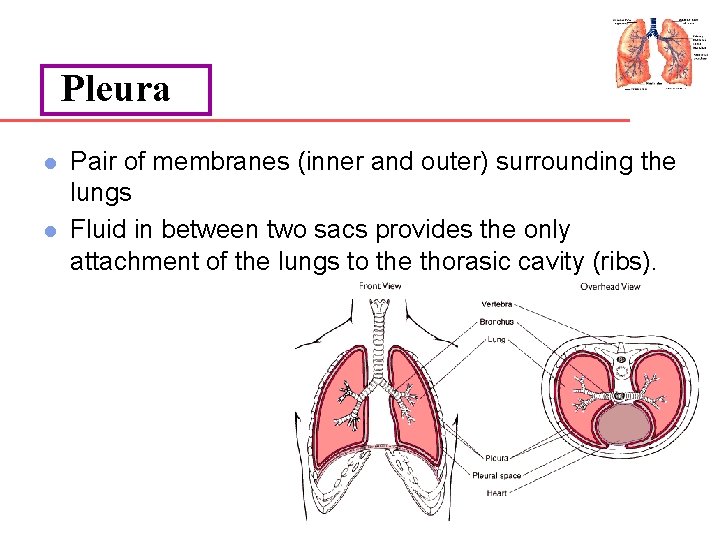
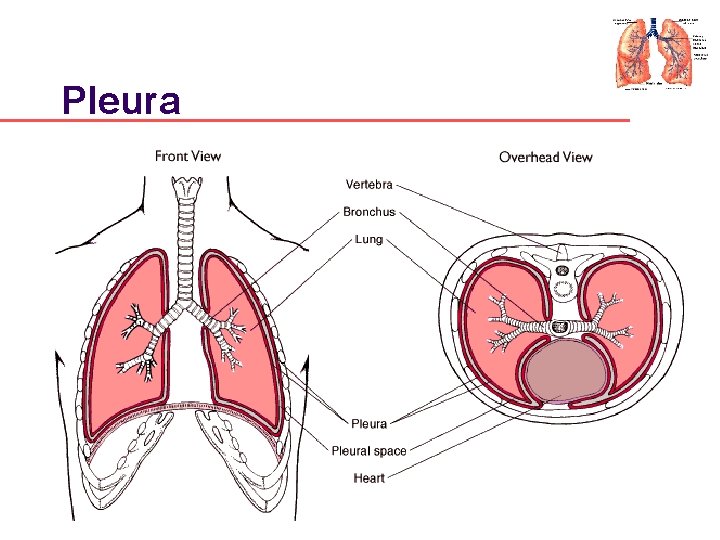
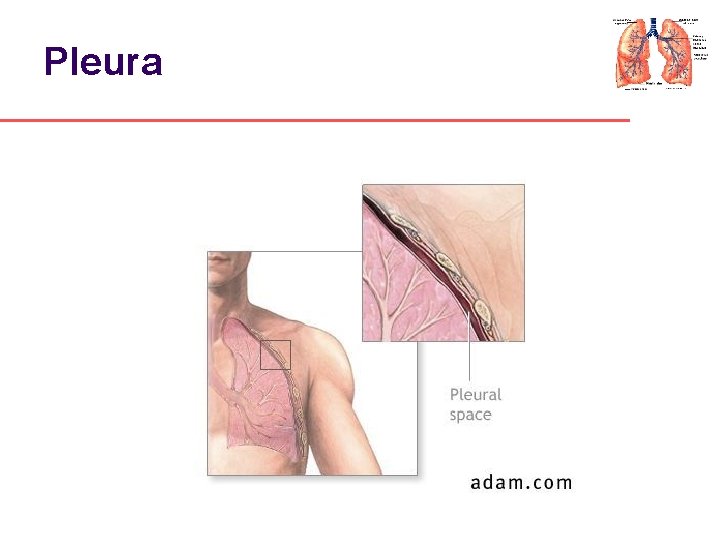
Pleura l l Pair of membranes (inner and outer) surrounding the lungs Fluid in between two sacs provides the only attachment of the lungs to the thorasic cavity (ribs).
Pleura
Pleura
Pneumothroax
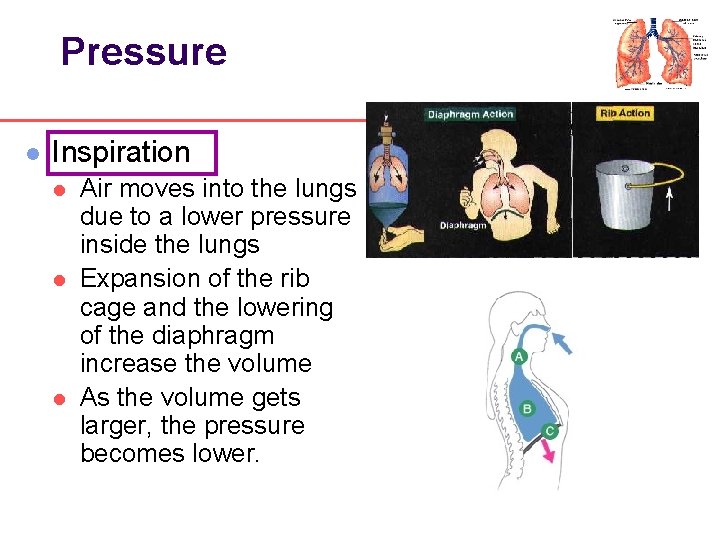
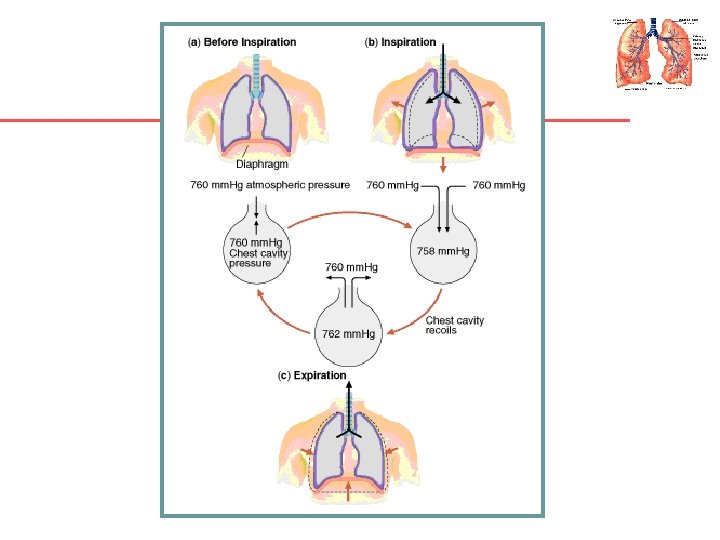
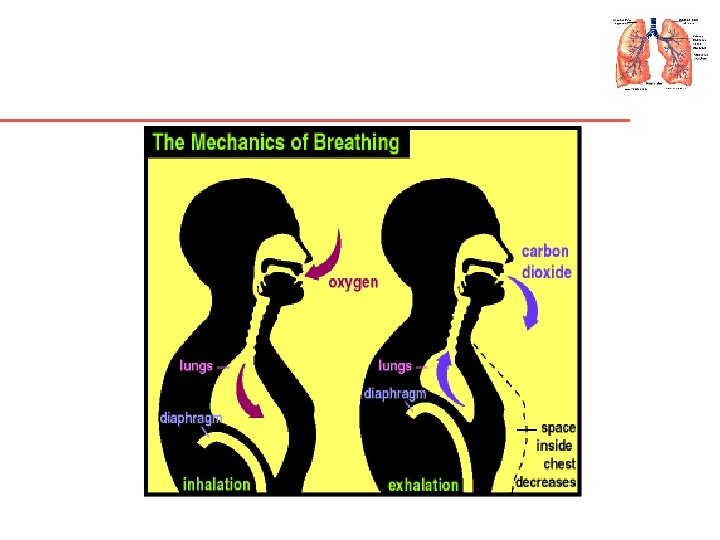
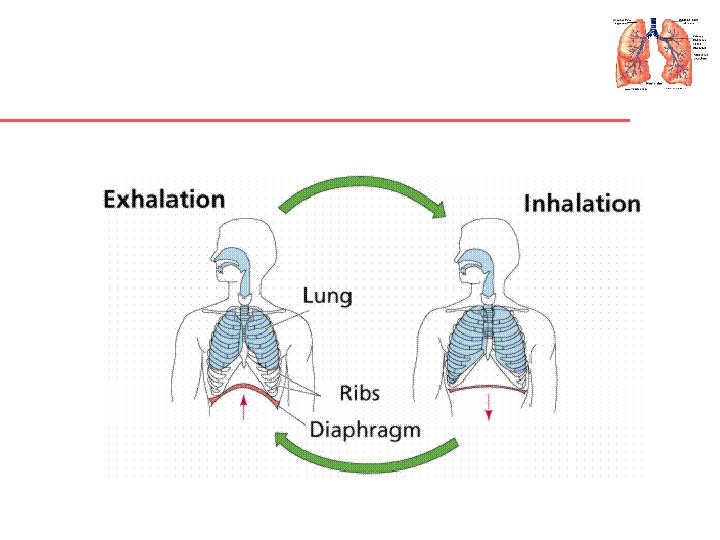
Pressure l Inspiration l l l Air moves into the lungs due to a lower pressure inside the lungs Expansion of the rib cage and the lowering of the diaphragm increase the volume As the volume gets larger, the pressure becomes lower.
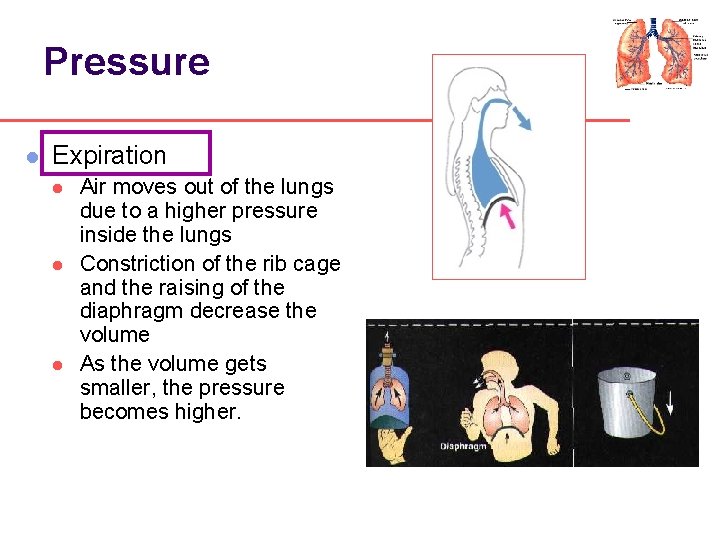
Pressure l Expiration l l l Air moves out of the lungs due to a higher pressure inside the lungs Constriction of the rib cage and the raising of the diaphragm decrease the volume As the volume gets smaller, the pressure becomes higher.
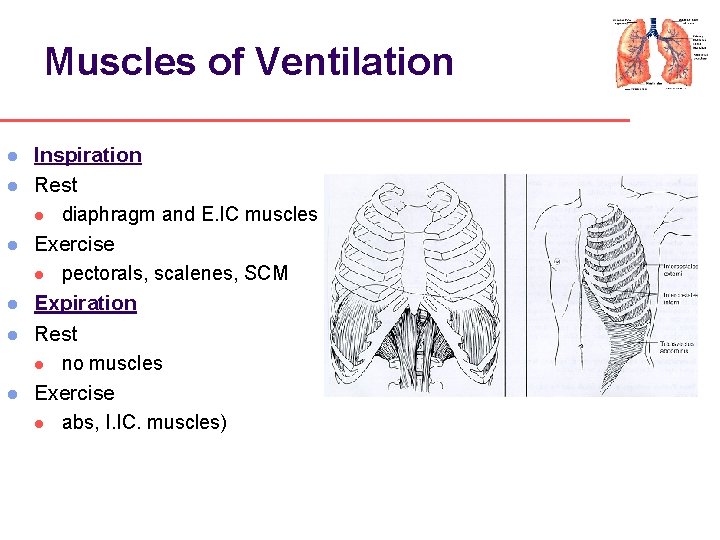
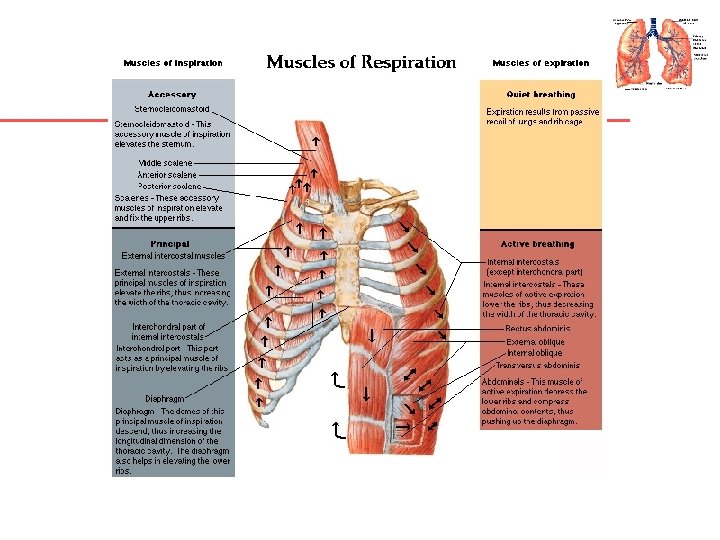
Muscles of Ventilation l l l Inspiration Rest l diaphragm and E. IC muscles Exercise l pectorals, scalenes, SCM Expiration Rest l no muscles Exercise l abs, I. IC. muscles)
Lungs and Exercise l l At rest, the blood is 97 -98% saturated with oxygen Exercise, the blood remains 97 -98% saturated Healthy lungs do not limit a person’s ability to exercise However, respiratory muscles need to be trained like any other skeletal muscle