
The Protestant Reformation The Catholic Church By 1500
The Protestant Reformation
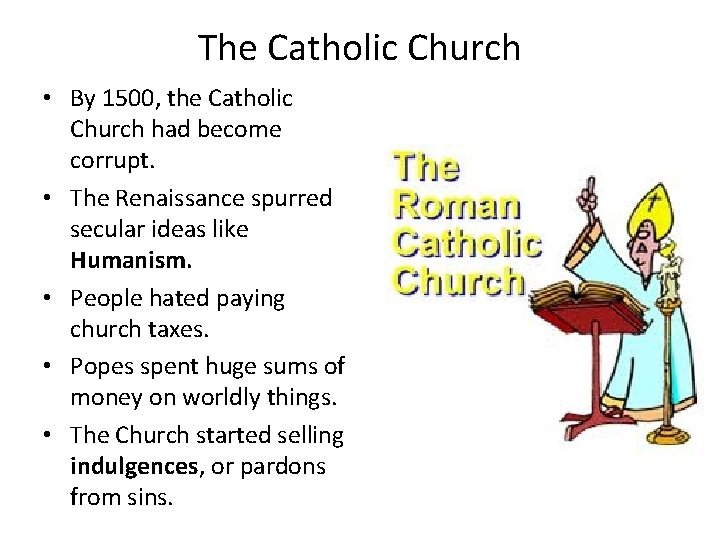
The Catholic Church • By 1500, the Catholic Church had become corrupt. • The Renaissance spurred secular ideas like Humanism. • People hated paying church taxes. • Popes spent huge sums of money on worldly things. • The Church started selling indulgences, or pardons from sins.
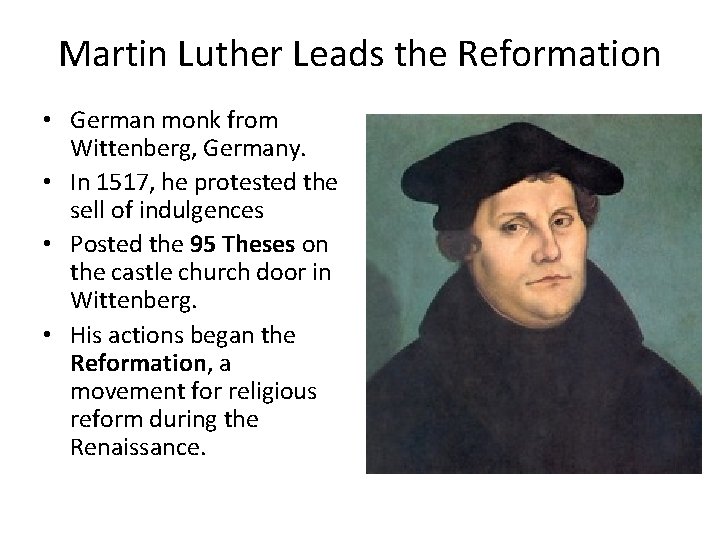
Martin Luther Leads the Reformation • German monk from Wittenberg, Germany. • In 1517, he protested the sell of indulgences • Posted the 95 Theses on the castle church door in Wittenberg. • His actions began the Reformation, a movement for religious reform during the Renaissance.
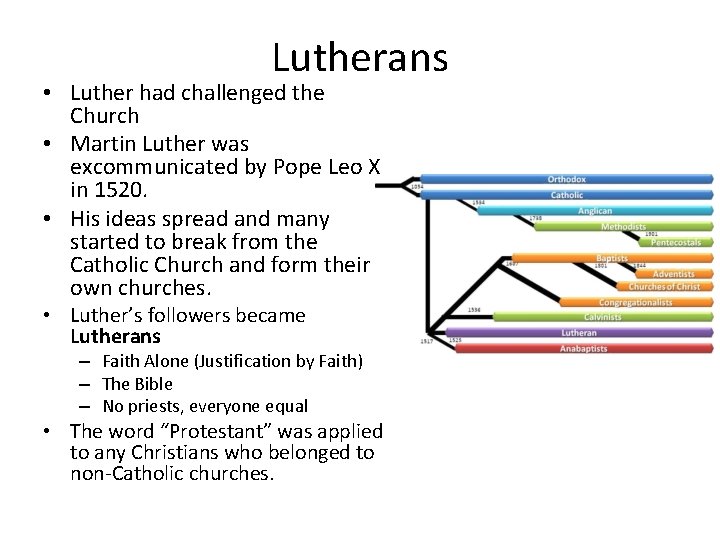
Lutherans • Luther had challenged the Church • Martin Luther was excommunicated by Pope Leo X in 1520. • His ideas spread and many started to break from the Catholic Church and form their own churches. • Luther’s followers became Lutherans – Faith Alone (Justification by Faith) – The Bible – No priests, everyone equal • The word “Protestant” was applied to any Christians who belonged to non-Catholic churches.
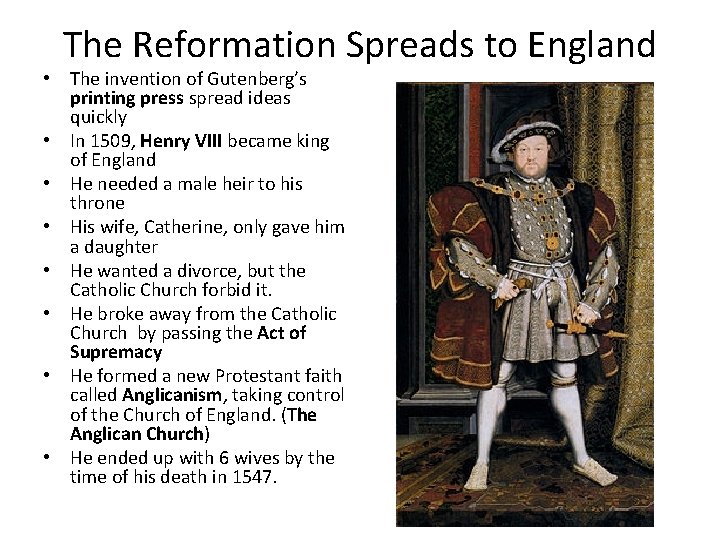
The Reformation Spreads to England • The invention of Gutenberg’s printing press spread ideas quickly • In 1509, Henry VIII became king of England • He needed a male heir to his throne • His wife, Catherine, only gave him a daughter • He wanted a divorce, but the Catholic Church forbid it. • He broke away from the Catholic Church by passing the Act of Supremacy • He formed a new Protestant faith called Anglicanism, taking control of the Church of England. (The Anglican Church) • He ended up with 6 wives by the time of his death in 1547.
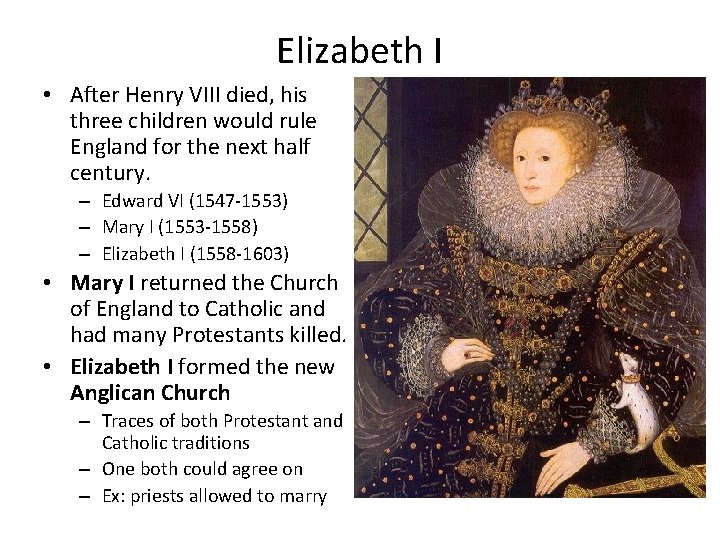
Elizabeth I • After Henry VIII died, his three children would rule England for the next half century. – Edward VI (1547 -1553) – Mary I (1553 -1558) – Elizabeth I (1558 -1603) • Mary I returned the Church of England to Catholic and had many Protestants killed. • Elizabeth I formed the new Anglican Church – Traces of both Protestant and Catholic traditions – One both could agree on – Ex: priests allowed to marry
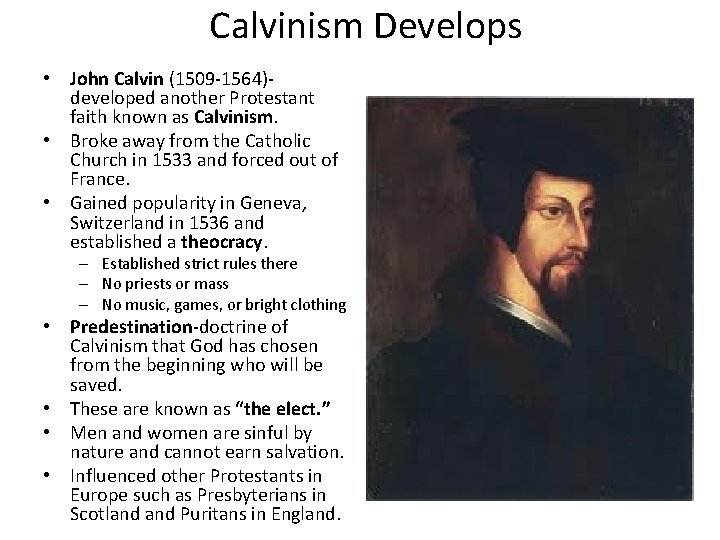
Calvinism Develops • John Calvin (1509 -1564)developed another Protestant faith known as Calvinism. • Broke away from the Catholic Church in 1533 and forced out of France. • Gained popularity in Geneva, Switzerland in 1536 and established a theocracy. – Established strict rules there – No priests or mass – No music, games, or bright clothing • Predestination-doctrine of Calvinism that God has chosen from the beginning who will be saved. • These are known as “the elect. ” • Men and women are sinful by nature and cannot earn salvation. • Influenced other Protestants in Europe such as Presbyterians in Scotland Puritans in England.
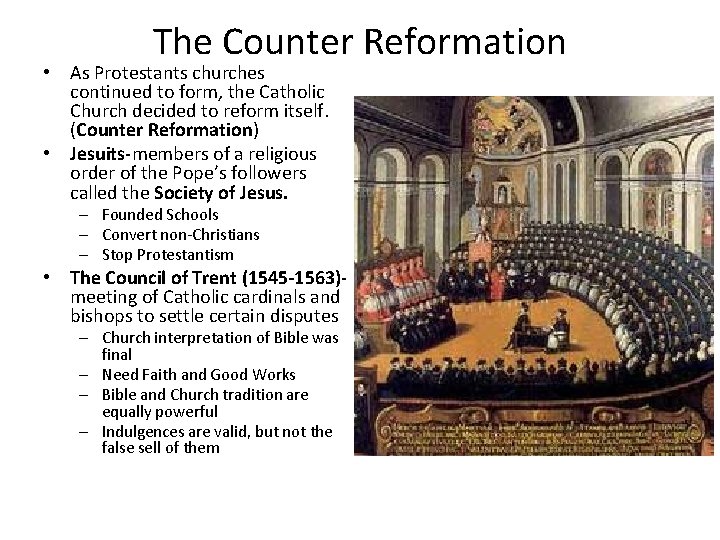
The Counter Reformation • As Protestants churches continued to form, the Catholic Church decided to reform itself. (Counter Reformation) • Jesuits-members of a religious order of the Pope’s followers called the Society of Jesus. – Founded Schools – Convert non-Christians – Stop Protestantism • The Council of Trent (1545 -1563)meeting of Catholic cardinals and bishops to settle certain disputes – Church interpretation of Bible was final – Need Faith and Good Works – Bible and Church tradition are equally powerful – Indulgences are valid, but not the false sell of them
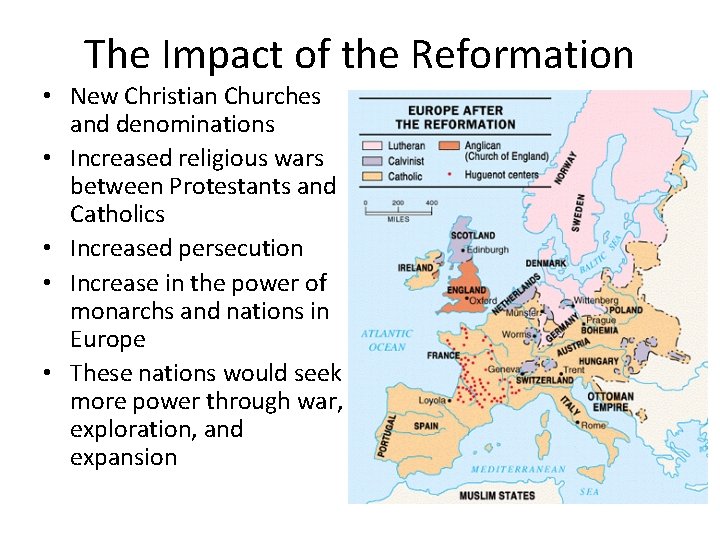
The Impact of the Reformation • New Christian Churches and denominations • Increased religious wars between Protestants and Catholics • Increased persecution • Increase in the power of monarchs and nations in Europe • These nations would seek more power through war, exploration, and expansion
Issue #1 • The sell of Indulgences and Relics by the Church
Issue #2 • The way to earn salvation is through priests, mass, and good deeds.
Issue #3 • Priest Marriage and Divorce in the Catholic Church
Movie Clips • http: //www. youtube. com/watch? v=r 5 P 7 Qk. H Cfa. I • http: //www. youtube. com/watch? v=1 x. W 7 Bh. E Be. EA • http: //www. youtube. com/watch? v=pkfyn 6 m. Y l. Cg • http: //www. youtube. com/watch? v=Kyh 3 fo. JV k 2 k • http: //www. youtube. com/watch? v=w. F_Up. Yq YJu. Y
- Slides: 13