
The Proteins and Amino Acids Chapter 6 Introduction
- Slides: 44
The Proteins and Amino Acids Chapter 6
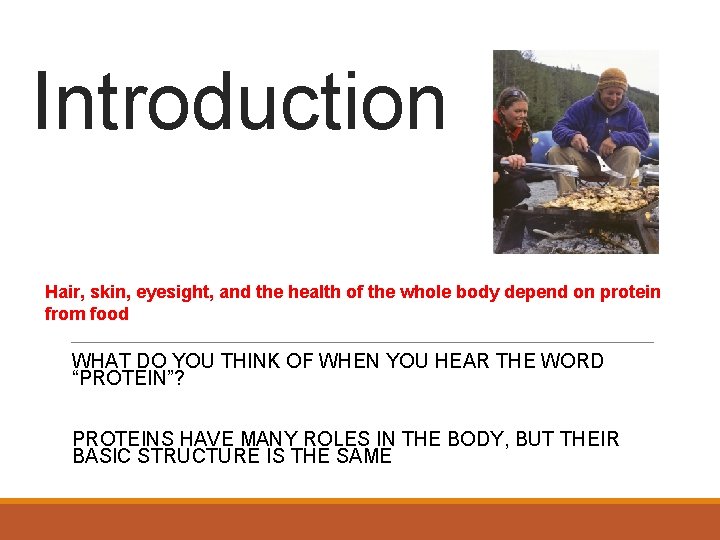
Introduction Hair, skin, eyesight, and the health of the whole body depend on protein from food WHAT DO YOU THINK OF WHEN YOU HEAR THE WORD “PROTEIN”? PROTEINS HAVE MANY ROLES IN THE BODY, BUT THEIR BASIC STRUCTURE IS THE SAME
What is a Protein? ● A complex molecule consisting of amino acids ● The “machines” that allow our bodies to function ● Crucial for body structure, functions, the regulation of cells, tissues and organs ● Muscles, skin, bones and many other parts contain significant amounts of protein ● 2% of total body weight is protein! ● Examples: Enzymes, hormones, antibodies, neurotransmitters, hemoglobin
Definition: ● Proteins are organic compounds composed of carbon, hydrogen, oxygen, and nitrogen. Roles in the body: ● Structural and mechanical ● Regulation of body processes ● Immune system ● Fluid balance ● Acid-base balance ● Transportation ● Fuel Source ● Regular genetic expression ● Build enzymes, hormones, and neurotransmitters ● Blood clotting
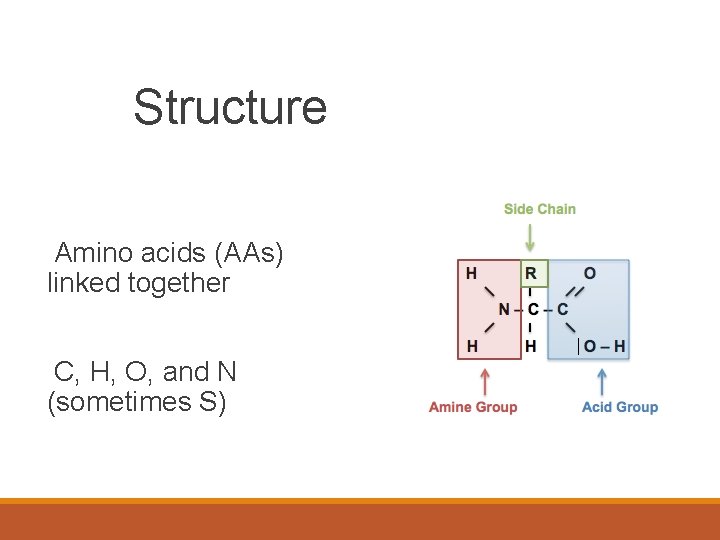
Structure Amino acids (AAs) linked together C, H, O, and N (sometimes S)
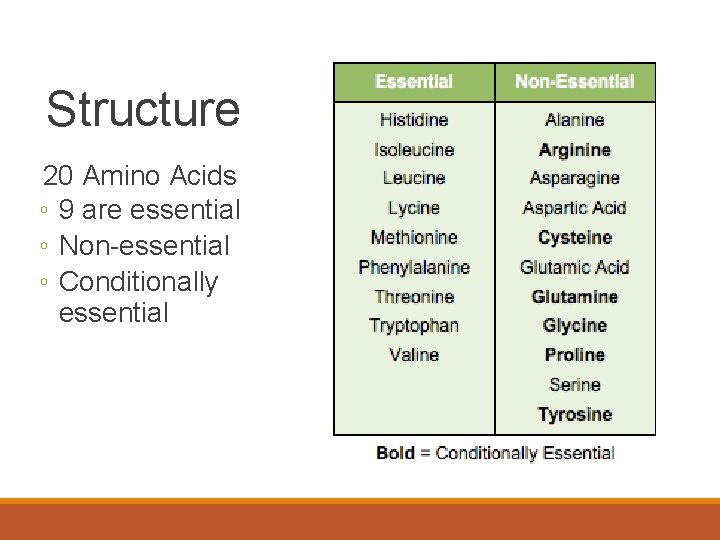
Structure 20 Amino Acids ◦ 9 are essential ◦ Non-essential ◦ Conditionally essential
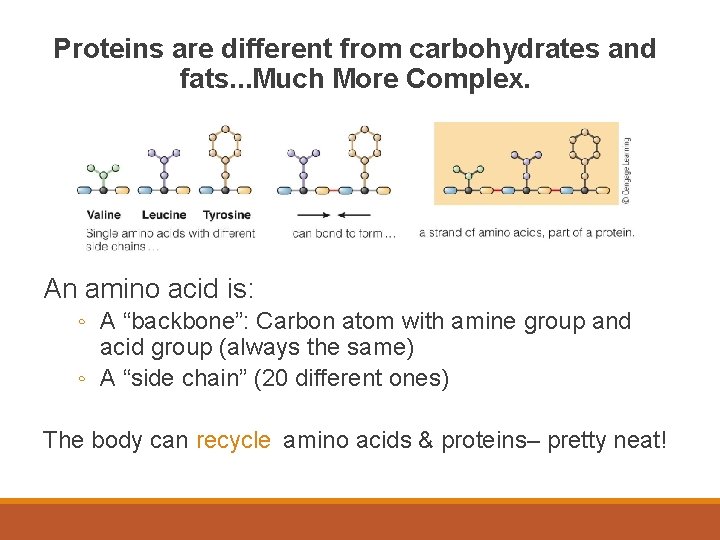
Proteins are different from carbohydrates and fats. . . Much More Complex. An amino acid is: ◦ A “backbone”: Carbon atom with amine group and acid group (always the same) ◦ A “side chain” (20 different ones) The body can recycle amino acids & proteins– pretty neat!
How Do Amino Acids Build Proteins? Peptide bonds ◦ Link amino acids Strands of amino acids do not remain straight ◦ Coils ◦ Folds Side chain electrical charge Activation
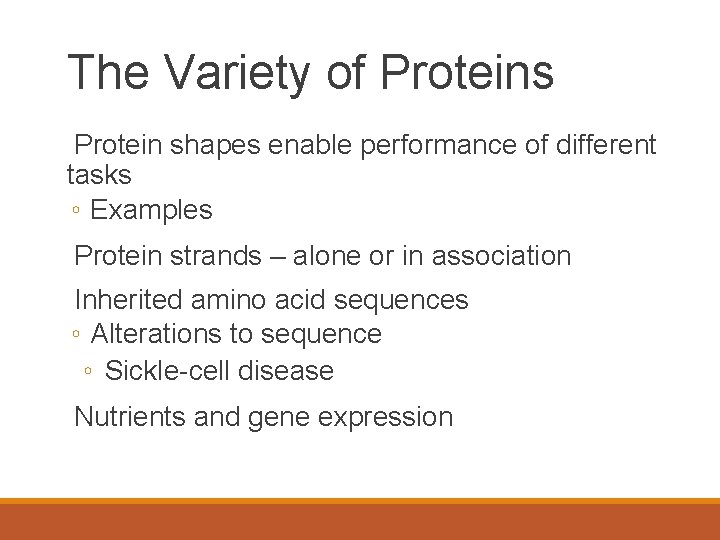
The Variety of Proteins Protein shapes enable performance of different tasks ◦ Examples Protein strands – alone or in association Inherited amino acid sequences ◦ Alterations to sequence ◦ Sickle-cell disease Nutrients and gene expression
The Importance of Protein Amino acids must be continually available ◦ Building of new proteins Amino acids are needed each day Protein turnover
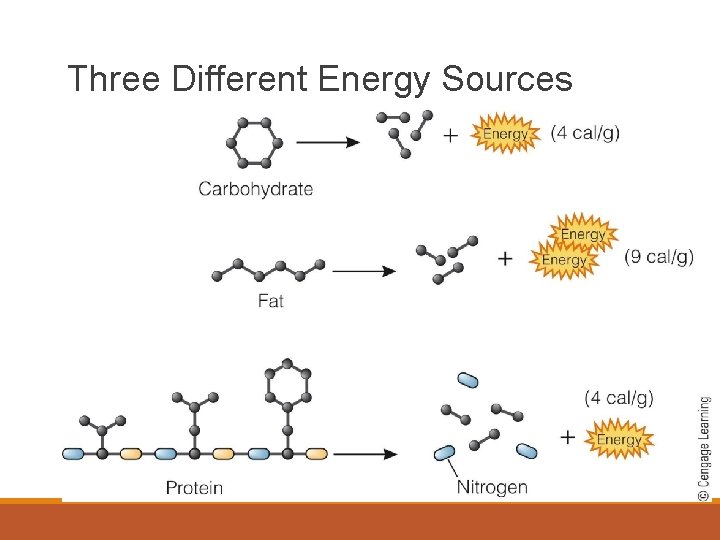
Three Different Energy Sources
The Fate of an Amino Acid Cellular use ◦ Build protein ◦ Make a needed compound ◦ Dismantle amino acid for component parts Wasting of amino acids ◦ Four conditions ◦ Preventing waste
The Fate of an Amino Acid Can be used for energy: ◦ Amine group removed ◦ Amine group excreted in the urine Can be stored in a different form: ◦ Dismantled ◦ Amine group excreted ◦ Converted to glucose or fat
Protein Destruction When is a protein broken down? ◦ Used as fuel ◦ Converted to glucose ◦ Protein turnover Steps of protein breakdown: ◦ Protein broken down to amino acids ◦ Amino acid is deaminated (amine group is removed) ◦ Free N builds in body ◦ This is TOXIC ◦ Blood carries N to liver (converted to urea) ◦ Urea is transported to the kidneys and is filtered out ◦ Urea is sent to bladder to be converted to urine for excretion
Providing Energy and Glucose Inadequate carbohydrate or energy Amino acids to glucose ◦ Can help maintain blood glucose level ◦ Urea No storage compound for protein Oversupply of amino acids ◦ Remove amine group ◦ Use of residues
The Fate of an Amino Acid Amino acids are “wasted” when: ◦ Energy is lacking ◦ Protein is overabundant ◦ An amino acid is oversupplied ◦ The quality of the diet’s protein is too low
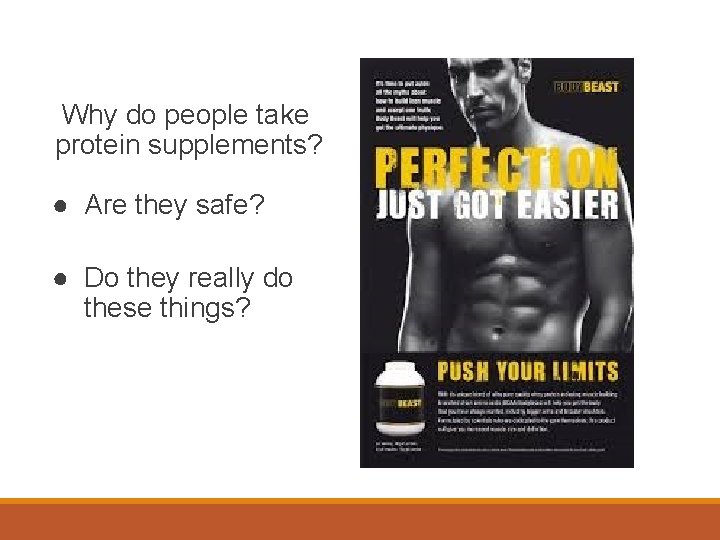
Why do people take protein supplements? ● Are they safe? ● Do they really do these things?
Food Protein: Need and Quality DRI ◦ Depends on body size ◦ Infants and growing children ◦ Recommended intake ◦ Athletes ◦ Minimum amount ◦ Upper limit Body’s health Quality
How Much Protein Do We Need? An individual's daily protein requirement depends on several factors, including: ◦ Age - a growing child's needs will not be the same as an individual ◦ ◦ ◦ aged 80 years Sex - males generally require more protein than (non-pregnant or non-breastfeeding) females Weight - an individual who weighs 200 lbs will require more protein compared to somebody who weighs 120 lbs. In fact, recent studies indicate that weight matters more than age when determining dietary protein requirements. Muscular exertion - an individual who earns his living delivering pianos will require more protein than a computer programmer of the same age and height Muscle mass - a muscle-bound weight trainer will need more dietary protein than a marathon runner Health - a person who is convalescing after an illness or medical procedure may need more dietary protein than other people
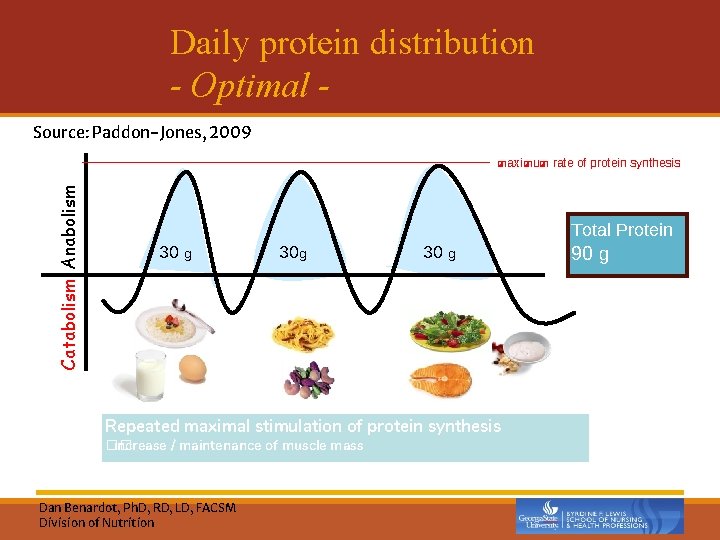
Dietary Protein Intake Recommended Intake: ◦ DRI range for protein intake is 10 to 35% of calories ◦ For a 2000 cal diet, this is 50 – 175 grams ◦ Average intake (US) is 78 grams ◦ RDA = 0. 8 g/kg body weight/day ◦ ~56 g/day for men and ~46 g/day for women. ◦ Why so little? ◦ Protein turnover
Daily protein distribution - Optimal Source: Paddon-Jones, 2009 Catabolism Anabolism maximum rate of protein synthesis 30 g Repeated maximal stimulation of protein synthesis �� increase / maintenance of muscle mass Dan Benardot, Ph. D, RD, LD, FACSM Division of Nutrition Total Protein 90 g
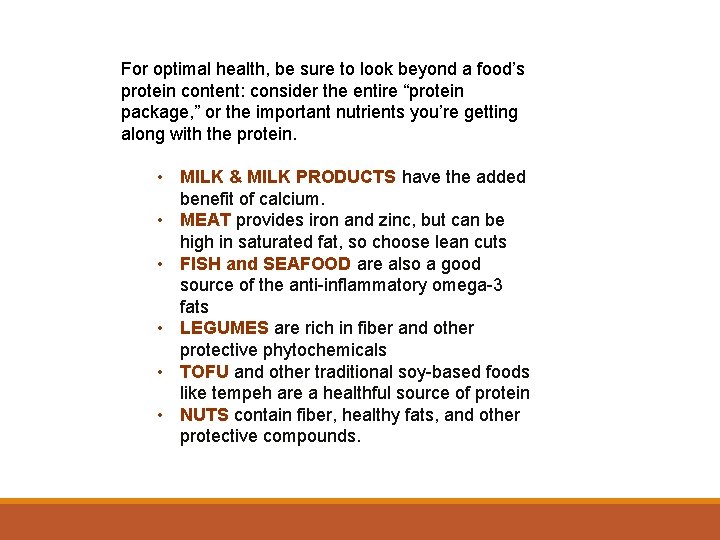
For optimal health, be sure to look beyond a food’s protein content: consider the entire “protein package, ” or the important nutrients you’re getting along with the protein. • MILK & MILK PRODUCTS have the added benefit of calcium. • MEAT provides iron and zinc, but can be high in saturated fat, so choose lean cuts • FISH and SEAFOOD are also a good source of the anti-inflammatory omega-3 fats • LEGUMES are rich in fiber and other protective phytochemicals • TOFU and other traditional soy-based foods like tempeh are a healthful source of protein • NUTS contain fiber, healthy fats, and other protective compounds.
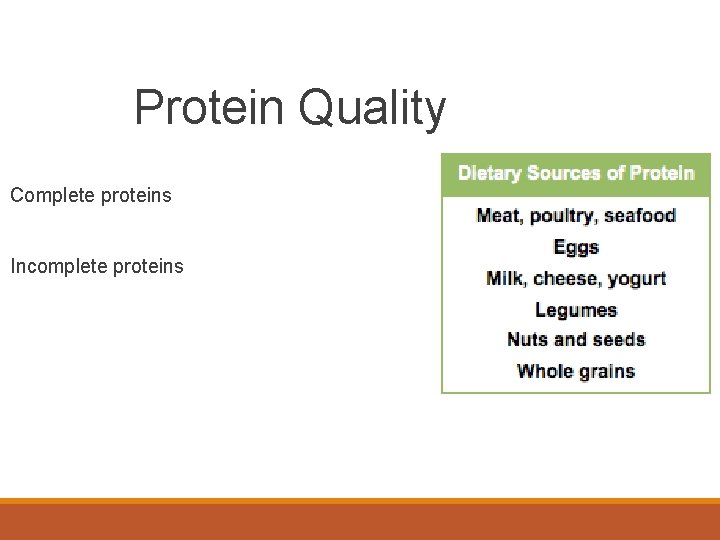
Protein Quality A measure of the essential amino acid content of a protein relative to the essential amino acid needs of the body Biological value (BV) – how well supports nitrogen balance Reference protein – egg white protein, the standard to which other proteins are compared = 100 score
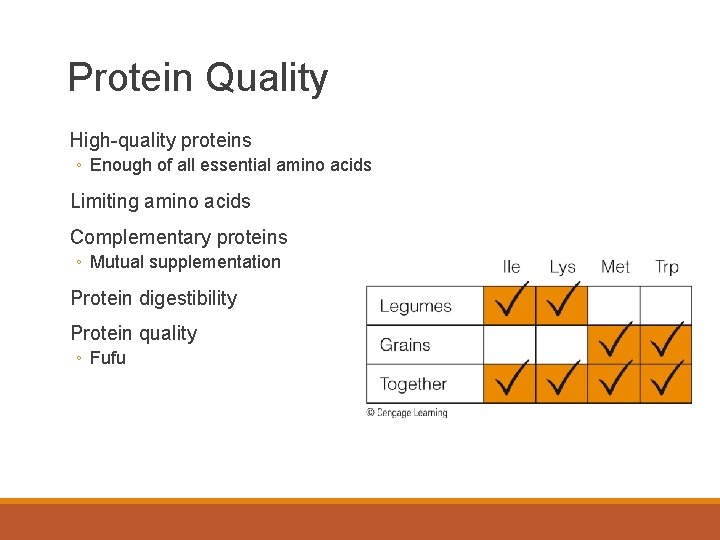
Protein Quality High-quality proteins ◦ Enough of all essential amino acids Limiting amino acids Complementary proteins ◦ Mutual supplementation Protein digestibility Protein quality ◦ Fufu
Protein Quality Complete proteins Incomplete proteins
Vegetarian and Meat. Containing Diets: What Are the Benefits and Pitfalls?
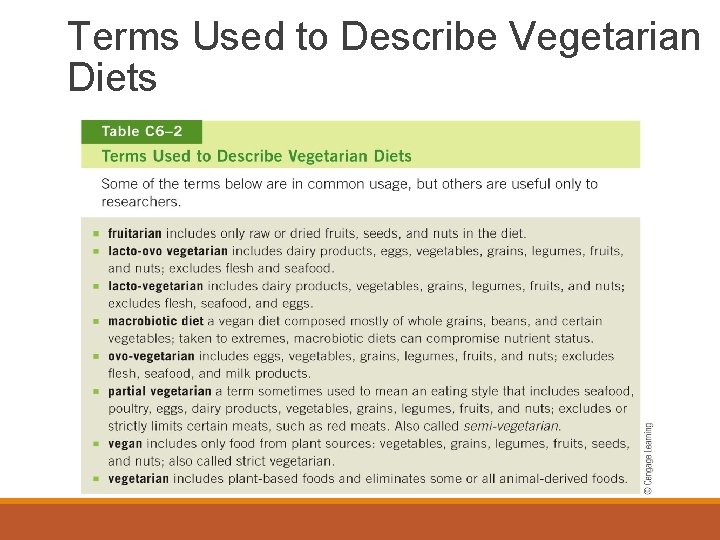
Terms Used to Describe Vegetarian Diets
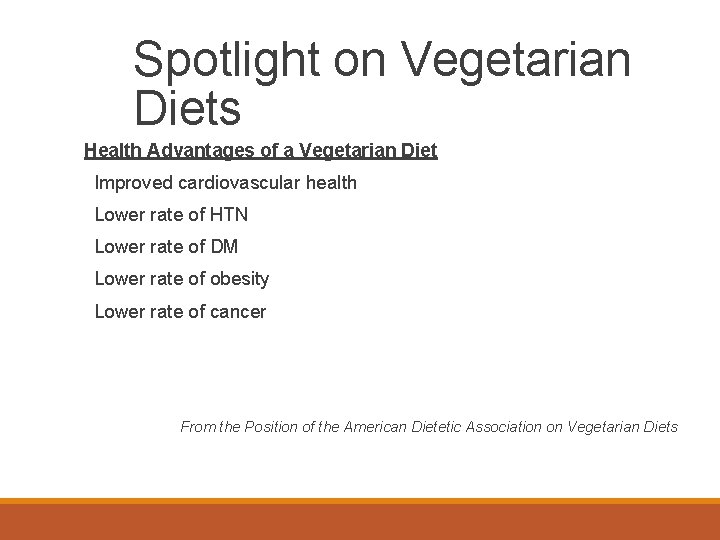
Spotlight on Vegetarian Diets Health Advantages of a Vegetarian Diet Improved cardiovascular health Lower rate of HTN Lower rate of DM Lower rate of obesity Lower rate of cancer From the Position of the American Dietetic Association on Vegetarian Diets
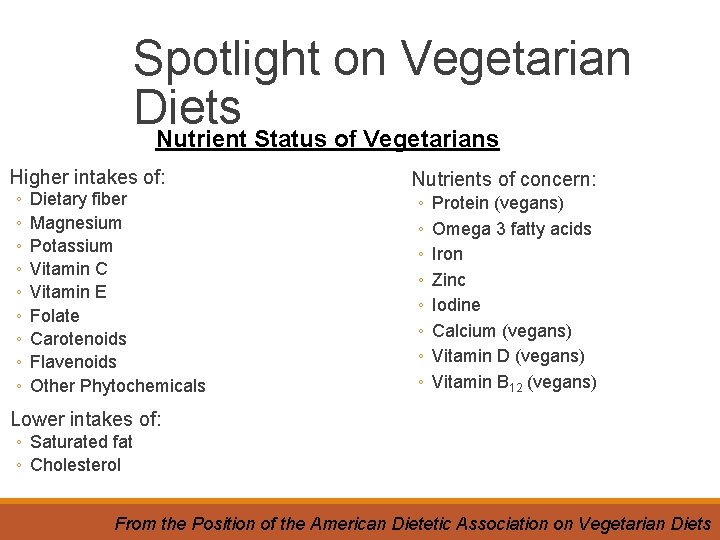
Spotlight on Vegetarian Diets Nutrient Status of Vegetarians Higher intakes of: ◦ ◦ ◦ ◦ ◦ Dietary fiber Magnesium Potassium Vitamin C Vitamin E Folate Carotenoids Flavenoids Other Phytochemicals Nutrients of concern: ◦ ◦ ◦ ◦ Protein (vegans) Omega 3 fatty acids Iron Zinc Iodine Calcium (vegans) Vitamin D (vegans) Vitamin B 12 (vegans) Lower intakes of: ◦ Saturated fat ◦ Cholesterol From the Position of the American Dietetic Association on Vegetarian Diets
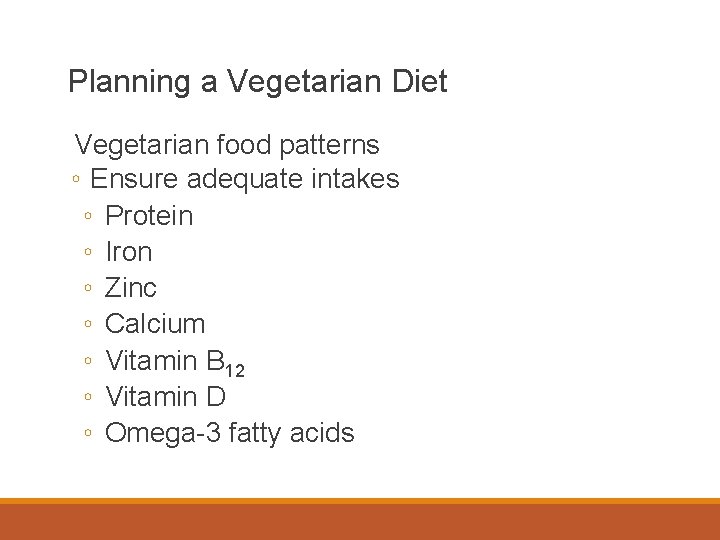
Planning a Vegetarian Diet Vegetarian food patterns ◦ Ensure adequate intakes ◦ Protein ◦ Iron ◦ Zinc ◦ Calcium ◦ Vitamin B 12 ◦ Vitamin D ◦ Omega-3 fatty acids
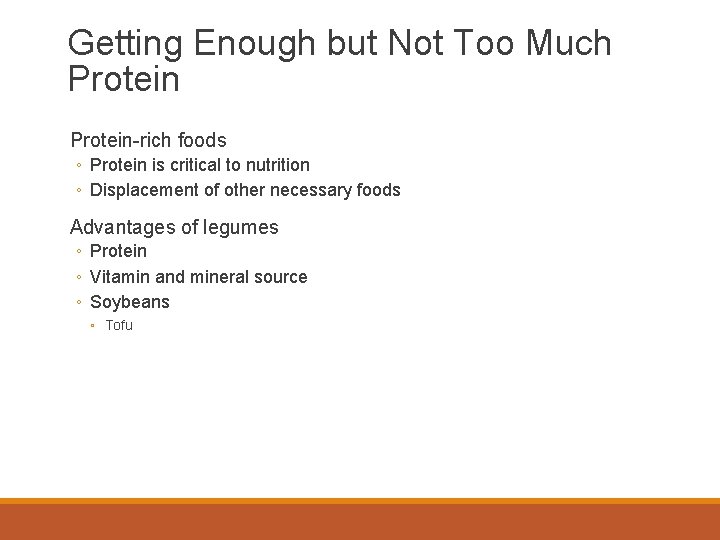
Getting Enough but Not Too Much Protein-rich foods ◦ Protein is critical to nutrition ◦ Displacement of other necessary foods Advantages of legumes ◦ Protein ◦ Vitamin and mineral source ◦ Soybeans ◦ Tofu
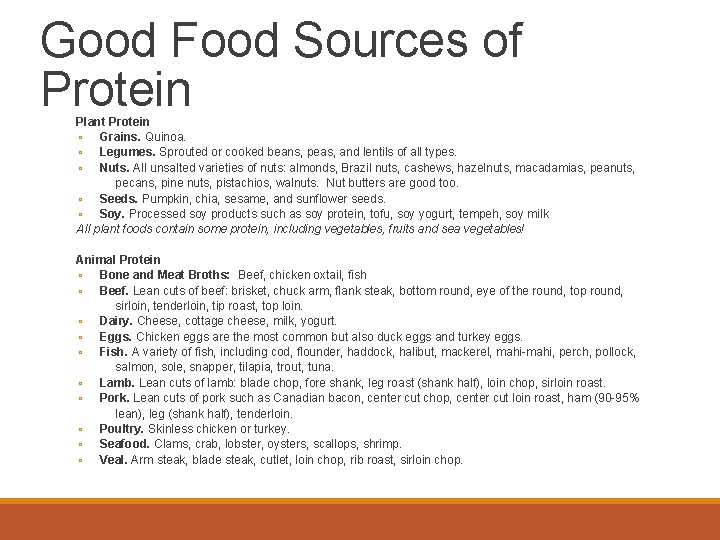
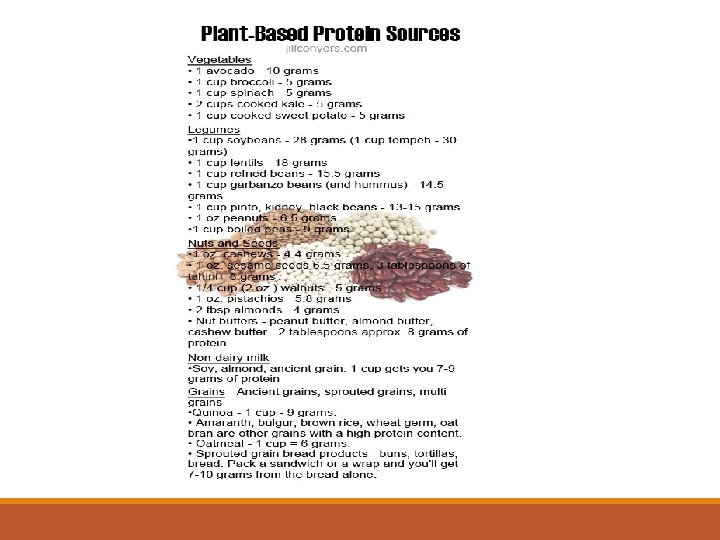
Good Food Sources of Protein Plant Protein ◦ Grains. Quinoa. ◦ Legumes. Sprouted or cooked beans, peas, and lentils of all types. ◦ Nuts. All unsalted varieties of nuts: almonds, Brazil nuts, cashews, hazelnuts, macadamias, peanuts, pecans, pine nuts, pistachios, walnuts. Nut butters are good too. ◦ Seeds. Pumpkin, chia, sesame, and sunflower seeds. ◦ Soy. Processed soy products such as soy protein, tofu, soy yogurt, tempeh, soy milk All plant foods contain some protein, including vegetables, fruits and sea vegetables! Animal Protein ◦ Bone and Meat Broths: Beef, chicken oxtail, fish ◦ Beef. Lean cuts of beef: brisket, chuck arm, flank steak, bottom round, eye of the round, top round, sirloin, tenderloin, tip roast, top loin. ◦ Dairy. Cheese, cottage cheese, milk, yogurt. ◦ Eggs. Chicken eggs are the most common but also duck eggs and turkey eggs. ◦ Fish. A variety of fish, including cod, flounder, haddock, halibut, mackerel, mahi-mahi, perch, pollock, salmon, sole, snapper, tilapia, trout, tuna. ◦ Lamb. Lean cuts of lamb: blade chop, fore shank, leg roast (shank half), loin chop, sirloin roast. ◦ Pork. Lean cuts of pork such as Canadian bacon, center cut chop, center cut loin roast, ham (90 -95% lean), leg (shank half), tenderloin. ◦ Poultry. Skinless chicken or turkey. ◦ Seafood. Clams, crab, lobster, oysters, scallops, shrimp. ◦ Veal. Arm steak, blade steak, cutlet, loin chop, rib roast, sirloin chop.
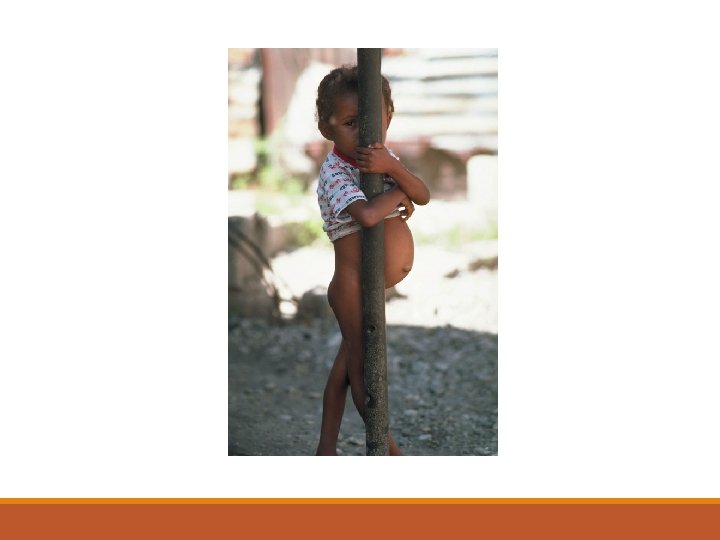
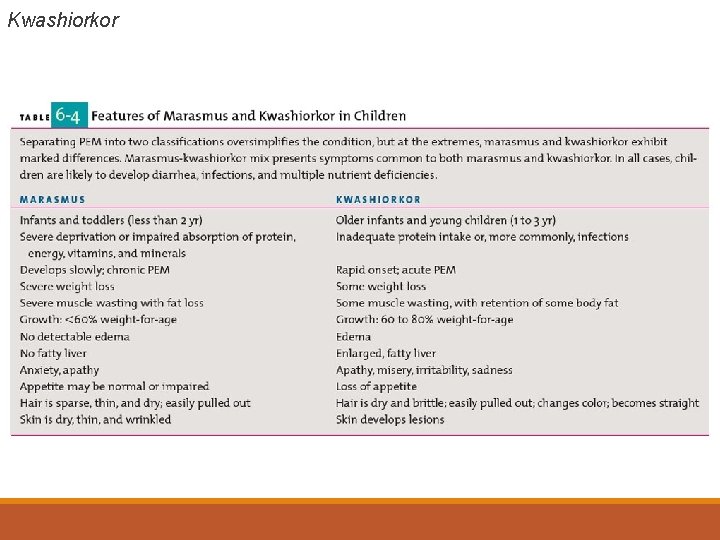
Protein & Health Too Little Protein-Energy Malnutrition (PEM) ● The world’s main form of malnutrition 1. Kwashiorkor: a deficiency disease caused by inadequate protein in the presence of adequate food energy 2. Marasmus: an energy-deficiency disease; starvation
What Happens When We Don’t Get Enough Protein? In some developing countries protein deficiency is a major cause of illness and premature death. Protein deficiency can lead to slowed mental development and reduced IQ, according to a study published in the journal Food and Nutrition. 5 In most parts of the world where protein deficiency is common, total food energy consumption is also too low - i. e. people are not getting enough food in general. Protein deficiency can lead to: ◦ ◦ ◦ ◦ ◦ Kwashiorkor: edema, muscle wasting, loss of hair pigment, skin patches Growth problems Wasting and shrinkage of muscle tissue Apathy Diarrhea Fatty liver Swollen belly Swollen legs Anemia Weaker immune system, leading to a higher susceptibility to infections and diseases
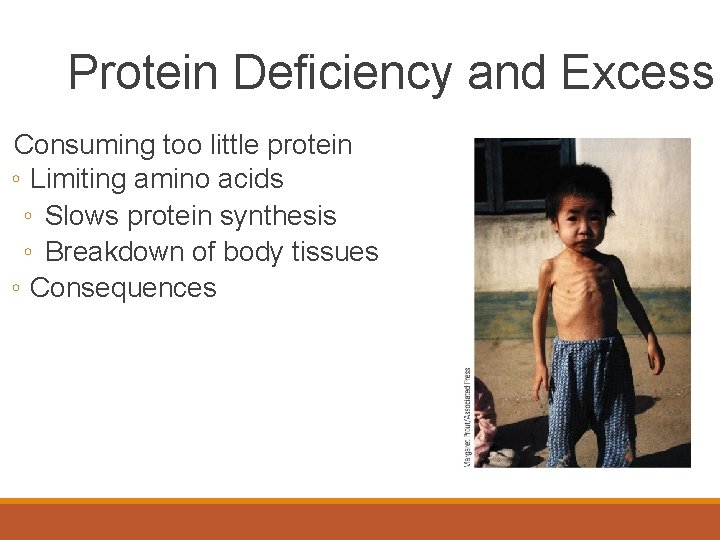
Protein Deficiency and Excess Consuming too little protein ◦ Limiting amino acids ◦ Slows protein synthesis ◦ Breakdown of body tissues ◦ Consequences
Kwashiorkor
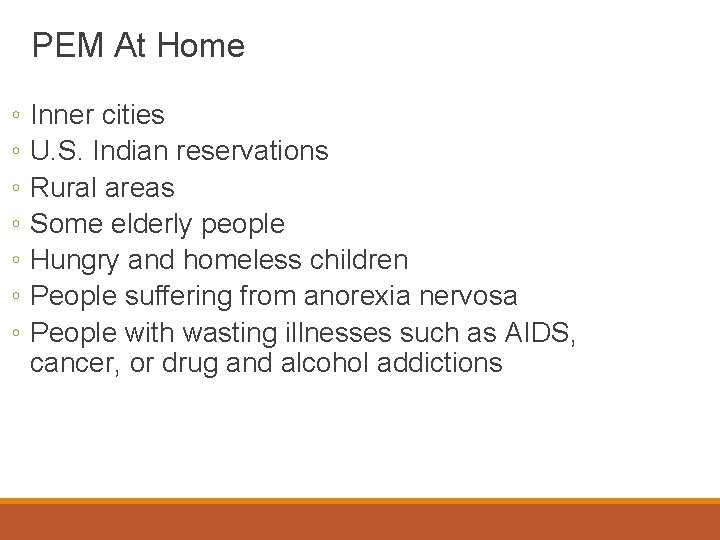
PEM At Home ◦ ◦ ◦ ◦ Inner cities U. S. Indian reservations Rural areas Some elderly people Hungry and homeless children People suffering from anorexia nervosa People with wasting illnesses such as AIDS, cancer, or drug and alcohol addictions
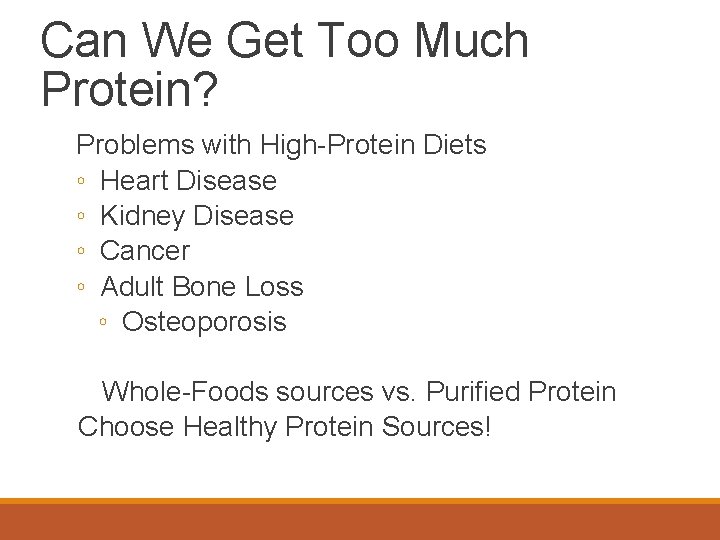
Can We Get Too Much Protein? Problems with High-Protein Diets ◦ Heart Disease ◦ Kidney Disease ◦ Cancer ◦ Adult Bone Loss ◦ Osteoporosis Whole-Foods sources vs. Purified Protein Choose Healthy Protein Sources!
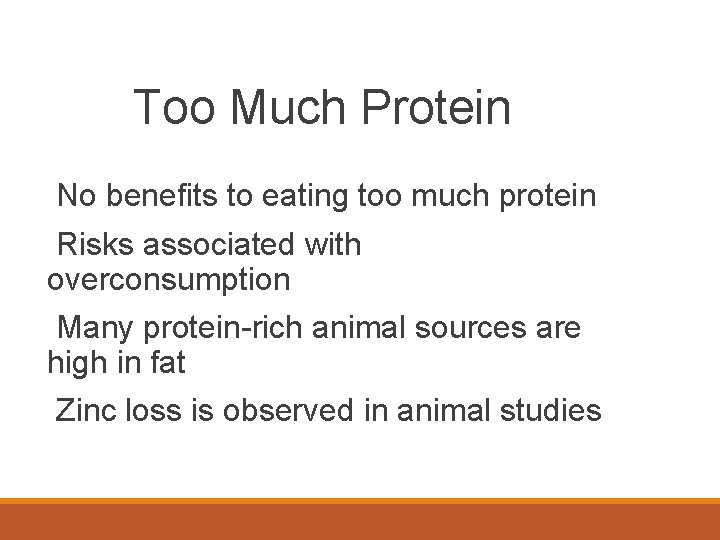
Too Much Protein No benefits to eating too much protein Risks associated with overconsumption Many protein-rich animal sources are high in fat Zinc loss is observed in animal studies
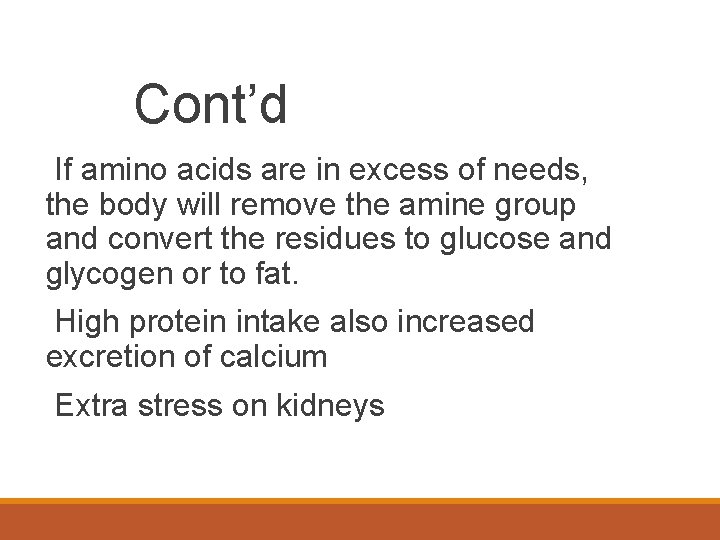
Cont’d If amino acids are in excess of needs, the body will remove the amine group and convert the residues to glucose and glycogen or to fat. High protein intake also increased excretion of calcium Extra stress on kidneys
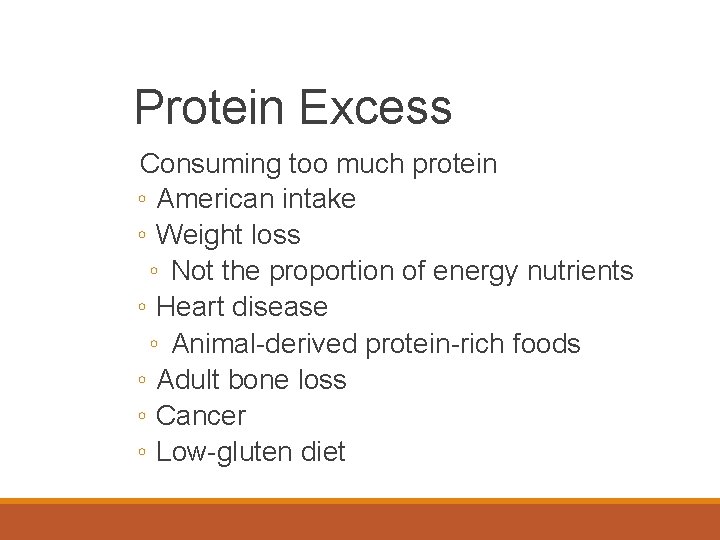
Protein Excess Consuming too much protein ◦ American intake ◦ Weight loss ◦ Not the proportion of energy nutrients ◦ Heart disease ◦ Animal-derived protein-rich foods ◦ Adult bone loss ◦ Cancer ◦ Low-gluten diet
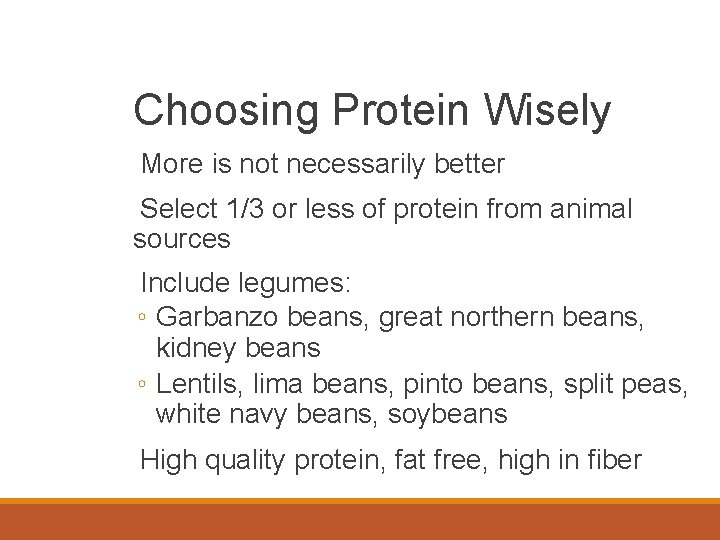
Choosing Protein Wisely More is not necessarily better Select 1/3 or less of protein from animal sources Include legumes: ◦ Garbanzo beans, great northern beans, kidney beans ◦ Lentils, lima beans, pinto beans, split peas, white navy beans, soybeans High quality protein, fat free, high in fiber