
The Properties of Sea Water What makes water





- Slides: 39
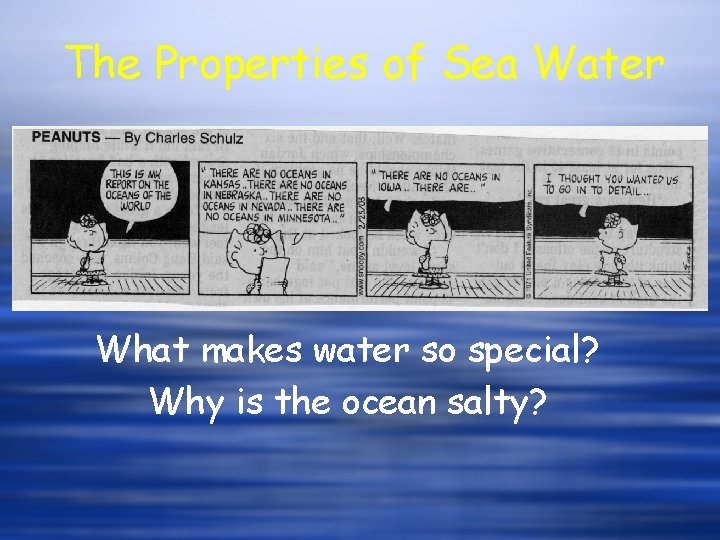
The Properties of Sea Water What makes water so special? Why is the ocean salty?
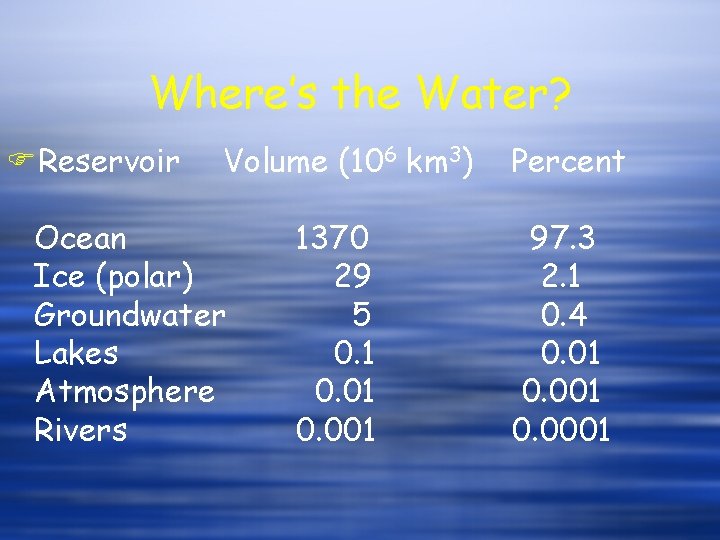
Where’s the Water? FReservoir Volume (106 km 3) Ocean Ice (polar) Groundwater Lakes Atmosphere Rivers 1370 29 5 0. 1 0. 001 Percent 97. 3 2. 1 0. 4 0. 01 0. 0001
Where did the water in the Oceans come from? FOutgassing (H 2 O, CO 2) of the Earth from volcanoes, early in its history, but continuing today FSedimentary rocks as old as 3. 8 billion years! FA much smaller amount from comets that pass by
The Water Molecule
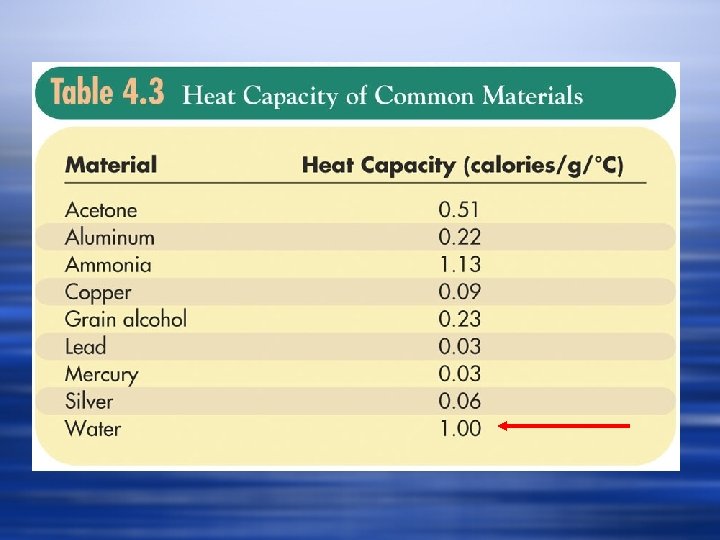
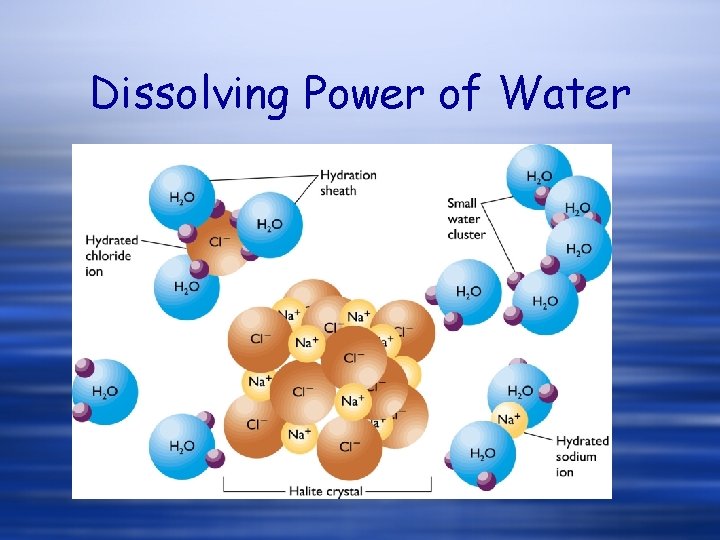
Water is a “Polar” Molecule FWeak electrical attraction makes for “sticky” molecules FThis explains its unique properties: heat capacity surface tension dissolving power
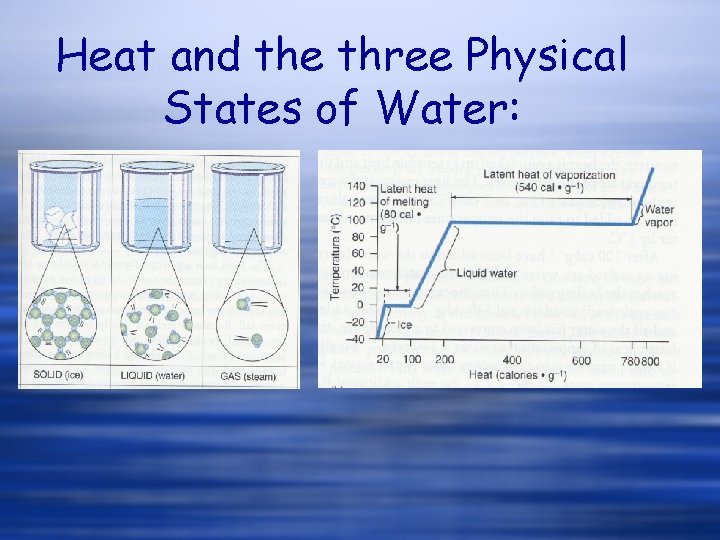
Temperature vs Heat FTemperature is a measure of how fast the molecules in a substance are moving FHeat is a measure of how much energy has to be put into (or gotten out of) a substance to change its temperature, or “state” (solid, liquid, gas)
Sensible Heat vs Latent Heat H Sensible heat is what we sense from different temperatures; energy needed to raise T (or released to decrease T) H Latent heat is the energy needed to change state (ice to water, water to vapor)
Exists in three states on the planet surface water vapor ice liquid water
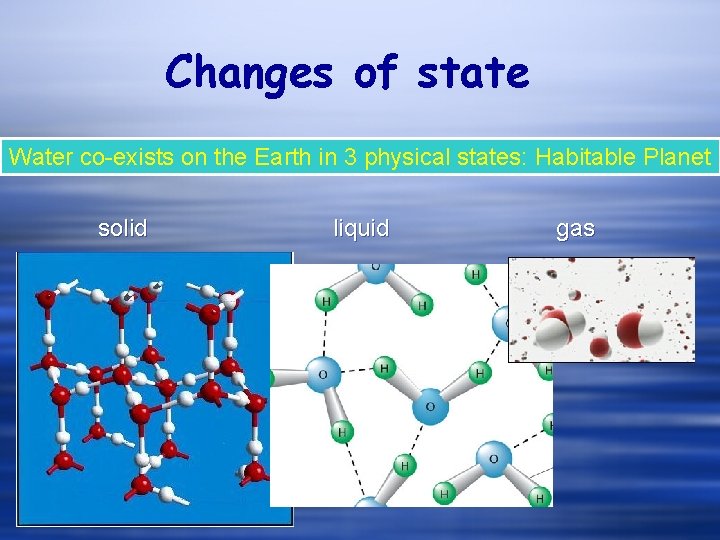
Changes of state Water co-exists on the Earth in 3 physical states: Habitable Planet solid liquid gas
Changes of state always occur at constant temperature The heat needed for a change of state is called latent heat
Heat and the three Physical States of Water:
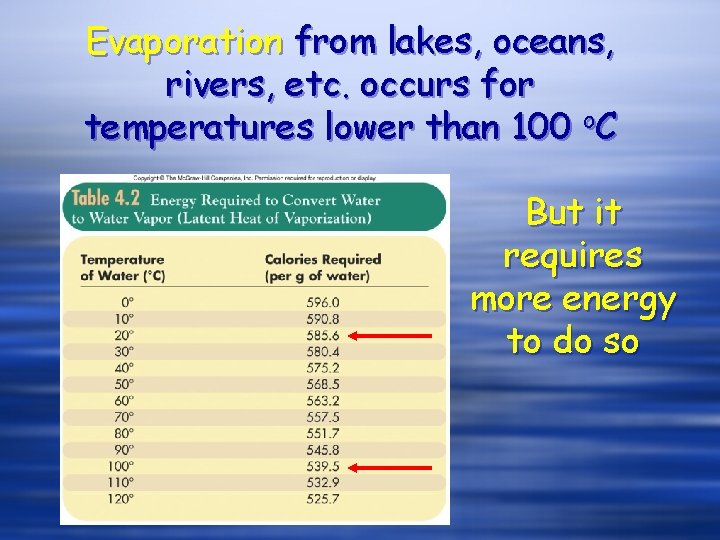
Evaporation from lakes, oceans, rivers, etc. occurs for temperatures lower than 100 o. C But it requires more energy to do so
Major source of energy to power the Earth’s weather systems Energy liberated into the atmosphere (condensation) Energy removed from surface (evaporation)
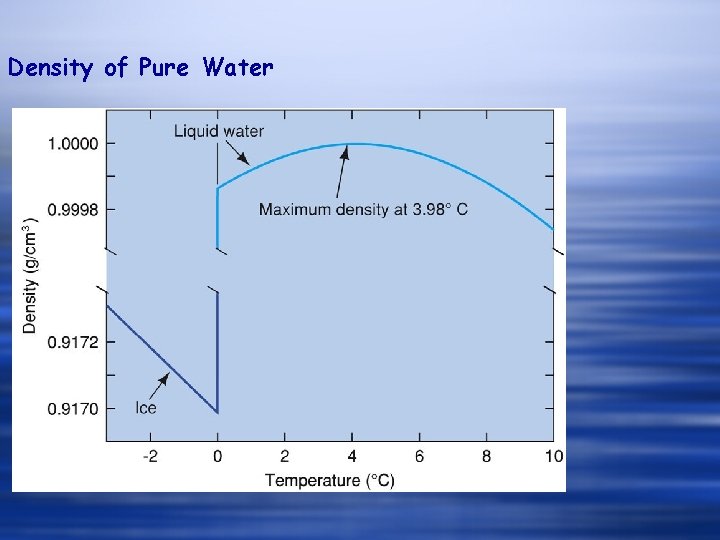
Density of Pure Water
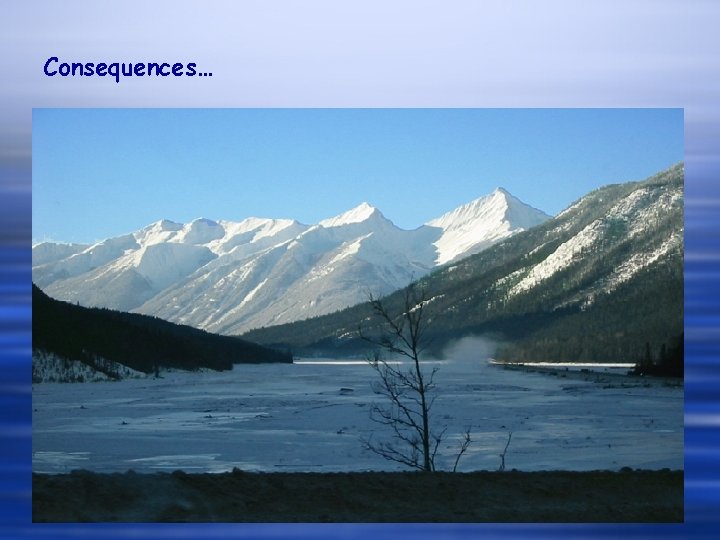
Consequences…
Consequences Bottom temperature of deep, cold lakes is always 4 o. C. Ice floats on the water surface, so fish survive. Pipes (or beer bottles) can freeze and burst.
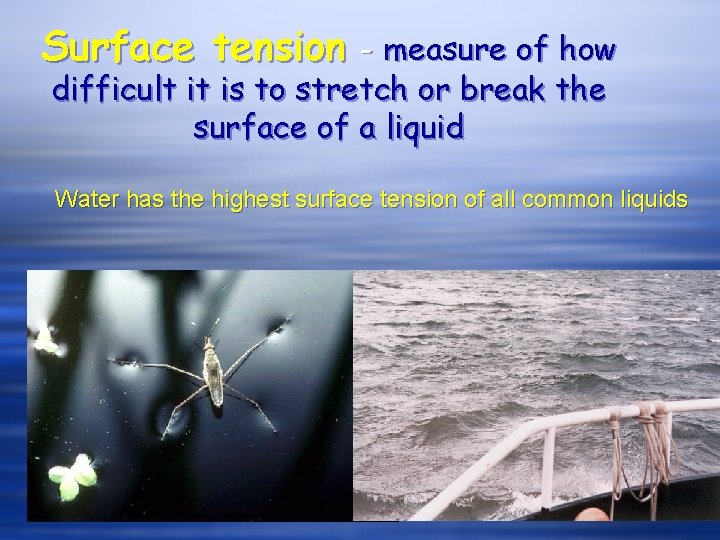
Surface tension - measure of how difficult it is to stretch or break the surface of a liquid Water has the highest surface tension of all common liquids
Special Properties of Water FDensity of solid is less than liquid FMelting and boiling points are very high FHighest heat capacity FHigh heat of fusion and vaporization FTremendous dissolving power
Dissolving Power of Water
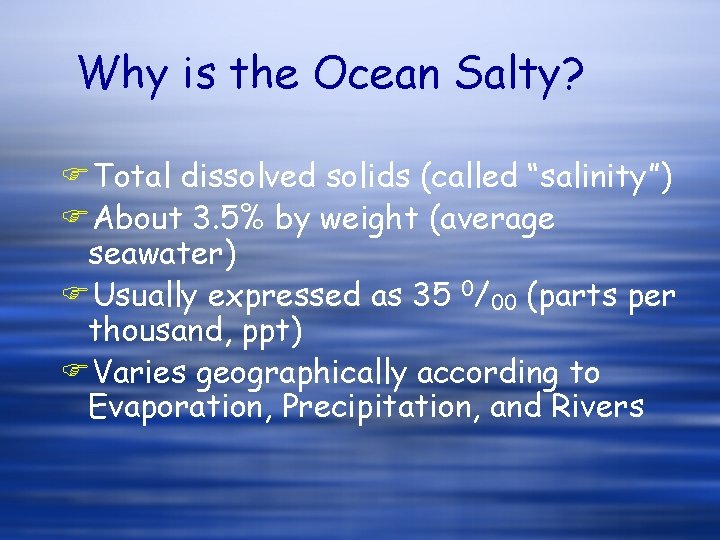
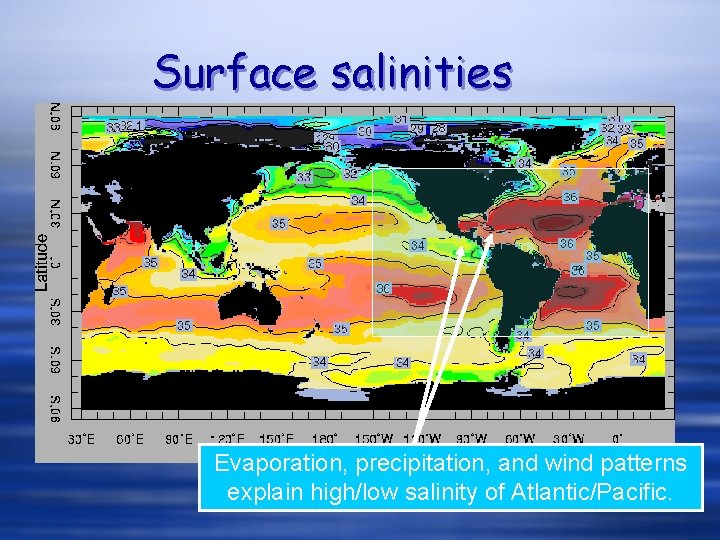
Why is the Ocean Salty? FTotal dissolved solids (called “salinity”) FAbout 3. 5% by weight (average seawater) FUsually expressed as 35 0/00 (parts per thousand, ppt) FVaries geographically according to Evaporation, Precipitation, and Rivers
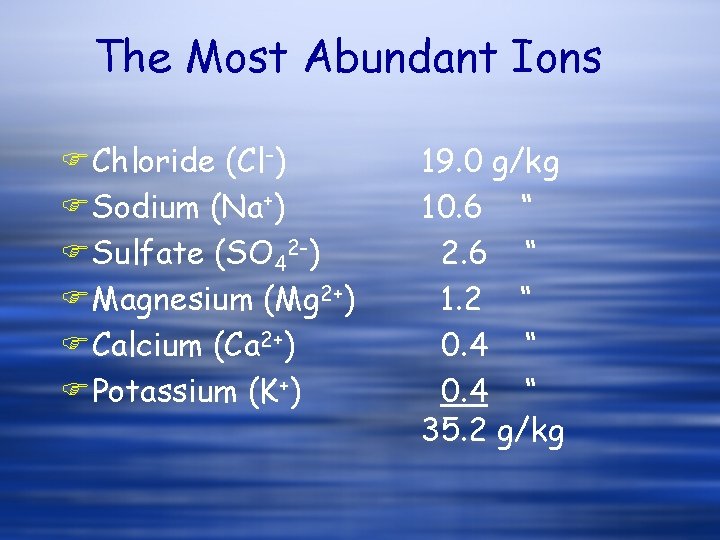
The Most Abundant Ions FChloride (Cl-) FSodium (Na+) FSulfate (SO 42 -) FMagnesium (Mg 2+) FCalcium (Ca 2+) FPotassium (K+) 19. 0 g/kg 10. 6 “ 2. 6 “ 1. 2 “ 0. 4 “ 35. 2 g/kg
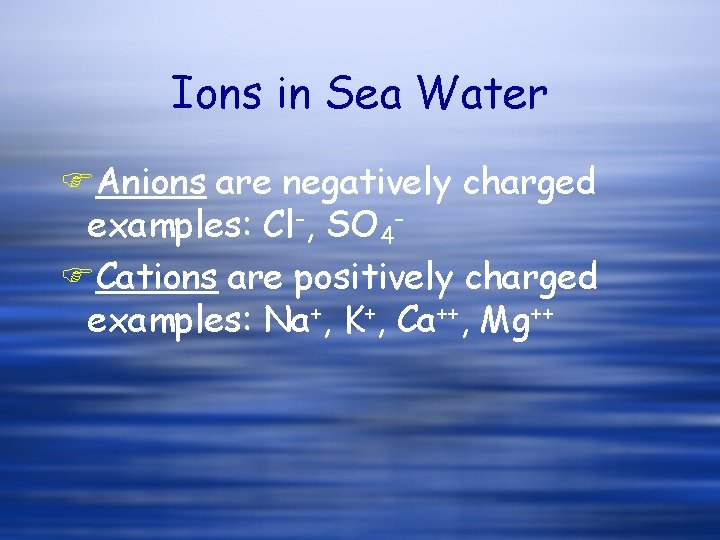
Ions in Sea Water FAnions are negatively charged examples: Cl-, SO 4 FCations are positively charged examples: Na+, K+, Ca++, Mg++
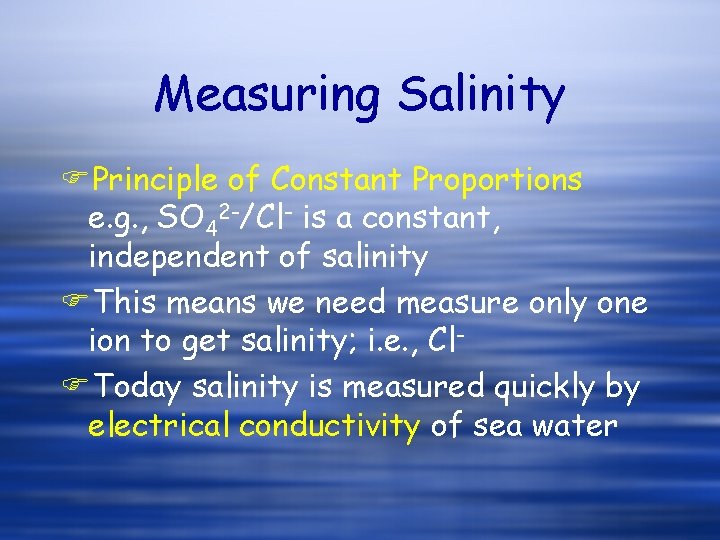
Measuring Salinity FPrinciple of Constant Proportions e. g. , SO 42 -/Cl- is a constant, independent of salinity FThis means we need measure only one ion to get salinity; i. e. , Cl. FToday salinity is measured quickly by electrical conductivity of sea water
Where does Salinity come from? FTerrigenous input (rivers, dust, ash) FHydrothermal vents FDissolving old sediments (evaporites) FSteady State: Inputs equal Outputs
Weathering of Rocks FH 2 O + CO 2 ---> H 2 CO 3 (carbonic acid) F“acid” rain, p. H ~4 -5; environmental concerns (HCl, HF, H 2 SO 4) FDissolves rock minerals into ions, which travel down rivers to the ocean
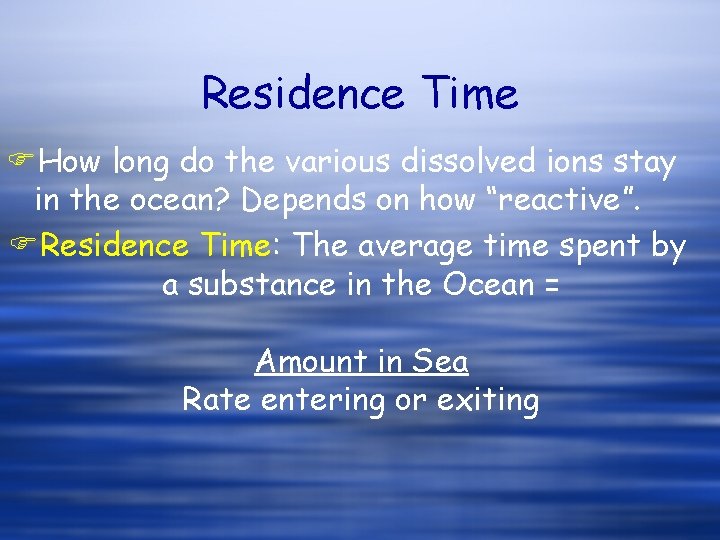
Residence Time FHow long do the various dissolved ions stay in the ocean? Depends on how “reactive”. FResidence Time: The average time spent by a substance in the Ocean = Amount in Sea Rate entering or exiting
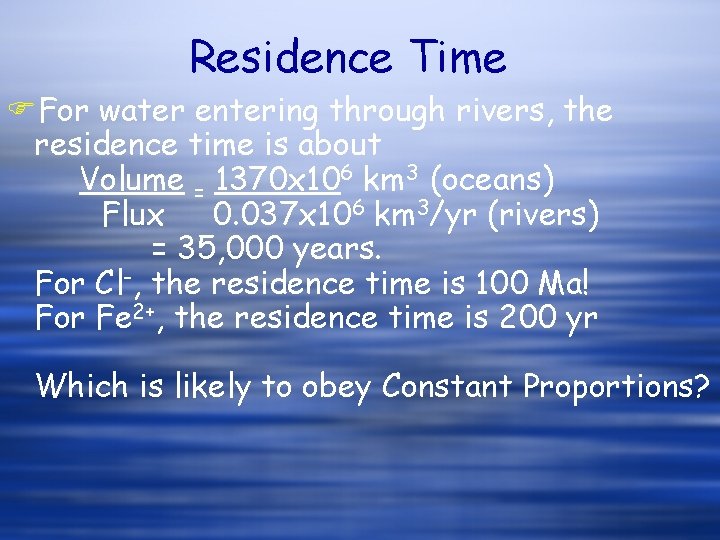
Residence Time FFor water entering through rivers, the residence time is about Volume = 1370 x 106 km 3 (oceans) Flux 0. 037 x 106 km 3/yr (rivers) = 35, 000 years. For Cl-, the residence time is 100 Ma! For Fe 2+, the residence time is 200 yr Which is likely to obey Constant Proportions?
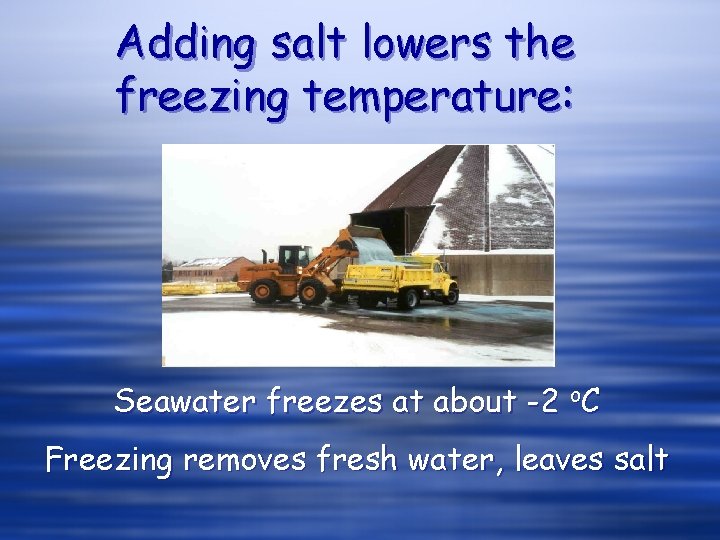
Adding salt lowers the freezing temperature: Seawater freezes at about -2 o. C Freezing removes fresh water, leaves salt
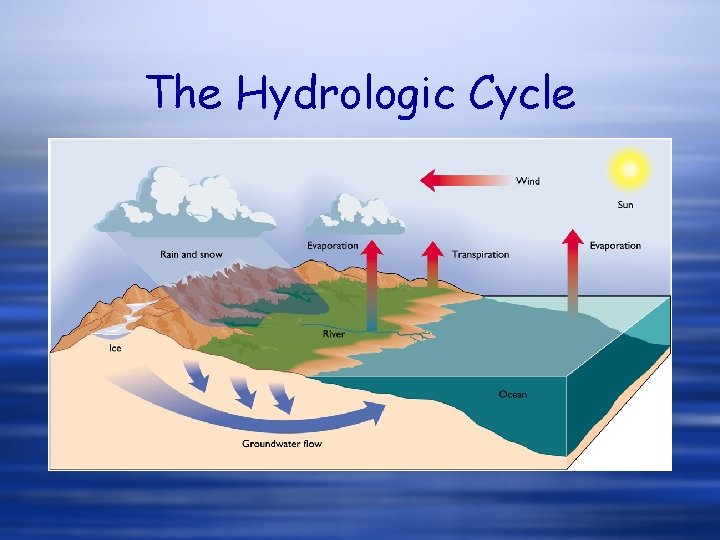
The Hydrologic Cycle
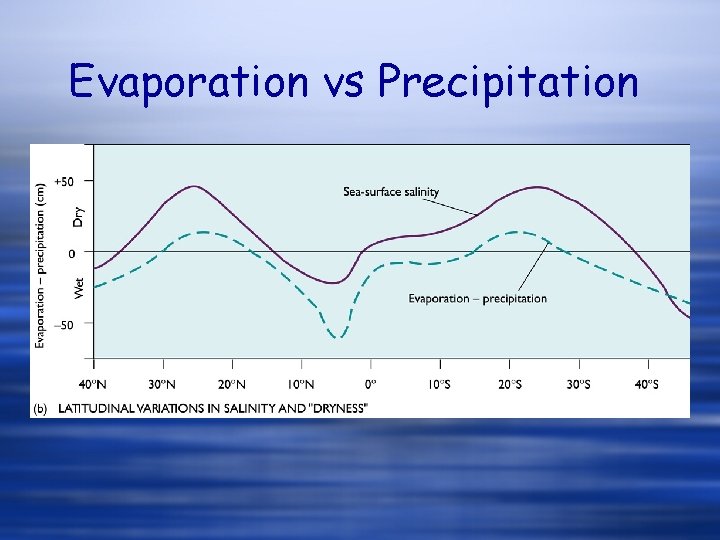
Evaporation - Precipitation FOver the oceans, evaporation exceeds precipitation FThe balance is restored by rain over the continents, returning water via rivers
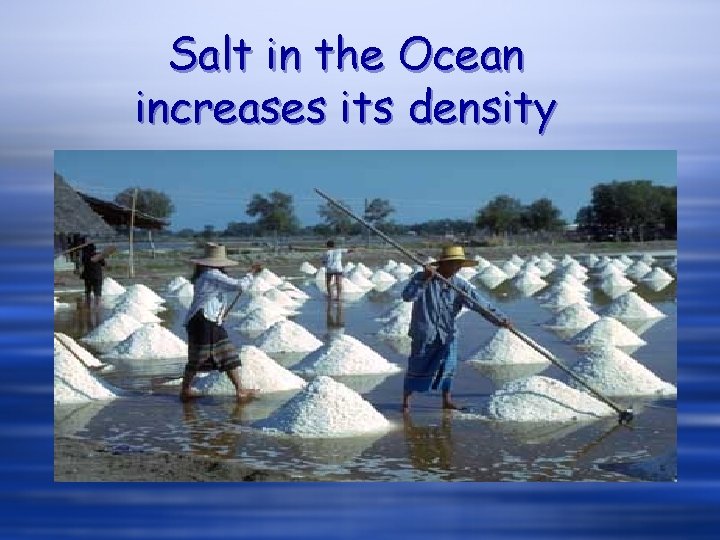
Salt in the Ocean increases its density
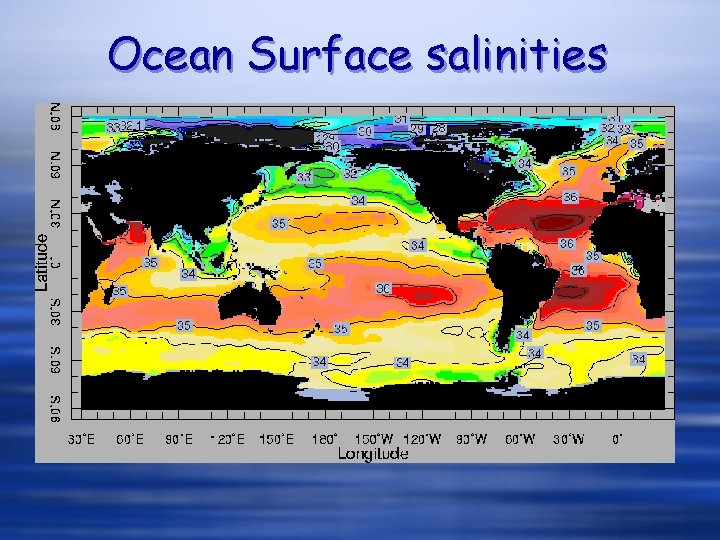
Ocean Surface salinities
Evaporation vs Precipitation
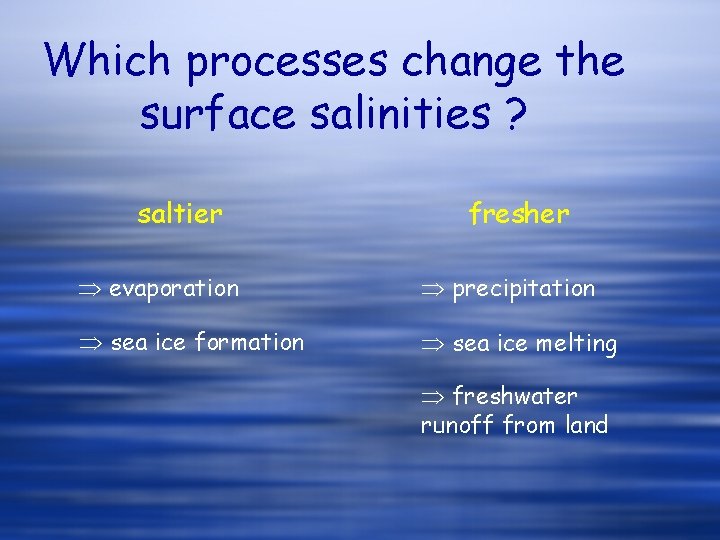
Which processes change the surface salinities ? saltier fresher evaporation precipitation sea ice formation sea ice melting freshwater runoff from land
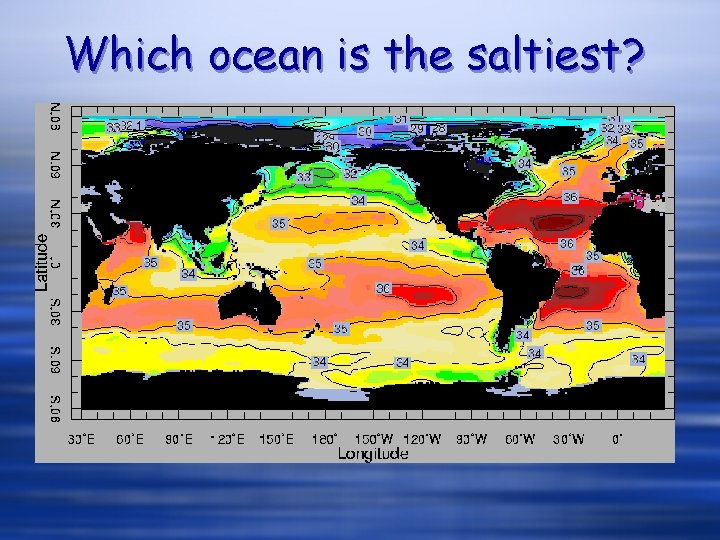
Which ocean is the saltiest?
The Atlantic! Ø In spite of the fact that many BIG rivers empty into the Atlantic than the Pacific, the Atlantic is actually significantly saltier because of the evaporation-precipitation cycle and the Isthmus of Panama plus input from the Mediterranean Sea
Surface salinities Evaporation, precipitation, and wind patterns explain high/low salinity of Atlantic/Pacific.
Summary: èWater is a polar molecule -- unique properties (melting pt, heat capacity, dissolving power, water denser than ice) èSalinity is the total dissolved solids èSalinity in the surface ocean varies by Evaporation - Precipitation èPrinciple of Constant Proportions èResidence Time in the Oceans