
The Properties of Matter Characteristic vs Non characteristic


- Slides: 19
The Properties of Matter
Characteristic vs. Non characteristic properties A characteristic property is something that is specific to that substance. (i. e. Density, melting point, boiling point) Non-characteristic properties are common to many substances. (i. e. states of matter, temperature, volume, mass, acidity and alkalinity)
Terminology States of matter : (solid, liquid or gas) Mass : the quantity of matter of the substance Volume: the space that matter occupies Temperature: quantity of heat an object or matter contains Acidity and alkalinity : determines whether a substance is an acid, a base or neutral in its chemical composition.
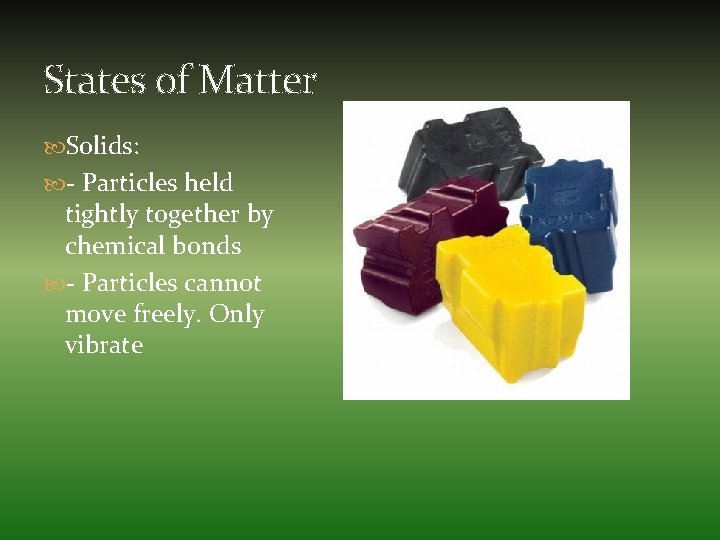
States of Matter Solids: - Particles held tightly together by chemical bonds - Particles cannot move freely. Only vibrate
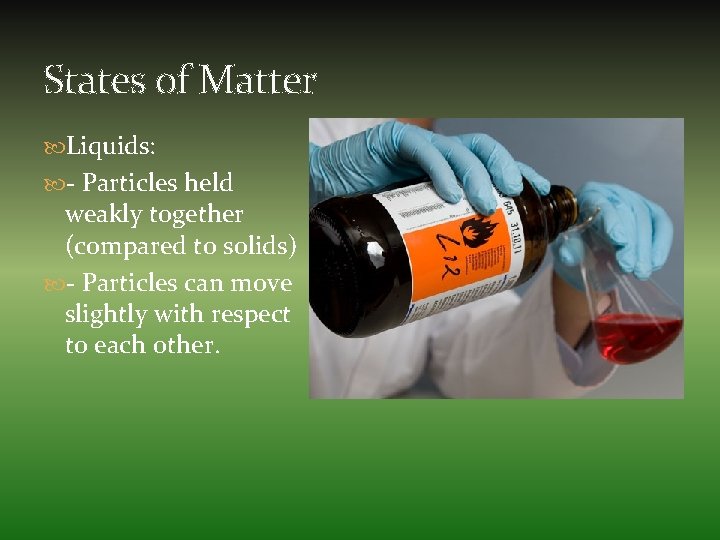
States of Matter Liquids: - Particles held weakly together (compared to solids) - Particles can move slightly with respect to each other.
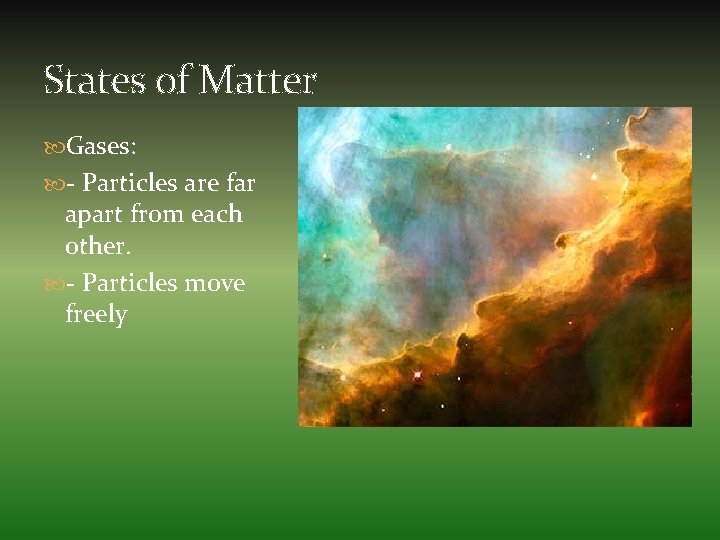
States of Matter Gases: - Particles are far apart from each other. - Particles move freely
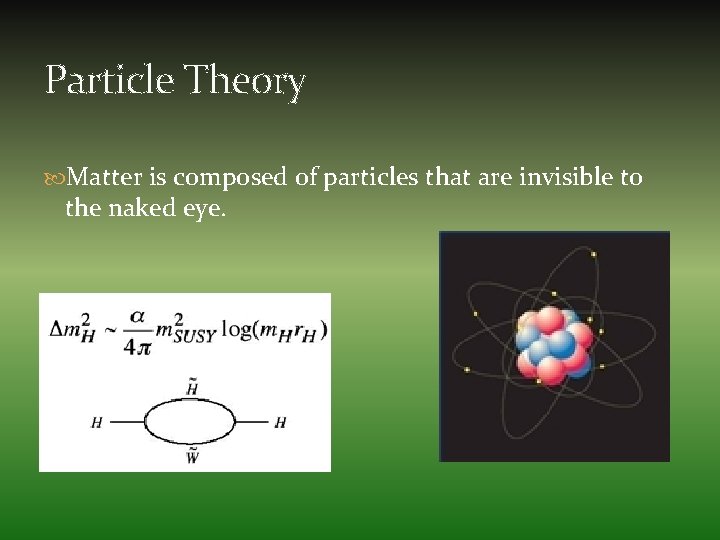
Particle Theory Matter is composed of particles that are invisible to the naked eye.
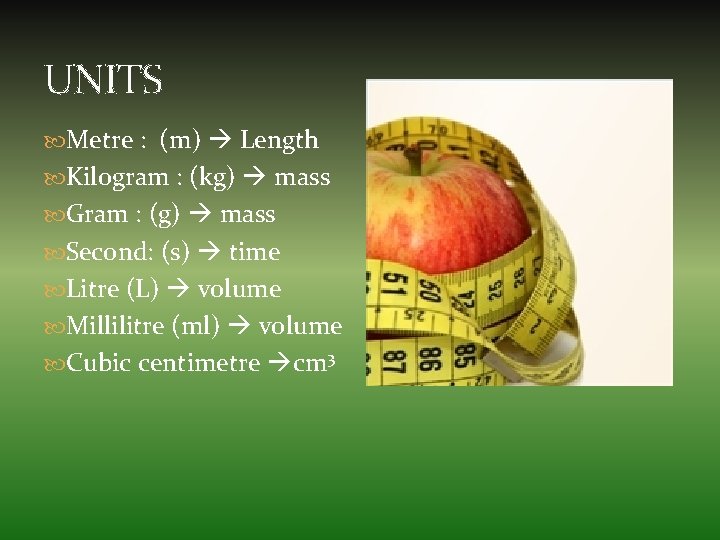
UNITS Metre : (m) Length Kilogram : (kg) mass Gram : (g) mass Second: (s) time Litre (L) volume Millilitre (ml) volume Cubic centimetre cm 3
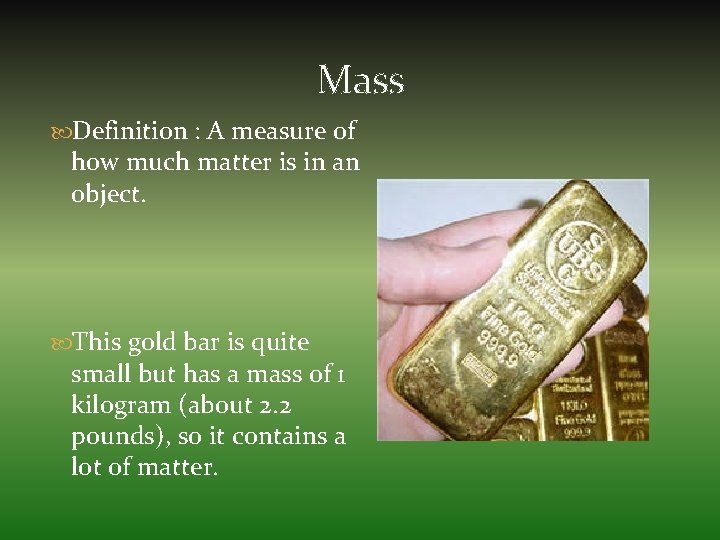
Mass Definition : A measure of how much matter is in an object. This gold bar is quite small but has a mass of 1 kilogram (about 2. 2 pounds), so it contains a lot of matter.
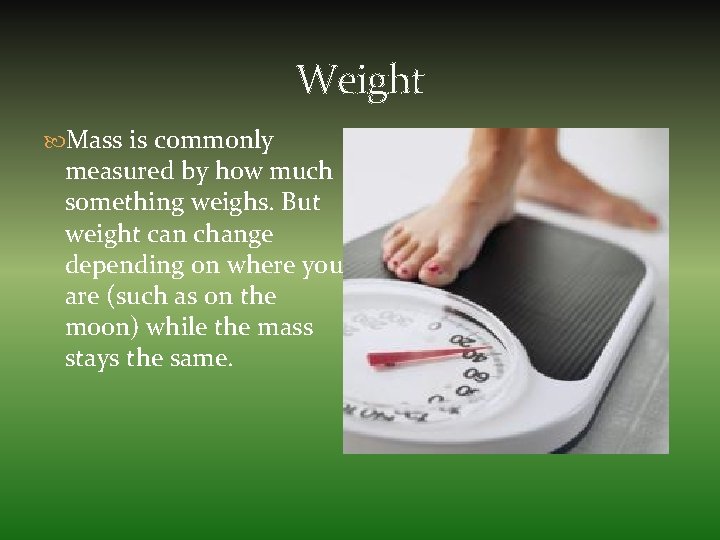
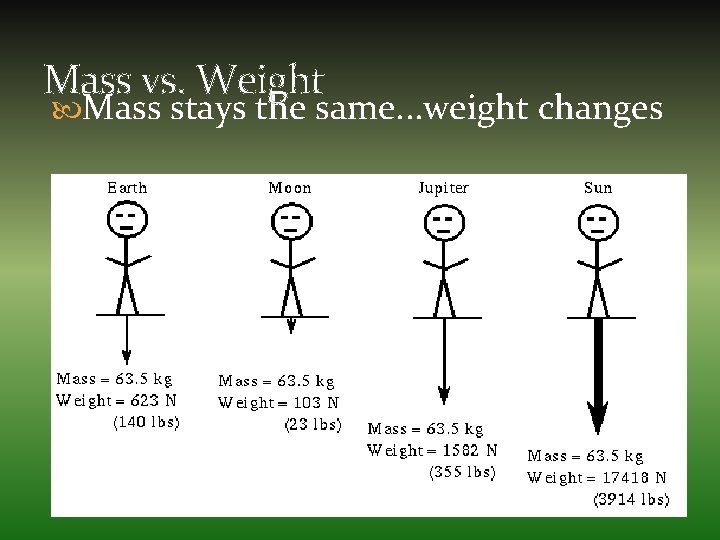
Weight Mass is commonly measured by how much something weighs. But weight can change depending on where you are (such as on the moon) while the mass stays the same.
Mass vs. Weight Mass stays the same. . . weight changes
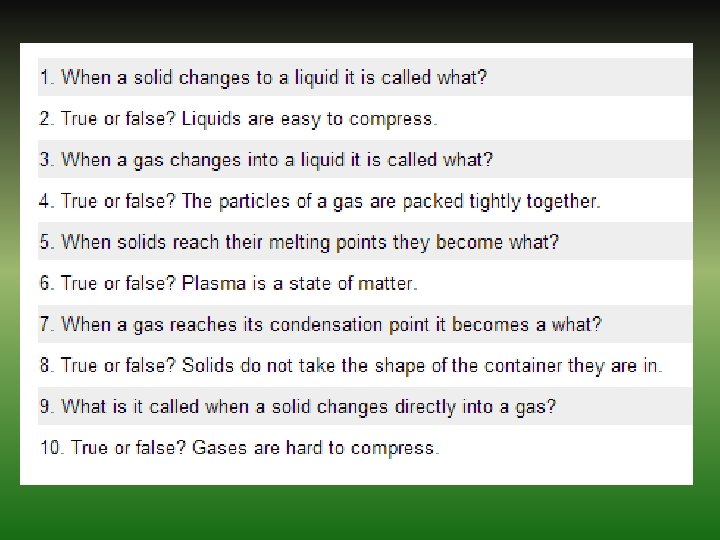
Quiz! With a partner answer the following questions relating to the states of matter. I will give you 15 minutes to write down your answers and then I will randomly pick a couple of teams to discuss their answers.
Mass vs. Volume Question: Can two objects with the same volume have different masses?
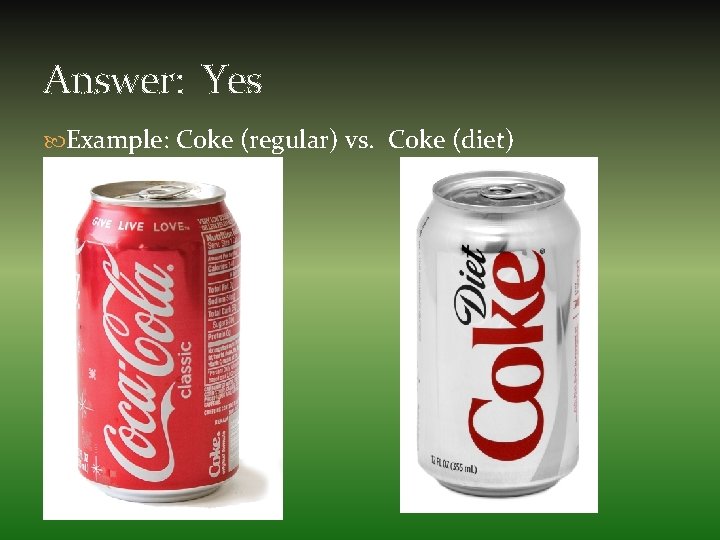
Answer: Yes Example: Coke (regular) vs. Coke (diet)
How? Two objects can have the same volume and different masses because while they might occupy the same amount of space they can have very different amounts of matter within that given space.
Brainstorm With a partner write down 4 examples of how some objects can have the same volume, but different masses. I will give you 8 minutes to write down your answers then I will randomly pick a few pairs to discuss their answers.
Science!