
The Progressive Presidents New areas of reform included
- Slides: 32
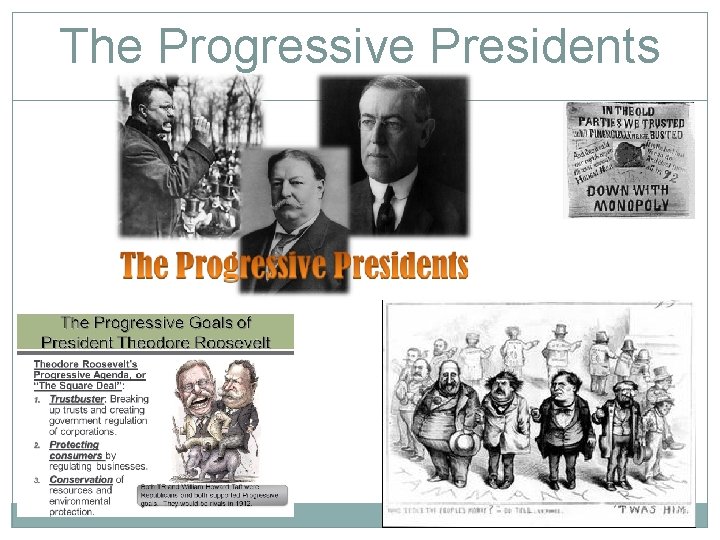
The Progressive Presidents
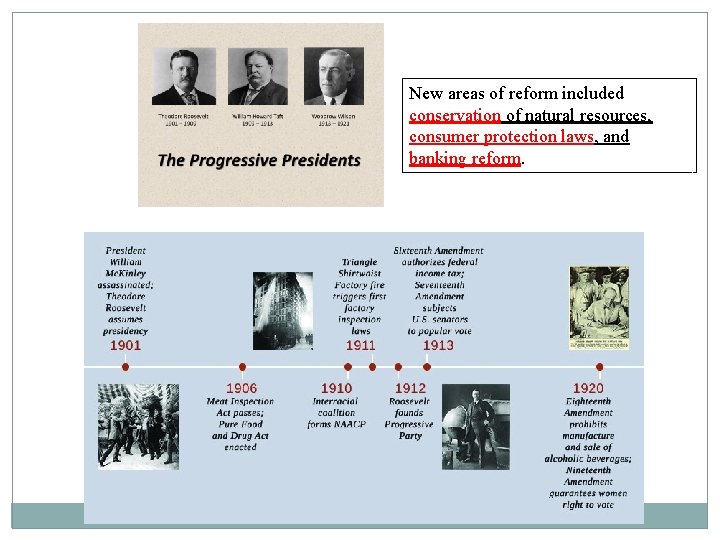
New areas of reform included conservation of natural resources, consumer protection laws, and banking reform.
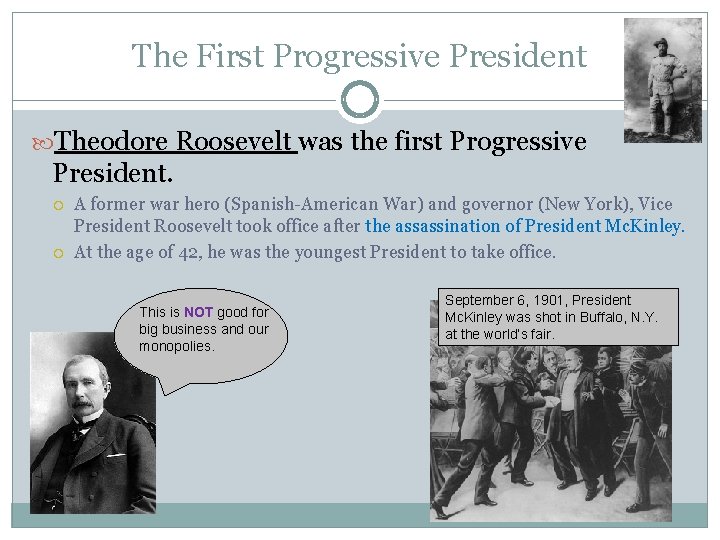
The First Progressive President Theodore Roosevelt was the first Progressive President. A former war hero (Spanish-American War) and governor (New York), Vice President Roosevelt took office after the assassination of President Mc. Kinley. At the age of 42, he was the youngest President to take office. This is NOT good for big business and our monopolies. September 6, 1901, President Mc. Kinley was shot in Buffalo, N. Y. at the world’s fair.
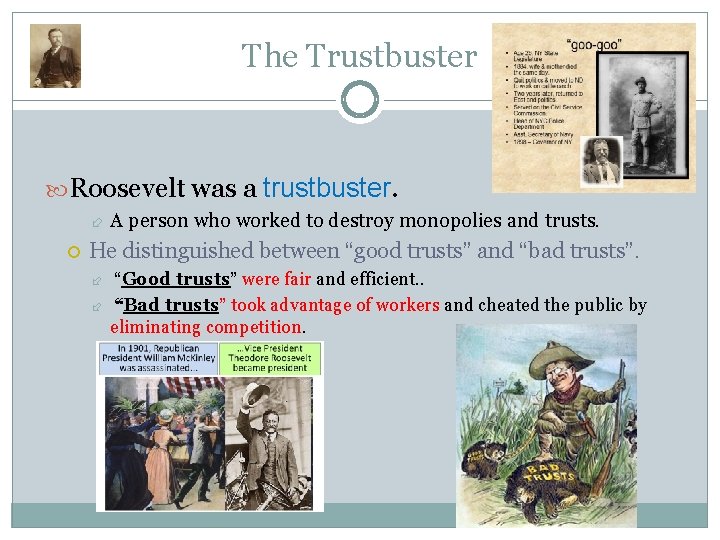
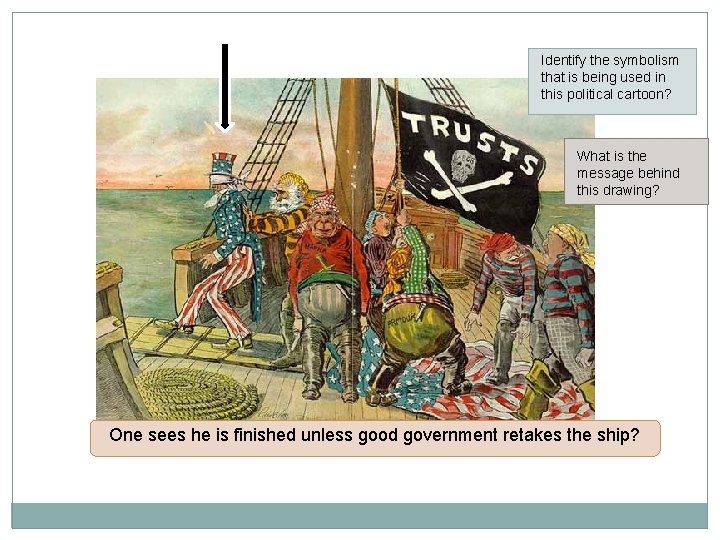
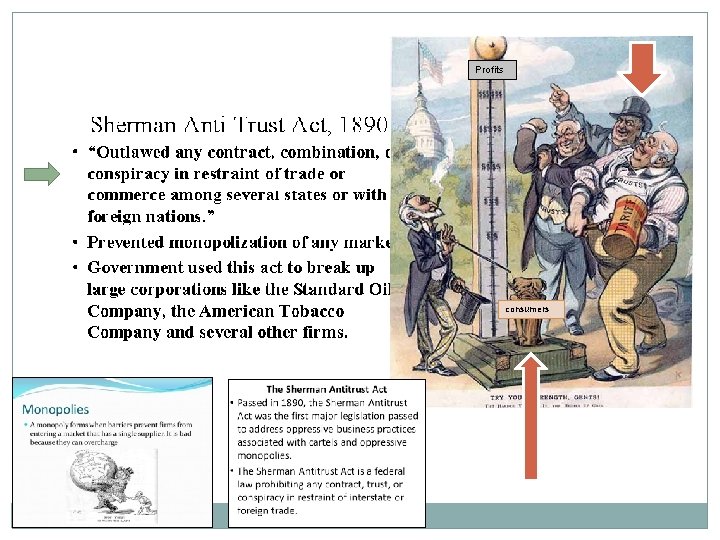
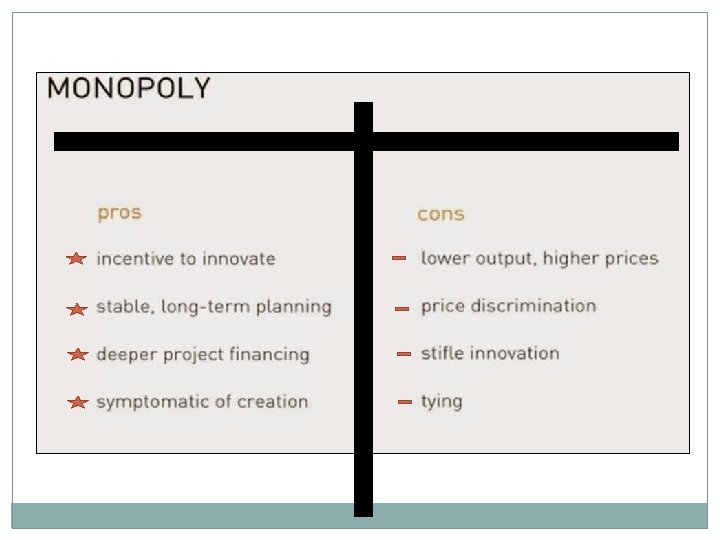
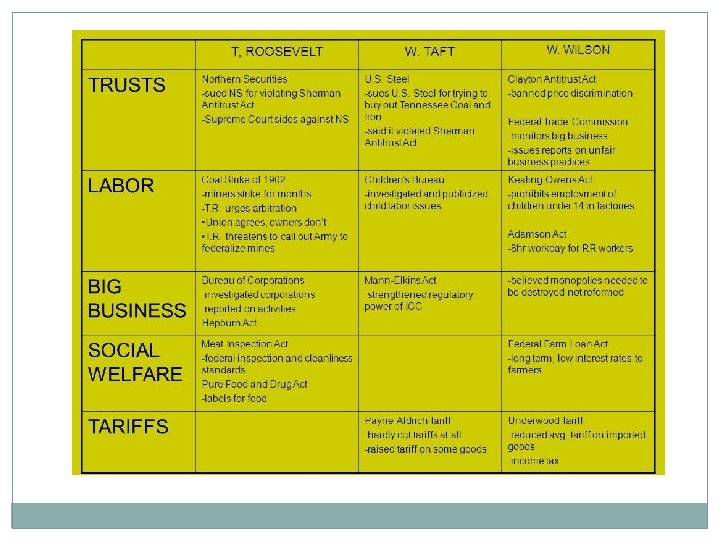
The Trustbuster Roosevelt was a trustbuster. A person who worked to destroy monopolies and trusts. He distinguished between “good trusts” and “bad trusts”. “Good trusts” were fair and efficient. . “Bad trusts” took advantage of workers and cheated the public by eliminating competition.
Identify the symbolism that is being used in this political cartoon? What is the message behind this drawing? One sees he is finished unless good government retakes the ship?
Profits consumers
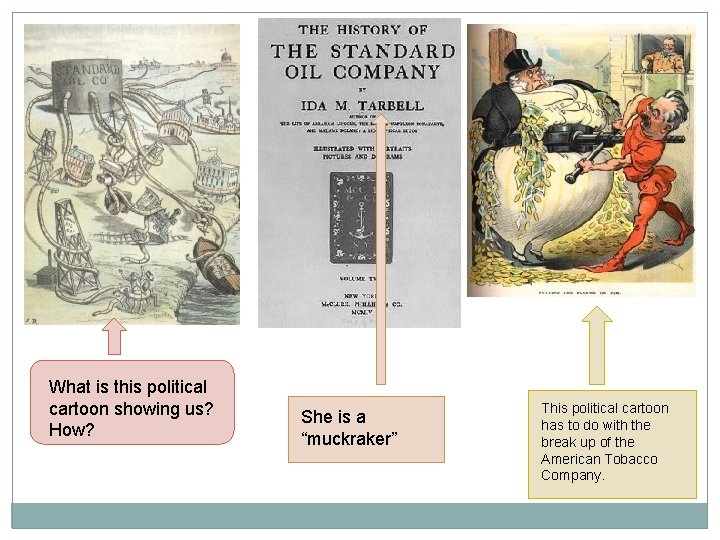
I Mean Reform Roosevelt argued that the government must control bad trusts or break them up. In a case involving the Northern Securities trust (1904), the Supreme Court used the Sherman Antitrust Act. Trusts can not limit free trade, they must allow competition. The Northern Securities trust had been formed to control competition among railroads. The decision was a victory for the PROGRESSIVES. For the first time, the Sherman Antitrust Act had been used to break up trusts, NOT unions. Roosevelt later launched suits against other trusts, including Standard Oil and the American Tobacco Company.
What is this political cartoon showing us? How? She is a “muckraker” This political cartoon has to do with the break up of the American Tobacco Company.
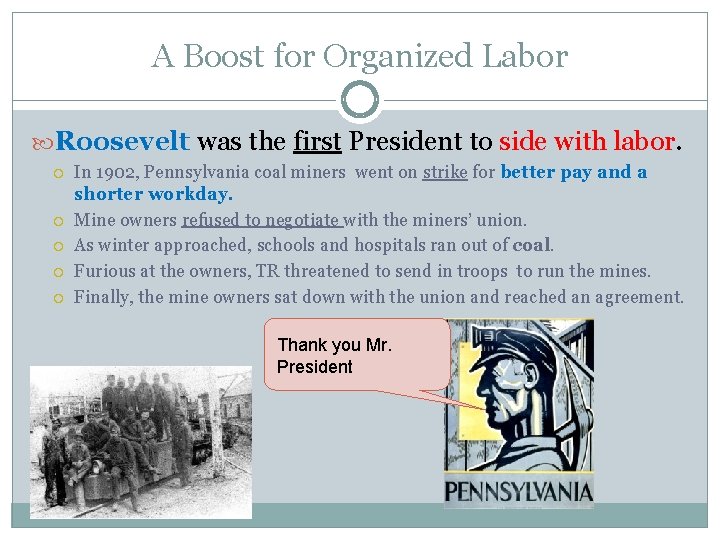
A Boost for Organized Labor Roosevelt was the first President to side with labor. In 1902, Pennsylvania coal miners went on strike for better pay and a shorter workday. Mine owners refused to negotiate with the miners’ union. As winter approached, schools and hospitals ran out of coal. Furious at the owners, TR threatened to send in troops to run the mines. Finally, the mine owners sat down with the union and reached an agreement. Thank you Mr. President
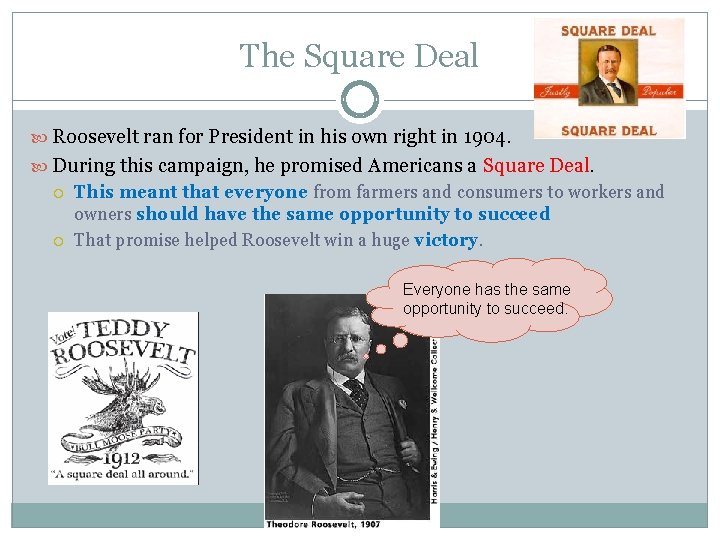
The Square Deal Roosevelt ran for President in his own right in 1904. During this campaign, he promised Americans a Square Deal. This meant that everyone from farmers and consumers to workers and owners should have the same opportunity to succeed That promise helped Roosevelt win a huge victory. Everyone has the same opportunity to succeed.
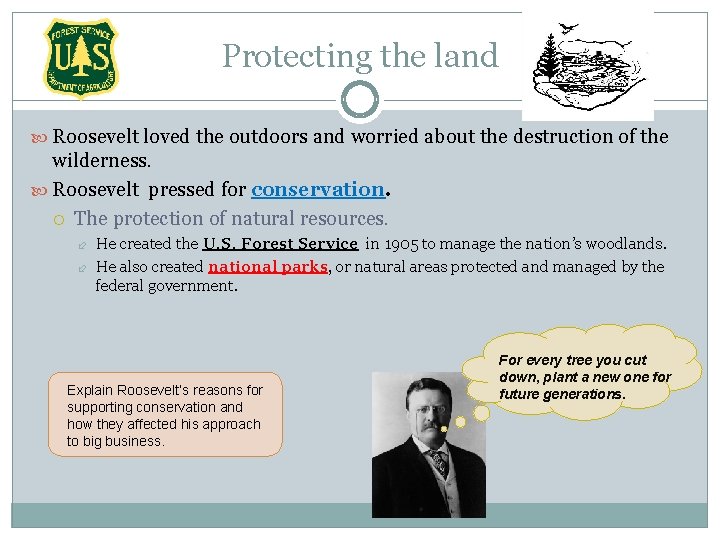
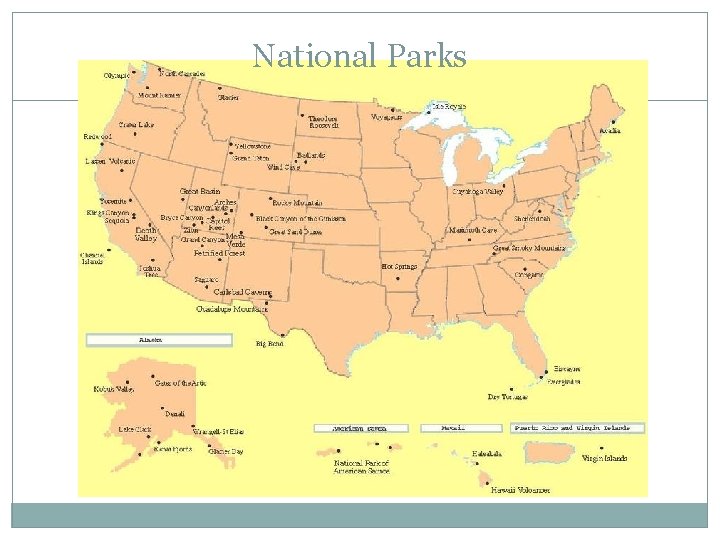
Protecting the land Roosevelt loved the outdoors and worried about the destruction of the wilderness. Roosevelt pressed for conservation. The protection of natural resources. He created the U. S. Forest Service in 1905 to manage the nation’s woodlands. He also created national parks, or natural areas protected and managed by the federal government. Explain Roosevelt’s reasons for supporting conservation and how they affected his approach to big business. For every tree you cut down, plant a new one for future generations.
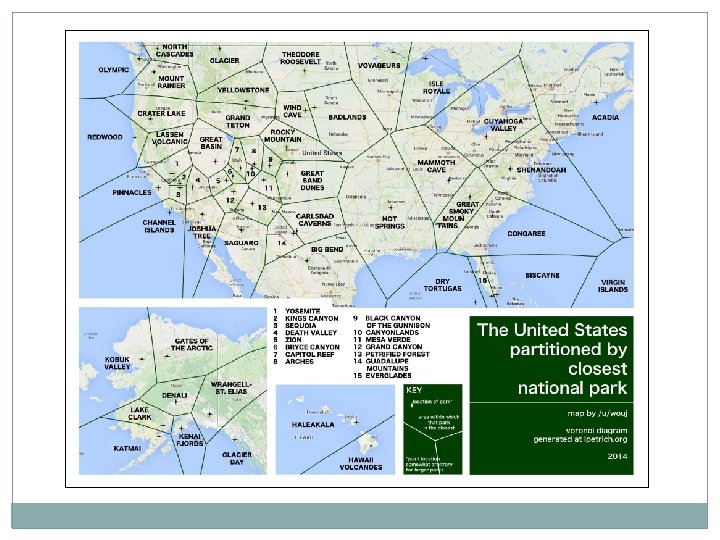
National Parks
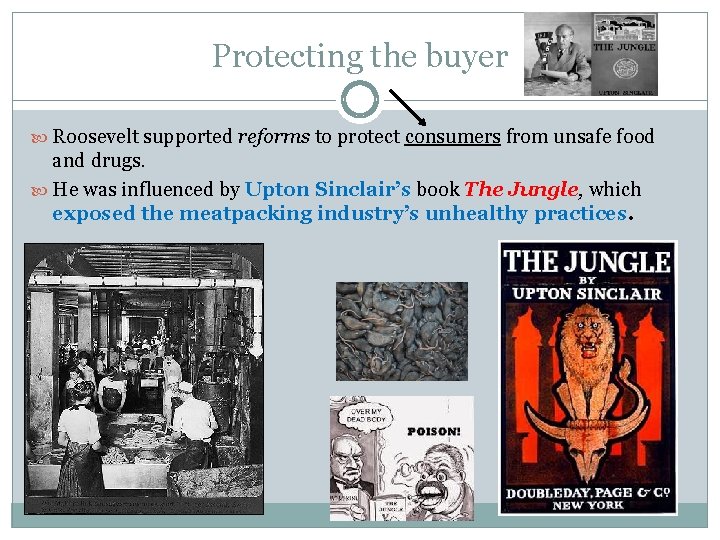
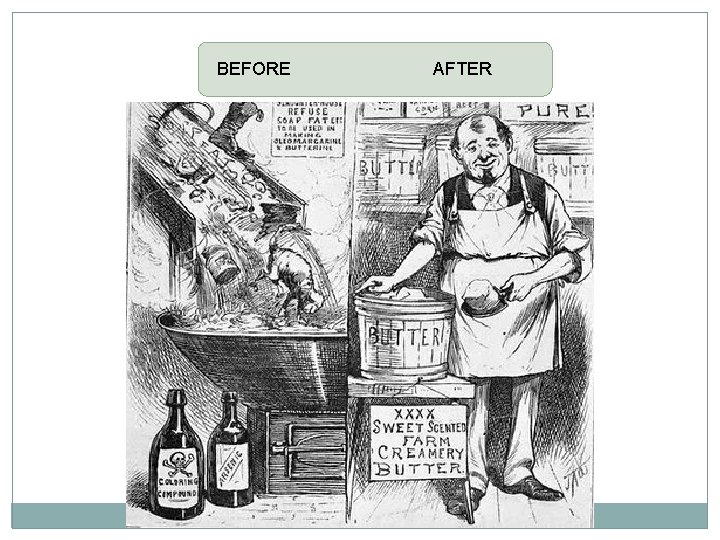
Protecting the buyer Roosevelt supported reforms to protect consumers from unsafe food and drugs. He was influenced by Upton Sinclair’s book The Jungle, which exposed the meatpacking industry’s unhealthy practices.
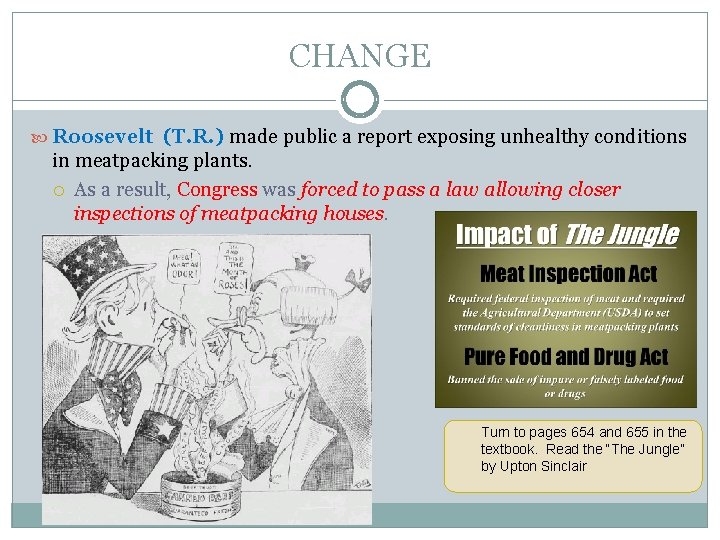
CHANGE Roosevelt (T. R. ) made public a report exposing unhealthy conditions in meatpacking plants. As a result, Congress was forced to pass a law allowing closer inspections of meatpacking houses. Turn to pages 654 and 655 in the textbook. Read the “The Jungle” by Upton Sinclair
BEFORE AFTER
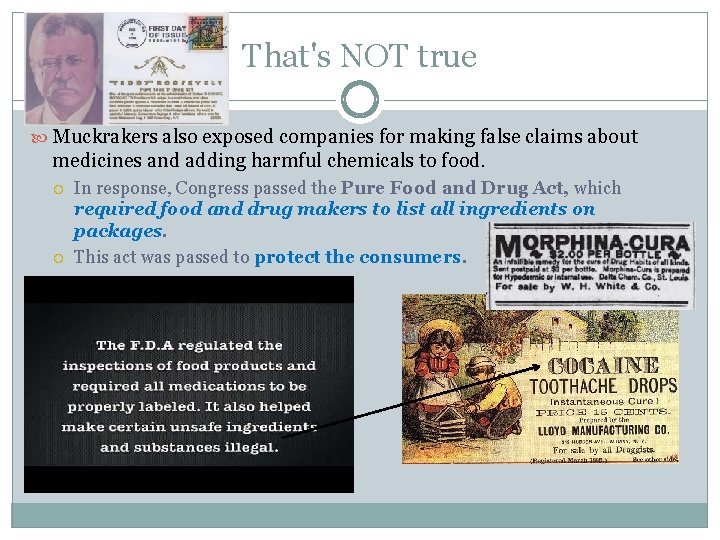
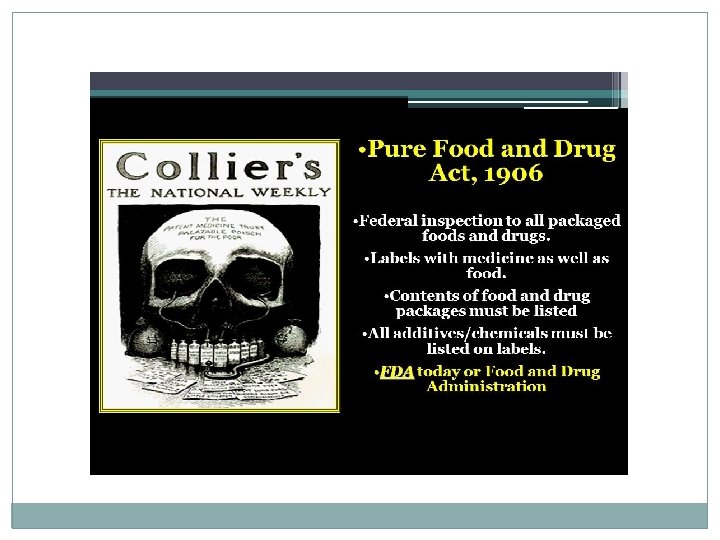
That's NOT true Muckrakers also exposed companies for making false claims about medicines and adding harmful chemicals to food. In response, Congress passed the Pure Food and Drug Act, which required food and drug makers to list all ingredients on packages. This act was passed to protect the consumers.
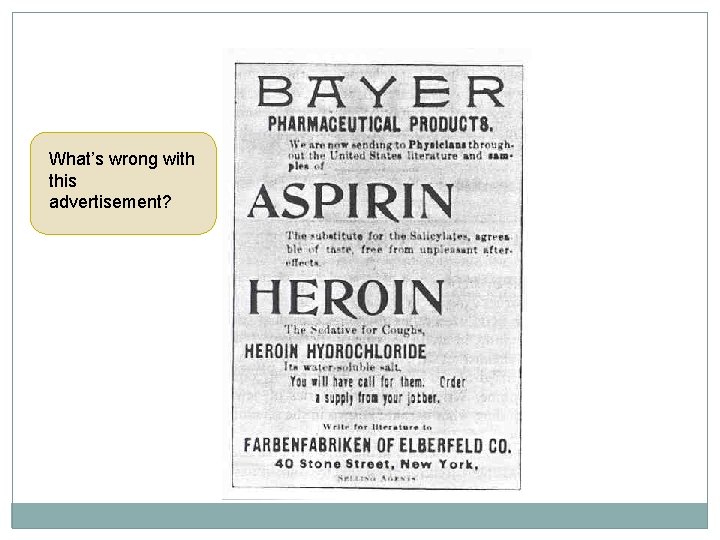
What’s wrong with this advertisement?
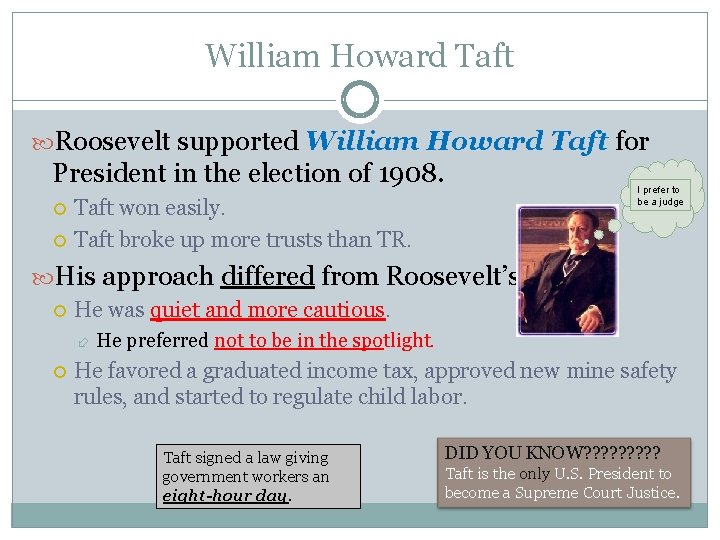
William Howard Taft Roosevelt supported William Howard Taft for President in the election of 1908. I prefer to be a judge Taft won easily. Taft broke up more trusts than TR. His approach differed from Roosevelt’s. He was quiet and more cautious. He preferred not to be in the spotlight. He favored a graduated income tax, approved new mine safety rules, and started to regulate child labor. Taft signed a law giving government workers an eight-hour day. DID YOU KNOW? ? ? ? ? Taft is the only U. S. President to become a Supreme Court Justice.
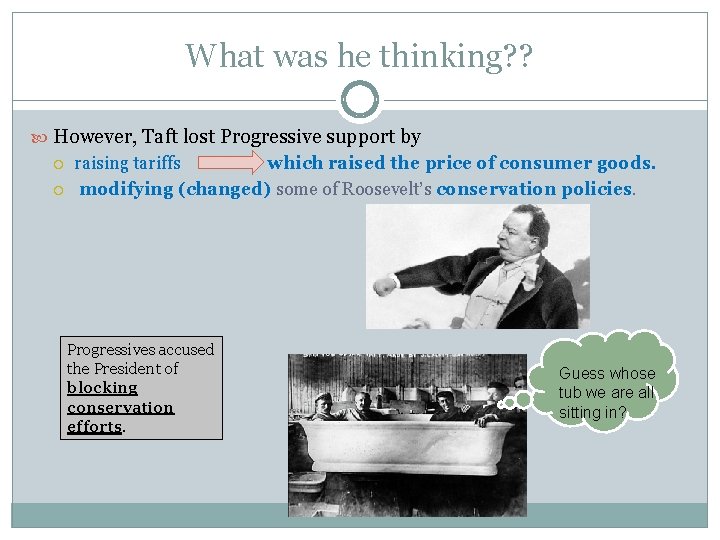
What was he thinking? ? However, Taft lost Progressive support by raising tariffs which raised the price of consumer goods. modifying (changed) some of Roosevelt’s conservation policies. Progressives accused the President of blocking conservation efforts. Guess whose tub we are all sitting in?
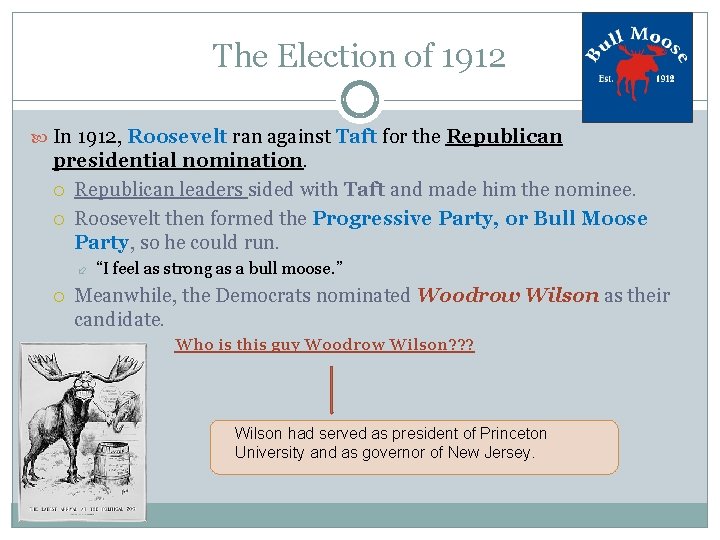
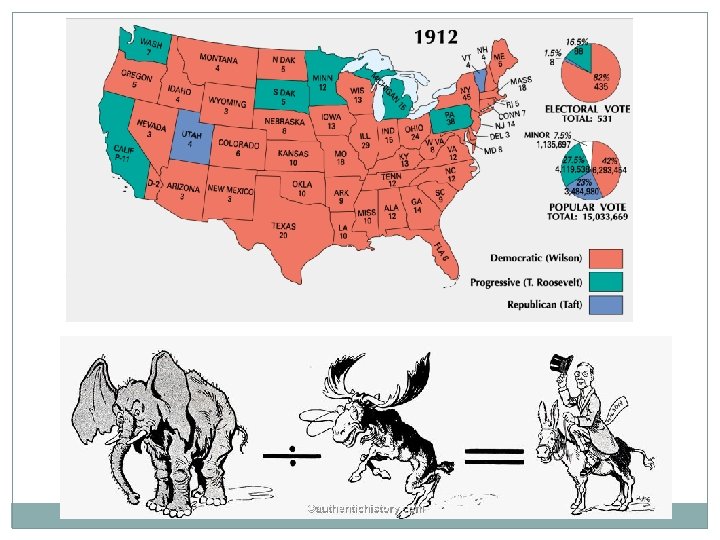
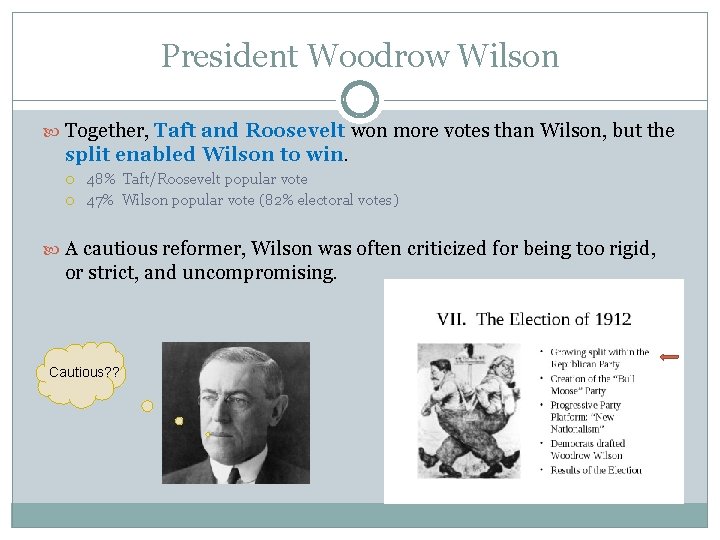
The Election of 1912 In 1912, Roosevelt ran against Taft for the Republican presidential nomination. Republican leaders sided with Taft and made him the nominee. Roosevelt then formed the Progressive Party, or Bull Moose Party, so he could run. “I feel as strong as a bull moose. ” Meanwhile, the Democrats nominated Woodrow Wilson as their candidate. Who is this guy Woodrow Wilson? ? ? Wilson had served as president of Princeton University and as governor of New Jersey.
President Woodrow Wilson Together, Taft and Roosevelt won more votes than Wilson, but the split enabled Wilson to win. 48% Taft/Roosevelt popular vote 47% Wilson popular vote (82% electoral votes) A cautious reformer, Wilson was often criticized for being too rigid, or strict, and uncompromising. Cautious? ?
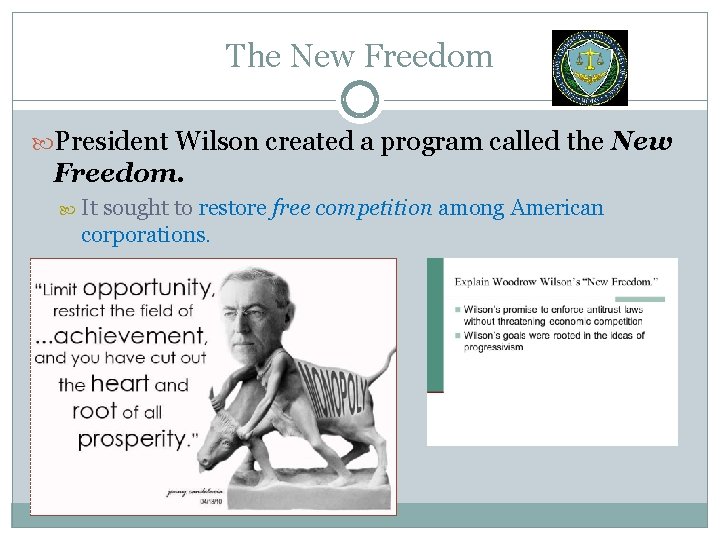
The New Freedom President Wilson created a program called the New Freedom. It sought to restore free competition among American corporations.
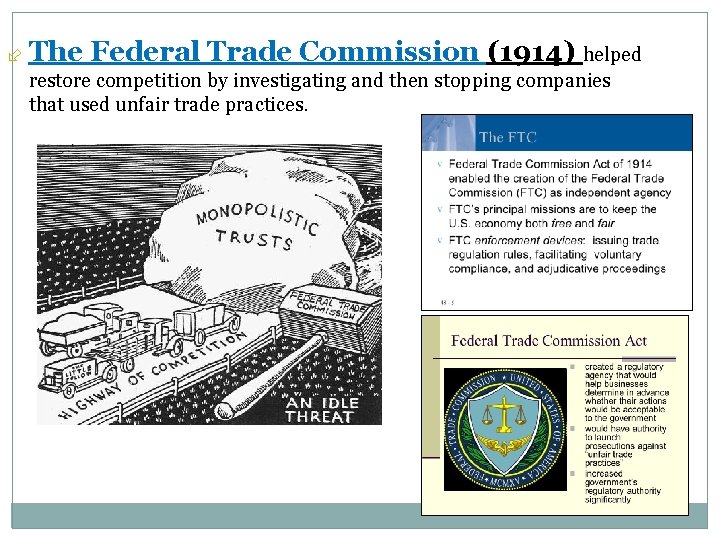
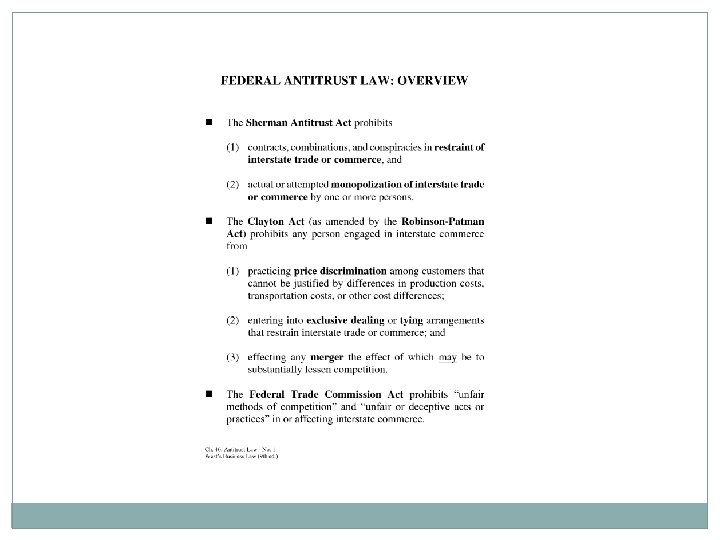
The Federal Trade Commission (1914) helped restore competition by investigating and then stopping companies that used unfair trade practices.
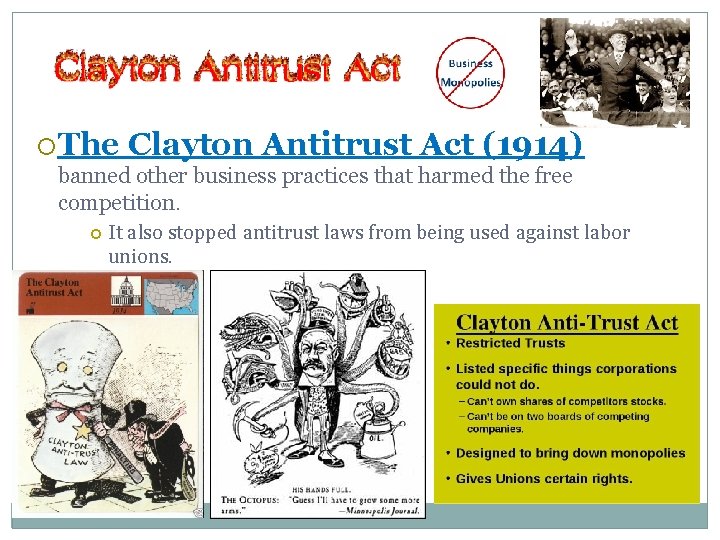
The Clayton Antitrust Act (1914) banned other business practices that harmed the free competition. It also stopped antitrust laws from being used against labor unions.
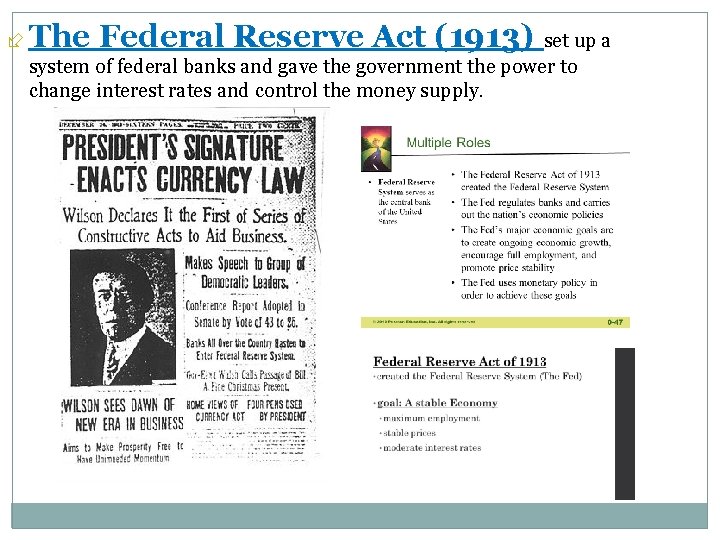
The Federal Reserve Act (1913) set up a system of federal banks and gave the government the power to change interest rates and control the money supply.
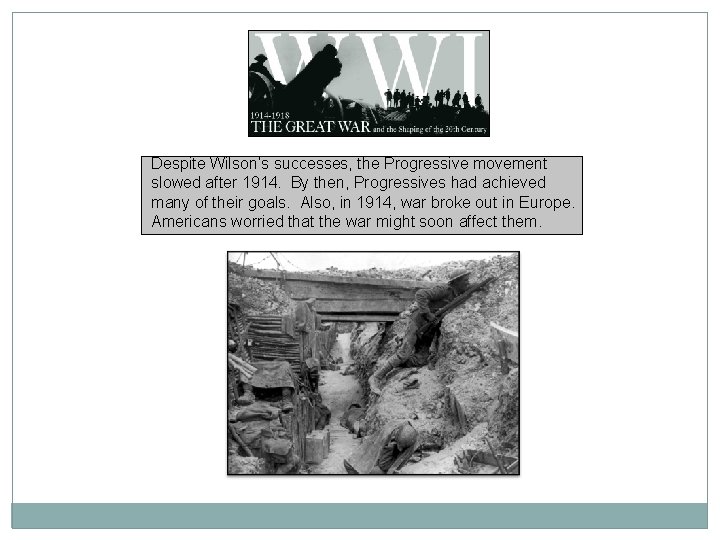
Despite Wilson’s successes, the Progressive movement slowed after 1914. By then, Progressives had achieved many of their goals. Also, in 1914, war broke out in Europe. Americans worried that the war might soon affect them.