
The Progress of War 1861 1865 Major Battles
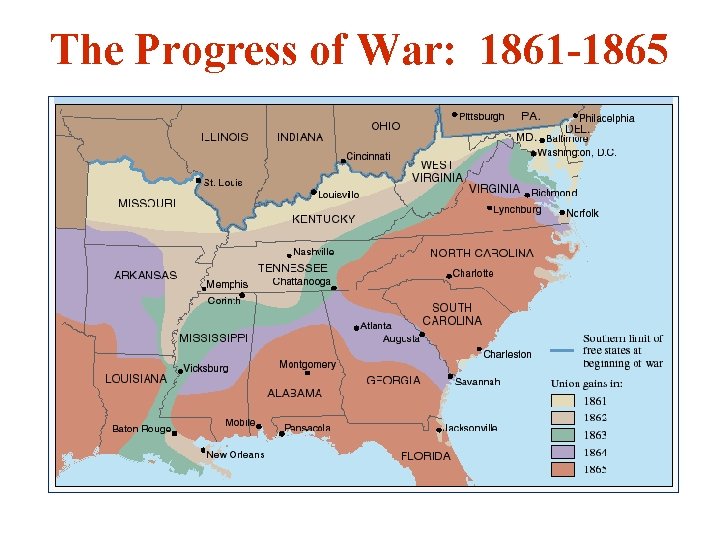
The Progress of War: 1861 -1865
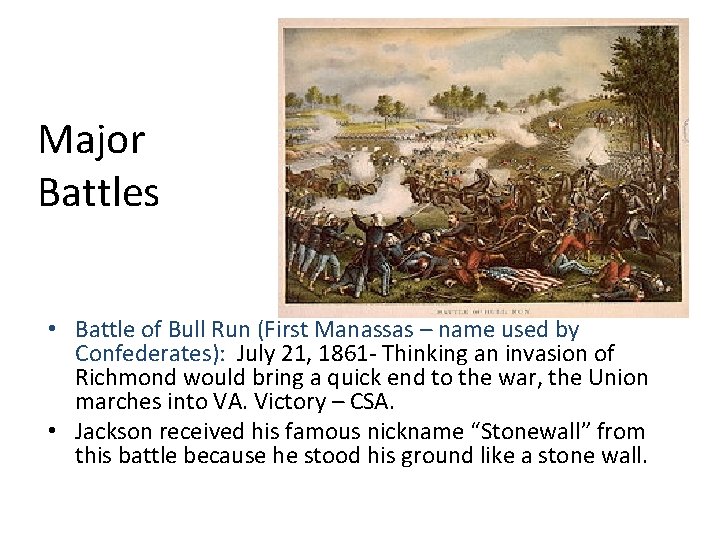
Major Battles • Battle of Bull Run (First Manassas – name used by Confederates): July 21, 1861 - Thinking an invasion of Richmond would bring a quick end to the war, the Union marches into VA. Victory – CSA. • Jackson received his famous nickname “Stonewall” from this battle because he stood his ground like a stone wall.
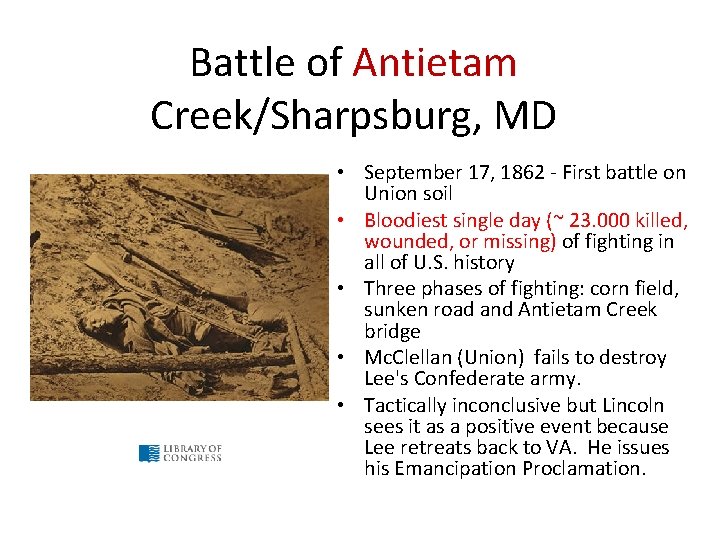
Battle of Antietam Creek/Sharpsburg, MD • September 17, 1862 - First battle on Union soil • Bloodiest single day (~ 23. 000 killed, wounded, or missing) of fighting in all of U. S. history • Three phases of fighting: corn field, sunken road and Antietam Creek bridge • Mc. Clellan (Union) fails to destroy Lee's Confederate army. • Tactically inconclusive but Lincoln sees it as a positive event because Lee retreats back to VA. He issues his Emancipation Proclamation.
Emancipation Proclamation September 22, 1862 • Lincoln issued this executive order that the slaves of any state in rebellion (the Confederacy) that did not return to the Union would be free as of January 1, 1863 (the deadline to return to the Union). • Slavery, not preserving the Union, is now a primary reason for fighting the war. • None of the Confederate States of America returned. • This document also discouraged European governments from helping the Confederacy.
Battle of Gettysburg Pennsylvania • Second battle on Union soil – Union Meade/Reynolds vs. Confederate Lee • Battle lasted three (3) days - July 1 -3, 1863 • During the first day of fighting, the Confederates were very successful; on the second the Union held their ground; and on the third “Pickets Charge” was repulsed leaving Lee no other option but to retreat back to Virginia • Major turning point in the war – largest # of casualties in the war (~23, 000 Union & 28, 000 Confederate) • The Confederacy never regained enough replacements while the Union had many more men to draft.
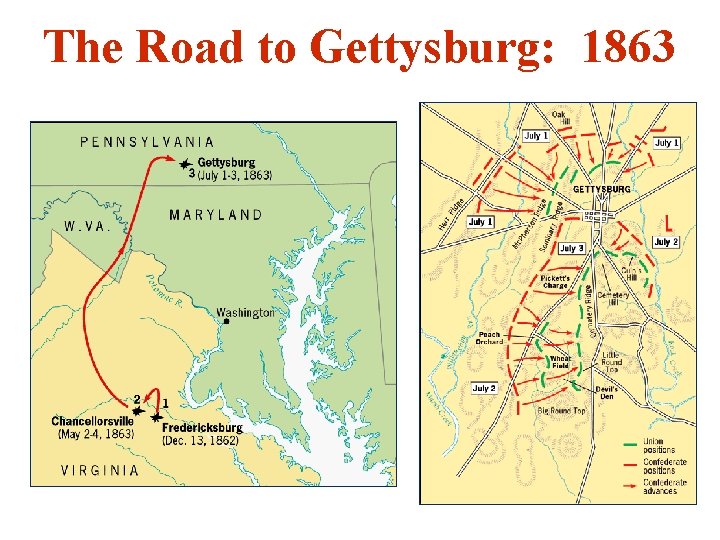
The Road to Gettysburg: 1863

Gettysburg Casualties
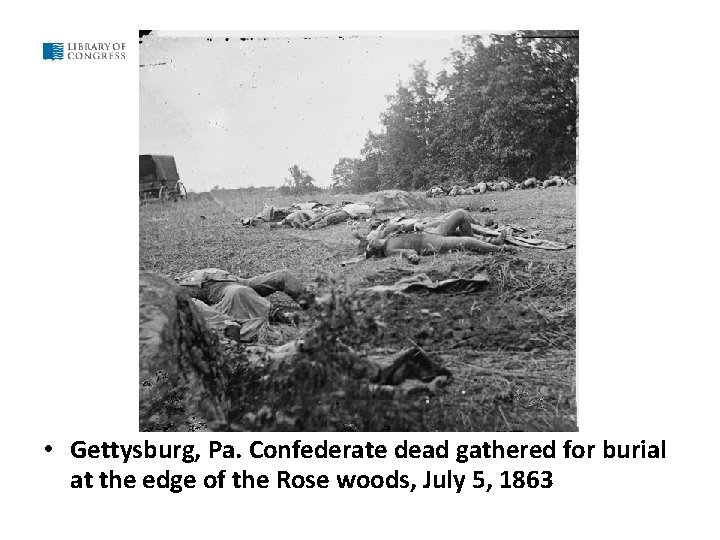
• Gettysburg, Pa. Confederate dead gathered for burial at the edge of the Rose woods, July 5, 1863
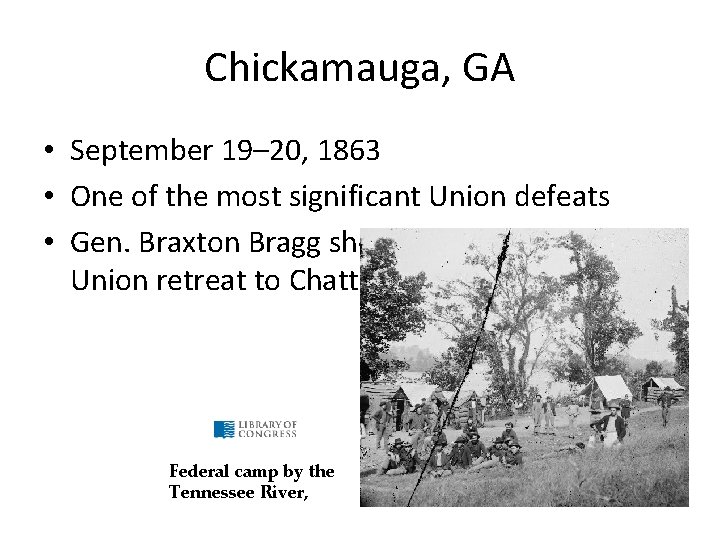
Chickamauga, GA • September 19– 20, 1863 • One of the most significant Union defeats • Gen. Braxton Bragg should have followed the Union retreat to Chattanooga Federal camp by the Tennessee River,
Kennesaw Mt. and the Atlanta Campaign • Battle of Kennesaw Mt. was the last Confederate victory before Atlanta falls • fought on June 27, 1864 • Johnston blocked Sherman’s path to Atlanta with fortifications on Kennesaw Mt. • The Union army eventually went around the Mt. and headed toward Atlanta, an important railroad and supply center for the Confederacy • September 2, 1864, Atlanta falls to Union forces and this politically helps Lincoln get re-elected
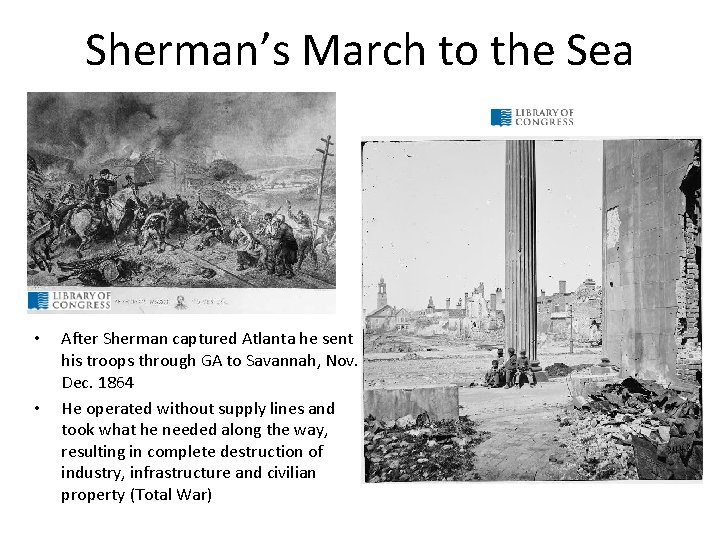
Sherman’s March to the Sea • • After Sherman captured Atlanta he sent his troops through GA to Savannah, Nov. Dec. 1864 He operated without supply lines and took what he needed along the way, resulting in complete destruction of industry, infrastructure and civilian property (Total War)
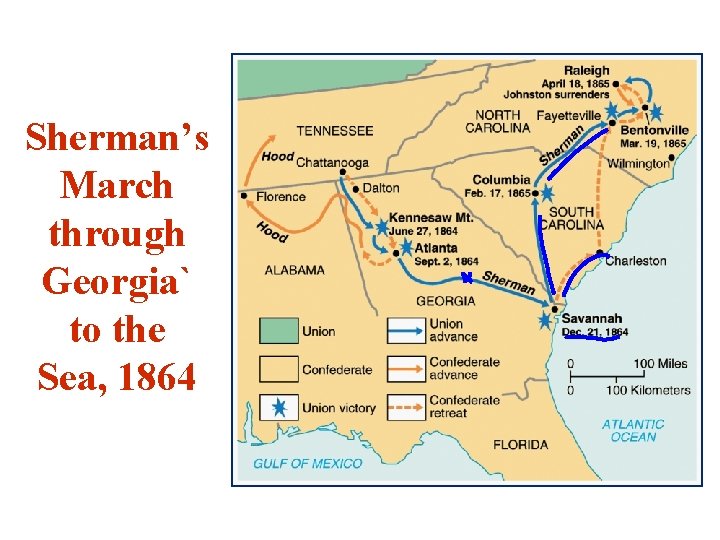
Sherman’s March through Georgia` to the Sea, 1864
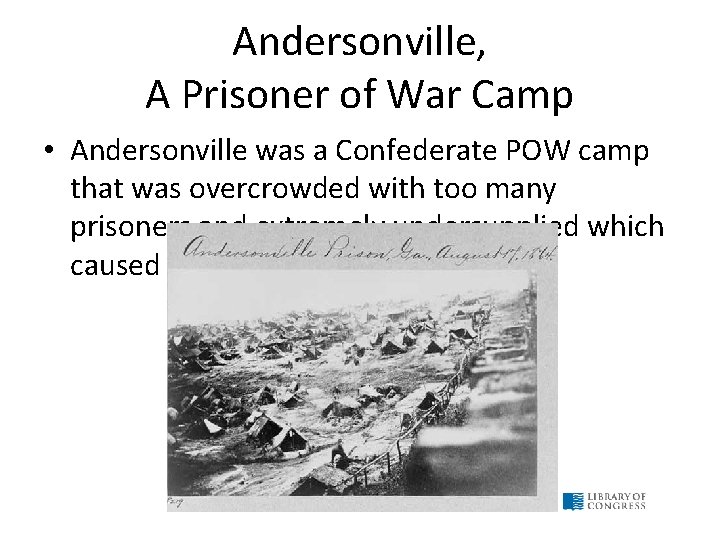
Andersonville, A Prisoner of War Camp • Andersonville was a Confederate POW camp that was overcrowded with too many prisoners and extremely undersupplied which caused many to die.
Andersonville • Camp Sumter, or Andersonville Prison, was in operation for 14 months (1864 – 1865) • Built to house 10, 000 prisoners • At one point, ~ 45, 000 Union Soldiers were held there. • ~ 13, 000 of them died
- Slides: 14