
The processing of morphemelike units in monomorphemic words


- Slides: 45
The processing of morpheme-like units in monomorphemic words. Marcus Taft & Paul Kougious School of Psychology University of New South Wales Sydney, AUSTRALIA
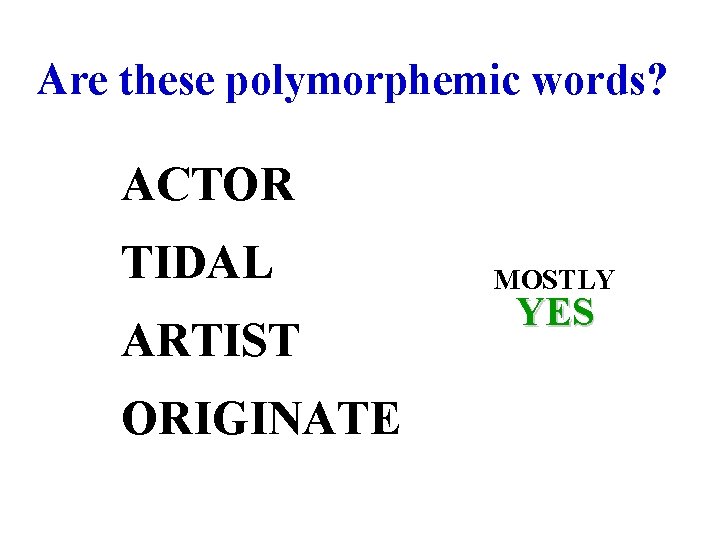
Are these polymorphemic words? ACTOR TIDAL ARTIST ORIGINATE MOSTLY YES
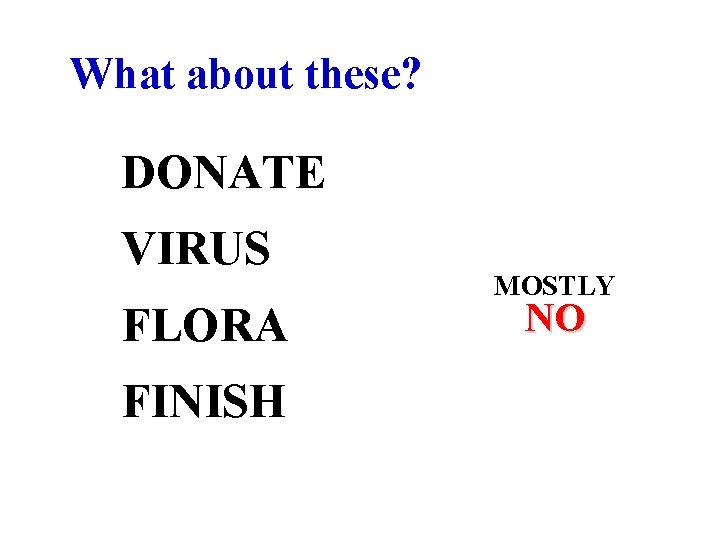
What about these? DONATE VIRUS FLORA FINISH MOSTLY NO
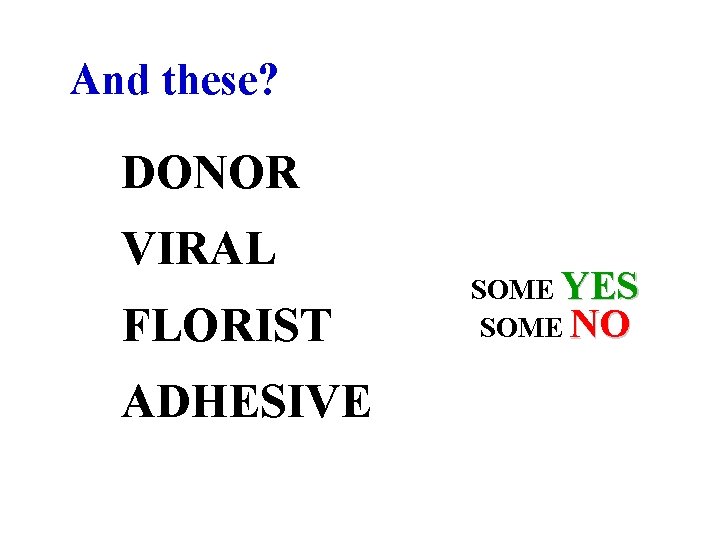
And these? DONOR VIRAL FLORIST ADHESIVE SOME YES SOME NO
So, VIRUS is not a polymorphemic word, but VIRAL might be. DONATE is not a polymorphemic word, but DONOR might be.
But VIRUS and VIRAL are clearly related, and they are related through VIR. Does this mean that VIR is a (bound) stem morpheme?
Similarly is DON a stem morpheme in DONATE and DONOR, even though the former is not considered to be polymorphemic? FLOR a stem morpheme in FLORA and FLORIST? Is FIN a stem morpheme in FINISH and FINAL? Is
Basically, we cannot define what is and is not a morpheme and this is a problem for any model of lexical processing that has all-or-none morphemic representations.
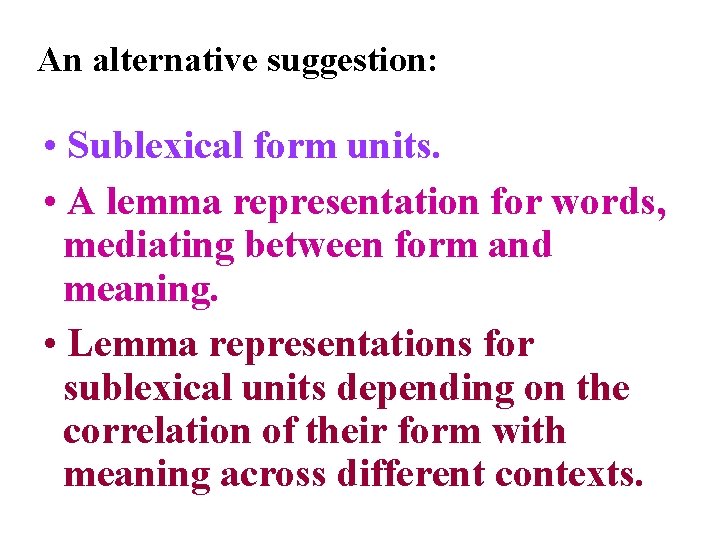
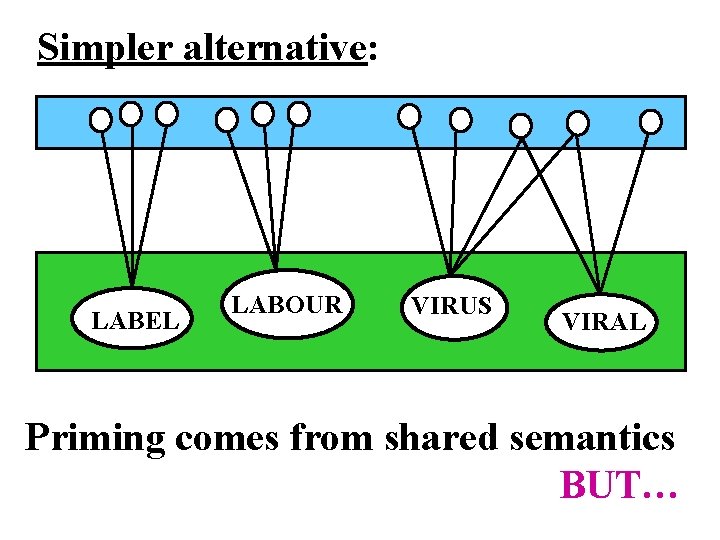
An alternative suggestion: • Sublexical form units. • A lemma representation for words, mediating between form and meaning. • Lemma representations for sublexical units depending on the correlation of their form with meaning across different contexts.
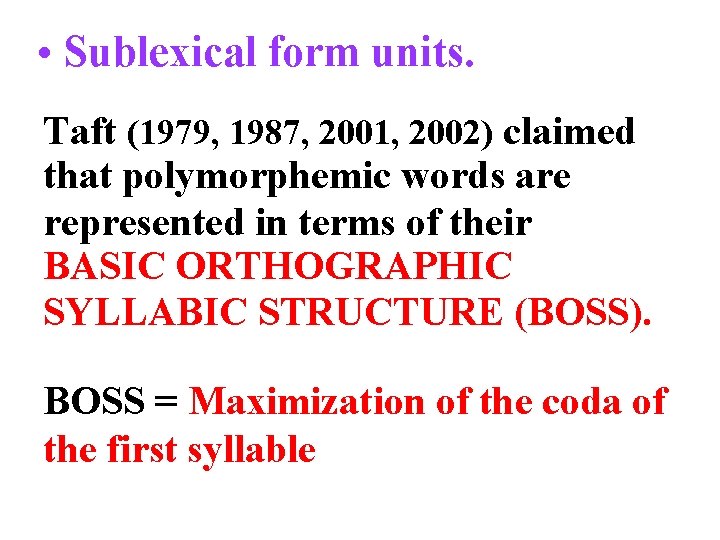
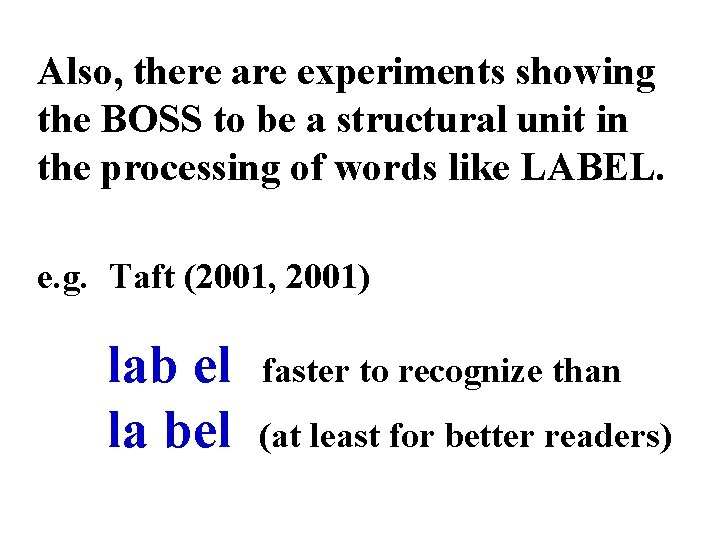
• Sublexical form units. Taft (1979, 1987, 2001, 2002) claimed that polymorphemic words are represented in terms of their BASIC ORTHOGRAPHIC SYLLABIC STRUCTURE (BOSS). BOSS = Maximization of the coda of the first syllable
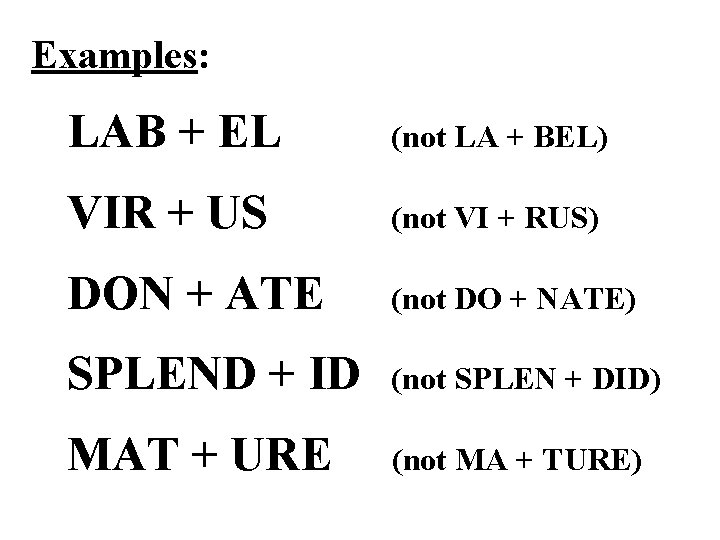
Examples: LAB + EL (not LA + BEL) VIR + US (not VI + RUS) DON + ATE (not DO + NATE) SPLEND + ID (not SPLEN + DID) MAT + URE (not MA + TURE)
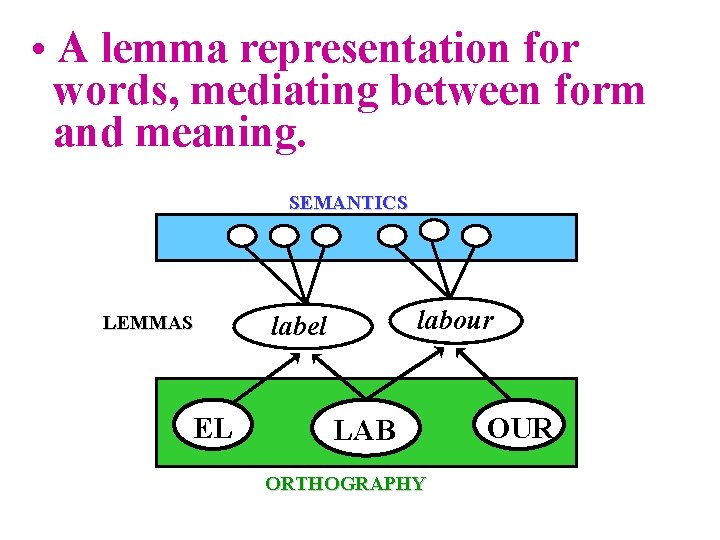
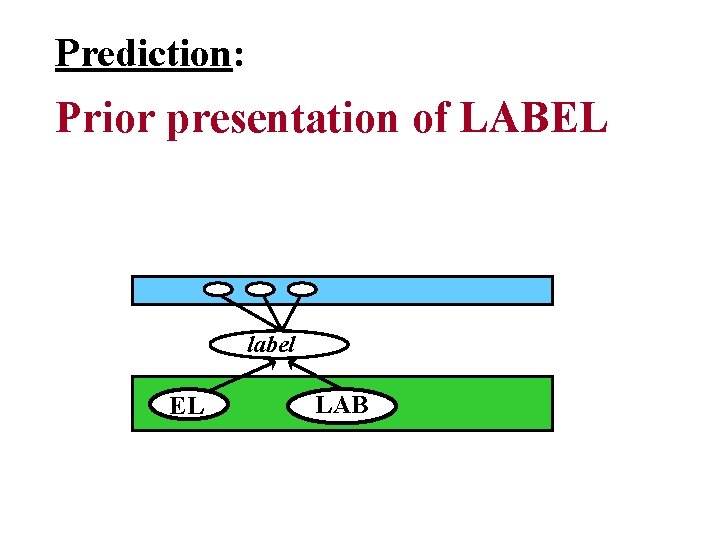
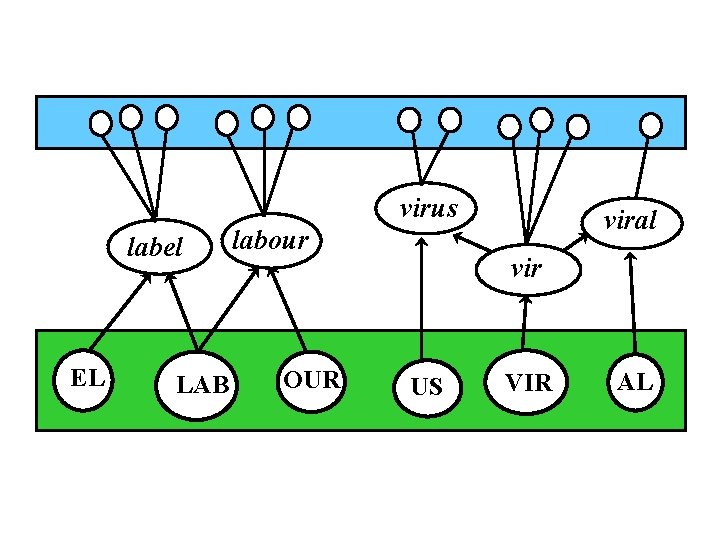
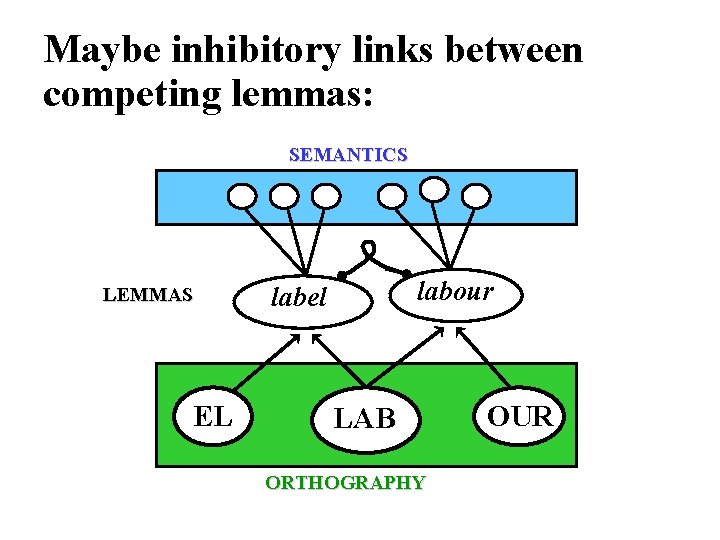
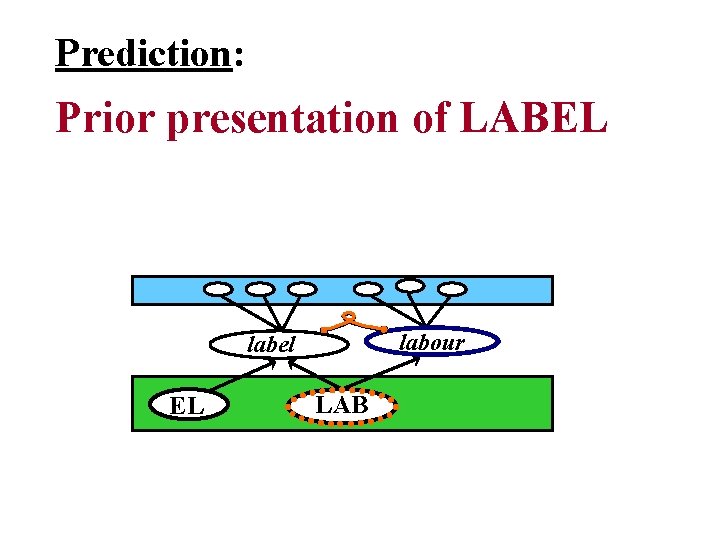
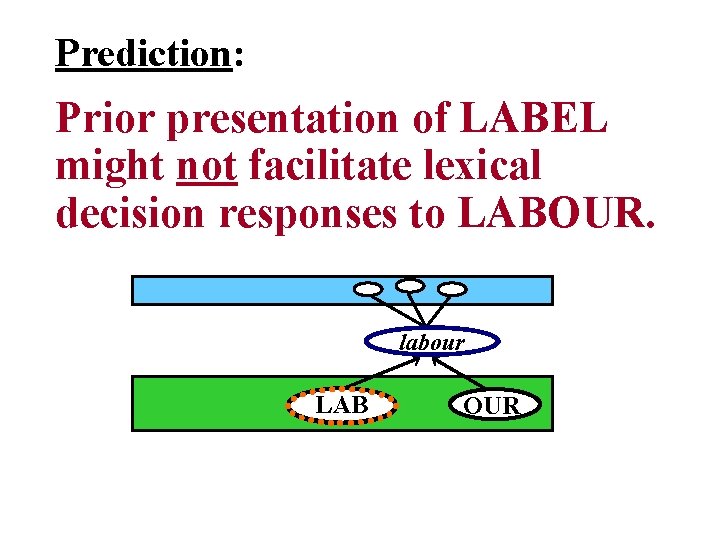
• A lemma representation for words, mediating between form and meaning. SEMANTICS LEMMAS EL labour label LAB ORTHOGRAPHY OUR
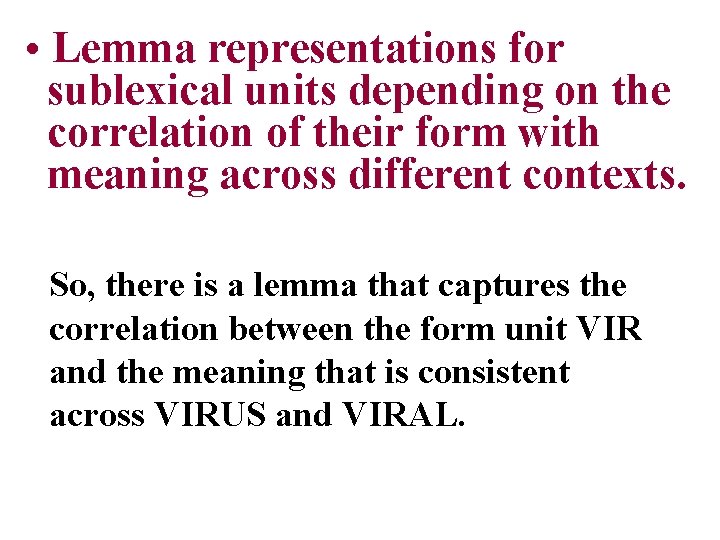
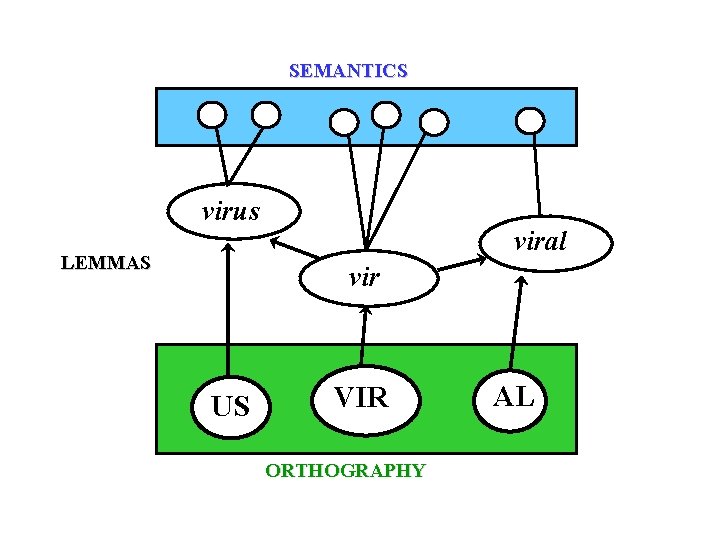
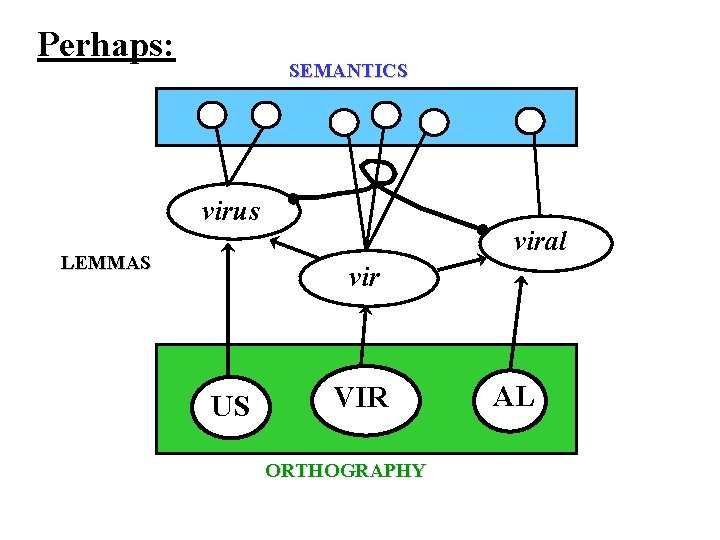
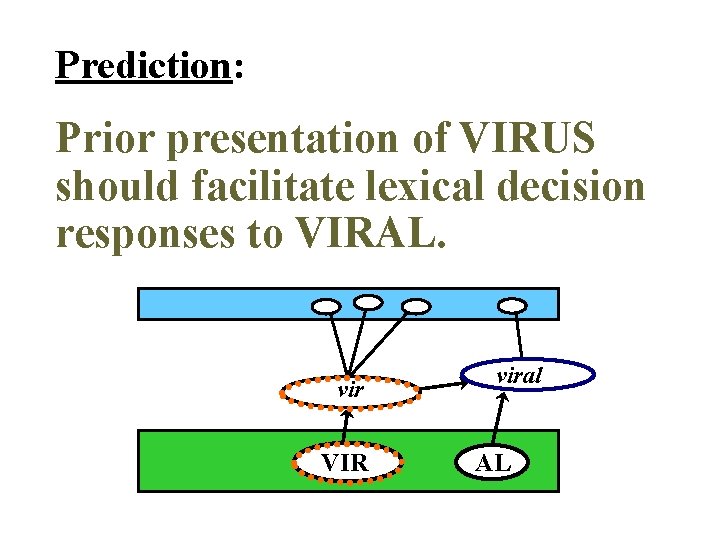
• Lemma representations for sublexical units depending on the correlation of their form with meaning across different contexts. So, there is a lemma that captures the correlation between the form unit VIR and the meaning that is consistent across VIRUS and VIRAL.
SEMANTICS virus LEMMAS viral vir US VIR ORTHOGRAPHY AL
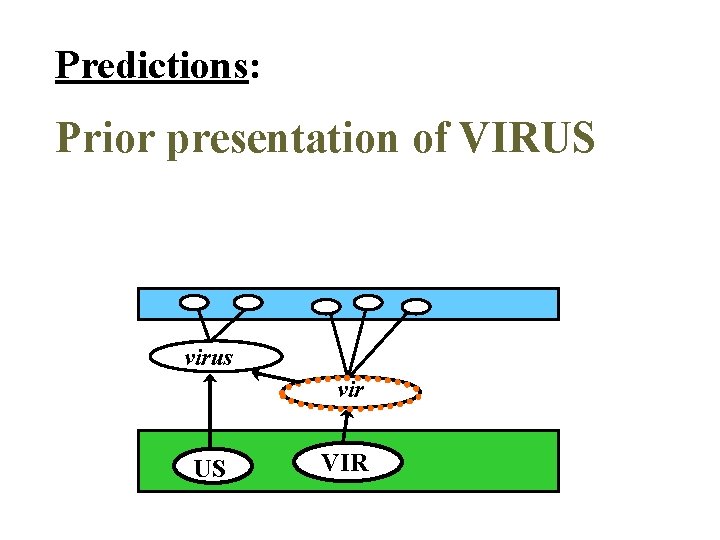
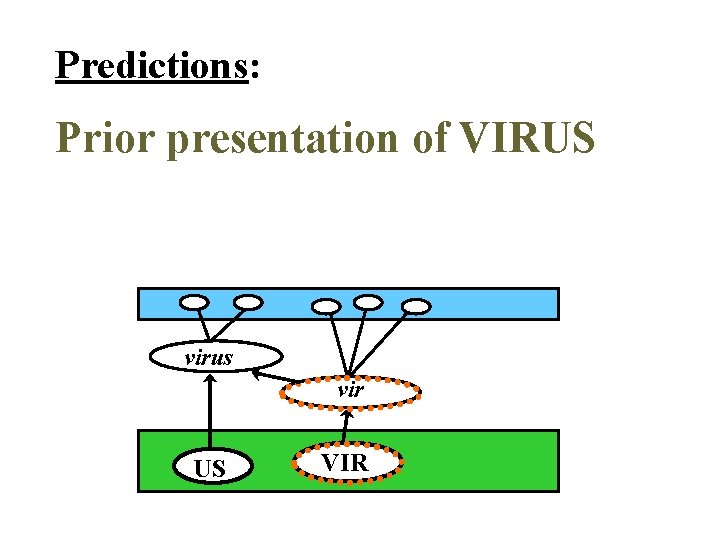
Predictions: Prior presentation of VIRUS virus vir US VIR
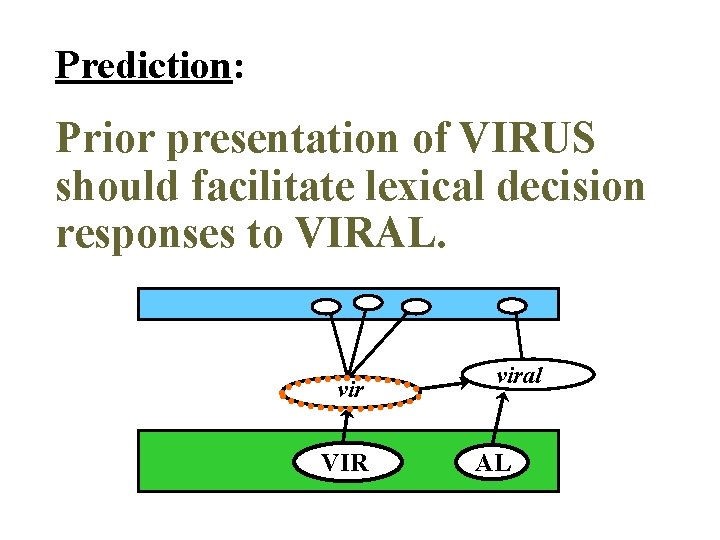
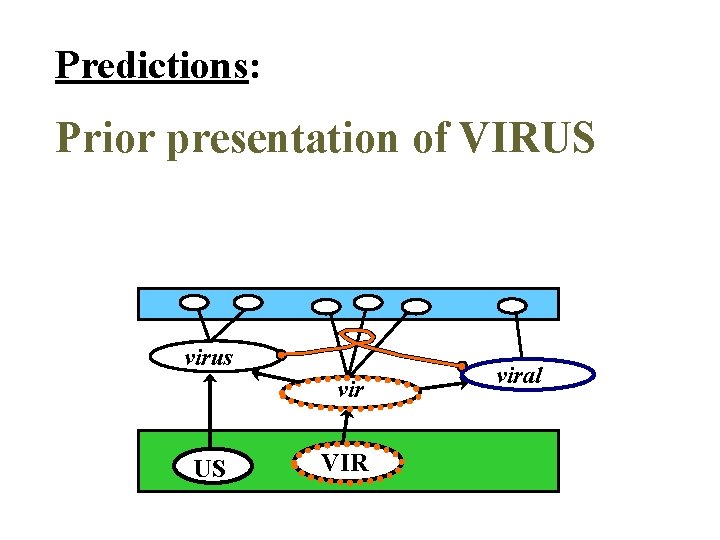
Prediction: Prior presentation of VIRUS should facilitate lexical decision responses to VIRAL. vir VIR viral AL
Prediction: Prior presentation of LABEL label EL LAB
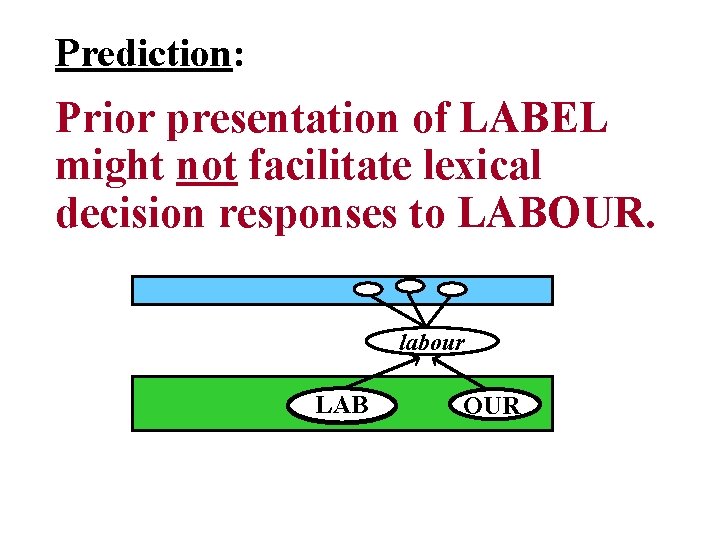
Prediction: Prior presentation of LABEL might not facilitate lexical decision responses to LABOUR. labour LAB OUR
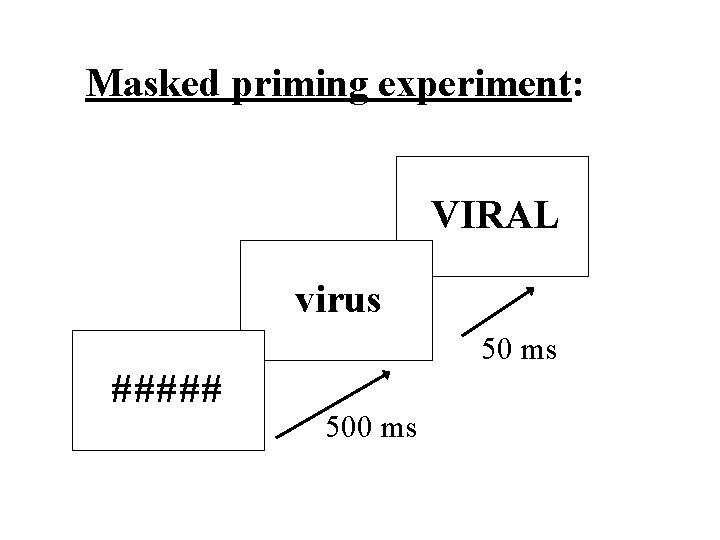
Masked priming experiment: VIRAL virus 50 ms ##### 500 ms
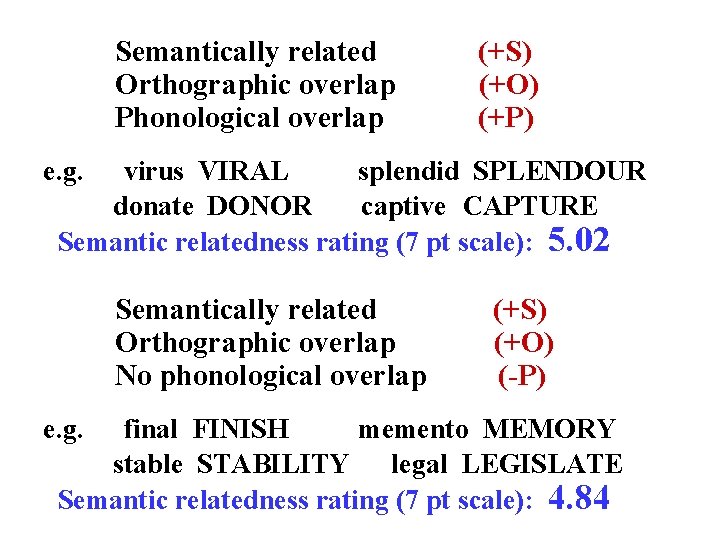
Semantically related Orthographic overlap Phonological overlap (+S) (+O) (+P) e. g. virus VIRAL splendid SPLENDOUR donate DONOR captive CAPTURE Semantic relatedness rating (7 pt scale): 5. 02 Semantically related Orthographic overlap No phonological overlap e. g. (+S) (+O) (-P) final FINISH memento MEMORY stable STABILITY legal LEGISLATE Semantic relatedness rating (7 pt scale): 4. 84
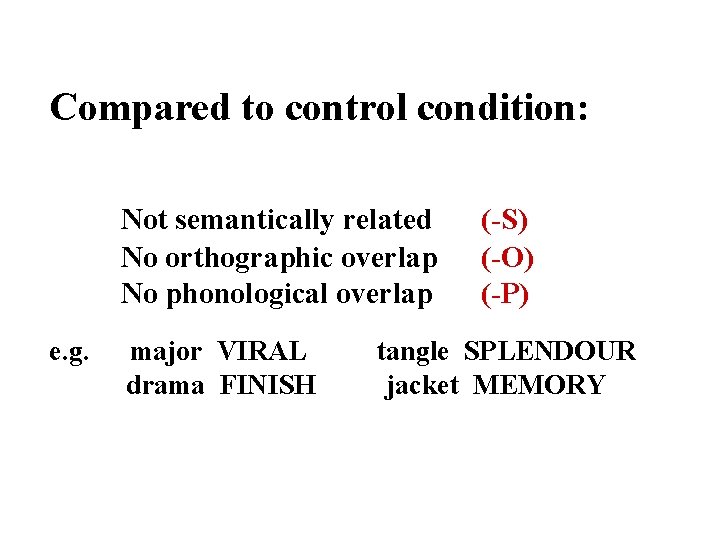
Compared to control condition: Not semantically related No orthographic overlap No phonological overlap e. g. major VIRAL drama FINISH (-S) (-O) (-P) tangle SPLENDOUR jacket MEMORY
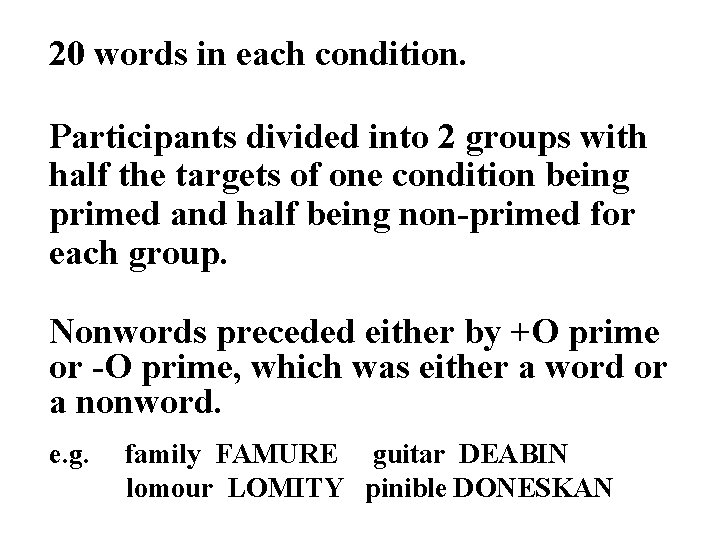
20 words in each condition. Participants divided into 2 groups with half the targets of one condition being primed and half being non-primed for each group. Nonwords preceded either by +O prime or -O prime, which was either a word or a nonword. e. g. family FAMURE guitar DEABIN lomour LOMITY pinible DONESKAN
25 RTs 22 • Significant facilitation • No interaction with phonological consistency
% Error 4. 6 2. 6 • Significant facilitation • No interaction with phonological consistency
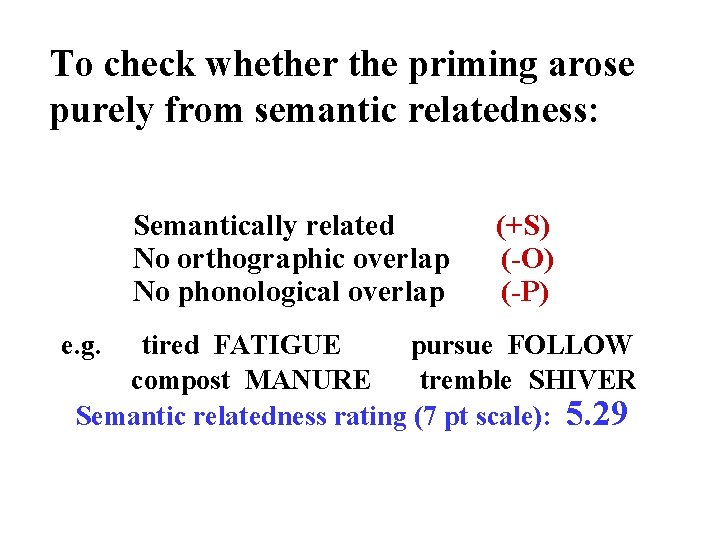
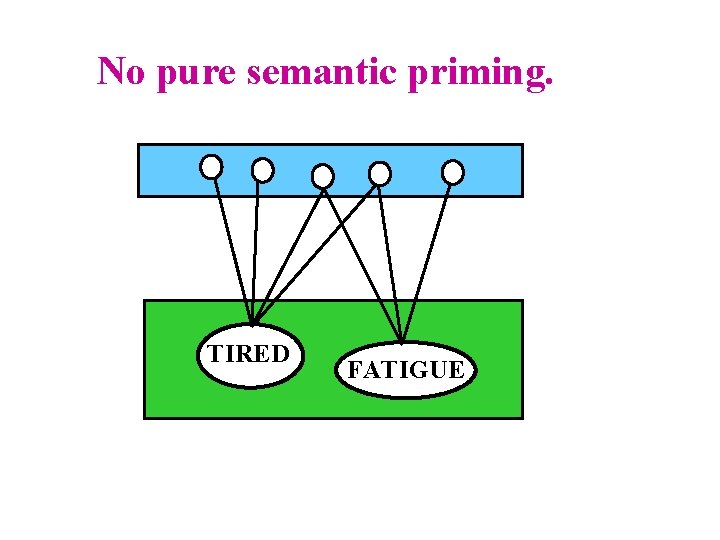
To check whether the priming arose purely from semantic relatedness: Semantically related No orthographic overlap No phonological overlap e. g. (+S) (-O) (-P) tired FATIGUE pursue FOLLOW compost MANURE tremble SHIVER Semantic relatedness rating (7 pt scale): 5. 29
RTs 5 • No pure semantic priming
% Error -2. 3 • No pure semantic priming
Is there any pure orthographic priming?
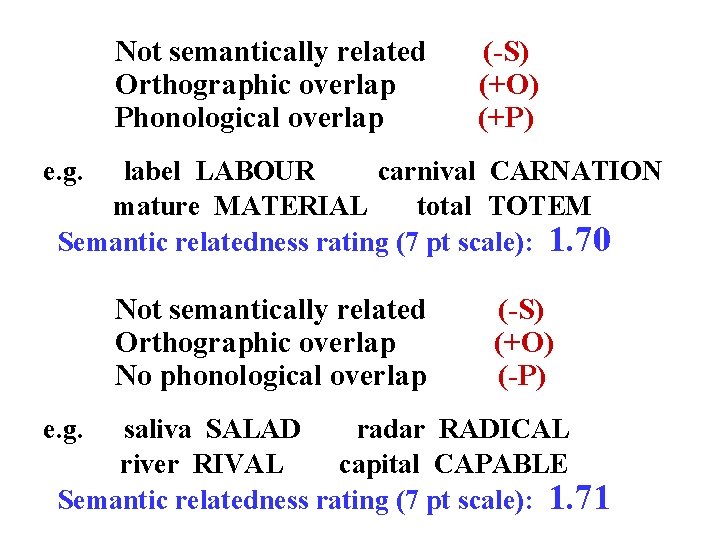
Not semantically related Orthographic overlap Phonological overlap (-S) (+O) (+P) e. g. label LABOUR carnival CARNATION mature MATERIAL total TOTEM Semantic relatedness rating (7 pt scale): 1. 70 Not semantically related Orthographic overlap No phonological overlap e. g. (-S) (+O) (-P) saliva SALAD radar RADICAL river RIVAL capital CAPABLE Semantic relatedness rating (7 pt scale): 1. 71
6 RTs 14 • No pure orthographic effect
% Error -4. 0 -2. 0 • No pure orthographic effect
% Error primed control
virus label EL LAB labour OUR viral vir US VIR AL
Simpler alternative: LABEL LABOUR VIRUS VIRAL Priming comes from shared semantics BUT…
No pure semantic priming. TIRED FATIGUE
Also, there are experiments showing the BOSS to be a structural unit in the processing of words like LABEL. e. g. Taft (2001, 2001) lab el la bel faster to recognize than (at least for better readers)
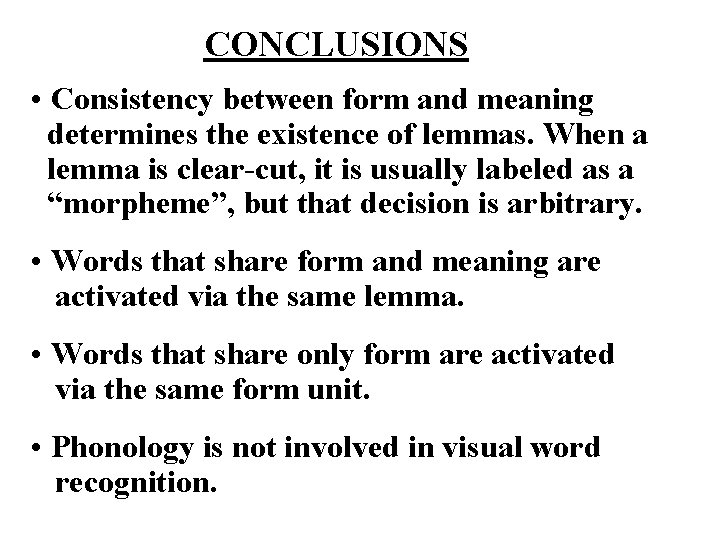
CONCLUSIONS • Consistency between form and meaning determines the existence of lemmas. When a lemma is clear-cut, it is usually labeled as a “morpheme”, but that decision is arbitrary. • Words that share form and meaning are activated via the same lemma. • Words that share only form are activated via the same form unit. • Phonology is not involved in visual word recognition.
Maybe inhibitory links between competing lemmas: SEMANTICS LEMMAS EL labour label LAB ORTHOGRAPHY OUR
Perhaps: SEMANTICS virus LEMMAS viral vir US VIR ORTHOGRAPHY AL
Predictions: Prior presentation of VIRUS virus vir US VIR
Predictions: Prior presentation of VIRUS virus vir US VIR viral
Prediction: Prior presentation of VIRUS should facilitate lexical decision responses to VIRAL. vir VIR viral AL
Prediction: Prior presentation of LABEL labour label EL LAB
Prediction: Prior presentation of LABEL might not facilitate lexical decision responses to LABOUR. labour LAB OUR