
The Process of Mitosis Reproduction of the Cell
- Slides: 12
The Process of Mitosis
Reproduction of the Cell • Cell division is necessary for normal growth, repair, and reproduction of an organism. • 2 types of cells – somatic cells (body cells) • diploid cells - 2 sets of chromosomes (2 n) – reproductive cells (sperm and egg) • haploid cells - single set of chromosomes (n)
Cell Division • Mitosis - process of cell division in which a somatic cell makes an identical copy of itself – involves one chromosome replication and 1 cell division – 1 parent cell forms 2 identical daughter cells
Mitosis • • • Interphase Prophase Metaphase Anaphase Telophase Cytokinesis
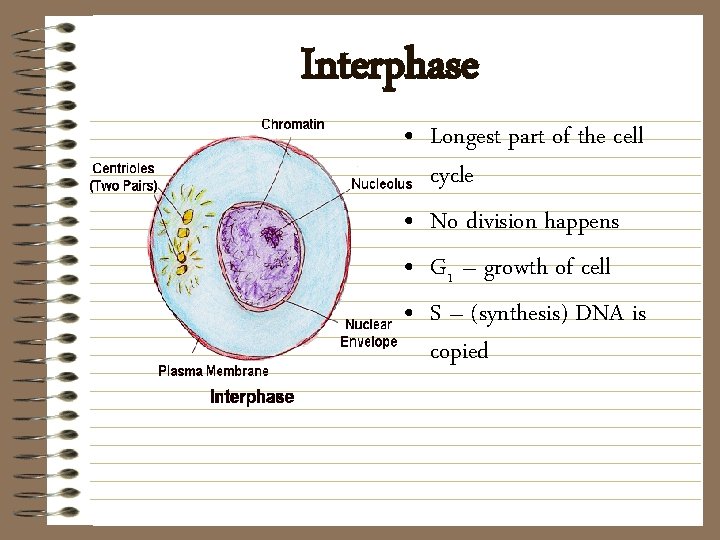
Interphase • Longest part of the cell cycle • No division happens • G 1 – growth of cell • S – (synthesis) DNA is copied
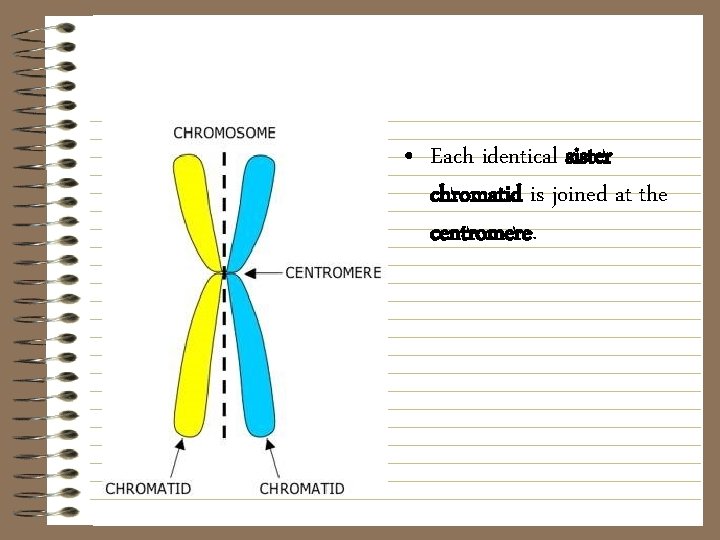
• Each identical sister chromatid is joined at the centromere.
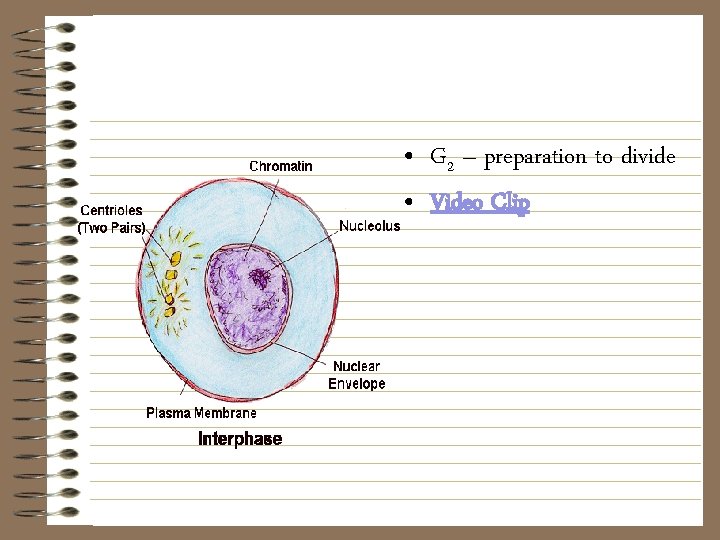
• G 2 – preparation to divide • Video Clip
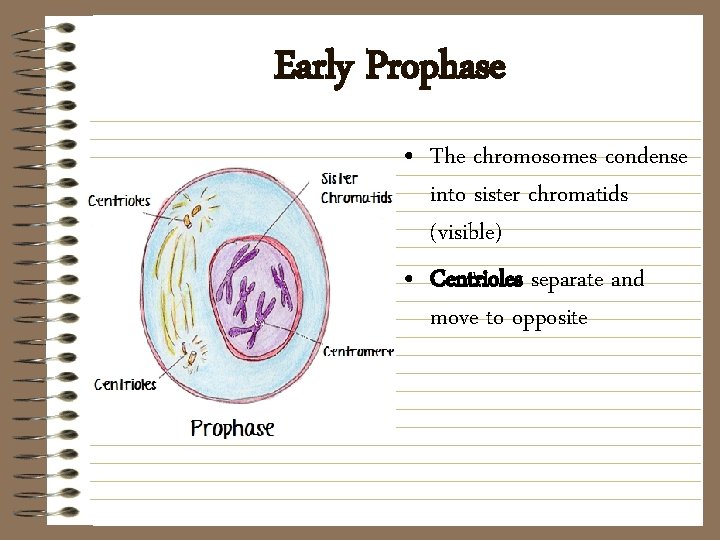
Early Prophase • The chromosomes condense into sister chromatids (visible) • Centrioles separate and move to opposite
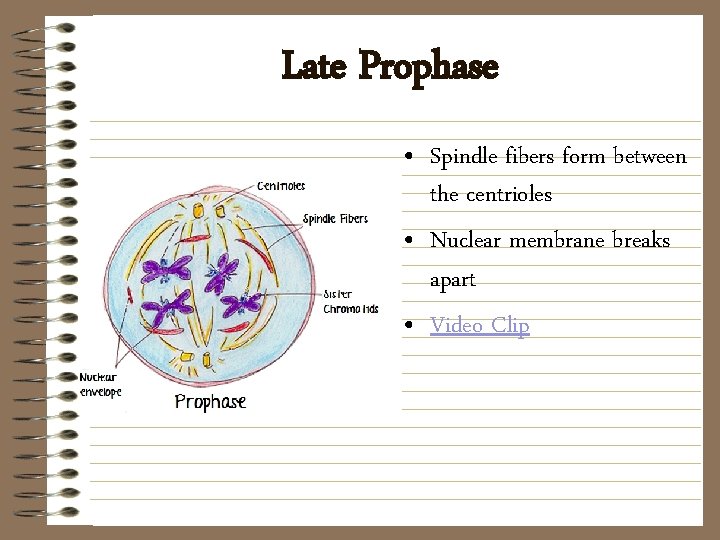
Late Prophase • Spindle fibers form between the centrioles • Nuclear membrane breaks apart • Video Clip
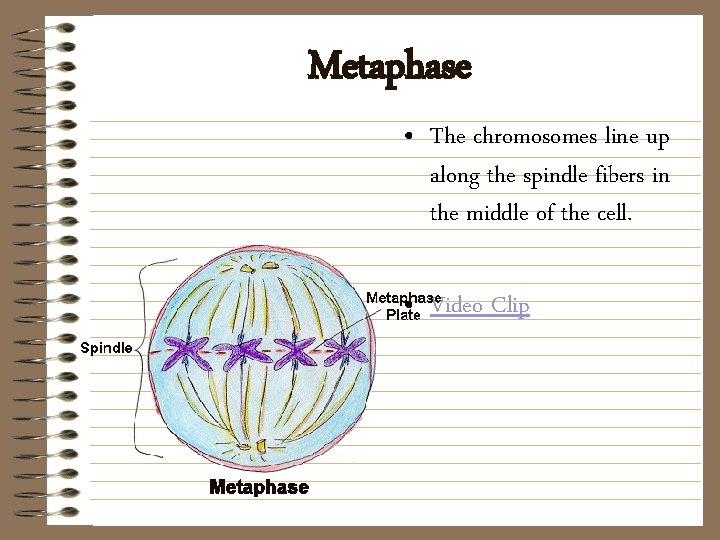
Metaphase • The chromosomes line up along the spindle fibers in the middle of the cell. • Video Clip
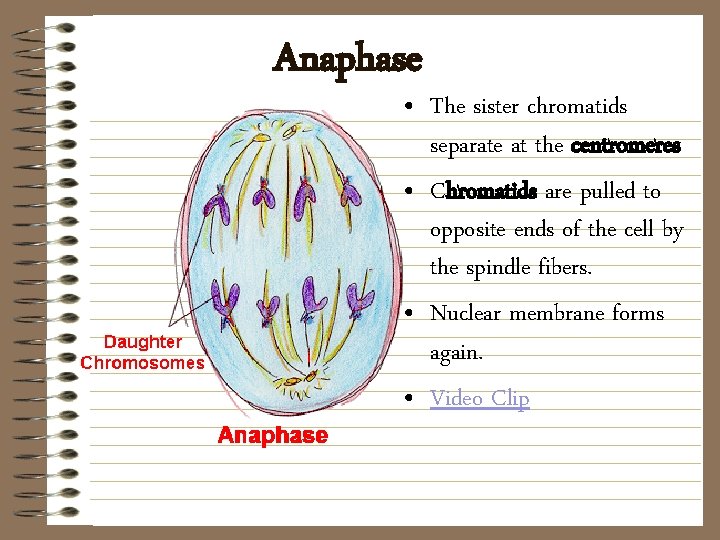
Anaphase • The sister chromatids separate at the centromeres • Chromatids are pulled to opposite ends of the cell by the spindle fibers. • Nuclear membrane forms again. • Video Clip
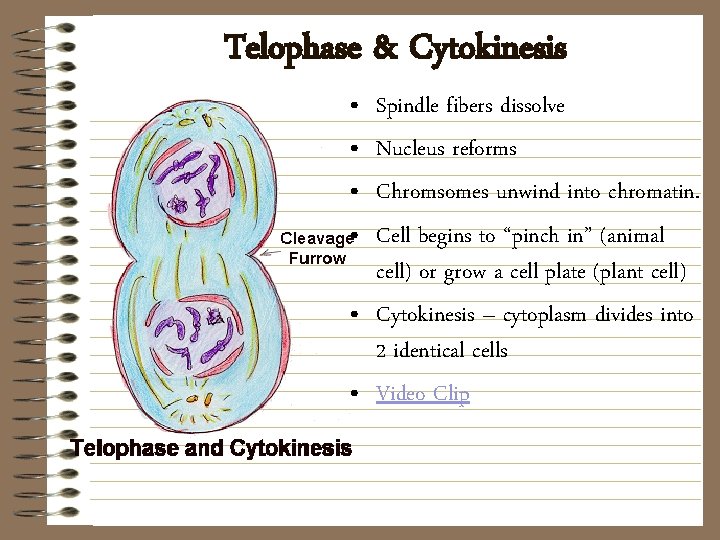
Telophase & Cytokinesis • • Spindle fibers dissolve Nucleus reforms Chromsomes unwind into chromatin. Cell begins to “pinch in” (animal cell) or grow a cell plate (plant cell) • Cytokinesis – cytoplasm divides into 2 identical cells • Video Clip