
The Process of Erosion and Deposition of Sediments
- Slides: 22
The Process of Erosion and Deposition of Sediments
Erosion and Deposition • The transportation and relocation of sediments weathered from rocks
Erosion • The moving of rock material from one place to another • For erosion to occur, three processes must take place: detachment, lifting of the particles, and transport. • There at least seven processes that can cause erosion.
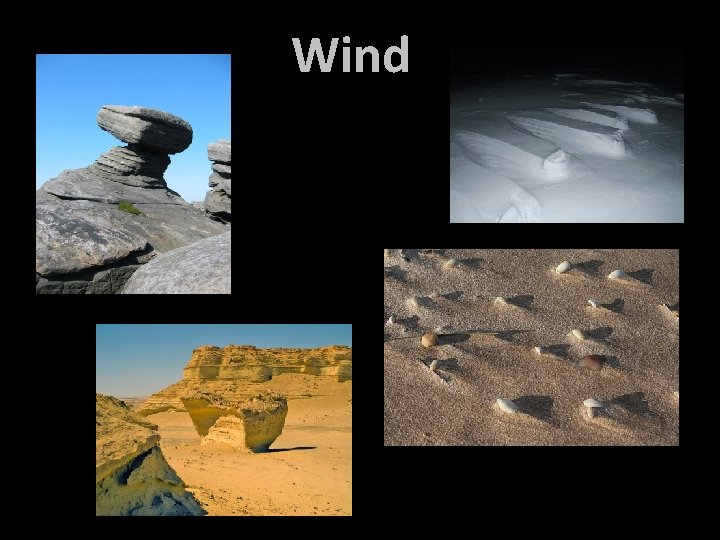
Erosion by Wind • Small sediments can be carried in the air by the wind. • Larger sediments can be rolled along the ground. • Erosion by abrasion may occur as particles come in contact with solid objects. • Examples: sand dunes, desert pavement, loess
Wind
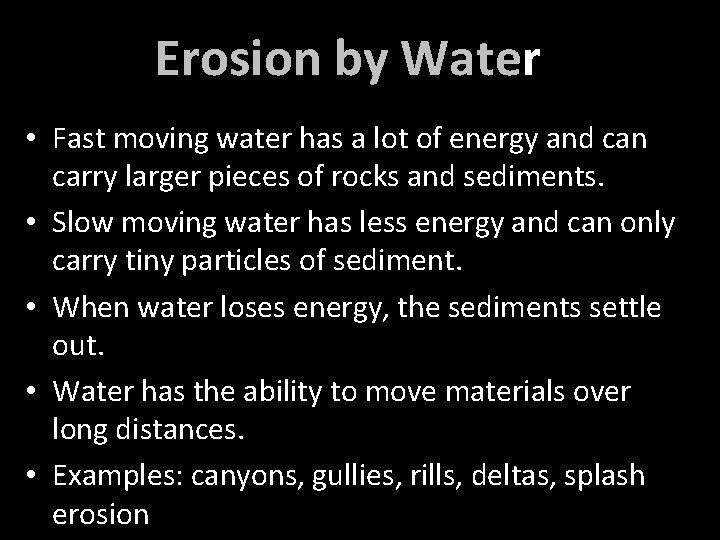
Erosion by Water • Fast moving water has a lot of energy and can carry larger pieces of rocks and sediments. • Slow moving water has less energy and can only carry tiny particles of sediment. • When water loses energy, the sediments settle out. • Water has the ability to move materials over long distances. • Examples: canyons, gullies, rills, deltas, splash erosion
Water
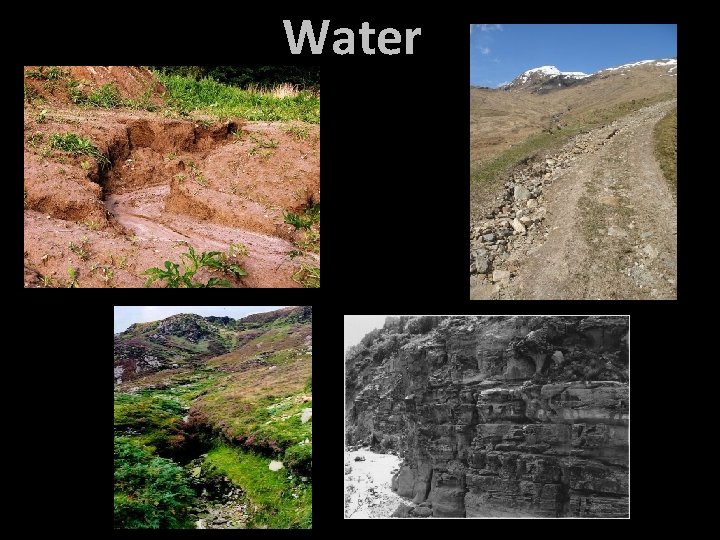
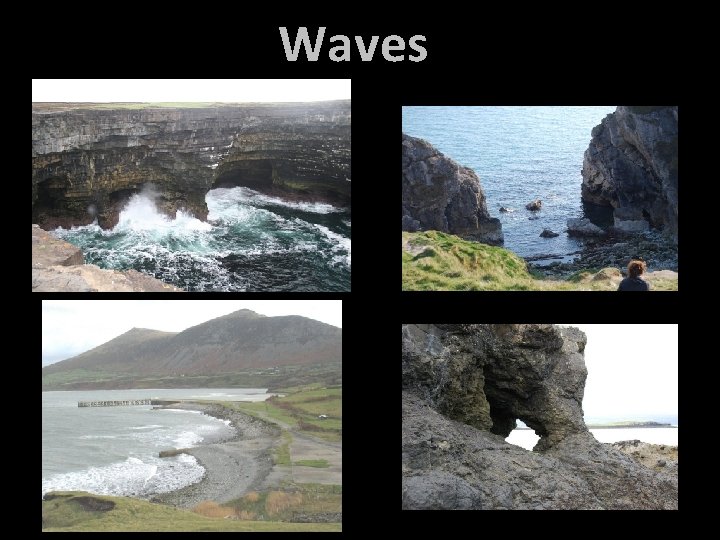
Erosion by Waves • The relentless pounding of waves causes erosion in several ways. • Grinding of materials brought by the waves against the shore. This forms sand. This can take over 100 years. • Action of saltwater on the minerals in the rocks causes chemical changes in the rock by dissolving the minerals. • Strong waves carrying sand strikes the base of a cliff undercutting or breaking the rock.
Waves
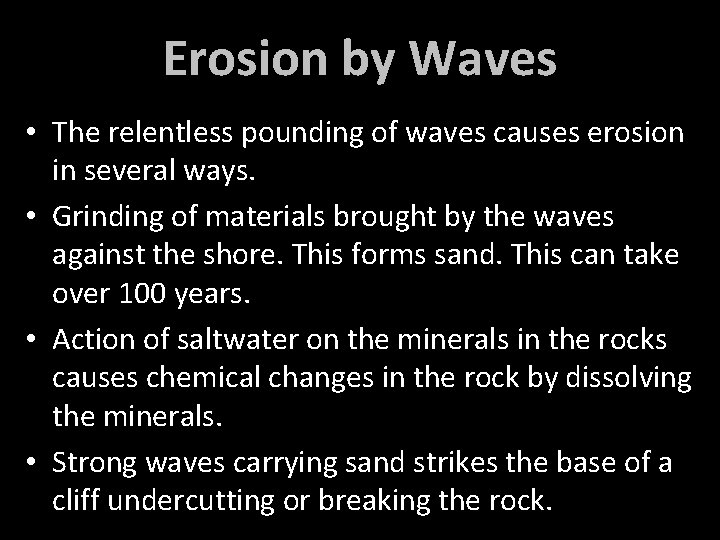
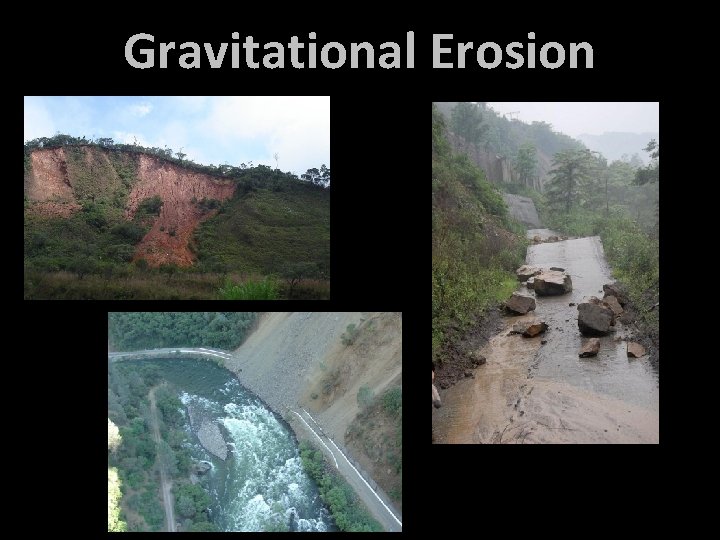
Erosion by Gravity • Downward movement of rock and sediment down a slope due to the pull of gravity • The process is quite slow and almost impossible to see until the land mass is no longer able to support itself and falls or slides down a slope. • Examples: landslide, slump, mass wasting, sinkhole, creep
Gravitational Erosion
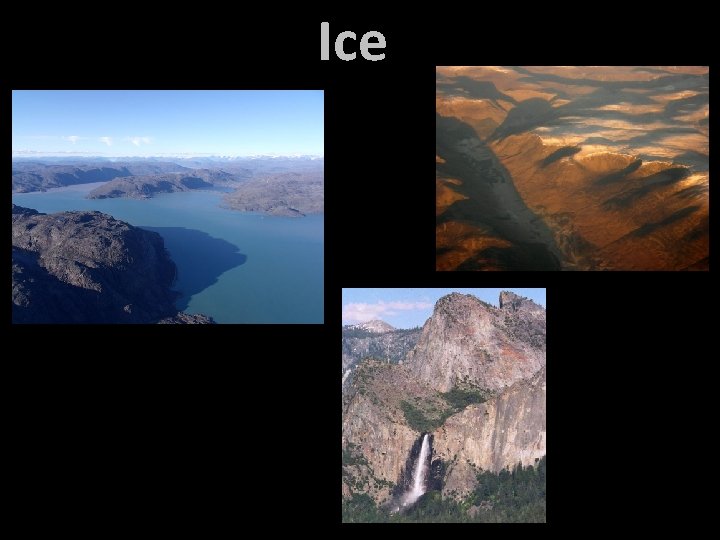
Erosion by Glacial Ice • Ice moves and carries rocks, grinding the rocks beneath it. • Plucking happens when materials are picked up by the moving ice and pushed along by the glacier. • During abrasion, smaller rocks act like large pieces of sand paper and cause grooves to be carved into the land. • Huge U-shaped valleys are cause by continental glaciers.
Ice
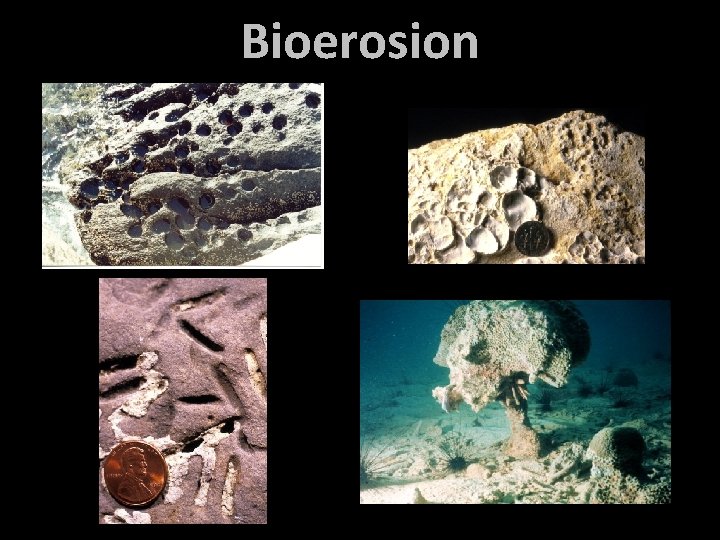
Erosion by Bioerosion • Bioerosion is the erosion of ocean rocks by living animals. • This is done by boring, drilling, rasping, or scraping. • Most often done by some mollusks, sponges, chiton, urchins, algae, bacteria, and fish
Bioerosion
Deposition • The laying down or dropping off of sediments that were carried to a new location from another location • Deposition can be transported by wind, water, or ice.
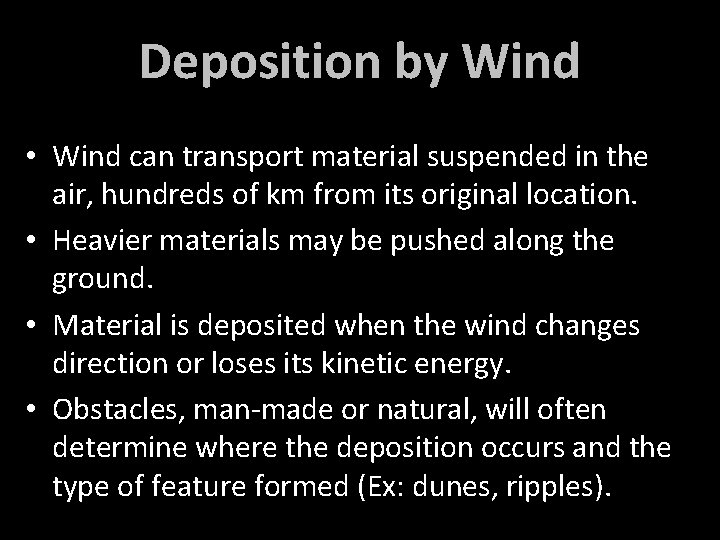
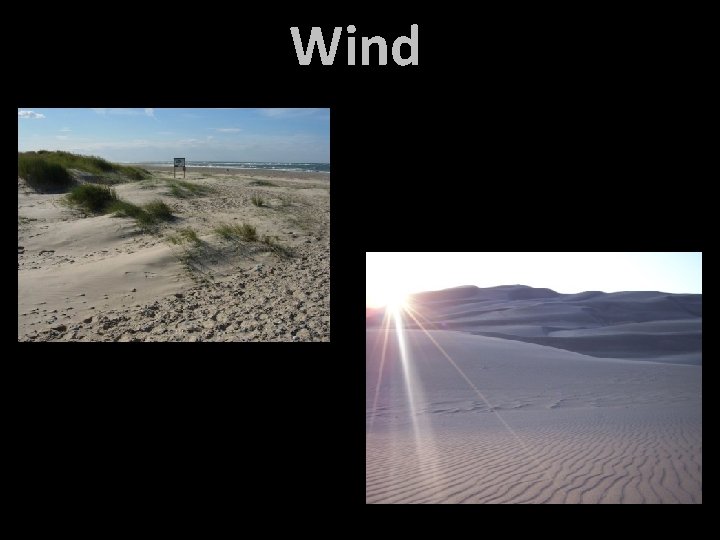
Deposition by Wind • Wind can transport material suspended in the air, hundreds of km from its original location. • Heavier materials may be pushed along the ground. • Material is deposited when the wind changes direction or loses its kinetic energy. • Obstacles, man-made or natural, will often determine where the deposition occurs and the type of feature formed (Ex: dunes, ripples).
Wind
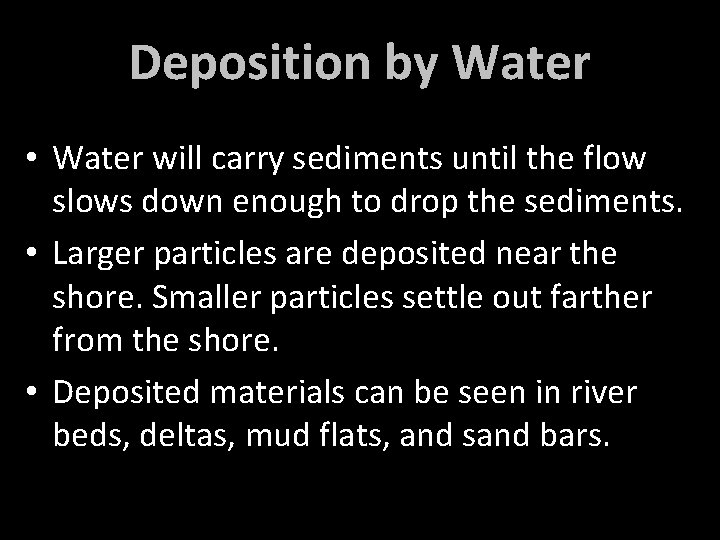
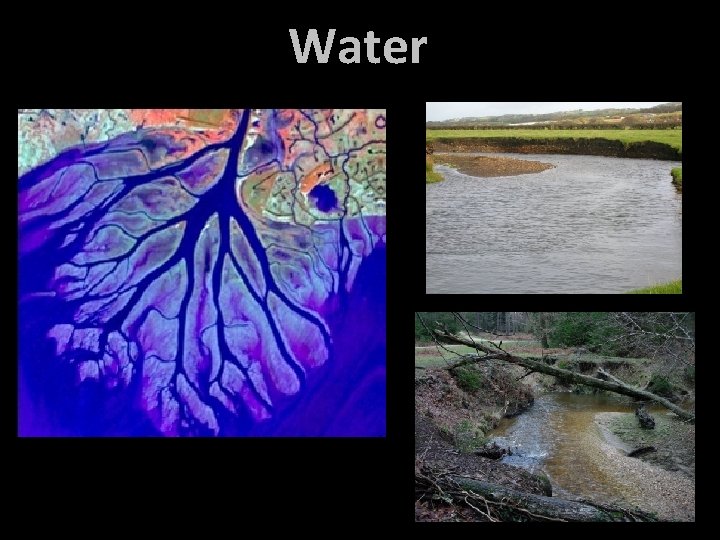
Deposition by Water • Water will carry sediments until the flow slows down enough to drop the sediments. • Larger particles are deposited near the shore. Smaller particles settle out farther from the shore. • Deposited materials can be seen in river beds, deltas, mud flats, and sand bars.
Water
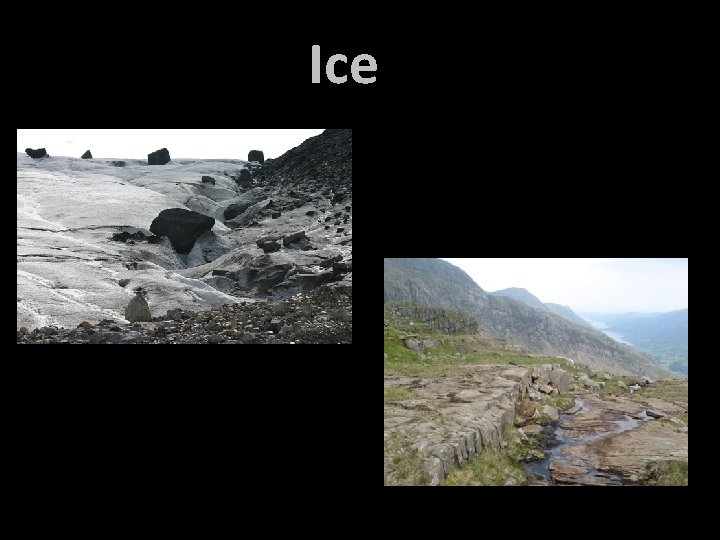
Deposition by Ice • Melting glaciers leave materials behind. • Includes huge boulders (erratics), piles of smaller rocks (moraines), glacial lakes, clay, and sand (till) • Glacial flows become slower if input is reduced or when the ice begins to melt.
Ice