
The Problem with Pomegranates The Myth of Persephone
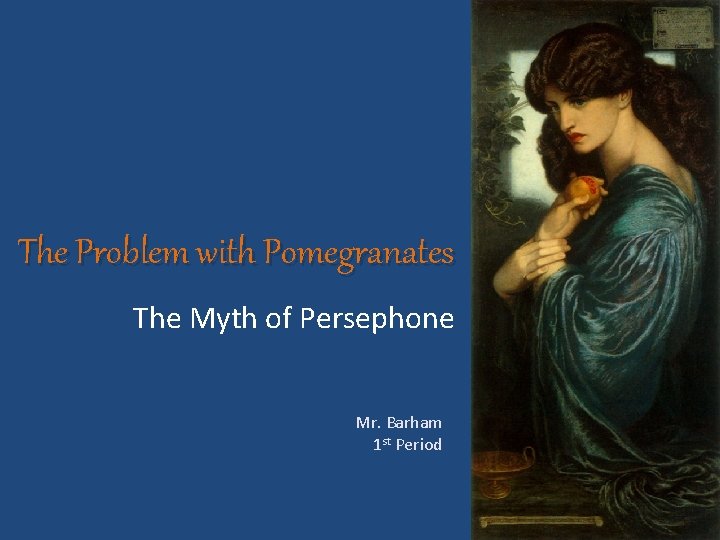
The Problem with Pomegranates The Myth of Persephone Mr. Barham 1 st Period
Source Analysis: The Myth of Persephone The Homeric Hymns • Not written by Homer • 33 anonymous poems, each dedicated to one of the gods • Written in the same verse as The Iliad and The Odyssey • Typically dated from 7 -6 B. C. Faulkner, Andrew. “Homeric Hymns. ” Oxford Bibliographies, 2014. Web. 15 Oct. 2014.

Myth Analysis: The Myth of Persephone Hospitality • Metaneira’s daughters insistent on Demeter visiting their home • Demeter honors hospitality by attempting to make Demophoon immortal Willy Pogány. 1921.
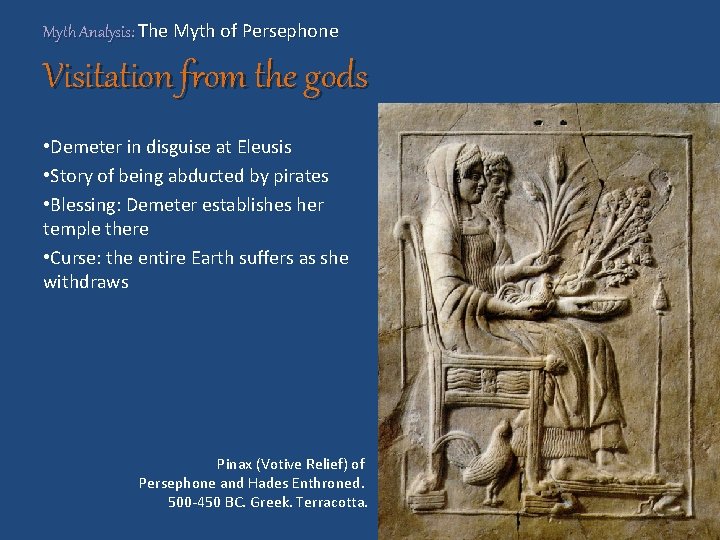
Myth Analysis: The Myth of Persephone Visitation from the gods • Demeter in disguise at Eleusis • Story of being abducted by pirates • Blessing: Demeter establishes her temple there • Curse: the entire Earth suffers as she withdraws Pinax (Votive Relief) of Persephone and Hades Enthroned. 500 -450 BC. Greek. Terracotta.
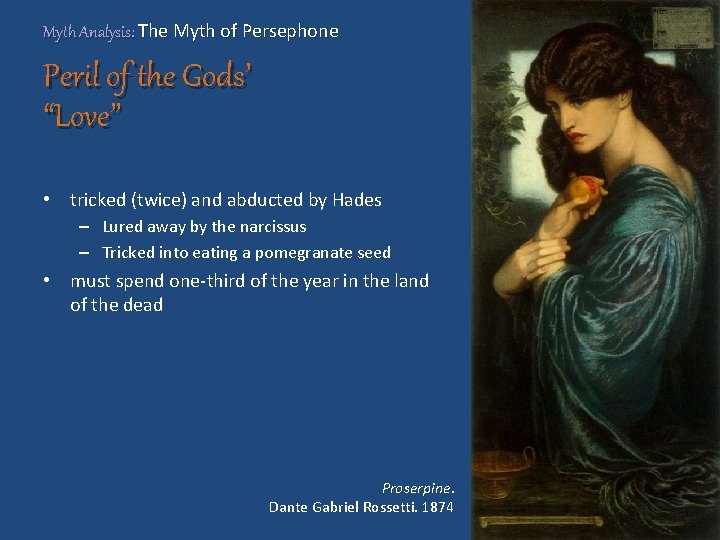
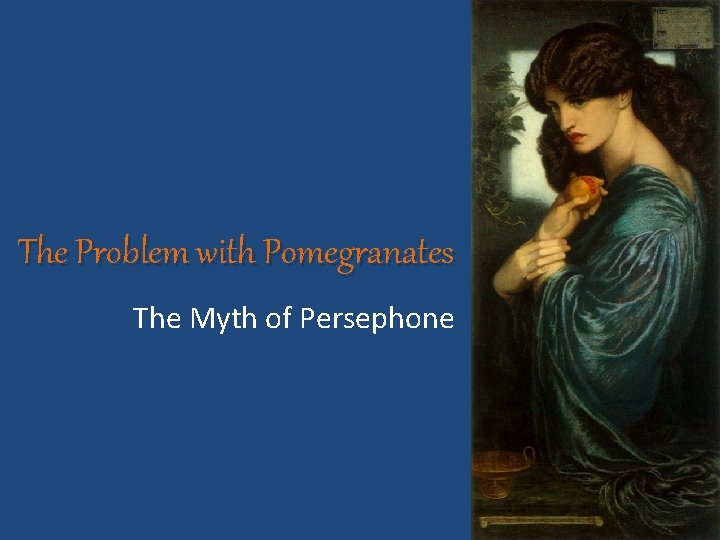
Myth Analysis: The Myth of Persephone Peril of the Gods’ “Love” • tricked (twice) and abducted by Hades – Lured away by the narcissus – Tricked into eating a pomegranate seed • must spend one-third of the year in the land of the dead Proserpine. Dante Gabriel Rossetti. 1874

Myth Analysis: The Myth of Persephone Early Science Explains the Seasons • Pomegranate seed • Winter: the third of the year when Persephone is in the Underworld • Spring: when she returns The Return of Persephone. Frederic Leighton. 1890 -1
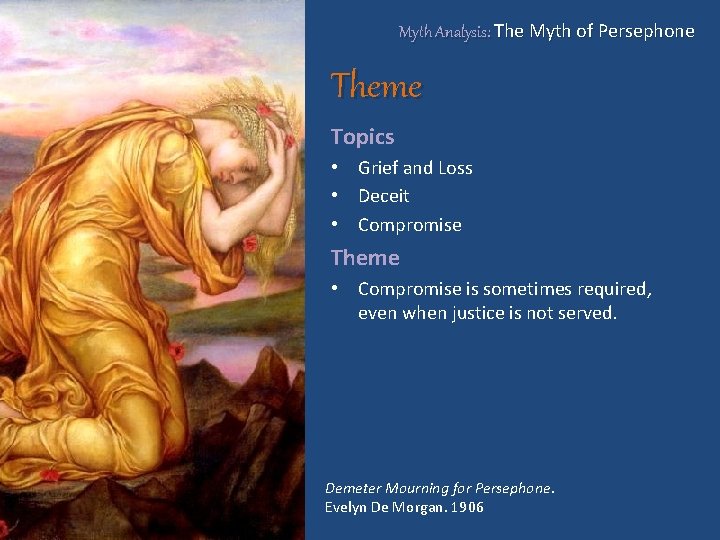
Myth Analysis: The Myth of Persephone Theme Topics • Grief and Loss • Deceit • Compromise Theme • Compromise is sometimes required, even when justice is not served. Demeter Mourning for Persephone. Evelyn De Morgan. 1906

Art Review: The Myth of Persephone Roman Sarcophagus Front Panel, 3 B. C. (Vienna Museum of Art)
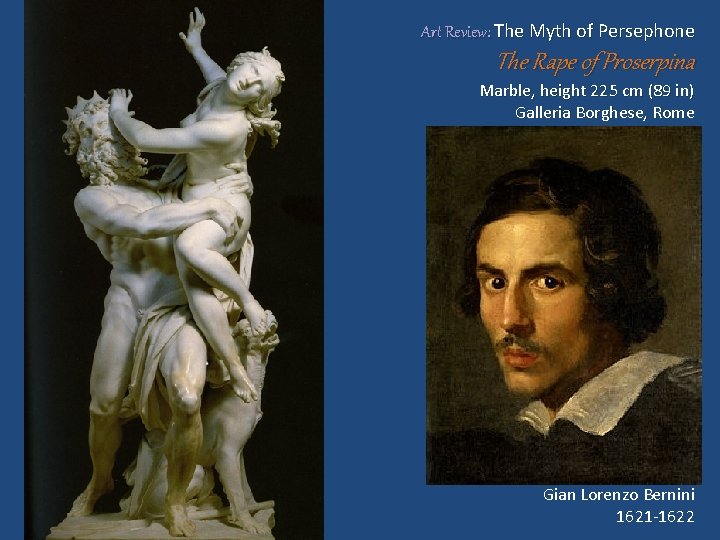
Art Review: The Myth of Persephone The Rape of Proserpina Marble, height 225 cm (89 in) Galleria Borghese, Rome Gian Lorenzo Bernini 1621 -1622
The Problem with Pomegranates The Myth of Persephone
- Slides: 10