
The Printing Press and the Spread of Ideas
- Slides: 13
The Printing Press and the Spread of Ideas
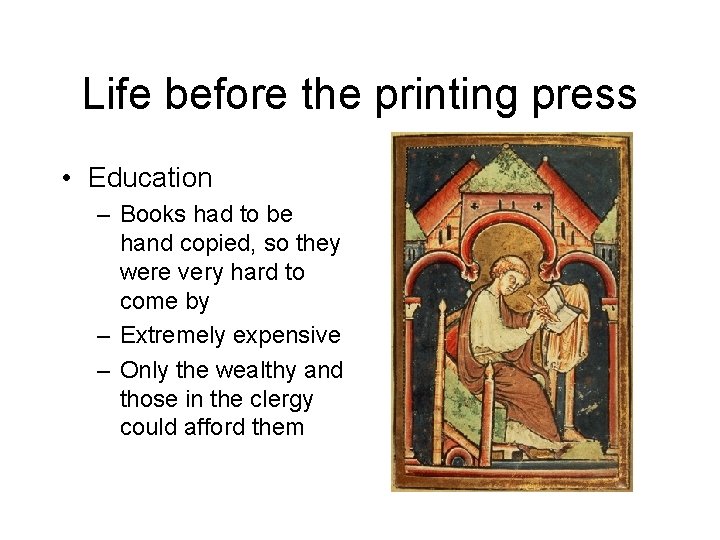
Life before the printing press • Education – Books had to be hand copied, so they were very hard to come by – Extremely expensive – Only the wealthy and those in the clergy could afford them
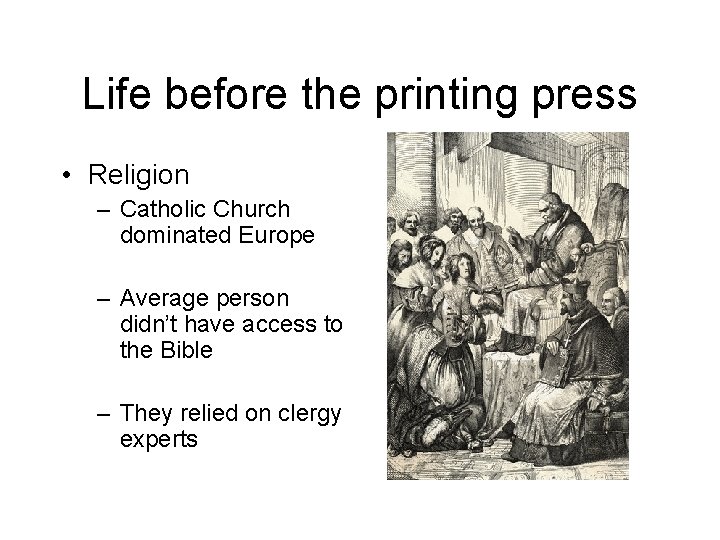
Life before the printing press • Religion – Catholic Church dominated Europe – Average person didn’t have access to the Bible – They relied on clergy experts
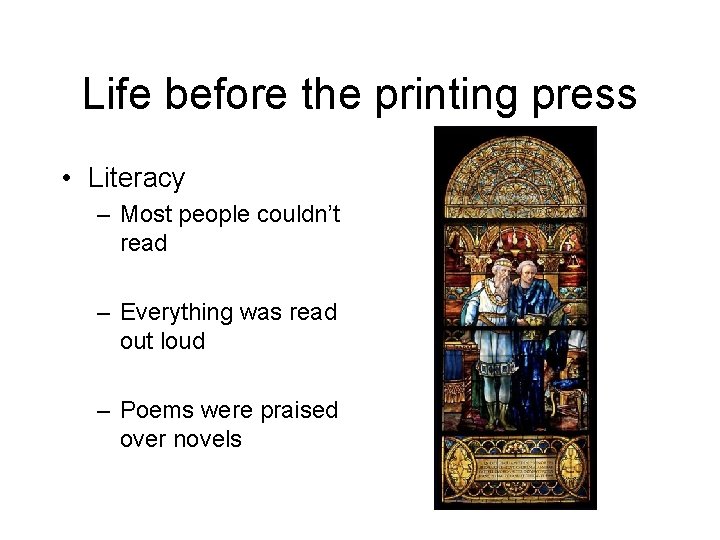
Life before the printing press • Literacy – Most people couldn’t read – Everything was read out loud – Poems were praised over novels
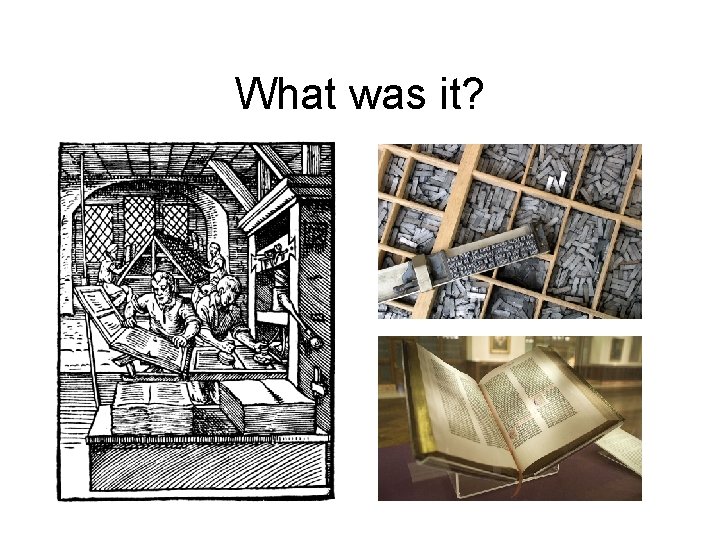
What was it?
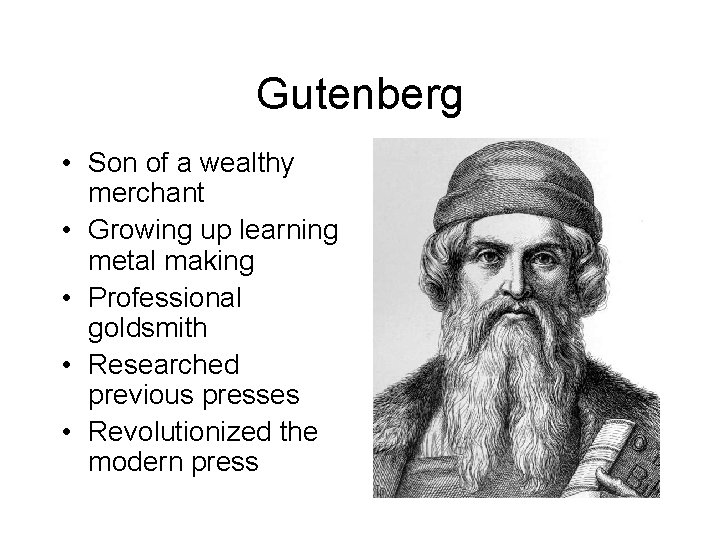
Gutenberg • Son of a wealthy merchant • Growing up learning metal making • Professional goldsmith • Researched previous presses • Revolutionized the modern press
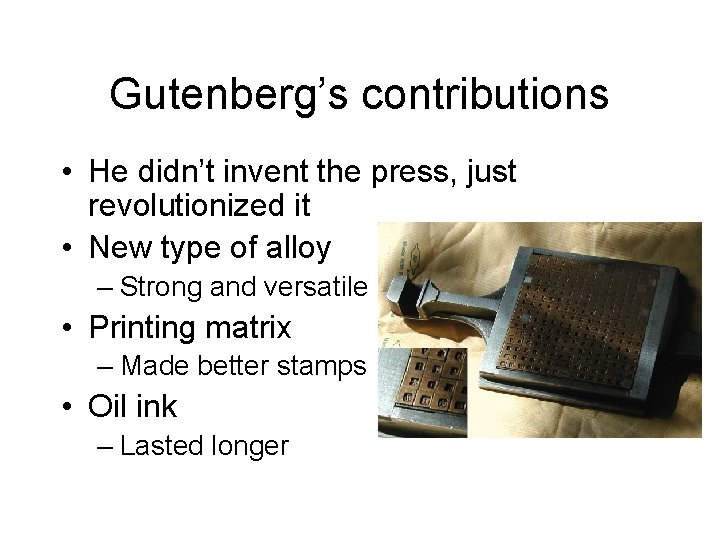
Gutenberg’s contributions • He didn’t invent the press, just revolutionized it • New type of alloy – Strong and versatile • Printing matrix – Made better stamps • Oil ink – Lasted longer
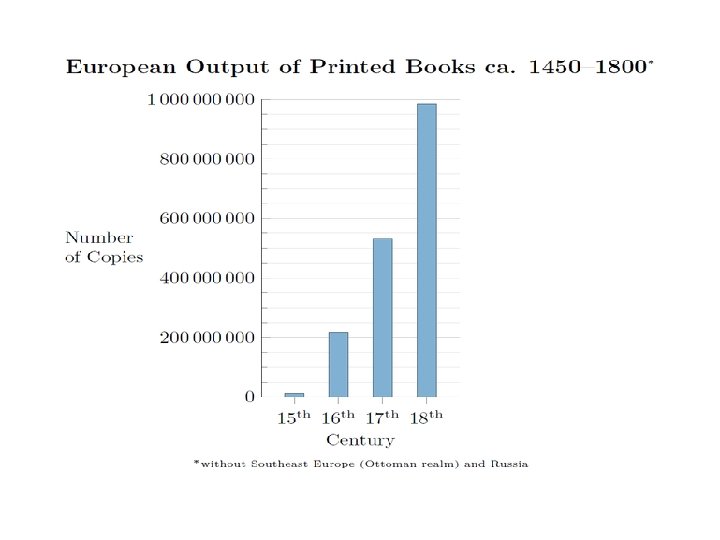
Influx of books
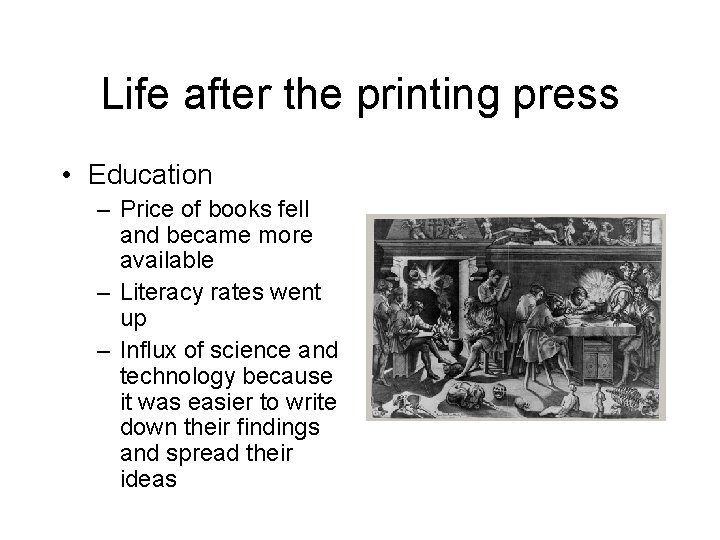
Life after the printing press • Education – Price of books fell and became more available – Literacy rates went up – Influx of science and technology because it was easier to write down their findings and spread their ideas
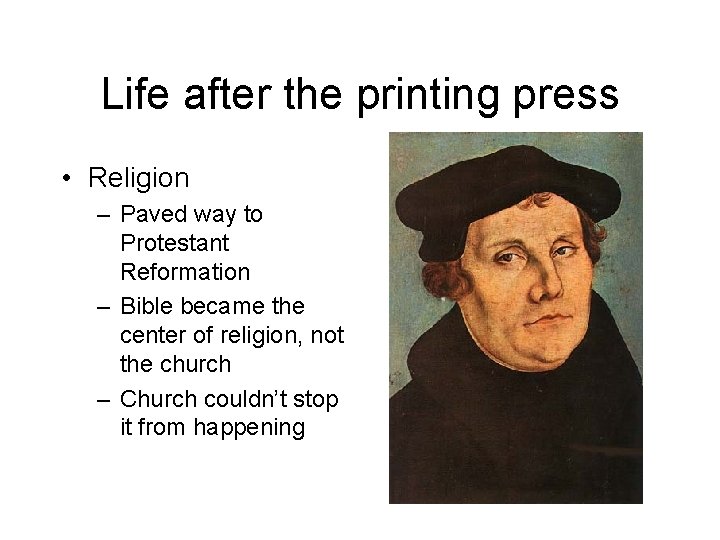
Life after the printing press • Religion – Paved way to Protestant Reformation – Bible became the center of religion, not the church – Church couldn’t stop it from happening
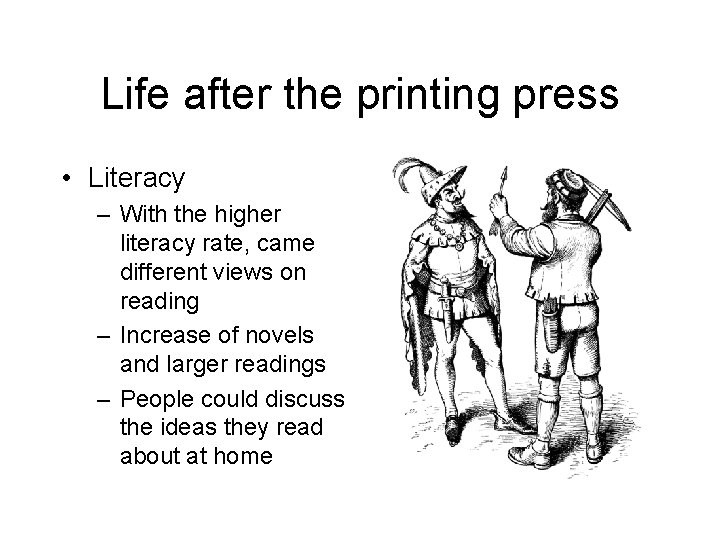
Life after the printing press • Literacy – With the higher literacy rate, came different views on reading – Increase of novels and larger readings – People could discuss the ideas they read about at home
Spread of ideas • Between classes, groups, cultures • Brought about the scientific revolution • Authorship became important • Invention of text aids • Decline of Latin
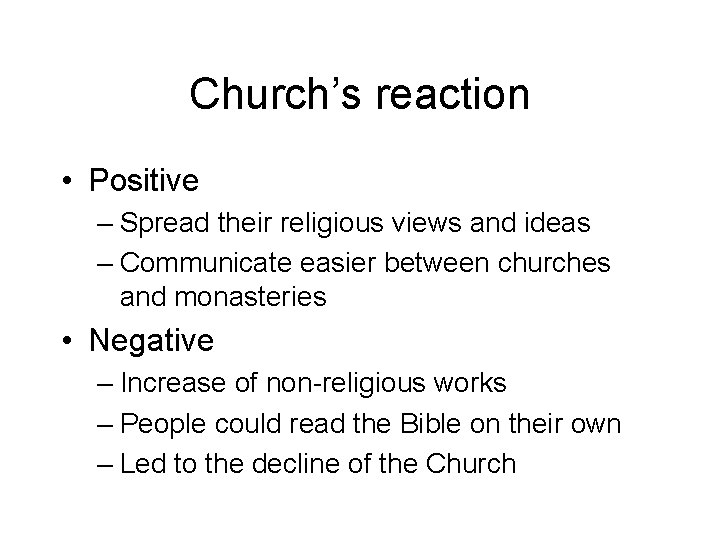
Church’s reaction • Positive – Spread their religious views and ideas – Communicate easier between churches and monasteries • Negative – Increase of non-religious works – People could read the Bible on their own – Led to the decline of the Church