
The Principles of the Constitution Principle 1 Popular
- Slides: 23
The Principles of the Constitution
Principle #1 Popular Sovereignty • “We the people” • Why are these first three words of the Constitution the most important? • They clearly state that the people—not the king, not the legislature, not the courts— are the true rulers in American government.
Gentlemen of Their Time Justice Ruth Bader Ginsburg • It manifests no disrespect for the Constitution to note that the framers were gentlemen of their time, and therefore had a distinctly limited vision of those who counted among “We the People. ” • Not until the adoption of the post–Civil War Fourteenth Amendment did the word “equal, ” in relation to the stature of individuals, even make an appearance in the Constitution. • But the equal dignity of all persons is nonetheless a vital part of our constitutional legacy, even if the culture of the framers held them back from fully perceiving that universal ideal. • We can best celebrate that legacy by continuing to strive to form “a more perfect Union” for ourselves and the generations to come.
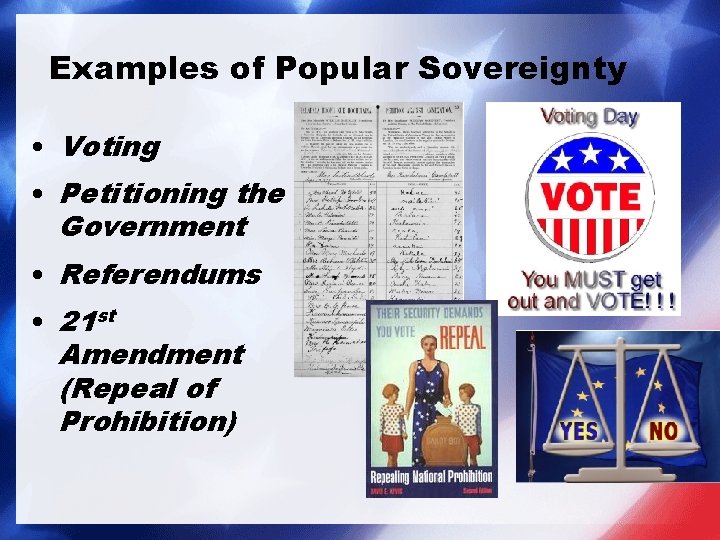
Examples of Popular Sovereignty • Voting • Petitioning the Government • Referendums • 21 st Amendment (Repeal of Prohibition)
Principle #2 Limited Government • Powers of the government are clearly defined in the Constitution • Why? • This way our government is limited by law • Why did the framers want to limit the power of the government?
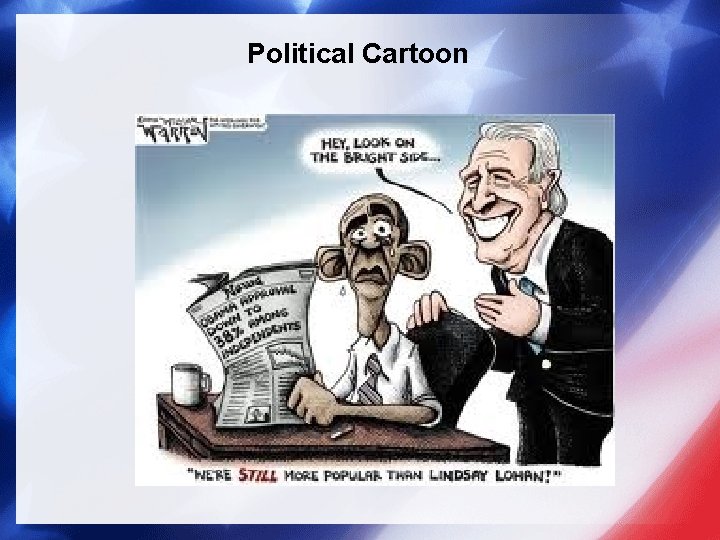
Political Cartoon
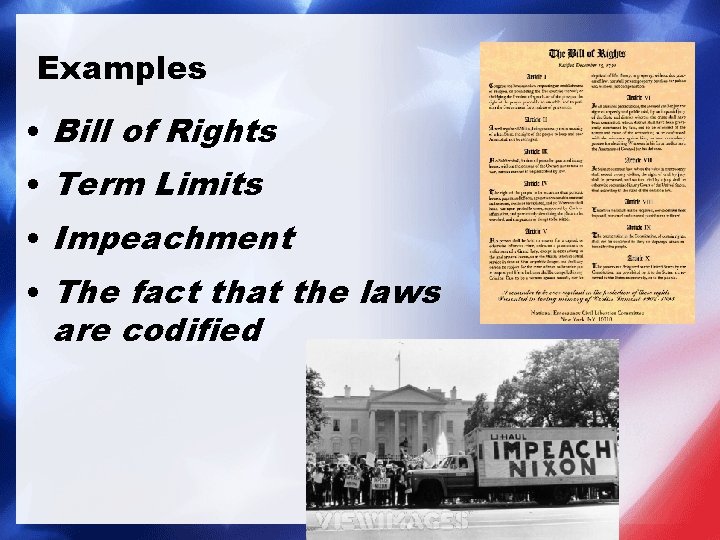
Examples • Bill of Rights • Term Limits • Impeachment • The fact that the laws are codified
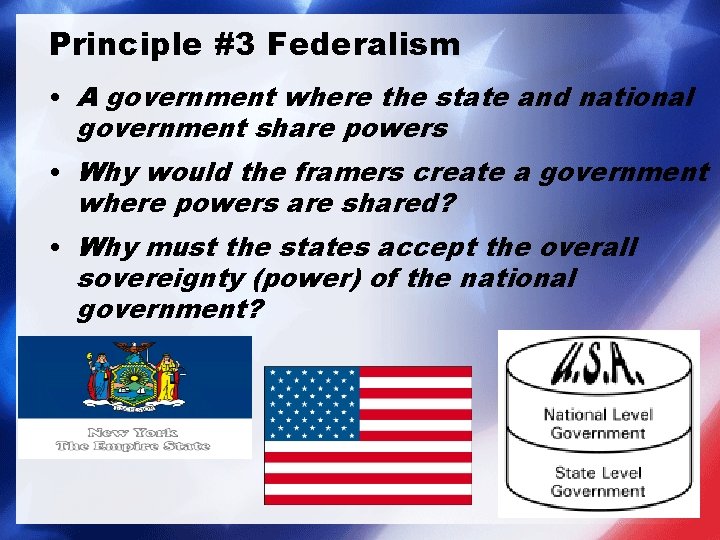
Principle #3 Federalism • A government where the state and national government share powers • Why would the framers create a government where powers are shared? • Why must the states accept the overall sovereignty (power) of the national government?
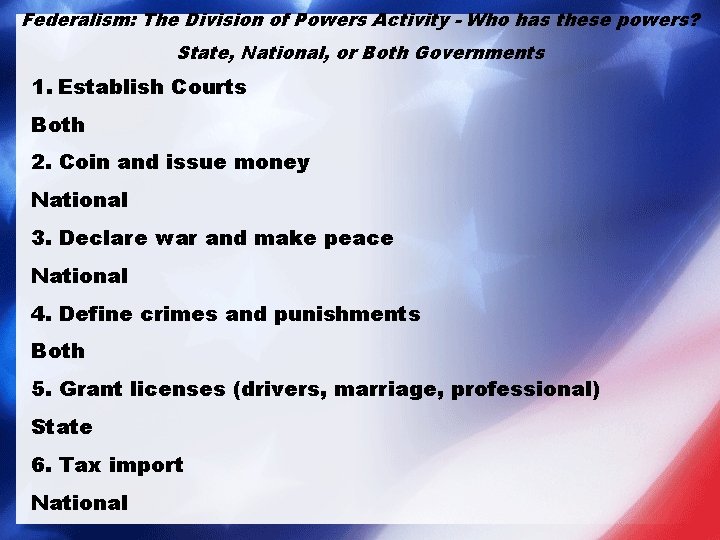
Federalism: The Division of Powers Activity - Who has these powers? State, National, or Both Governments 1. Establish Courts Both 2. Coin and issue money National 3. Declare war and make peace National 4. Define crimes and punishments Both 5. Grant licenses (drivers, marriage, professional) State 6. Tax import National
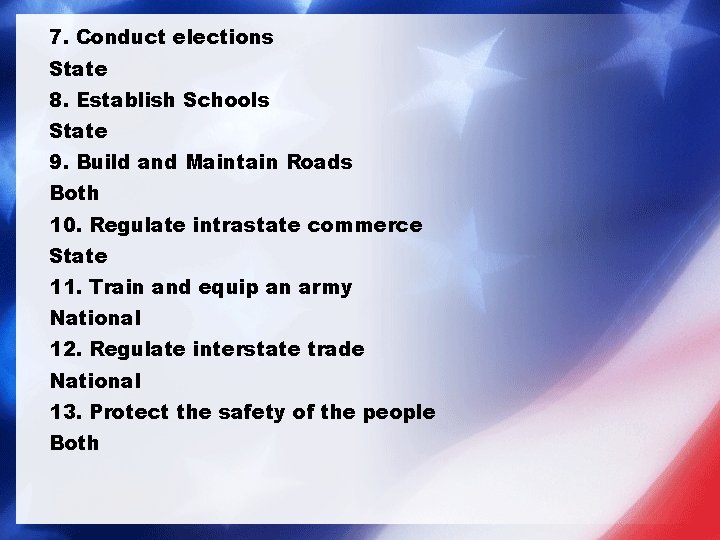
7. Conduct elections State 8. Establish Schools State 9. Build and Maintain Roads Both 10. Regulate intrastate commerce State 11. Train and equip an army National 12. Regulate interstate trade National 13. Protect the safety of the people Both
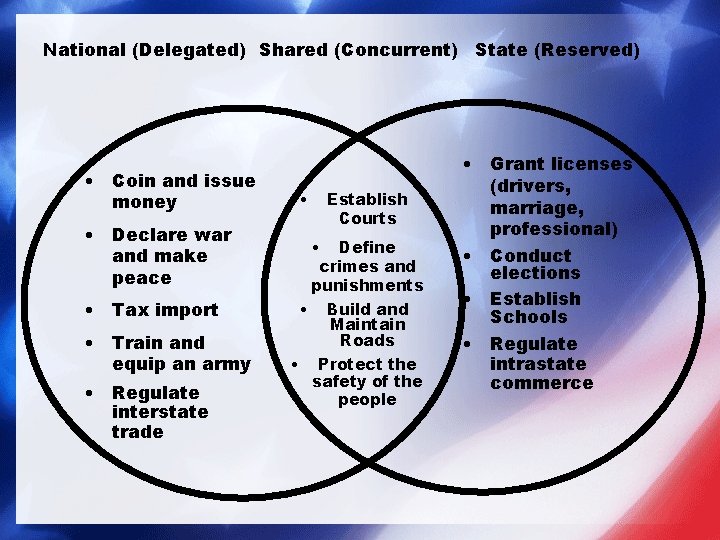
National (Delegated) Shared (Concurrent) State (Reserved) • Coin and issue money • Declare war and make peace • Tax import • Train and equip an army • Regulate interstate trade • Establish Courts • Define crimes and punishments • Build and Maintain Roads • Protect the safety of the people • Grant licenses (drivers, marriage, professional) • Conduct elections • Establish Schools • Regulate intrastate commerce
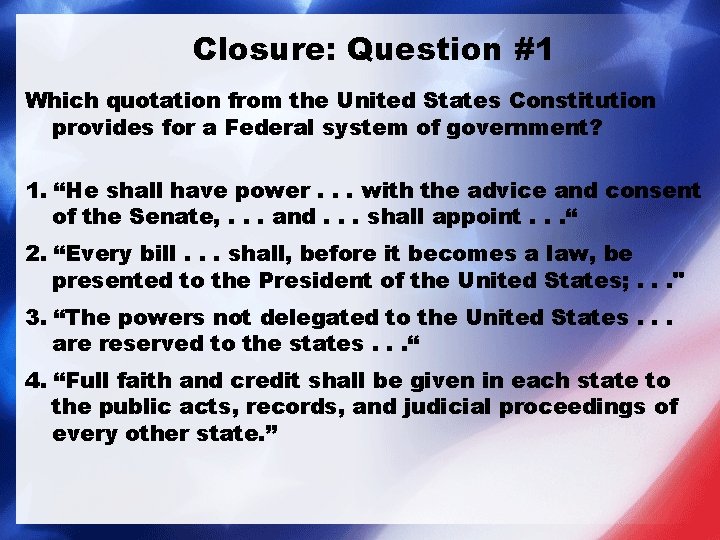
Closure: Question #1 Which quotation from the United States Constitution provides for a Federal system of government? 1. “He shall have power. . . with the advice and consent of the Senate, . . . and. . . shall appoint. . . “ 2. “Every bill. . . shall, before it becomes a law, be presented to the President of the United States; . . . " 3. “The powers not delegated to the United States. . . are reserved to the states. . . “ 4. “Full faith and credit shall be given in each state to the public acts, records, and judicial proceedings of every other state. ”
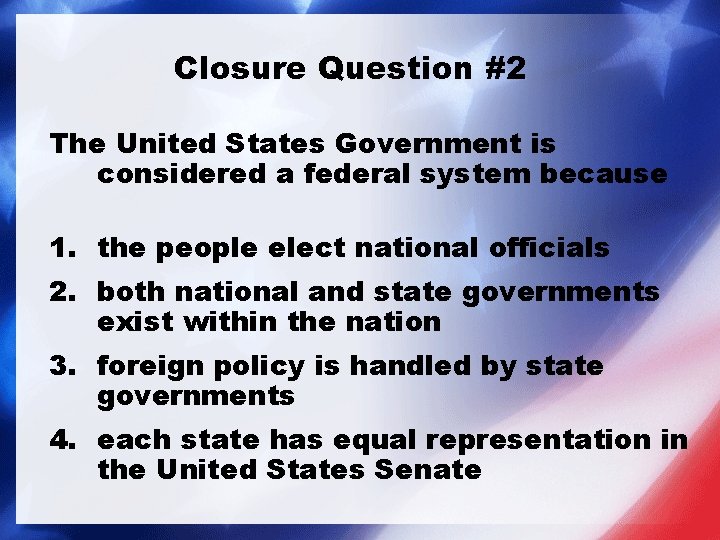
Closure Question #2 The United States Government is considered a federal system because 1. the people elect national officials 2. both national and state governments exist within the nation 3. foreign policy is handled by state governments 4. each state has equal representation in the United States Senate
Today’s Closure… Evaluate which principle of government is most evident in your life today. Provide evidence to support your argument.
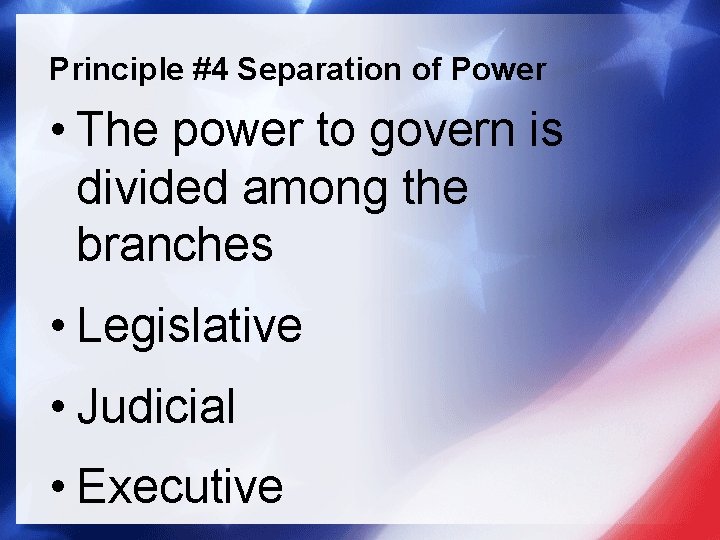
Principle #4 Separation of Power • The power to govern is divided among the branches • Legislative • Judicial • Executive
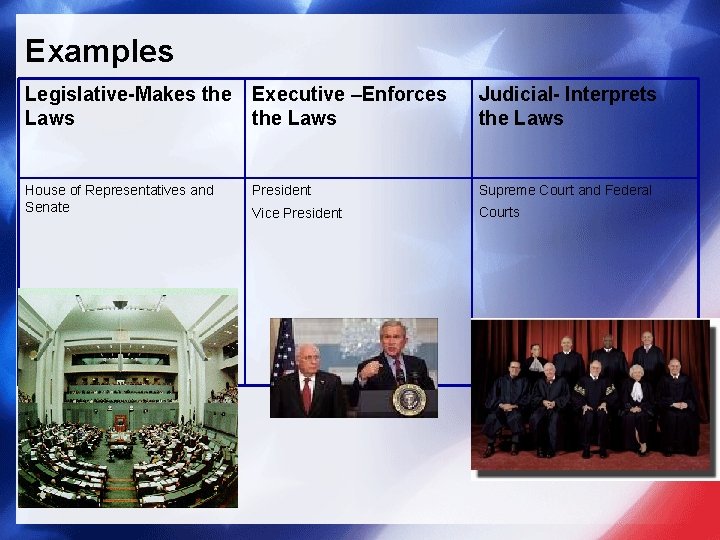
Examples Legislative-Makes the Laws Executive –Enforces the Laws Judicial- Interprets the Laws House of Representatives and Senate President Supreme Court and Federal Vice President Courts
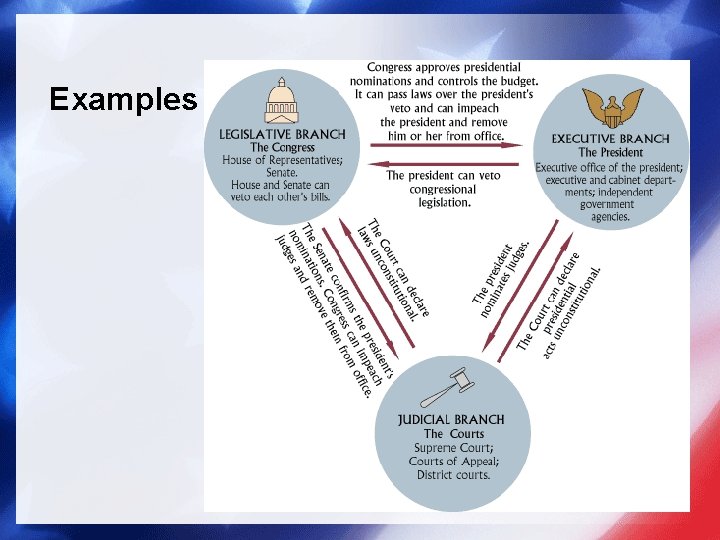
Principle #5 Checks and Balances • This system gives each branch of the national government way to check, or control, the other branches • Why? • Checks and Balances Predictions
Examples
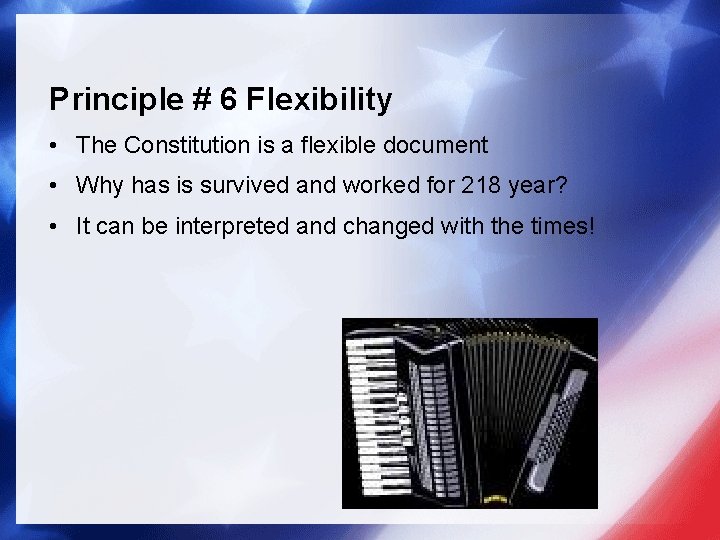
Principle # 6 Flexibility • The Constitution is a flexible document • Why has is survived and worked for 218 year? • It can be interpreted and changed with the times!
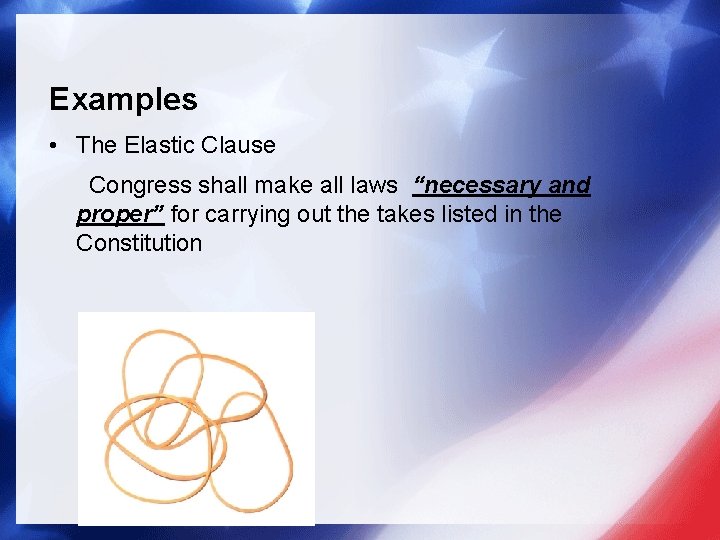
Examples • The Elastic Clause Congress shall make all laws “necessary and proper” for carrying out the takes listed in the Constitution
Example 2 • The Amendment Process -Article V describes how the Constitution may be formally changed -Both Congress and the States must agree -THE ONLY WAY TO CHANGE AN ADMENT IS BY ADDING ANOTHER ONE
Example 3 • Judicial Review -The Supreme Court has the power to interpret any law or action of the government as constitutional or unconstitutional
Example 4