
The Principles of Design Rhythm Movement Balance Proportion
The Principles of Design Rhythm Movement Balance Proportion Variety Emphasis Unity
Rhythm Repeating an element over and over in a work of art; similar to pattern; like the beat of artwork In music there is a beat – in visual art there is a motif Occurs when movement is repeated Used to direct your eye
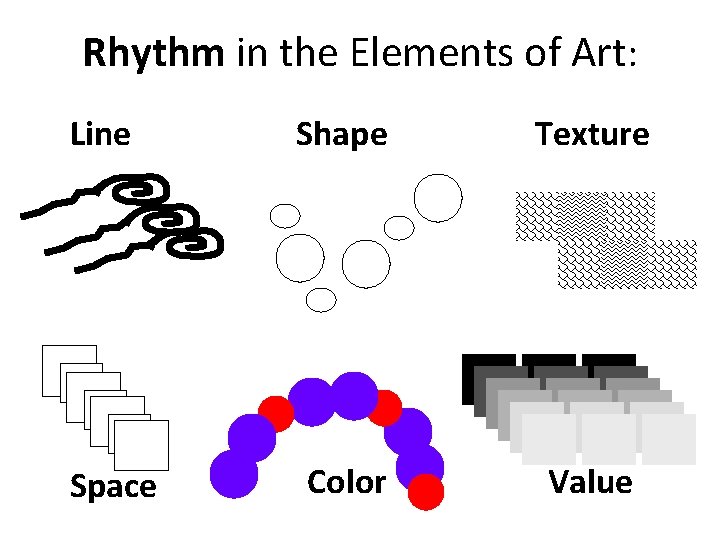
Rhythm in the Elements of Art: Line Space Shape Texture Color Value

Movement an illusion of motion; when your eye follows a path; caused by repetition and rhythm Your eye will move around an artwork because of the way the artist repeated things Adds excitement
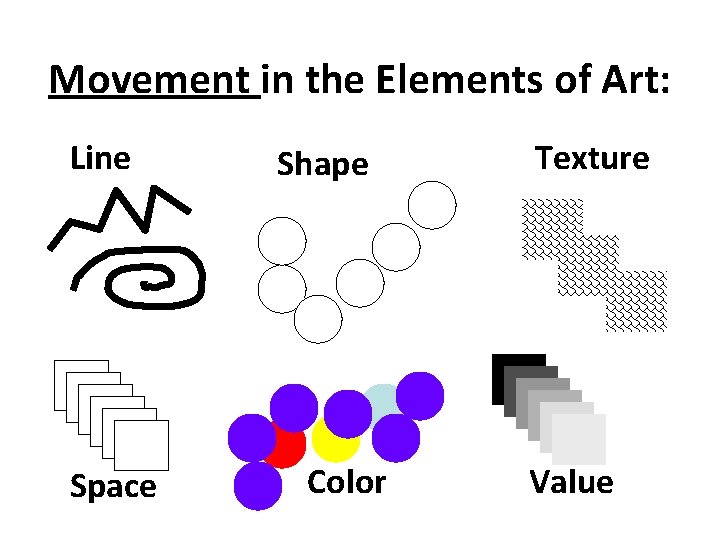
Movement in the Elements of Art: Line Space Shape Color Texture Value
Balance a sense of stability in the body of work; a feeling of equal weight.
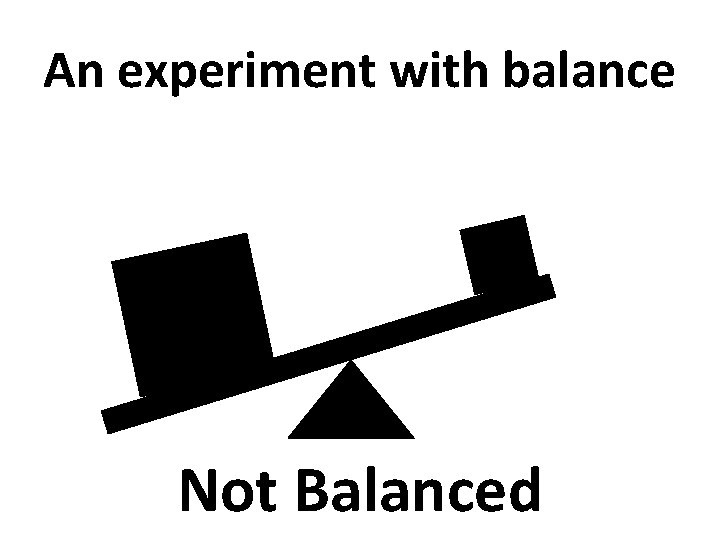
An experiment with balance Not Balanced
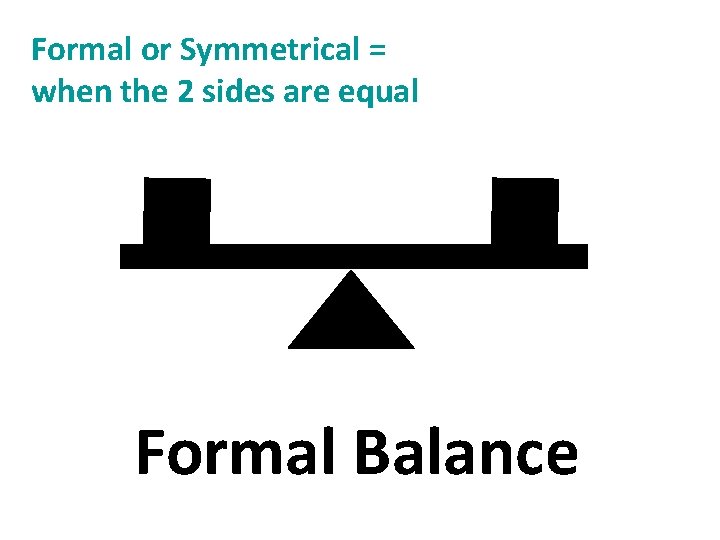
Formal or Symmetrical = when the 2 sides are equal Formal Balance
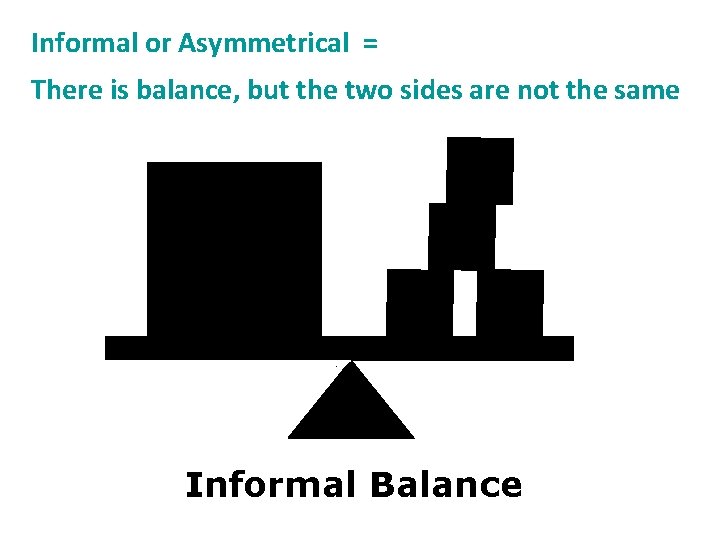
Informal or Asymmetrical = There is balance, but the two sides are not the same Informal Balance
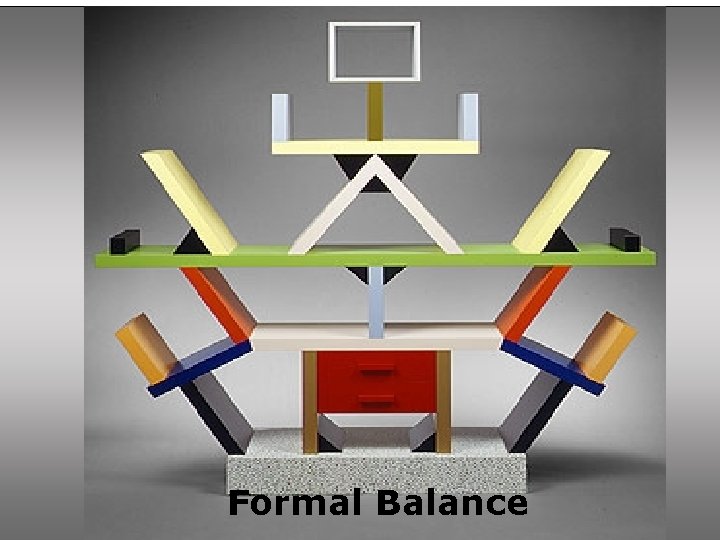
Formal Balance
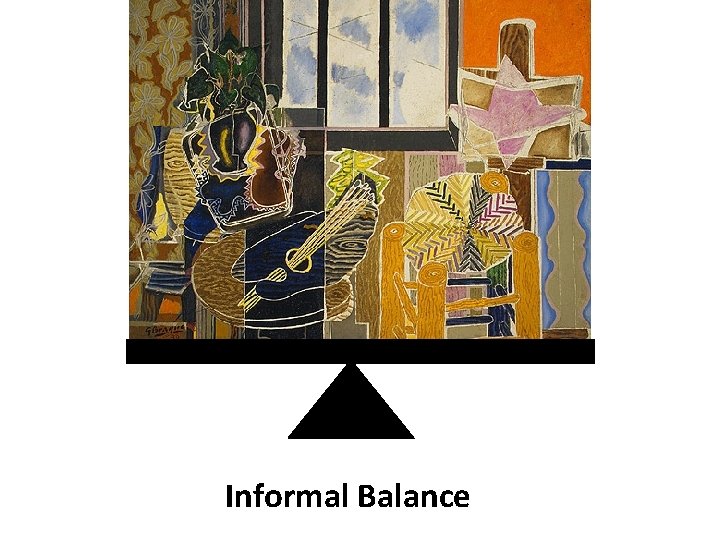
Informal Balance
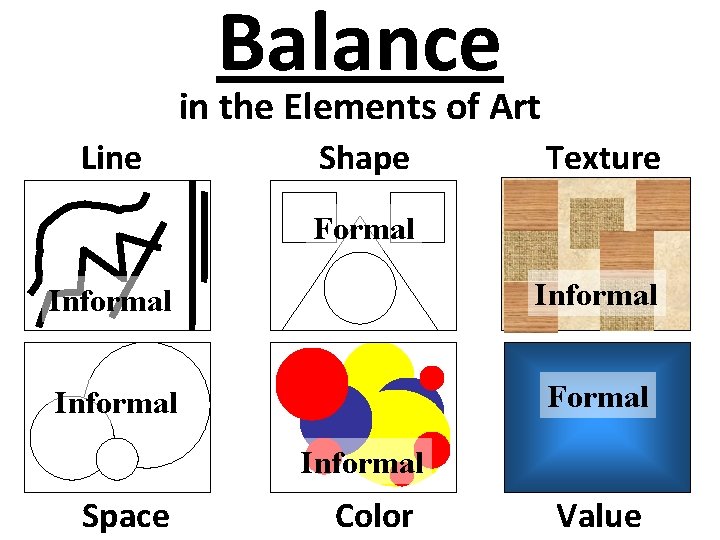
Balance in the Elements of Art Line Shape Texture Formal Informal Formal Informal Space Color Value
Proportion (scale) refers to the relationships of the Size of objects in a body of work. Artists learned that distorting or exaggerating proportion could alter the effect of a work on the viewer Artists can show what is important by changing the sizes of objects
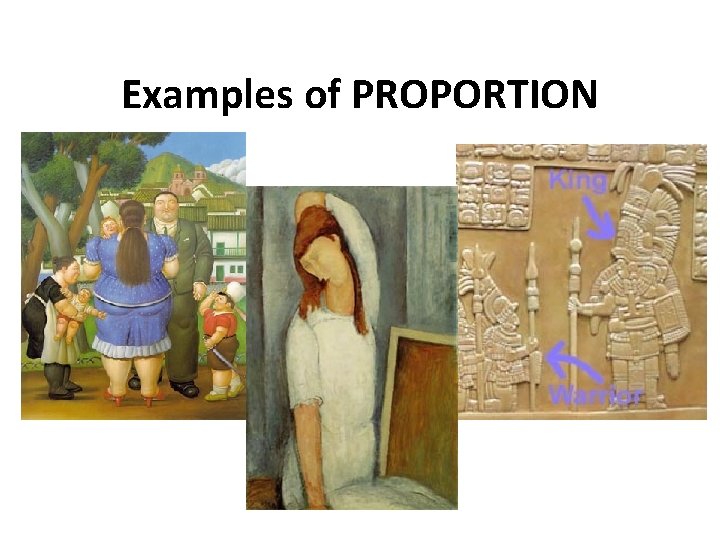
Examples of PROPORTION
Variety Differences in artwork; You can achieve variety by using different shapes, textures, colors and values in your work. Adds visual interest; keeps your eye looking
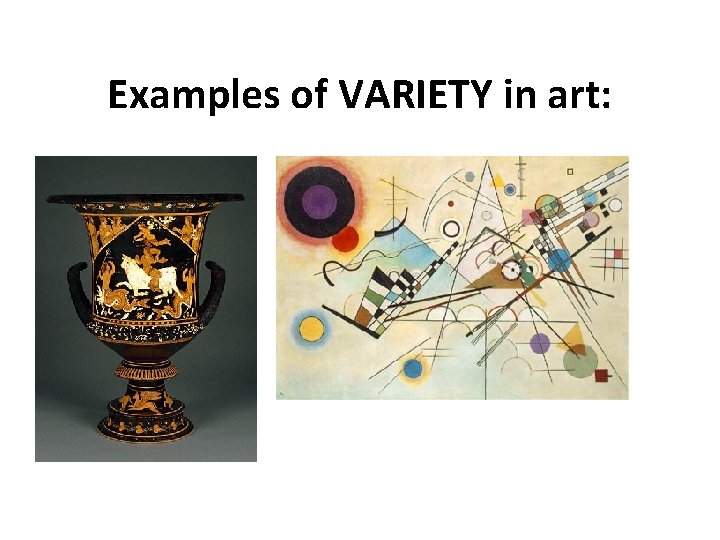
Examples of VARIETY in art:
Emphasis One object or area that stands out or attracts attention, an area of interest that is important AKA “focal point” Created with strong contrast, highlights, large size, etc.
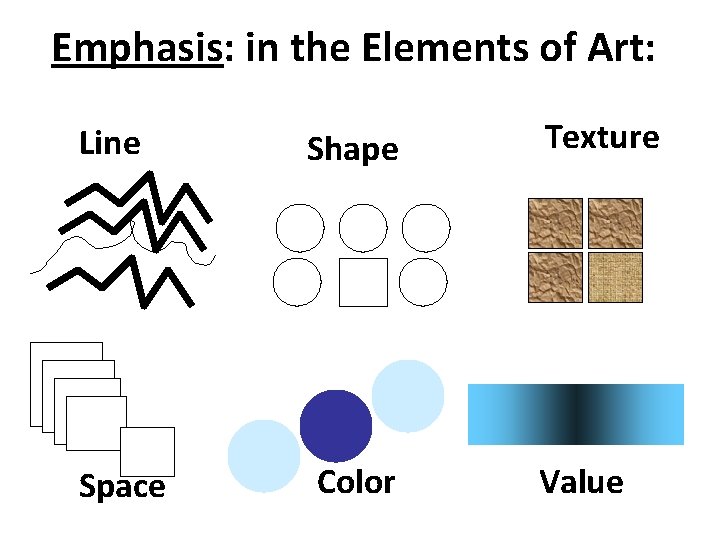
Emphasis: in the Elements of Art: Line Shape Texture Space Color Value
Unity everything fits together as a whole; AKA “harmony” Your work should not appear disjointed or confusing. Lines, shapes, colors, textures, value or space fit together to form one unit Composition appears to be a whole, not a collection of parts
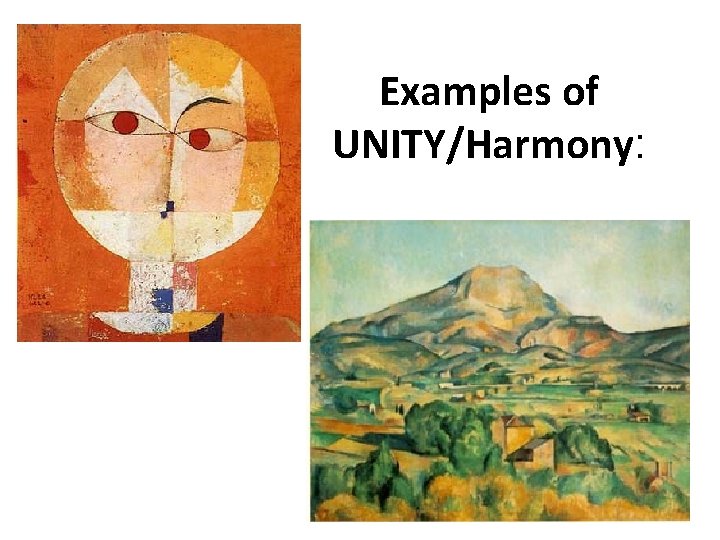
Examples of UNITY/Harmony:
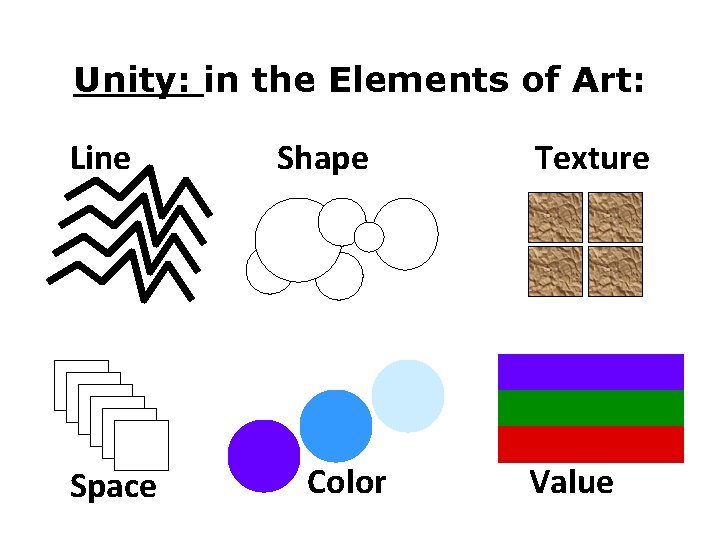
Unity: in the Elements of Art: Line Space Shape Color Texture Value
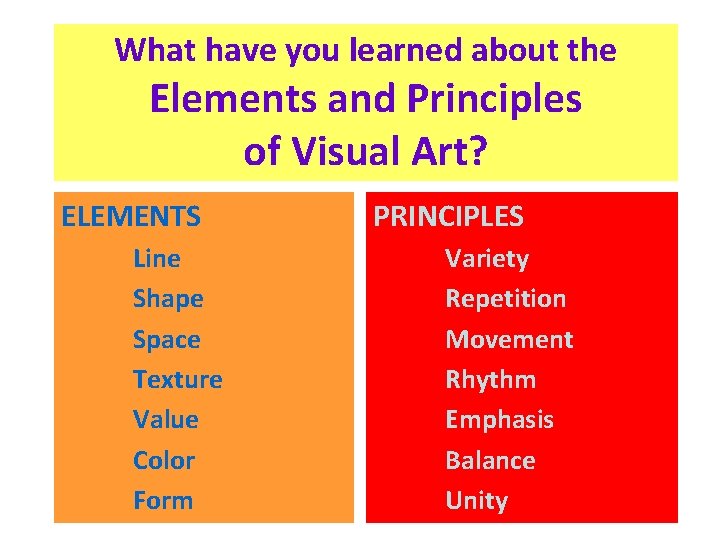
What have you learned about the Elements and Principles of Visual Art? ELEMENTS Line Shape Space Texture Value Color Form PRINCIPLES Variety Repetition Movement Rhythm Emphasis Balance Unity
- Slides: 22