
The Principles of Design in Layout Objective Objective
The Principles of Design in Layout
Objective: Objective • Students will describe and analyze the principles of design in digital art (contrast, balance, emphasis, repetition, unity, and variety). Questions: 1. What will you be able to describe after this lesson? 2. What are you going analyze?
Prior Knowledge 1. When you are reading a magazine or a newspaper, what catches your eye? 2. What are things that appeal to you as you look at a newspaper or magazine? Objective: Students will describe and analyze the principles of design in digital art (contrast, balance, emphasis, repetition, unity, and variety).
Importance • It is important that you understand the basics of design, so that we have well designed documents. • Learning how to create designs that have impact is important to the success of any design project you are working on. • Also, understanding how to Objective: Students will describe and analyze the principles of design in digital art (contrast, balance, emphasis, repetition, unity, and variety). Questions: 1. Explain why it is important that you understand the basics of design? 2. Where could you use the skills you learn
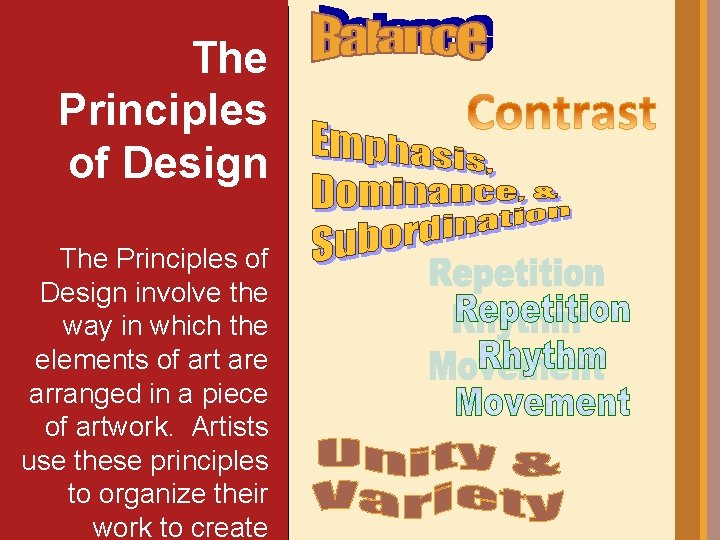
The Principles of Design involve the way in which the elements of art are arranged in a piece of artwork. Artists use these principles to organize their work to create
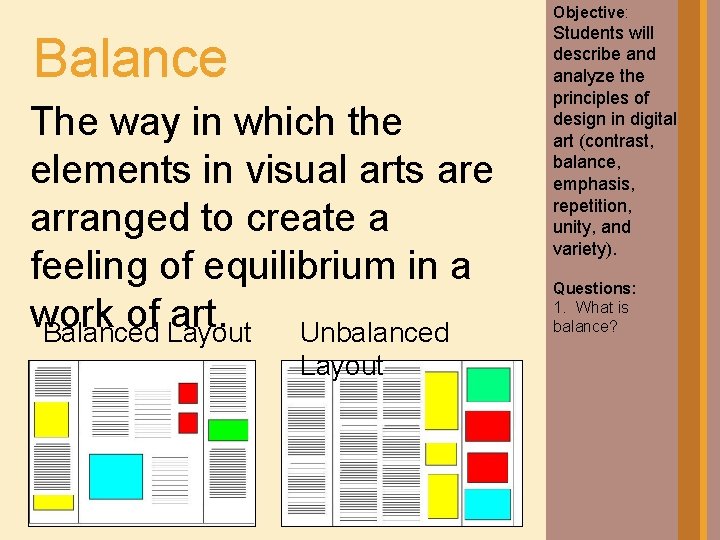
Objective: Balance The way in which the elements in visual arts are arranged to create a feeling of equilibrium in a work of art. Balanced Layout Unbalanced Layout Students will describe and analyze the principles of design in digital art (contrast, balance, emphasis, repetition, unity, and variety). Questions: 1. What is balance?
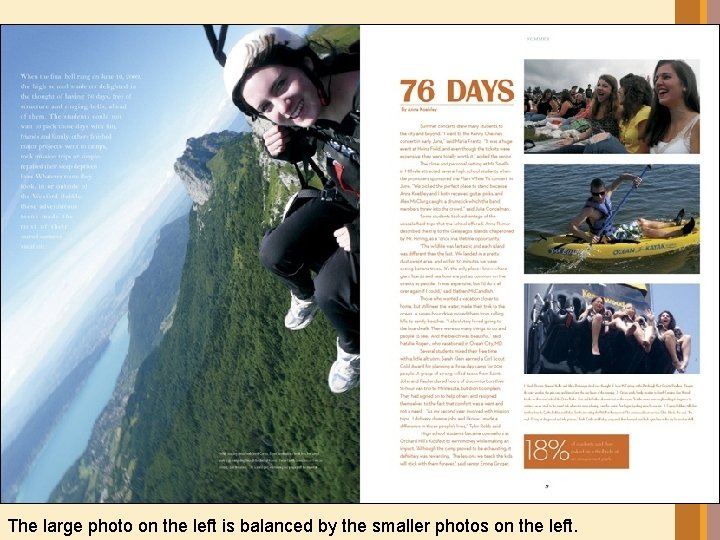
The large photo on the left is balanced by the smaller photos on the left.
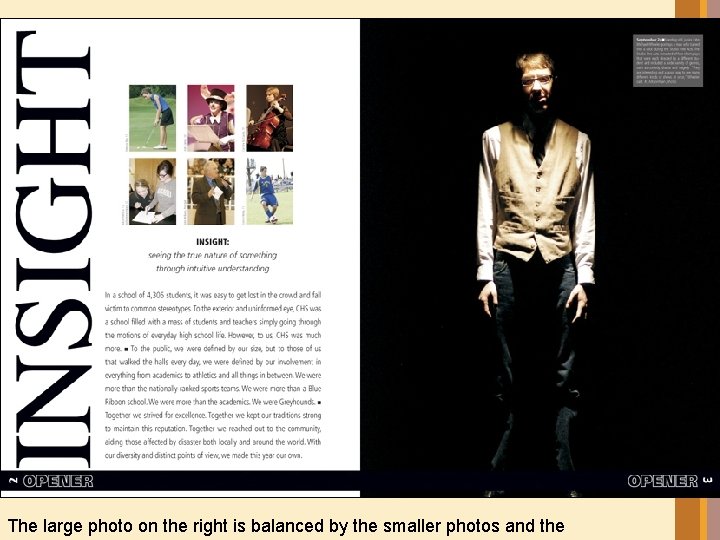
The large photo on the right is balanced by the smaller photos and the
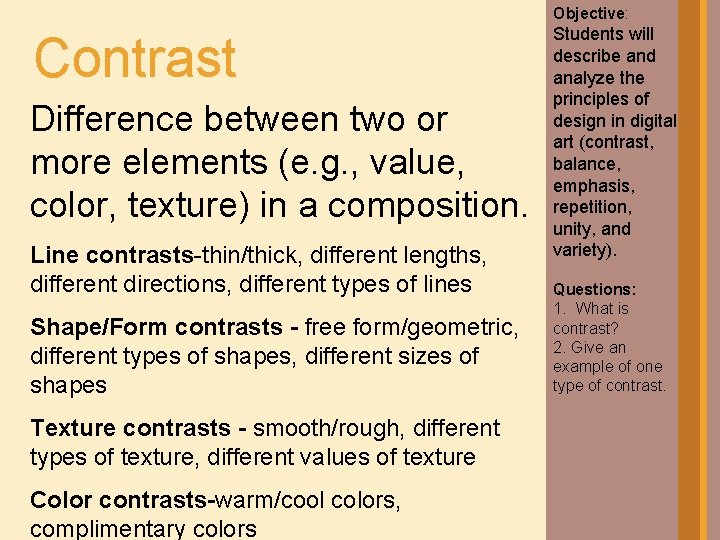
Objective: Contrast Difference between two or more elements (e. g. , value, color, texture) in a composition. Line contrasts-thin/thick, different lengths, different directions, different types of lines Shape/Form contrasts - free form/geometric, different types of shapes, different sizes of shapes Texture contrasts - smooth/rough, different types of texture, different values of texture Color contrasts-warm/cool colors, complimentary colors Students will describe and analyze the principles of design in digital art (contrast, balance, emphasis, repetition, unity, and variety). Questions: 1. What is contrast? 2. Give an example of one type of contrast.
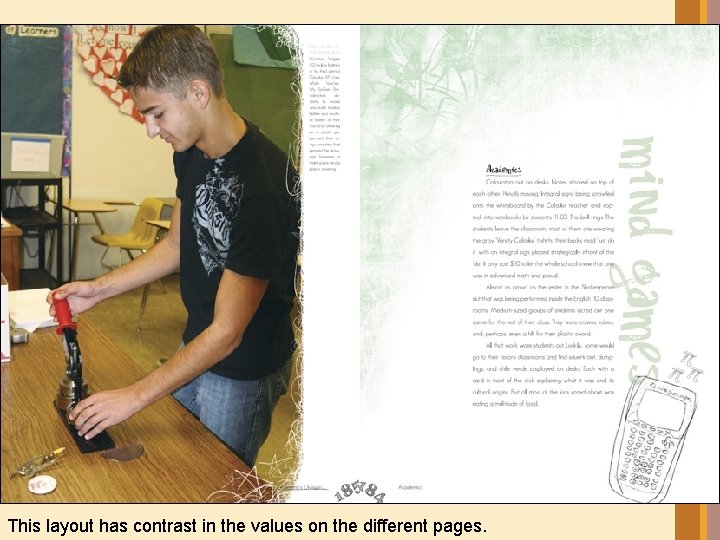
This layout has contrast in the values on the different pages.
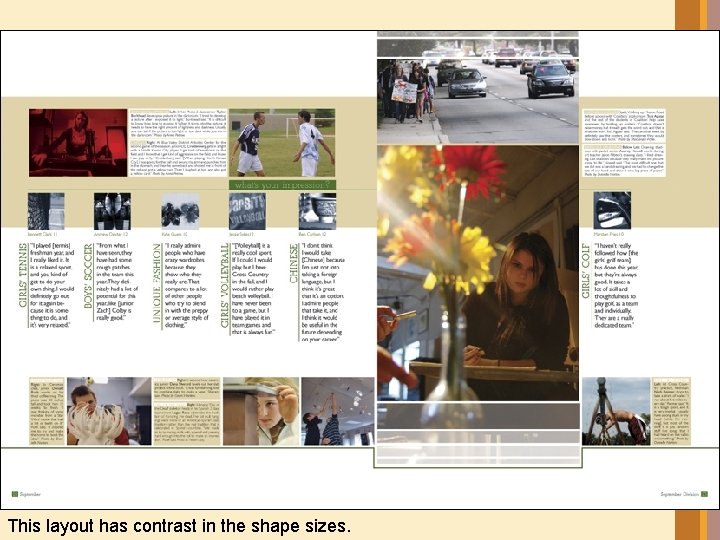
This layout has contrast in the shape sizes.
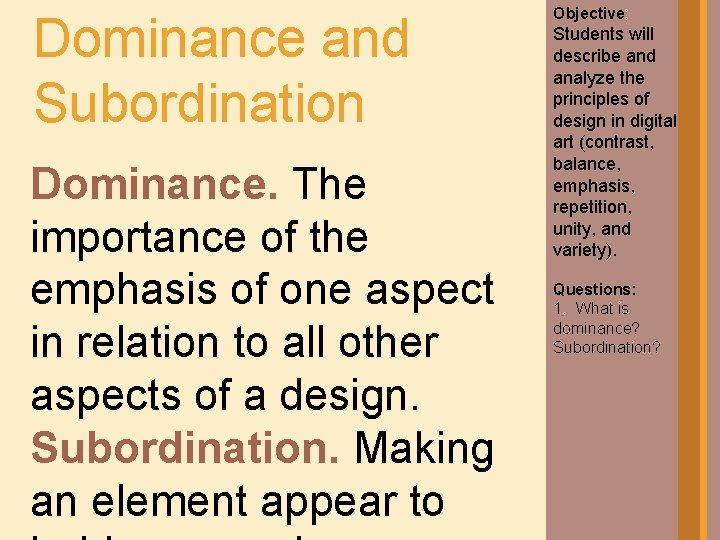
Dominance and Subordination Dominance. The importance of the emphasis of one aspect in relation to all other aspects of a design. Subordination. Making an element appear to Objective: Students will describe and analyze the principles of design in digital art (contrast, balance, emphasis, repetition, unity, and variety). Questions: 1. What is dominance? Subordination?
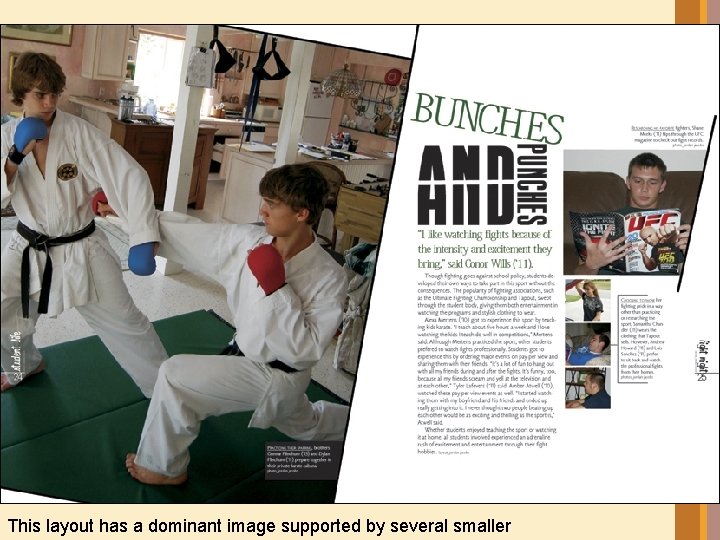
This layout has a dominant image supported by several smaller
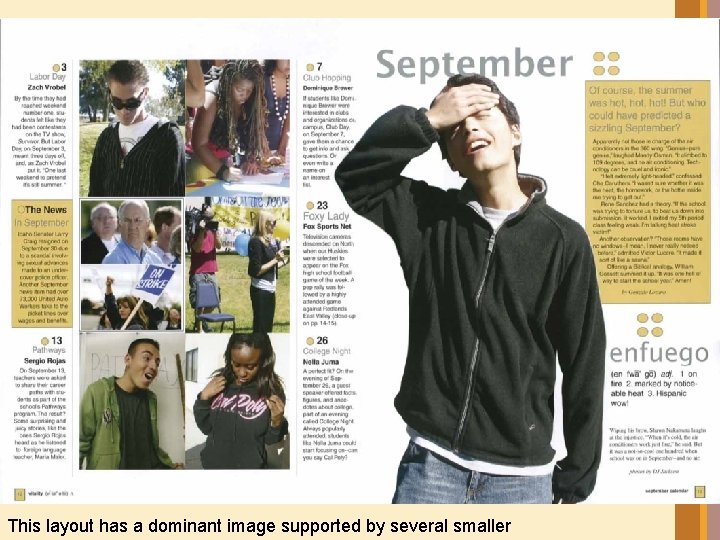
This layout has a dominant image supported by several smaller
Objective: Emphasis Special stress given to an element to make it stand out. Many times this achieved through the use of the other principles such as: • Emphasizing an element by making it dominant. Students will describe and analyze the principles of design in digital art (contrast, balance, emphasis, repetition, unity, and variety). Questions: 1. What is emphasis?
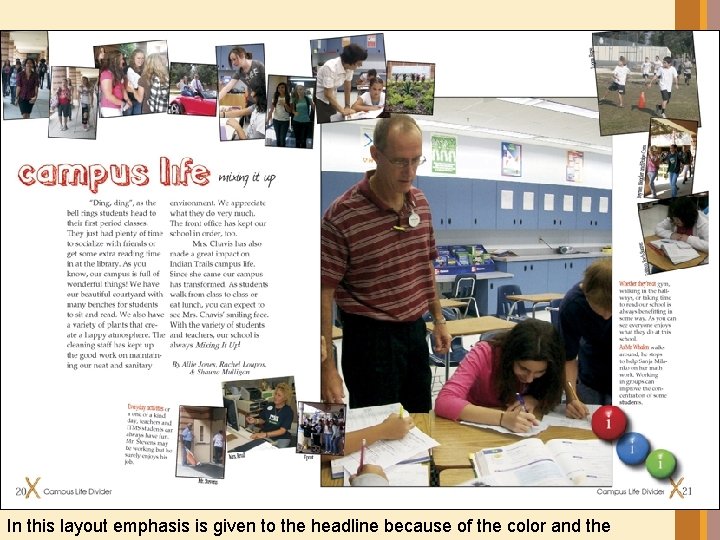
In this layout emphasis is given to the headline because of the color and the
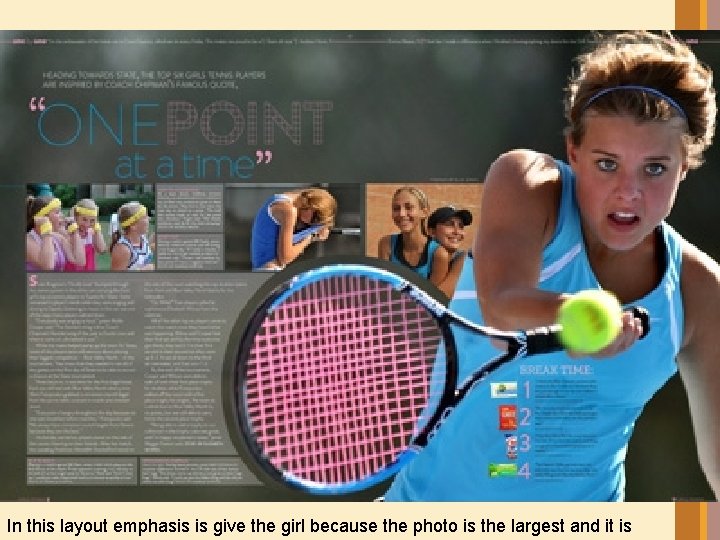
In this layout emphasis is give the girl because the photo is the largest and it is
Repetition, Movement, Rhythm Movement. The principle of design dealing with the creation of action. Rhythm. Intentional, regular repetition of lines of shapes to achieve a specific repetitious effect Objective: Students will describe and analyze the principles of design in digital art (contrast, balance, emphasis, repetition, unity, and variety). Questions: 1. What is movement? 2. What is rhythm?
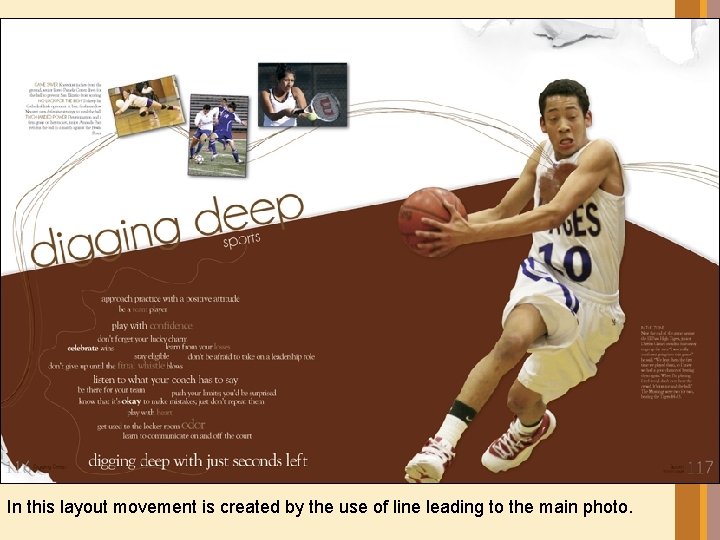
In this layout movement is created by the use of line leading to the main photo.
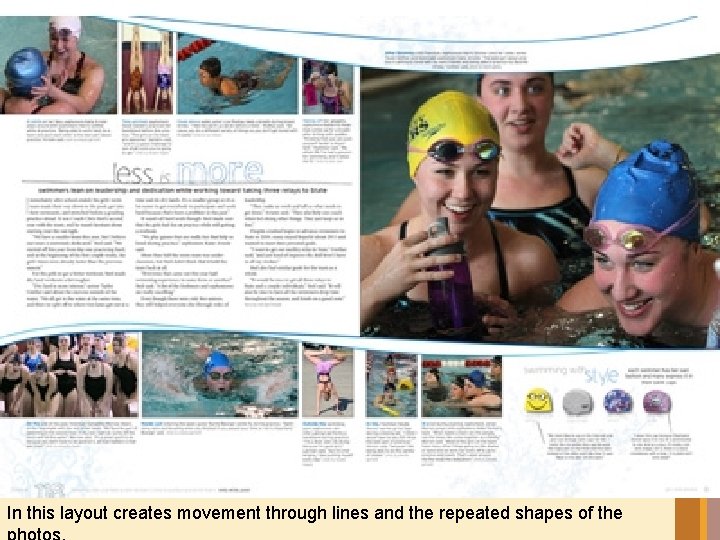
In this layout creates movement through lines and the repeated shapes of the
Objective: Unity Total visual effect in a composition achieved by the careful blending of the elements of art and the principles of design. Students will describe and analyze the principles of design in digital art (contrast, balance, emphasis, repetition, unity, and variety). Questions: 1. What is unity?
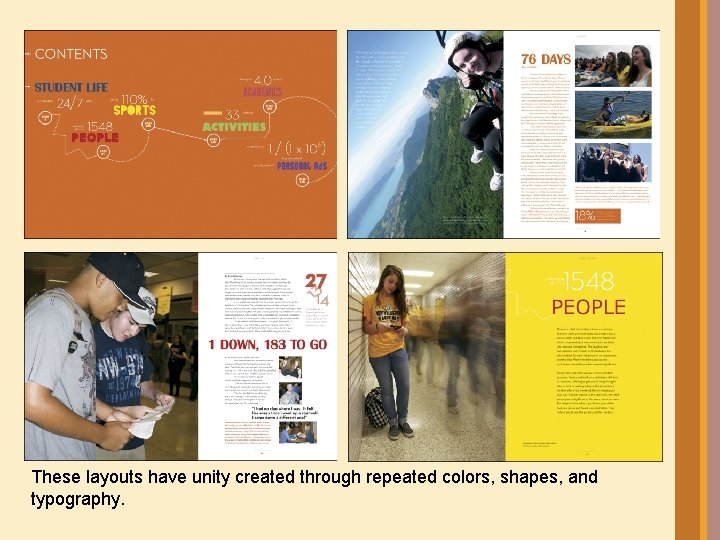
These layouts have unity created through repeated colors, shapes, and typography.
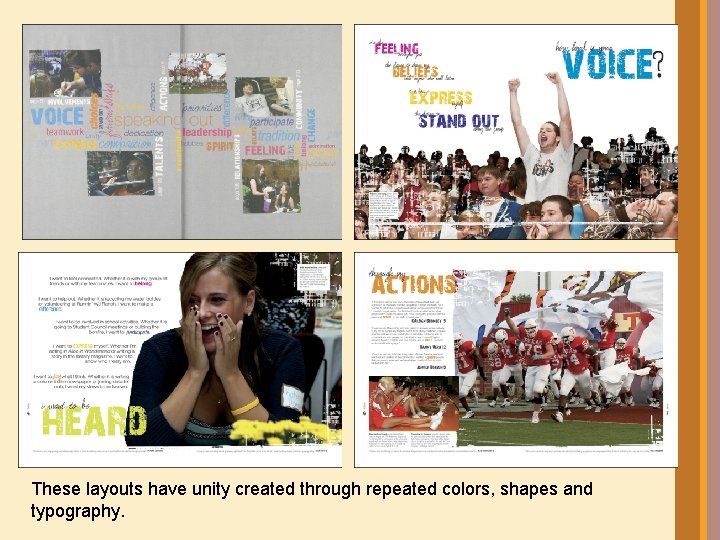
These layouts have unity created through repeated colors, shapes and typography.
- Slides: 23