
The Principles of Art Balance Artist use balance
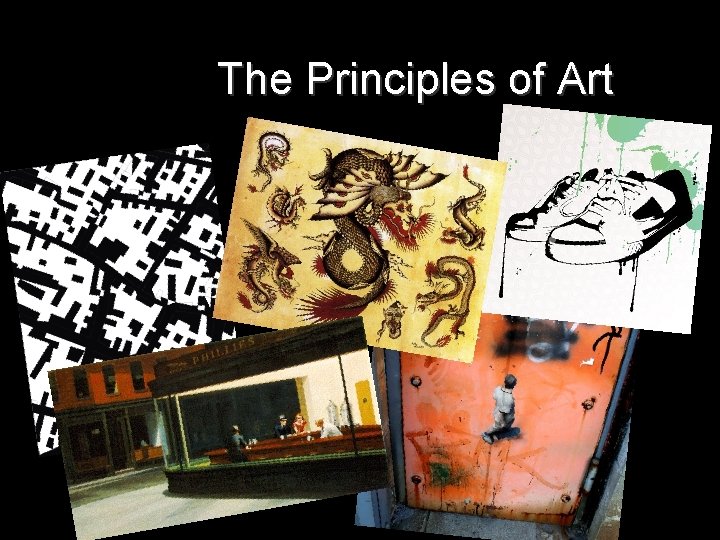
The Principles of Art

Balance Artist use balance to create a “visual weig Symmetrical (formal) balance means both sides of an imaginary line are the same.

Asymmetrical (informal) balance means each side of an imaginary line are different yet equal.
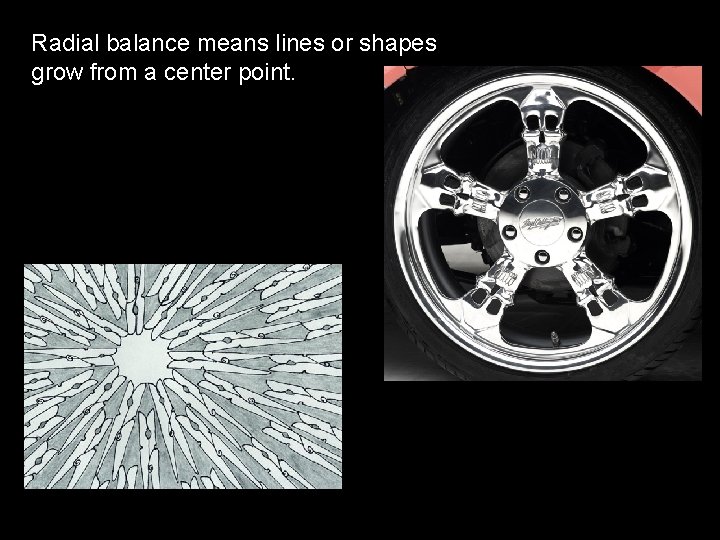
Radial balance means lines or shapes grow from a center point.

Contrast Two things that are very different have a lot of contrast. White and black have the greatest contrast. Complementary colors also have high contrast. Artists use high contrast to make something show up.

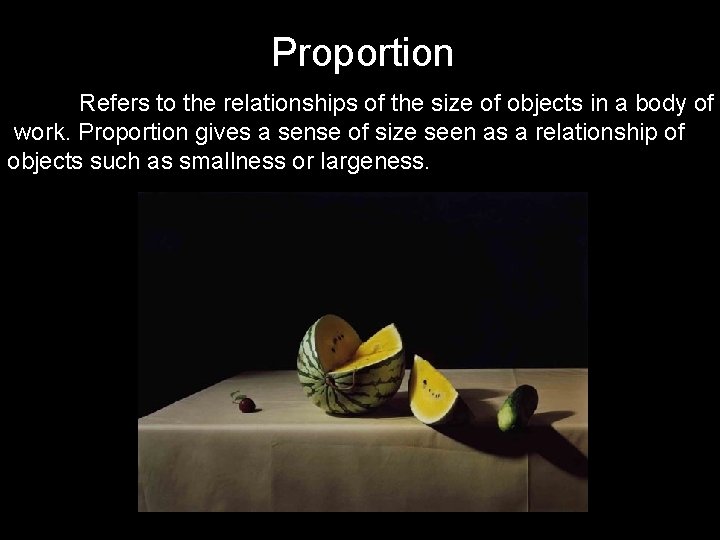
Proportion Refers to the relationships of the size of objects in a body of work. Proportion gives a sense of size seen as a relationship of objects such as smallness or largeness.
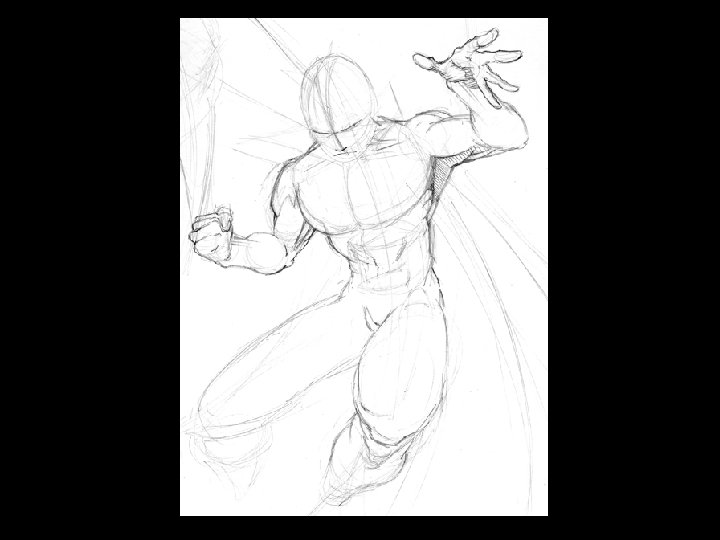
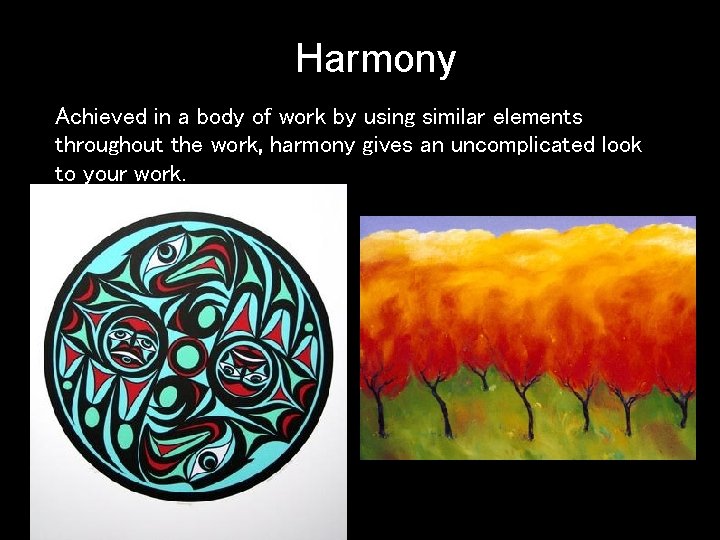
Harmony Achieved in a body of work by using similar elements throughout the work, harmony gives an uncomplicated look to your work.
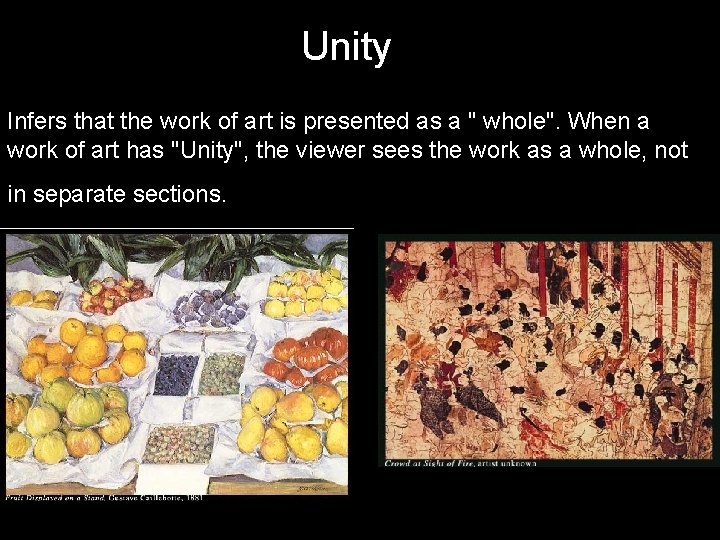
Unity Infers that the work of art is presented as a " whole". When a work of art has "Unity", the viewer sees the work as a whole, not in separate sections.
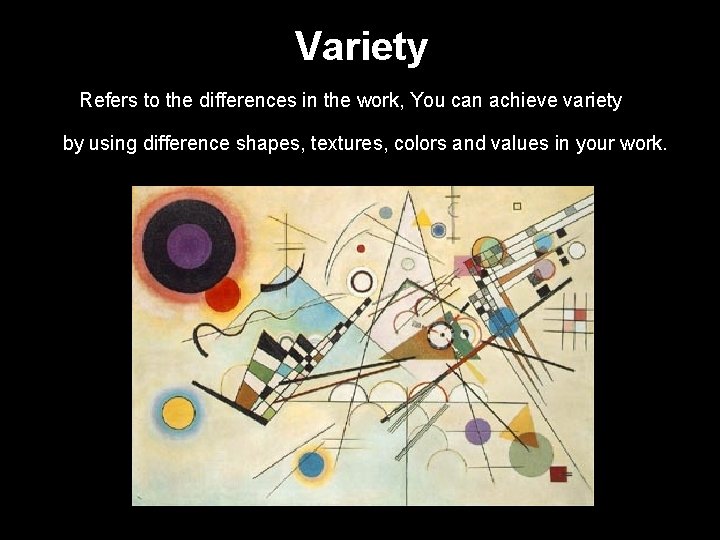
Variety Refers to the differences in the work, You can achieve variety by using difference shapes, textures, colors and values in your work.
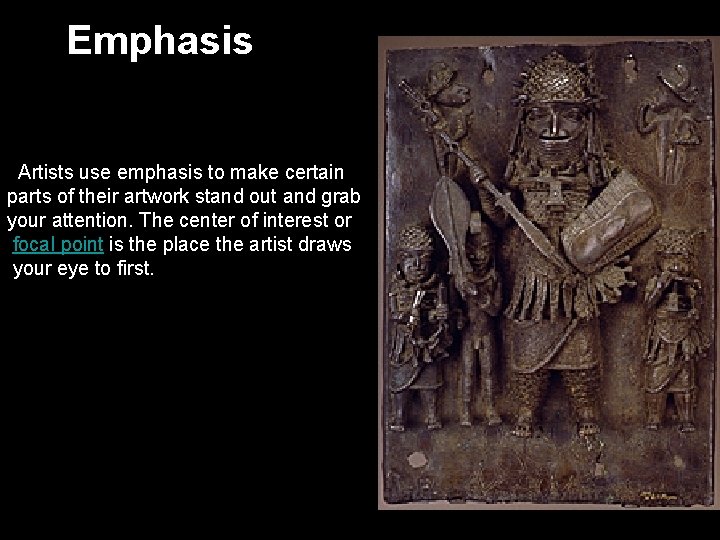
Emphasis Artists use emphasis to make certain parts of their artwork stand out and grab your attention. The center of interest or focal point is the place the artist draws your eye to first.
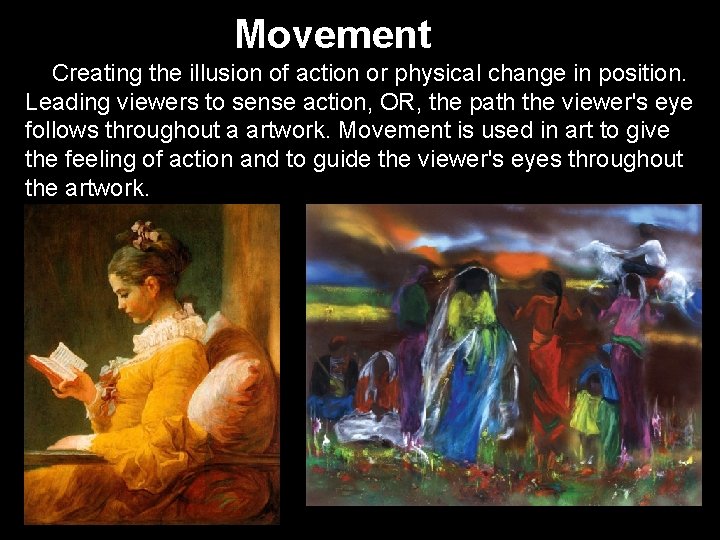
Movement Creating the illusion of action or physical change in position. Leading viewers to sense action, OR, the path the viewer's eye follows throughout a artwork. Movement is used in art to give the feeling of action and to guide the viewer's eyes throughout the artwork.
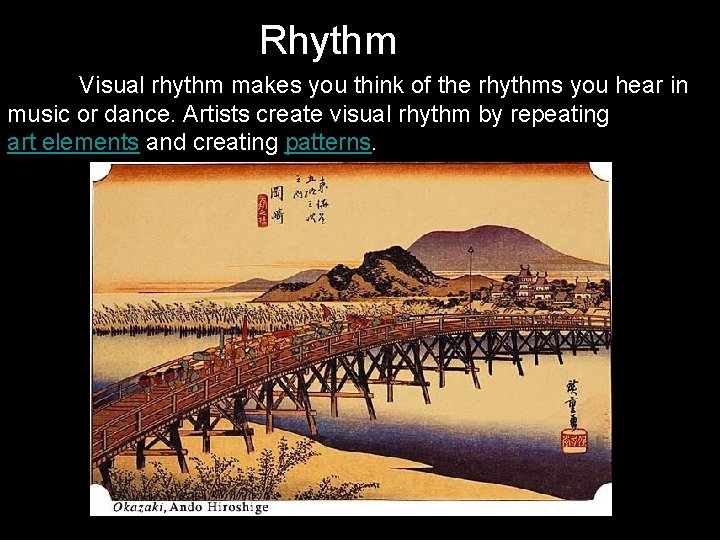
Rhythm Visual rhythm makes you think of the rhythms you hear in music or dance. Artists create visual rhythm by repeating art elements and creating patterns.
- Slides: 16