
The Primary Mathematics Teaching for Mastery Specialist Teacher
- Slides: 18
The Primary Mathematics Teaching for Mastery Specialist Teacher Programme Teacher Research Group Wednesday 27 th April 2016 Angela Linford
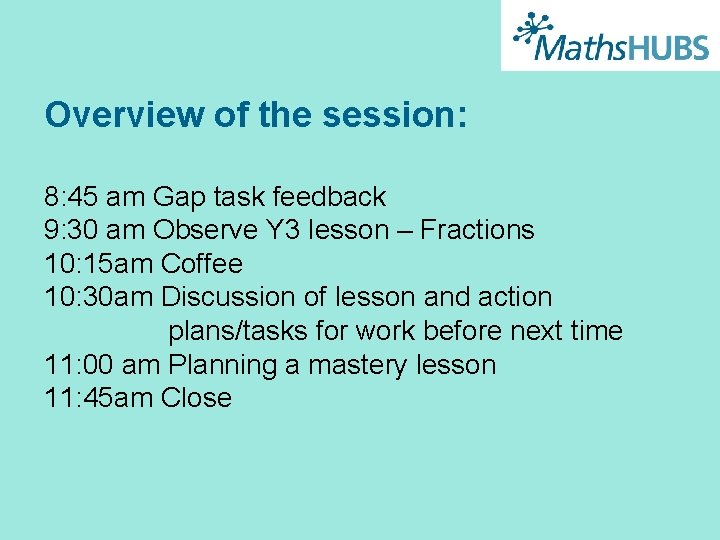
Overview of the session: 8: 45 am Gap task feedback 9: 30 am Observe Y 3 lesson – Fractions 10: 15 am Coffee 10: 30 am Discussion of lesson and action plans/tasks for work before next time 11: 00 am Planning a mastery lesson 11: 45 am Close
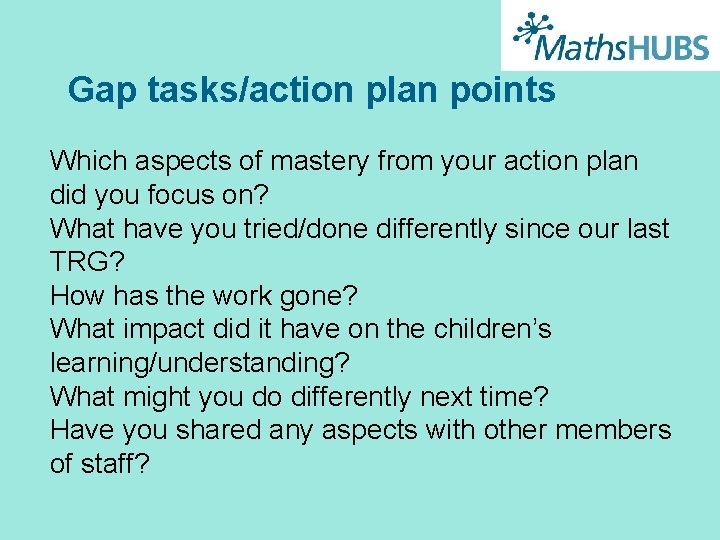
Gap tasks/action plan points Which aspects of mastery from your action plan did you focus on? What have you tried/done differently since our last TRG? How has the work gone? What impact did it have on the children’s learning/understanding? What might you do differently next time? Have you shared any aspects with other members of staff?
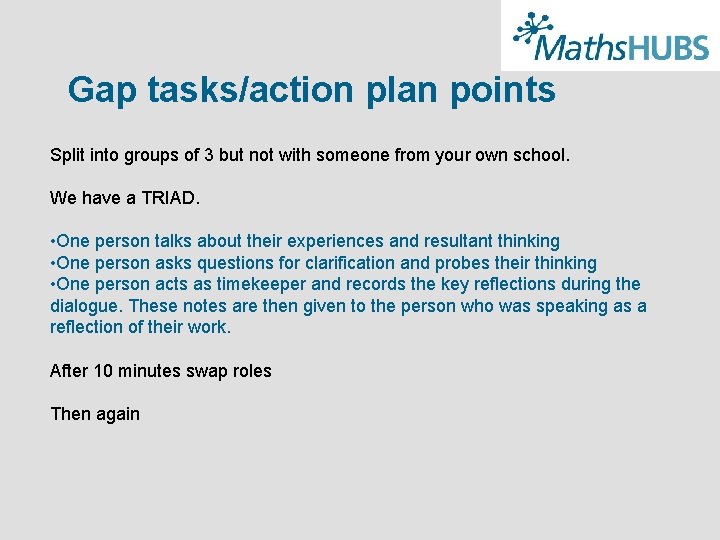
Gap tasks/action plan points Split into groups of 3 but not with someone from your own school. We have a TRIAD. • One person talks about their experiences and resultant thinking • One person asks questions for clarification and probes their thinking • One person acts as timekeeper and records the key reflections during the dialogue. These notes are then given to the person who was speaking as a reflection of their work. After 10 minutes swap roles Then again
Mastery of Mathematics is more…. . • Deep and sustainable learning • The ability to build on something that has already been sufficiently mastered • The ability to reason about a concept and make connections • Conceptual and procedural fluency
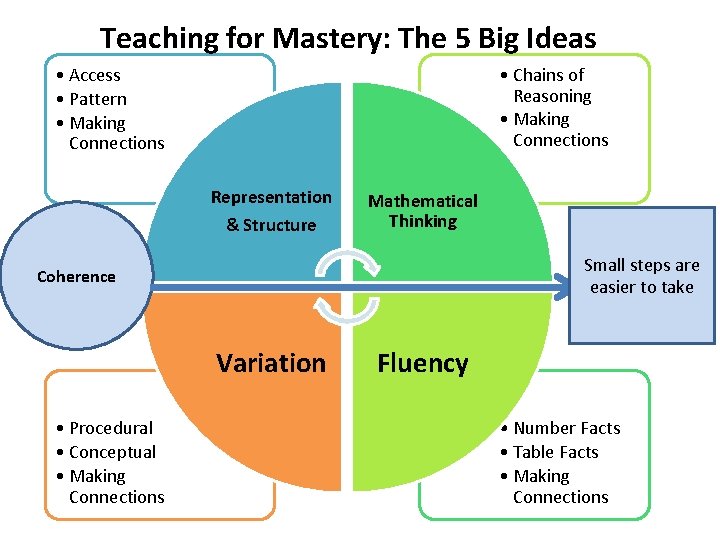
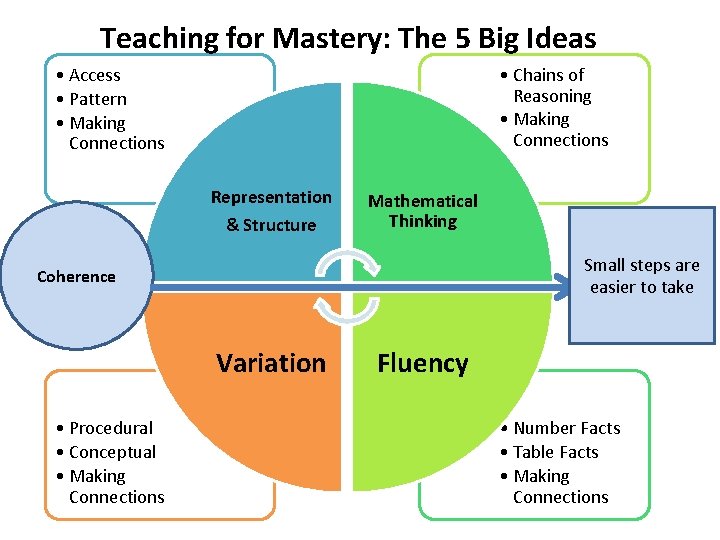
Teaching for Mastery: The 5 Big Ideas • Access • Pattern • Making Connections • Chains of Reasoning • Making Connections Representation & Structure Mathematical Thinking Small steps are easier to take Coherence Variation • Procedural • Conceptual • Making Connections Fluency • Number Facts • Table Facts • Making Connections
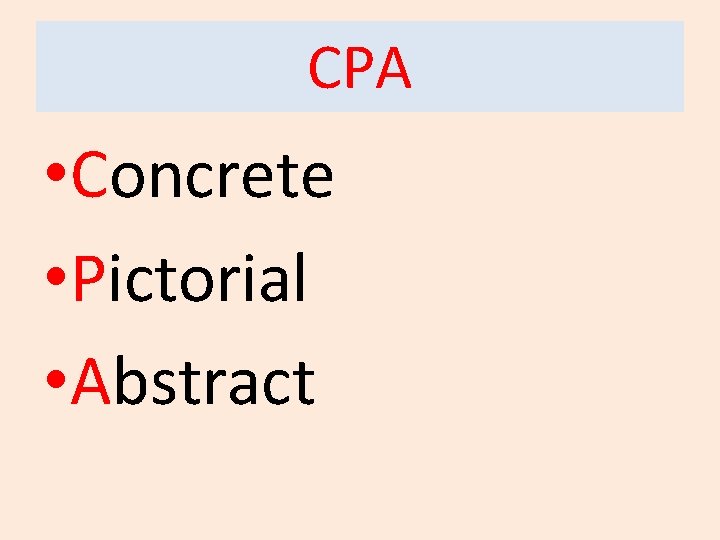
CPA • Concrete • Pictorial • Abstract
Context of Lesson and prior learning Day 5 in second block on Fractions (first block before Easter break) Children are familiar with the part, whole model They can name fraction of shapes and discrete objects They understand a tenth as a decimal The have explored that fractions have to be equal but not congruent shapes Today’s small step - the whole can be different things. You need to be clear about what the whole is. Then you can say what fraction of the whole you can see.
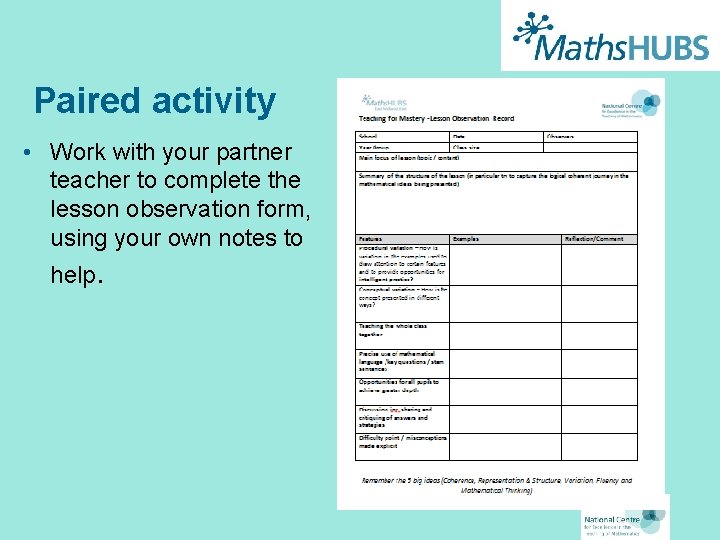
Paired activity • Work with your partner teacher to complete the lesson observation form, using your own notes to help.
Post lesson discussion • What struck you about the lesson? • Let’s discuss some features of the lesson. • What one thing will you take from today’s lesson?
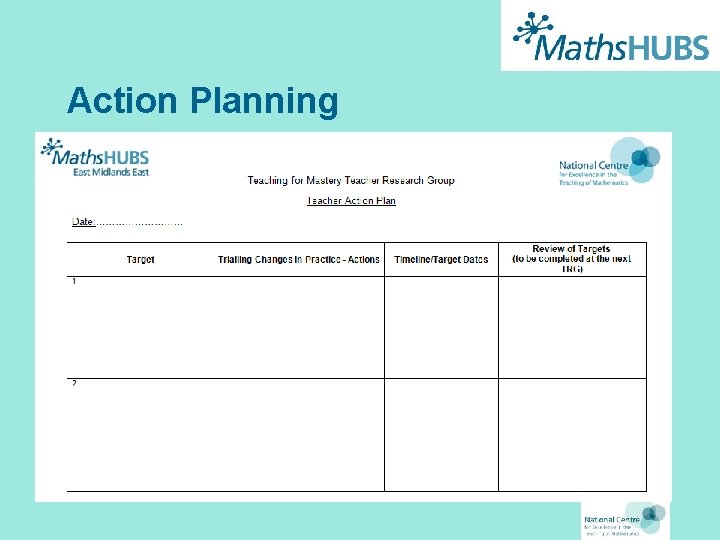
Action Planning
Planning a mastery lesson Year 3 obj: calculate mathematical statements for division, including for twodigit numbers divided by one-digit numbers, using formal written methods Small step – dividing a 2 digit number into equal groups, no exchange
Teaching for Mastery: The 5 Big Ideas • Access • Pattern • Making Connections • Chains of Reasoning • Making Connections Representation & Structure Mathematical Thinking Small steps are easier to take Coherence Variation • Procedural • Conceptual • Making Connections Fluency • Number Facts • Table Facts • Making Connections
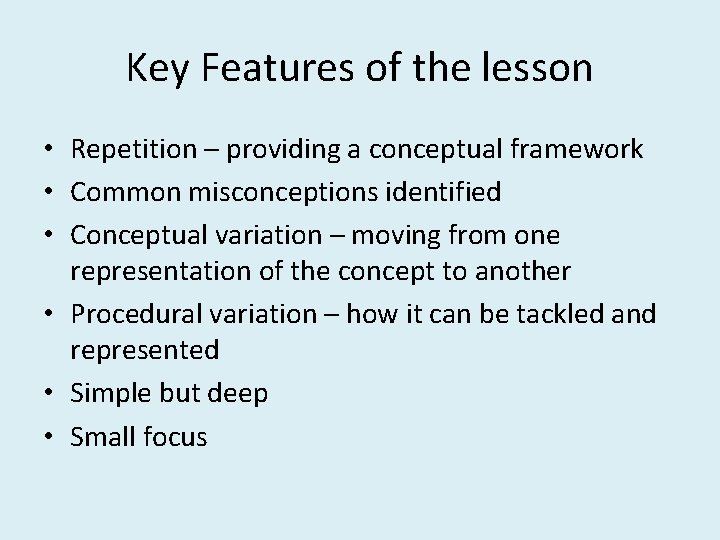
Key Features of the lesson • Repetition – providing a conceptual framework • Common misconceptions identified • Conceptual variation – moving from one representation of the concept to another • Procedural variation – how it can be tackled and represented • Simple but deep • Small focus
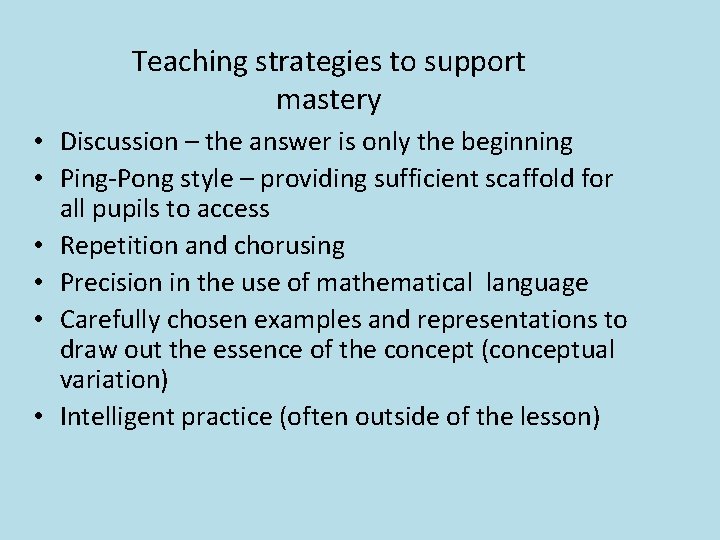
Teaching strategies to support mastery • Discussion – the answer is only the beginning • Ping-Pong style – providing sufficient scaffold for all pupils to access • Repetition and chorusing • Precision in the use of mathematical language • Carefully chosen examples and representations to draw out the essence of the concept (conceptual variation) • Intelligent practice (often outside of the lesson)
Next TRG • Wednesday 8 th June • We will discuss how our action plan work has gone in a similar way to today. • We will discuss and analyse how the planned lesson went/reflection • Would anyone like to offer to teach a short lesson at their school for us to observe? Or is there a better focus for that TRG?
TRG 4 • TRG 4 will now be held at Minster School, Southwell and will involve all 4 TRG groups. We will be planning a unit of work together and evaluating our work • I will let you know the date ASAP.
Summing up • Thank you • Action plan points • Try out the lesson either in your own class or in a colleague’s class • Perhaps keep a log/reflection/journal of the things you try out and how they have gone