
The Primary Care Information Project How Can Government

- Slides: 29
The Primary Care Information Project How Can Government Get Value From HIT? New York City Department of Health and Mental Hygiene www. nyc. gov/pcip Presentation developed by Farzad Mostashari, MD MSc
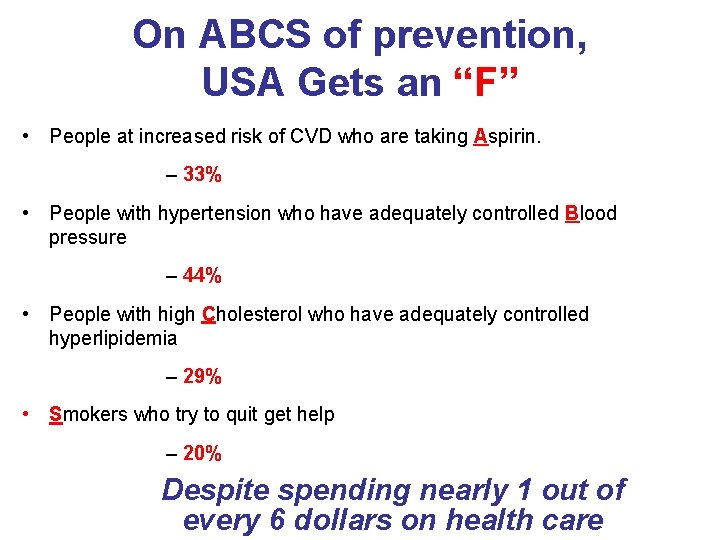
On ABCS of prevention, USA Gets an “F” • People at increased risk of CVD who are taking Aspirin. – 33% • People with hypertension who have adequately controlled Blood pressure – 44% • People with high Cholesterol who have adequately controlled hyperlipidemia – 29% • Smokers who try to quit get help – 20% Despite spending nearly 1 out of every 6 dollars on health care
Most Room For Improvement Pham HH, Schrag D, Hargraves JL, Bach PB. Delivery of Preventive Services to Older Adults by Primary Care Physicians. JAMA. 2005; 294: 473 -481.
Few Quality Improvement Tools * Model controls for practice size, years in practice, hours a week in direct patient care, salary status, physician type (primary care vs. specialist), certification status in specialty, and use of EMR. Audet AMJ, Doty MM, Shamasdin J, Schoenbaum SC. Measure, Learn, And Improve: Physicians’ Involvement In Quality Improvement. Health Affairs. 2005; 24: 843 -853.
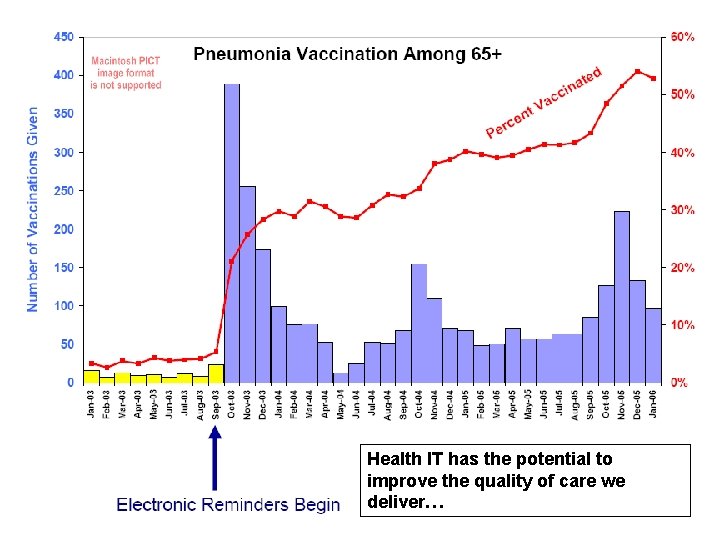
Health IT has the potential to improve the quality of care we deliver…
State of Health IT on the Ground • Most ambulatory care in the US is provided in small office settings (1 -5 providers) but only 11 -15% of these offices have a health IT system. Delivery of ambulatory care in the US 1 Adoption of HIT in Physician Practices, by size 2 1 -2 physicians 6 -10 physicians Percentage > 11 physicians 3 -5 physicians 1 2 -5 6 -15 16 -30 > 30 Number of physicians in a practice Des. Roches CM, Campbell EG, Rao SR, Donelan K, Ferris TG, Jha A, Kaushal R, Levy DE, Rosenbaum S, Shields AE, Blumenthal D. Electronic health records in ambulatory care--a national survey of physicians. N Engl J Med. 2008 Jul 3; 359(1): 50 -60. Epub 2008 Jun 18.
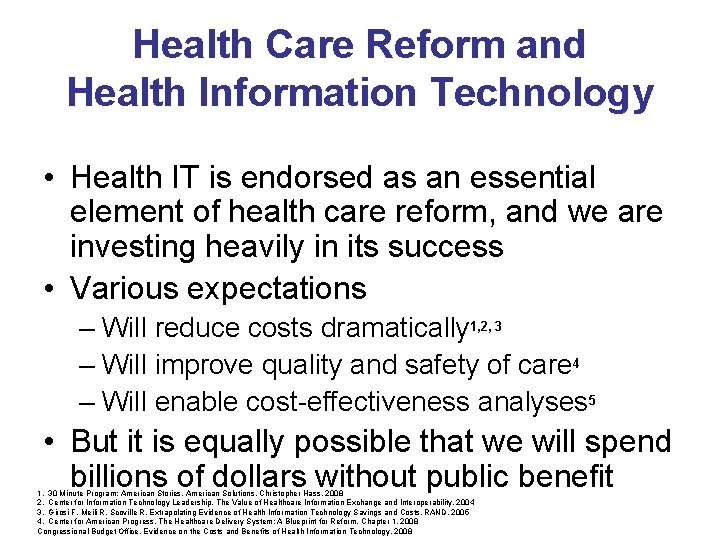
Health Care Reform and Health Information Technology • Health IT is endorsed as an essential element of health care reform, and we are investing heavily in its success • Various expectations – Will reduce costs dramatically 1, 2, 3 – Will improve quality and safety of care 4 – Will enable cost-effectiveness analyses 5 • But it is equally possible that we will spend billions of dollars without public benefit 1. 30 Minute Program: American Stories, American Solutions. Christopher Hass. 2008 2. Center for Information Technology Leadership. The Value of Healthcare Information Exchange and Interoperability. 2004 3. Girosi F. Meili R. Scoville R. Extrapolating Evidence of Health Information Technology Savings and Costs. RAND. 2005 4. Center for American Progress. The Healthcare Delivery System: A Blueprint for Reform. Chapter 1. 2008 Congressional Budget Office. Evidence on the Costs and Benefits of Health Information Technology. 2008
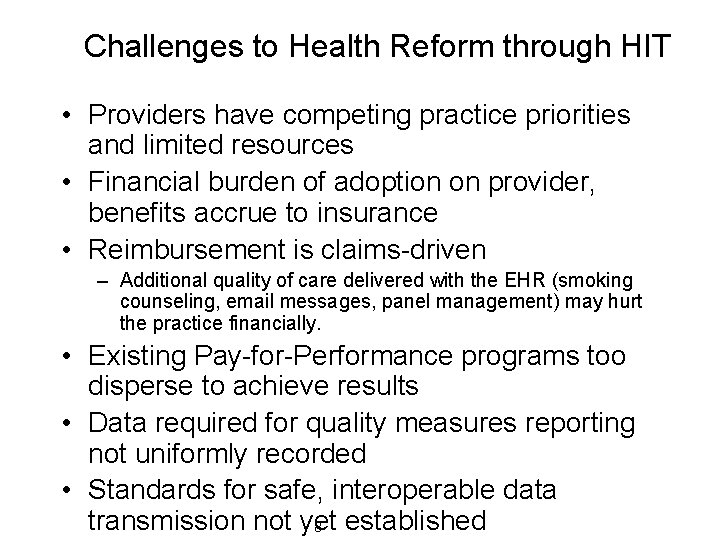
Challenges to Health Reform through HIT • Providers have competing practice priorities and limited resources • Financial burden of adoption on provider, benefits accrue to insurance • Reimbursement is claims-driven – Additional quality of care delivered with the EHR (smoking counseling, email messages, panel management) may hurt the practice financially. • Existing Pay-for-Performance programs too disperse to achieve results • Data required for quality measures reporting not uniformly recorded • Standards for safe, interoperable data transmission not yet established 8
What Is the Role of Government? • Ensure HIT addresses priority public health issues – Prevention – Quality of care – Coordination of care – Reimbursement reform – Disparities in health outcomes
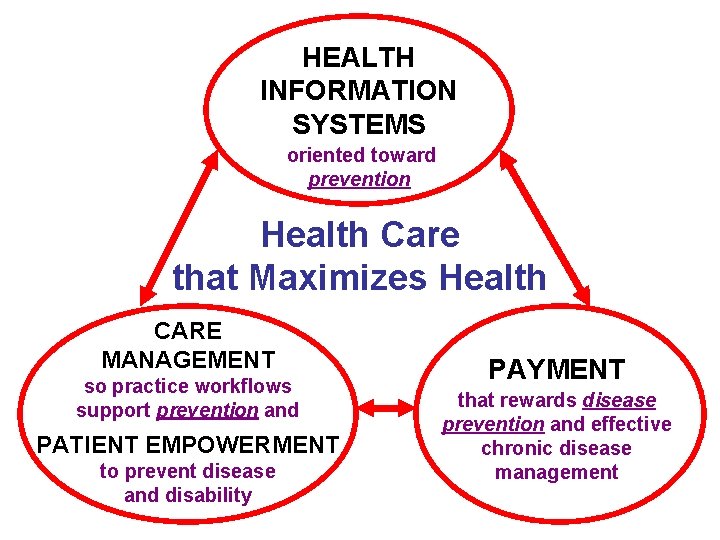
HEALTH INFORMATION SYSTEMS oriented toward prevention Health Care that Maximizes Health CARE MANAGEMENT so practice workflows support prevention and PATIENT EMPOWERMENT to prevent disease and disability PAYMENT that rewards disease prevention and effective chronic disease management
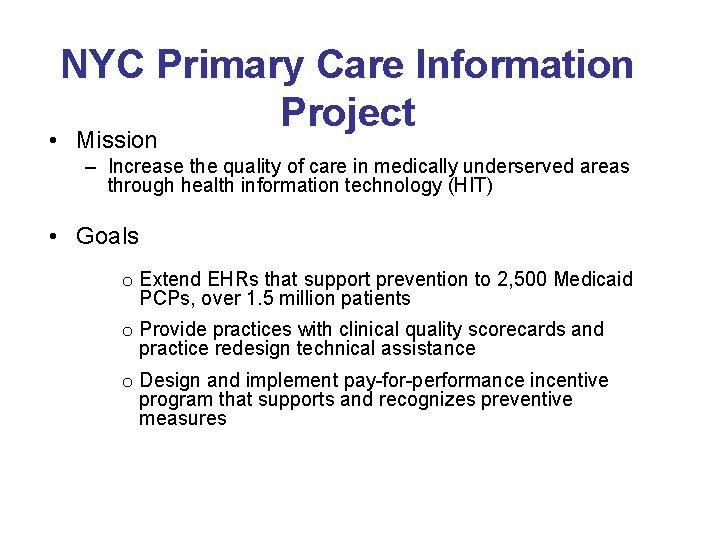
NYC Primary Care Information Project • Mission – Increase the quality of care in medically underserved areas through health information technology (HIT) • Goals o Extend EHRs that support prevention to 2, 500 Medicaid PCPs, over 1. 5 million patients o Provide practices with clinical quality scorecards and practice redesign technical assistance o Design and implement pay-for-performance incentive program that supports and recognizes preventive measures
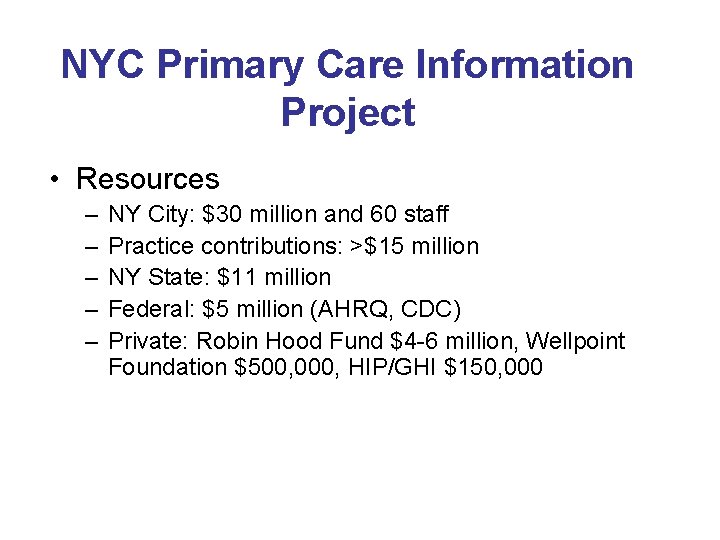
NYC Primary Care Information Project • Resources – – – NY City: $30 million and 60 staff Practice contributions: >$15 million NY State: $11 million Federal: $5 million (AHRQ, CDC) Private: Robin Hood Fund $4 -6 million, Wellpoint Foundation $500, 000, HIP/GHI $150, 000
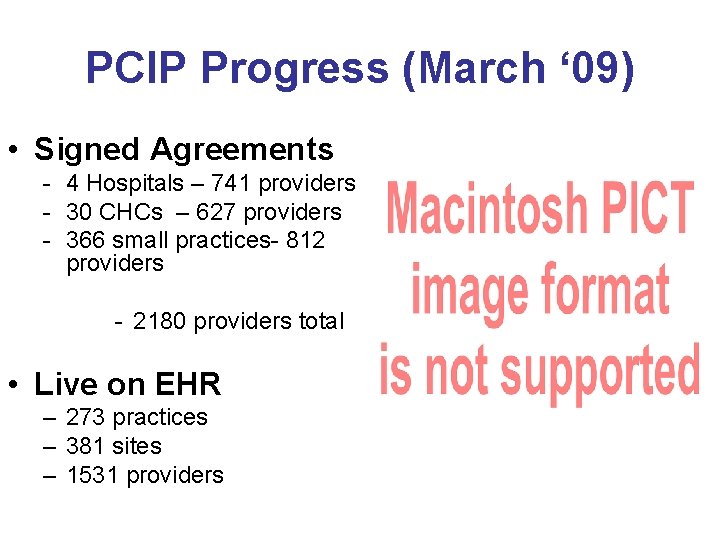
PCIP Progress (March ‘ 09) • Signed Agreements - 4 Hospitals – 741 providers - 30 CHCs – 627 providers - 366 small practices- 812 providers - 2180 providers total • Live on EHR – 273 practices – 381 sites – 1531 providers
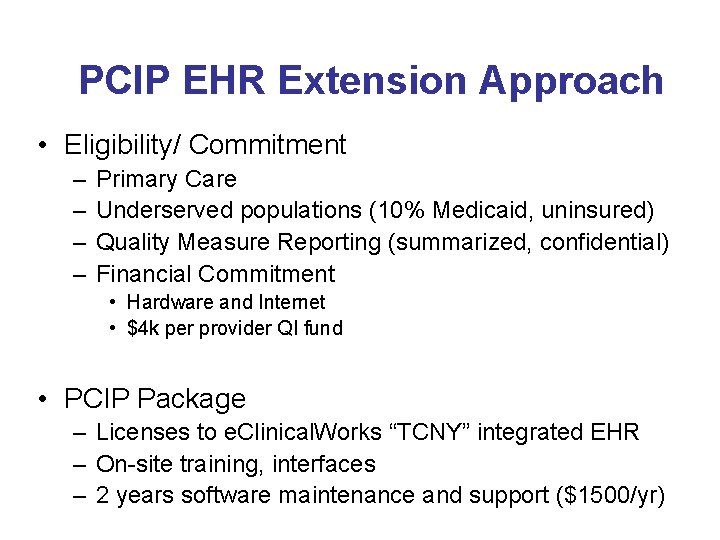
PCIP EHR Extension Approach • Eligibility/ Commitment – – Primary Care Underserved populations (10% Medicaid, uninsured) Quality Measure Reporting (summarized, confidential) Financial Commitment • Hardware and Internet • $4 k per provider QI fund • PCIP Package – Licenses to e. Clinical. Works “TCNY” integrated EHR – On-site training, interfaces – 2 years software maintenance and support ($1500/yr)
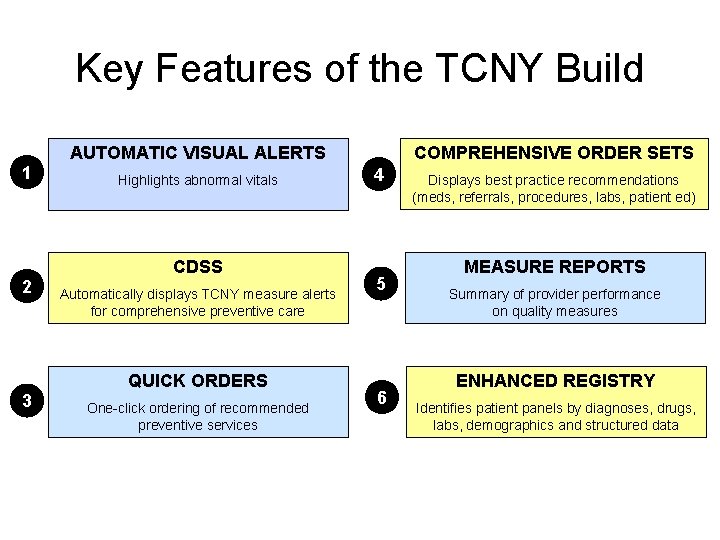
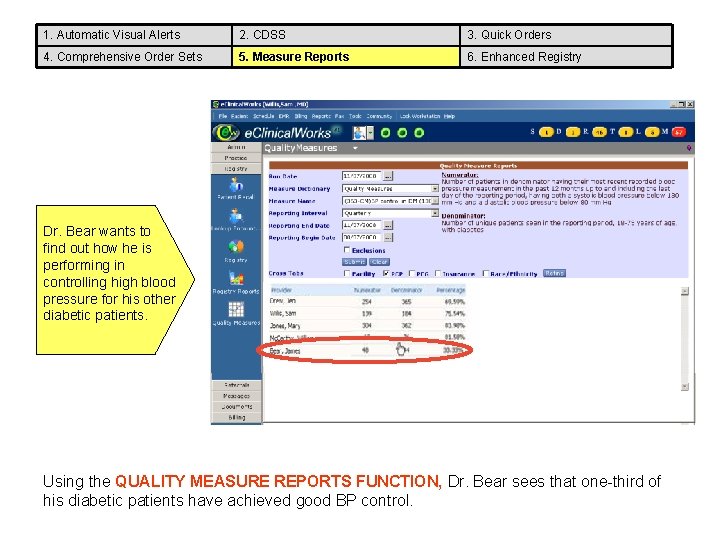
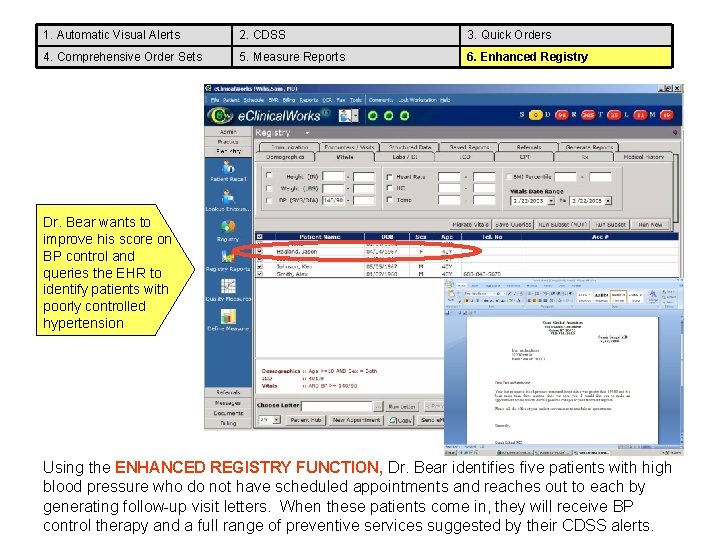
Key Features of the TCNY Build 1 2 AUTOMATIC VISUAL ALERTS Highlights abnormal vitals CDSS Automatically displays TCNY measure alerts for comprehensive preventive care QUICK ORDERS 3 One-click ordering of recommended preventive services COMPREHENSIVE ORDER SETS 4 5 6 Displays best practice recommendations (meds, referrals, procedures, labs, patient ed) MEASURE REPORTS Summary of provider performance on quality measures ENHANCED REGISTRY Identifies patient panels by diagnoses, drugs, labs, demographics and structured data
The following storyline illustrates the TCNY Clinical Decision Support System in action Jane Doe, a 48 year-old woman has come to her family practitioner, Dr. James Bear, for an annual exam.
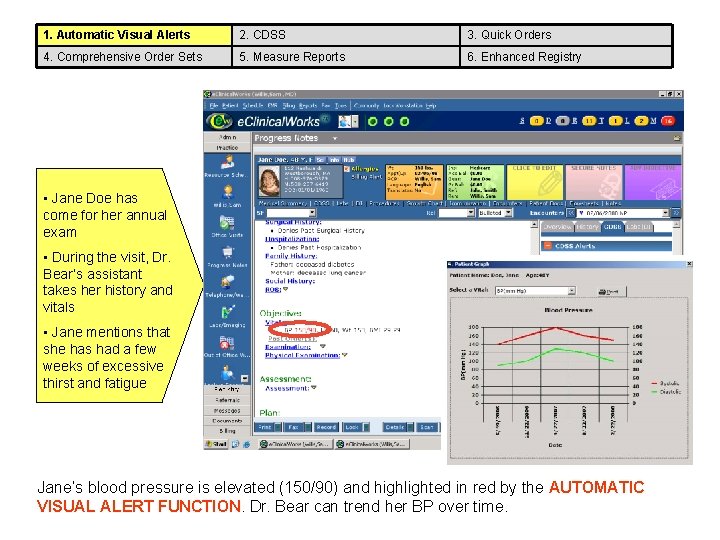
1. Automatic Visual Alerts 2. CDSS 3. Quick Orders 4. Comprehensive Order Sets 5. Measure Reports 6. Enhanced Registry • Jane Doe has come for her annual exam • During the visit, Dr. Bear’s assistant takes her history and vitals • Jane mentions that she has had a few weeks of excessive thirst and fatigue Jane’s blood pressure is elevated (150/90) and highlighted in red by the AUTOMATIC VISUAL ALERT FUNCTION. Dr. Bear can trend her BP over time.
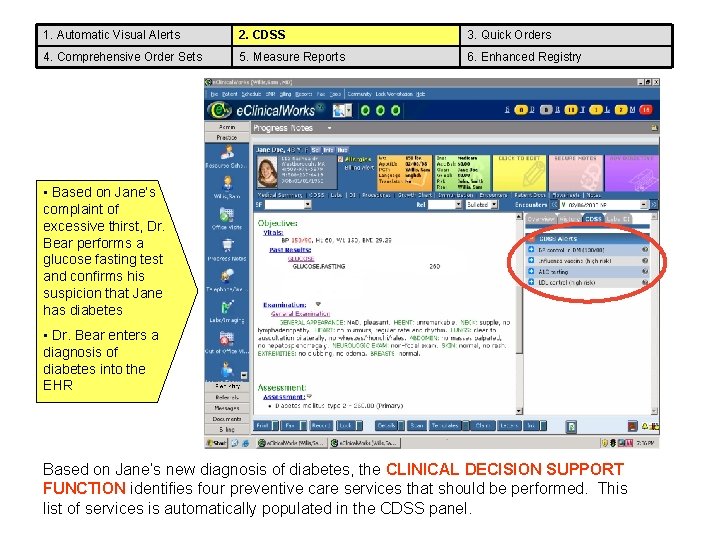
1. Automatic Visual Alerts 2. CDSS 3. Quick Orders 4. Comprehensive Order Sets 5. Measure Reports 6. Enhanced Registry • Based on Jane’s complaint of excessive thirst, Dr. Bear performs a glucose fasting test and confirms his suspicion that Jane has diabetes • Dr. Bear enters a diagnosis of diabetes into the EHR Based on Jane’s new diagnosis of diabetes, the CLINICAL DECISION SUPPORT FUNCTION identifies four preventive care services that should be performed. This list of services is automatically populated in the CDSS panel.
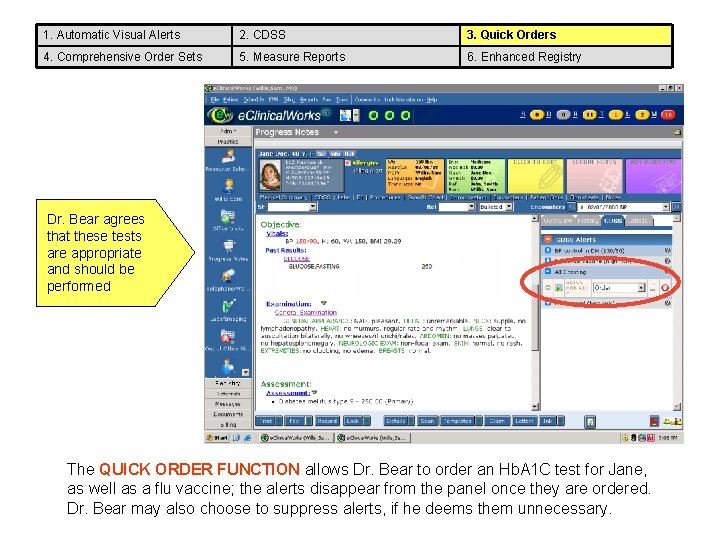
1. Automatic Visual Alerts 2. CDSS 3. Quick Orders 4. Comprehensive Order Sets 5. Measure Reports 6. Enhanced Registry Dr. Bear agrees that these tests are appropriate and should be performed The QUICK ORDER FUNCTION allows Dr. Bear to order an Hb. A 1 C test for Jane, as well as a flu vaccine; the alerts disappear from the panel once they are ordered. Dr. Bear may also choose to suppress alerts, if he deems them unnecessary.
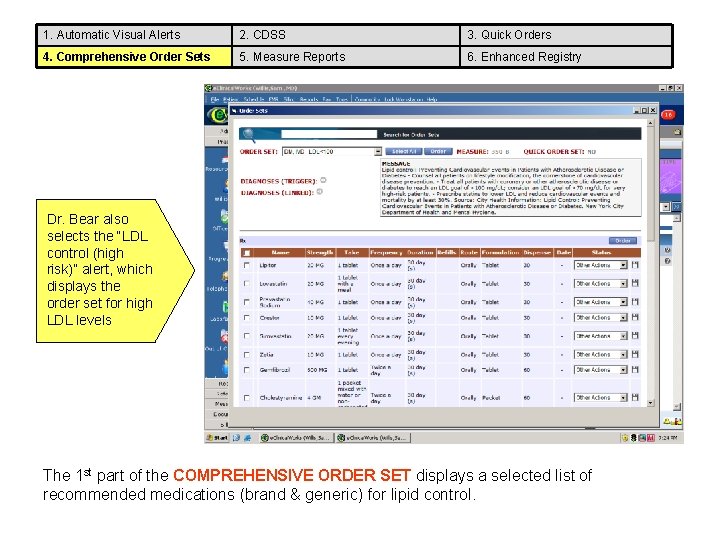
1. Automatic Visual Alerts 2. CDSS 3. Quick Orders 4. Comprehensive Order Sets 5. Measure Reports 6. Enhanced Registry Dr. Bear also selects the “LDL control (high risk)” alert, which displays the order set for high LDL levels The 1 st part of the COMPREHENSIVE ORDER SET displays a selected list of recommended medications (brand & generic) for lipid control.
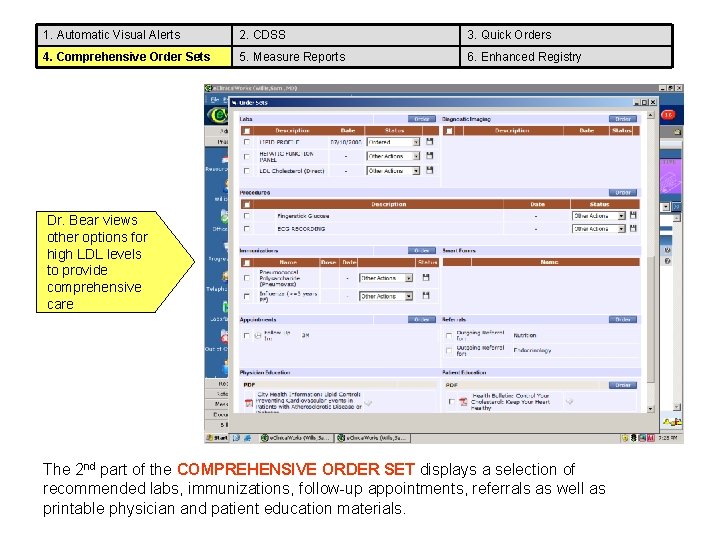
1. Automatic Visual Alerts 2. CDSS 3. Quick Orders 4. Comprehensive Order Sets 5. Measure Reports 6. Enhanced Registry Dr. Bear views other options for high LDL levels to provide comprehensive care The 2 nd part of the COMPREHENSIVE ORDER SET displays a selection of recommended labs, immunizations, follow-up appointments, referrals as well as printable physician and patient education materials.
1. Automatic Visual Alerts 2. CDSS 3. Quick Orders 4. Comprehensive Order Sets 5. Measure Reports 6. Enhanced Registry Dr. Bear wants to find out how he is performing in controlling high blood pressure for his other diabetic patients. Using the QUALITY MEASURE REPORTS FUNCTION, Dr. Bear sees that one-third of his diabetic patients have achieved good BP control.
1. Automatic Visual Alerts 2. CDSS 3. Quick Orders 4. Comprehensive Order Sets 5. Measure Reports 6. Enhanced Registry Dr. Bear wants to improve his score on BP control and queries the EHR to identify patients with poorly controlled hypertension Using the ENHANCED REGISTRY FUNCTION, Dr. Bear identifies five patients with high blood pressure who do not have scheduled appointments and reaches out to each by generating follow-up visit letters. When these patients come in, they will receive BP control therapy and a full range of preventive services suggested by their CDSS alerts.
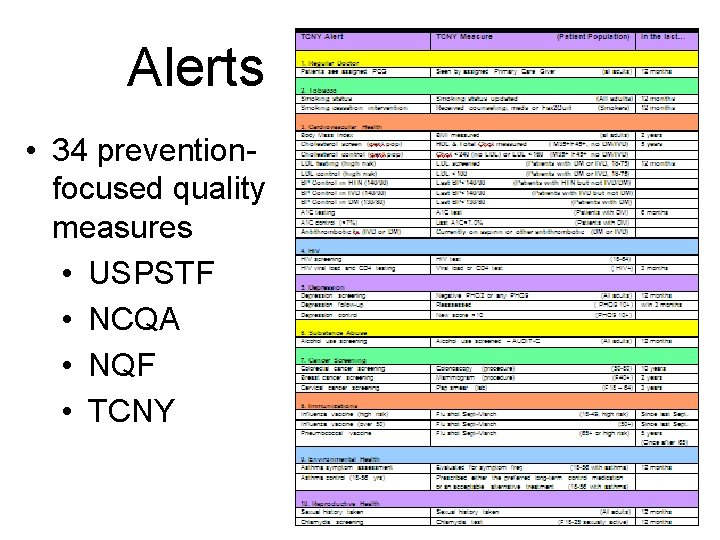
Alerts • 34 preventionfocused quality measures • USPSTF • NCQA • NQF • TCNY
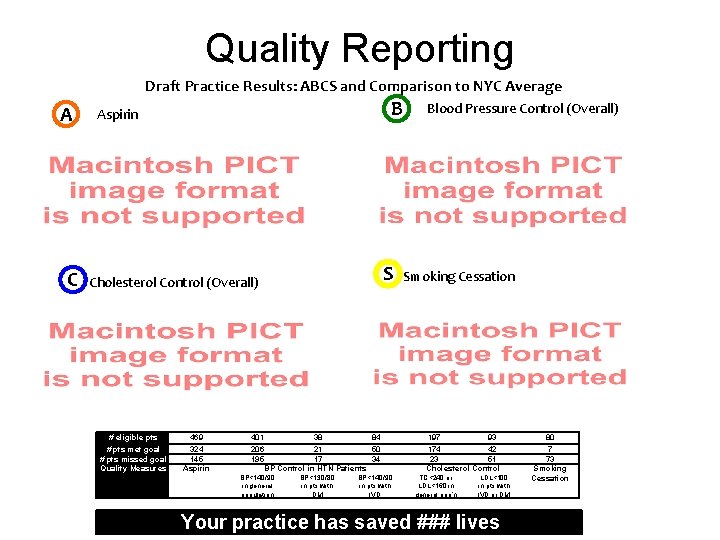
Quality Reporting Draft Practice Results: ABCS and Comparison to NYC Average A C B Aspirin S Cholesterol Control (Overall) # eligible pts 469 # pts met goal # pts missed goal Quality Measures 324 145 Aspirin 401 38 84 206 21 50 195 17 34 BP Control in HTN Patients BP<140/90 in general population BP<130/80 in pts with DM BP<140/90 in pts with IVD Blood Pressure Control (Overall) Smoking Cessation 197 93 174 42 23 51 Cholesterol Control TC<240 or LDL<160 in general pop’n LDL<100 in pts with IVD or DM Your practice has saved ### lives 80 7 73 Smoking Cessation
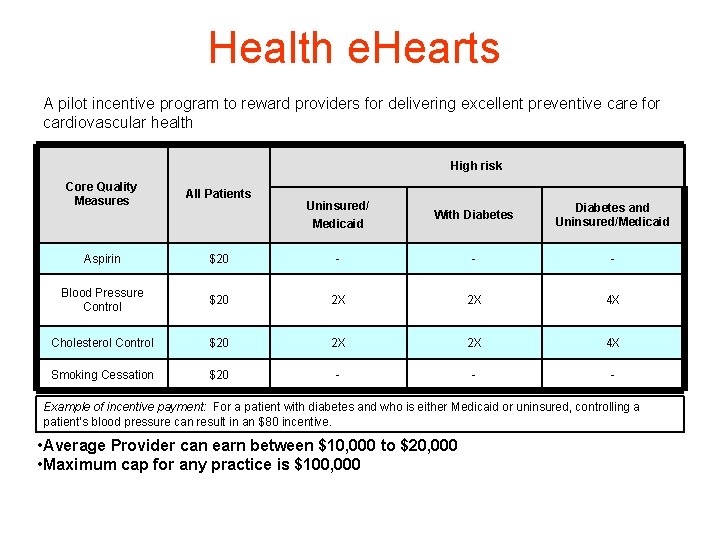
Health e. Hearts A pilot incentive program to reward providers for delivering excellent preventive care for cardiovascular health High risk Core Quality Measures All Patients Uninsured/ Medicaid With Diabetes and Uninsured/Medicaid Aspirin $20 - - - Blood Pressure Control $20 2 X 2 X 4 X Cholesterol Control $20 2 X 2 X 4 X Smoking Cessation $20 - - - Example of incentive payment: For a patient with diabetes and who is either Medicaid or uninsured, controlling a patient’s blood pressure can result in an $80 incentive. • Average Provider can earn between $10, 000 to $20, 000 • Maximum cap for any practice is $100, 000
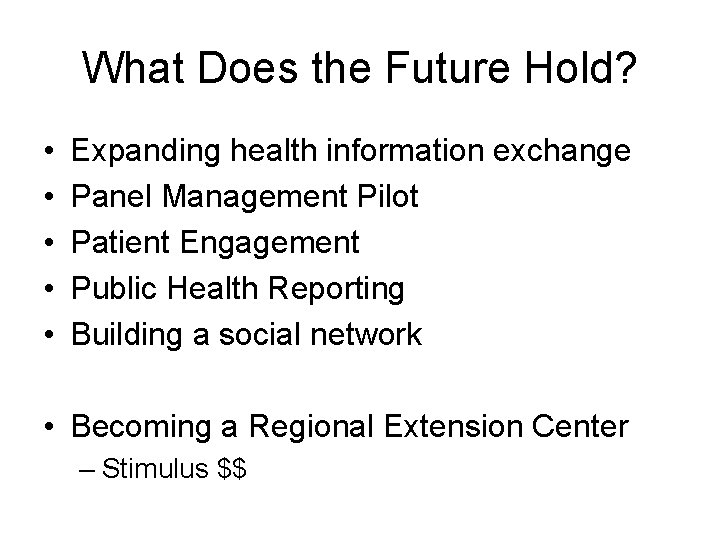
What Does the Future Hold? • • • Expanding health information exchange Panel Management Pilot Patient Engagement Public Health Reporting Building a social network • Becoming a Regional Extension Center – Stimulus $$
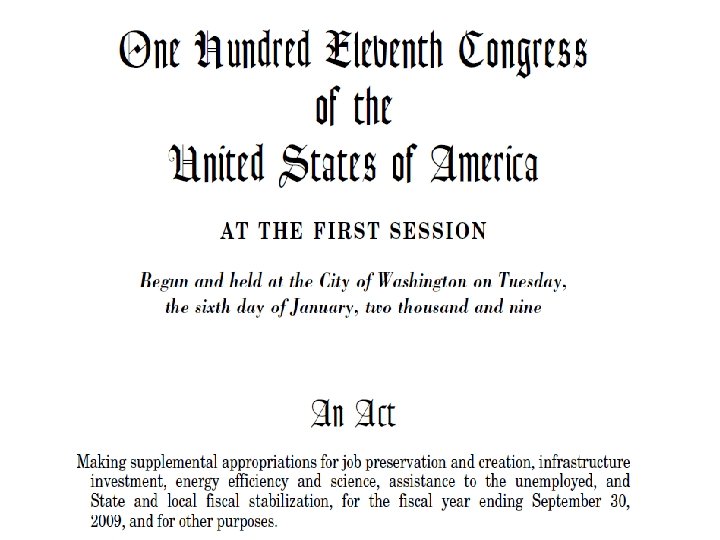
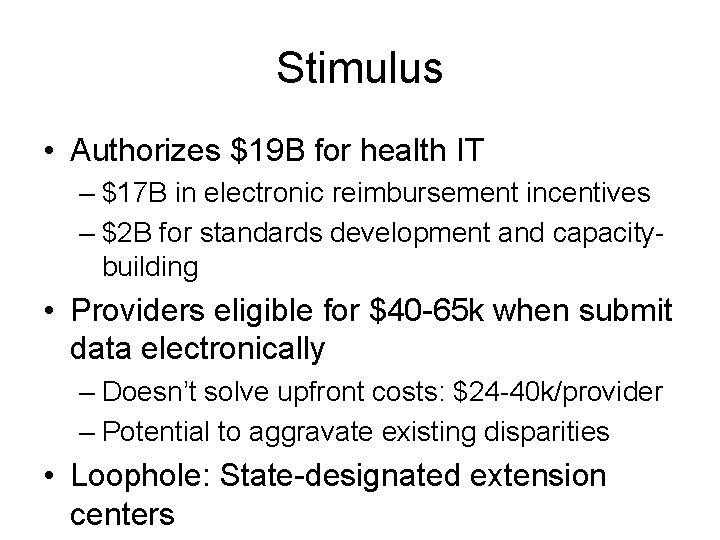
Stimulus • Authorizes $19 B for health IT – $17 B in electronic reimbursement incentives – $2 B for standards development and capacitybuilding • Providers eligible for $40 -65 k when submit data electronically – Doesn’t solve upfront costs: $24 -40 k/provider – Potential to aggravate existing disparities • Loophole: State-designated extension centers