
The priests vestments THE PRIESTS VESTMENTS The vestments


- Slides: 19
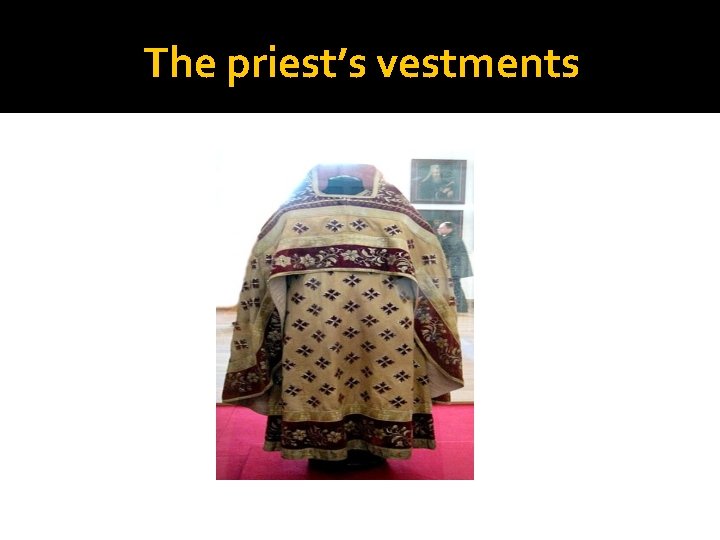
The priest’s vestments
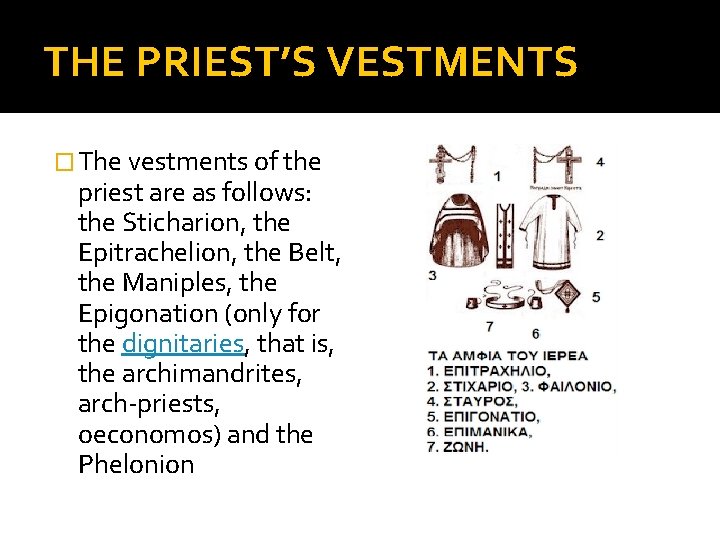
THE PRIEST’S VESTMENTS � The vestments of the priest are as follows: the Sticharion, the Epitrachelion, the Belt, the Maniples, the Epigonation (only for the dignitaries, that is, the archimandrites, arch-priests, oeconomos) and the Phelonion
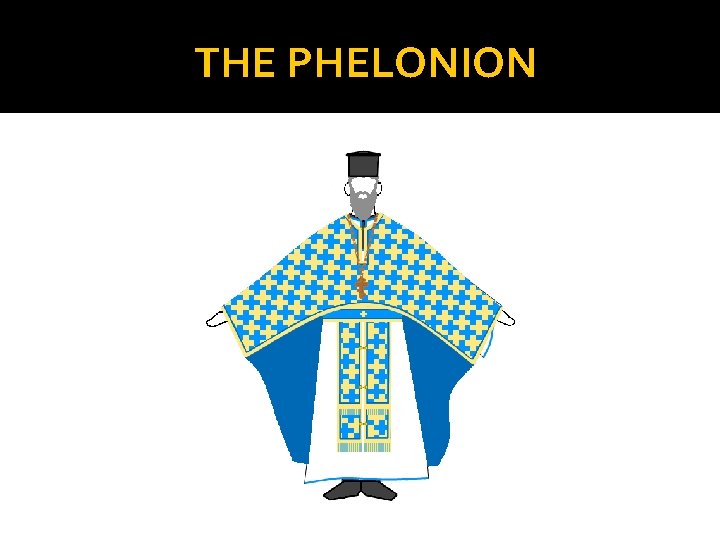
THE PHELONION
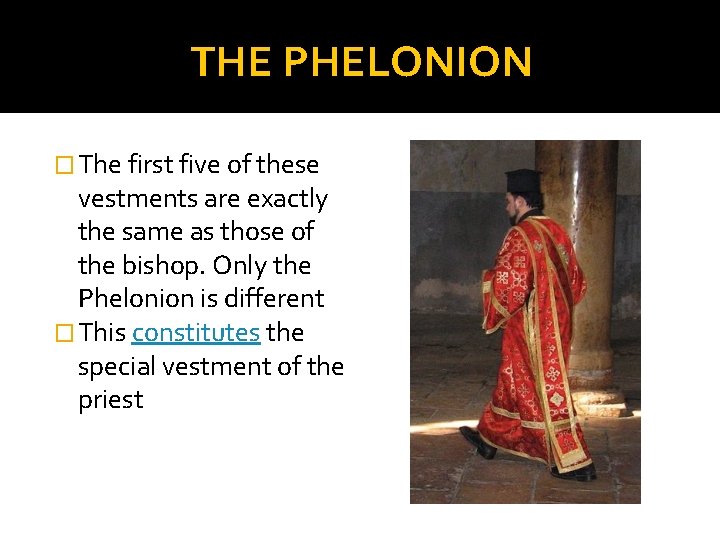
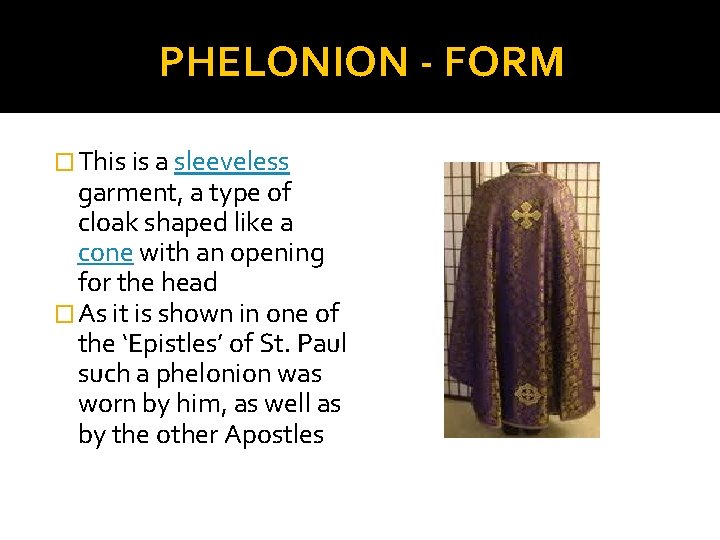
THE PHELONION � The first five of these vestments are exactly the same as those of the bishop. Only the Phelonion is different � This constitutes the special vestment of the priest
PHELONION - FORM � This is a sleeveless garment, a type of cloak shaped like a cone with an opening for the head � As it is shown in one of the ‘Epistles’ of St. Paul such a phelonion was worn by him, as well as by the other Apostles
POLYSTAVRION PHELONION � In olden times it was also worn by the bishops. To distinguish the bishop from the priest during the services, the bishop’s phelonion was decorated with many crosses; therefore, it was called ‘Polystavrion Phelonion’
DISTINCTIVE VESTMENT OF THE PRIEST � In the Byzantine paintings, the Fathers of our Church are usually portrayed with such polystavria phelonia � After the bishops replaced it by the saccos, the phelonion became the distinctive vestment of the priest
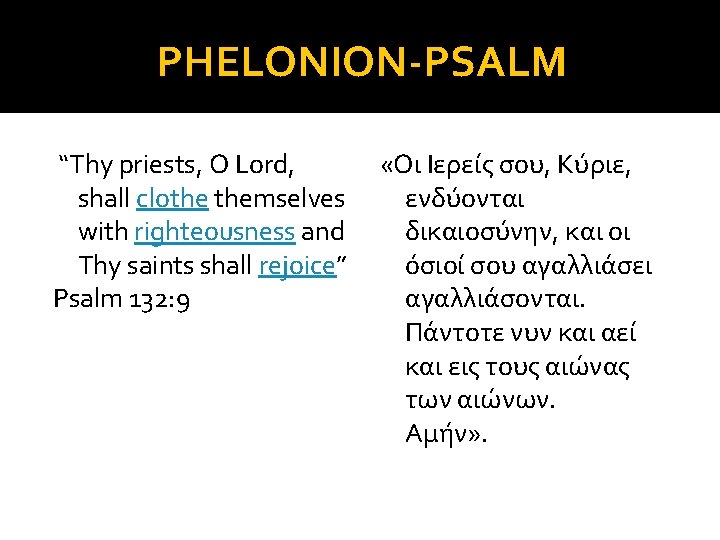
SYMBOLISM OF PHELONION � ‘Phelonion’ is a Latin word meaning “mantle” or “cloak” � It has the same symbolic meaning as the bishop’s saccos, that is, it represents the red chiton of the Lord and denotes that the priests are invested with the truth and should be ministers of the truth � The Bible passage which the priest recites as he puts on the phelonion is:
THE DEACON’S VESTMENTS
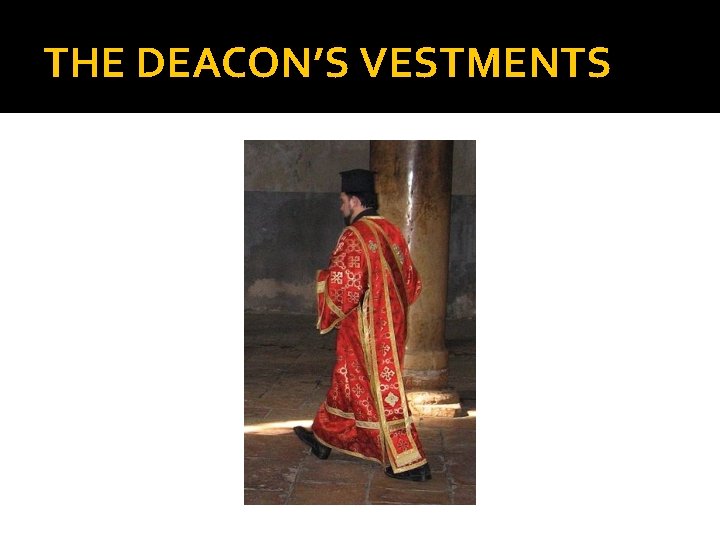
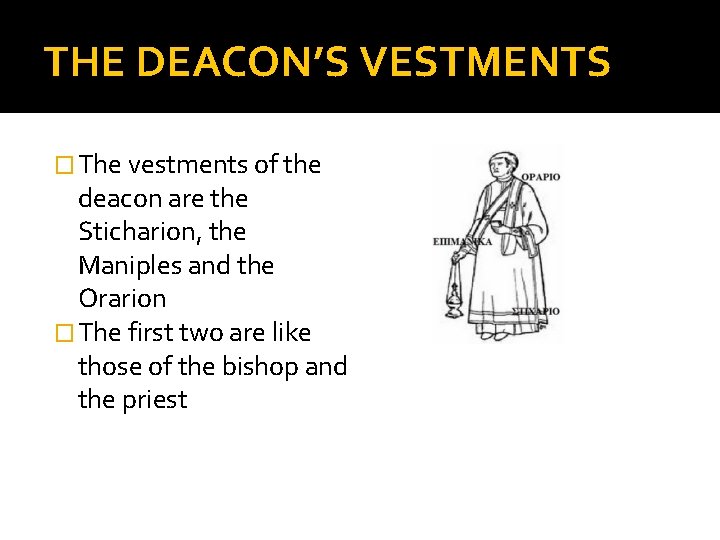
THE DEACON’S VESTMENTS � The vestments of the deacon are the Sticharion, the Maniples and the Orarion � The first two are like those of the bishop and the priest
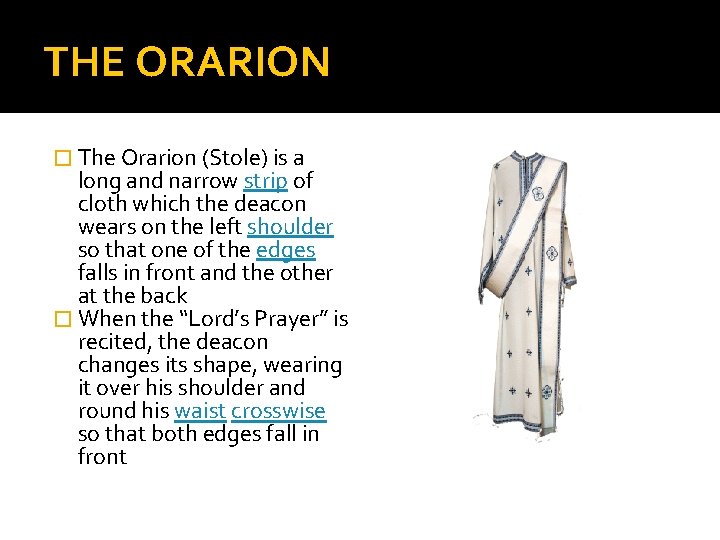
THE ORARION � The Orarion (Stole) is a long and narrow strip of cloth which the deacon wears on the left shoulder so that one of the edges falls in front and the other at the back � When the “Lord’s Prayer” is recited, the deacon changes its shape, wearing it over his shoulder and round his waist crosswise so that both edges fall in front
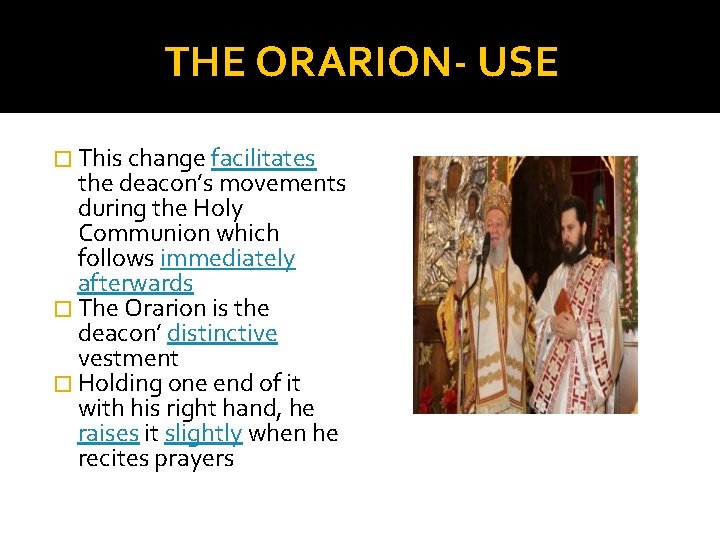
THE ORARION- USE � This change facilitates the deacon’s movements during the Holy Communion which follows immediately afterwards � The Orarion is the deacon’ distinctive vestment � Holding one end of it with his right hand, he raises it slightly when he recites prayers
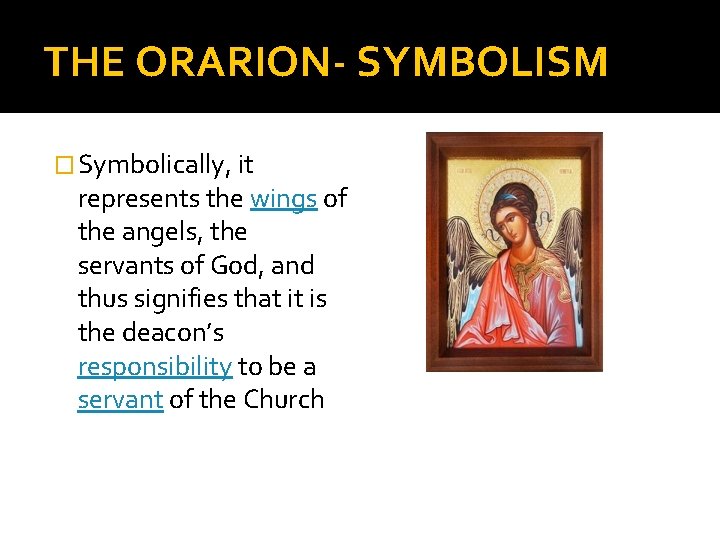
THE ORARION- SYMBOLISM � Symbolically, it represents the wings of the angels, the servants of God, and thus signifies that it is the deacon’s responsibility to be a servant of the Church
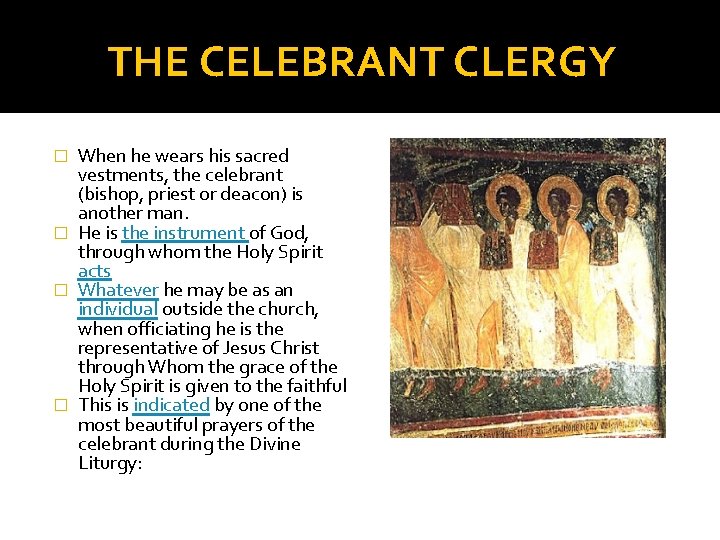
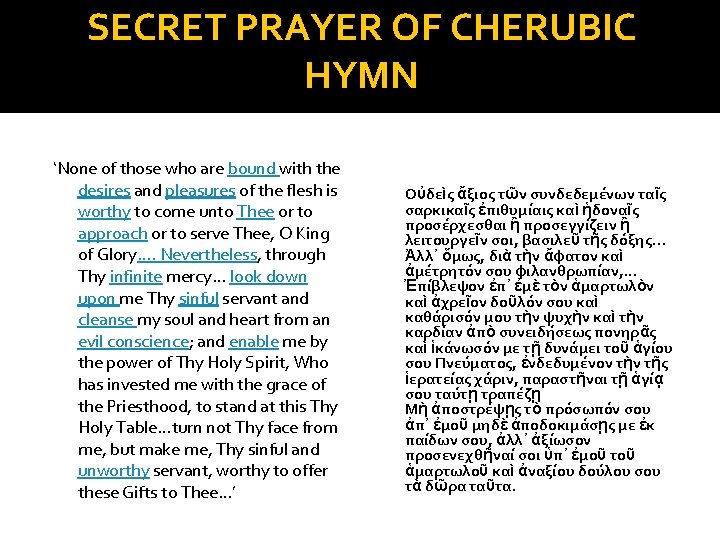
THE CELEBRANT CLERGY When he wears his sacred vestments, the celebrant (bishop, priest or deacon) is another man. � He is the instrument of God, through whom the Holy Spirit acts � Whatever he may be as an individual outside the church, when officiating he is the representative of Jesus Christ through Whom the grace of the Holy Spirit is given to the faithful � This is indicated by one of the most beautiful prayers of the celebrant during the Divine Liturgy: �
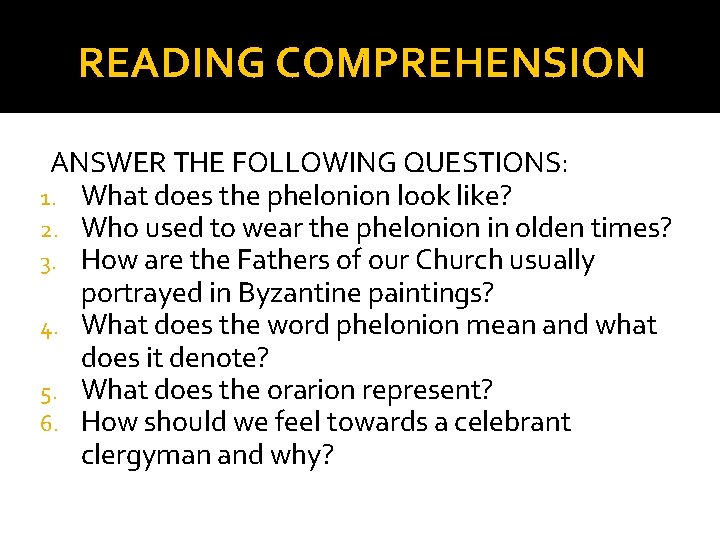
READING COMPREHENSION ANSWER THE FOLLOWING QUESTIONS: 1. What does the phelonion look like? 2. Who used to wear the phelonion in olden times? 3. How are the Fathers of our Church usually portrayed in Byzantine paintings? 4. What does the word phelonion mean and what does it denote? 5. What does the orarion represent? 6. How should we feel towards a celebrant clergyman and why?
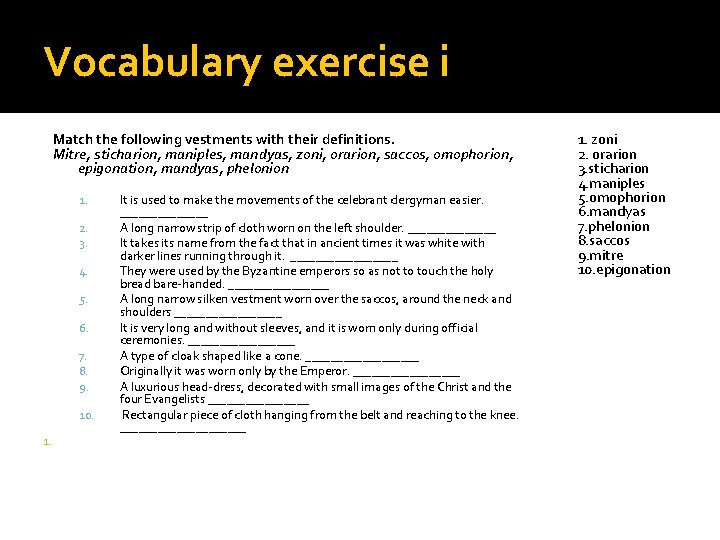
Vocabulary exercise i Match the following vestments with their definitions. Mitre, sticharion, maniples, mandyas, zoni, orarion, saccos, omophorion, epigonation, mandyas, phelonion 1. 2. 3. 4. 5. 6. 7. 8. 9. 10. 1. It is used to make the movements of the celebrant clergyman easier. _______ A long narrow strip of cloth worn on the left shoulder. _______ It takes its name from the fact that in ancient times it was white with darker lines running through it. _________ They were used by the Byzantine emperors so as not to touch the holy bread bare-handed. ________ A long narrow silken vestment worn over the saccos, around the neck and shoulders _________ It is very long and without sleeves, and it is worn only during official ceremonies. _________ A type of cloak shaped like a cone. _________ Originally it was worn only by the Emperor. _________ A luxurious head-dress, decorated with small images of the Christ and the four Evangelists ________ Rectangular piece of cloth hanging from the belt and reaching to the knee. __________ 1. zoni 2. orarion 3. sticharion 4. maniples 5. omophorion 6. mandyas 7. phelonion 8. saccos 9. mitre 10. epigonation
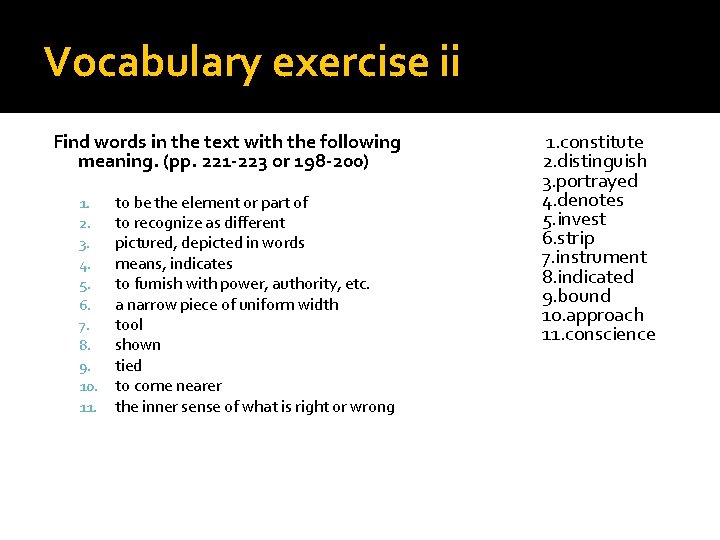
Vocabulary exercise ii Find words in the text with the following meaning. (pp. 221 -223 or 198 -200) 1. 2. 3. 4. 5. 6. 7. 8. 9. 10. 11. to be the element or part of to recognize as different pictured, depicted in words means, indicates to furnish with power, authority, etc. a narrow piece of uniform width tool shown tied to come nearer the inner sense of what is right or wrong 1. constitute 2. distinguish 3. portrayed 4. denotes 5. invest 6. strip 7. instrument 8. indicated 9. bound 10. approach 11. conscience