
The Price Revolution and Commercialization Price Revolution The

- Slides: 7
The Price Revolution and Commercialization
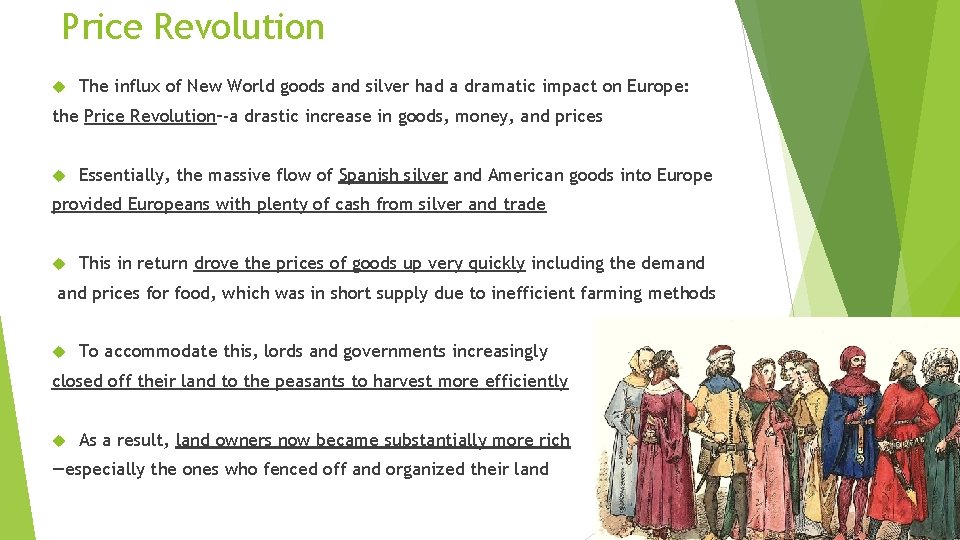
Price Revolution The influx of New World goods and silver had a dramatic impact on Europe: the Price Revolution–-a drastic increase in goods, money, and prices Essentially, the massive flow of Spanish silver and American goods into Europe provided Europeans with plenty of cash from silver and trade This in return drove the prices of goods up very quickly including the demand prices for food, which was in short supply due to inefficient farming methods To accommodate this, lords and governments increasingly closed off their land to the peasants to harvest more efficiently As a result, land owners now became substantially more rich —especially the ones who fenced off and organized their land
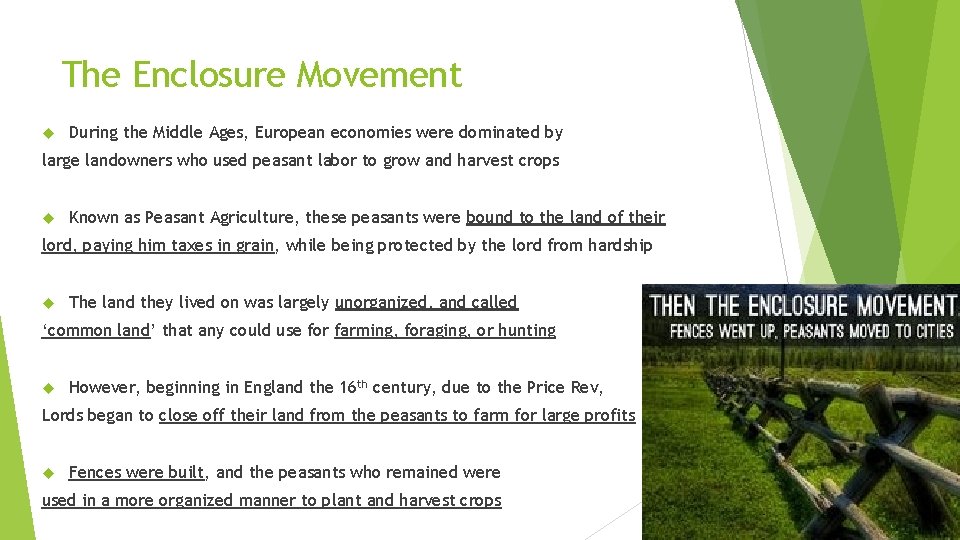
The Enclosure Movement During the Middle Ages, European economies were dominated by large landowners who used peasant labor to grow and harvest crops Known as Peasant Agriculture, these peasants were bound to the land of their lord, paying him taxes in grain, while being protected by the lord from hardship The land they lived on was largely unorganized, and called ‘common land’ that any could use for farming, foraging, or hunting However, beginning in England the 16 th century, due to the Price Rev, Lords began to close off their land from the peasants to farm for large profits Fences were built, and the peasants who remained were used in a more organized manner to plant and harvest crops
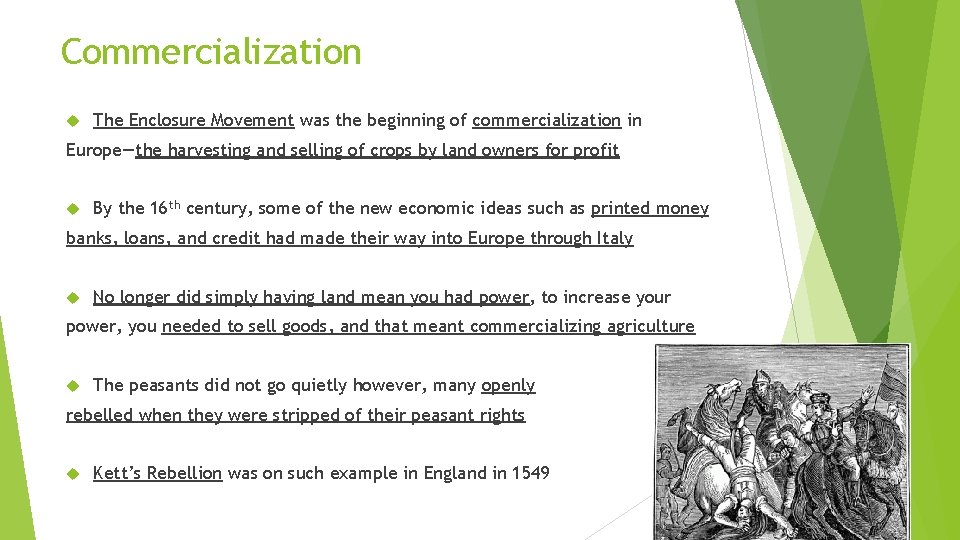
Commercialization The Enclosure Movement was the beginning of commercialization in Europe—the harvesting and selling of crops by land owners for profit By the 16 th century, some of the new economic ideas such as printed money banks, loans, and credit had made their way into Europe through Italy No longer did simply having land mean you had power, to increase your power, you needed to sell goods, and that meant commercializing agriculture The peasants did not go quietly however, many openly rebelled when they were stripped of their peasant rights Kett’s Rebellion was on such example in England in 1549
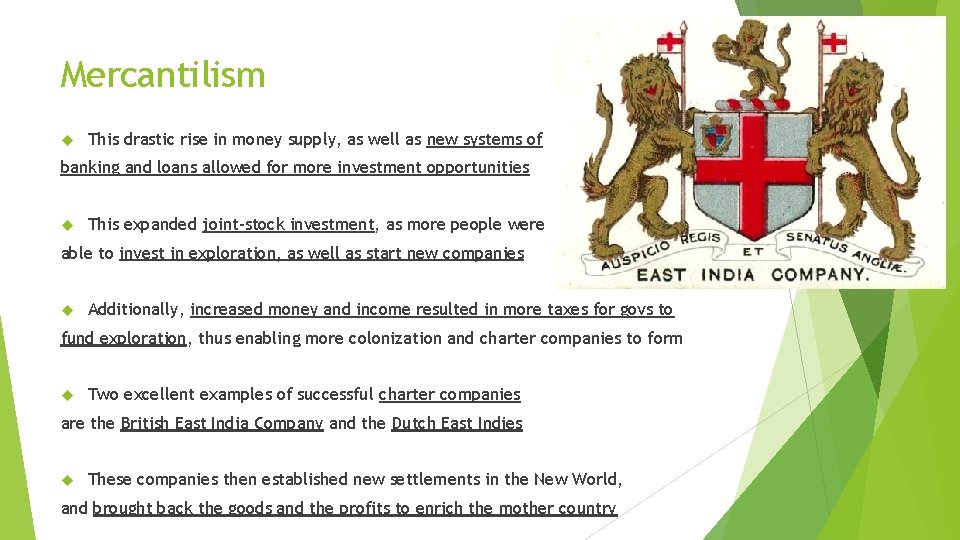
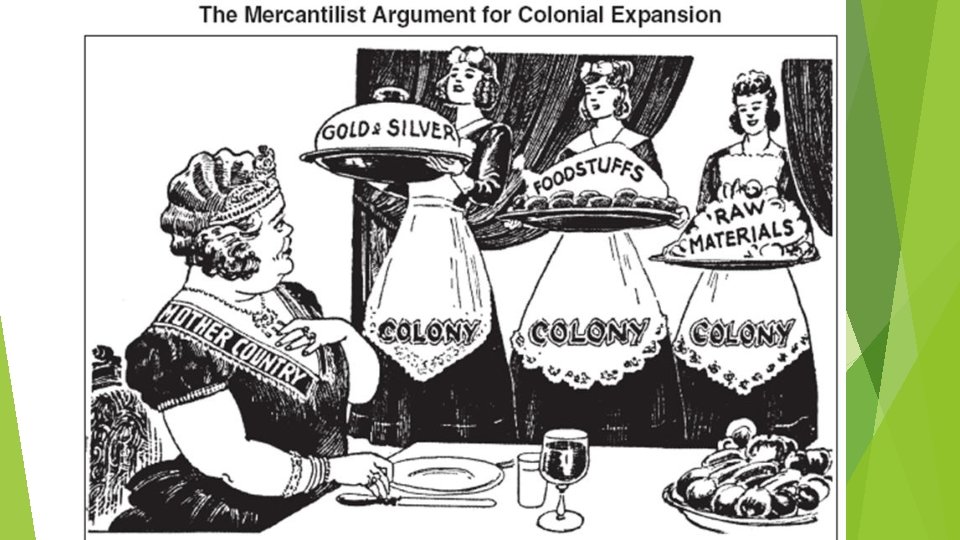
Mercantilism This drastic rise in money supply, as well as new systems of banking and loans allowed for more investment opportunities This expanded joint-stock investment, as more people were able to invest in exploration, as well as start new companies Additionally, increased money and income resulted in more taxes for govs to fund exploration, thus enabling more colonization and charter companies to form Two excellent examples of successful charter companies are the British East India Company and the Dutch East Indies These companies then established new settlements in the New World, and brought back the goods and the profits to enrich the mother country
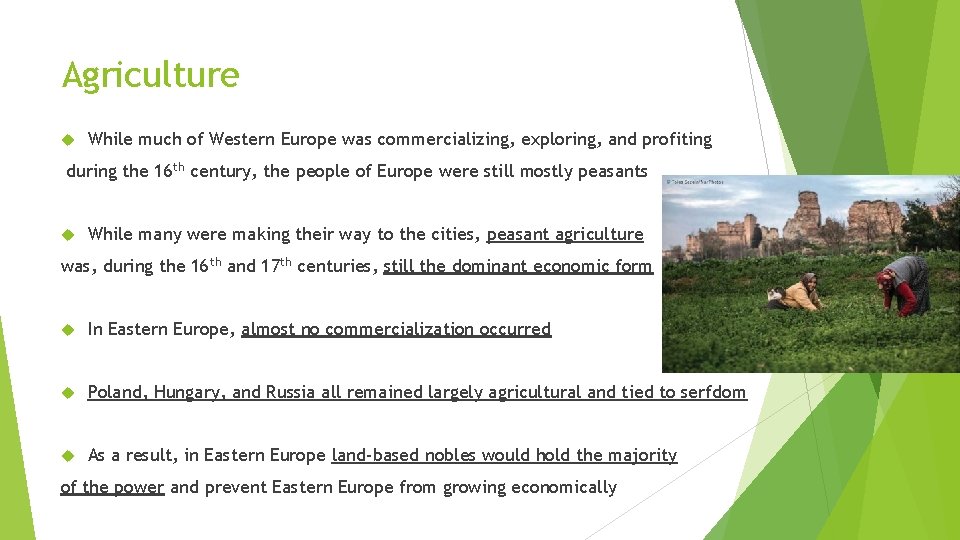
Agriculture While much of Western Europe was commercializing, exploring, and profiting during the 16 th century, the people of Europe were still mostly peasants While many were making their way to the cities, peasant agriculture was, during the 16 th and 17 th centuries, still the dominant economic form In Eastern Europe, almost no commercialization occurred Poland, Hungary, and Russia all remained largely agricultural and tied to serfdom As a result, in Eastern Europe land-based nobles would hold the majority of the power and prevent Eastern Europe from growing economically