
The Prevention of Rheumatic Fever and Rheumatic Heart










- Slides: 56
The Prevention of Rheumatic Fever and Rheumatic Heart Disease Dr Liesl Zühlke Paediatric Cardiologist: Red Cross War Memorial Childrens Hospital Cape Town South Africa Liesl. zuhlke@uct. ac. za
• • • I graduated from University of Cape Town medical School in 1991 and qualified as a pediatrician in 1999 and as a paediatric cardiologist in 2007. I am currently a doctoral fellow involved in full-time research related to rheumatic fever and rheumatic heart disease working within the framework of the A. S. A. P programme. Sub-Saharan Africa remains a hotspot for rheumatic fever and rheumatic heart disease. It is the only truly preventable chronic cardiac condition, yet still reigns rampant in poor countries years after virtual eradication in developed nations. Rheumatic heart disease is a major killer of children, adolescents and young adults. Health practioners practising in resource-poor settings such as Africa, need to work together to raise awareness of this condition, survey incidence, prevalence and temporal trends , be advocates for patients whose lives are affected by rheumatic heart disease and institute prevention strategies. Rheumatic heart disease is a neglected disease of poverty – we need to turn the tide and address the fundamental issues surrounding this condition that still remain. As a paediatric cardiologist seeing patients with rheumatic heart disease on a regular basis, I feel passionate about being part of the solution and working towards the eradication of rheumatic heart disease in our lifetime- a very achievable goal.
Learning Objectives: • To understand the pathogenesis of acute rheumatic fever and rheumatic heart disease • To appreciate the burden of disease • To recognize the features of a streptococcal sore throat • To know the treatment regimens of a streptococcal sore throat • To be aware of secondary prevention measures • To understand the role of a register-based programme
Performance Objectives: • • • Examine the burden of disease within own communities Timely recognition of a streptococcal sore throat with correct treatment Institute secondary prevention programme Institute the above measure within a register-based programme Join the global community fighting Rheumatic fever and rheumatic heart disease
What is the pathogenesis of acute rheumatic fever?
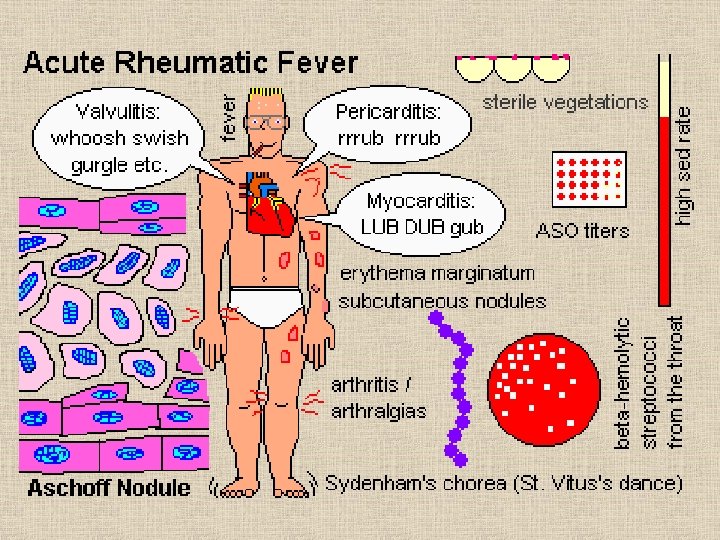
ACUTE RHEUMATIC FEVER • Autoimmune consequence of infection with Group A streptococcal infection • Results in a generalised inflammatory response affecting brains, joints, skin, subcutaneous tissues and the heart.
ACUTE RHEUMATIC FEVER • The clinical presentation can be vague and difficult to diagnose. • Currently the modified Duckett. Jones criteria form the basis of the diagnosis of the condition.
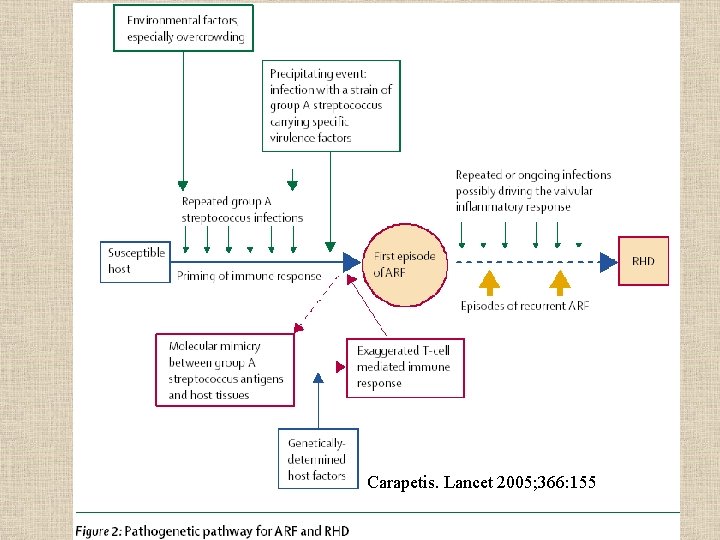
Carapetis. Lancet 2005; 366: 155
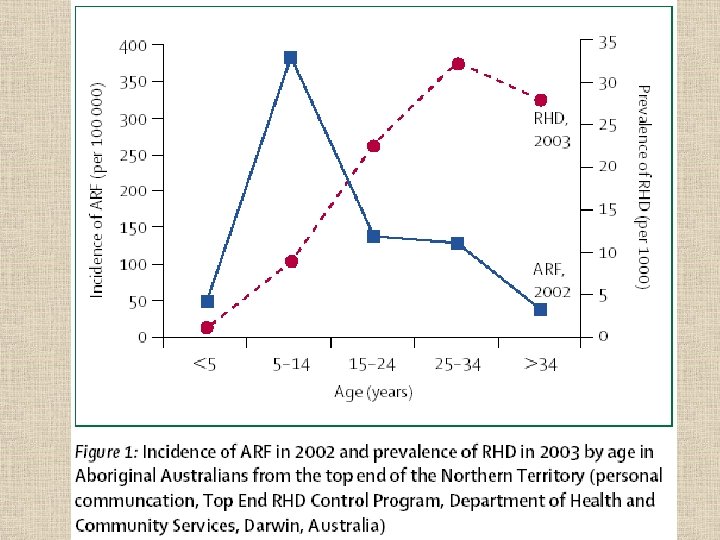
RHEUMATIC HEART DISEASE • Rheumatic Heart Disease is the permanent heart valve damage resulting from one or more attacks of ARF. • It is thought that 40 -60% of patients with ARF will go on to developing RHD.
RHEUMATIC HEART DISEASE • The commonest valves affecting are the mitral and aortic, in that order. However all four valves can be affected.
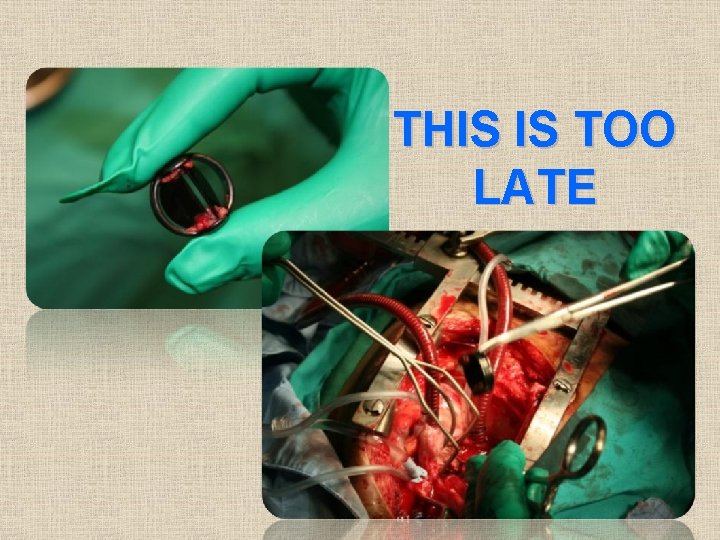
RHEUMATIC HEART DISEASE • Sadly, RHD can go undetected with the result that patients present with debilitating heart failure. • At this stage surgery is the only possible treatment option.
RHEUMATIC HEART DISEASE • Patients living in poor countries have limited or no access to expensive heart surgery. • Prosthetic valves themselves are costly and associated with a not insignificant morbidity and mortality.
What is the incidence of acute rheumatic fever and rheumatic heart disease?
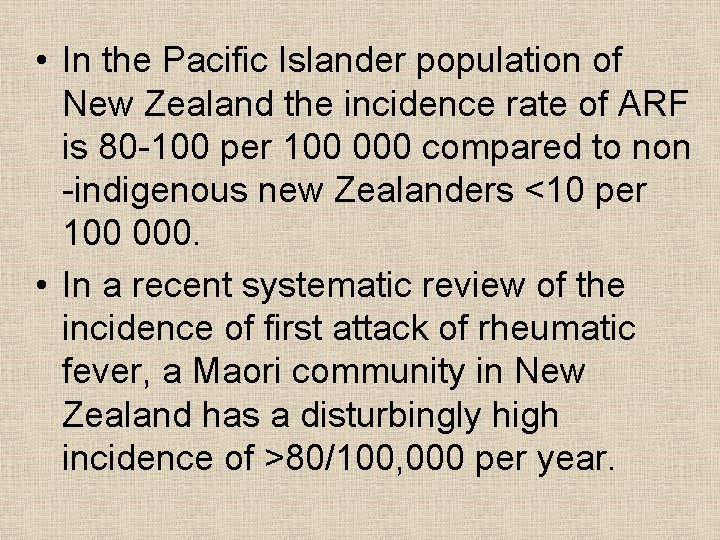
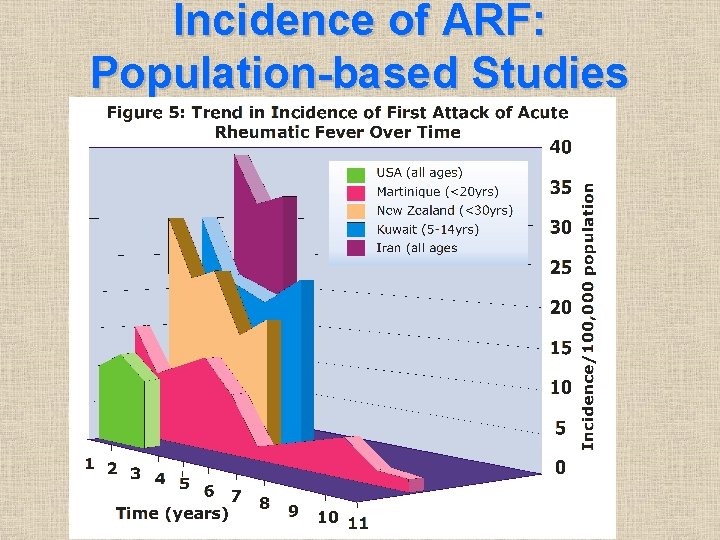
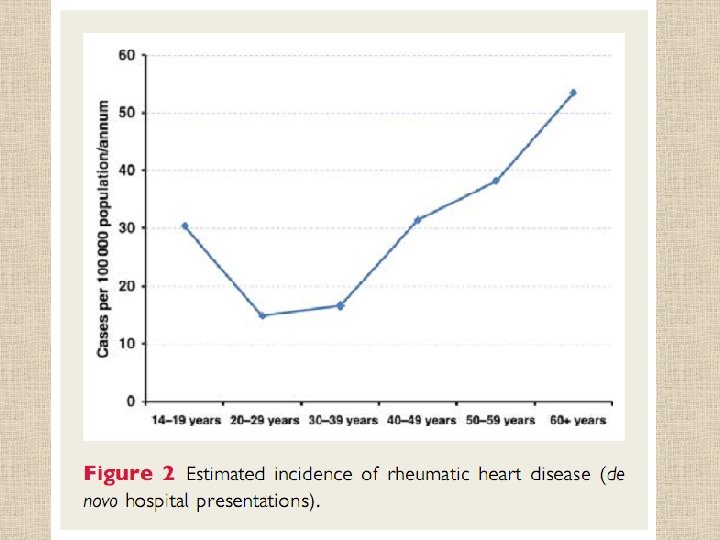
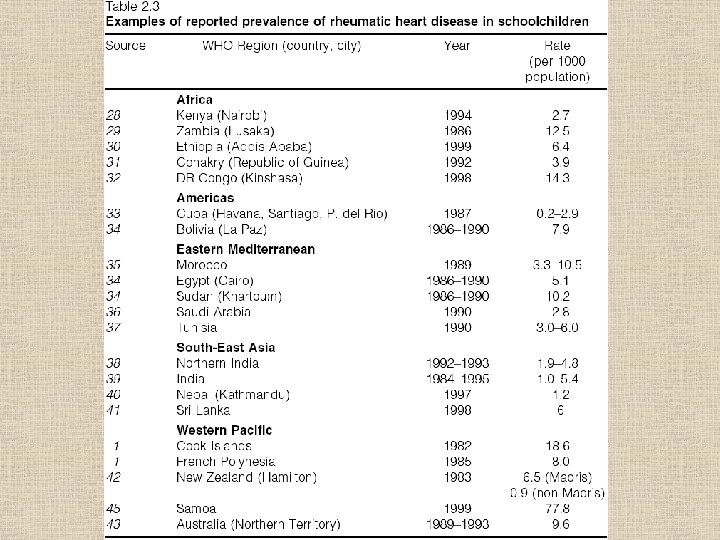
• In the Pacific Islander population of New Zealand the incidence rate of ARF is 80 -100 per 100 000 compared to non -indigenous new Zealanders <10 per 100 000. • In a recent systematic review of the incidence of first attack of rheumatic fever, a Maori community in New Zealand has a disturbingly high incidence of >80/100, 000 per year.
Incidence of ARF: Population-based Studies
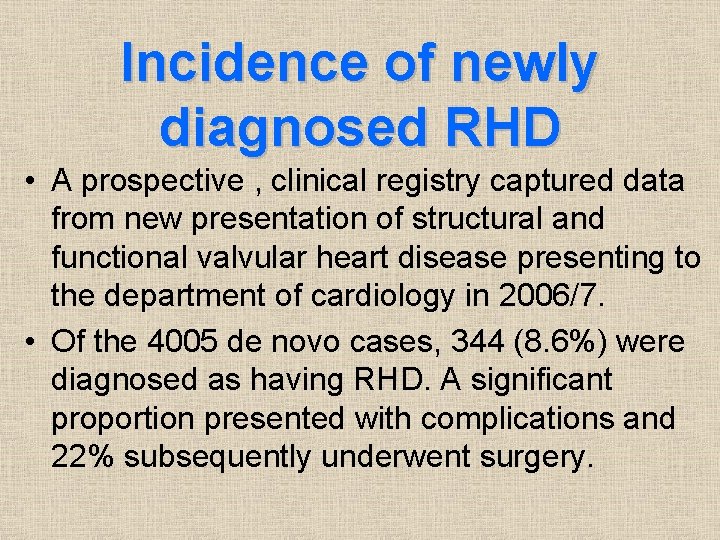
Incidence of newly diagnosed RHD • A prospective , clinical registry captured data from new presentation of structural and functional valvular heart disease presenting to the department of cardiology in 2006/7. • Of the 4005 de novo cases, 344 (8. 6%) were diagnosed as having RHD. A significant proportion presented with complications and 22% subsequently underwent surgery.
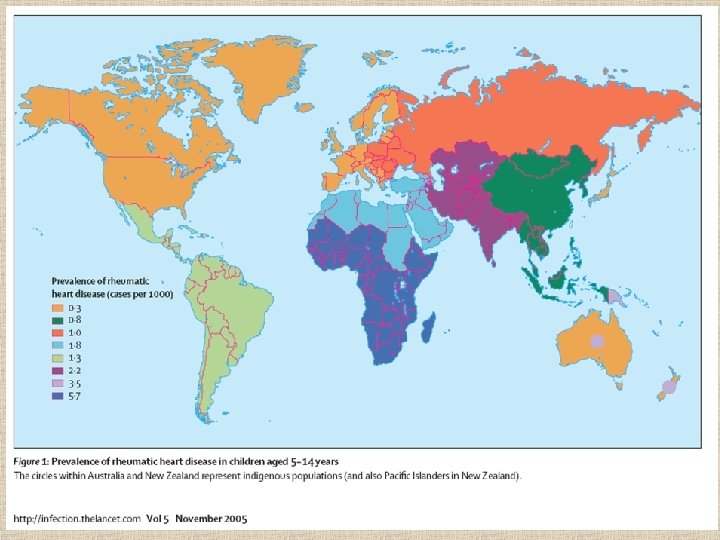
What is the prevalence of rheumatic heart disease?
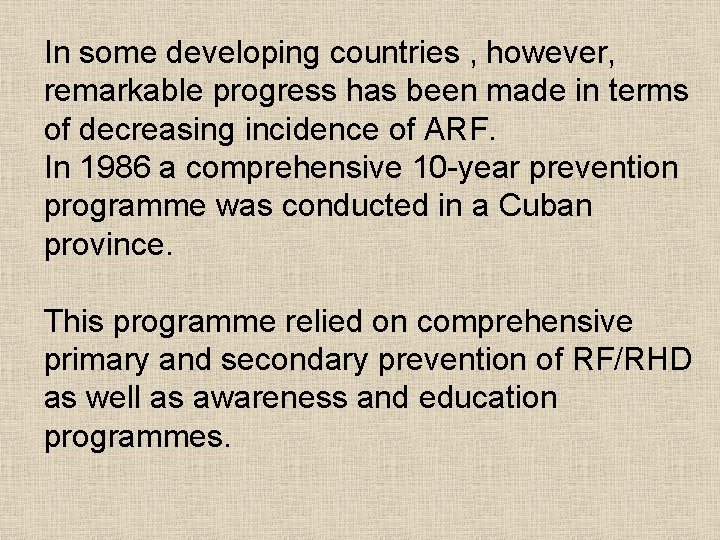
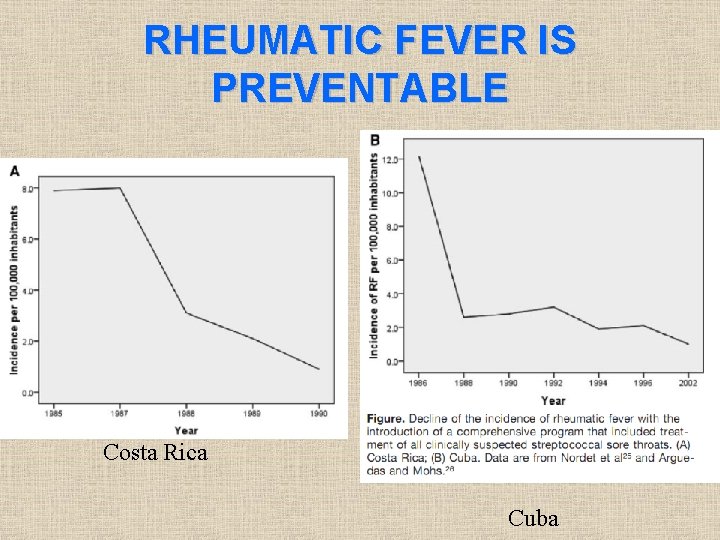
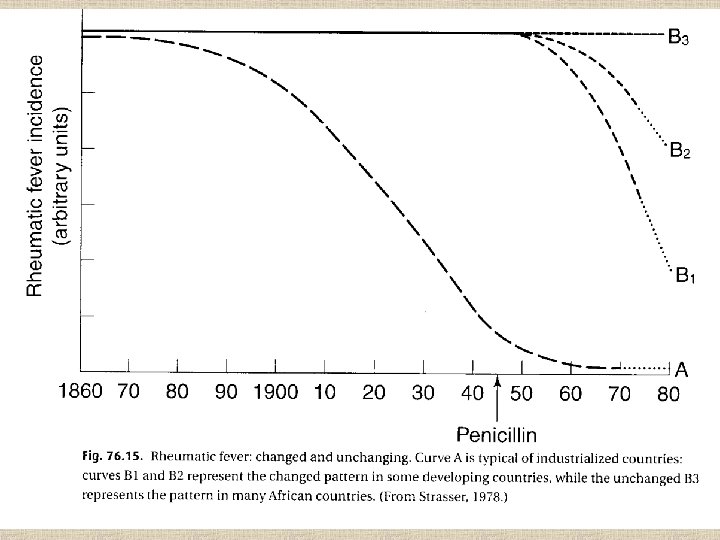
In some developing countries , however, remarkable progress has been made in terms of decreasing incidence of ARF. In 1986 a comprehensive 10 -year prevention programme was conducted in a Cuban province. This programme relied on comprehensive primary and secondary prevention of RF/RHD as well as awareness and education programmes.
RHEUMATIC FEVER IS PREVENTABLE Costa Rica Cuba
The main content of the activities focused around early detection and treatment of sore throats and streptococcal pharyngitis. The project also included primary and secondary prevention of RF/RHD, training of personnel, health education, dissemination of information, community involvement and epidemiological surveillance.
There was a progressive decline in the occurrence and severity of acute RF and RHD, with a marked decrease in the prevalence of RHD in school children. A marked and progressive decline was also seen in the incidence and severity of ARF. There was an even more marked reduction in recurrent attacks of RF as well as in the number and severity of patients requiring hospitalisation and surgical care.
What are the clinical features of strep sore throat?
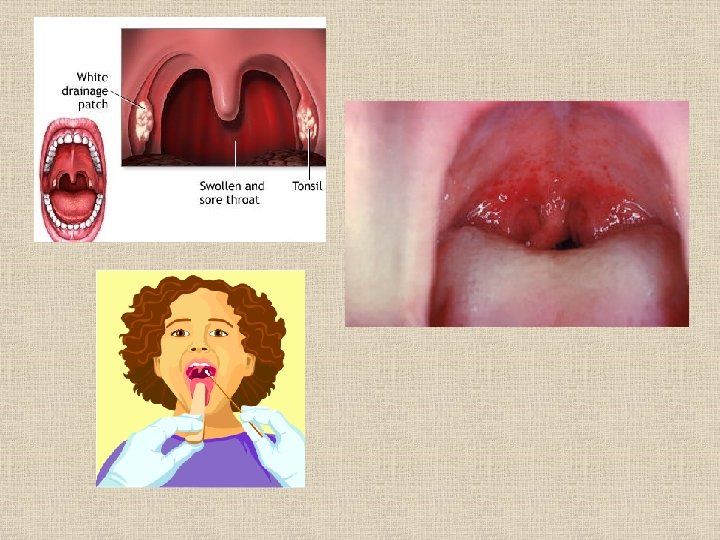
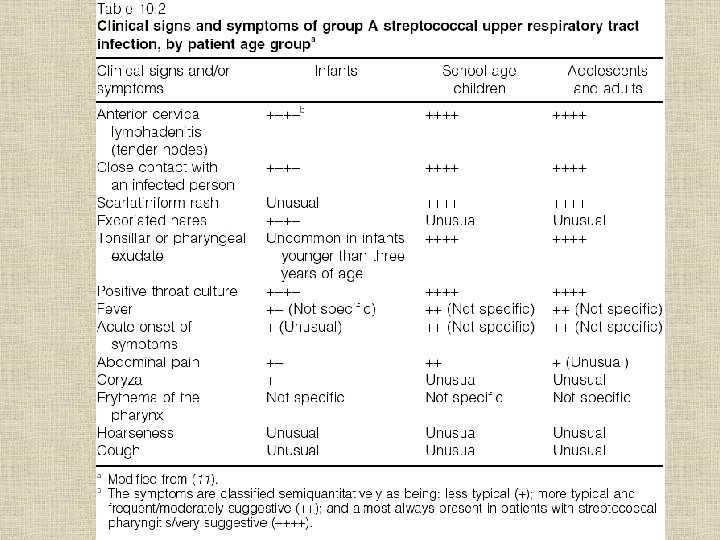
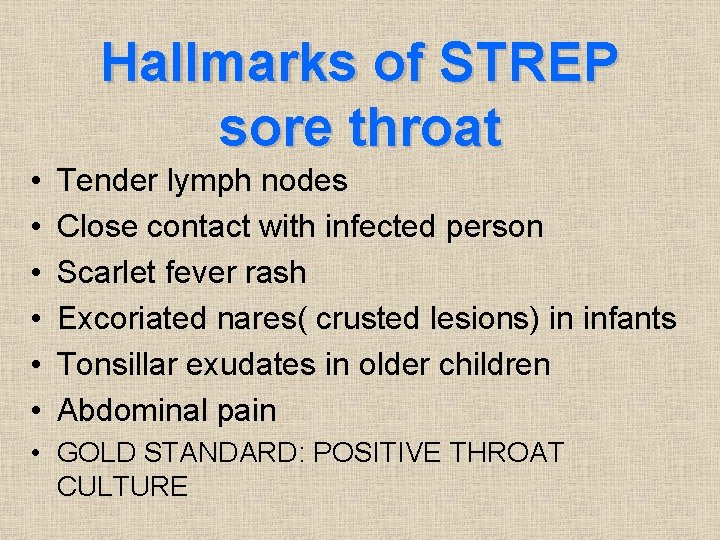
Hallmarks of STREP sore throat • • • Tender lymph nodes Close contact with infected person Scarlet fever rash Excoriated nares( crusted lesions) in infants Tonsillar exudates in older children Abdominal pain • GOLD STANDARD: POSITIVE THROAT CULTURE
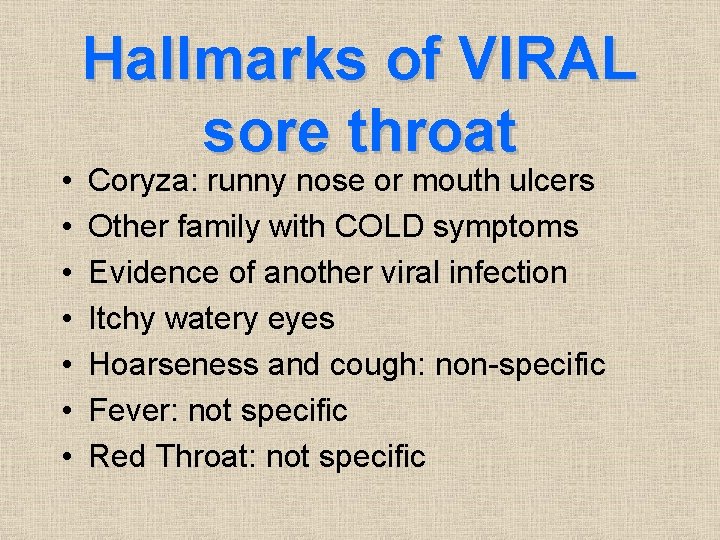
• • Hallmarks of VIRAL sore throat Coryza: runny nose or mouth ulcers Other family with COLD symptoms Evidence of another viral infection Itchy watery eyes Hoarseness and cough: non-specific Fever: not specific Red Throat: not specific
What are the treatment regimens of streptococcal sore throat?
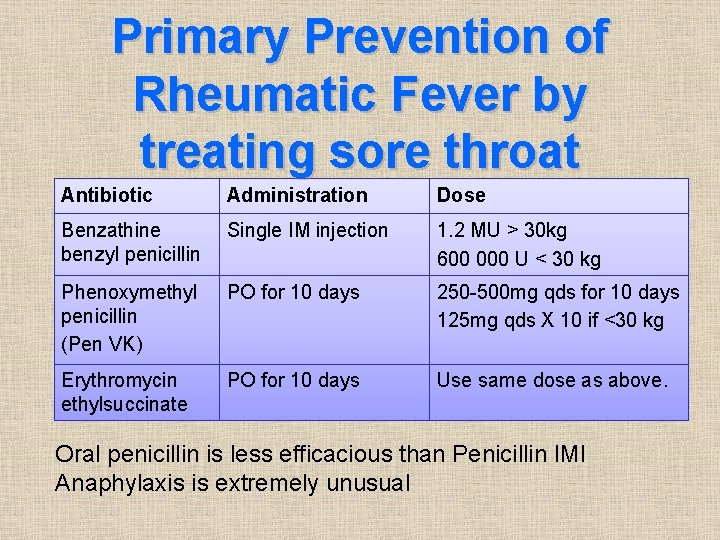
Primary Prevention of Rheumatic Fever by treating sore throat Antibiotic Administration Dose Benzathine benzyl penicillin Single IM injection 1. 2 MU > 30 kg 600 000 U < 30 kg Phenoxymethyl penicillin (Pen VK) PO for 10 days 250 -500 mg qds for 10 days 125 mg qds X 10 if <30 kg Erythromycin ethylsuccinate PO for 10 days Use same dose as above. Oral penicillin is less efficacious than Penicillin IMI Anaphylaxis is extremely unusual
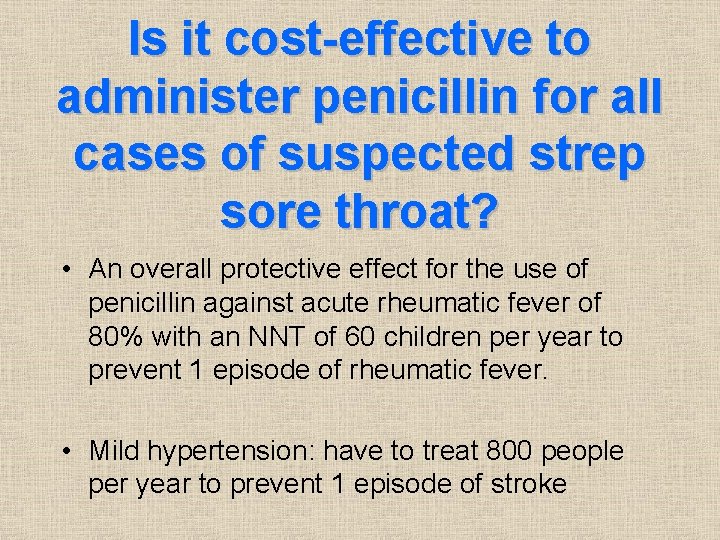
Is it cost-effective to administer penicillin for all cases of suspected strep sore throat? • An overall protective effect for the use of penicillin against acute rheumatic fever of 80% with an NNT of 60 children per year to prevent 1 episode of rheumatic fever. • Mild hypertension: have to treat 800 people per year to prevent 1 episode of stroke
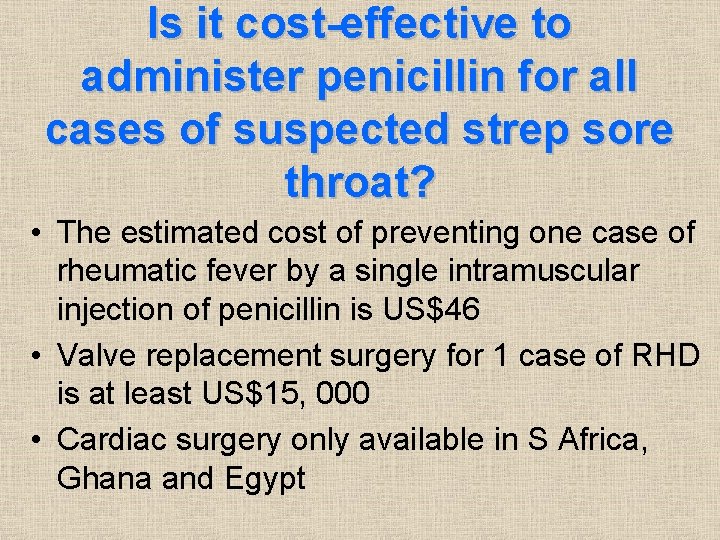
Is it cost-effective to administer penicillin for all cases of suspected strep sore throat? • The estimated cost of preventing one case of rheumatic fever by a single intramuscular injection of penicillin is US$46 • Valve replacement surgery for 1 case of RHD is at least US$15, 000 • Cardiac surgery only available in S Africa, Ghana and Egypt
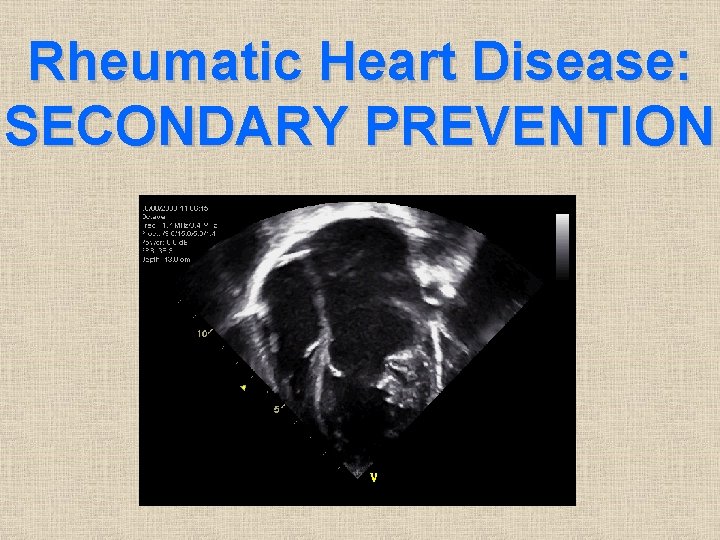
Rheumatic Heart Disease: SECONDARY PREVENTION PICTURE TAKEN OUT FOR SPACE ISSUES
THIS IS TOO LATE
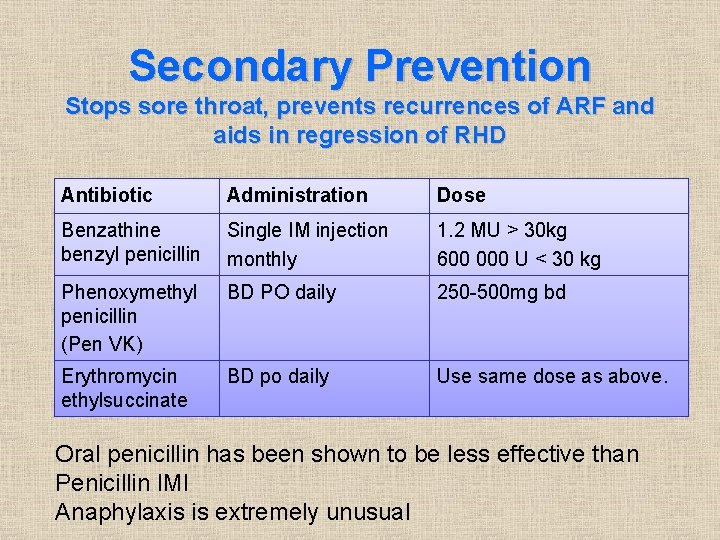
Secondary Prevention Stops sore throat, prevents recurrences of ARF and aids in regression of RHD Antibiotic Administration Dose Benzathine benzyl penicillin Single IM injection monthly 1. 2 MU > 30 kg 600 000 U < 30 kg Phenoxymethyl penicillin (Pen VK) BD PO daily 250 -500 mg bd Erythromycin ethylsuccinate BD po daily Use same dose as above. Oral penicillin has been shown to be less effective than Penicillin IMI Anaphylaxis is extremely unusual
During an episode of ARF, valve changes can be minor and are still able to regress. After recurrent episodes of ARF, thickening of subvalvar apparatus, chordal thickening and shortening and progression to permanent valve damage is evident.
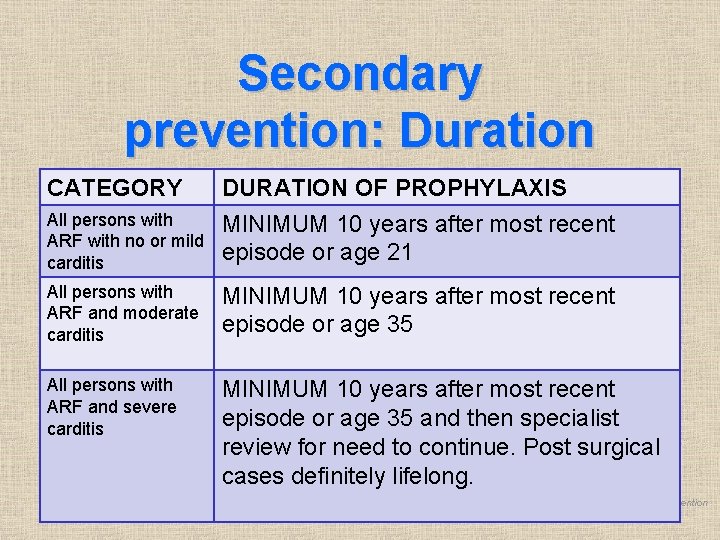
Secondary prevention: Duration CATEGORY All persons with ARF with no or mild carditis DURATION OF PROPHYLAXIS MINIMUM 10 years after most recent episode or age 21 All persons with ARF and moderate carditis MINIMUM 10 years after most recent episode or age 35 All persons with ARF and severe carditis MINIMUM 10 years after most recent episode or age 35 and then specialist review for need to continue. Post surgical cases definitely lifelong. Awareness ♦ Surveillance ♦ Advocacy ♦ Prevention
Secondary prevention: specifics PENCILLIN Secondary prophylaxis also reduces the severity of RHD. It is associated with regression of heart disease in approximately 50 -70% of those with good adherence over a decade and reduces mortality. Route: BPG is most effective when given as a deep intramuscular injection.
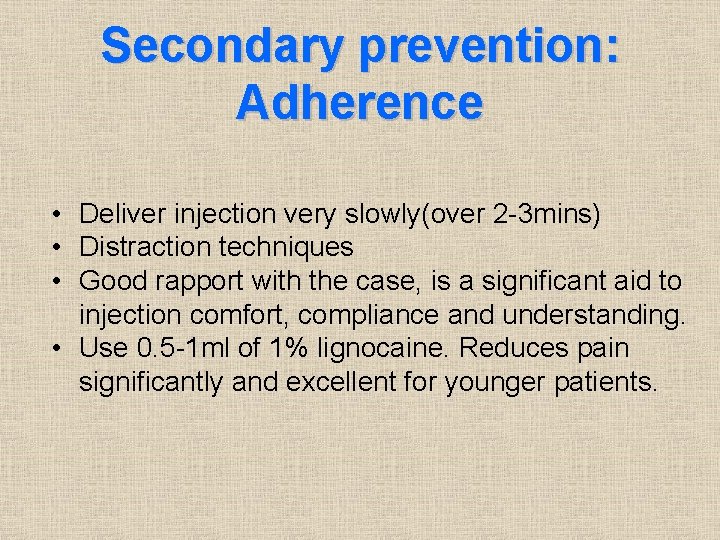
Secondary prevention: Adherence How can we reduce the pain associated with IM Penicillin? • • . Use a 23 -gauge needle- deeper is better Local pressure to area for 10 secs Warm syringe to room temperature First allow alcohol to dry or use ethylchloride spray
Secondary prevention: Adherence • Deliver injection very slowly(over 2 -3 mins) • Distraction techniques • Good rapport with the case, is a significant aid to injection comfort, compliance and understanding. • Use 0. 5 -1 ml of 1% lignocaine. Reduces pain significantly and excellent for younger patients.
Ensuring that patients understand their disease, are informed regarding their future and receive secondary prophylaxis EDUCATION Health education is critical at all levels Lack of parental awareness of the causes and consequences of ARF/RHD is a key contributor to poor adherence amongst children on long-term prophylaxis.
“Kenyan-Heart Talking Walls”: Dr. Aggrey Primary School Elizabeth Gatumia, Kenyan Heart Foundation/ Danish Heart Foundation
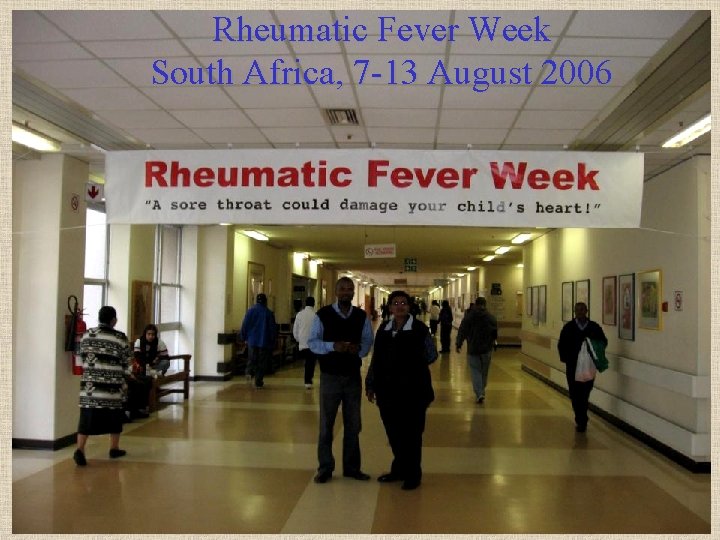
Rheumatic Fever Week South Africa, 7 -13 August 2006
What is the role of a register-based programme?
In 1972, the WHO launched a register-based programme to combat RF. RHD. By 1990, registers had been established in 16 countries with over a million school-going children involved. However in 2001, the WHO ceased its funding to this global programme. Experience elsewhere however provides conclusive evidence of registers realising notable successes in reducing RF recurrence.
The purpose of a register: Collect data on demographic profiles Highlight deficiencies in service delivery Priority-based guidelines to evaluate and manage patients Most importantly: A register of cases of RF and RHD can be used to improve treatment adherence in order to prevent recurrent RF and the development of RHD, necessitating surgery.
A. S. A. P. Programme for the Control of RHD in Africa: Focus areas for action • Awareness raising: public, healthcare workers • Surveillance: incidence, prevalence, temporal trends • Advocacy: appropriate funding of the treatment and prevention programmes • Prevention: application of existing knowledge in primary & secondary prevention
Summary • Rheumatic heart disease is the only truly preventable chronic heart condition • Primary prevention: – Penicillin for suspected strep sore throat • Secondary prevention – Penicillin prophylaxis • It is a legal requirement to notify cases of acute rheumatic fever to the local authority in South Africa
Summary The A. S. A. P. Programme for the Eradication of Rheumatic Fever in Africa: An achievable goal