
The preventable burden of workrelated illhealth Pierluigi Cocco
The preventable burden of work-related ill-health Pierluigi Cocco Professor of Occupational Medicine Department of Medical Sciences and Public Health. University of Cagliari
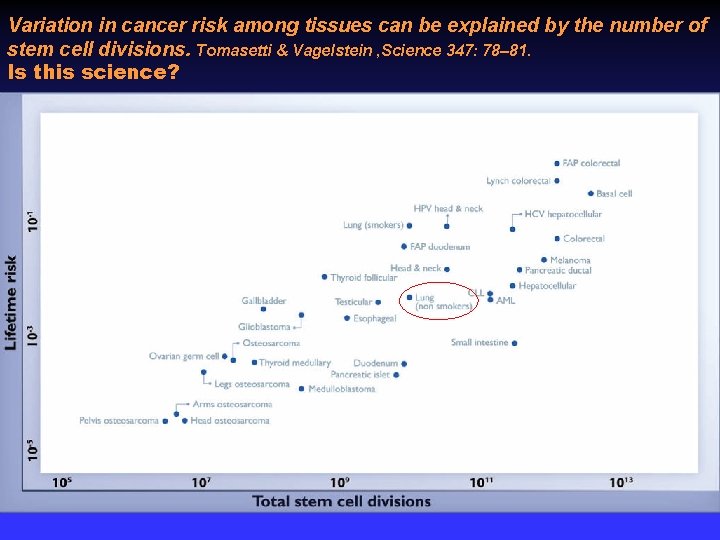
Variation in cancer risk among tissues can be explained by the number of stem cell divisions. Tomasetti & Vagelstein , Science 347: 78– 81. Is this science?
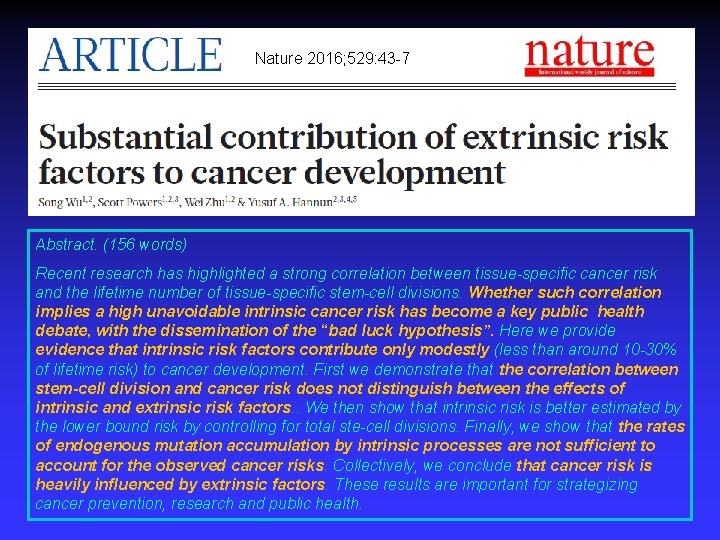
Nature 2016; 529: 43 -7 Abstract. (156 words) Recent research has highlighted a strong correlation between tissue-specific cancer risk and the lifetime number of tissue-specific stem-cell divisions. Whether such correlation implies a high unavoidable intrinsic cancer risk has become a key public health debate, with the dissemination of the “bad luck hypothesis”. Here we provide evidence that intrinsic risk factors contribute only modestly (less than around 10 -30% of lifetime risk) to cancer development. First we demonstrate that the correlation between stem-cell division and cancer risk does not distinguish between the effects of intrinsic and extrinsic risk factors. . We then show that intrinsic risk is better estimated by the lower bound risk by controlling for total ste-cell divisions. Finally, we show that the rates of endogenous mutation accumulation by intrinsic processes are not sufficient to account for the observed cancer risks. Collectively, we conclude that cancer risk is heavily influenced by extrinsic factors. These results are important for strategizing cancer prevention, research and public health.
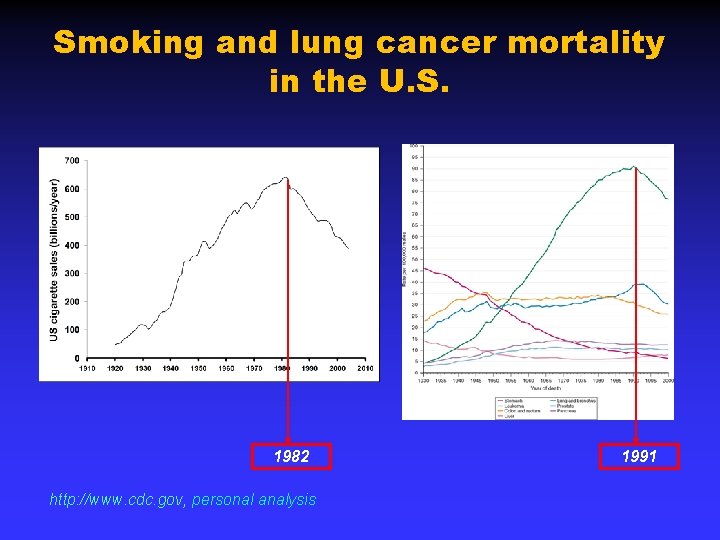
Smoking and lung cancer mortality in the U. S. 1982 http: //www. cdc. gov, personal analysis 1991
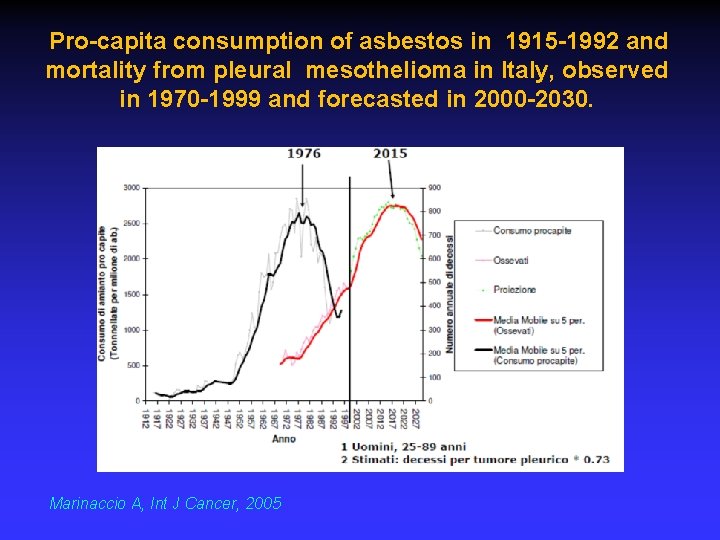
Pro-capita consumption of asbestos in 1915 -1992 and mortality from pleural mesothelioma in Italy, observed in 1970 -1999 and forecasted in 2000 -2030. Marinaccio A, Int J Cancer, 2005
Attributable risk to occupational risk factors by cancer site (adapted from Doll & Peto, 1981)
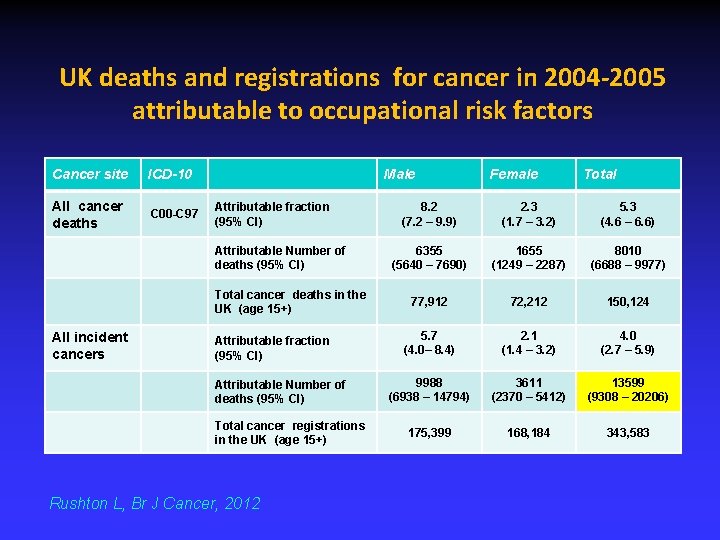
UK deaths and registrations for cancer in 2004 -2005 attributable to occupational risk factors Cancer site ICD-10 All cancer deaths C 00 -C 97 Male Attributable fraction (95% CI) Attributable Number of deaths (95% CI) Total cancer deaths in the UK (age 15+) All incident cancers Attributable fraction (95% CI) Attributable Number of deaths (95% CI) Total cancer registrations in the UK (age 15+) Rushton L, Br J Cancer, 2012 Female Total 8. 2 (7. 2 – 9. 9) 2. 3 (1. 7 – 3. 2) 5. 3 (4. 6 – 6. 6) 6355 (5640 – 7690) 1655 (1249 – 2287) 8010 (6688 – 9977) 77, 912 72, 212 150, 124 5. 7 (4. 0– 8. 4) 2. 1 (1. 4 – 3. 2) 4. 0 (2. 7 – 5. 9) 9988 (6938 – 14794) 3611 (2370 – 5412) 13599 (9308 – 20206) 175, 399 168, 184 343, 583
Despite a substantial literature on risk of cardiovascular diseases overall, ischaemic heart disease, acute myocardal infarction, hypertension, and exposure to particulate matter, lead, noise, shiftwork, and psychosocial stress, far fewer studies have explored the burden of occupational exposures on cardiovascular diseases Causes: ü Difficulty in assessing the share of occupational ill health Inadequate information on exposures, lack of exposure measurements, and number of exposed individuals; ü Lack of registration of occupational information in routinely collected health data, including family doctor records, hospital records, and disease registries Rushton L, Curr Environ Health Rep, 2017
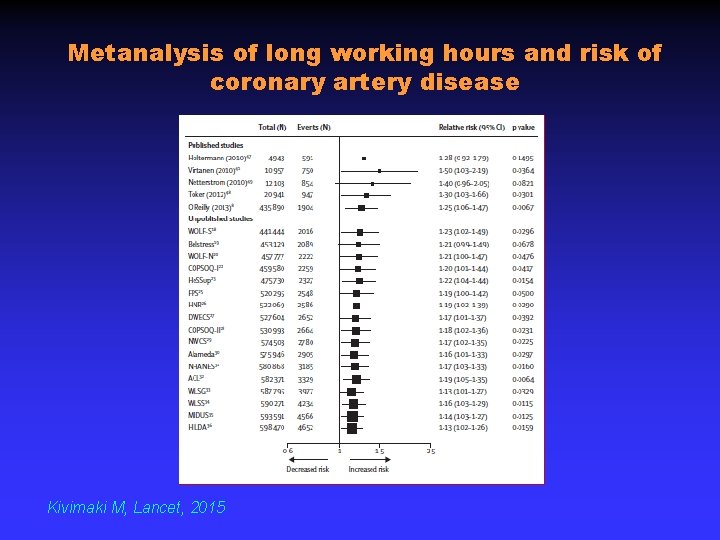
Metanalysis of long working hours and risk of coronary artery disease Kivimaki M, Lancet, 2015
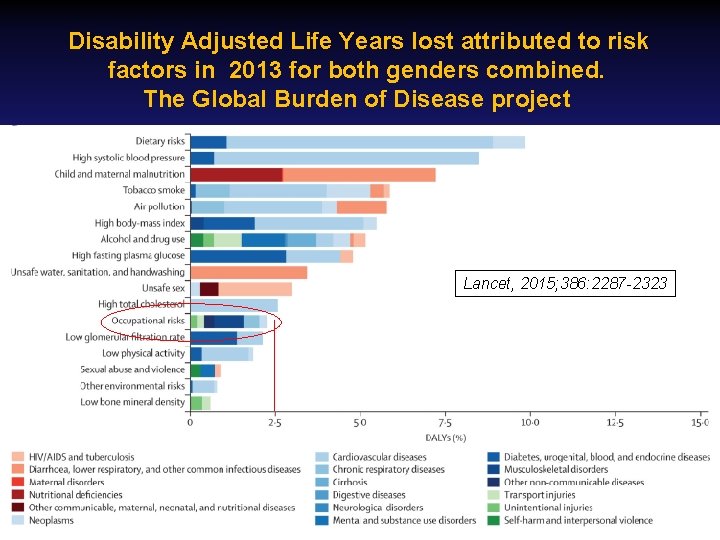
Disability Adjusted Life Years lost attributed to risk factors in 2013 for both genders combined. The Global Burden of Disease project Lancet, 2015; 386: 2287 -2323
Numbers of global occupationally related deaths in 2015 by WHO region and major disease groups Rushton L, Curr Environ Health Rep, 2017
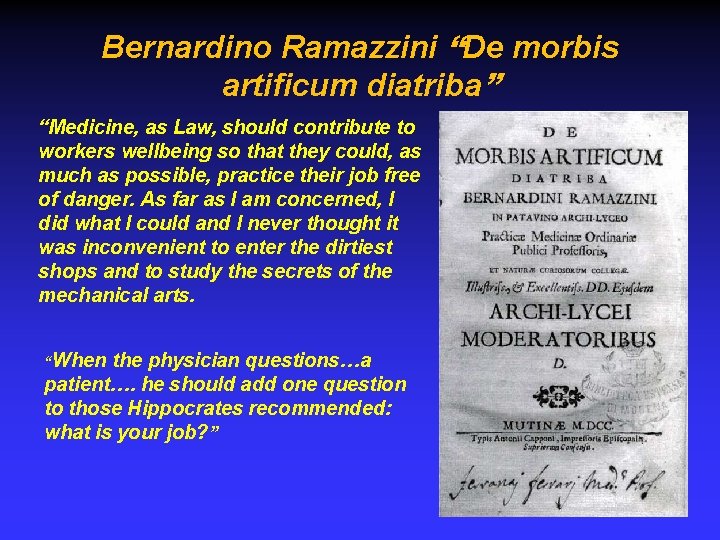
Bernardino Ramazzini “De morbis artificum diatriba” “Medicine, as Law, should contribute to workers wellbeing so that they could, as much as possible, practice their job free of danger. As far as I am concerned, I did what I could and I never thought it was inconvenient to enter the dirtiest shops and to study the secrets of the mechanical arts. “When the physician questions…a patient…. he should add one question to those Hippocrates recommended: what is your job? ”
Aims of this presentation: to compare the attributable fraction of occupational factors with that of heritability, as calculated from GWAS studies, so to understand to what extent occupational medicine can contribute to reduce the human burden of ill health.
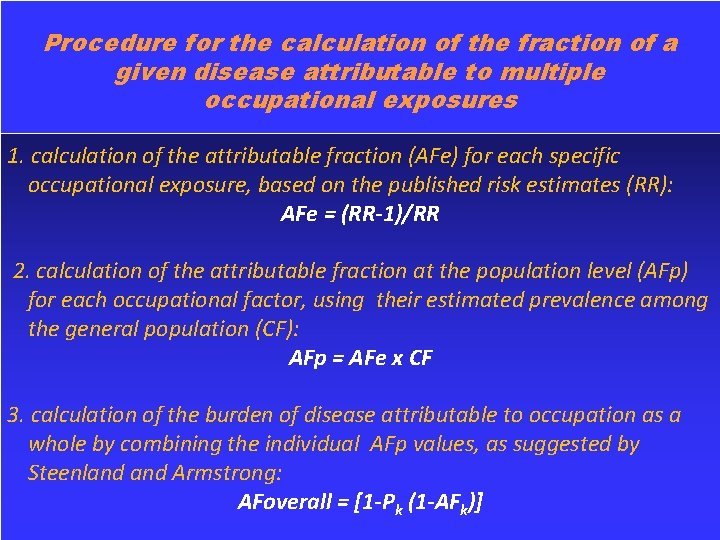
Procedure for the calculation of the fraction of a given disease attributable to multiple occupational exposures 1. calculation of the attributable fraction (AFe) for each specific occupational exposure, based on the published risk estimates (RR): AFe = (RR-1)/RR 2. calculation of the attributable fraction at the population level (AFp) for each occupational factor, using their estimated prevalence among the general population (CF): AFp = AFe x CF 3. calculation of the burden of disease attributable to occupation as a whole by combining the individual AFp values, as suggested by Steenland Armstrong: AFoverall = [1 -Pk (1 -AFk)]
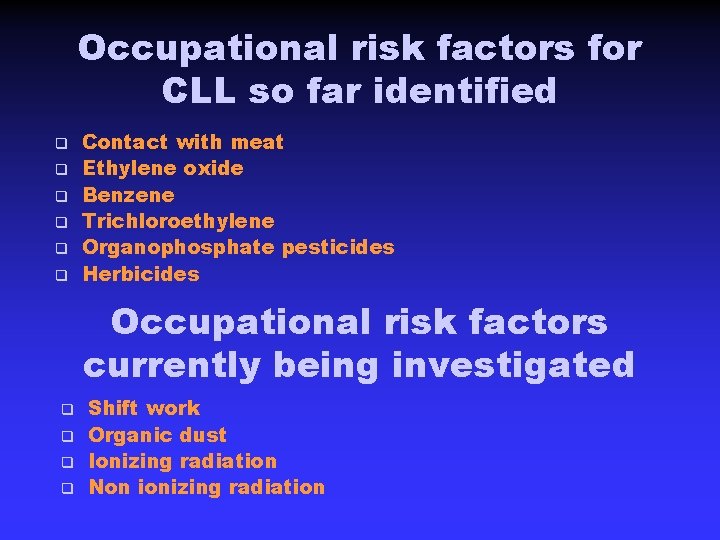
Occupational risk factors for CLL so far identified q q q Contact with meat Ethylene oxide Benzene Trichloroethylene Organophosphate pesticides Herbicides Occupational risk factors currently being investigated q q Shift work Organic dust Ionizing radiation Non ionizing radiation
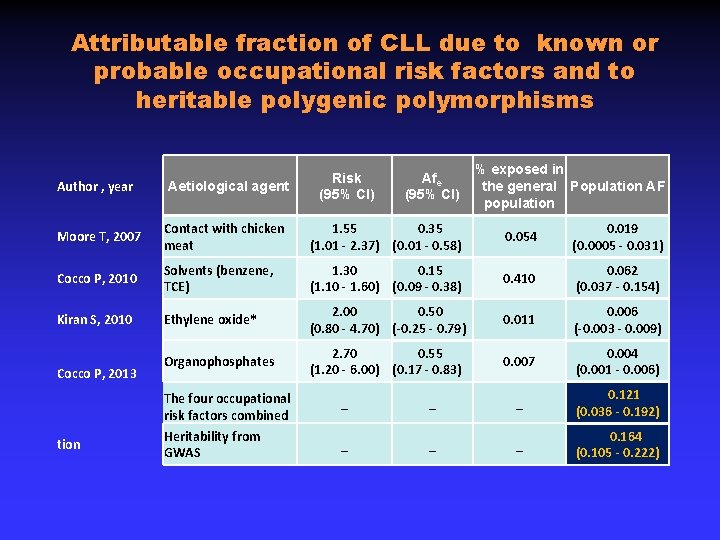
Attributable fraction of CLL due to known or probable occupational risk factors and to heritable polygenic polymorphisms Author , year Aetiological agent Risk (95% CI) Afe (95% CI) % exposed in the general Population AF population Moore T, 2007 Contact with chicken meat 1. 55 0. 35 (1. 01 - 2. 37) (0. 01 - 0. 58) 0. 054 0. 019 (0. 0005 - 0. 031) Cocco P, 2010 Solvents (benzene, TCE) 1. 30 0. 15 (1. 10 - 1. 60) (0. 09 - 0. 38) 0. 410 0. 062 (0. 037 - 0. 154) Kiran S, 2010 Ethylene oxide* 2. 00 0. 50 (0. 80 - 4. 70) (-0. 25 - 0. 79) 0. 011 0. 006 (-0. 003 - 0. 009) Organophosphates 2. 70 0. 55 (1. 20 - 6. 00) (0. 17 - 0. 83) 0. 007 0. 004 (0. 001 - 0. 006) Cocco P, 2013 tion The four occupational risk factors combined _ _ _ 0. 121 (0. 036 - 0. 192) Heritability from GWAS _ _ _ 0. 164 (0. 105 - 0. 222)
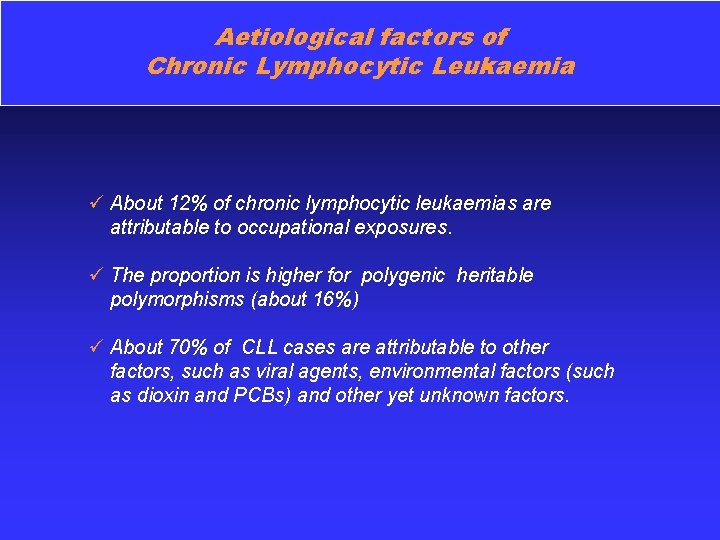
Aetiological factors of Chronic Lymphocytic Leukaemia ü About 12% of chronic lymphocytic leukaemias are attributable to occupational exposures. ü The proportion is higher for polygenic heritable polymorphisms (about 16%) ü About 70% of CLL cases are attributable to other factors, such as viral agents, environmental factors (such as dioxin and PCBs) and other yet unknown factors.
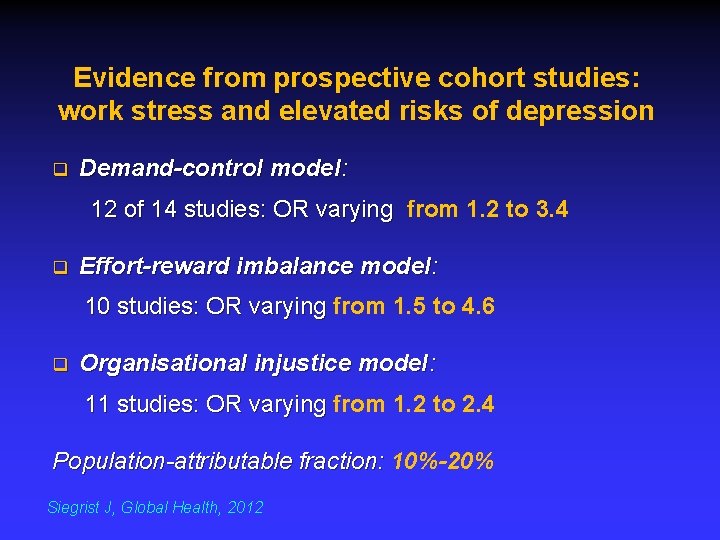
Evidence from prospective cohort studies: work stress and elevated risks of depression q Demand-control model: 12 of 14 studies: OR varying from 1. 2 to 3. 4 12 of 14 studies: OR varying q Effort-reward imbalance model: 10 studies: OR varying from 1. 5 to 4. 6 10 studies: OR varying q Organisational injustice model: 11 studies: OR varying from 1. 2 to 2. 4 11 studies: OR varying Population-attributable fraction: 10%-20% Siegrist J, Global Health, 2012
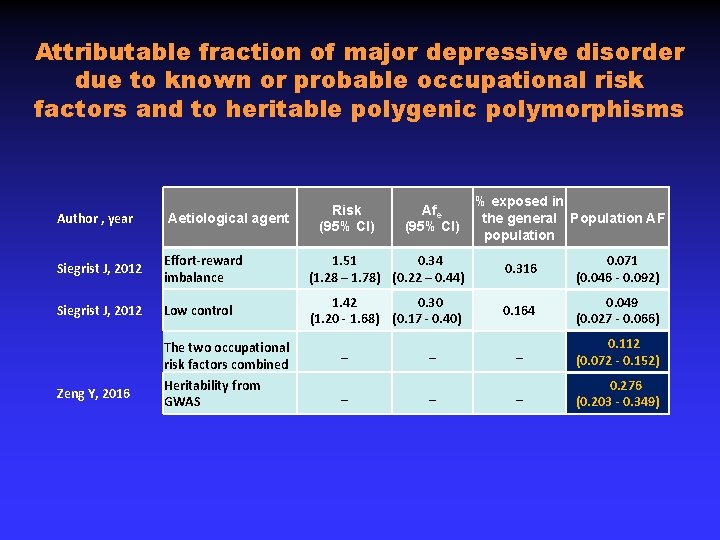
Attributable fraction of major depressive disorder due to known or probable occupational risk factors and to heritable polygenic polymorphisms Author , year Aetiological agent Risk (95% CI) Afe (95% CI) % exposed in the general Population AF population Siegrist J, 2012 Effort-reward imbalance 1. 51 0. 34 (1. 28 – 1. 78) (0. 22 – 0. 44) 0. 316 0. 071 (0. 046 - 0. 092) Siegrist J, 2012 Low control 1. 42 0. 30 (1. 20 - 1. 68) (0. 17 - 0. 40) 0. 164 0. 049 (0. 027 - 0. 066) Zeng Y, 2016 The two occupational risk factors combined _ _ _ 0. 112 (0. 072 - 0. 152) Heritability from GWAS _ _ _ 0. 276 (0. 203 - 0. 349)
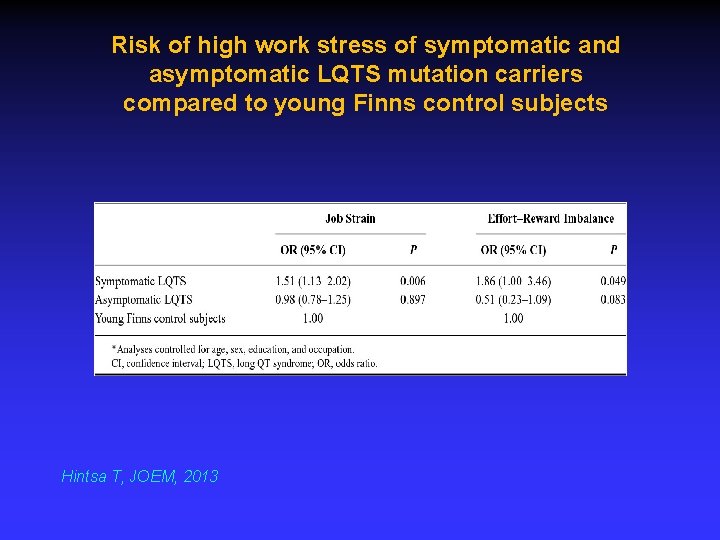
Risk of high work stress of symptomatic and asymptomatic LQTS mutation carriers compared to young Finns control subjects Hintsa T, JOEM, 2013
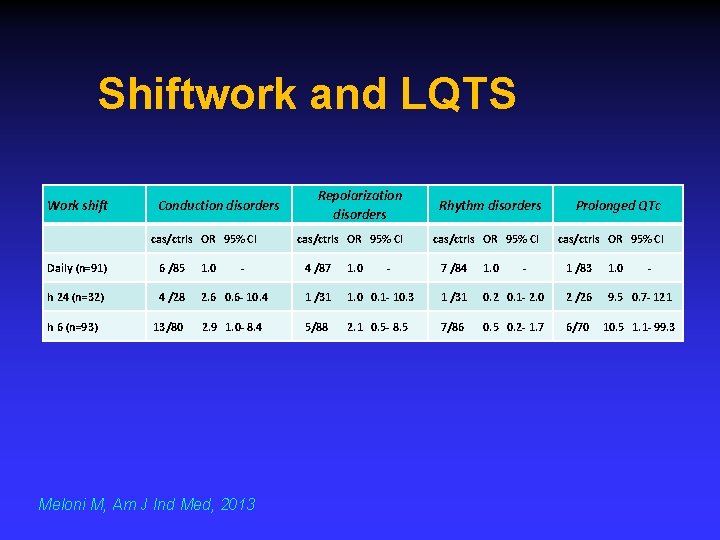
Shiftwork and LQTS Work shift Conduction disorders cas/ctrls OR 95% CI Daily (n=91) 6 /85 1. 0 h 24 (n=32) 4 /28 h 6 (n=93) 13/80 - Repolarization disorders Rhythm disorders Prolonged QTc cas/ctrls OR 95% CI 4 /87 1. 0 2. 6 0. 6 - 10. 4 1 /31 2. 9 1. 0 - 8. 4 5/88 Meloni M, Am J Ind Med, 2013 - 7 /84 1. 0 0. 1 - 10. 3 1 /31 2. 1 0. 5 - 8. 5 7/86 - 1 /83 1. 0 - 0. 2 0. 1 - 2. 0 2 /26 9. 5 0. 7 - 121 0. 5 0. 2 - 1. 7 6/70 10. 5 1. 1 - 99. 3
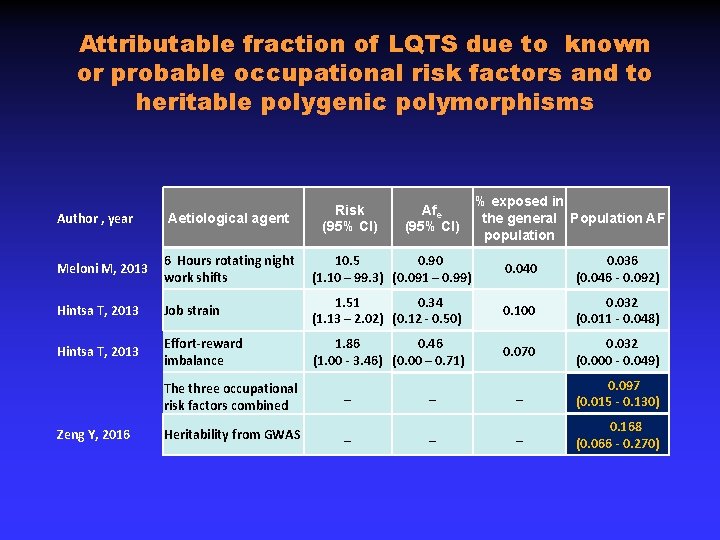
Attributable fraction of LQTS due to known or probable occupational risk factors and to heritable polygenic polymorphisms Author , year Aetiological agent Risk (95% CI) Afe (95% CI) % exposed in the general Population AF population Meloni M, 2013 6 Hours rotating night work shifts 10. 5 0. 90 (1. 10 – 99. 3) (0. 091 – 0. 99) 0. 040 0. 036 (0. 046 - 0. 092) Hintsa T, 2013 Job strain 1. 51 0. 34 (1. 13 – 2. 02) (0. 12 - 0. 50) 0. 100 0. 032 (0. 011 - 0. 048) Hintsa T, 2013 Effort-reward imbalance 1. 86 0. 46 (1. 00 - 3. 46) (0. 00 – 0. 71) 0. 070 0. 032 (0. 000 - 0. 049) Zeng Y, 2016 The three occupational risk factors combined _ _ _ 0. 097 (0. 015 - 0. 130) Heritability from GWAS _ _ _ 0. 168 (0. 066 - 0. 270)
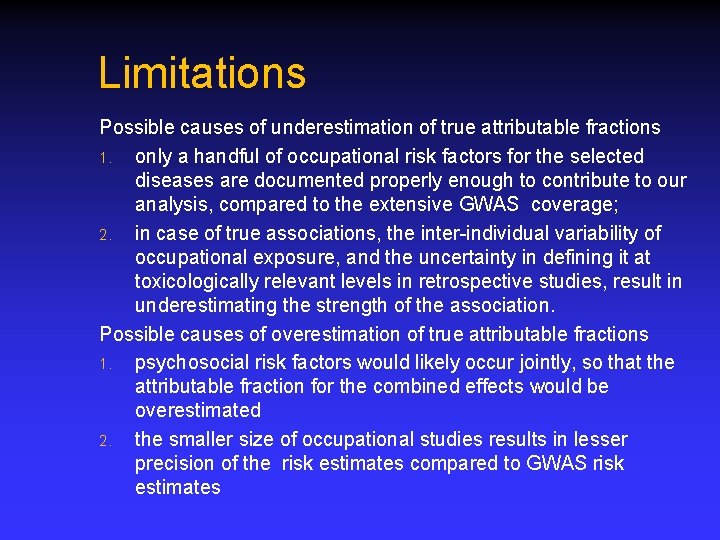
Limitations Possible causes of underestimation of true attributable fractions 1. only a handful of occupational risk factors for the selected diseases are documented properly enough to contribute to our analysis, compared to the extensive GWAS coverage; 2. in case of true associations, the inter-individual variability of occupational exposure, and the uncertainty in defining it at toxicologically relevant levels in retrospective studies, result in underestimating the strength of the association. Possible causes of overestimation of true attributable fractions 1. psychosocial risk factors would likely occur jointly, so that the attributable fraction for the combined effects would be overestimated 2. the smaller size of occupational studies results in lesser precision of the risk estimates compared to GWAS risk estimates
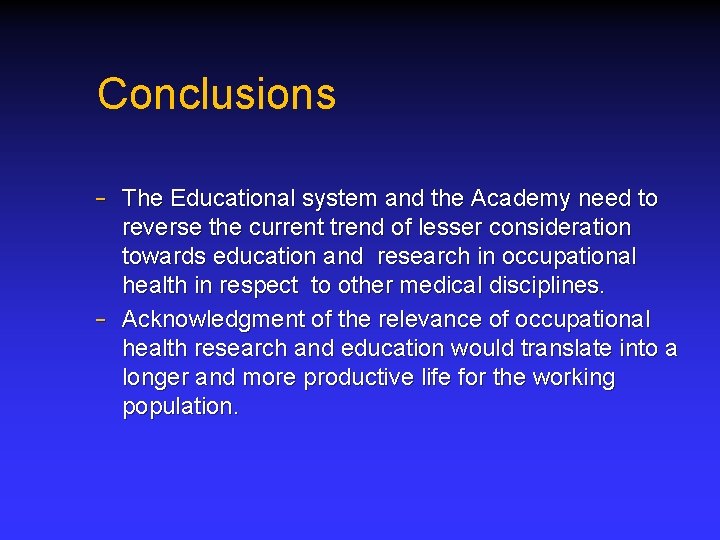
Conclusions − − The Educational system and the Academy need to reverse the current trend of lesser consideration towards education and research in occupational health in respect to other medical disciplines. Acknowledgment of the relevance of occupational health research and education would translate into a longer and more productive life for the working population.
- Slides: 24