
The Preterite Tense What are the uses of

- Slides: 43
The Preterite Tense
What are the uses of the Preterite Tense? n 1) To talk about specific actions, completed at a specific time in the past. Example: Ayer yo fui al centro comercial. n Yesterday I went to the mall. n
What are the uses of the Preterite Tense? n 2) To talk about successive completed events. Example: Esta mañana yo me desperté a las cinco, me levanté a las cinco y diez, me duché, me vestí, me cepillé los dientes y salí para la escuela. n This morning I woke up, got up, showerd, got dressed…etc. n
Expressions Used to Help Identify the Preterite Tense ayer – yesterday n anteayer- the day before yest n anoche – last night n la semana pasada – last week n el año pasado- last year n el fin de semana pasado – last n weekend n
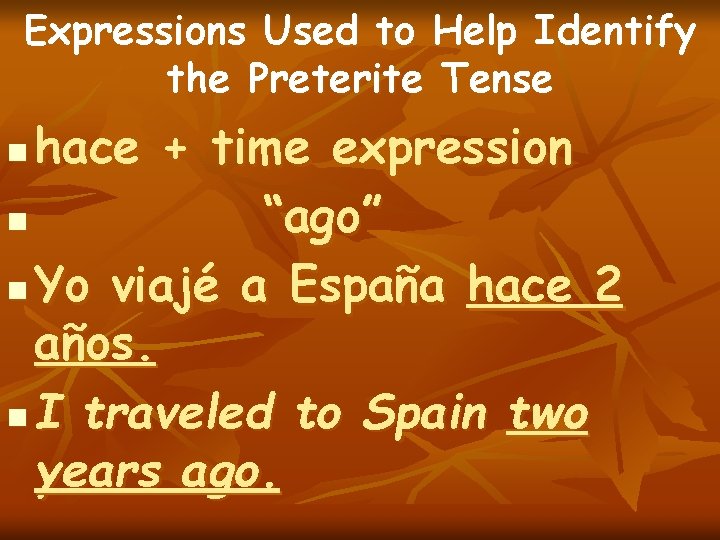
Expressions Used to Help Identify the Preterite Tense hace + time expression n “ago” n Yo viajé a España hace 2 años. n I traveled to Spain two years ago. n
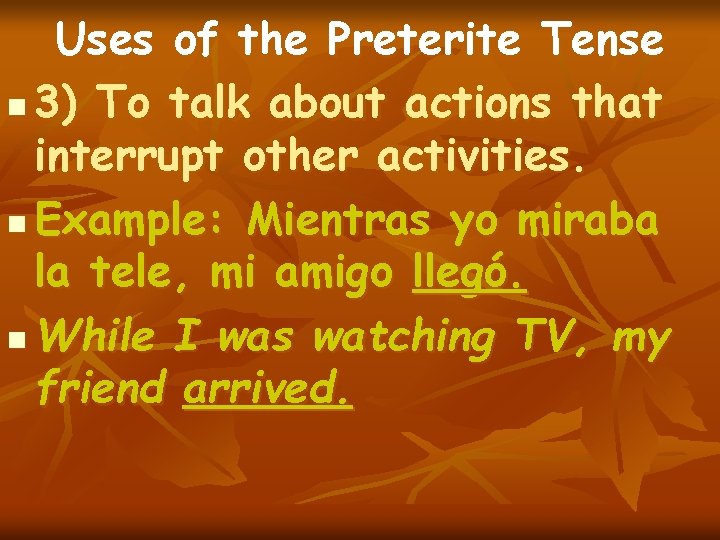
Uses of the Preterite Tense n 3) To talk about actions that interrupt other activities. n Example: Mientras yo miraba la tele, mi amigo llegó. n While I was watching TV, my friend arrived.
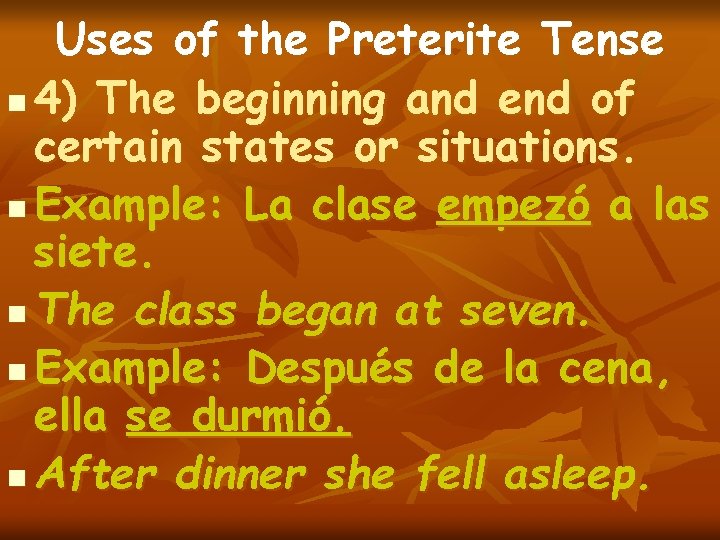
Uses of the Preterite Tense n 4) The beginning and end of certain states or situations. n Example: La clase empezó a las siete. n The class began at seven. n Example: Después de la cena, ella se durmió. n After dinner she fell asleep.
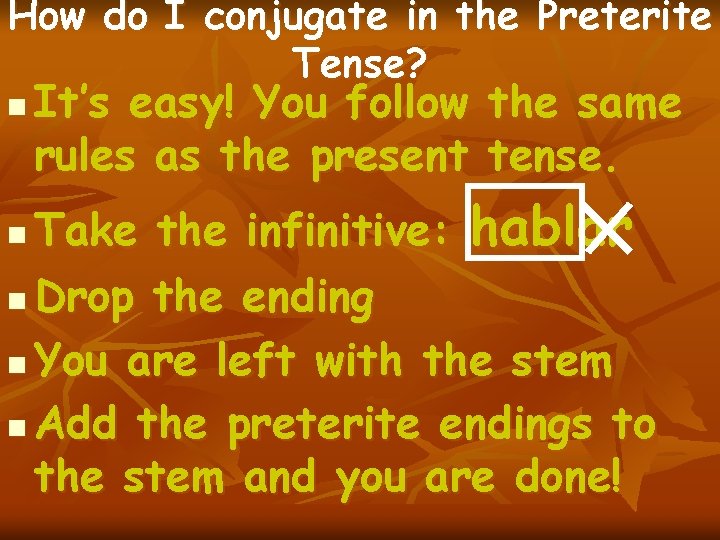
How do I conjugate in the Preterite Tense? n It’s easy! You follow the same rules as the present tense. Take the infinitive: hablar n Drop the ending n You are left with the stem n Add the preterite endings to the stem and you are done! n
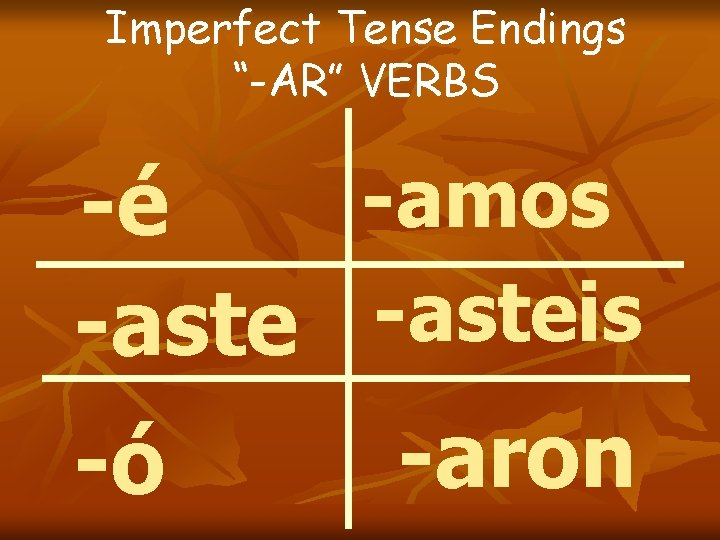
Imperfect Tense Endings “-AR” VERBS -amos -é -asteis -aron -ó
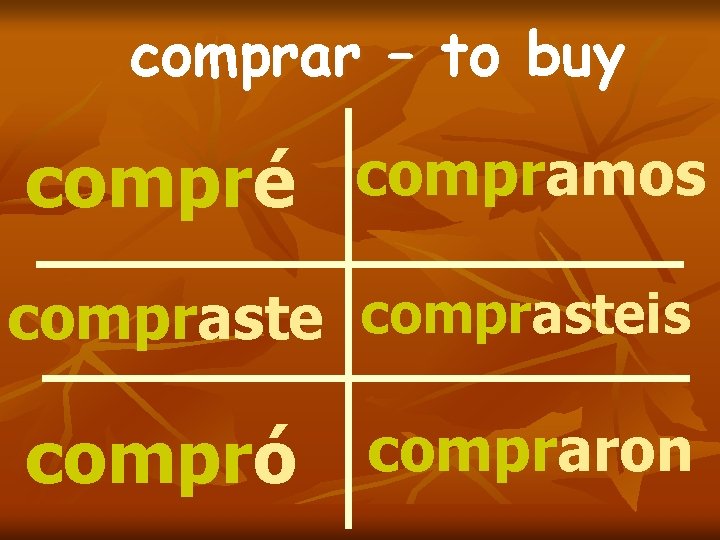
comprar – to buy compré compramos comprasteis compró compraron
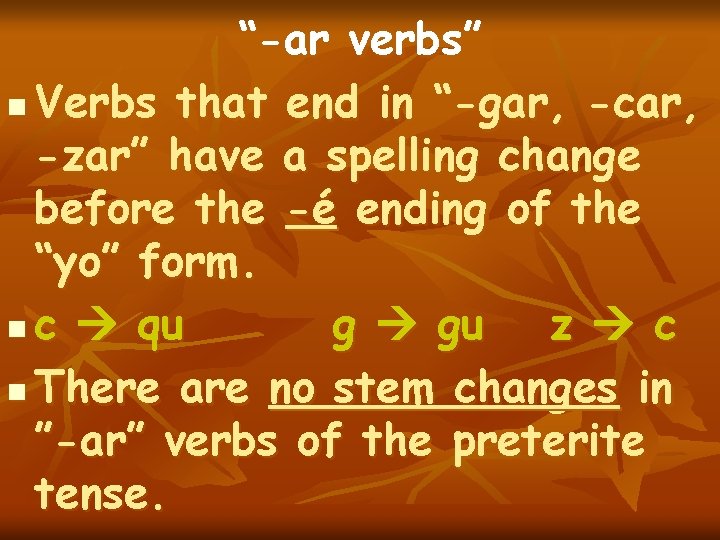
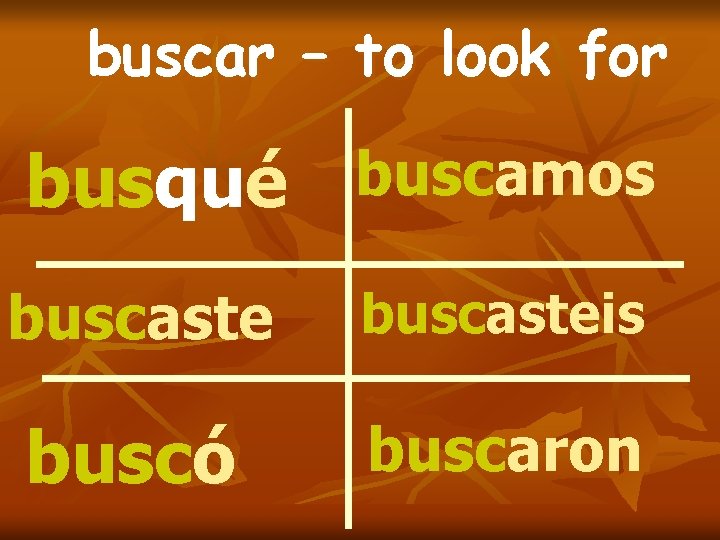
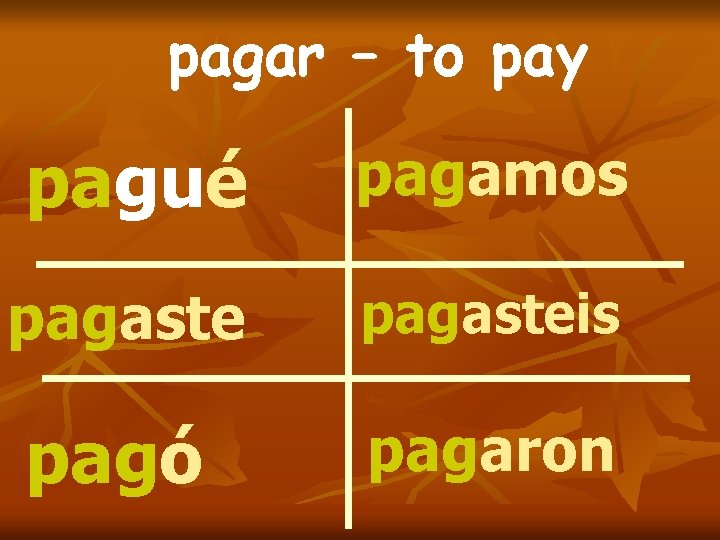
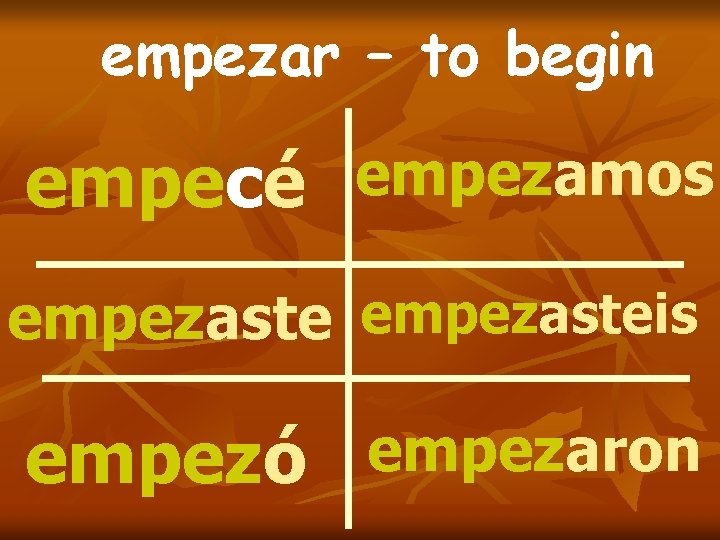
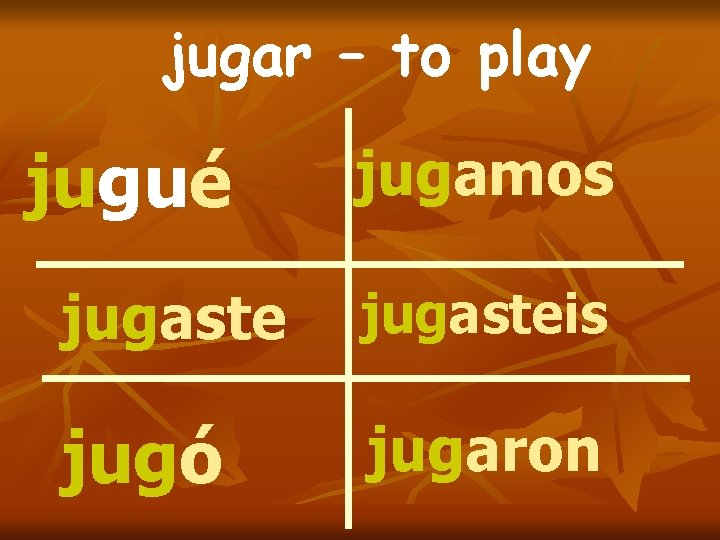
“-ar verbs” n Verbs that end in “-gar, -car, -zar” have a spelling change before the -é ending of the “yo” form. n c qu g gu z c n There are no stem changes in ”-ar” verbs of the preterite tense.
buscar – to look for busqué buscamos buscasteis buscó buscaron
pagar – to pay pagué pagamos pagasteis pagó pagaron
empezar – to begin empecé empezamos empezasteis empezó empezaron
jugar – to play jugué jugamos jugasteis jugó jugaron
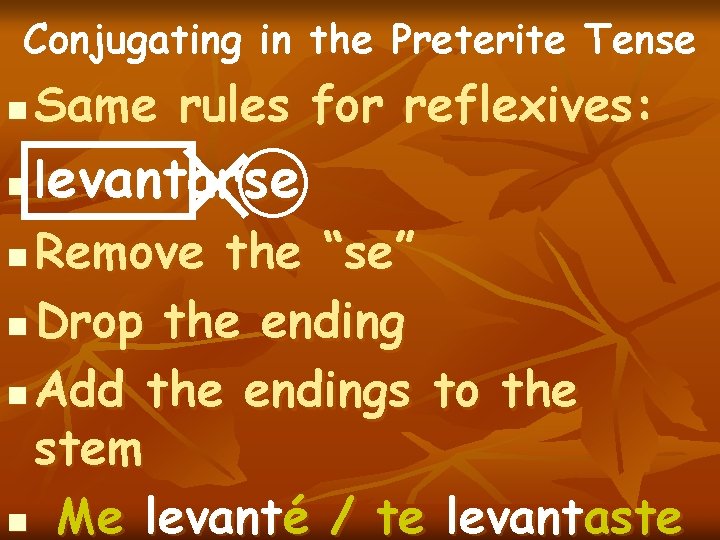
Conjugating in the Preterite Tense n Same rules for reflexives: levantarse n Remove the “se” n Drop the ending n Add the endings to the stem n Me levanté / te levantaste n
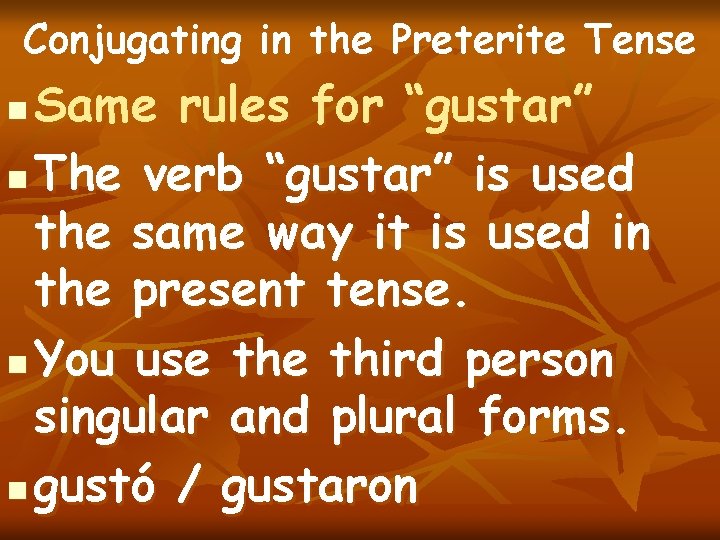
Conjugating in the Preterite Tense Same rules for “gustar” n The verb “gustar” is used the same way it is used in the present tense. n You use third person singular and plural forms. n gustó / gustaron n
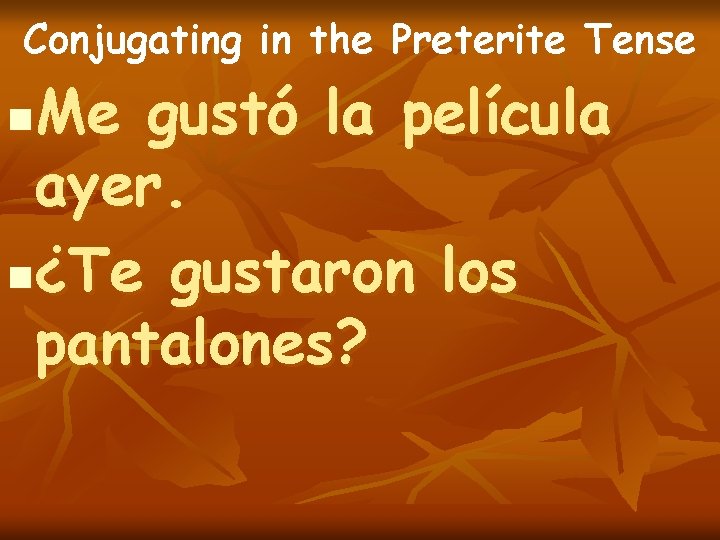
Conjugating in the Preterite Tense Me gustó la película ayer. n¿Te gustaron los pantalones? n
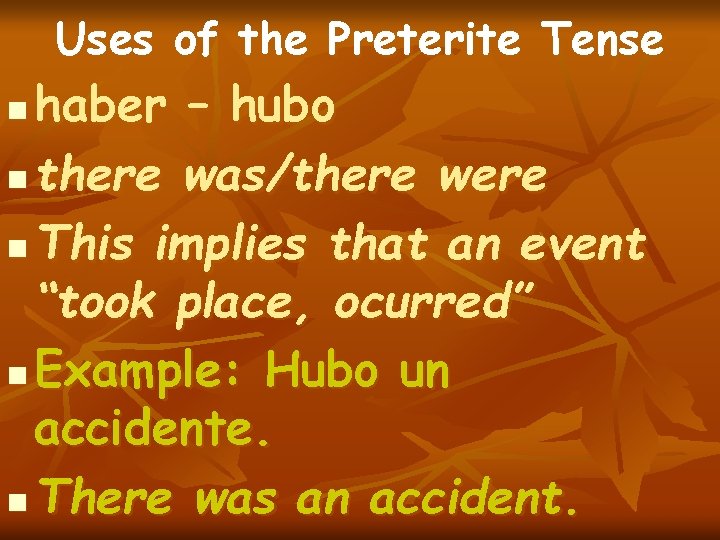
Uses of the Preterite Tense haber – hubo n there was/there were n This implies that an event “took place, ocurred” n Example: Hubo un accidente. n There was an accident. n
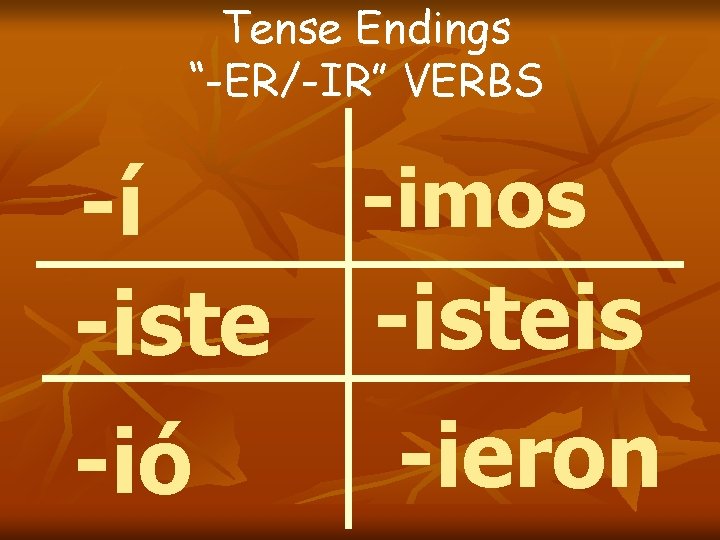
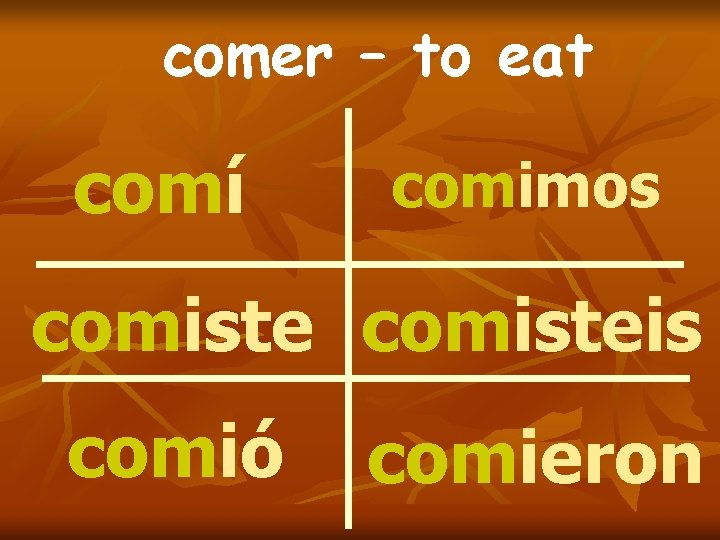
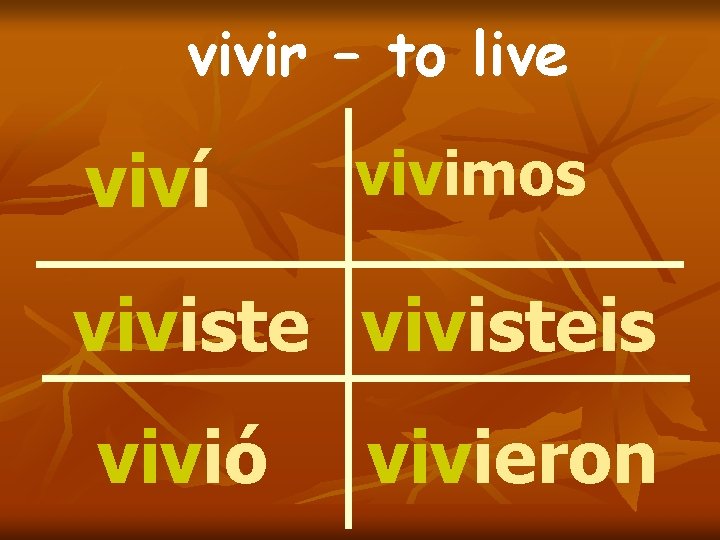
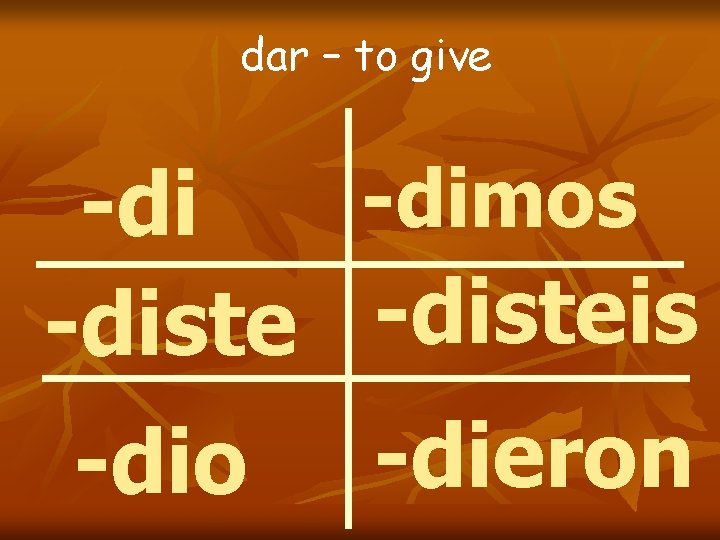
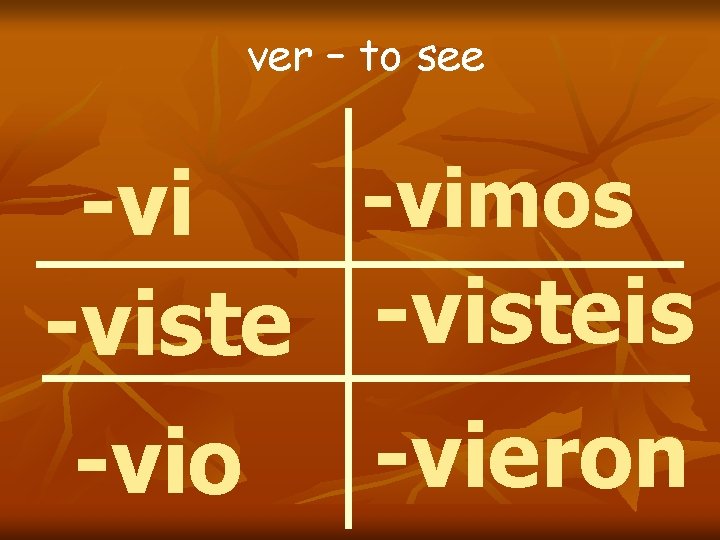
Tense Endings “-ER/-IR” VERBS -í -iste -ió -imos -isteis -ieron
comer – to eat comí comimos comisteis comió comieron
vivir – to live viví vivimos vivisteis vivió vivieron
dar – to give -dimos -disteis -dio -dieron
ver – to see -vimos -visteis -vio -vieron
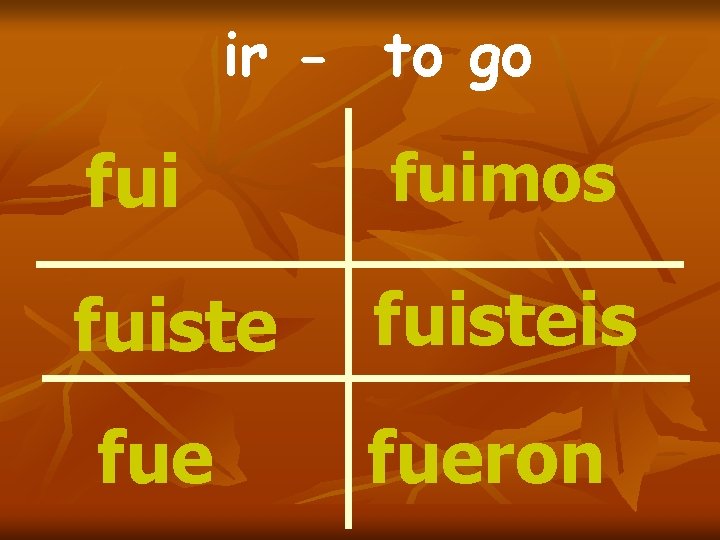
ir - to go fuimos fuisteis fueron
ser - to be fuimos fuisteis fueron
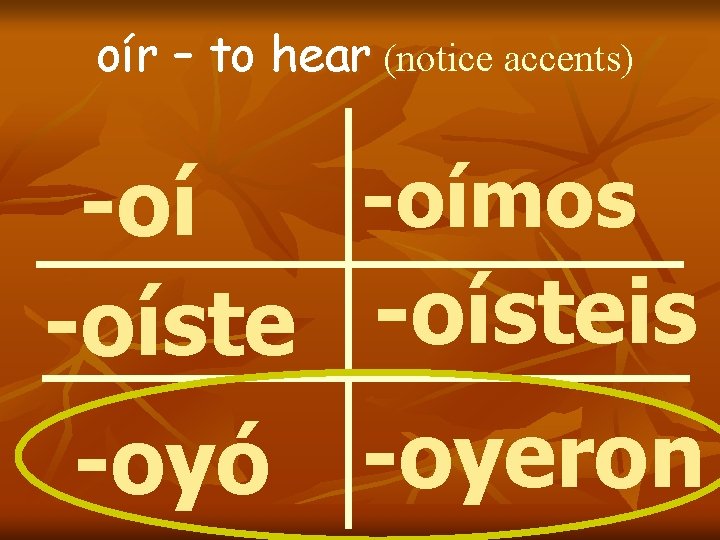
oír – to hear (notice accents) -oímos -oísteis -oyó -oyeron
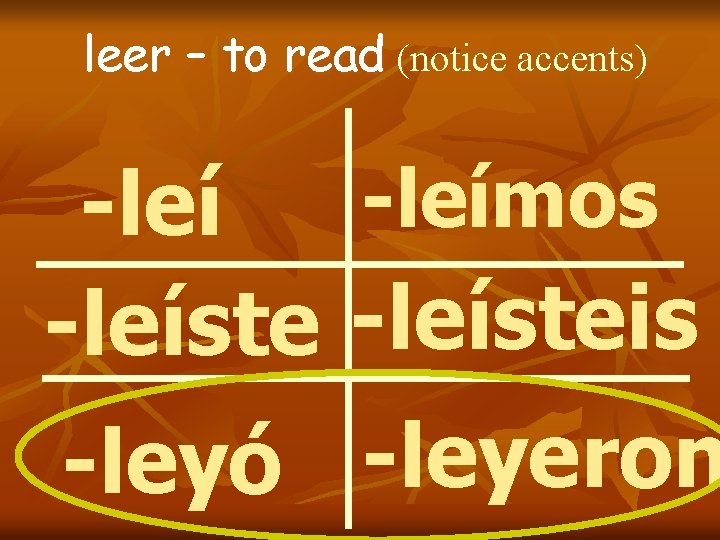
leer – to read (notice accents) -leímos -leísteis -leyó -leyeron
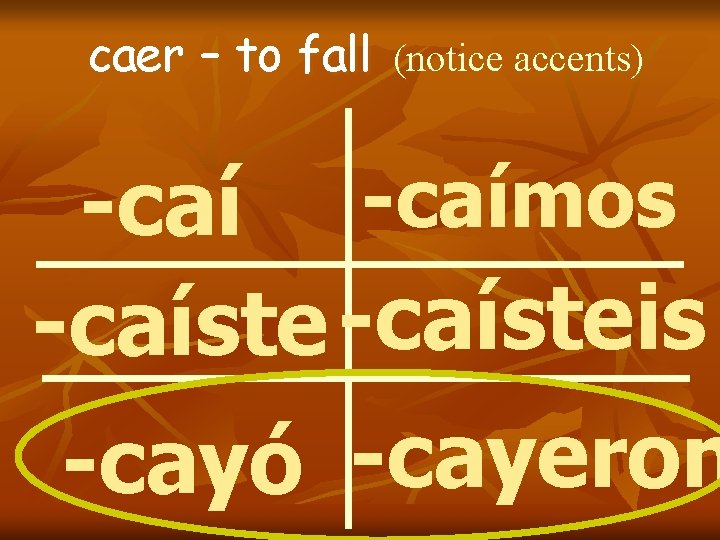
caer – to fall (notice accents) -caímos -caísteis -cayó -cayeron
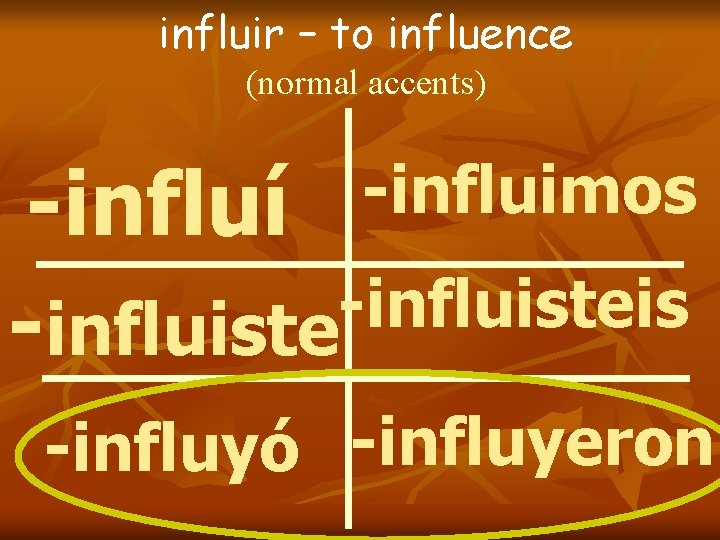
influir – to influence (normal accents) -influí -influisteis -influiste -influimos -influyó -influyeron
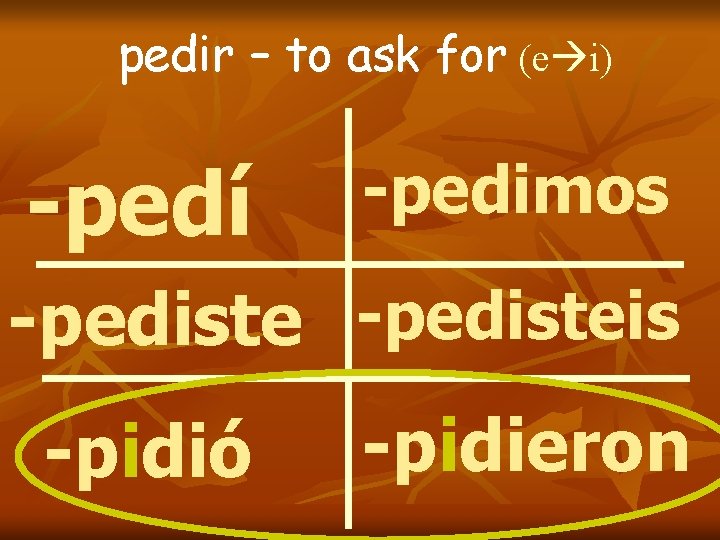
pedir – to ask for (e i) -pedí -pedimos -pedisteis -pidió -pidieron
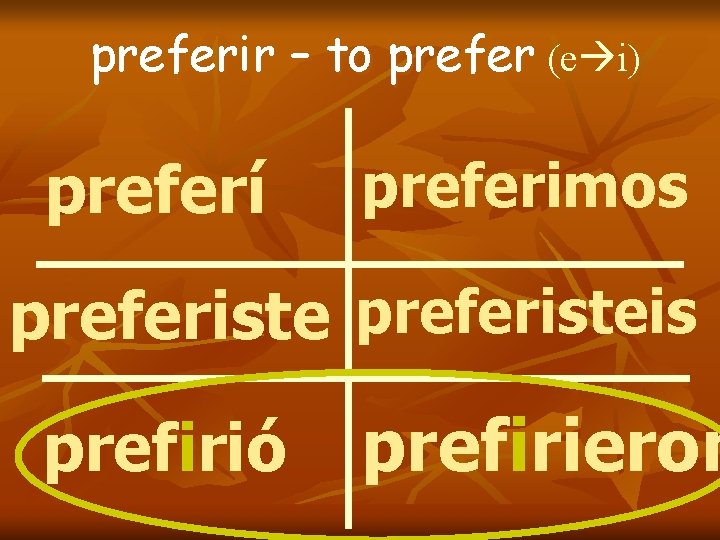
preferir – to prefer (e i) preferí preferimos preferisteis prefirió prefirieron
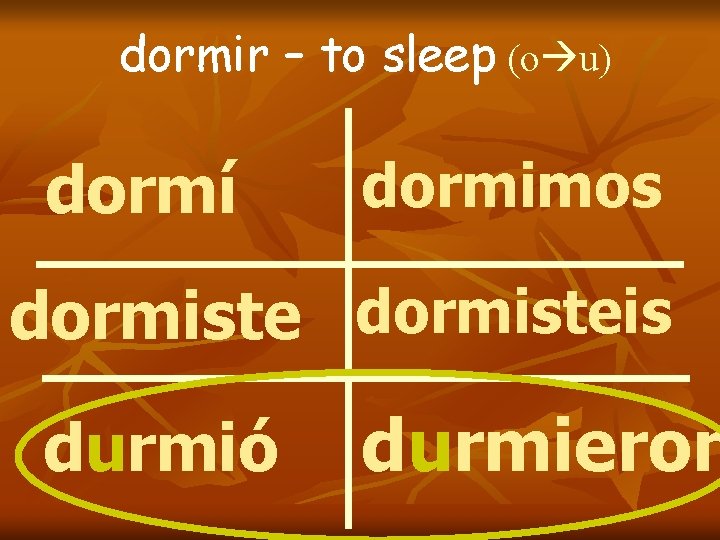
dormir – to sleep (o u) dormí dormimos dormisteis durmió durmieron
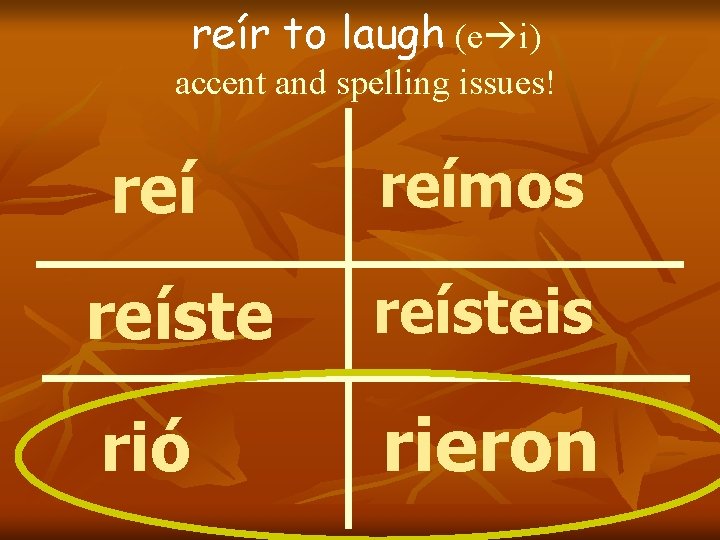
reír to laugh (e i) accent and spelling issues! reímos reísteis rió rieron
Verbs with “Special Stems” There a set of verbs that have an irregular stem. n This stem is used throughout the entire verb chart. n They also use a different set of endings. n They don’t have any n
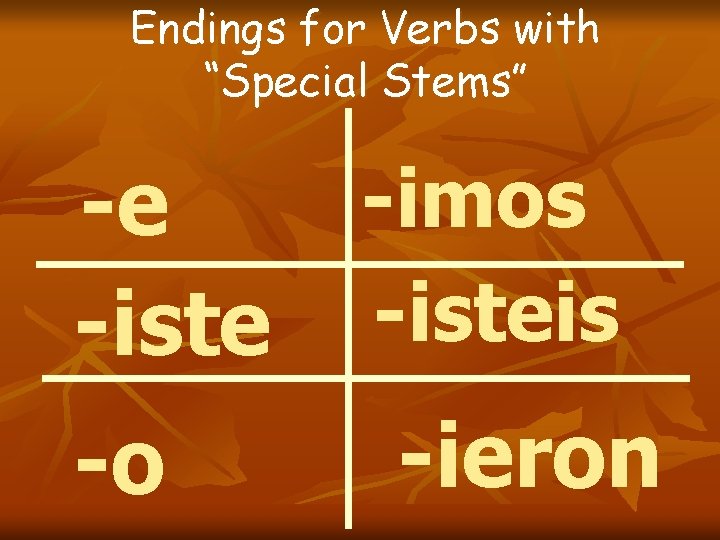
Endings for Verbs with “Special Stems” -e -iste -o -imos -isteis -ieron
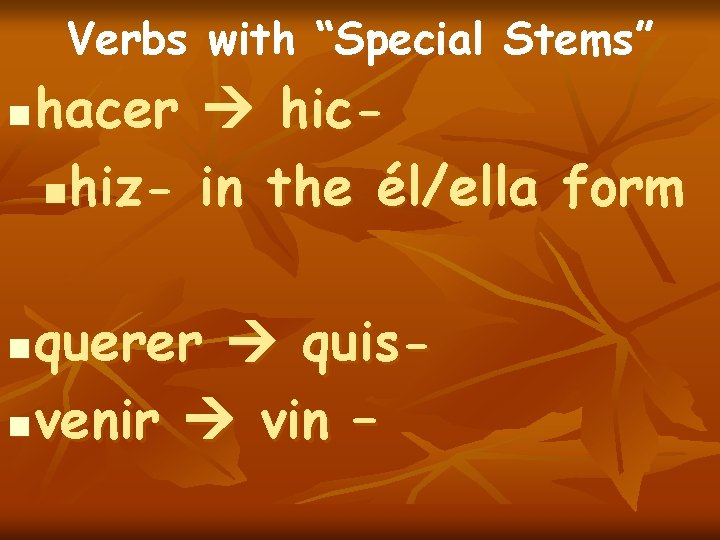
Verbs with “Special Stems” n hacer hicnhiz- in the él/ella form querer quisn venir vin – n
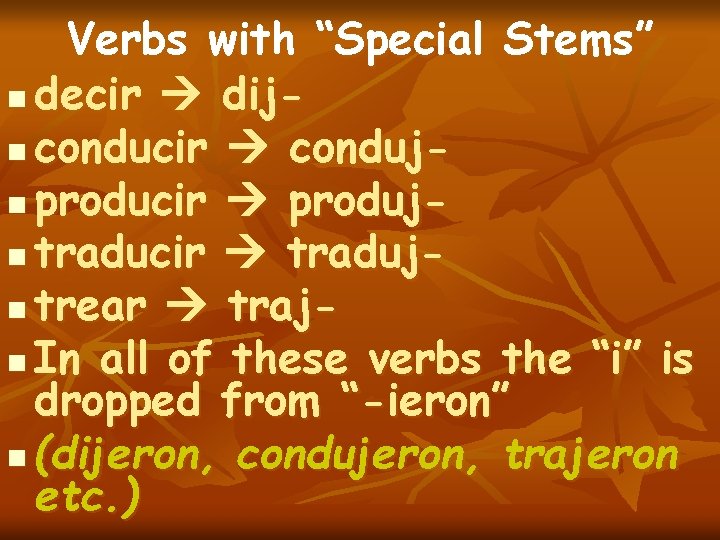
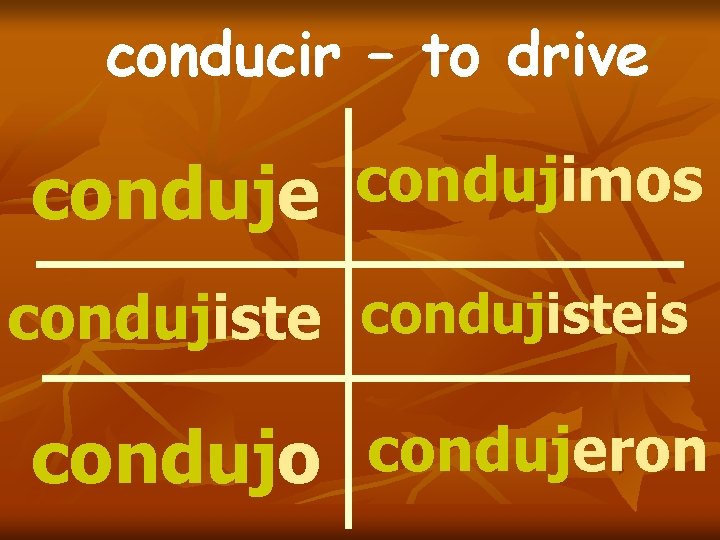
Verbs with “Special Stems” n decir dijn conducir condujn producir produjn traducir tradujn trear trajn In all of these verbs the “i” is dropped from “-ieron” n (dijeron, condujeron, trajeron etc. )
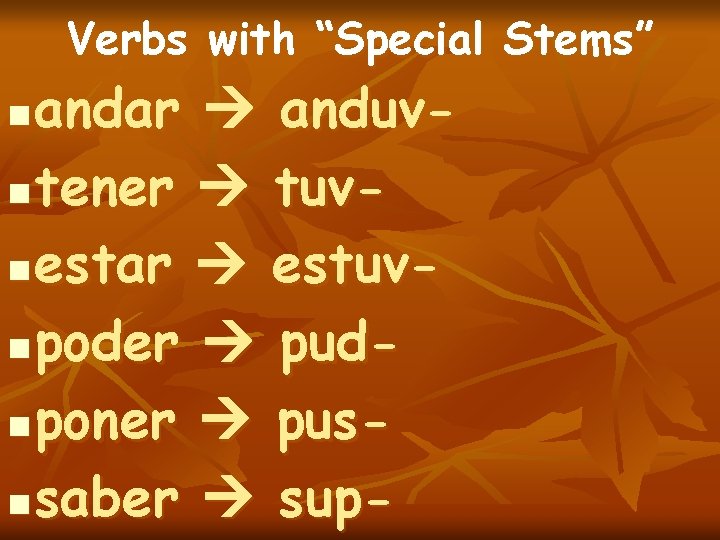
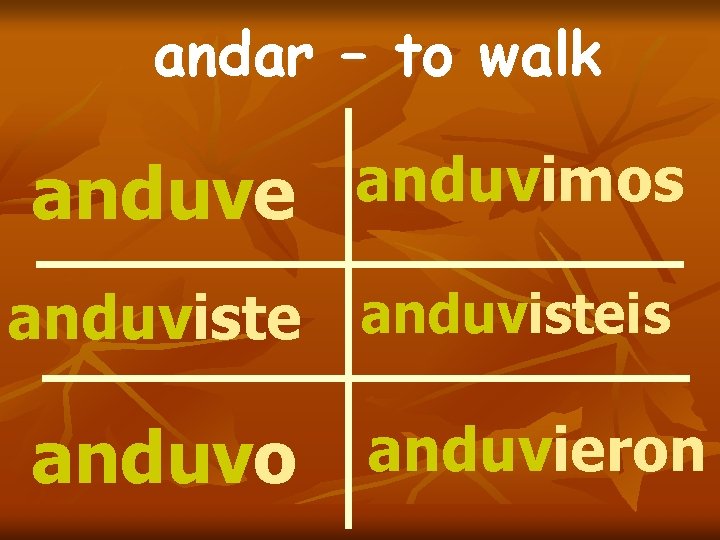
Verbs with “Special Stems” andar anduvn tener tuvn estar estuvn poder pudn poner pusn saber supn
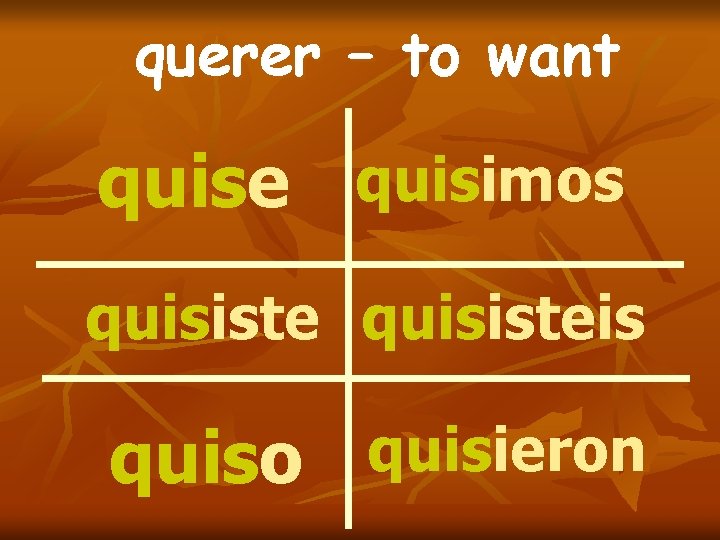
querer – to want quise quisimos quisisteis quiso quisieron
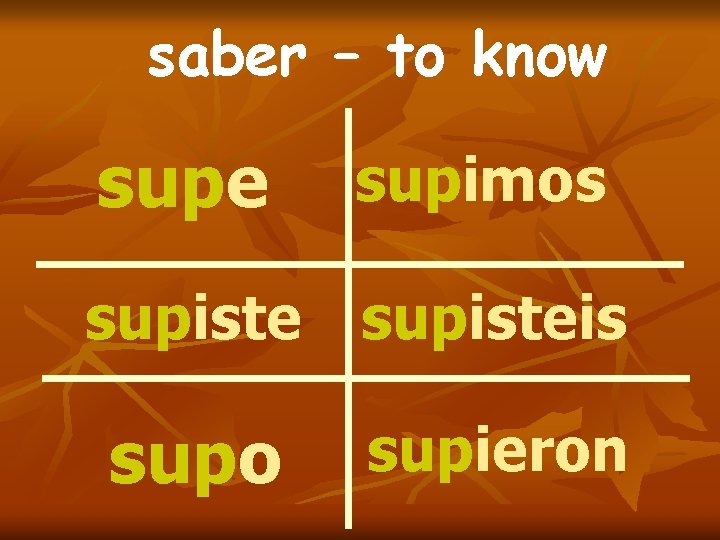
saber – to know supe supimos supisteis supo supieron
conducir – to drive condujimos condujisteis condujo condujeron
andar – to walk anduve anduvimos anduvisteis anduvo anduvieron