
The Presidents Cabinet What is the Cabinet Department
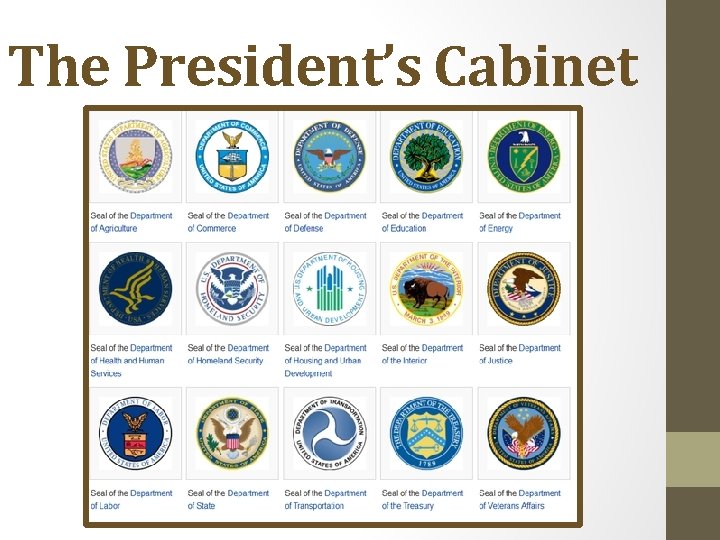
The President’s Cabinet
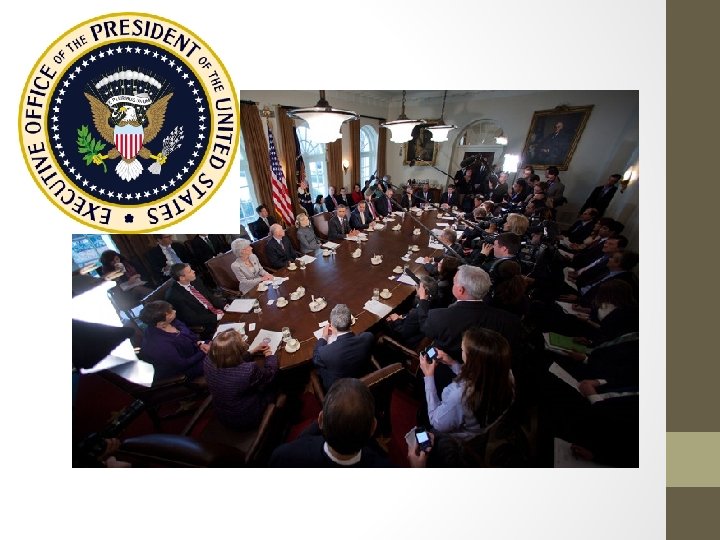
What is the Cabinet? • Department heads advise the president on policy matters • The 15 cabinet secretaries also serve as the administrators of their bureaucratic departments

Selection of the Cabinet • Presidents must balance many political, social, and management considerations when selecting and nominating cabinet secretaries • Secretaries should have some credible expertise in the policy areas their departments will manage • Must be acceptable to all groups that have political power • Should provide geographic balance as well as racial and gender representation • Patronage and party loyalty are also important
Nominations and Confirmation • President-elect creates a list of candidates with help from advisers, congressional leaders, and interest groups • Campaign staffers interview candidates, often asking questions about issues their department is facing • The Senate holds confirmation hearings • Nominees must answer questions about their views and background before the Senate committee that is relevant to the cabinet position • The Senate usually confirms the president’s nominees • Of the more than 500 cabinet appointments since the time of George Washington, only a handful have been rejected by the Senate
Department of State Secretary of State • 1789 • Foreign Affairs • Manages our Embassies

Department of Treasury Secretary of the Treasury • 1789 • Responsible for promoting economic prosperity and ensuring financial security • Usually has banking or financial experience
Department of Defense Secretary of Defense • 1789 • Provide the military forces needed to deter war and to protect the security of our country
Department of Justice Attorney General • 1789 • To enforce the law and defend the interests of the United States according to the law • Must have experience in law (lawyer or judge)
Department of Interior Secretary of the Interior • 1849 • Westward Expansion (Then) • Protects America’s natural resources and heritage (Now)
Department of Agriculture Secretary of Agriculture • 1889 • Land Grants, scientific agriculture
Department of Commerce Secretary of Commerce • 1913 • Economic influence of manufacturing and business • Conduct the U. S. Census every 10 years

Department of Labor Secretary of Labor • 1913 • Concerned with industrial workforce, unions, and welfare of workers
Department of Health and Human Services Secretary of Health and Human Services • 1953 • Government supports social welfare of citizens
Department of Housing and Urban Development Secretary of HUD • 1966 • Concerned with quality of inner city housing & conditions • War on Poverty
Department of Transportation Secretary of Transportation • 1966 • U. S. Infrastructure: airports, seaports and highways
Department of Energy Secretary of Energy • 1977 • Nuclear energy and current energy problems
Department of Education Secretary of Education • 1980 • Need for strong math and science to compete with Communists, improve education of minorities
Department of Veteran Affairs Secretary of Veterans Affairs • 1988 • Veterans Administration needed cabinet status
Department of Homeland Security Secretary of Homeland Security • 2003 • Response to terror attacks, security agency
- Slides: 20