
The Presidency 12 Video The Big Picture 12
The Presidency 12
Video: The Big Picture 12 http: //media. pearsoncmg. com/ph/hss/SSA_SHARED_MED IA_1/polisci/presidency/Edwards_Ch 12_The_Presidency_S eg 1_v 2. html
Edwards Learning Objectives 12. 1 12. 2 12 Characterize the expectations for and the backgrounds of presidents and identify paths to the White House and how presidents may be removed Evaluate the president’s constitutional powers and the expansion of presidential power
Edwards Learning Objectives 12. 1 12. 4 12 Describe the roles of the vice president, cabinet, Executive Office of the President, White House staff, and First Lady Assess the impact of various sources of presidential influence on the president’s ability to win congressional support
Edwards Learning Objectives 12. 3 12. 6 12 Analyze the president’s powers in making national security policy and the relationship between the president and Congress in this arena Identify the factors that affect the president’s ability to obtain public support
Edwards Learning Objectives 12. 7 12. 8 12 Characterize the president’s relations with the press and news coverage of the presidency Assess the role of presidential power in the American democracy and the president’s impact on the scope of government
Video: The Basics 12 http: //media. pearsoncmg. com/ph/hss/SSA_SHARED_MED IA_1/polisci/presidency/Seg 2_The_Presidency_v 2. html
The Presidents Great Expectations Who They Are How They Got There 12. 1
Great Expectations 12. 1 Are expectations realistic? n Ensure peace, prosperity and security n Power does not match responsibilities Cognitive dissonance: n Americans want strong leader but fear concentration of power n We want government to be small and limited, yet solve all societal and economic problems
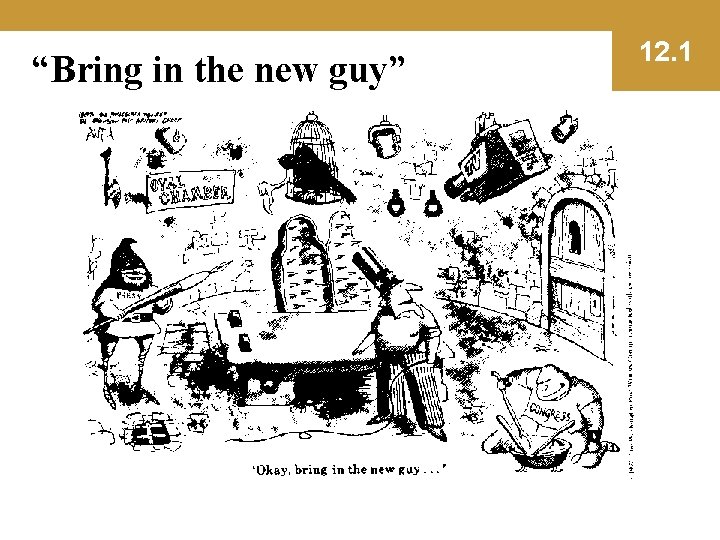
“Bring in the new guy” 12. 1
Who They Are Basic requirements: n Natural-born citizen n 35 years of age or older n Resident of the U. S. for previous 14 years White, male, Protestant Most Accidental President? First female president? 12. 1
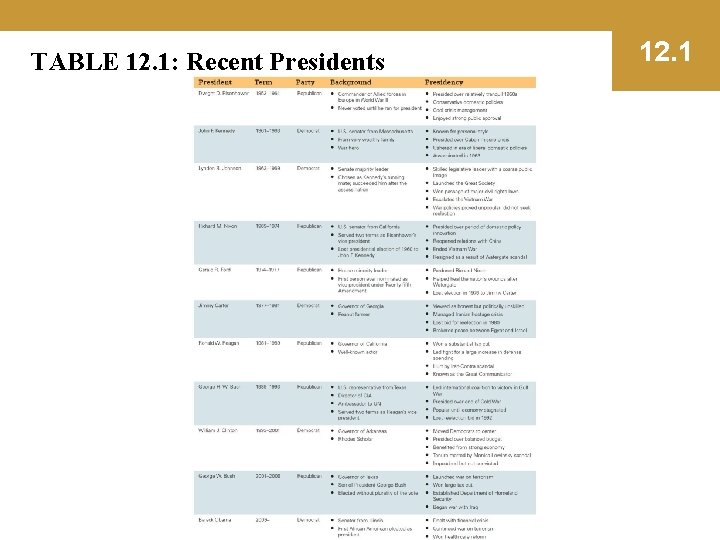
TABLE 12. 1: Recent Presidents 12. 1
How They Got There Elections: The Typical Road to the White House n Twenty-Second Amendment (1951) Succession n Twenty-Fifth Amendment (1967) Impeachment n Watergate n Clinton’s sex scandal 12. 1
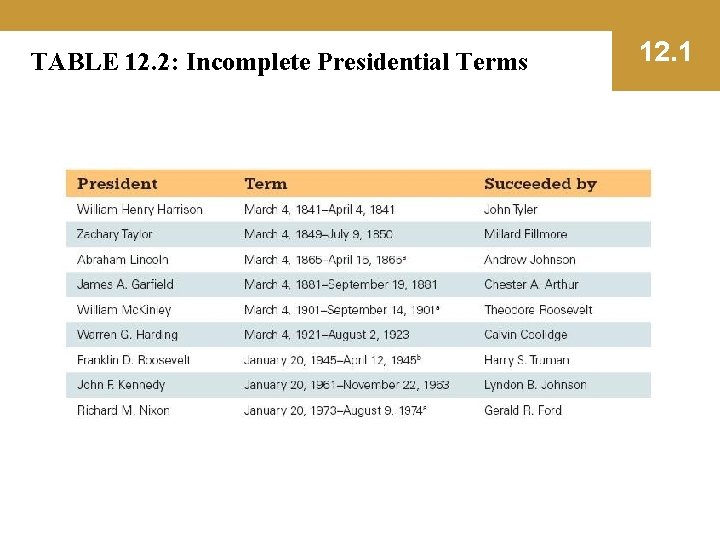
TABLE 12. 2: Incomplete Presidential Terms 12. 1
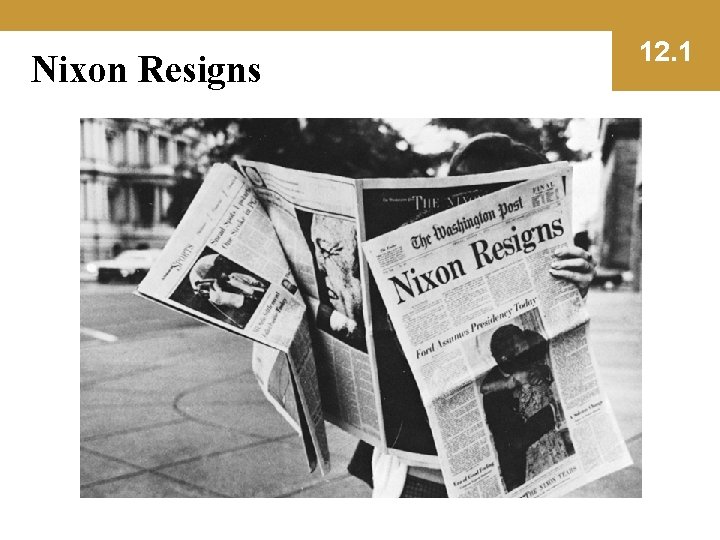
Nixon Resigns 12. 1
12. 1 Which amendment creates a means for selecting a vice president when the office becomes vacant? a. Twenty-second Amendment b. Twenty-fifth Amendment c. Twelfth Amendment d. Tenth Amendment 12. 1
12. 1 Which amendment creates a means for selecting a vice president when the office becomes vacant? a. Twenty-second Amendment b. Twenty-fifth Amendment c. Twelfth Amendment d. Tenth Amendment 12. 1
Presidential Powers Constitutional Powers Expansion of Power Perspectives on Presidential Power 12. 2
Video: In Context 12. 2 http: //media. pearsoncmg. com/ph/hss/SSA_SHARED_MED IA_1/polisci/presidency/Seg 3_Presidency_v 2. html
Constitutional Powers 12. 2 Constitution says little n “The executive power shall be vested in a president of the United States of America. ” Fear of abuse of power Madisonian system n Shared powers n Checks and balances Short term of office
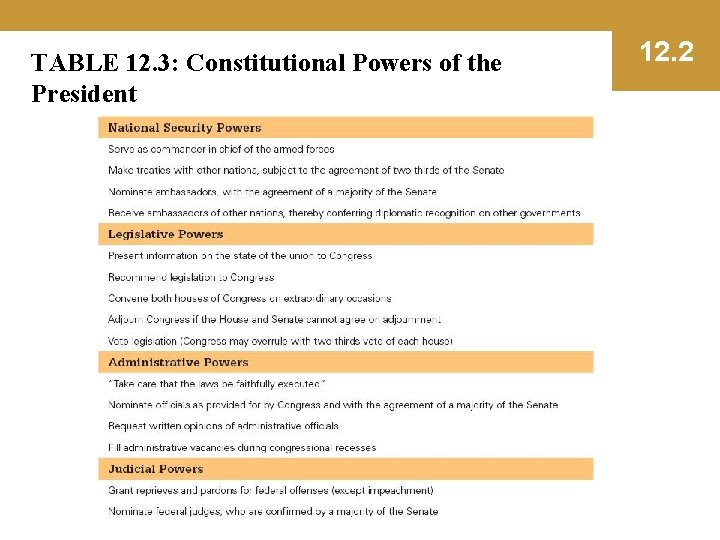
TABLE 12. 3: Constitutional Powers of the President 12. 2
Expansion of Power Changes leading to expansion of presidential power n Military n Technological n Economic Presidents take initiative to expand role n Lincoln n FDR 12. 2
Perspectives on Presidential Power 1950 s-1960 s n Strong = good; weak = bad 1970 s n Vietnam War n Watergate 1980 s and beyond n Mixed feeling about presidential power 12. 2
12. 2 Which of the following is NOT an enumerated power of the president? a. Make treaties with other nations b. Veto legislation c. Nominate ambassadors d. Declare war 12. 2
12. 2 Which of the following is NOT an enumerated power of the president? a. Make treaties with other nations b. Veto legislation c. Nominate ambassadors d. Declare war 12. 2

Explore the Simulation: You Are a First-Term President 12. 2 http: //media. pearsoncmg. com/long_longman_media _1/2013_mpsl_sim/simulation. html? simula. URL=8
Running the Government: Chief Executive Vice President Cabinet Executive Office White House Staff First Lady 12. 3
Vice President Mainly ceremonial in previous years Increasing role in modern presidency n Cheney n Biden 12. 3
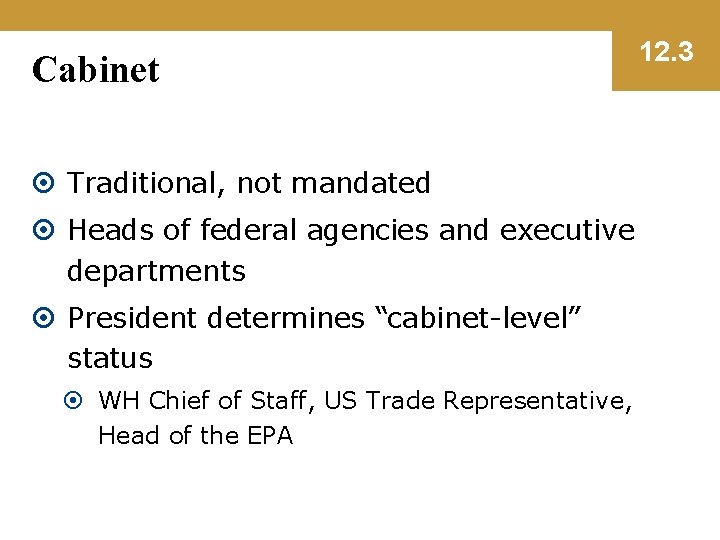
Cabinet Traditional, not mandated Heads of federal agencies and executive departments President determines “cabinet-level” status WH Chief of Staff, US Trade Representative, Head of the EPA 12. 3
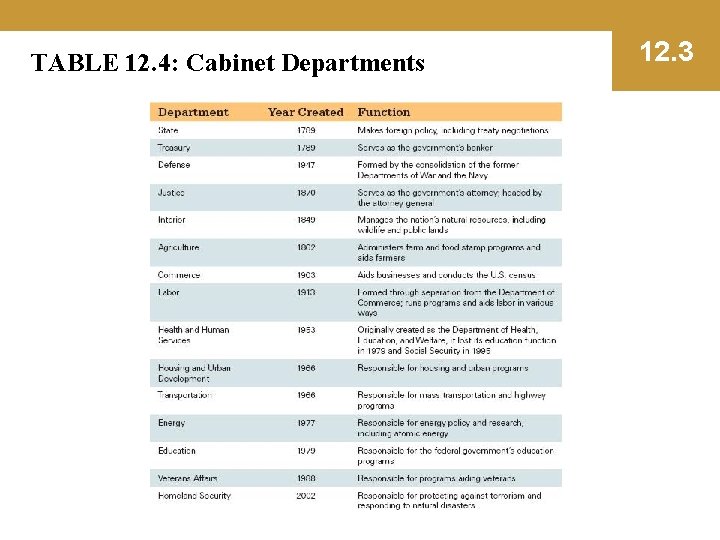
TABLE 12. 4: Cabinet Departments 12. 3
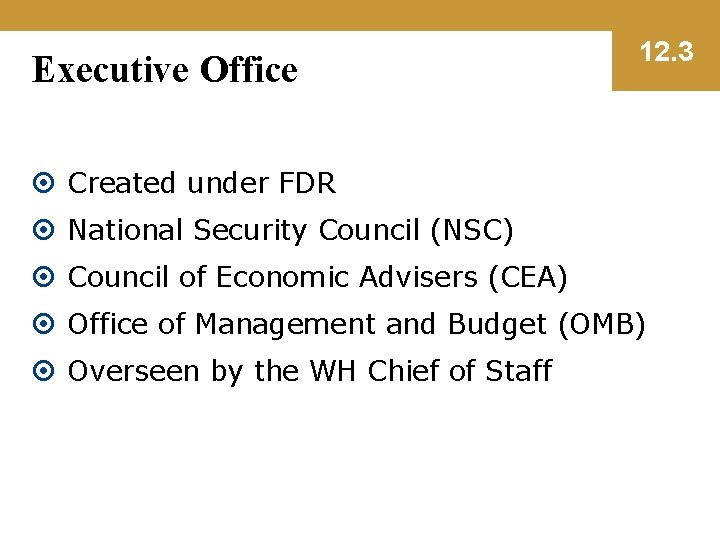
Executive Office 12. 3 Created under FDR National Security Council (NSC) Council of Economic Advisers (CEA) Office of Management and Budget (OMB) Overseen by the WH Chief of Staff
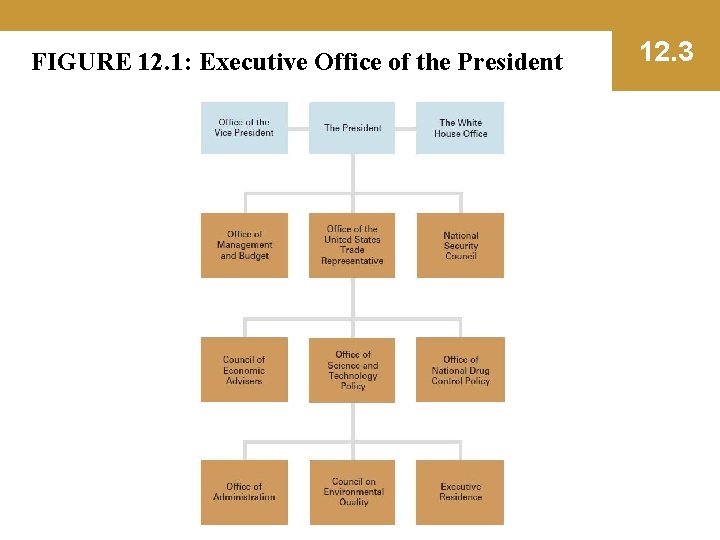
FIGURE 12. 1: Executive Office of the President 12. 3
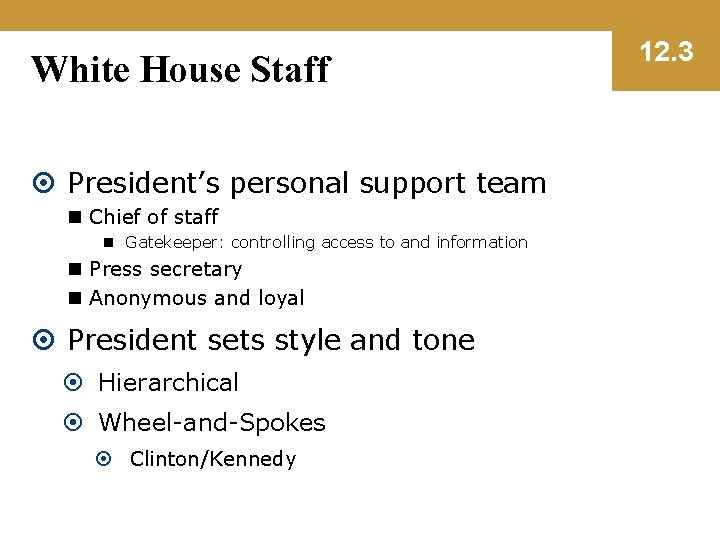
White House Staff President’s personal support team n Chief of staff n Gatekeeper: controlling access to and information n Press secretary n Anonymous and loyal President sets style and tone Hierarchical Wheel-and-Spokes Clinton/Kennedy 12. 3
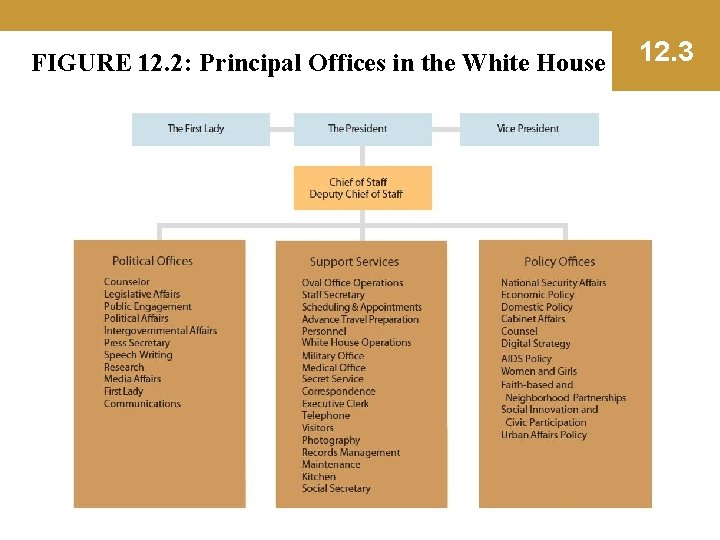
FIGURE 12. 2: Principal Offices in the White House 12. 3

First Lady 12. 3 No longer just a well-dressed homemaker n n n Abigail Adams Edith Wilson Eleanor Roosevelt Hillary Rodham Clinton Michelle Obama

Michele Obama with military families 12. 3
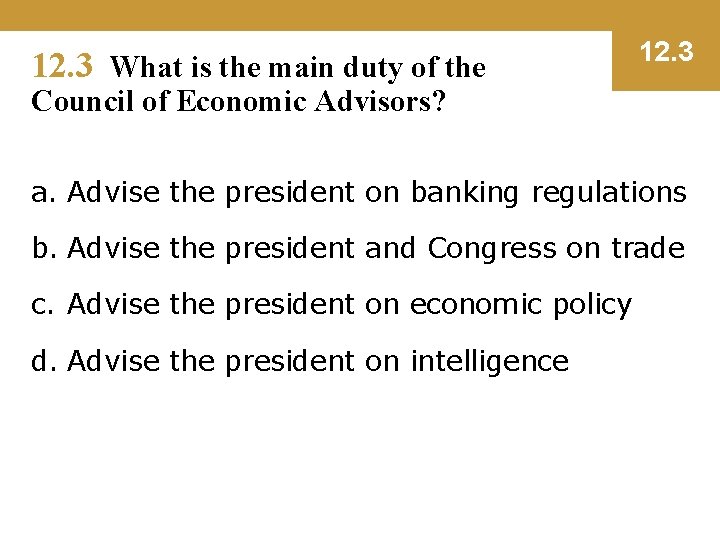
12. 3 What is the main duty of the 12. 3 Council of Economic Advisors? a. Advise the president on banking regulations b. Advise the president and Congress on trade c. Advise the president on economic policy d. Advise the president on intelligence
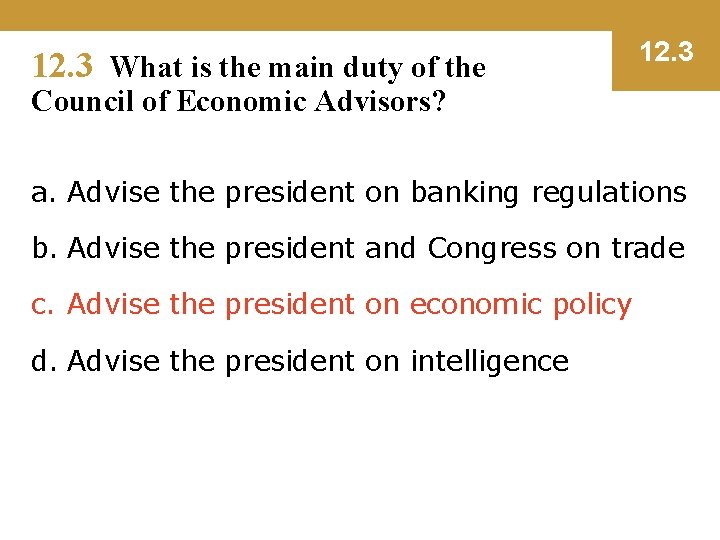
12. 3 What is the main duty of the 12. 3 Council of Economic Advisors? a. Advise the president on banking regulations b. Advise the president and Congress on trade c. Advise the president on economic policy d. Advise the president on intelligence
Presidential Leadership of Congress: Politics of Shared Powers Chief Legislator Party Leadership Public Support Legislative Skills 12. 4
Chief Legislator State of the Union Today, as much a speech to the public as to Congress Lays out his legislative agenda Veto n Threat n Pocket Veto n Line-item veto n Unconstitutional n Clinton v City of New York 12. 4

TABLE 12. 5: Presidential Vetoes 12. 4
Party Leadership 12. 4 Bonds of Party § Presidents depend on members of his party in Congress to support his legislative agenda § Natural for party members to have similar views as the President and to want to retain the White House by implementing the party’s legislative agenda § Natural for the opposition to resist president’s policies § § Ideological reasons § Wanting to make him look bad Presidents will have their most success when they control both houses of Congress

Party Leadership Slippage in Party Support § Members first and foremost seek reelection § May oppose the president, especially if he is unpopular § Relies on Party leadership and compromise Leading the Party n Presidential Coattails n Voters cast their ballots for congressional candidates of the president’s party because those candidates support the president n Happening less often in recent elections n Historically, president’s party gains few seats in presidential elections and tends to lose seats in midterm (off-year) elections 12. 4
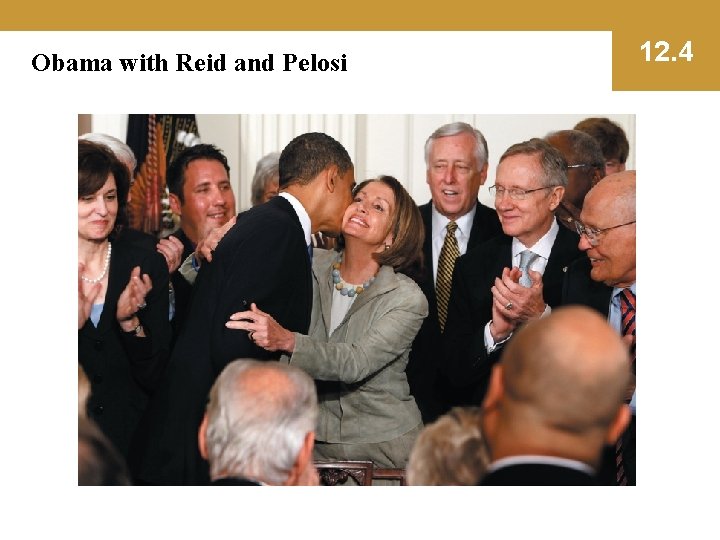
Obama with Reid and Pelosi 12. 4
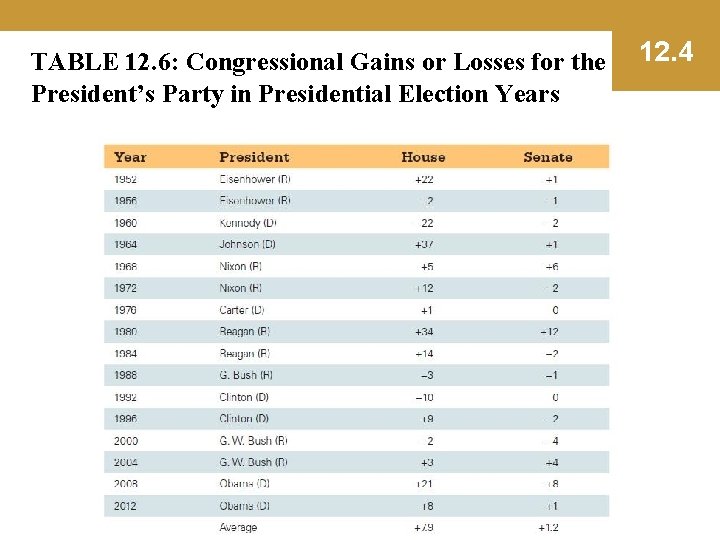
TABLE 12. 6: Congressional Gains or Losses for the President’s Party in Presidential Election Years 12. 4
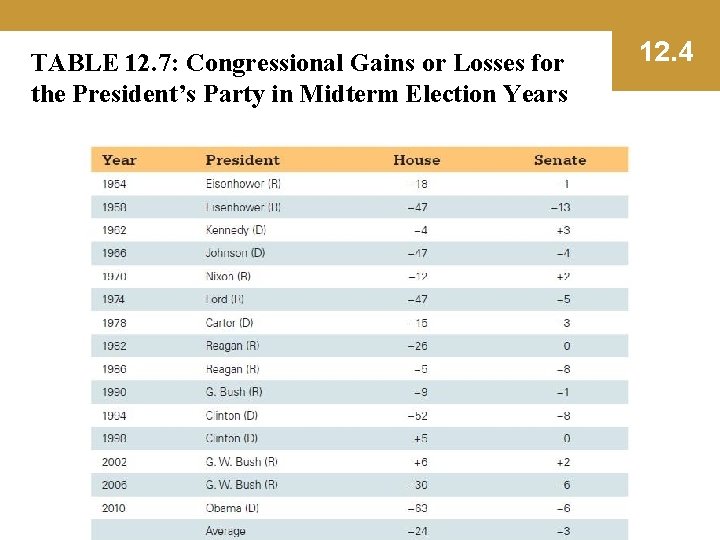
TABLE 12. 7: Congressional Gains or Losses for the President’s Party in Midterm Election Years 12. 4
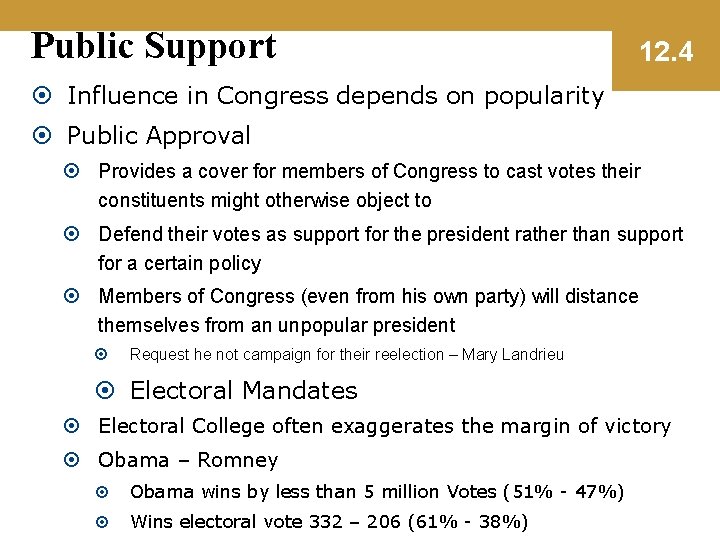
Public Support 12. 4 Influence in Congress depends on popularity Public Approval Provides a cover for members of Congress to cast votes their constituents might otherwise object to Defend their votes as support for the president rather than support for a certain policy Members of Congress (even from his own party) will distance themselves from an unpopular president Request he not campaign for their reelection – Mary Landrieu Electoral Mandates Electoral College often exaggerates the margin of victory Obama – Romney Obama wins by less than 5 million Votes (51% - 47%) Wins electoral vote 332 – 206 (61% - 38%)
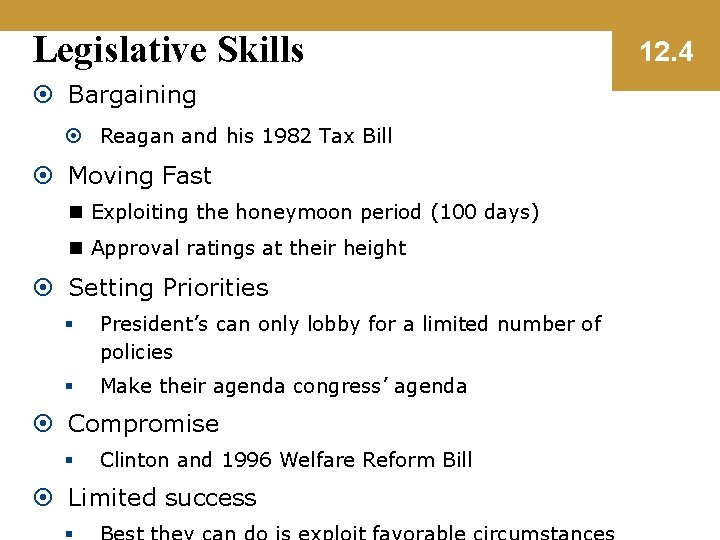
Legislative Skills Bargaining Reagan and his 1982 Tax Bill Moving Fast n Exploiting the honeymoon period (100 days) n Approval ratings at their height Setting Priorities § President’s can only lobby for a limited number of policies § Make their agenda congress’ agenda Compromise § Clinton and 1996 Welfare Reform Bill Limited success 12. 4
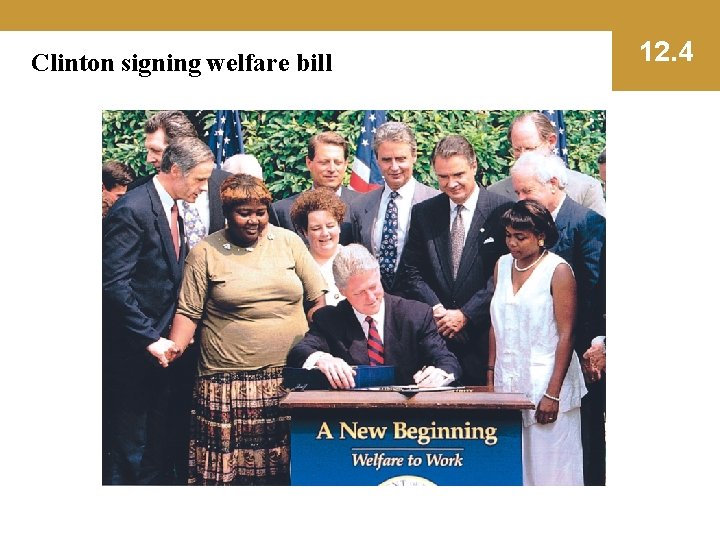
Clinton signing welfare bill 12. 4
12. 4 A president will usually have the 12. 4 most legislative success when a. he has persuasive powers with Congress and the public b. he presides over good foreign relations c. his party controls both houses of Congress d. he has strong staff support

Video: Thinking Like a Political Scientist 12. 4 http: //media. pearsoncmg. com/ph/hss/SSA_SHARED_MED IA_1/polisci/presidency/Seg 4_Presidency_v 2. html
12. 4 A president will usually have the 12. 4 most legislative success when a. he has persuasive powers with Congress and the public b. he presides over good foreign relations c. his party controls both houses of Congress d. he has strong staff support
President and National Security Policy Chief Diplomat Commander in Chief War Powers Crisis Manager Working with Congress 12. 5
Chief Diplomat Extending diplomatic recognition Can also terminate relations Iran 1979 Treaties Executive agreements More common in last 50 years 12. 5
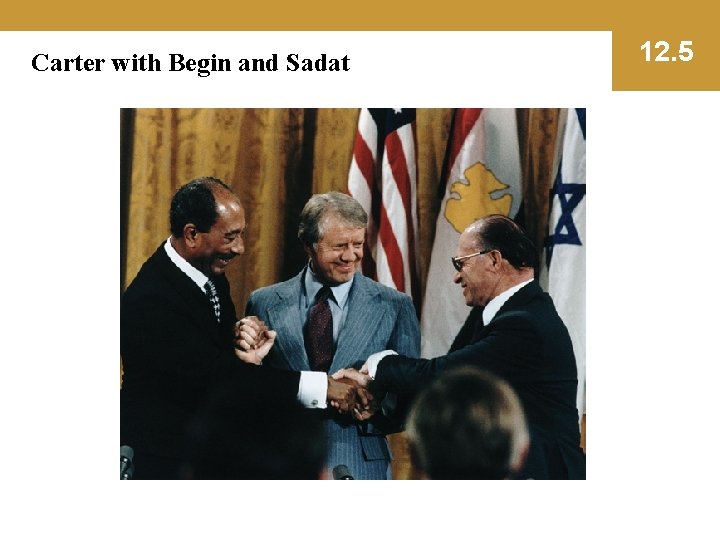
Carter with Begin and Sadat 12. 5

Commander in Chief President can deploy troops n Congress must declare war, appropriate funds Framers did not envision standing army n Washington personally lead troops to put down the Whiskey Rebellion n Or nuclear arsenal 12. 5
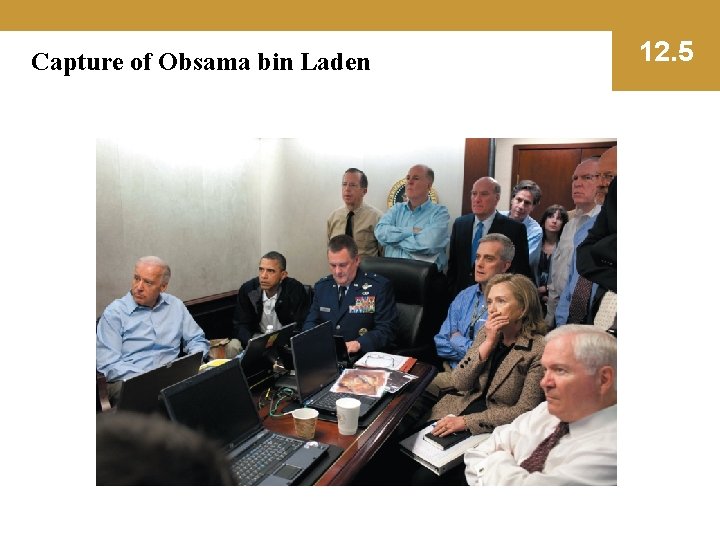
Capture of Obsama bin Laden 12. 5
War Powers Resolution (1973) n Passed over Nixon’s veto n Presidents must seek Congressional approval before deploying armed forces except in emergencies n Must notify congress within 48 hours n Must end military engagement in 60 days (unless Congress declares war) n Attempt by Congress to limit the president’s authority to commit troops overseas Legislative veto President ignore Believe it to be unconstitutional What do you think? 12. 5
Crisis Manager What constitutes a crisis? n A sudden, unpredictable, and potentially dangerous event, such as a military attack or an earthquake n Cuban Missile Crisis n 9/11 n Can affect his presidency and his legacy Modern communications technology § Things happen immediately now 12. 5

Responding to 9/11 12. 5
Working with Congress Two presidencies n Domestic policy n Much more limited n Need Congress to get bills passed n Will suffer at the ballot box under a weak economy n Foreign policy n President takes the lead n Need for the country to be unified n Impractical for 535 members of congress to conduct foreign policy 12. 5
12. 5 The president has the most influence in a. national security policy b. domestic policies c. public welfare d. public opinion 12. 5
12. 5 The president has the most influence in a. national security policy b. domestic policies c. public welfare d. public opinion 12. 5
Power from the People: Public Presidency 12. 6 Going Public Presidential Approval § Party ID § Performance on the economy and foreign policy § Evaluations of his character and leadership Policy Support Mobilizing the Public § Presidents typically fail to mobilize the public in support of their policies § Requires both opinion support and action
Going Public “Public sentiment is everything. With public sentiment nothing can fail; without it nothing can succeed. ” Ceremonial duties build public support 12. 6
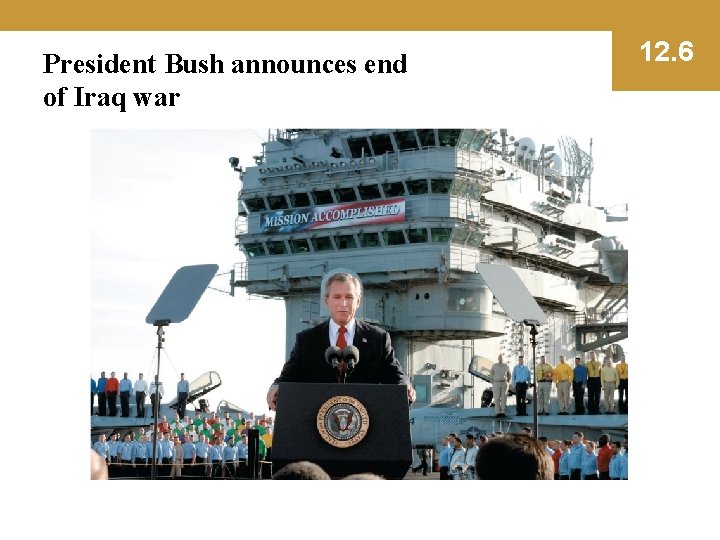
President Bush announces end of Iraq war 12. 6
Presidential Approval Product of many factors n n n Party affiliation Honeymoon period Policy success Integrity and leadership skills Rally events 12. 6
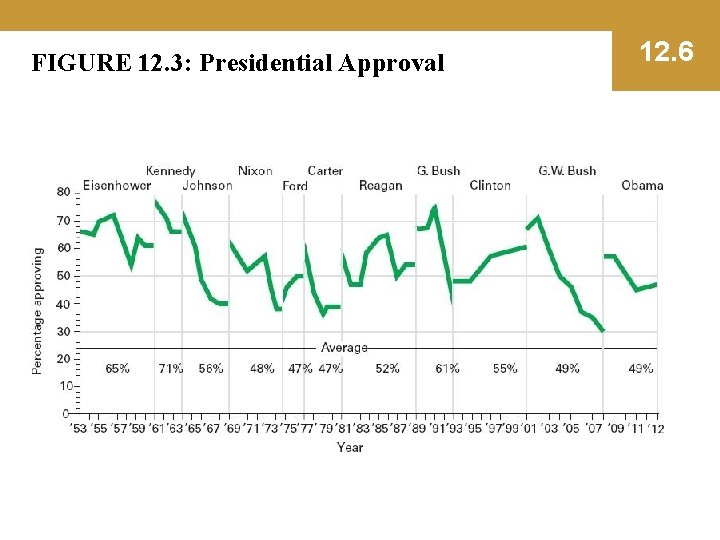
FIGURE 12. 3: Presidential Approval 12. 6
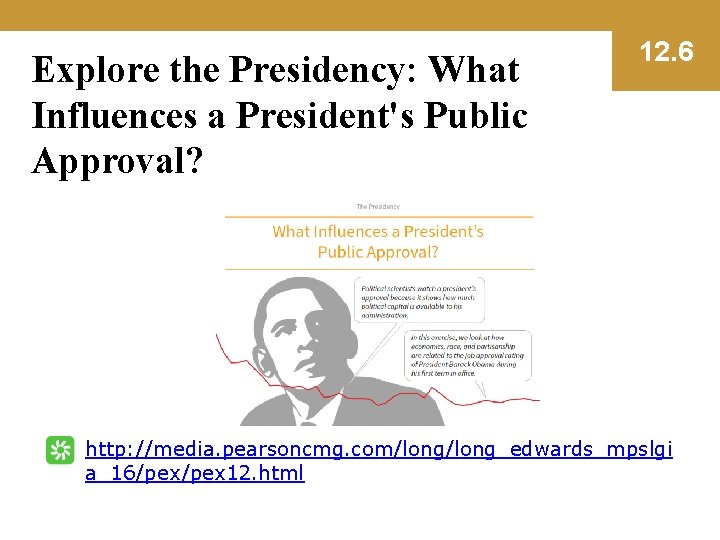
Explore the Presidency: What Influences a President's Public Approval? 12. 6 http: //media. pearsoncmg. com/long_edwards_mpslgi a_16/pex 12. html
Policy Support Using the bully pulpit effectively n Media skills n Lighting, makeup, stage settings, camera angels clothing Public not receptive n Not interested in politics and government n Biased reasoners and partisans n Weak on facts 12. 6
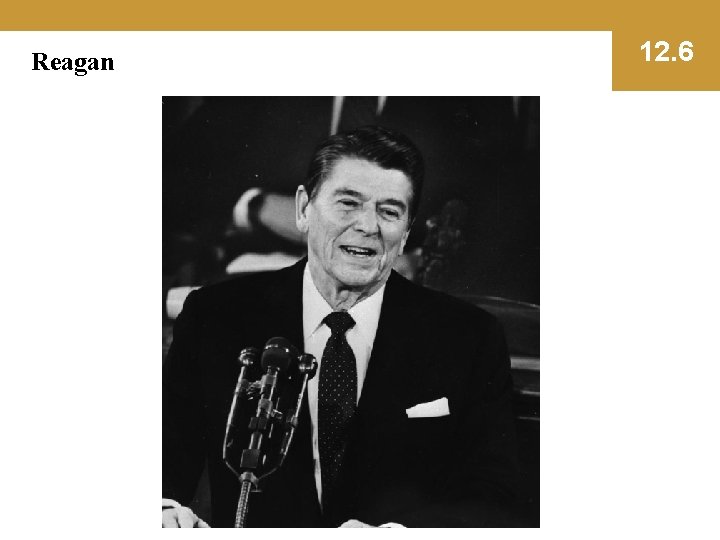
Reagan 12. 6
Mobilizing the Public 12. 6 When the people speak, Congress listens n This is a rare event n Inattentive public n Apathetic public n Congress responds to this, too
12. 6 As a president’s time in office increases, his approval ratings a. also increase b. generally go down c. remain stable d. decrease but rise as his term ends 12. 6
12. 6 As a president’s time in office increases, his approval ratings a. also increase b. generally go down c. remain stable d. decrease but rise as his term ends 12. 6
President and the Press Nature of News Coverage Much of the coverage is superficial and without partisan or ideological bias Increase in the negativity Increase in ideological sources FOX, MSNBC 12. 7
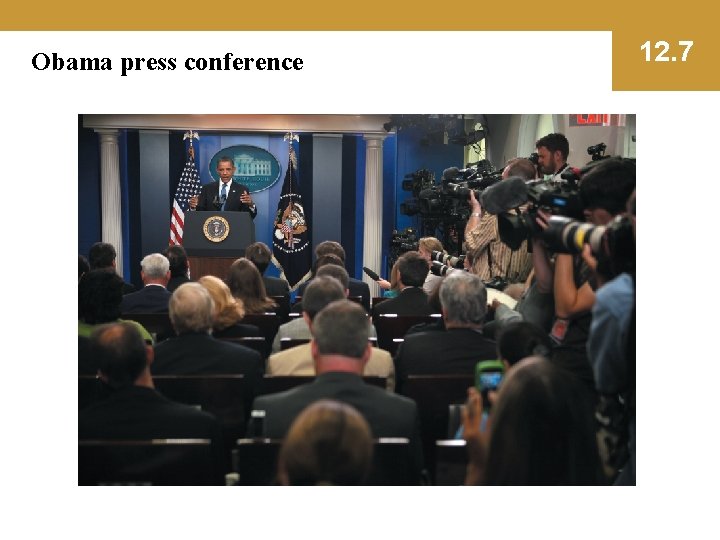
Obama press conference 12. 7
Nature of News Coverage 12. 7 Media serves as intermediary n Does not always verify facts n Negative coverage tends to predominate ALL presidents n Are news outlets biased? Press secretary Most express satisfaction with their ability to get their message across as intended Briefings, answer questions Arrange interviews with WH officials, photo-ops, and travel on Air Force One
12. 7 With which statement would most 12. 7 press secretaries agree? a. The media have a liberal bias. b. Coverage of the presidency is generally positive. c. Media bias has little impact on the way the American people are informed. d. Media coverage is based solely on facts.
12. 7 With which statement would most 12. 7 press secretaries agree? a. The media have a liberal bias. b. Coverage of the presidency is generally positive. c. Media bias has little impact on the way the American people are informed. d. Media coverage is based solely on facts.
Understanding the American Presidency 12. 8 Presidency and Democracy Presidency and the Scope of Government
Presidency and Democracy 12. 8 Wanting and fearing a strong president n Safety in checks and balances n Favor a strong president in times of crisis, and when the president shares their ideological perspective and policy ideas What happens when government is divided? Often leads to policy gridlock However, change happens in both unified and divided governments
Presidency and the Scope of Government 12. 8 What made Theodore Roosevelt, Woodrow Wilson, and Franklin Roosevelt noteworthy presidents? Government growth not inherent in presidency Reagan Ideologically conservative and operationally liberal
Video: In the Real World 12. 8 http: //media. pearsoncmg. com/ph/hss/SSA_SHARED_MED IA_1/polisci/presidency/Seg 5_The_Presidency_v 2. html
12. 8 According to the text, which of the 12. 8 following is true? a. Divided government cannot pass legislation. b. Change occurs in unified as well as divided government. c. All presidents work toward increasing presidential power. d. Presidents since LBJ have championed growth of government.
12. 8 According to the text, which of the 12. 8 following is true? a. Divided government cannot pass legislation. b. Change occurs in unified as well as divided government. c. All presidents work toward increasing presidential power. d. Presidents since LBJ have championed growth of government.
Discussion Question How do presidents use the “power to persuade” to implement their agenda? In what way is this power considered to be their most important? 12
Video: So What? 12 http: //media. pearsoncmg. com/ph/hss/SSA_SHARED_MED IA_1/polisci/presidency/Edwards_Ch 12_The_Presidency_S eg 6_v 2. html
Further Review: On My. Poli. Sci. Lab Listen to the Chapter Study and Review the Flashcards Study and Review the Practice Tests 12
- Slides: 89