
The present subjunctive with Verbs of DESIRE The

The present subjunctive with Verbs of DESIRE
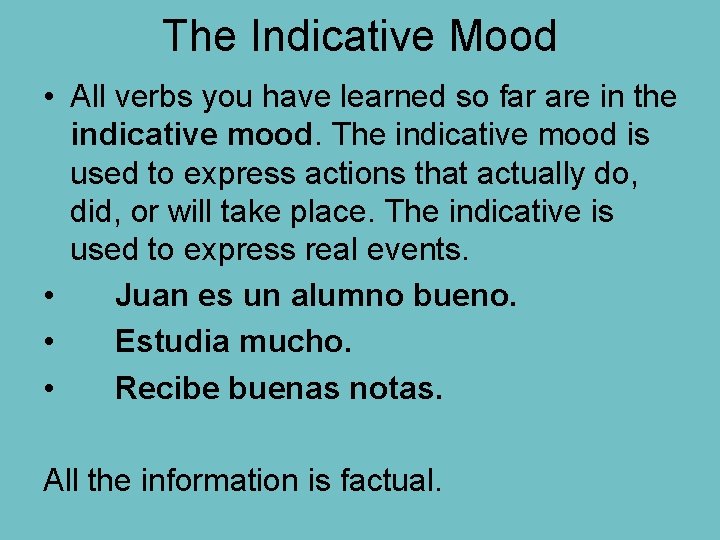
The Indicative Mood • All verbs you have learned so far are in the indicative mood. The indicative mood is used to express actions that actually do, did, or will take place. The indicative is used to express real events. • Juan es un alumno bueno. • Estudia mucho. • Recibe buenas notas. All the information is factual.
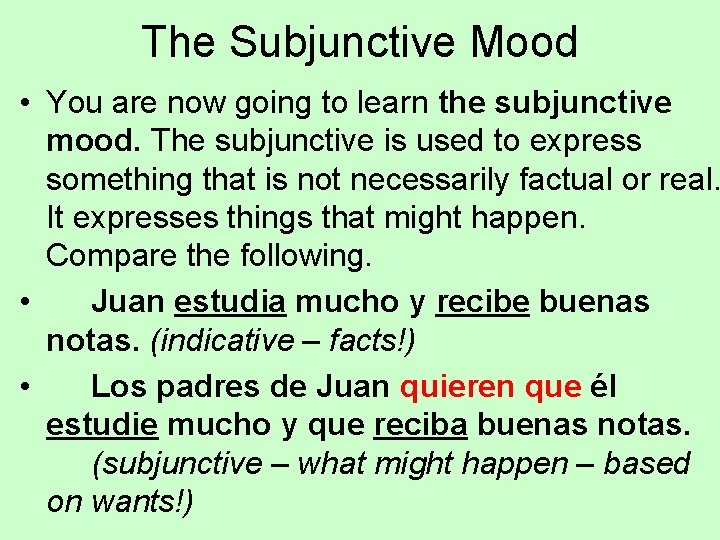
The Subjunctive Mood • You are now going to learn the subjunctive mood. The subjunctive is used to express something that is not necessarily factual or real. It expresses things that might happen. Compare the following. • Juan estudia mucho y recibe buenas notas. (indicative – facts!) • Los padres de Juan quieren que él estudie mucho y que reciba buenas notas. (subjunctive – what might happen – based on wants!)
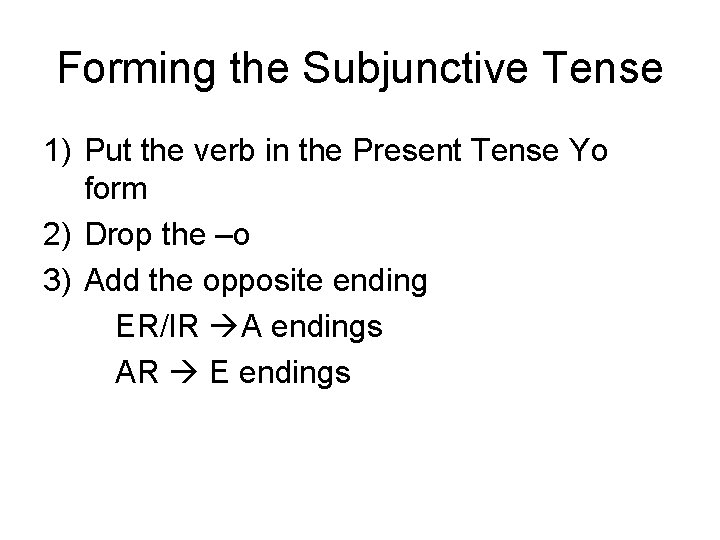
Forming the Subjunctive Tense 1) Put the verb in the Present Tense Yo form 2) Drop the –o 3) Add the opposite ending ER/IR A endings AR E endings
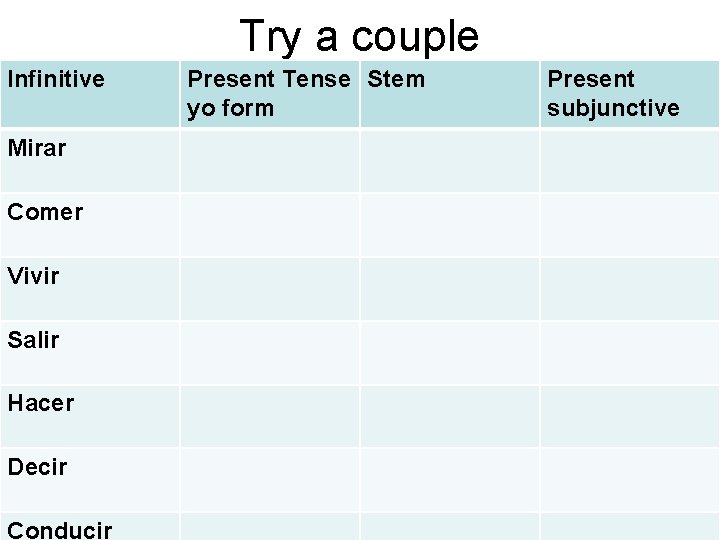
Try a couple Infinitive Mirar Comer Vivir Salir Hacer Decir Conducir Present Tense Stem yo form Present subjunctive
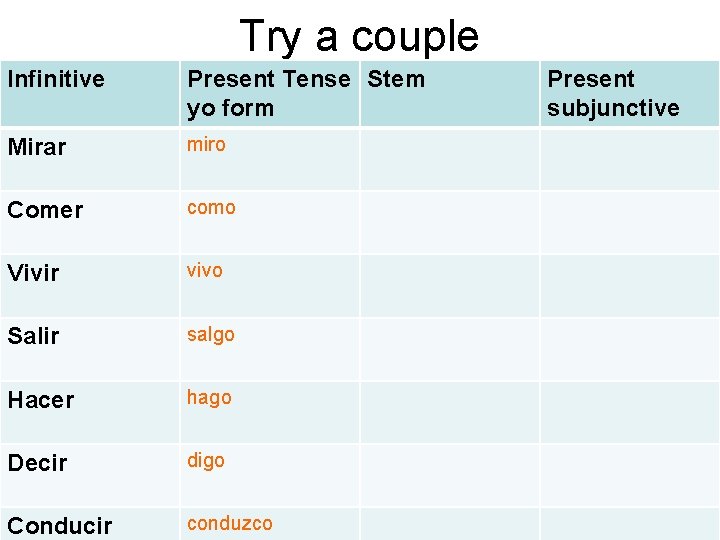
Try a couple Infinitive Present Tense Stem yo form Mirar miro Comer como Vivir vivo Salir salgo Hacer hago Decir digo Conducir conduzco Present subjunctive
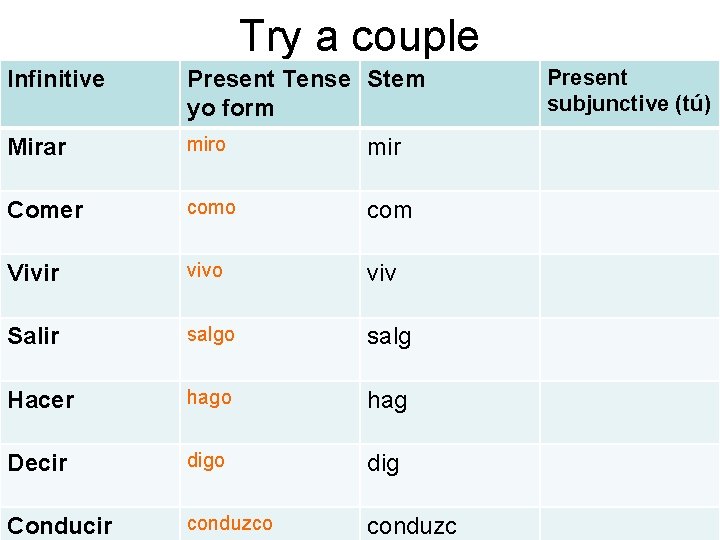
Try a couple Infinitive Present Tense Stem yo form Mirar miro mir Comer como com Vivir vivo viv Salir salgo salg Hacer hago hag Decir digo dig Conducir conduzco conduzc Present subjunctive (tú)
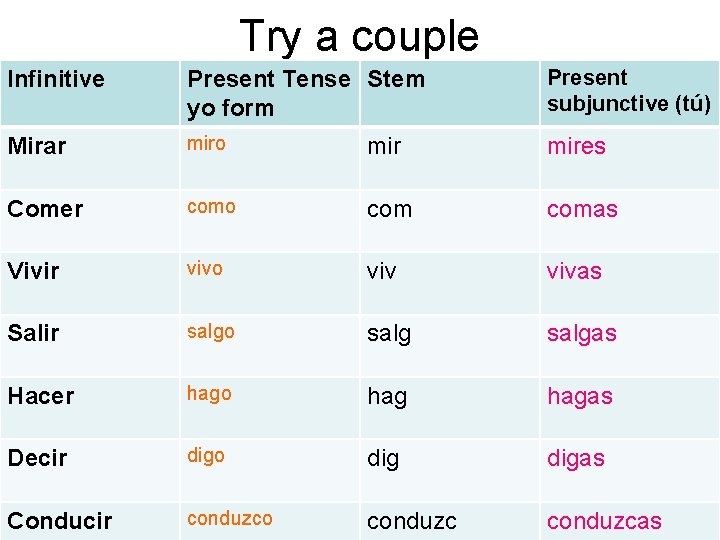
Try a couple Infinitive Present Tense Stem yo form Present subjunctive (tú) Mirar miro mires Comer como comas Vivir vivo vivas Salir salgo salgas Hacer hago hagas Decir digo digas Conducir conduzco conduzcas
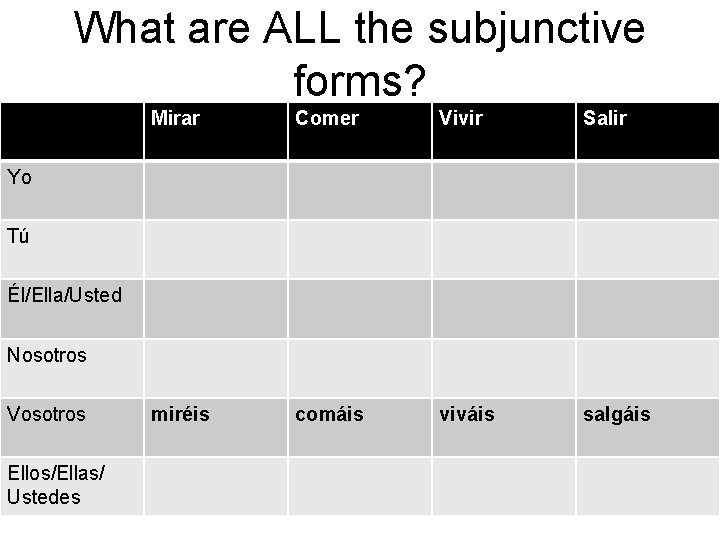
What are ALL the subjunctive forms? Mirar Comer Vivir Salir miréis comáis viváis salgáis Yo Tú Él/Ella/Usted Nosotros Vosotros Ellos/Ellas/ Ustedes
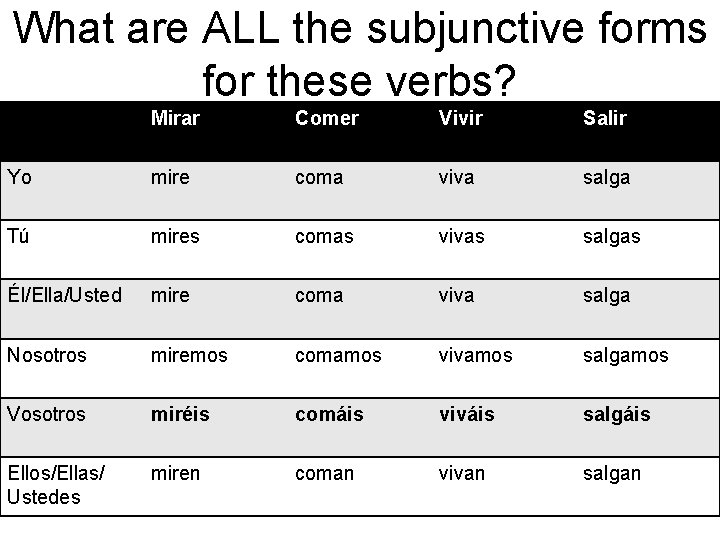
What are ALL the subjunctive forms for these verbs? Mirar Comer Vivir Salir Yo mire coma viva salga Tú mires comas vivas salgas Él/Ella/Usted mire coma viva salga Nosotros miremos comamos vivamos salgamos Vosotros miréis comáis viváis salgáis Ellos/Ellas/ Ustedes miren coman vivan salgan
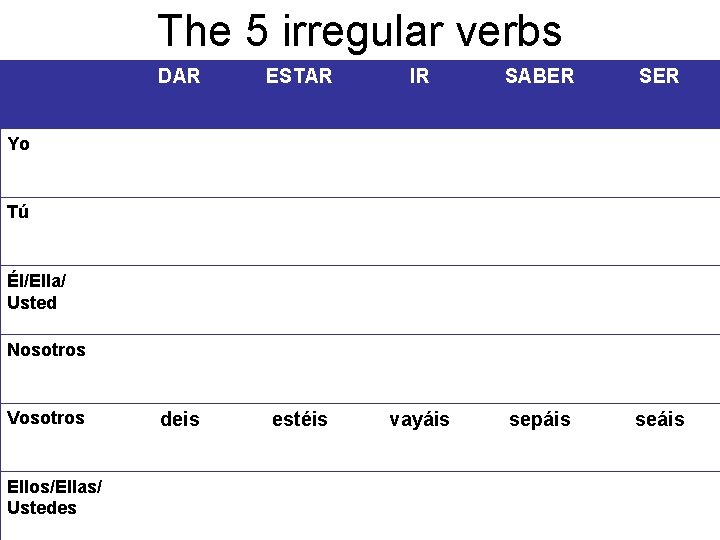
The 5 irregular verbs DAR ESTAR IR SABER SER deis estéis vayáis sepáis seáis Yo Tú Él/Ella/ Usted Nosotros Vosotros Ellos/Ellas/ Ustedes
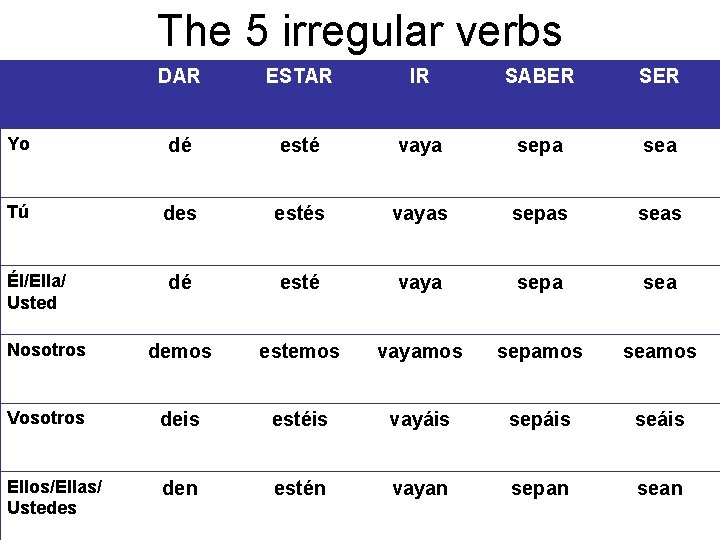
The 5 irregular verbs DAR ESTAR IR SABER SER Yo dé esté vaya sepa sea Tú des estés vayas sepas seas dé esté vaya sepa sea Nosotros demos estemos vayamos sepamos seamos Vosotros deis estéis vayáis sepáis seáis Ellos/Ellas/ Ustedes den estén vayan sepan sean Él/Ella/ Usted
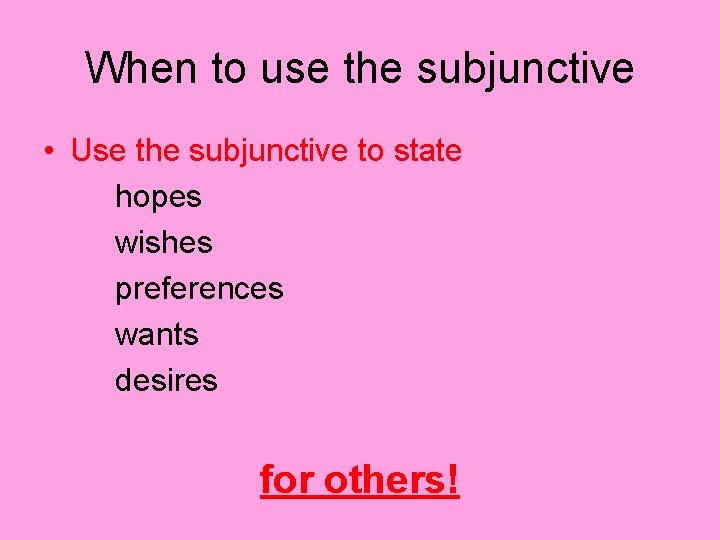
When to use the subjunctive • Use the subjunctive to state hopes wishes preferences wants desires for others!
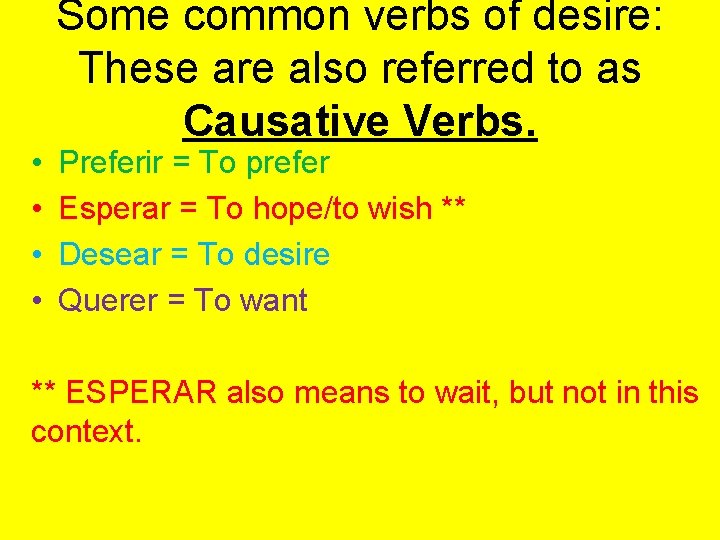
• • Some common verbs of desire: These are also referred to as Causative Verbs. Preferir = To prefer Esperar = To hope/to wish ** Desear = To desire Querer = To want ** ESPERAR also means to wait, but not in this context.
* To use the subjunctive in the dependent clause, there are 3 criteria which MUST be met. * If 1 of the conditions are NOT met, the indicative mood (the regular present tense) is used.
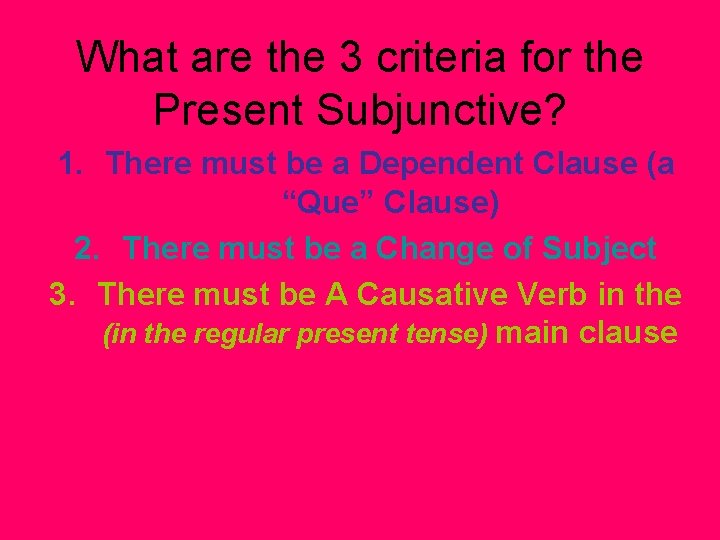
What are the 3 criteria for the Present Subjunctive? 1. There must be a Dependent Clause (a “Que” Clause) 2. There must be a Change of Subject 3. There must be A Causative Verb in the (in the regular present tense) main clause
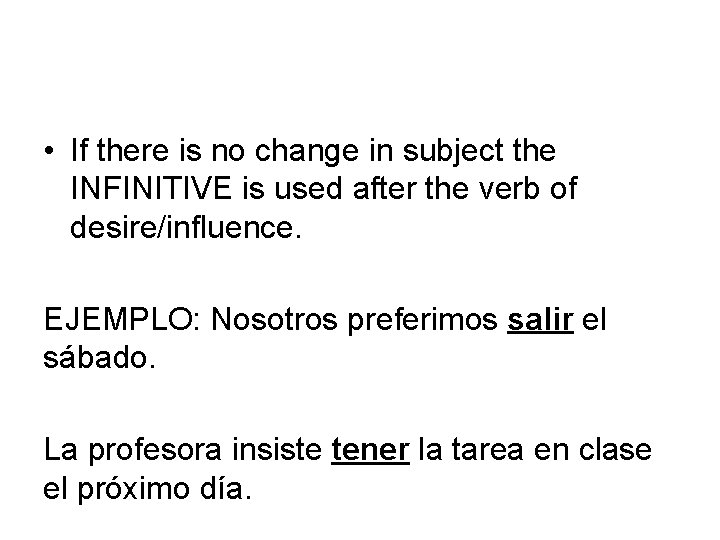
• If there is no change in subject the INFINITIVE is used after the verb of desire/influence. EJEMPLO: Nosotros preferimos salir el sábado. La profesora insiste tener la tarea en clase el próximo día.
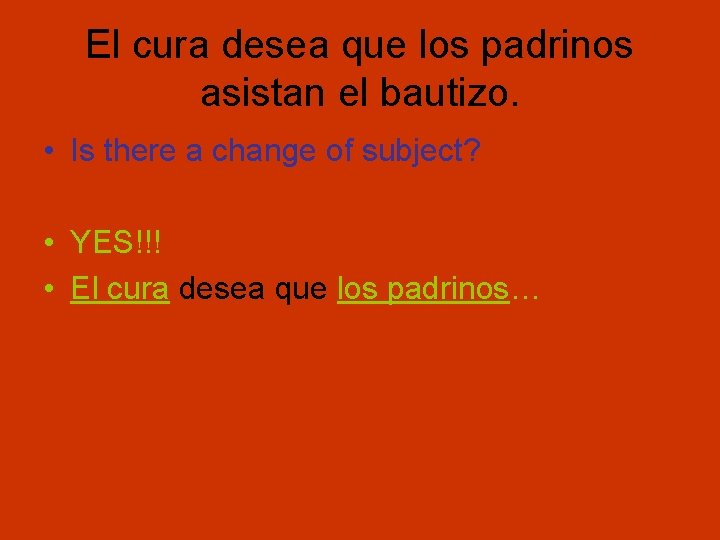
El cura desea que los padrinos asistan el bautizo. • Is there a change of subject? • YES!!! • El cura desea que los padrinos…
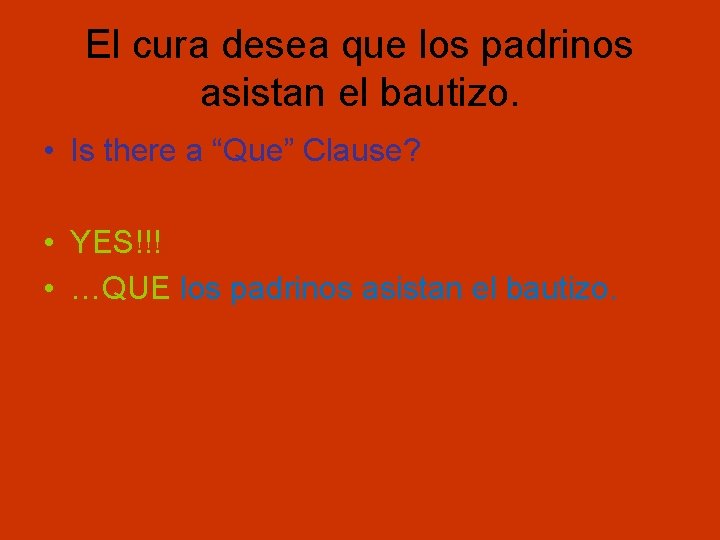
El cura desea que los padrinos asistan el bautizo. • Is there a “Que” Clause? • YES!!! • …QUE los padrinos asistan el bautizo.
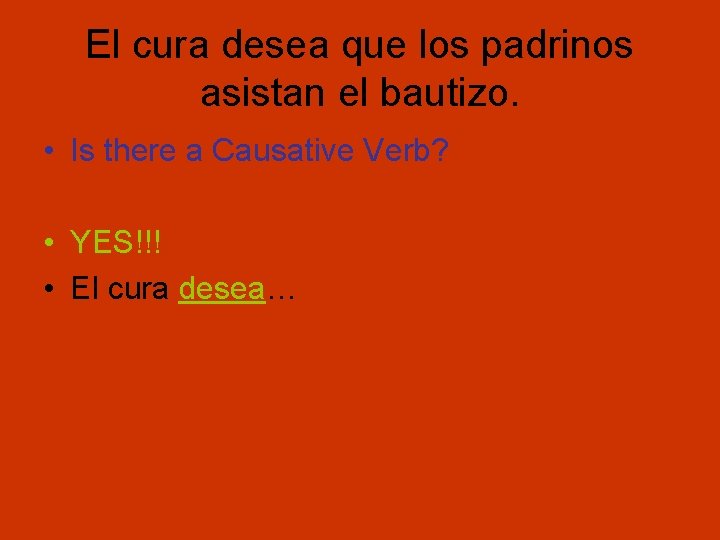
El cura desea que los padrinos asistan el bautizo. • Is there a Causative Verb? • YES!!! • El cura desea…
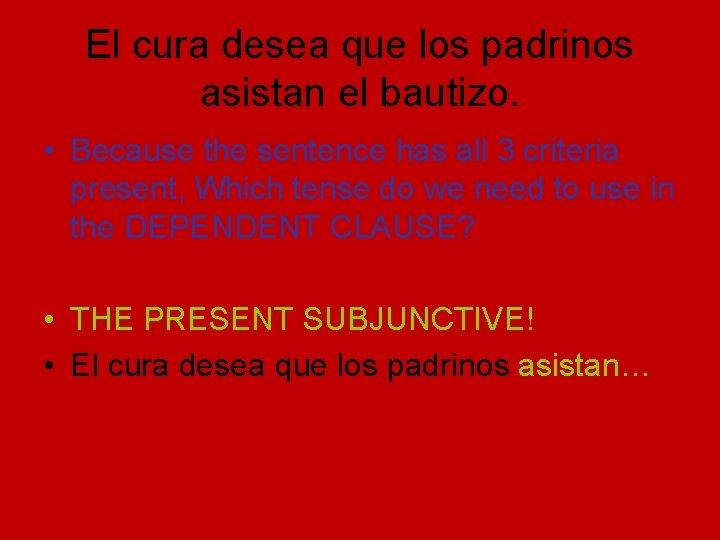
El cura desea que los padrinos asistan el bautizo. • Because the sentence has all 3 criteria present, Which tense do we need to use in the DEPENDENT CLAUSE? • THE PRESENT SUBJUNCTIVE! • El cura desea que los padrinos asistan…
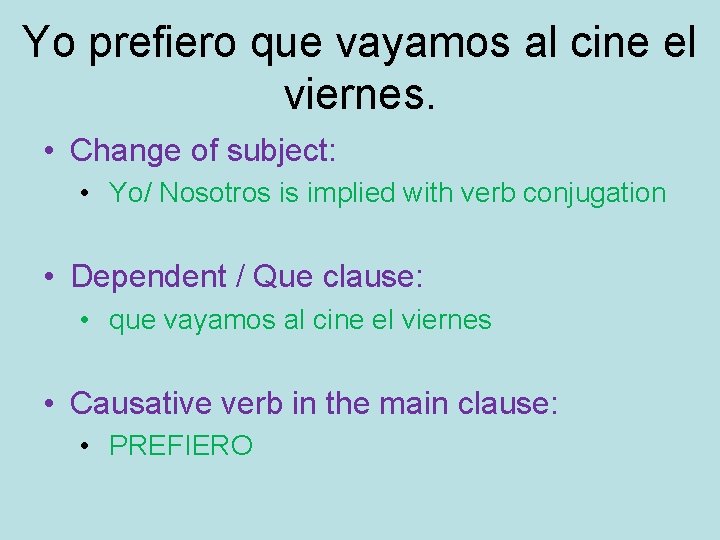
Yo prefiero que vayamos al cine el viernes. • Change of subject: • Yo/ Nosotros is implied with verb conjugation • Dependent / Que clause: • que vayamos al cine el viernes • Causative verb in the main clause: • PREFIERO
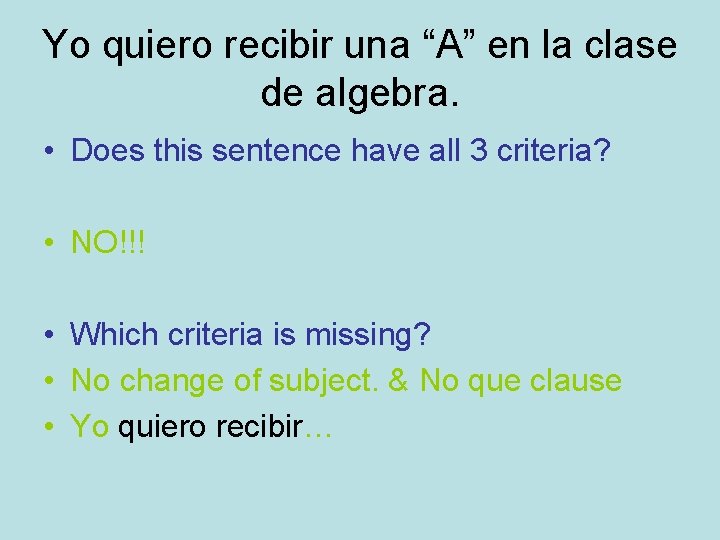
Yo quiero recibir una “A” en la clase de algebra. • Does this sentence have all 3 criteria? • NO!!! • Which criteria is missing? • No change of subject. & No que clause • Yo quiero recibir…
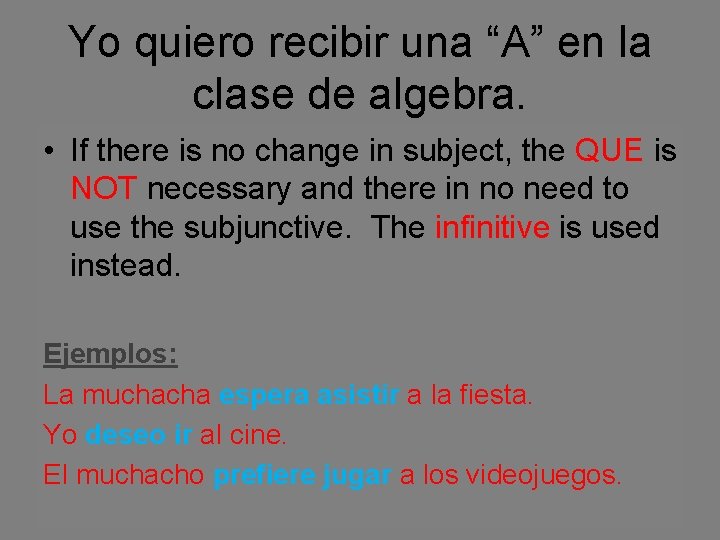
Yo quiero recibir una “A” en la clase de algebra. • If there is no change in subject, the QUE is NOT necessary and there in no need to use the subjunctive. The infinitive is used instead. Ejemplos: La muchacha espera asistir a la fiesta. Yo deseo ir al cine. El muchacho prefiere jugar a los videojuegos.
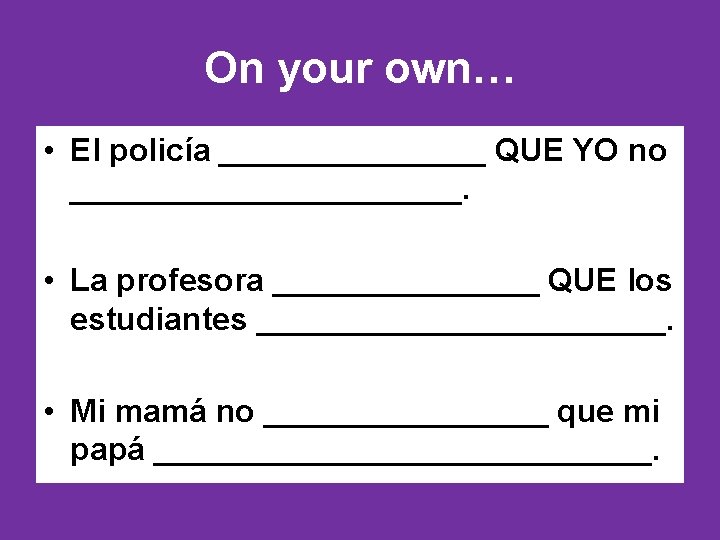
On your own… • El policía ________ QUE YO no ___________. • La profesora ________ QUE los estudiantes ____________. • Mi mamá no ________ que mi papá ______________.
Subjuntivo ¿Sí? o ¿No? • Instrucciones: State whether the statements below are examples of subjunctive sentences, with either Sí or No. • If Sí – Identify the three criteria present • If No – Explain WHY not
• Mi hermano y yo esperamos tener más tiempo para cocinar el próximo año. Usted desea que yo practique preparar comida en la parilla.
Tú quieres que nosotros entendamos bien las instrucciones de la receta. Pido que mi hermano hierva el agua para la pasta. Yo prefiero no quemarme cuando estoy cocinando. Mi mamá exige que nosotros horneemos la chuleta de cerdo.
Margarita ruega que su esposo no se olvide unos ingredientes de la receta. Marta aconseja que ella ponga la olla al fuego a tiempo. Los papás proponen que el hijo caliente las vegetales en el horno de microondas. La receta sugiere que Usted pique la cebolla, el pimiento y el ajo.
Yo mando que comamos a un restaurante porque mi mamá no puede cocinar bien. Mis parientes prohíben usar la estufa cuando estar solos en casa.
Mi mejor amigo … El presidente de los Estados Unidos … El entrenador … Mi novio/a (del futuro)… Mi perro… Mis hermanos no… Yo _____ que El Papá Noel me…
- Slides: 31