
The Present Simple V Vs It often rains
- Slides: 3
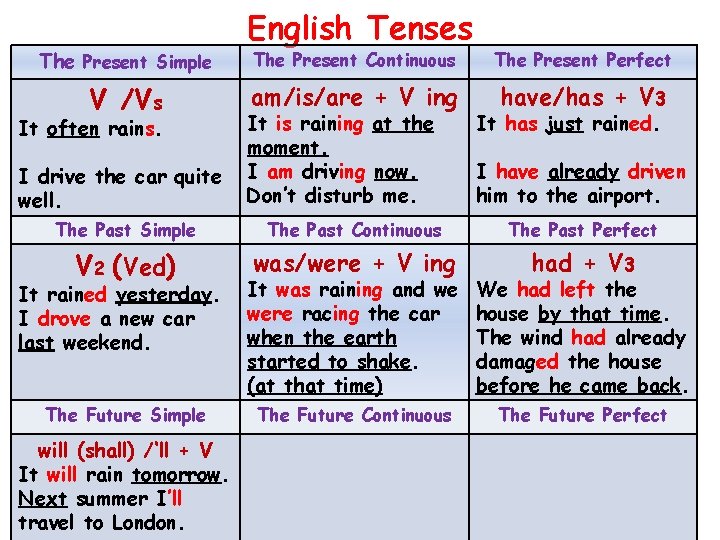
The Present Simple V /Vs It often rains. I drive the car quite well. English Tenses The Present Continuous The Present Perfect am/is/are + V ing have/has + V 3 It is raining at the moment. I am driving now. Don’t disturb me. It has just rained. I have already driven him to the airport. The Past Simple The Past Continuous The Past Perfect V 2 (Ved) was/were + V ing had + V 3 It rained yesterday. I drove a new car last weekend. The Future Simple will (shall) /‘ll + V It will rain tomorrow. Next summer I’ll travel to London. It was raining and we were racing the car when the earth started to shake. (at that time) We had left the house by that time. The wind had already damaged the house before he came back. The Future Continuous The Future Perfect
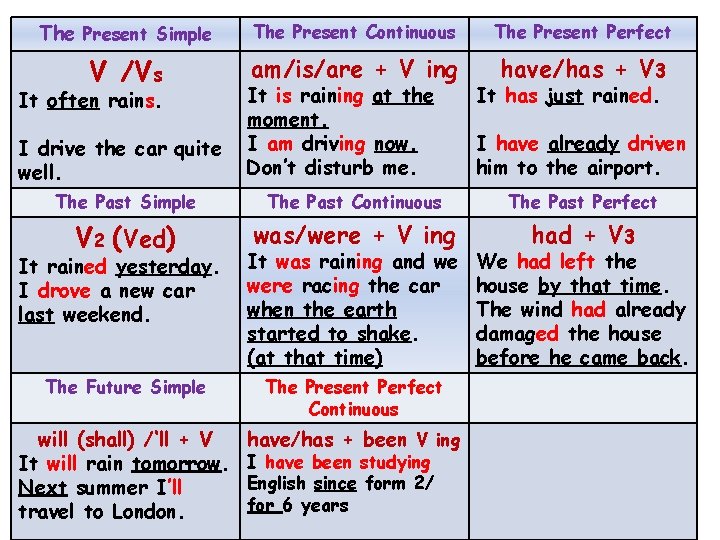
The Present Simple The Present Continuous The Present Perfect V /Vs am/is/are + V ing have/has + V 3 It often rains. I drive the car quite well. It is raining at the moment. I am driving now. Don’t disturb me. It has just rained. I have already driven him to the airport. The Past Simple The Past Continuous The Past Perfect V 2 (Ved) was/were + V ing had + V 3 It rained yesterday. I drove a new car last weekend. It was raining and we were racing the car when the earth started to shake. (at that time) The Future Simple The Present Perfect Continuous will (shall) /‘ll + V It will rain tomorrow. Next summer I’ll travel to London. have/has + been V ing I have been studying English since form 2/ for 6 years We had left the house by that time. The wind had already damaged the house before he came back.
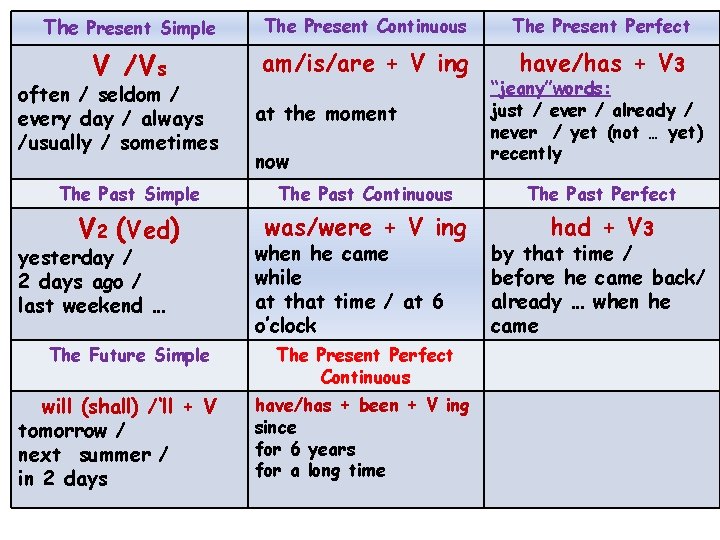
The Present Simple The Present Continuous The Present Perfect V /Vs am/is/are + V ing have/has + V 3 often / seldom / every day / always /usually / sometimes at the moment now “jeany”words: just / ever / already / never / yet (not … yet) recently The Past Simple The Past Continuous The Past Perfect V 2 (Ved) was/were + V ing had + V 3 yesterday / 2 days ago / last weekend … The Future Simple will (shall) /‘ll + V tomorrow / next summer / in 2 days when he came while at that time / at 6 o’clock The Present Perfect Continuous have/has + been + V ing since for 6 years for a long time by that time / before he came back/ already … when he came