
THE PRESENT SIMPLE AFFIRMATIVE STATEMENTS Ordinary verbs follow
THE PRESENT SIMPLE

AFFIRMATIVE STATEMENTS Ordinary verbs follow the SHIT rule: § Third person singular SHE / IT → INFINITIVE + S → e. g. “He works. ”

POSSESSION (BEZIT) ‘to have’ & ‘have got’ § the verb ‘have got’ is not used in fixed expressions: § e. g. ‘to have breakfast’ § exercise 4. 9 WB p. 97 (ind) § oral exercise: ‘Have you got … ? ’
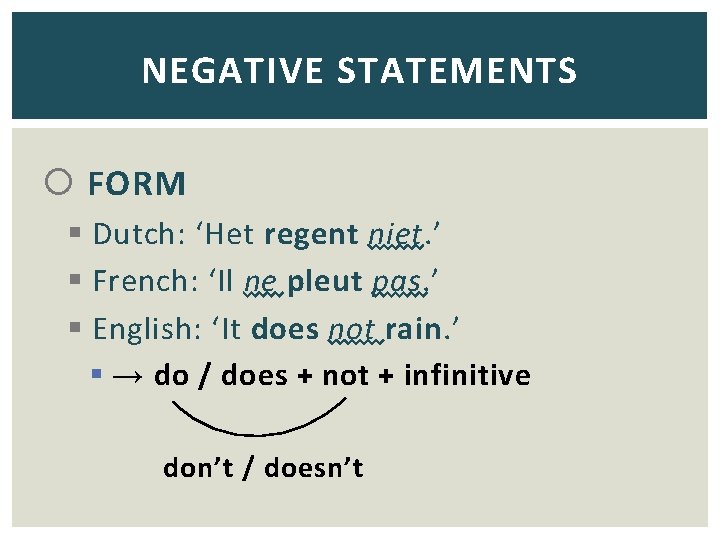
NEGATIVE STATEMENTS FORM § Dutch: ‘Het regent niet. ’ § French: ‘Il ne pleut pas. ’ § English: ‘It does not rain. ’ § → do / does + not + infinitive don’t / doesn’t

NEGATIVE STATEMENTS UITZONDERINGEN § to be: ‘I am not a dragon. ’ § can: ‘I cannot / can’t speak Chinese. ’ § have got: ‘We have not got tennis courts at our school. ’
NEGATIVE STATEMENTS EXERCISES § exercise 4. 13 WB p. 100 (in pairs) § exercise 4. 15 WB p. 102 (ind) § TB p. 77 → theory
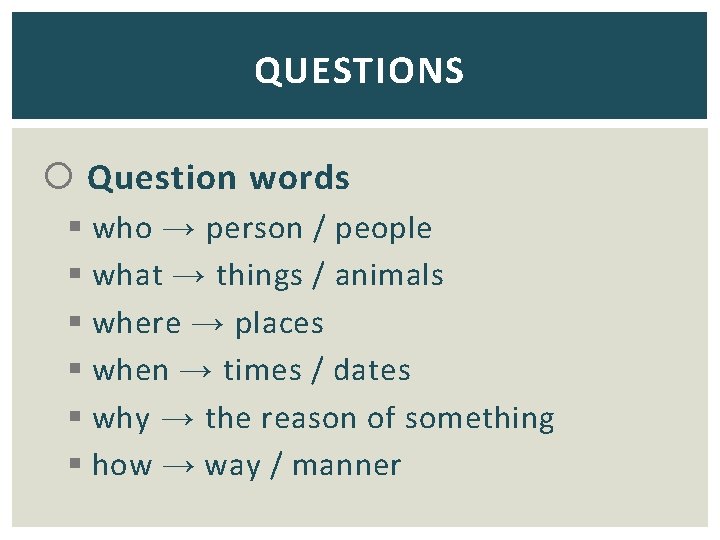
QUESTIONS Question words § who → person / people § what → things / animals § where → places § when → times / dates § why → the reason of something § how → way / manner
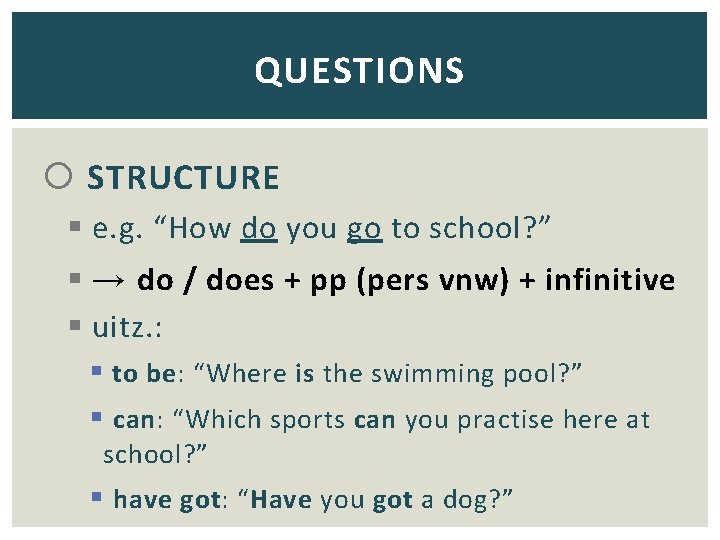
QUESTIONS STRUCTURE § e. g. “How do you go to school? ” § → do / does + pp (pers vnw) + infinitive § uitz. : § to be: “Where is the swimming pool? ” § can: “Which sports can you practise here at school? ” § have got: “Have you got a dog? ”
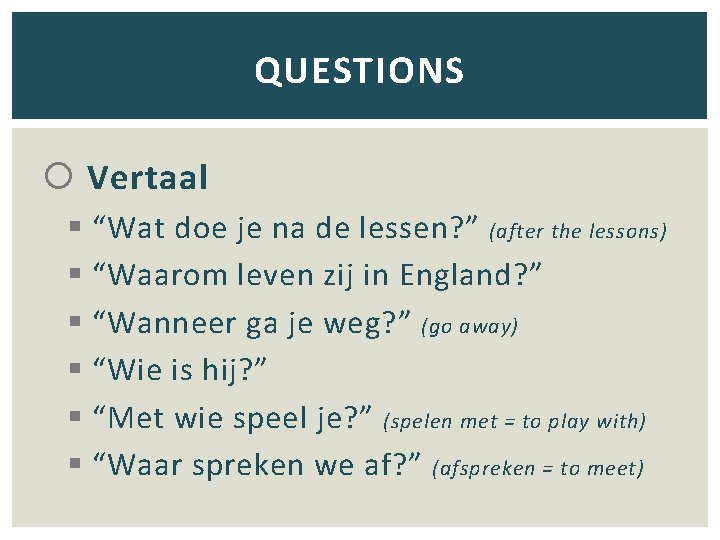
QUESTIONS Vertaal § “Wat doe je na de lessen? ” (after the lessons) § “Waarom leven zij in England? ” § “Wanneer ga je weg? ” (go away) § “Wie is hij? ” § “Met wie speel je? ” (spelen met = to play with) § “Waar spreken we af? ” (afspreken = to meet)
QUESTIONS EXERCISE § exercise 4. 18 WB p. 105 (ind)
- Slides: 10