
THE PRESENT CONTINUOUS TENSE AFFIRMATIVE Play I am
- Slides: 17
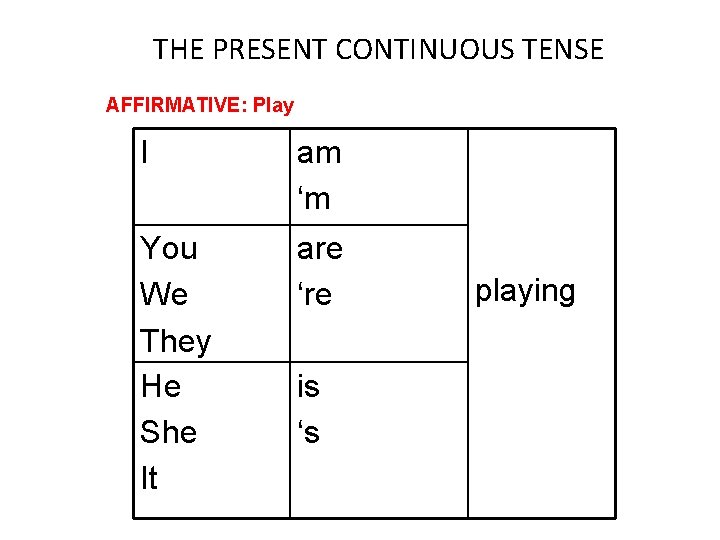
THE PRESENT CONTINUOUS TENSE AFFIRMATIVE: Play I am ‘m You We They He She It are ‘re is ‘s playing
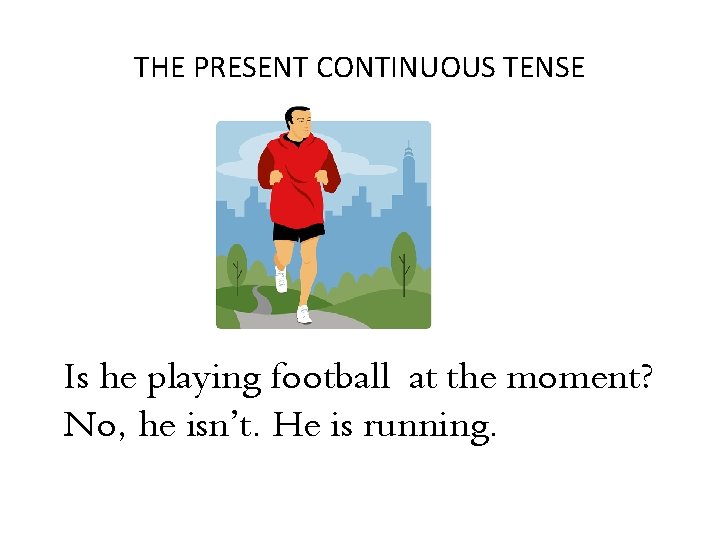
THE PRESENT CONTINUOUS TENSE Is he playing football at the moment? No, he isn’t. He is running.
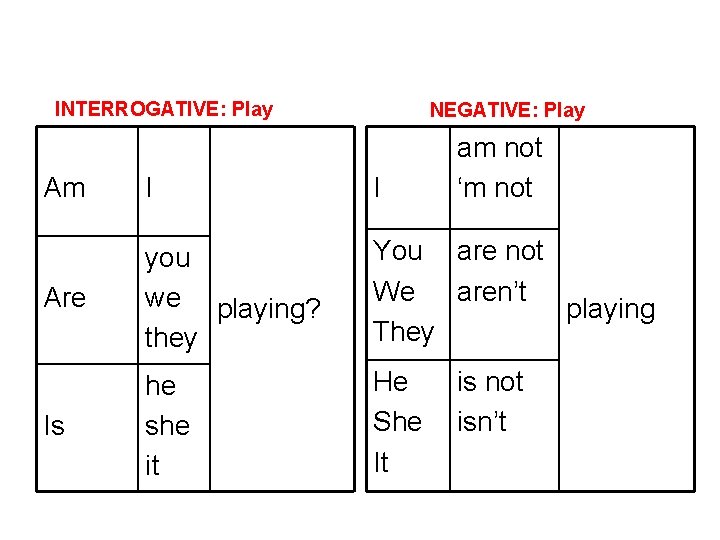
INTERROGATIVE: Play NEGATIVE: Play am not ‘m not Am I I Are you we playing? they You are not We aren’t playing They Is he she it He She It is not isn’t
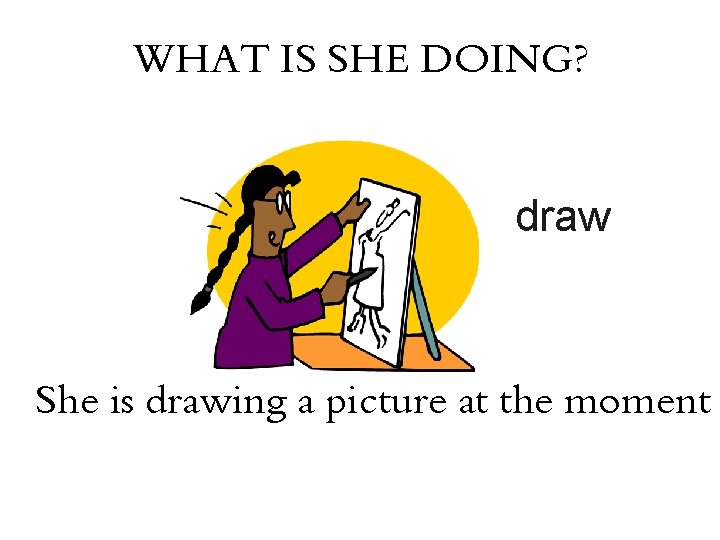
WHAT IS SHE DOING? draw She is drawing a picture at the moment
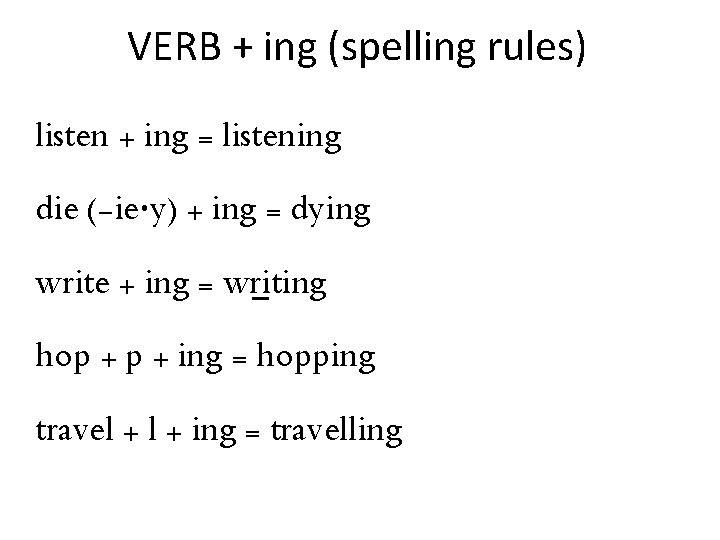
VERB + ing (spelling rules) listen + ing = listening die (-ie y) + ing = dying write + ing = writing hop + ing = hopping travel + ing = travelling
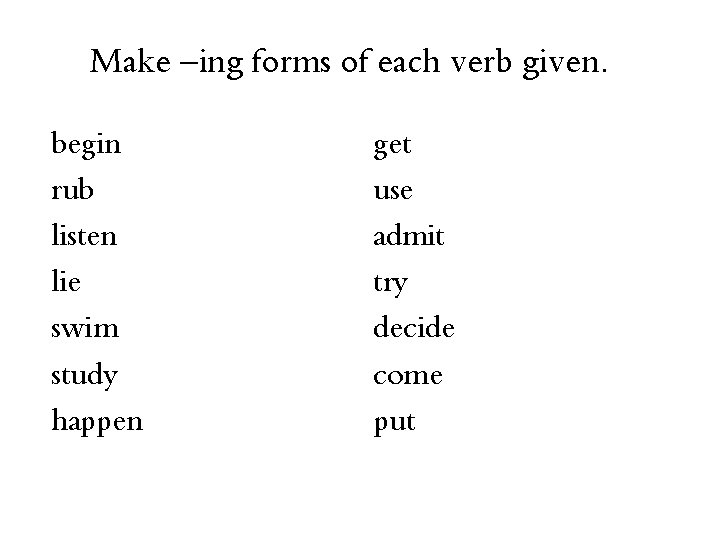
Make –ing forms of each verb given. begin rub listen lie swim study happen get use admit try decide come put
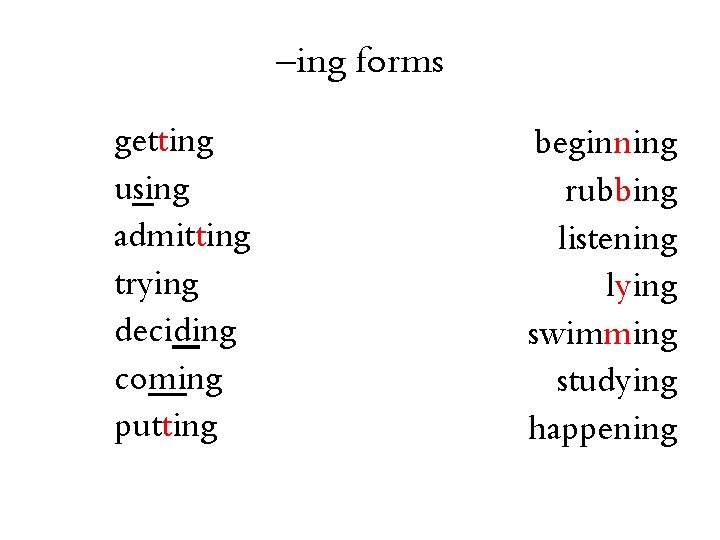
–ing forms getting using admitting trying deciding coming putting beginning rubbing listening lying swimming studying happening
The Present Continuous Tense is used for 1 - Actions which are happening at or around the moment of speaking Now I’m doing the washing up. She is working very hard nowadays. 2 - Temporary situations. I’m staying with a friend at the moment.
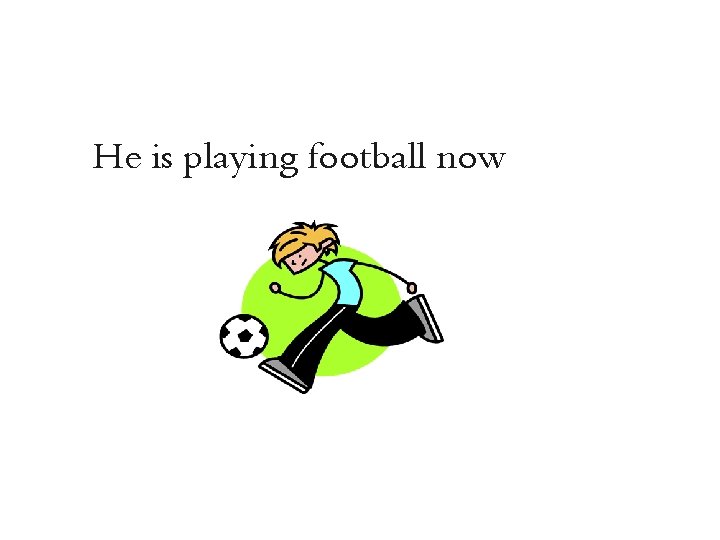
He is playing football now
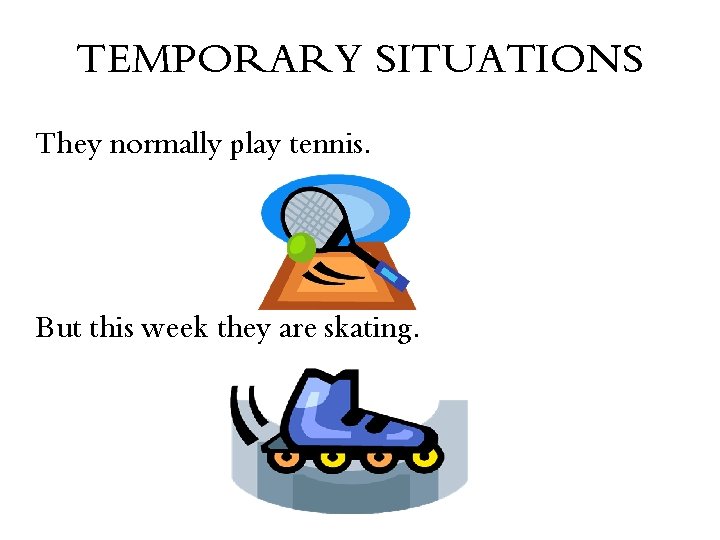
TEMPORARY SITUATIONS They normally play tennis. But this week they are skating.
3. Changing or developing situations. His English is getting better. It’s getting colder. 4. Fixed arrangements in the near future. They are getting married next week.
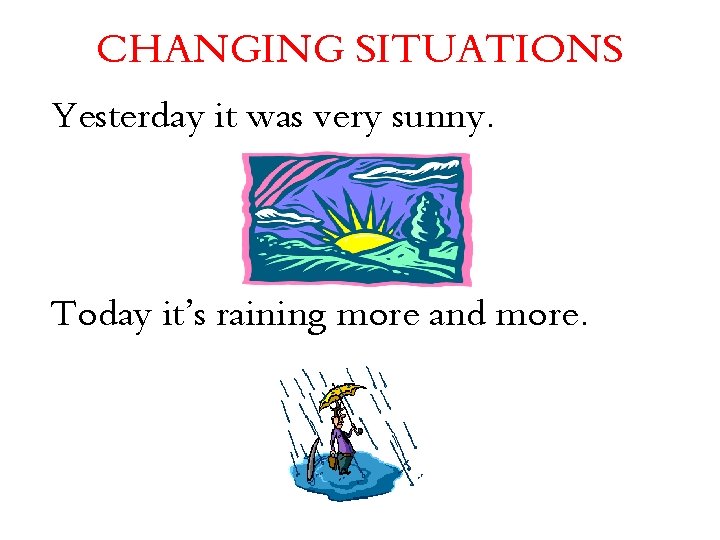
CHANGING SITUATIONS Yesterday it was very sunny. Today it’s raining more and more.
FUTURE ARRANGEMENTS They are celebrating a party next weekend.
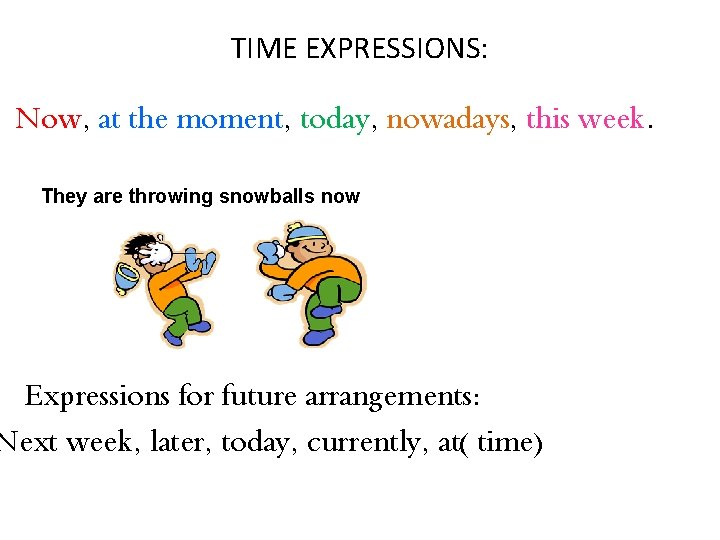
TIME EXPRESSIONS: Now, at the moment, today, nowadays, this week. They are throwing snowballs now Expressions for future arrangements: Next week, later, today, currently, at( time)
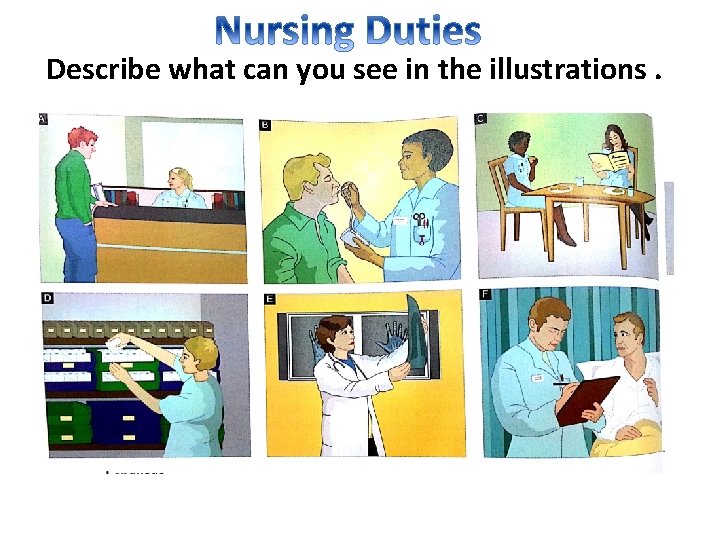
Describe what can you see in the illustrations.
A visitor is talking to a nurse at the nurse's station. A nurse is taking a patient's temperature. Two nurses are eating lunch in the nurses lounge. A nurse is looking for bandages in the clean supply room. A doctor is looking at an x-ray ( in the consulting room). A nurse is filling in a patient's temperature chart.