
The Present and Future of Hybrid and Electric
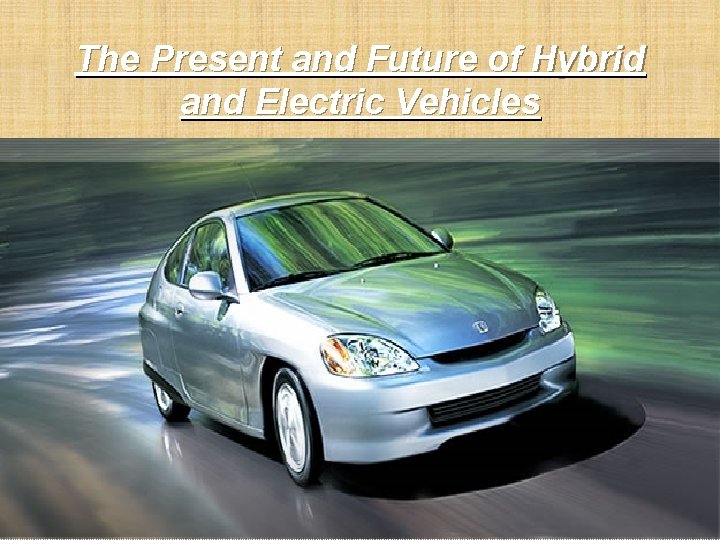
The Present and Future of Hybrid and Electric Vehicles
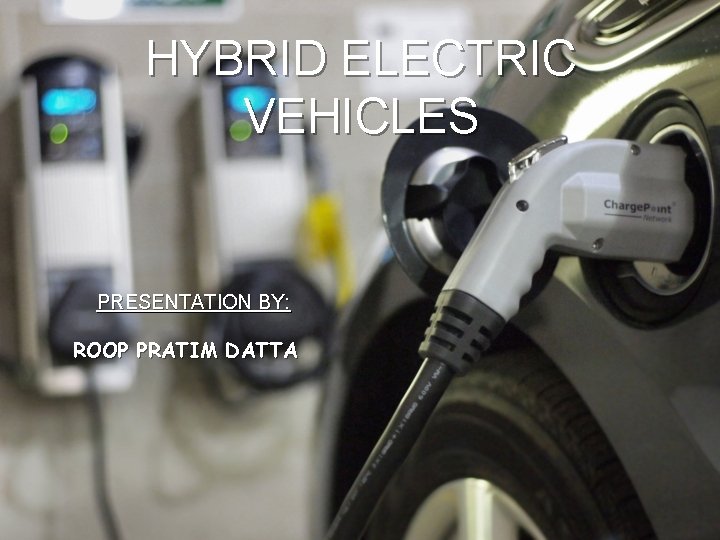
HYBRID ELECTRIC VEHICLES PRESENTATION BY: ROOP PRATIM DATTA
Presentation Outline – Why does society need/want hybrid and electric vehicles? – Current status of EV’s and HEV’s. – The general structure and functionality of HEV’s. – New developments and future technology of HEV’s.
The Need for Electric and Hybrid Electric Vehicles Environmental Concerns: Current use of heat-combustion engine is a major source of air pollution and may be a cause of global warming. Practical Concerns: Current conventional cars use a quickly decreasing source of fossil fuel. Although no one knows exactly how long the world’s supply of oil will last, most agree that it isn’t too far in the future that our current supply will be used up.

Americans will be routinely driving hybrid electric cars performing at 80 miles per gallon. Today's internalcombustion-engineonly vehicle will become an artifact of history. ” - Dan
The Benefits of EV’s and HEV’s compared with conventional vehicles – The electric motor is far more efficient (70%-85% efficiency) than the heat engine (30%-40%). – EV’s can use regenerative stopping (regain 30% of energy used, theoretically). – As mentioned already, HEV’s are more environmentally friendly and the oil supplies for conventional vehicles are being depleted.
THE ANATOMY :
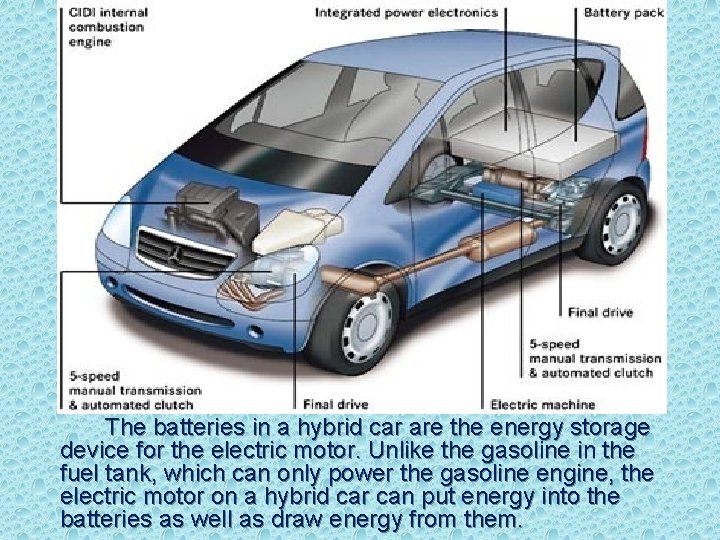
The batteries in a hybrid car are the energy storage device for the electric motor. Unlike the gasoline in the fuel tank, which can only power the gasoline engine, the electric motor on a hybrid car can put energy into the batteries as well as draw energy from them.
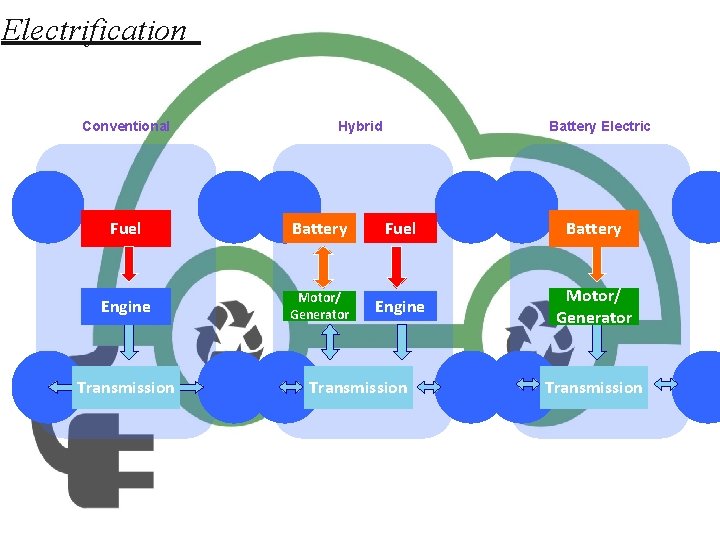
Electrification : Conventional Hybrid Battery Electric Fuel Battery Engine Motor/ Generator Transmission
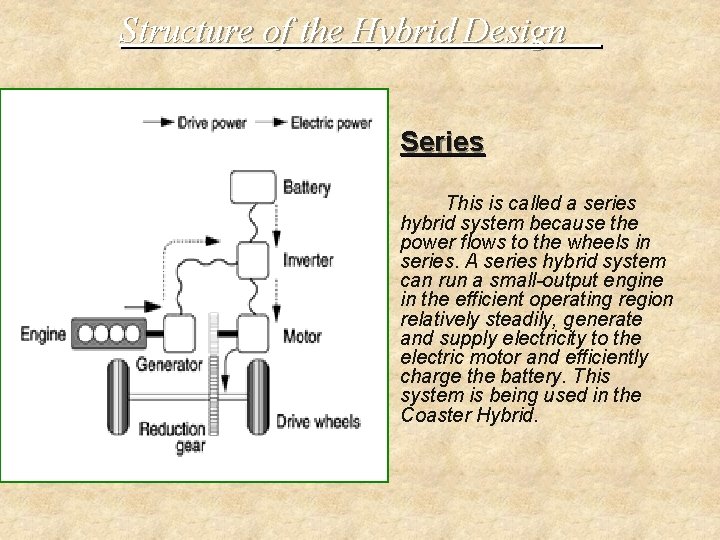
Structure of the Hybrid Design Series This is called a series hybrid system because the power flows to the wheels in series. A series hybrid system can run a small-output engine in the efficient operating region relatively steadily, generate and supply electricity to the electric motor and efficiently charge the battery. This system is being used in the Coaster Hybrid.
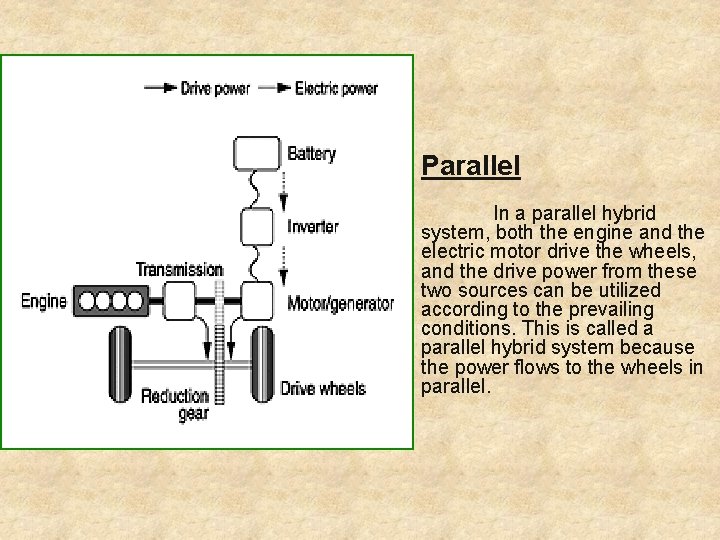
Parallel In a parallel hybrid system, both the engine and the electric motor drive the wheels, and the drive power from these two sources can be utilized according to the prevailing conditions. This is called a parallel hybrid system because the power flows to the wheels in parallel.
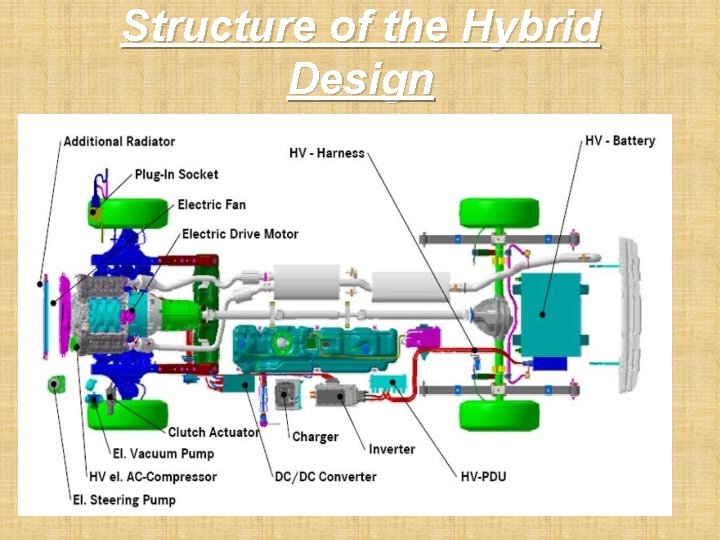
Structure of the Hybrid Design
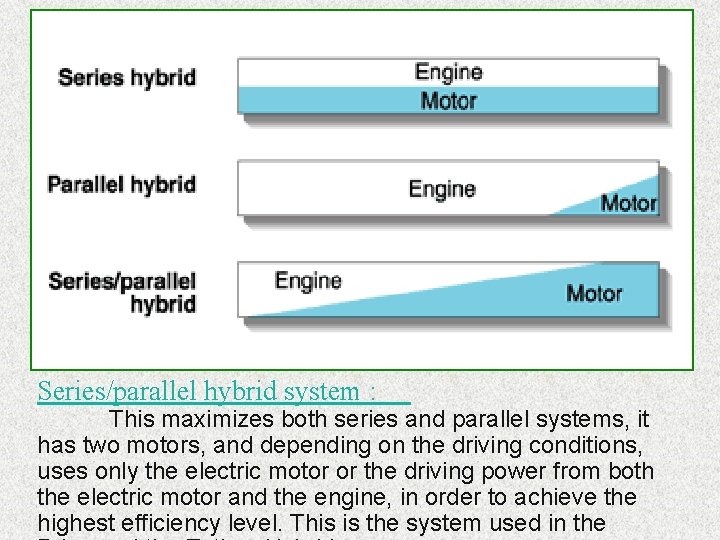
Series/parallel hybrid system : This maximizes both series and parallel systems, it has two motors, and depending on the driving conditions, uses only the electric motor or the driving power from both the electric motor and the engine, in order to achieve the highest efficiency level. This is the system used in the
Current Areas of Research Current research focusing on maximizing the efficiency – Reduce Mass. – Decrease material and manufacturing costs. – Improving the Hardware. – Battery – alternatives to/maximizing
The Nickel Metal Hydride Battery The Benefits – – hold twice as much energy as lead batteries have a longer life cycle require no maintenance the materials in them are far less toxic than the materials in regular car batteries. The Disadvantages – – – they can be heavy and bulky High price- as much as $5000. With sudden boom of hybrid cars, there is a supply shortage.
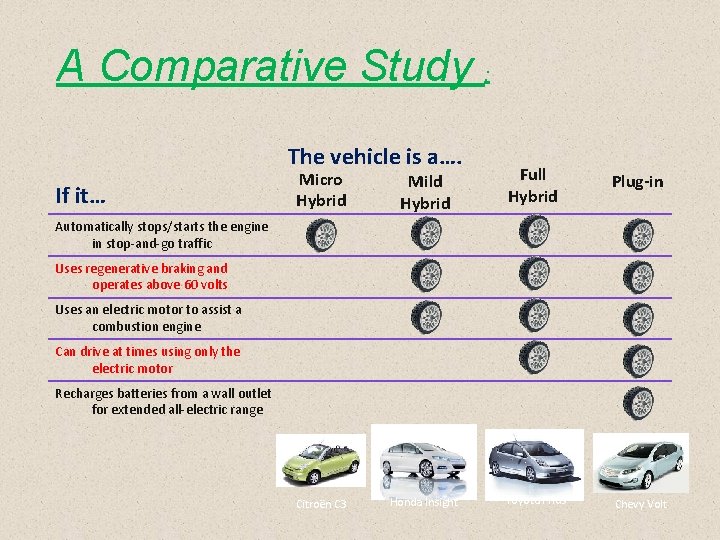
A Comparative Study : The vehicle is a…. If it… Micro Hybrid Mild Hybrid Citroën C 3 Honda Insight Full Hybrid Plug-in Toyota Prius Chevy Volt Automatically stops/starts the engine in stop-and-go traffic Uses regenerative braking and operates above 60 volts Uses an electric motor to assist a combustion engine Can drive at times using only the electric motor Recharges batteries from a wall outlet for extended all-electric range
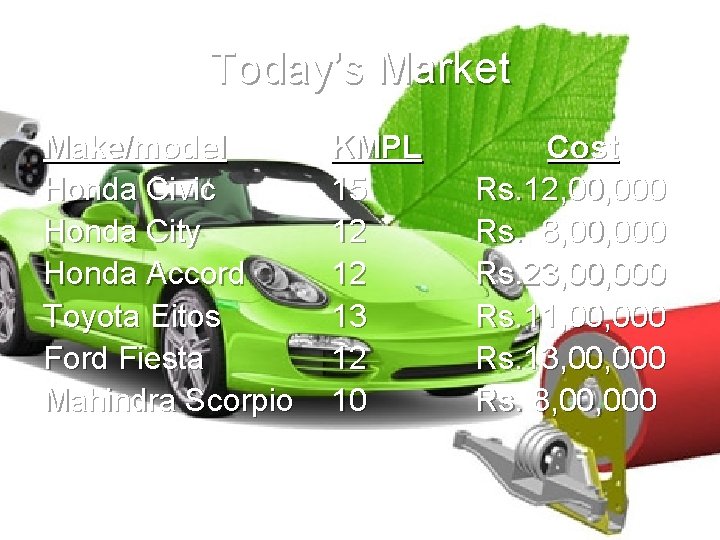
Today’s Market Make/model Honda Civic Honda City Honda Accord Toyota Eitos Ford Fiesta Mahindra Scorpio KMPL 15 12 12 13 12 10 Cost Rs. 12, 000 Rs. 8, 000 Rs. 23, 000 Rs. 11, 000 Rs. 13, 000 Rs. 8, 000
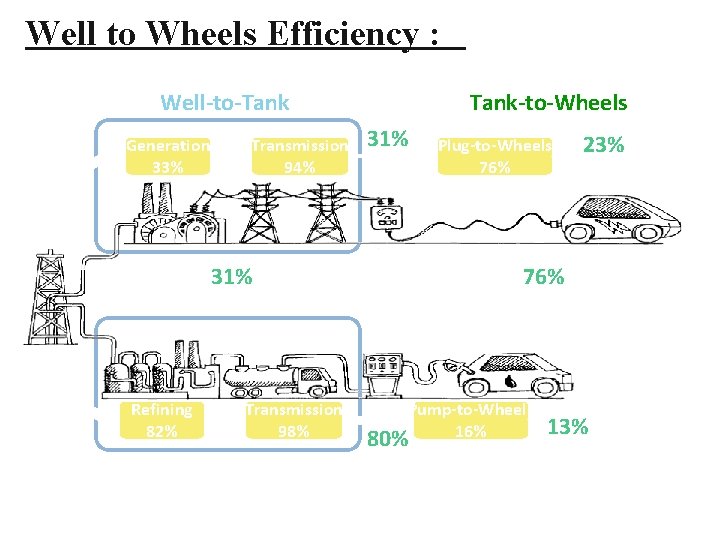
Well to Wheels Efficiency : Well-to-Tank Generation 33% Transmission 94% Tank-to-Wheels 31% Refining 82% Transmission 98% Plug-to-Wheels 76% 23% 76% Pump-to-Wheels 16% 80% 13%
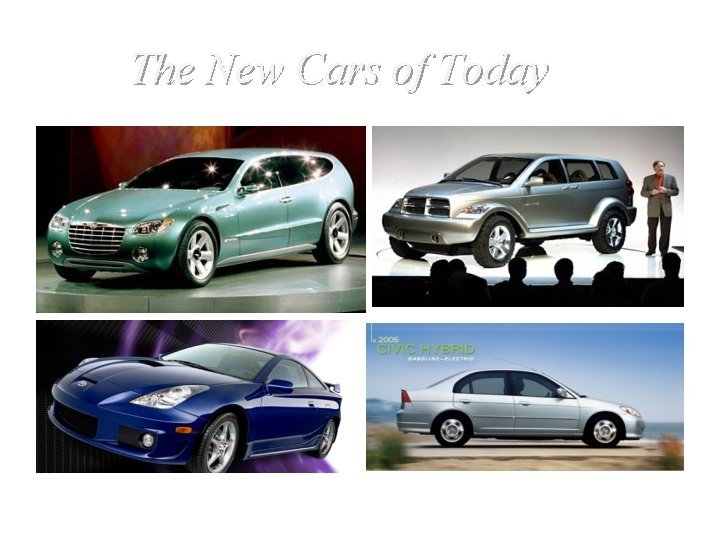
The New Cars of Today

Electric Vehicles Save Gas & Money; -Over $18, 000 potential savings:
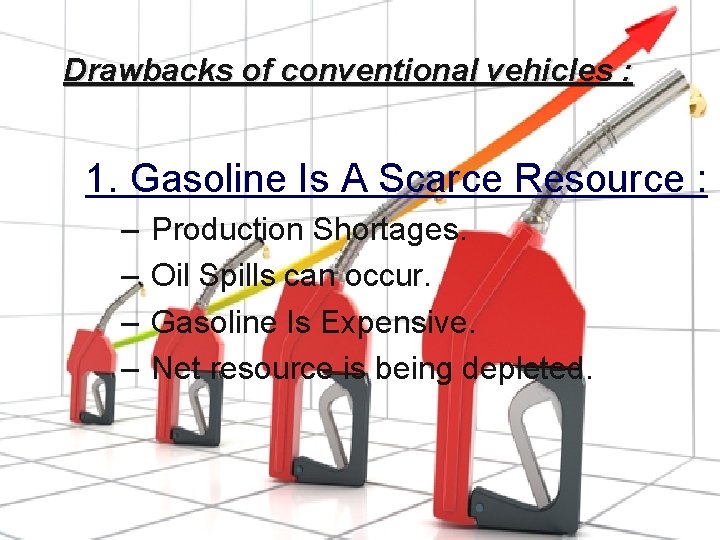
Drawbacks of conventional vehicles : 1. Gasoline Is A Scarce Resource : – – Production Shortages. Oil Spills can occur. Gasoline Is Expensive. Net resource is being depleted.

2. Heavy Reliance On Imports: – India only manufactures 10% of gasoline needed in India. – Heavy reliance on foreign countries. – Pricing is uncontrollable – Future availability may be limited especially with 3 rd world country expansion.

3. Creates Smog & Ozone in Big Cities : – Nitrogen oxides, the main source of urban smog. – Unburned hydrocarbons, the main source of urban ozone.
4. Creates Greenhouse Gases : - Carbon monoxide , a poisonous gas is one of the major “Greenhouse Gases”. - Greenhouse effects the planet, rising sea levels, flooding, etc. – The main source (95%) of carbon monoxide in our air is from vehicle emissions. (Per EPA studies)
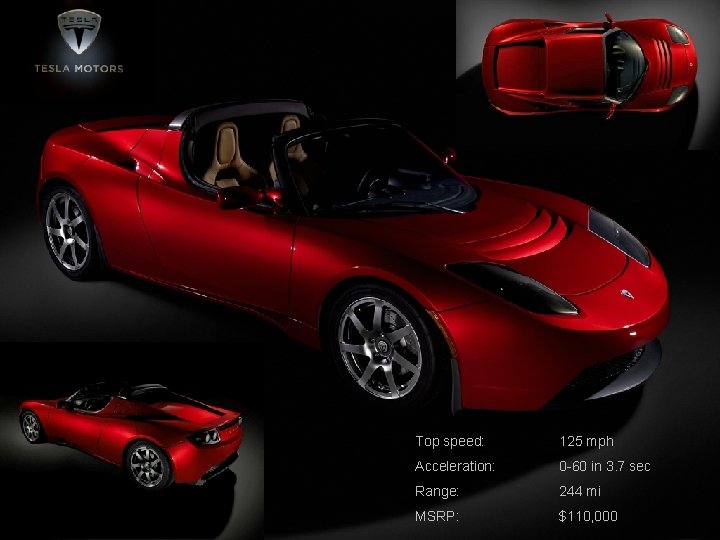
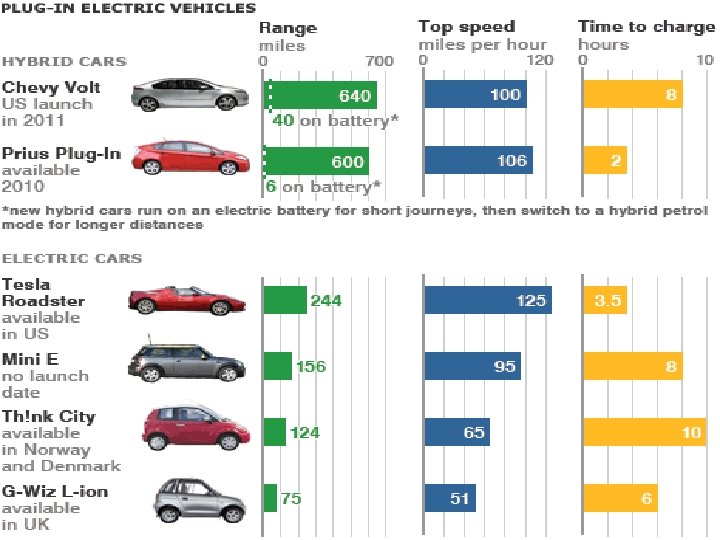
Tesla Roadster EVs 101 Top speed: 125 mph Acceleration: 0 -60 in 3. 7 sec Range: 244 mi MSRP: $110, 000
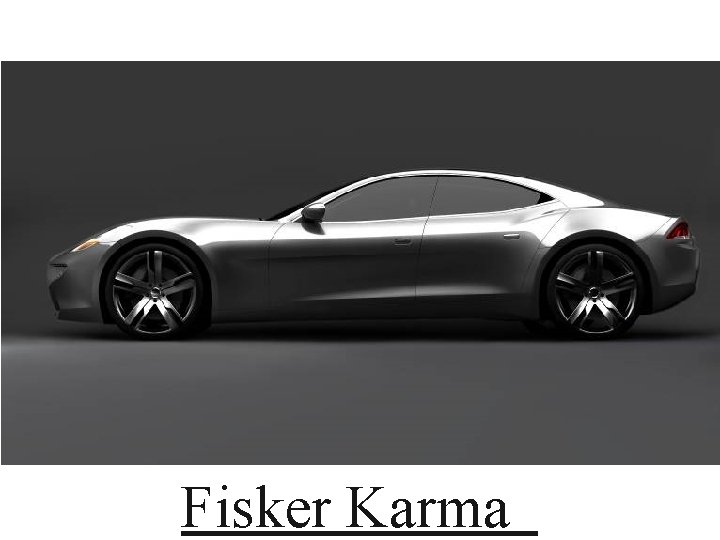
Fisker Karma
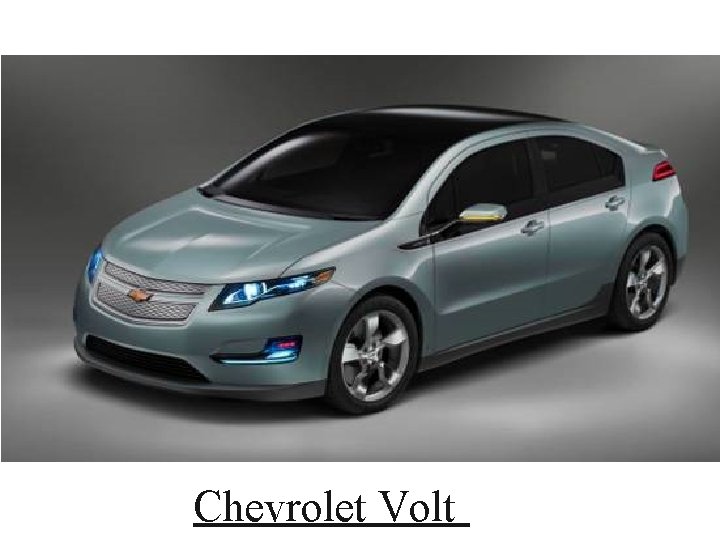
Chevrolet Volt

Conclusion : Hence , we see that the transportation system under electrical systems is far more efficient and eco-friendly than the prevalent model of the internal combustion engine based transportation system. Considering all the aspects of engineering and environment the forth coming decade will see a rise in the number of electrical vehicles and its users , be it the advanced countries like the United States of America or Canada , or be it the developing countries like India and China. The future belongs to the plethora of Electrical Engineering in many of its manifestations…………….

Go Green!!!! THANK YOU The future really is in our hands!
- Slides: 31