
The Power of Reading March 2018 The Power
- Slides: 13
The Power of Reading March 2018
The Power of Reading Website • Provides access to a bank of teaching sequences for nearly 200 children's books for all year groups in the primary phase. • Some free teaching sequences • Annual subscription: £ 300
Context • Read Write Inc phonics • Literature Circle model introduced in Year 2 • Literature Circle model using range of roles with progression from LKS 2 to UKS 2 well established
Rationale • Reading & writing results at KS 1 & KS 2 in line or above • Analysis of 2017 paper highlighted: – Children finding vocabulary questions more challenging – Greater focus on impact/effectiveness of language – Inference questions • Concern over progress of SEN/LA in comprehension of texts • Concern over writing stamina especially cross curricular • Previous focus on introducing new curriculum for maths with mixed-age classes rather than English • Over-reliance on a repetitive KS 2 Literacy scheme with lack of creativity
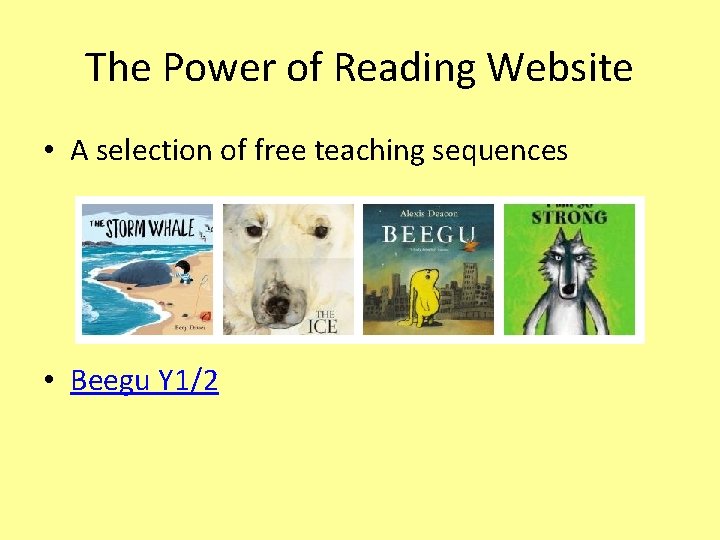
The Power of Reading Website • A selection of free teaching sequences • Beegu Y 1/2
Content of Teaching Sequences • Mapped to National Curriculum for: – word reading/comprehension – Transcription/composition – Speaking & listening – Cross Curricular Links
Content of Teaching Sequences eg Beegu Teaching Approaches: • • • Response to illustration Reading Aloud Book Talk Role-Play Visualisation Role on the Wall Shared Writing Hot-Seating Story Mapping Writing Outcomes • • • Writing in role Free verse poetry Instructional writing Letter Writing Playscript Guide to Earth
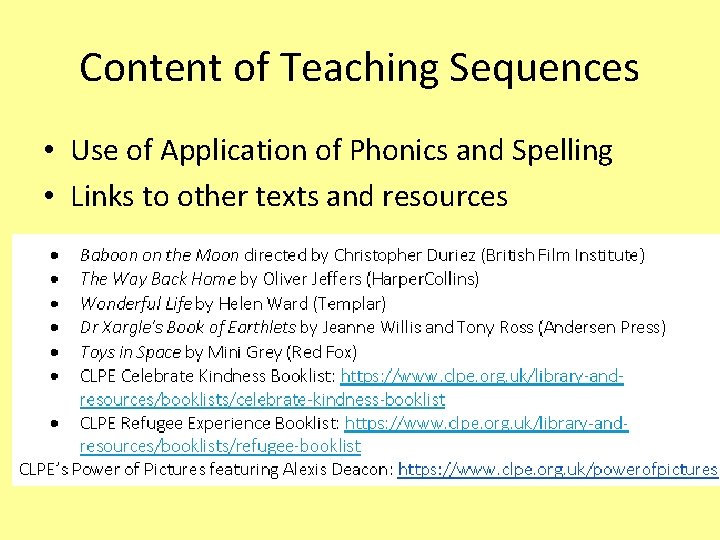
Content of Teaching Sequences • Use of Application of Phonics and Spelling • Links to other texts and resources
Content of Teaching Sequences • Individual session plans • Flexible to be adapted and tailored to needs of cohort
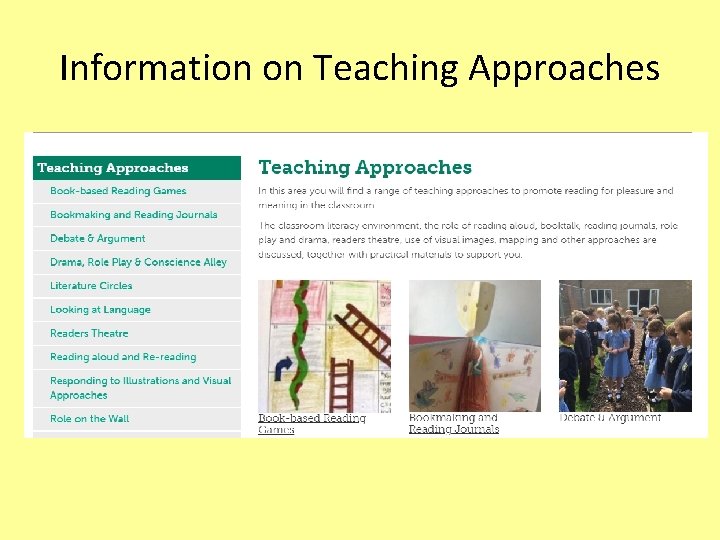
Information on Teaching Approaches
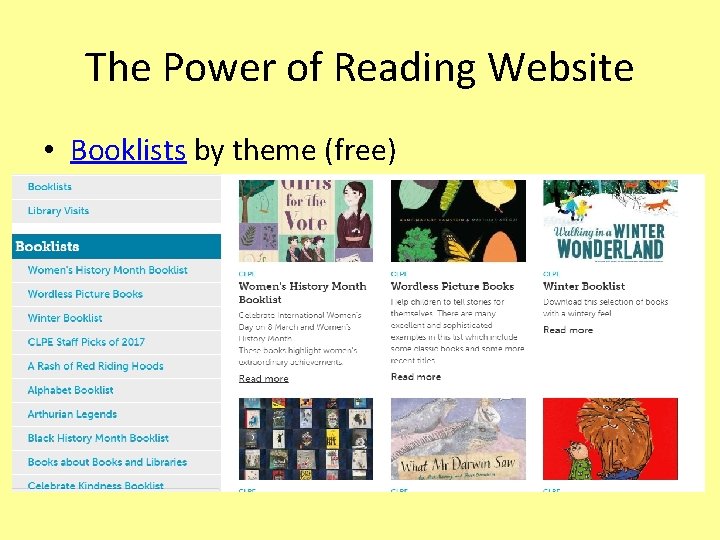
The Power of Reading Website • Booklists by theme (free)
Evaluation • • • Wide range of high-quality texts Mixture of familiar & new texts Creative approaches to writing Greater focus on purpose and audience in the writing tasks Cross curricular links – literacy more engaging Structure of sequences especially useful for less experienced teachers Works well for mixed-age planning Teachers reading aloud regularly to class Wider range of quality writing evident in children’s books Staff enthusiastic and inspired by the choice of texts: “ I love it!” UKS 2 especially positive about the whole class text & associated writing activities
Considerations • Availability of texts for a whole class • Amount of time needed to read chapters of KS 2 novels impacts on writing time • Some of the texts difficult to find