
The Power of Positive Thinking Keep your thoughts
- Slides: 29
The Power of Positive Thinking • • • Keep your thoughts positive because your thoughts become your words, Keep your words positive because your words become your behavior, Keep your behavior positive because your behavior becomes your habits, Keep your habits positive because your habits becomes your values, Keep your values positive because your values becomes your destiny. – Mahatma Gandhi
Benchmark Reading & Math Data Using Data To Enhance Instruction Gail White School Counselor Martin L. King, Jr. Elementary
Skills Measured Reading v Words and Phrases v Main Idea v Comparisons v Reference Research Math • Number Sense • Measurement • Geometry • Algebraic Thinking • Data Analysis
Understanding the Data
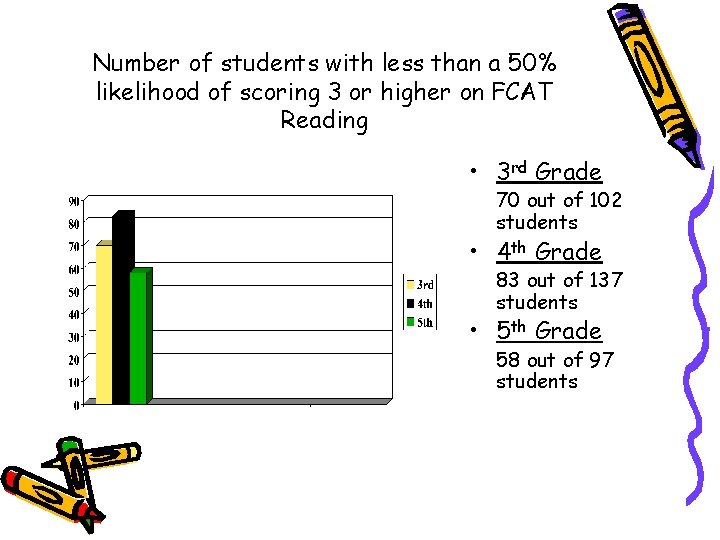
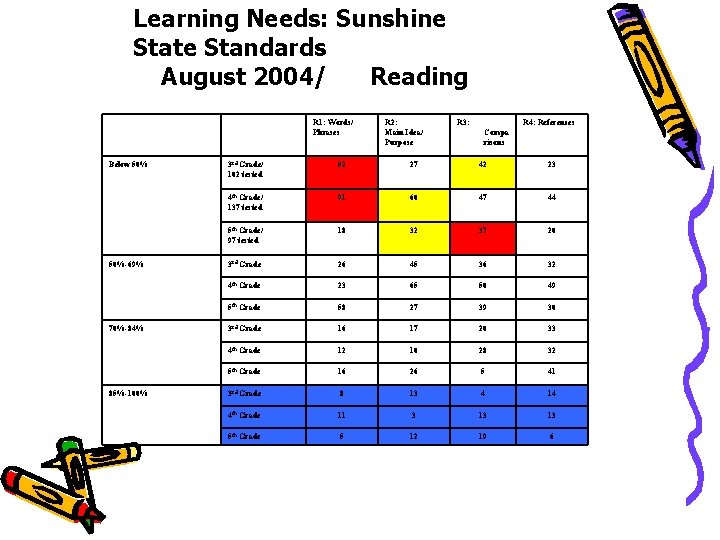
Number of students with less than a 50% likelihood of scoring 3 or higher on FCAT Reading • 3 rd Grade 70 out of 102 students • 4 th Grade 83 out of 137 students • 5 th Grade 58 out of 97 students
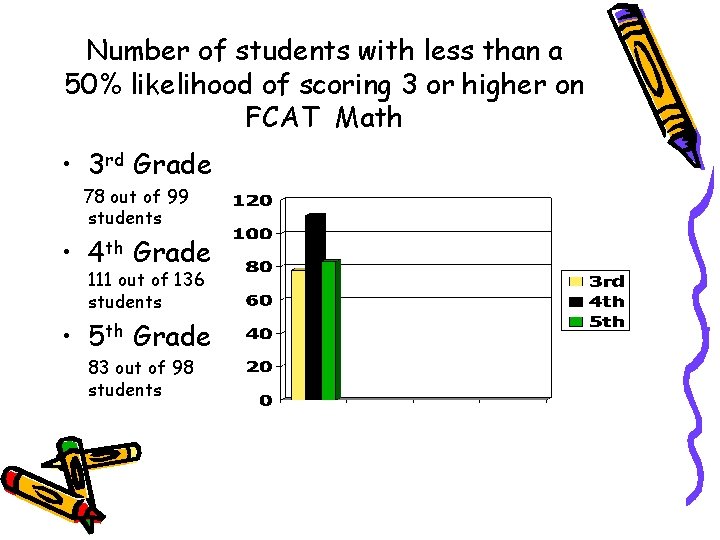
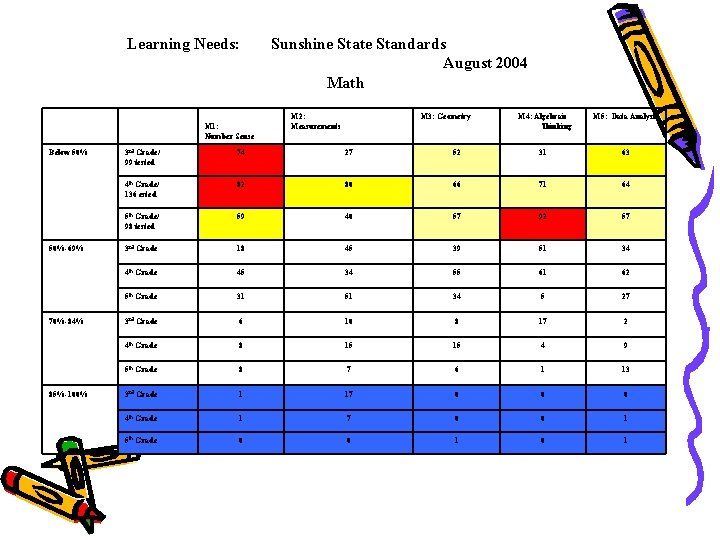
Number of students with less than a 50% likelihood of scoring 3 or higher on FCAT Math • 3 rd Grade 78 out of 99 students • 4 th Grade 111 out of 136 students • 5 th Grade 83 out of 98 students
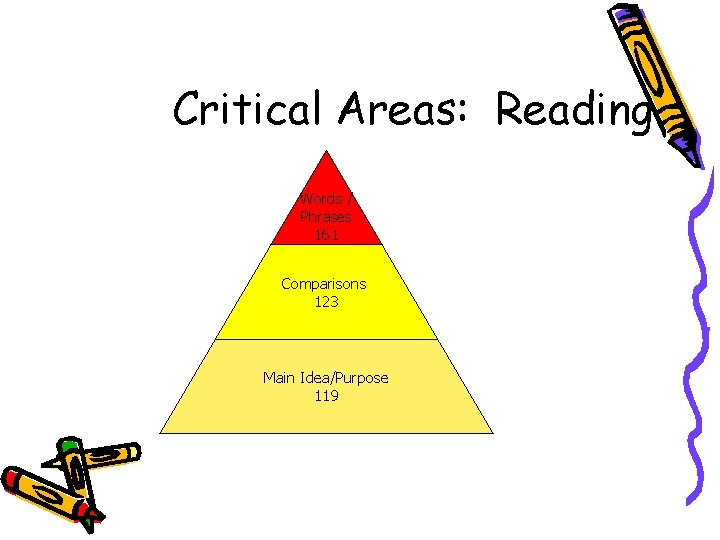
Critical Areas: Reading Words / Phrases 161 Comparisons 123 Main Idea/Purpose 119
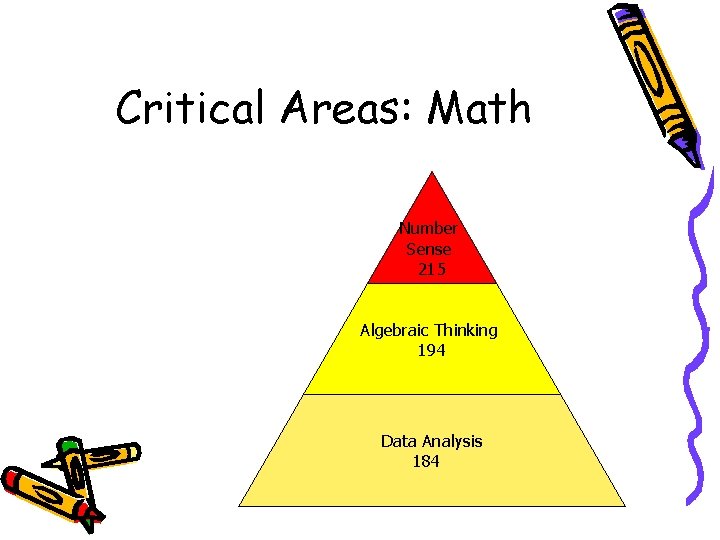
Critical Areas: Math Number Sense 215 Algebraic Thinking 194 Data Analysis 184
Where do we go from here? • How do we improve? (Research) • Developing strategies and action plans to meet the needs of students • Team Work: Grade level groups • Presentation of plans • Questions, comments, concerns
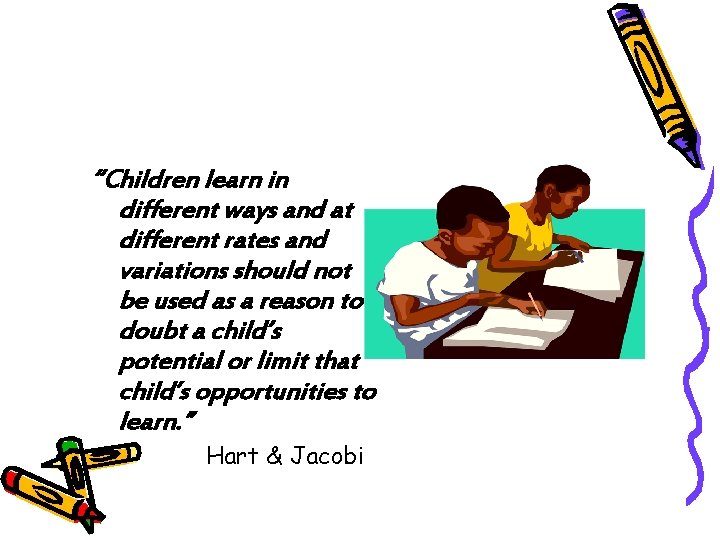
“Children learn in different ways and at different rates and variations should not be used as a reason to doubt a child’s potential or limit that child’s opportunities to learn. ” Hart & Jacobi
Research Instructional Strategies that Enhance Achievement Ø Getting and Sustaining Attention Ø Creating Meaning Ø Semantic Memory Ø Episodic Memory Ø Procedural Learning Ø Engaging Emotions
Getting and Sustaining Attention ü Change voice, tone, volume, accent, pace ü Use props (bells, costumes, music) ü Deliberate use of contrast (change location) ü Balance novelty and ritual ü Make students the main show
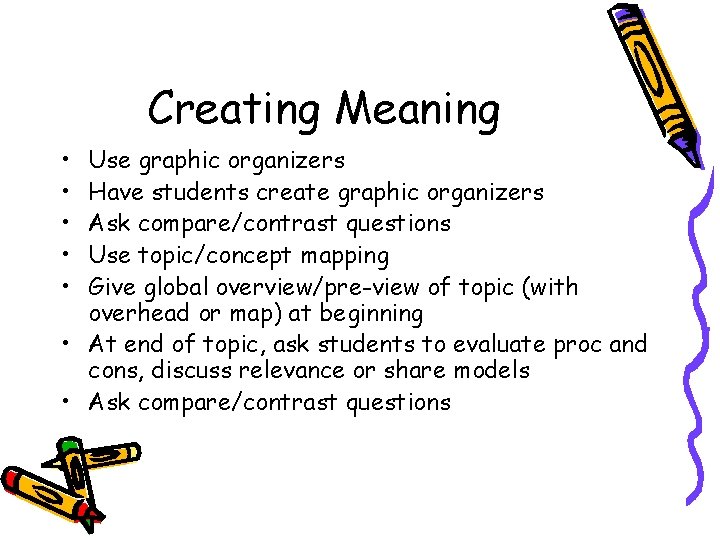
Creating Meaning • • • Use graphic organizers Have students create graphic organizers Ask compare/contrast questions Use topic/concept mapping Give global overview/pre-view of topic (with overhead or map) at beginning • At end of topic, ask students to evaluate proc and cons, discuss relevance or share models • Ask compare/contrast questions
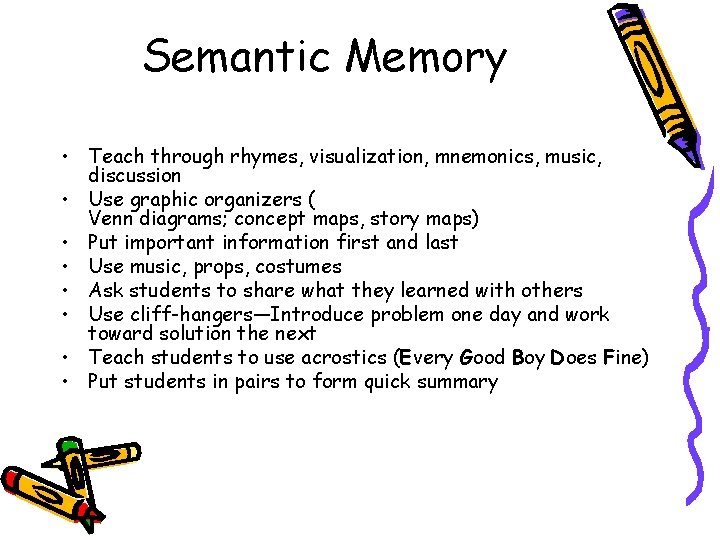
Semantic Memory • Teach through rhymes, visualization, mnemonics, music, discussion • Use graphic organizers ( Venn diagrams; concept maps, story maps) • Put important information first and last • Use music, props, costumes • Ask students to share what they learned with others • Use cliff-hangers—Introduce problem one day and work toward solution the next • Teach students to use acrostics (Every Good Boy Does Fine) • Put students in pairs to form quick summary
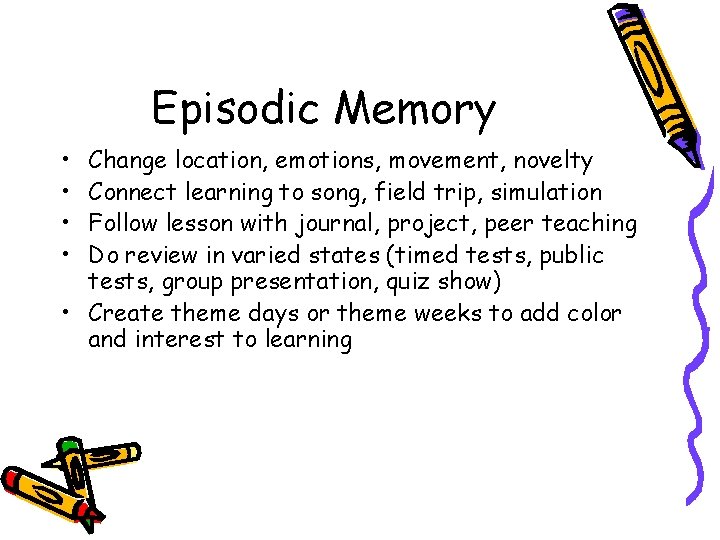
Episodic Memory • • Change location, emotions, movement, novelty Connect learning to song, field trip, simulation Follow lesson with journal, project, peer teaching Do review in varied states (timed tests, public tests, group presentation, quiz show) • Create theme days or theme weeks to add color and interest to learning
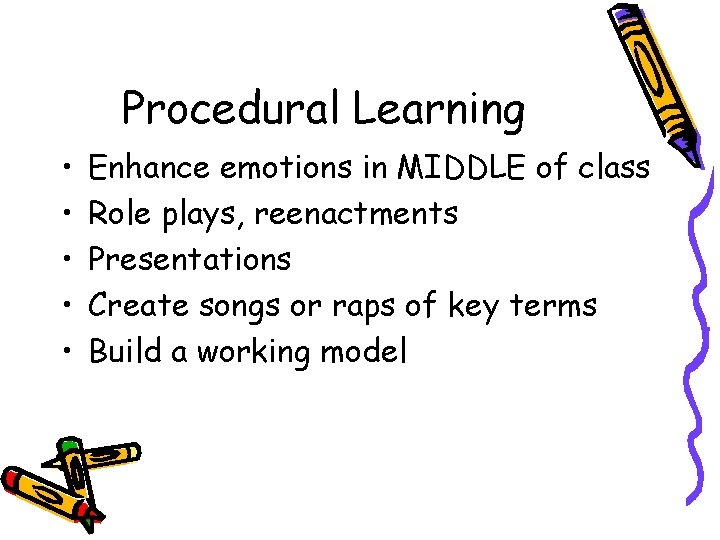
Procedural Learning • • • Enhance emotions in MIDDLE of class Role plays, reenactments Presentations Create songs or raps of key terms Build a working model
Engaging Emotions • Use celebrations (high fives, food, music, laughter) • Use controversy (debated, dialogue, argument) • Use physical rituals (chants, cheers, clapping patterns, movements) • Do shared work (partners, think/pair/share) • Use movement (improvisation, dance, quiz show games, rap, stretching, pretend) • Engage emotions as part of learning (e. g. games, music, drama)
Characteristic of good teachers • Stay on students • Able to control behavior AND focus on lesson • Goes out of the way to provide help • Explains until the “light bulb” goes on • Provides a variety of activities through which to learn • Is connected to students (the relationship is important)
Students Value Teachers Who… “Nagging” students communicates a teacher believes the student can succeed and cares enough to make sure the work is done. These teachers: • Regularly check work • Provide a regular and visible accounting of missing work • Call students’ homes to make sure they complete their work • Act as cheerleader, encourager
Students Value Teachers Who… • “A good teacher takes time out to see if all the kids have what they’re talking about…and cares how they’re doing and will see if they need help. ”
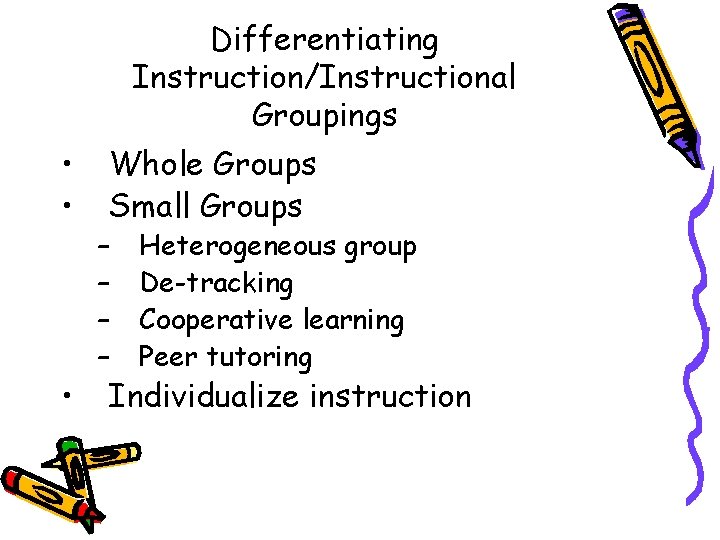
Differentiating Instruction/Instructional Groupings • • • Whole Groups Small Groups – – Heterogeneous group De-tracking Cooperative learning Peer tutoring Individualize instruction
Let’s Review the DATA • Each number represent a child.
Learning Needs: Sunshine State Standards August 2004/ Reading R 1: Words/ Phrases Below 50%-69% 70%-84% 85%-100% R 2: Main Idea/ Purpose R 3: R 4: References Compa risons 3 rd Grade/ 102 tested 52 27 42 23 4 th Grade/ 137 tested 91 60 47 44 5 th Grade/ 97 tested 18 32 37 20 3 rd Grade 26 45 36 32 4 th Grade 23 65 50 49 5 th Grade 58 27 39 30 3 rd Grade 16 17 20 33 4 th Grade 12 10 28 32 5 th Grade 16 26 5 41 3 rd Grade 8 13 4 14 4 th Grade 11 3 13 13 5 th Grade 5 12 19 6
Learning Needs: M 1: Number Sense Below 50%-69% 70%-84% 85%-100% Sunshine State Standards August 2004 Math M 2: Measurements M 3: Geometry M 4: Algebraic Thinking M 5: Data Analysis 3 rd Grade/ 99 tested 74 27 52 31 63 4 th Grade/ 136 ested 82 80 66 71 64 5 th Grade/ 98 tested 59 40 57 92 57 3 rd Grade 18 45 39 51 34 4 th Grade 45 34 55 61 62 5 th Grade 31 51 34 5 27 3 rd Grade 6 10 8 17 2 4 th Grade 8 15 15 4 9 5 th Grade 8 7 6 1 13 3 rd Grade 1 17 0 0 0 4 th Grade 1 7 0 0 1 5 th Grade 0 0 1
Introducing. . . • A DATA Collection Form to help you differentiate instruction based upon each student needs.
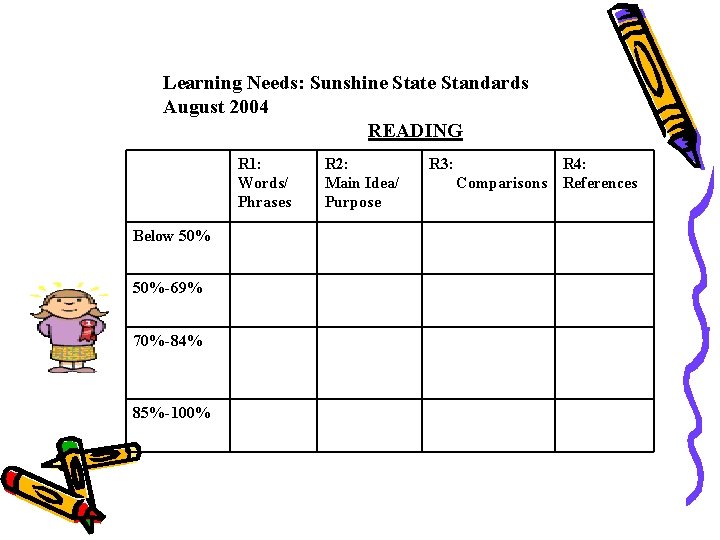
Learning Needs: Sunshine State Standards August 2004 READING R 1: Words/ Phrases Below 50%-69% 70%-84% 85%-100% R 2: Main Idea/ Purpose R 3: R 4: Comparisons References
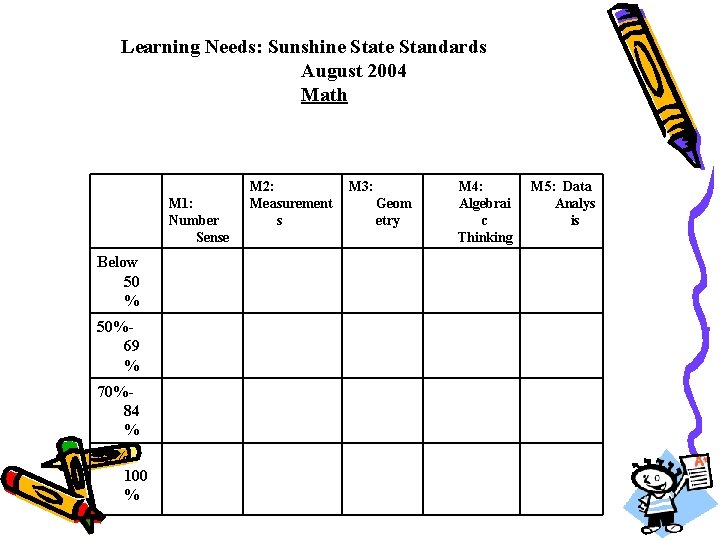
Learning Needs: Sunshine State Standards August 2004 Math M 1: Number Sense Below 50 % 50%69 % 70%84 % 85%100 % M 2: Measurement s M 3: Geom etry M 4: Algebrai c Thinking M 5: Data Analys is
Which child do you stand for? • “A hundred years from now it will not matter what my bank account was, the sort of house I lived in, or the kind of car I drove…But the world may be different because I was important in the life of a child. ”
References • Hart, P. J. , & Jacobi, M. (1992). From gatekeeper to advocate: Transforming the role of the school counselor. New York: The College Board, obtained through The Achievement Council. (420 Wilshire Blvd. Suite 420, Los Angeles, CA 90010, 231 -487 -3194, fax 213 -487 -0879). • Jensen, E. (1998). Teaching with the brain in mind. Alexandria, VA: Association for Supervision and Curriculum Development • Wilson, B. & Corbrett, H. (2001). Listening to Urban Kids. Albany, NY: SUNY Press.