
The Power of Inelastic Neutron Scattering Vibrational Spectroscopy
The Power of Inelastic Neutron Scattering Vibrational Spectroscopy of hydrogen, applications to catalysis AJ (Timmy) Ramirez-Cuesta ISIS Facility Rutherford Appleton Laboratory STFC

Rutherford Appleton Lab (on a sunny day!) Diamond ISIS Facility Central Laser Facility
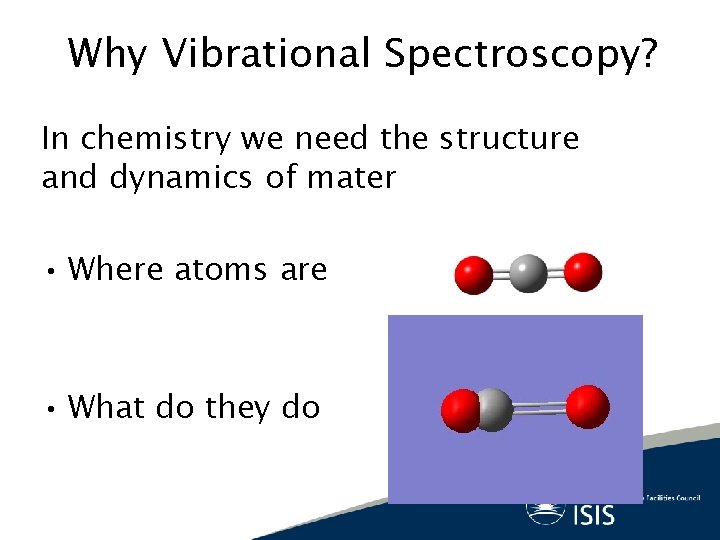
Why Vibrational Spectroscopy? In chemistry we need the structure and dynamics of mater • Where atoms are • What do they do
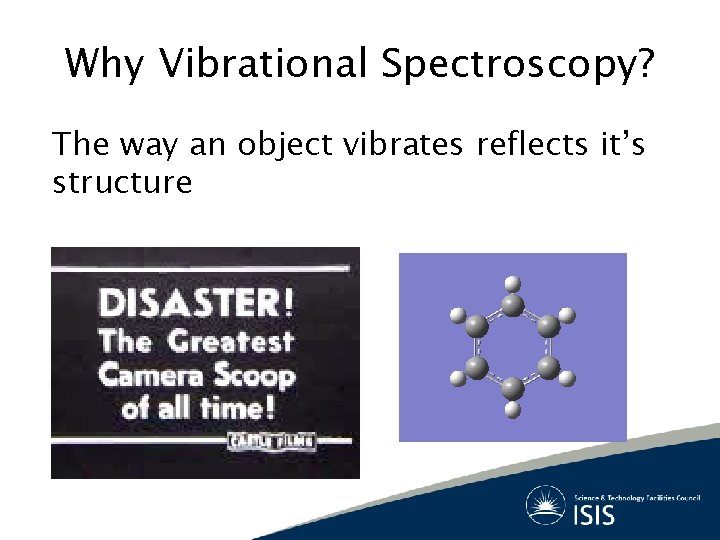
Why Vibrational Spectroscopy? The way an object vibrates reflects it’s structure

How do atoms move? • In a molecule containing N atoms there are, in principle, 3 N degrees of freedom. • There are 3 translations and 3 rotations of the whole molecule • Consequently there are 3 N-6 motions that are not translations or rotations. (A linear molecule the number is 3 N 5)

How do atoms move? We call these motions are called the Normal Modes of vibration For example, in water there are:
What are Normal Modes • In the harmonic approximation, a Normal Mode is a vibrational state in which atoms move in simple harmonic motion around their equilibrium positions. • Any possible internal motion of the molecule can be described by a superposition of Normal Modes
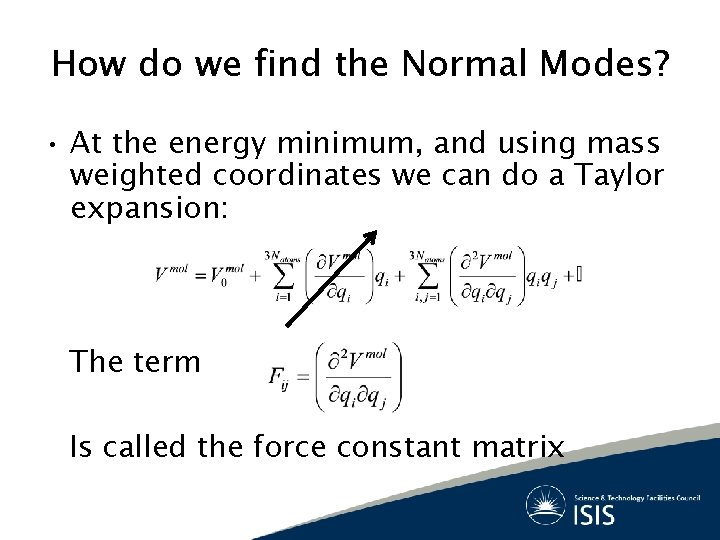
How do we find the Normal Modes? • At the energy minimum, and using mass weighted coordinates we can do a Taylor expansion: The term Is called the force constant matrix
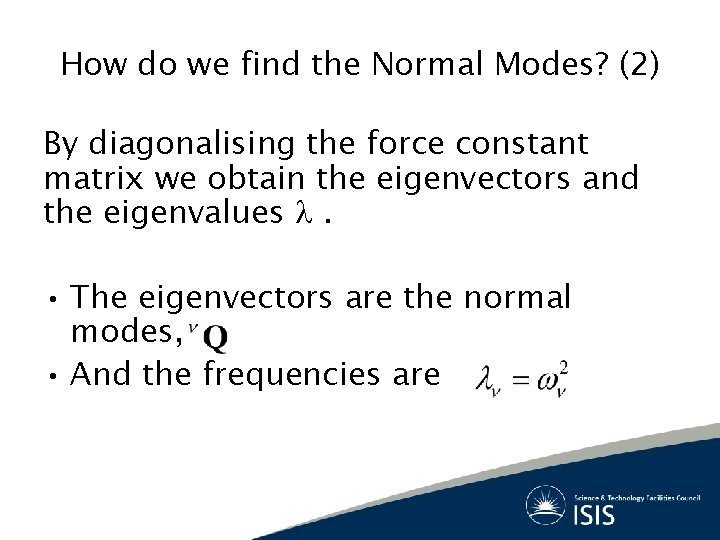
How do we find the Normal Modes? (2) By diagonalising the force constant matrix we obtain the eigenvectors and the eigenvalues . • The eigenvectors are the normal modes, • And the frequencies are
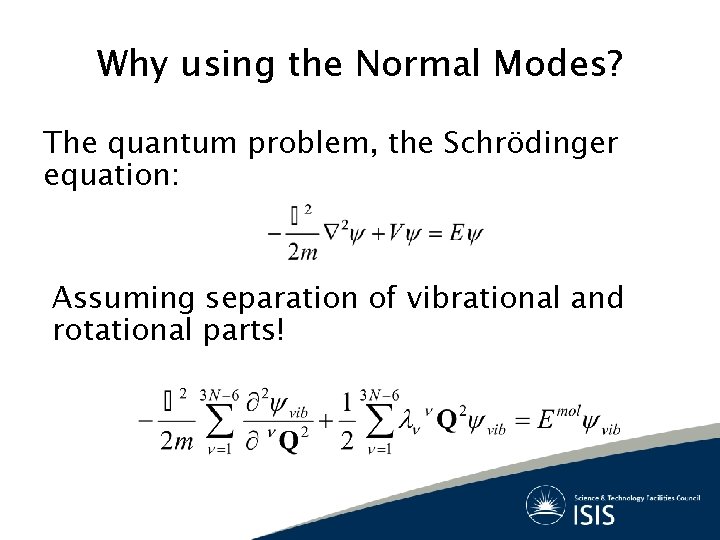
Why using the Normal Modes? The quantum problem, the Schrödinger equation: Assuming separation of vibrational and rotational parts!
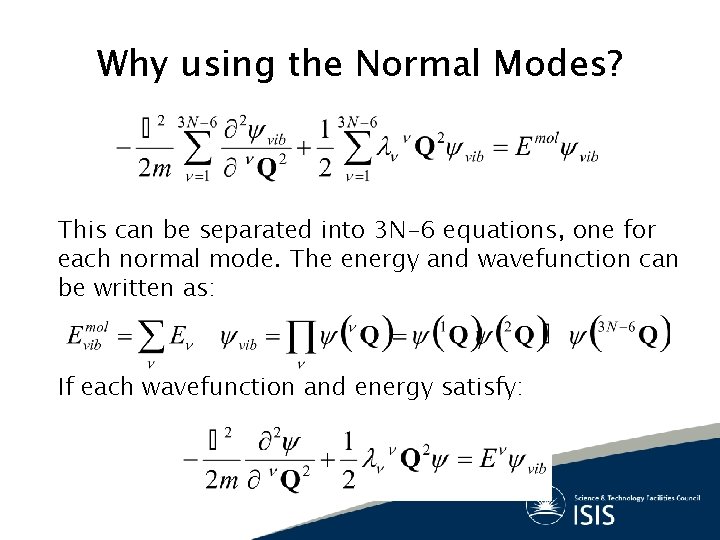
Why using the Normal Modes? This can be separated into 3 N-6 equations, one for each normal mode. The energy and wavefunction can be written as: If each wavefunction and energy satisfy:
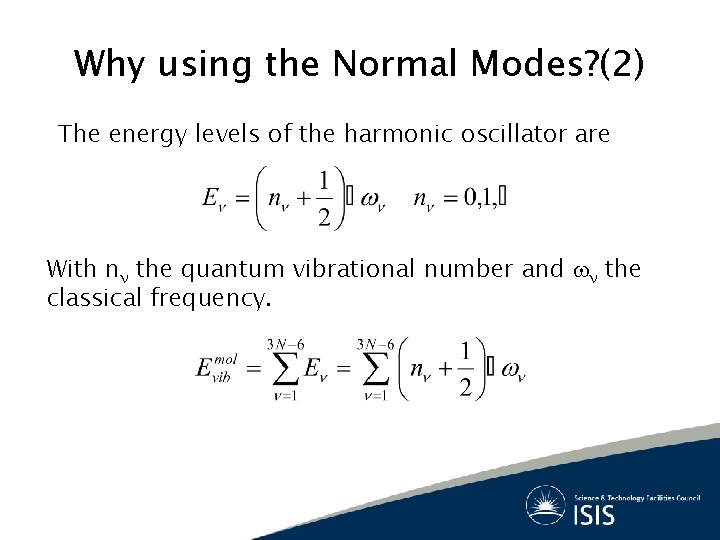
Why using the Normal Modes? (2) The energy levels of the harmonic oscillator are With n the quantum vibrational number and the classical frequency.
The Vibrational Problem in the Solid State • In the solid state, the periodicity of the lattice create phonon dispersion effects. • The normal modes are now different on each point of the first Brillouin zone • The total number of vibrations is 3 N, of which, 3 are acoustic modes and 3 N-3 are called optical modes. • DFPT allows the calculation of the normal modes for an arbitrary point in the Brillouin zone by interpolation.
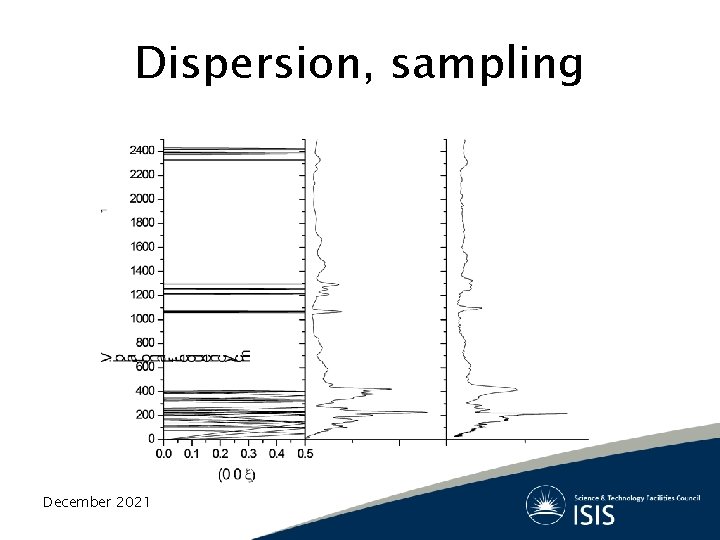
Dispersion, sampling December 2021
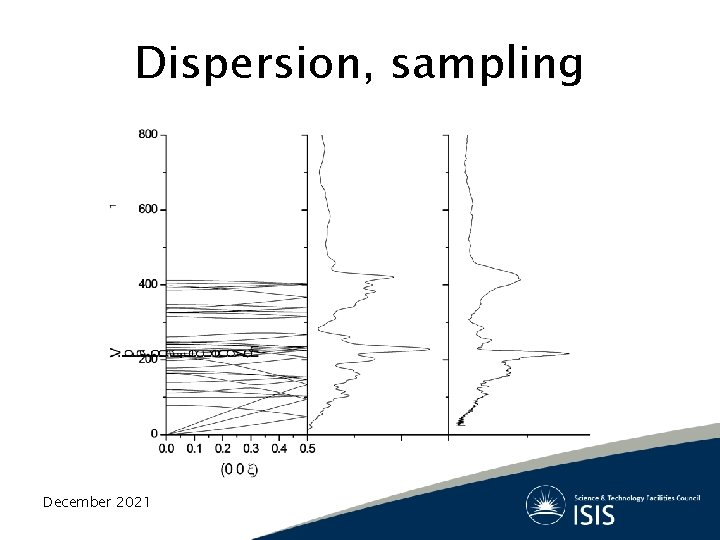
Dispersion, sampling December 2021
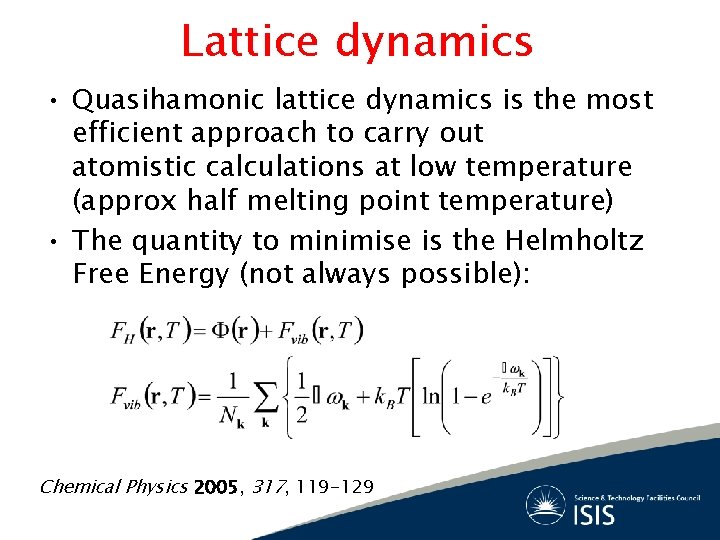
Lattice dynamics • Quasihamonic lattice dynamics is the most efficient approach to carry out atomistic calculations at low temperature (approx half melting point temperature) • The quantity to minimise is the Helmholtz Free Energy (not always possible): Chemical Physics 2005, 317, 119 -129
How do we probe the vibrations? • We need a probe to excite one of the vibrational energy levels. • We can use photons and neutrons – Using photons we have IR and Raman spectroscopy – Using neutrons we have Inelastic Neutron Scattering INS
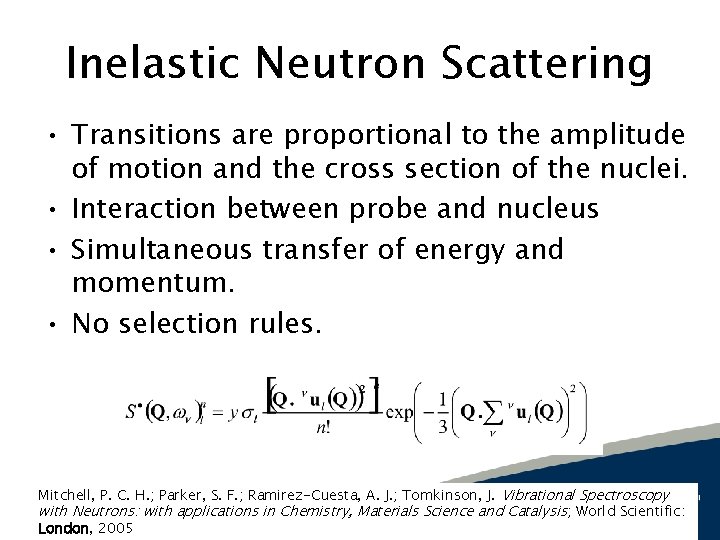
Inelastic Neutron Scattering • Transitions are proportional to the amplitude of motion and the cross section of the nuclei. • Interaction between probe and nucleus • Simultaneous transfer of energy and momentum. • No selection rules. Mitchell, P. C. H. ; Parker, S. F. ; Ramirez-Cuesta, A. J. ; Tomkinson, J. Vibrational Spectroscopy with Neutrons: with applications in Chemistry, Materials Science and Catalysis; World Scientific: London, 2005
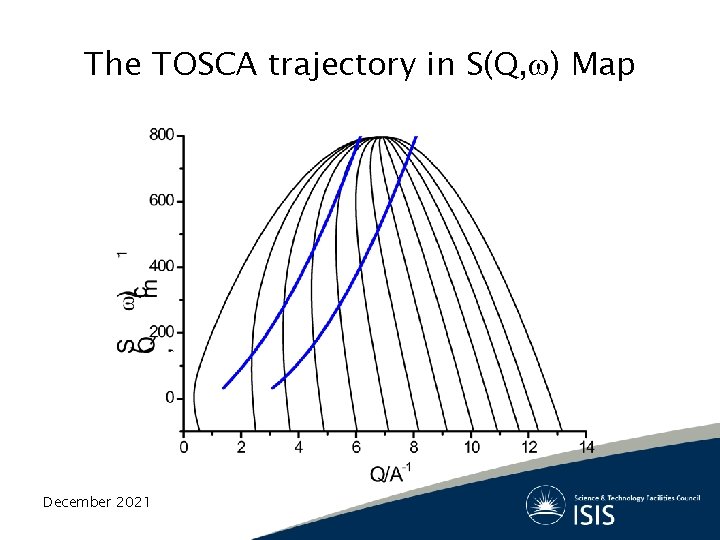
The TOSCA trajectory in S(Q, ) Map December 2021
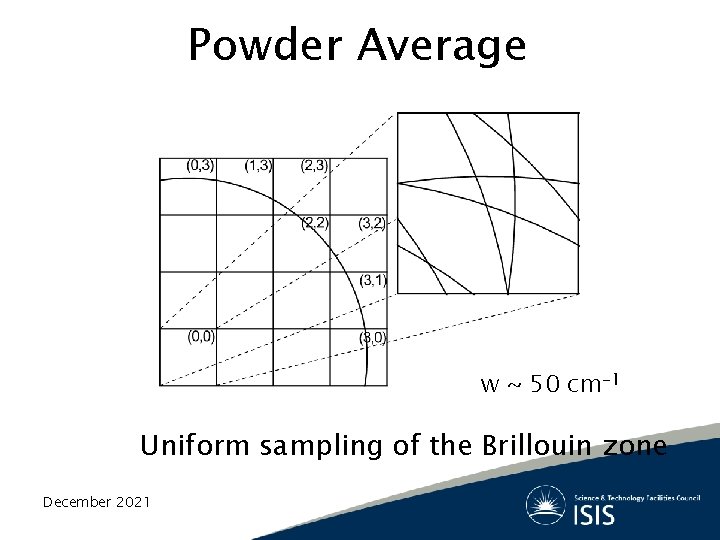
Powder Average w ~ 50 cm-1 Uniform sampling of the Brillouin zone December 2021
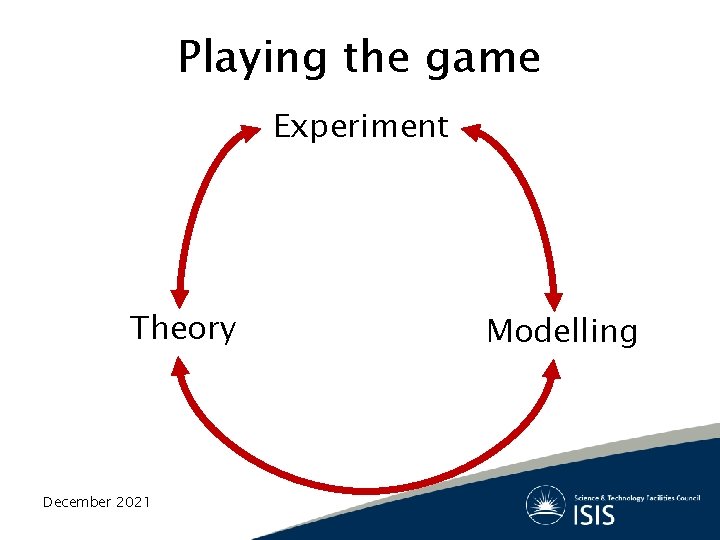
Playing the game Experiment Theory December 2021 Modelling
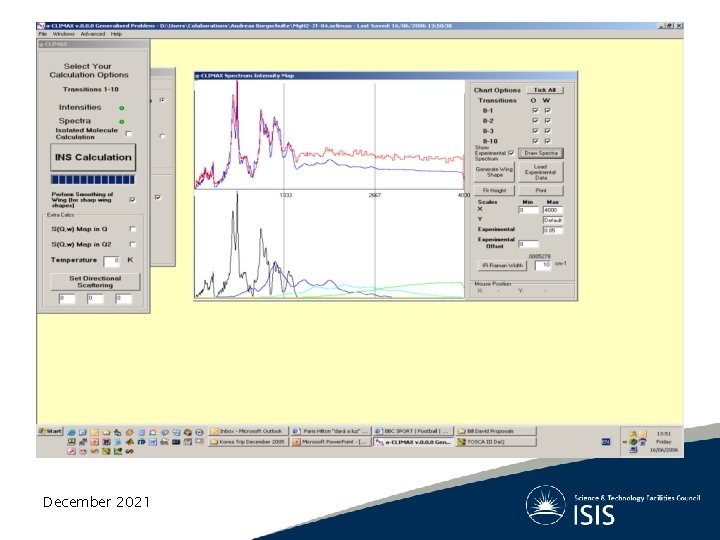
Calculation of INS spectra a-CLIMAX • It uses the isolated molecule approach for the study of molecular solids. • For extended solid calculations, with a fine sampling of the Brillouin zone the approximation is not longer necessary since there is no distinction between external and internal modes. Computer Physics Communications 2004, 157, 226 -238
DFT calculations • For the calculations shown in this talk I have used CASTEP from Accelrys • Interpolation algorithms of the dynamical matrix allow the sampling of the Brillouin zone with different grid sizes.
December 2021
Calculation of INS spectra • The normal modes are calculated for a large grid of points in the reciprocal space. In the example we mention here the lattice was sampled as a 16 x 32 grid (the symmetry of the system makes that number substantially smaller). • The INS spectra is generated from the eigenvectors and eigenvalues on every point in the grid. December 2021
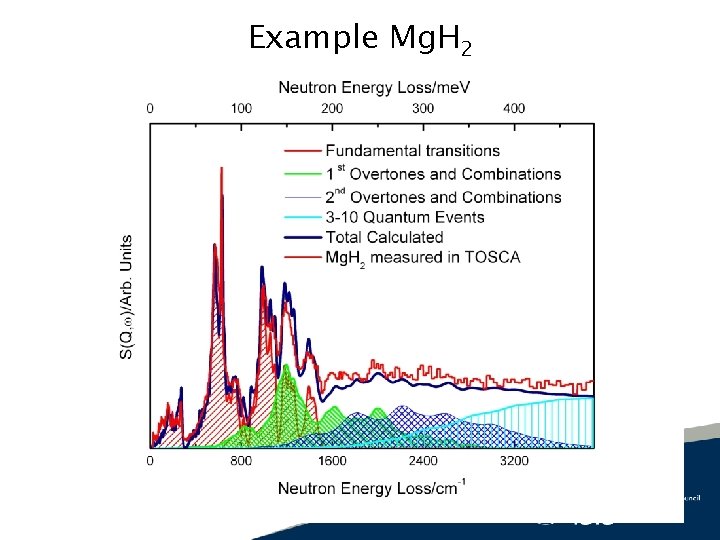
Example Mg. H 2 December 2021
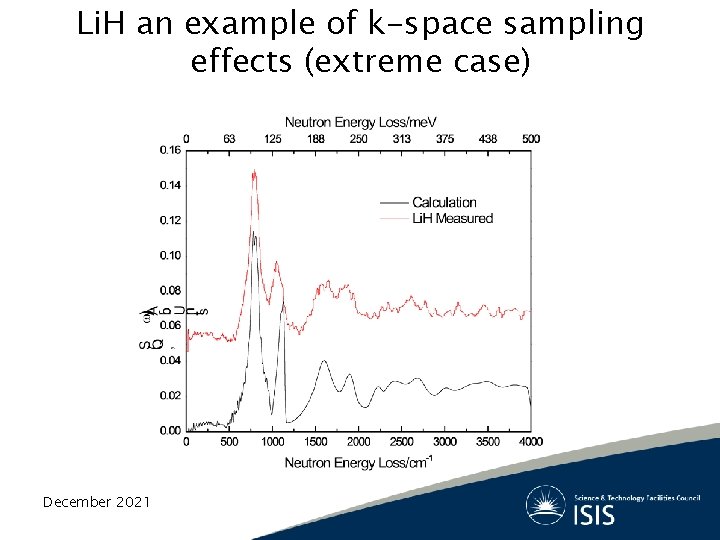
Li. H an example of k-space sampling effects (extreme case) December 2021
Li. H an example of k-space sampling effects December 2021
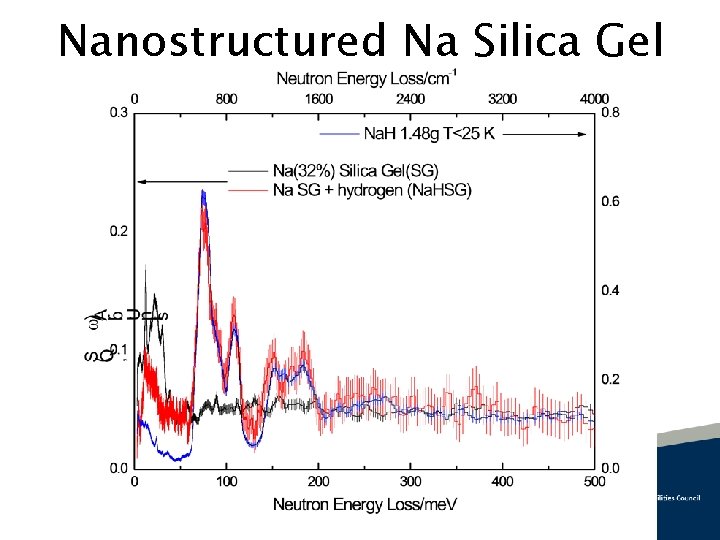
Na Silica Gel/Na. H SG The size of the nanoparticles has to be larger than 16 x 16 X 16 Journal of Cluster Science, 21, 543 -549, 2010
Raney Ni
Raney Ni
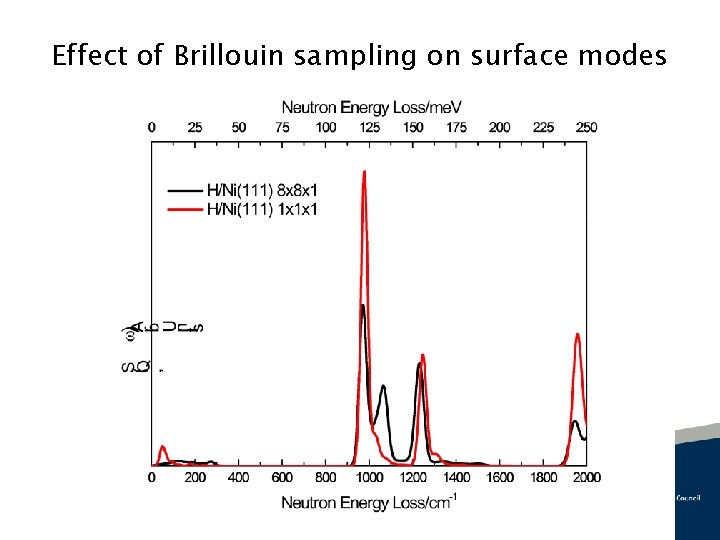
Effect of Brillouin sampling on surface modes

Raney Ni
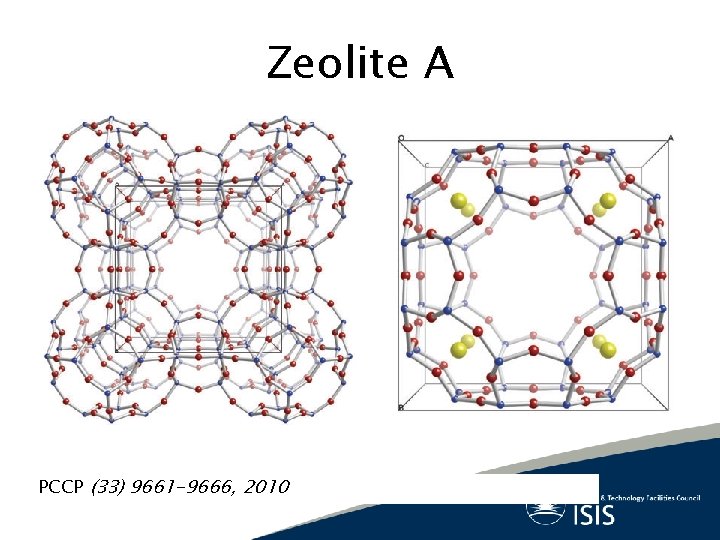
Zeolite A PCCP (33) 9661 -9666, 2010
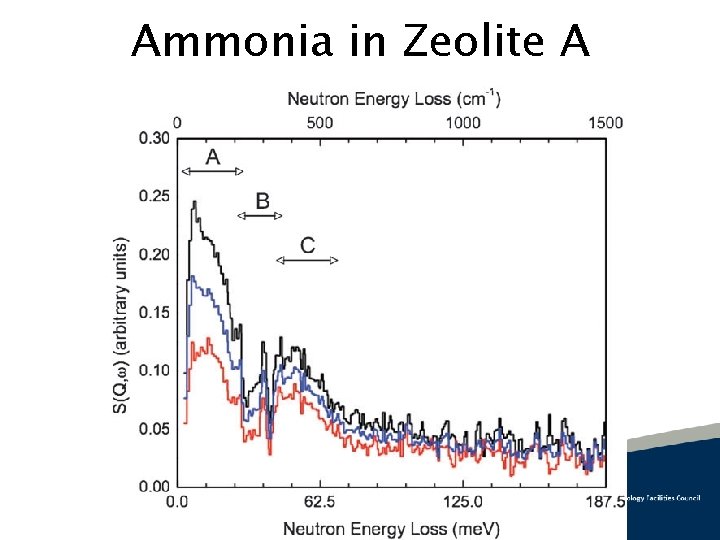
Ammonia in Zeolite A
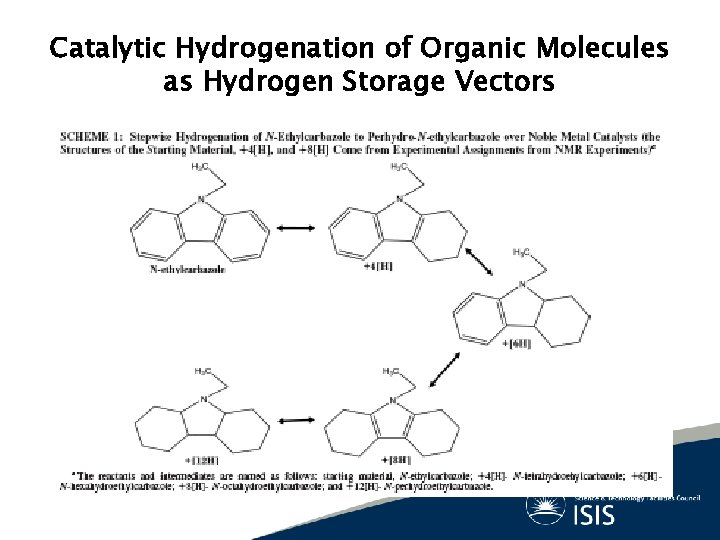
Catalytic Hydrogenation of Organic Molecules as Hydrogen Storage Vectors
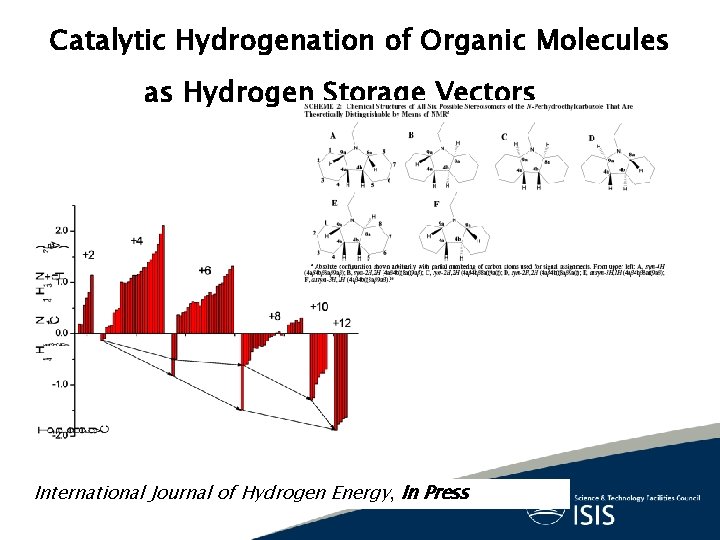
Catalytic Hydrogenation of Organic Molecules as Hydrogen Storage Vectors International Journal of Hydrogen Energy, In Press
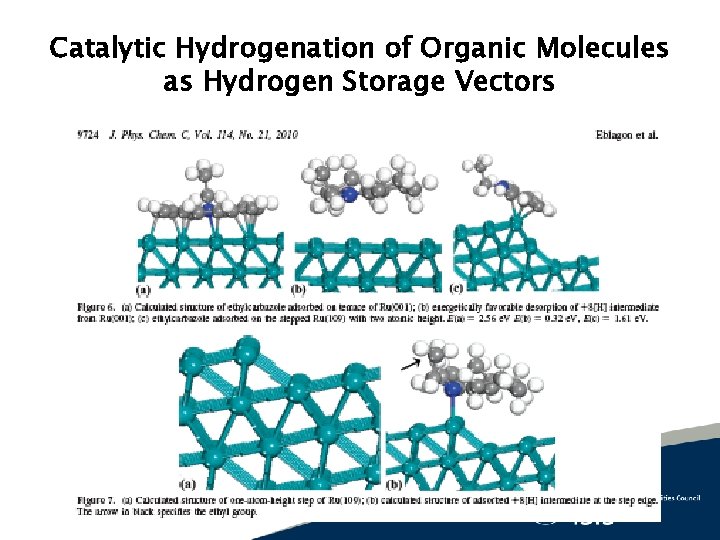
Catalytic Hydrogenation of Organic Molecules as Hydrogen Storage Vectors
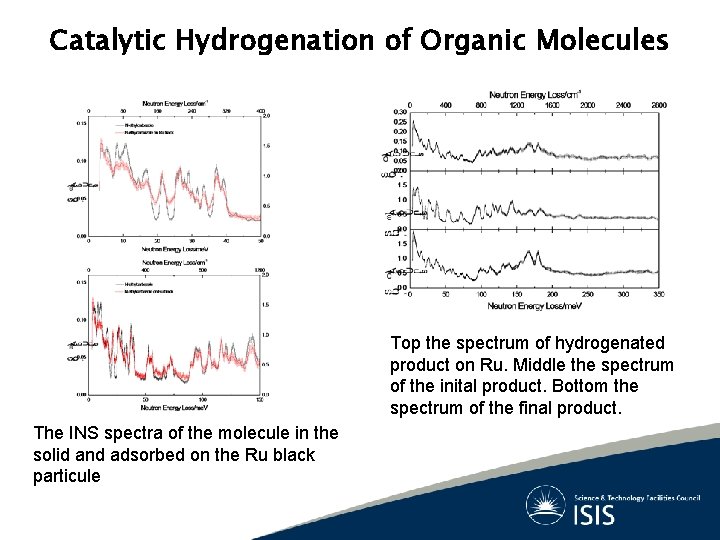
Catalytic Hydrogenation of Organic Molecules Top the spectrum of hydrogenated product on Ru. Middle the spectrum of the inital product. Bottom the spectrum of the final product. The INS spectra of the molecule in the solid and adsorbed on the Ru black particule
Acknowledgements • Keith Refson (STFC) • Kasia Morawa Eblagon, Edman Tsang (Oxford) • Peter Albers (Aqura) • Stewart Parker (STFC) • Peter Edwards, Asel Sartvaeva, Andrew Seel, Martin Owen Jones (Oxford)



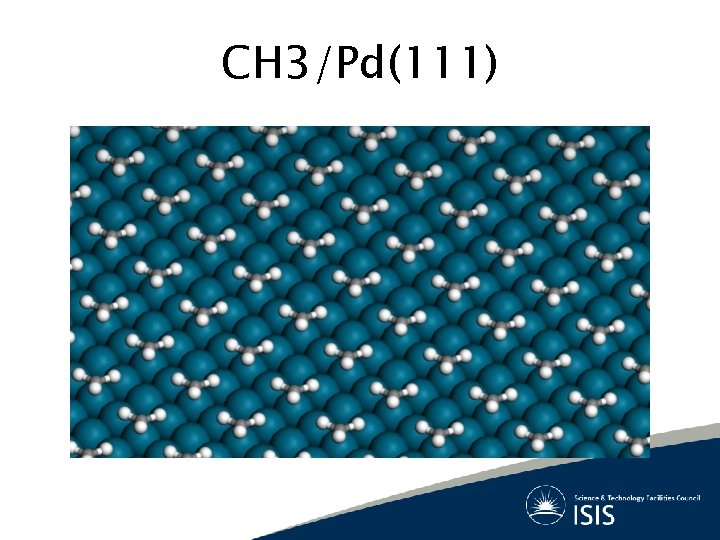
CH 3/Pd(111)
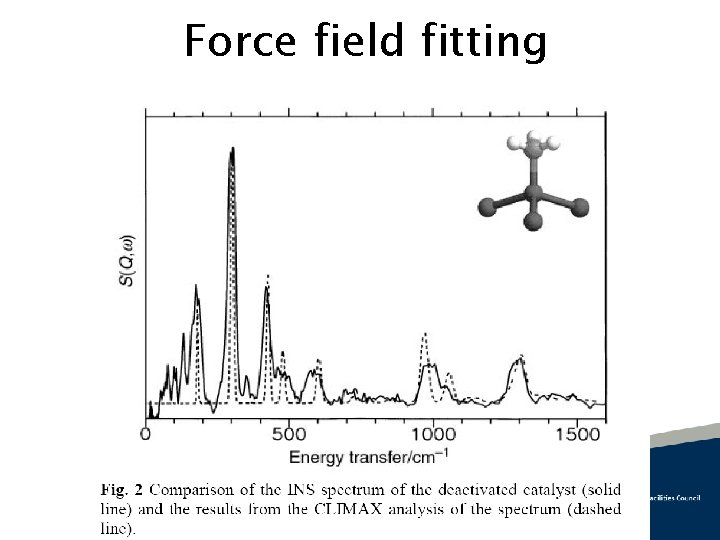
Force field fitting
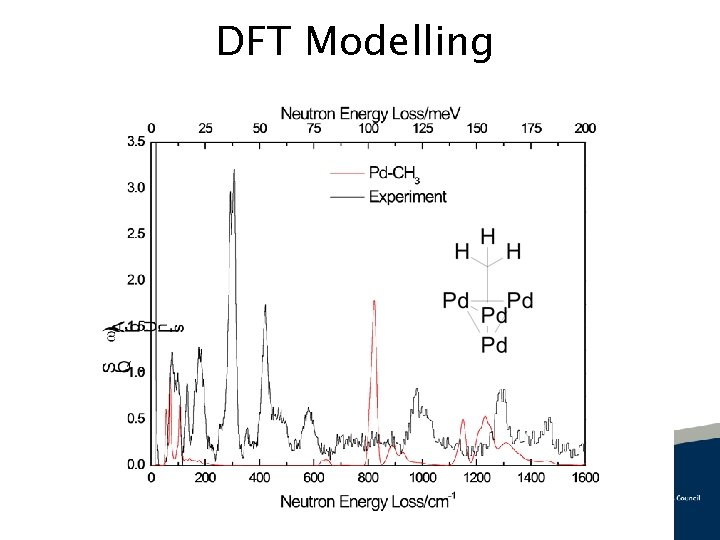
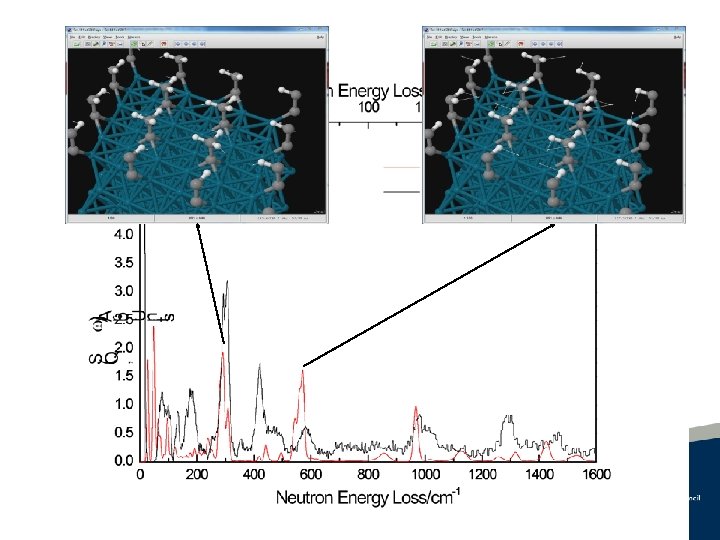
DFT Modelling
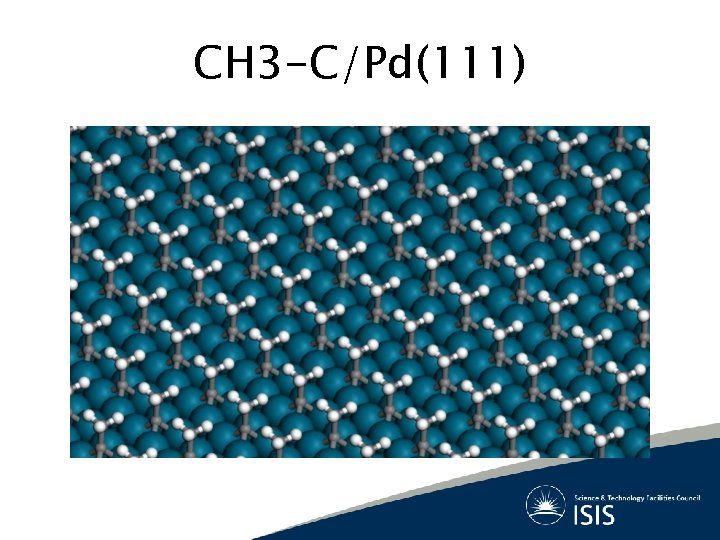
CH 3 -C/Pd(111)
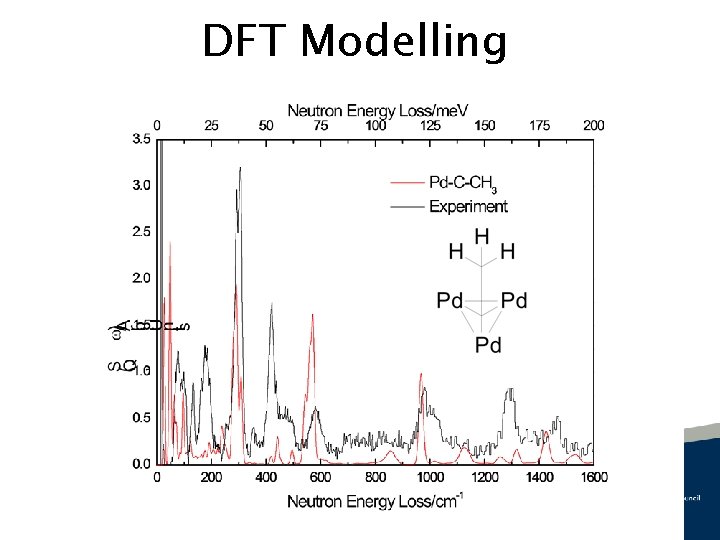
DFT Modelling


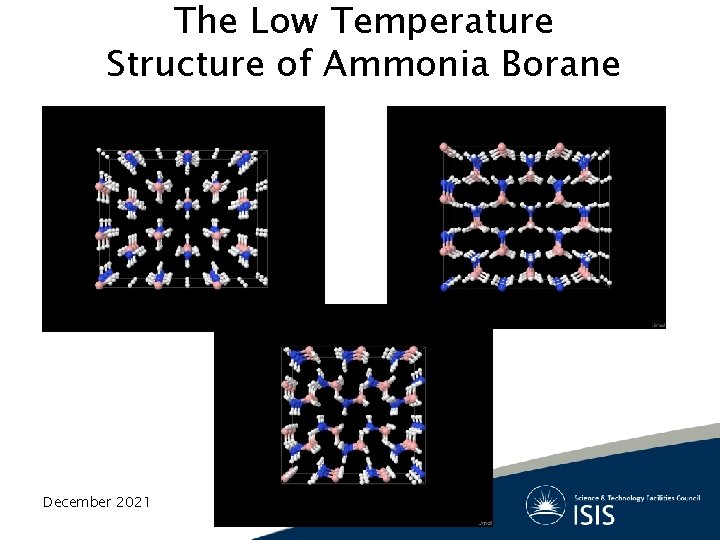
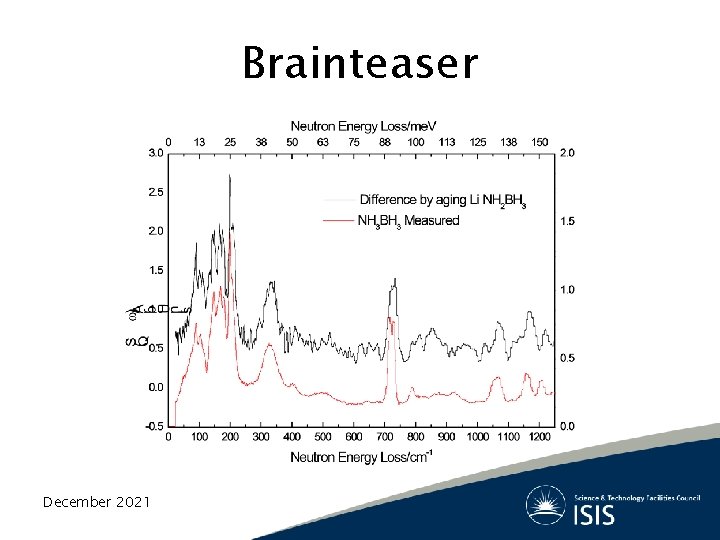
The Low Temperature Structure of Ammonia Borane December 2021
The normal modes in NH 3 BH 3 December 2021
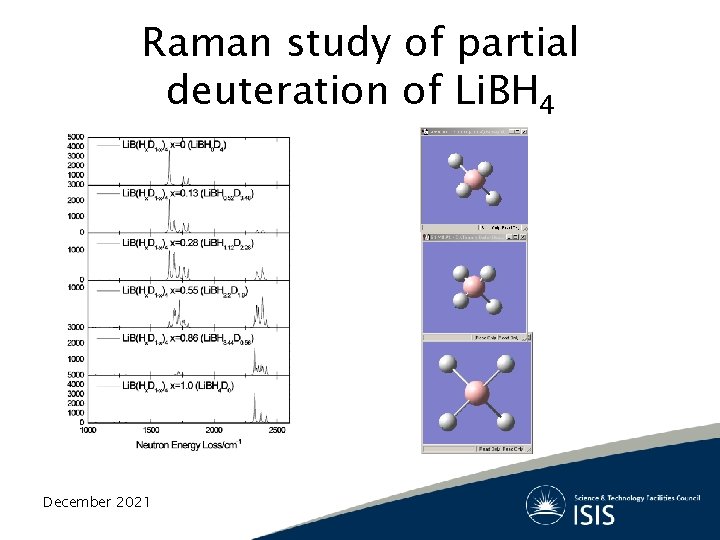
Raman study of partial deuteration of Li. BH 4 December 2021
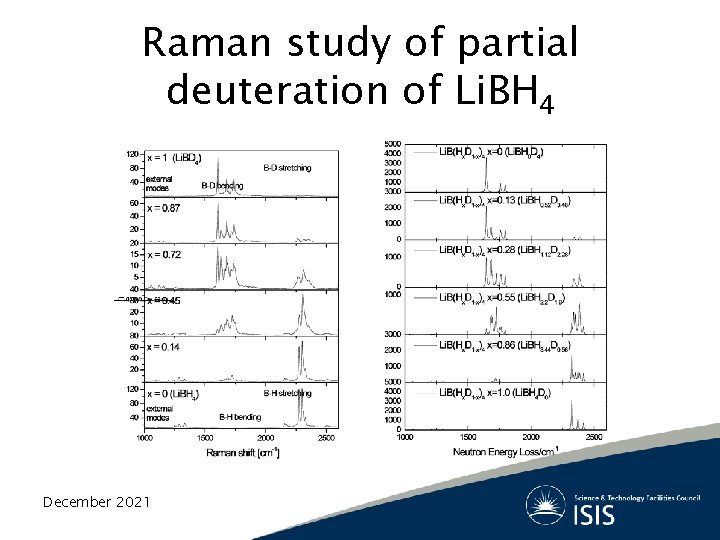
Raman study of partial deuteration of Li. BH 4 December 2021
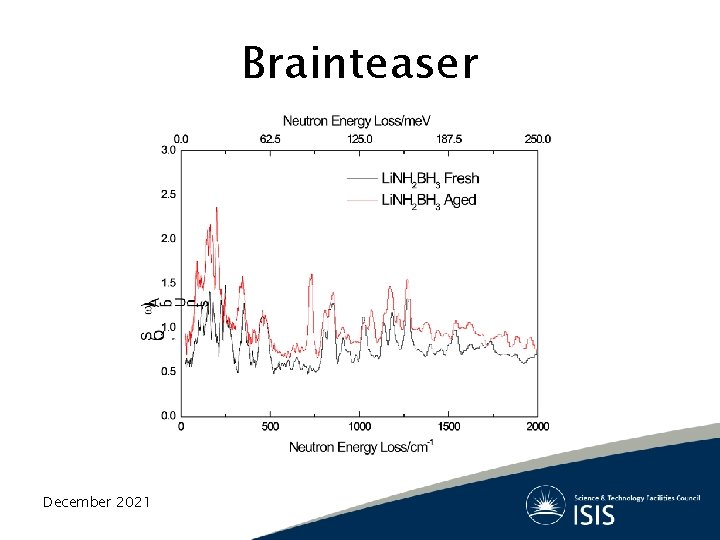
Brainteaser December 2021
Brainteaser December 2021
Acknowledgements • Keith Refson • Bill David, Kate Ryan, Martin Owen Jones • Robin Gremaud, Andreas Borgschulte, Florian Buchter • ISIS December 2021
Nanostructured Na Silica Gel
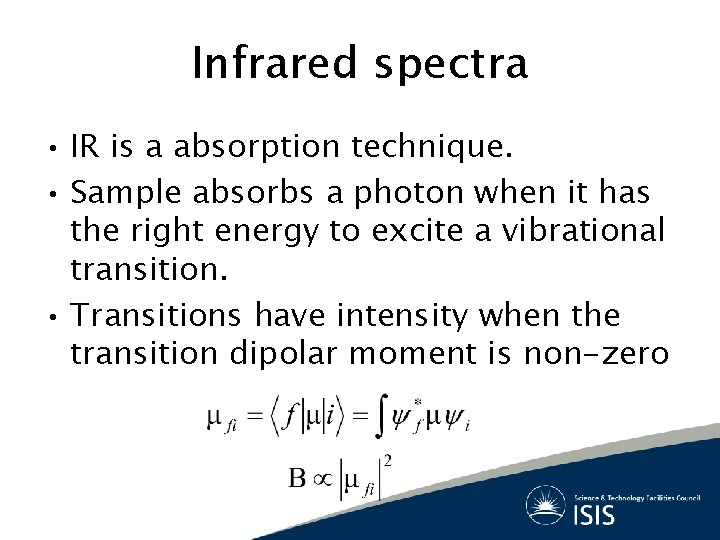
Infrared spectra • IR is a absorption technique. • Sample absorbs a photon when it has the right energy to excite a vibrational transition. • Transitions have intensity when the transition dipolar moment is non-zero
Raman • Inelastic scattering of light • Transitions intensities are related to the changing polarizability. There are seleection rules. • The interaction of radiation is with the electronic cloud. • More than 25 “Raman Spectroscopies”
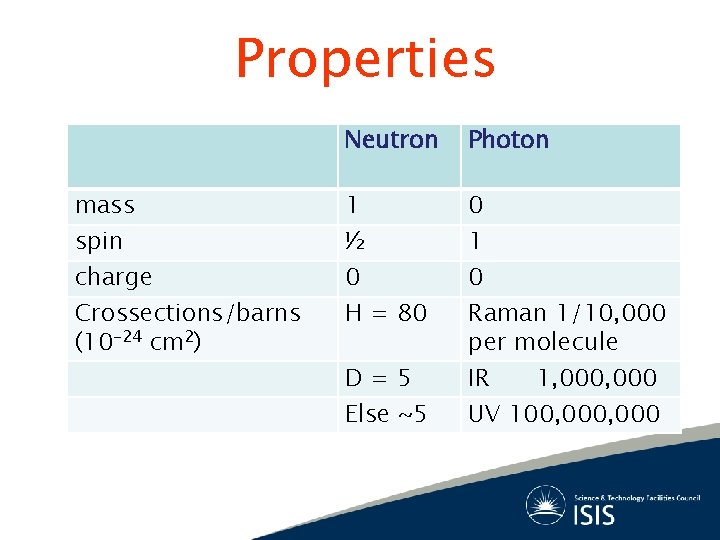
Properties mass spin charge Crossections/barns (10 -24 cm 2) Neutron Photon 1 ½ 0 1 0 H = 80 D=5 Else ~5 0 Raman 1/10, 000 per molecule IR 1, 000 UV 100, 000
Vibrational Spectroscopy with Neutrons
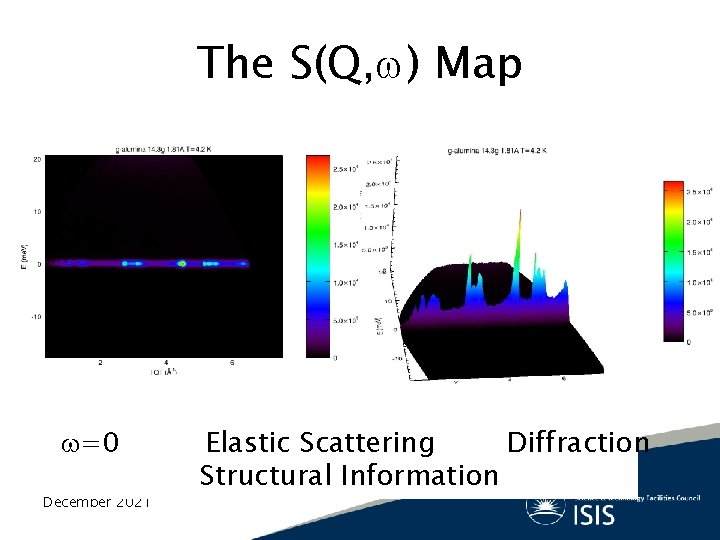
The S(Q, ) Map =0 December 2021 Elastic Scattering Diffraction Structural Information
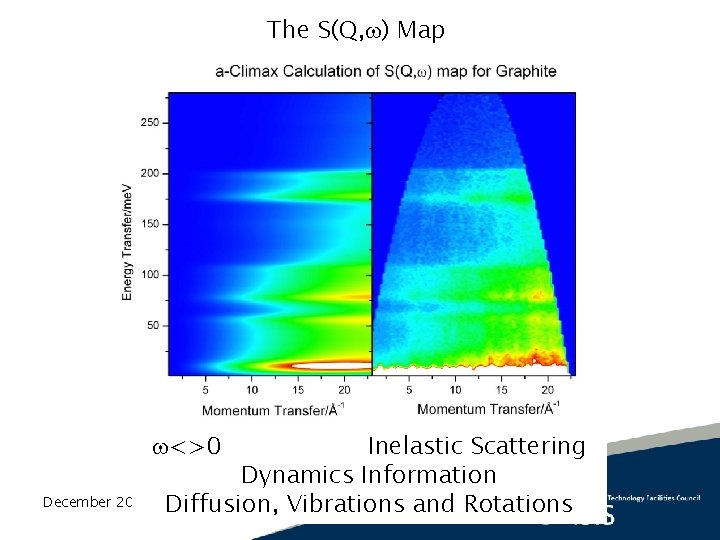
The S(Q, ) Map Inelastic Scattering Dynamics Information Diffusion, Vibrations and Rotations <>0 December 2021
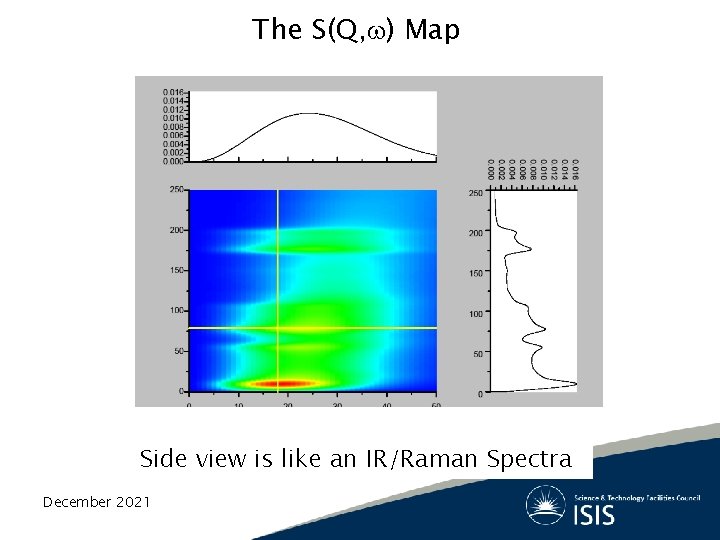
The S(Q, ) Map Side view is like an IR/Raman Spectra December 2021
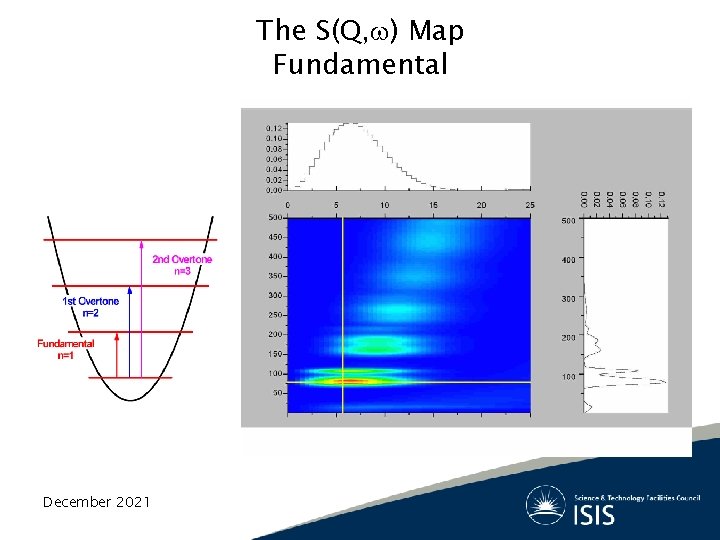
The S(Q, ) Map Fundamental December 2021
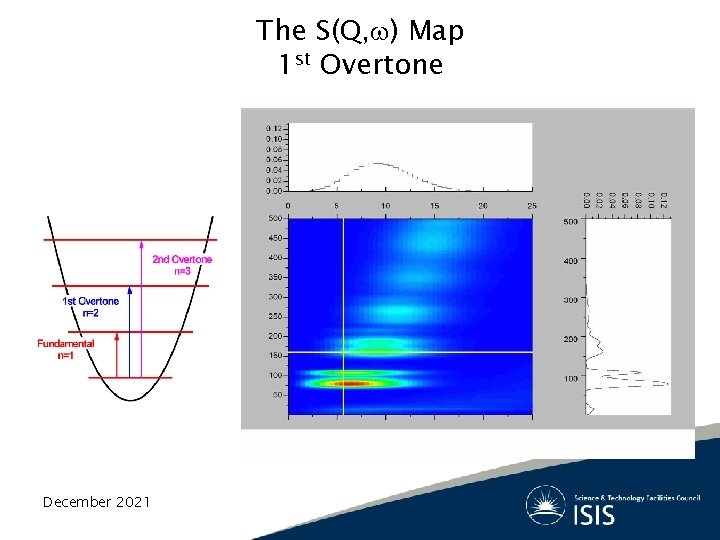
The S(Q, ) Map 1 st Overtone December 2021
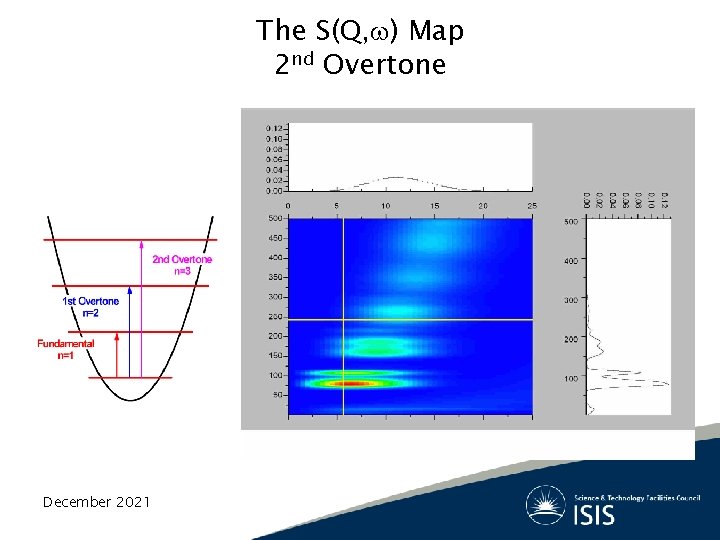
The S(Q, ) Map 2 nd Overtone December 2021
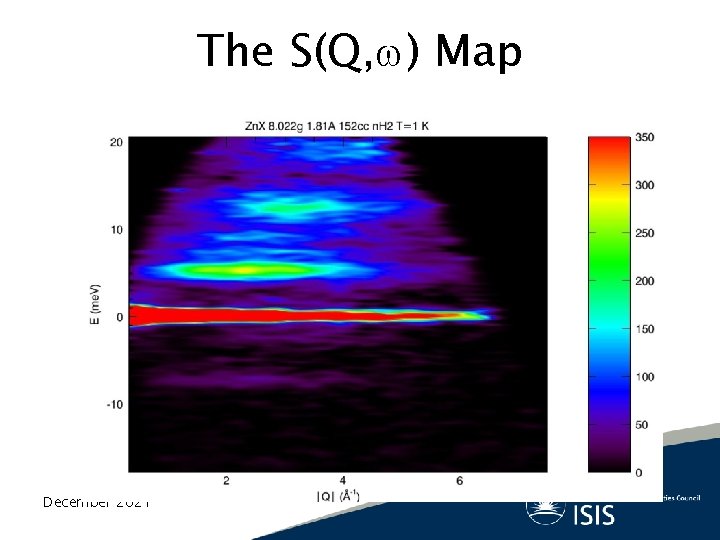
The S(Q, ) Map December 2021
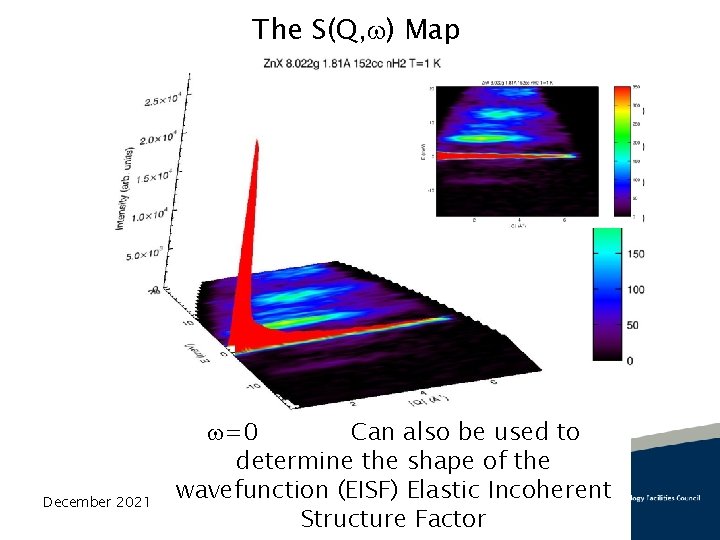
The S(Q, ) Map December 2021 =0 Can also be used to determine the shape of the wavefunction (EISF) Elastic Incoherent Structure Factor
- Slides: 72