
The Power of e Marketing Robert Fleming President
The Power of e. Marketing
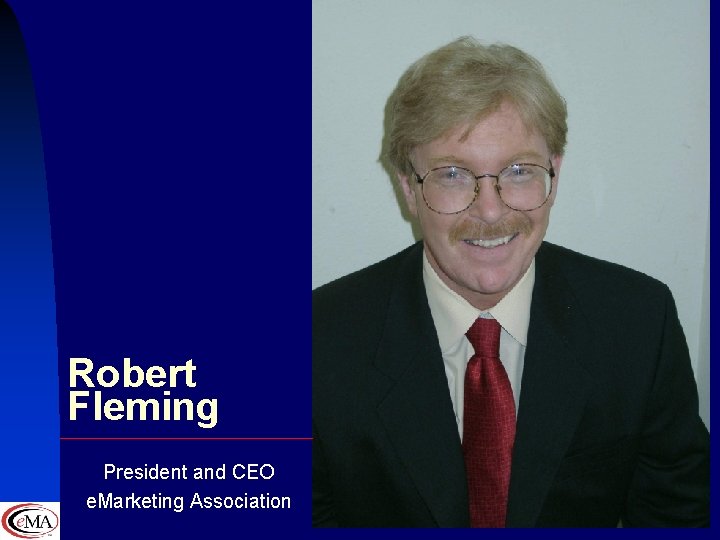
Robert Fleming President and CEO e. Marketing Association
The Internet is Different n n n A rare example of a modern functional anarchy No official censors, no bosses, no board of directors, no stockholders No one “owns” the Internet, there is no “Internet, Incorporated” The “Internet” itself, doesn’t even officially exist as an entity The “Internet” never charges for anything. Each group accessing the internet is responsible for their own machine and access
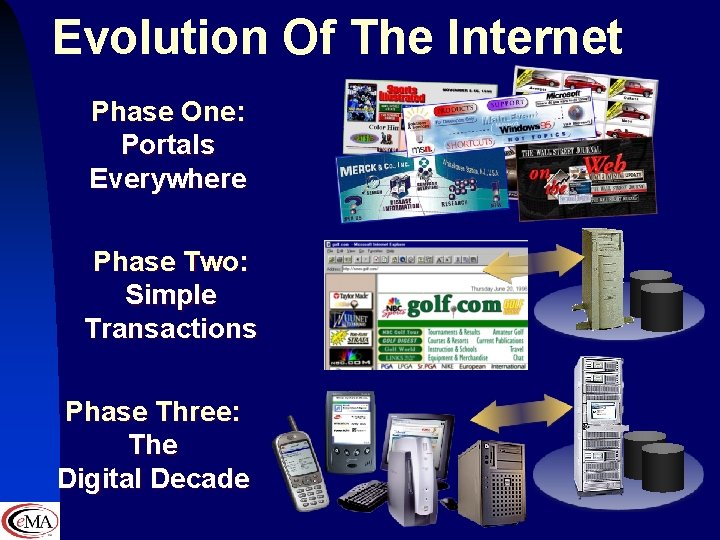
Evolution Of The Internet Phase One: Portals Everywhere Phase Two: Simple Transactions Phase Three: The Digital Decade

The Internet Grows n n 600 million people access the internet worldwide (2002 est. ) 2002 e-commerce 1 trillion dollars (est. ) 68% increase in e-commerce 2000 vs. 2001 Over 1 billion web pages, 40 million sites
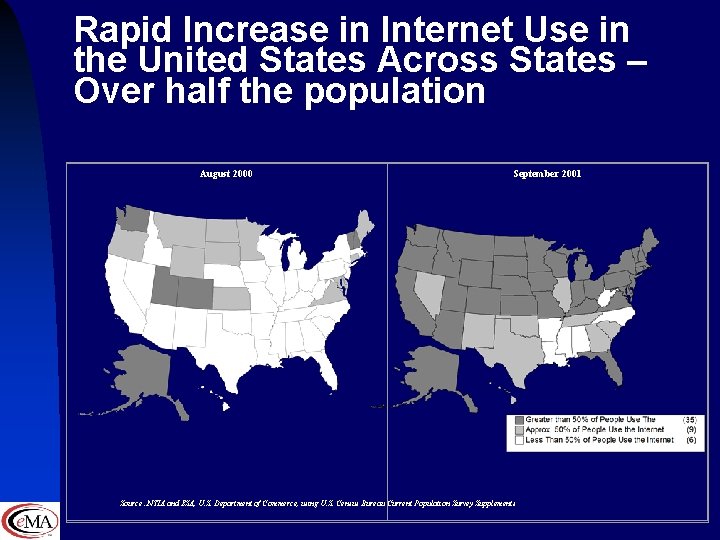
Rapid Increase in Internet Use in the United States Across States – Over half the population August 2000 September 2001 Source: NTIA and ESA, U. S. Department of Commerce, using U. S. Census Bureau Current Population Survey Supplements
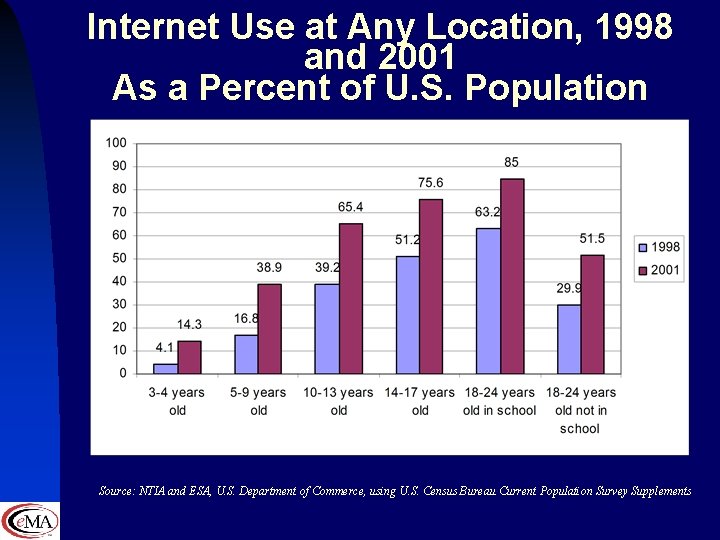
Internet Use at Any Location, 1998 and 2001 As a Percent of U. S. Population Source: NTIA and ESA, U. S. Department of Commerce, using U. S. Census Bureau Current Population Survey Supplements
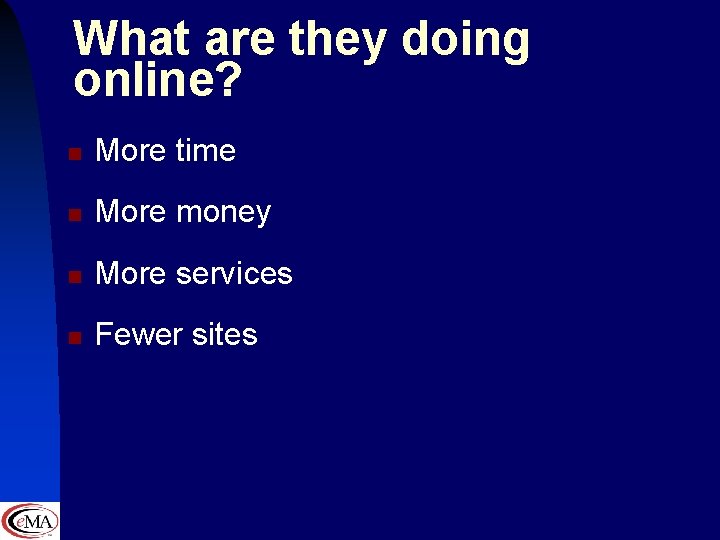
What are they doing online? n More time n More money n More services n Fewer sites
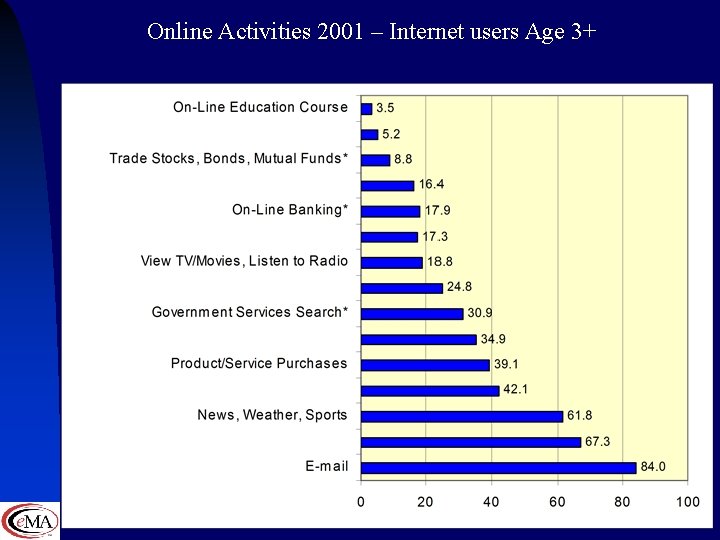
Online Activities 2001 – Internet users Age 3+
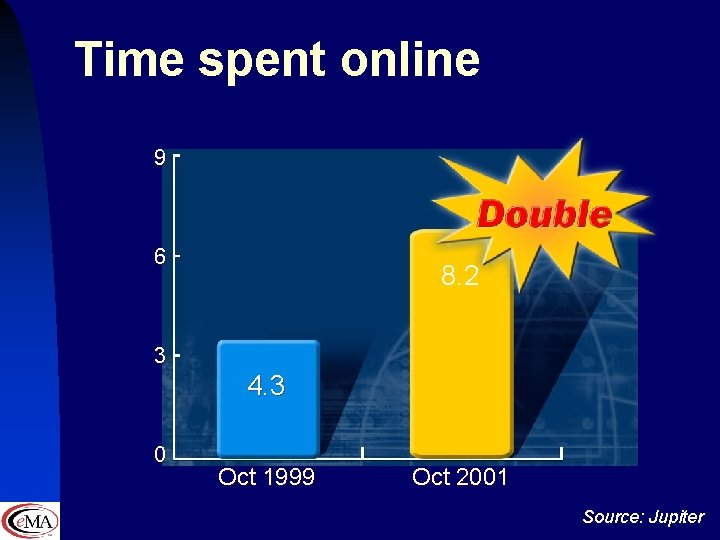
Time spent online 9 6 8. 2 3 4. 3 0 Oct 1999 Oct 2001 Source: Jupiter
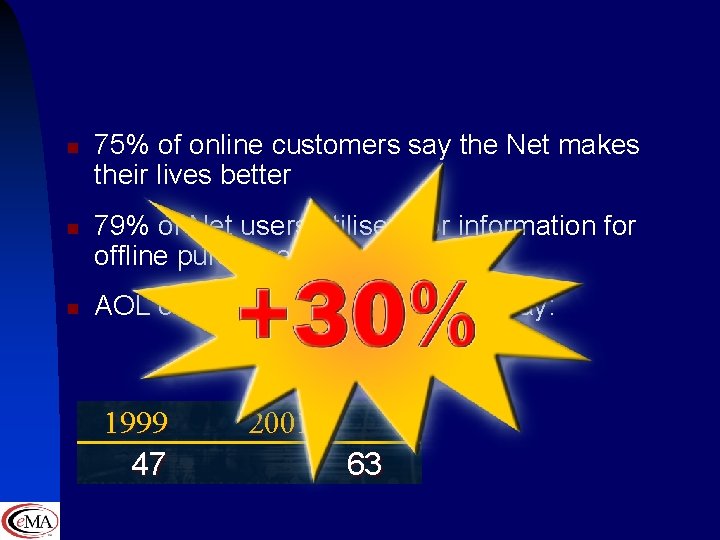
n n n 75% of online customers say the Net makes their lives better 79% of Net users utilise it for information for offline purchases AOL online average minutes per day: 1999 47 2001 63
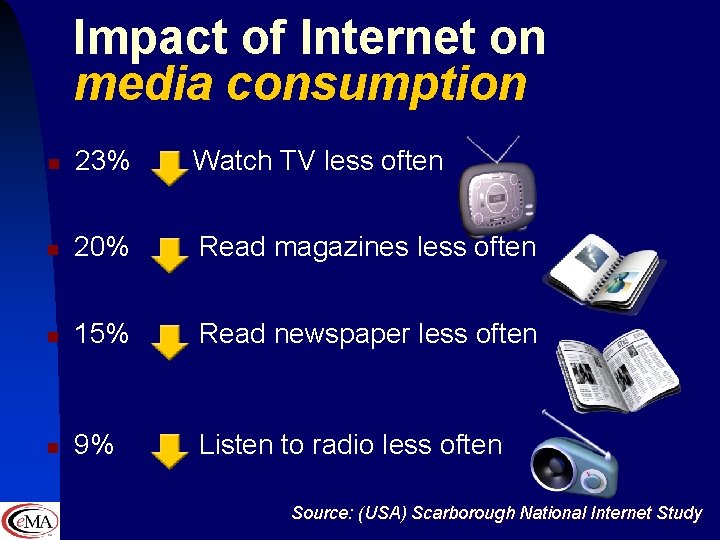
Impact of Internet on media consumption n 23% Watch TV less often n 20% Read magazines less often n 15% Read newspaper less often n 9% Listen to radio less often Source: (USA) Scarborough National Internet Study
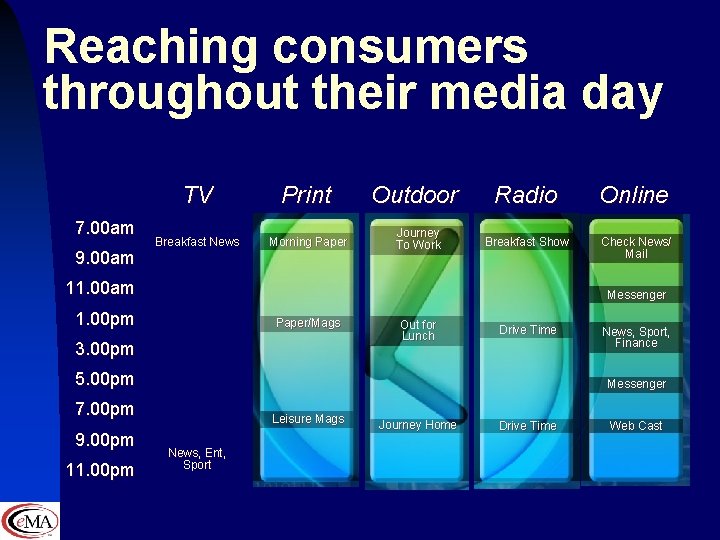
Reaching consumers throughout their media day 7. 00 am 9. 00 am TV Print Breakfast News Morning Paper Outdoor Journey To Work Radio Online Breakfast Show Check News/ Mail 11. 00 am Messenger 1. 00 pm Paper/Mags 3. 00 pm Out for Lunch Drive Time 5. 00 pm Messenger 7. 00 pm 9. 00 pm 11. 00 pm News, Sport, Finance Leisure Mags News, Ent, Sport Journey Home Drive Time Web Cast
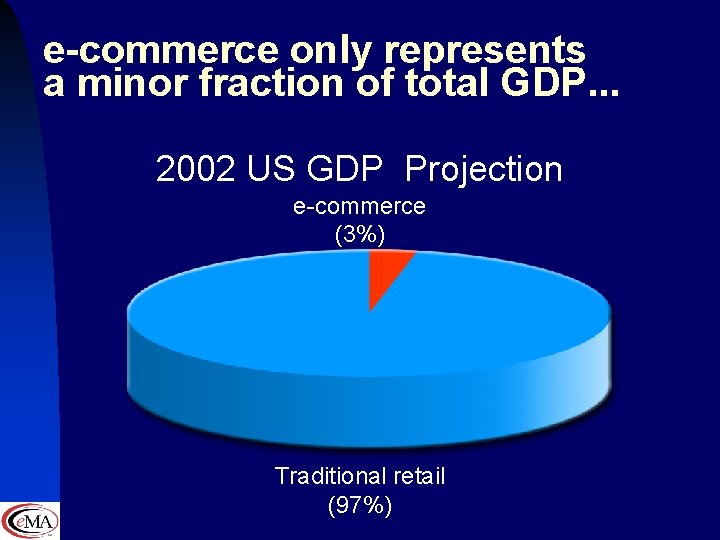
e-commerce only represents a minor fraction of total GDP. . . 2002 US GDP Projection e-commerce (3%) Traditional retail (97%)
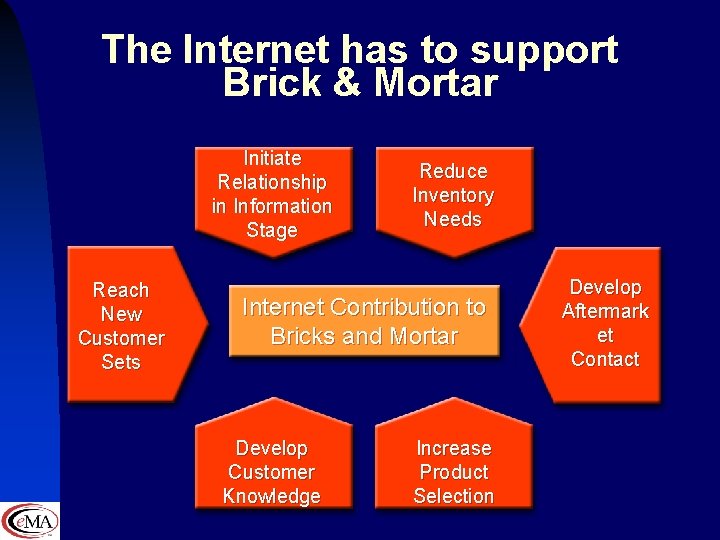
The Internet has to support Brick & Mortar Initiate Relationship in Information Stage Reach New Customer Sets Reduce Inventory Needs Internet Contribution to Bricks and Mortar Develop Customer Knowledge Increase Product Selection Develop Aftermark et Contact
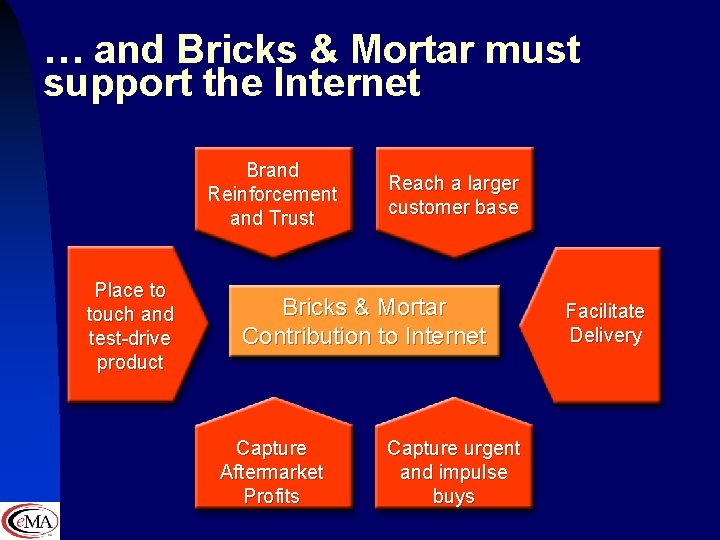
… and Bricks & Mortar must support the Internet Brand Reinforcement and Trust Place to touch and test-drive product Reach a larger customer base Bricks & Mortar Contribution to Internet Capture Aftermarket Profits Capture urgent and impulse buys Facilitate Delivery
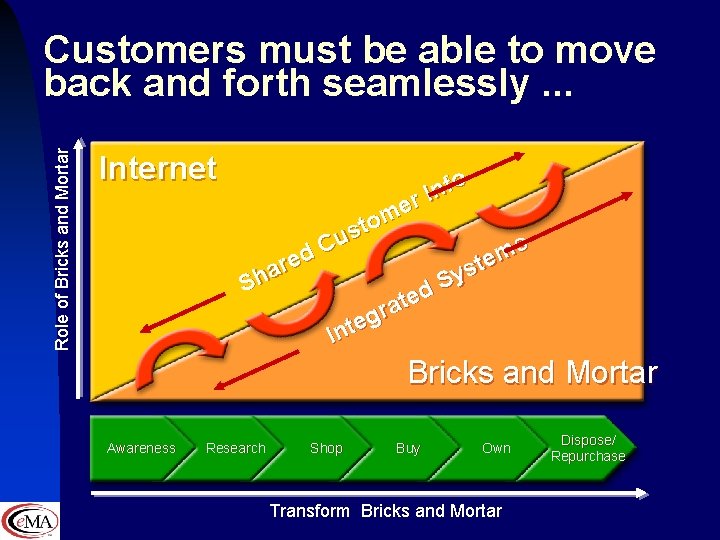
Role of Bricks and Mortar Customers must be able to move back and forth seamlessly. . . Internet fo n I r e m o t us s C m d te re s a y S Sh d te a r g e t In Bricks and Mortar Awareness Research Shop Buy Own Transform Bricks and Mortar Dispose/ Repurchase
Marketing Employment Is Growing “Employment of advertising, marketing, promotions, public relations, and sales managers is expected to increase faster than the average for all occupations through 2010 ” Source: United States Department of Labor
e. MA Employment Survey 70% of all management level marketing positions require Internet abilities and/or experience.
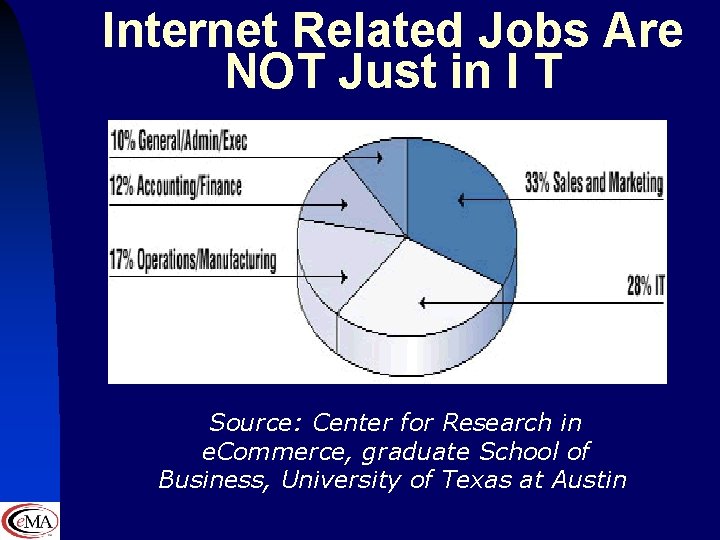
Internet Related Jobs Are NOT Just in I T Source: Center for Research in e. Commerce, graduate School of Business, University of Texas at Austin
The Change in Corporate Culture n n n 1996 – most web sites are managed by IT /MIS 2001 – marketing and IT/MIS manage web sites jointly (in some cases) Marketing needs to “own” web site IT/MIS are the mechanics – marketing the pilot Marketing becomes more collaborative and less autonomous
Are the Following IT or Marcom Functions? Corporate communications n Advertising n Corporate identity n Product positioning n Market Research n
IT/MIS Continues to Dominate Web Management Lack of technical understanding by marketers n Fast changing technology can create confusion n Corporate politics plays a role n
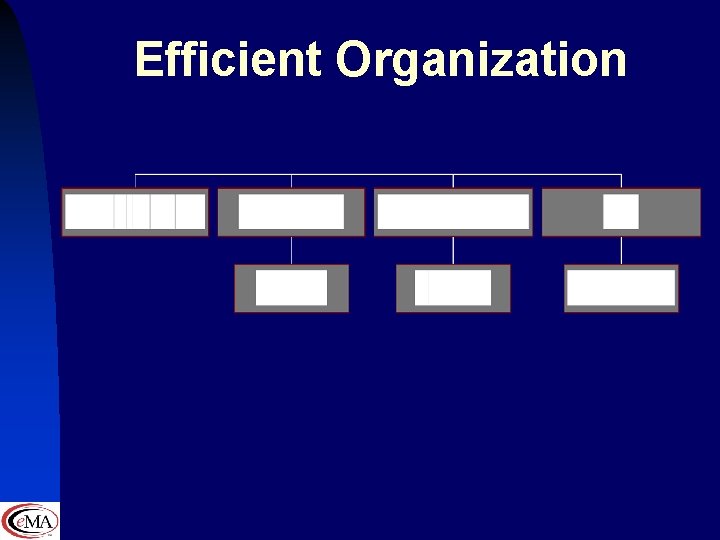
Efficient Organization
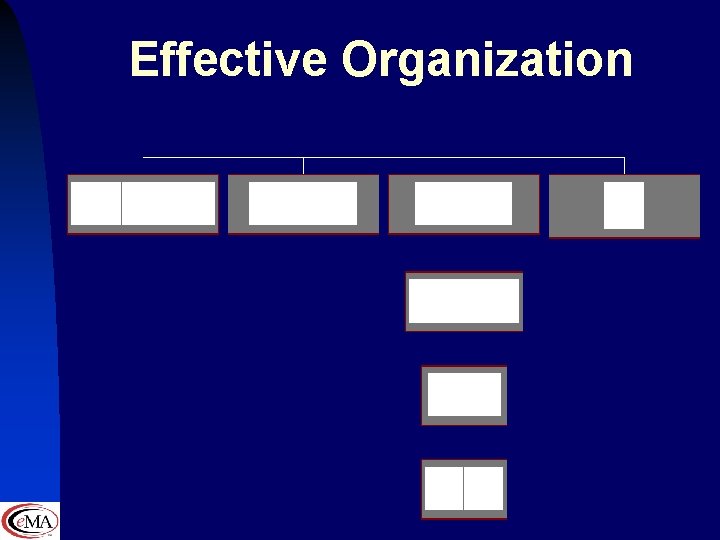
Effective Organization
Outlook n n n Increasing shift of web site responsibility from MIS to marketing Increased technical knowledge required from marketers Internet marketing accounts for 15% of all advertising impressions and only 5% of marketing budgets The gap will close between impressions and budget Marketer must understand new tools
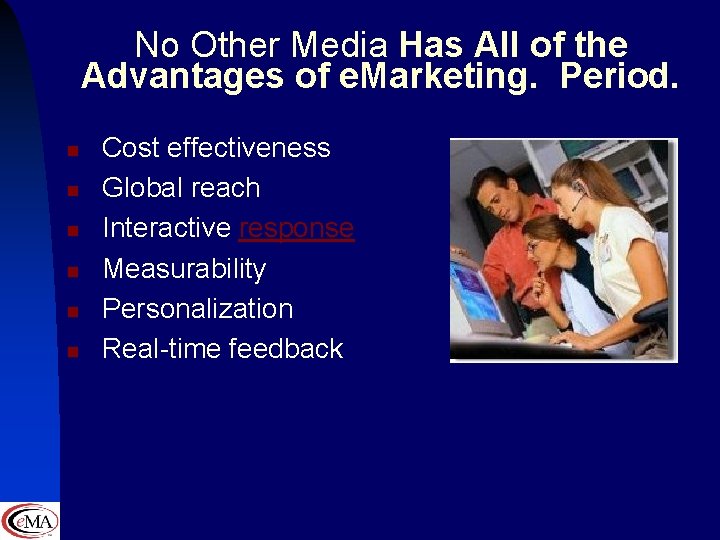
No Other Media Has All of the Advantages of e. Marketing. Period. n n n Cost effectiveness Global reach Interactive response Measurability Personalization Real-time feedback
But E-marketing Suffers From n n n n Lack of data – 5 years vs. decades for magazines, radio Lack of understanding of technology by marketers Fast moving and turbulent arena Changing technologies Lack of trained personal Senior management barriers Corporate culture
Online Marketing Tools Are Less Than 6 Years Old (That’s First Grade) n n n n n E-mail marketing Site design for e-commerce Viral marketing Affiliate marketing Banner advertising Search engines Online publicity Research CRM
Site Design for Emarketing n n n n n Merchant account checkout Visitor expectations Surveys Content Technical considerations Color Plug ins Product descriptions Company information
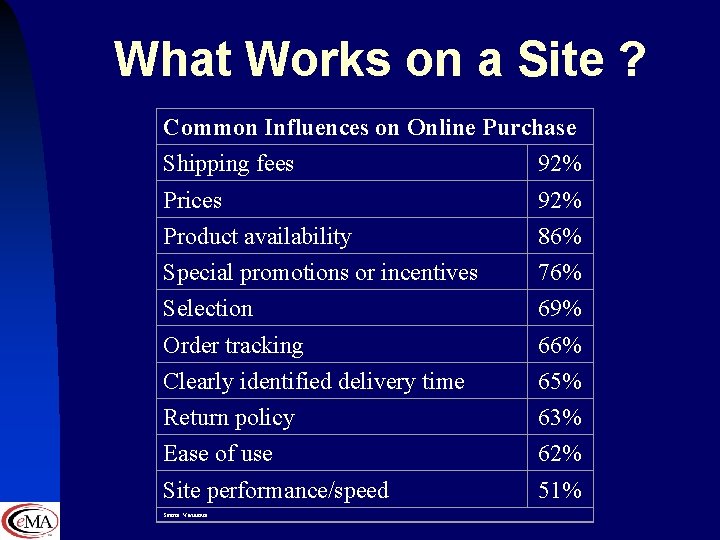
What Works on a Site ? Common Influences on Online Purchase Shipping fees 92% Prices 92% Product availability 86% Special promotions or incentives 76% Selection 69% Order tracking 66% Clearly identified delivery time 65% Return policy 63% Ease of use 62% Site performance/speed 51% Source: Vividence
Search Engines n n n Pay for position taking a strong lead Search engine optimization (SEO) critical Majority of users rely on search engines for navigation Targeted audience Accounts for over 70% of new site visitors Turbulent arena
E-mail Marketing n n E-mail is the number one app with over 90% of internet users Issues such as browser differences, targeting, and privacy are critical Spam, creates a major negative for e-mail marketing, laws passed in 19 states Only 3 years of significant use
Viral Marketing n n Hot Mail was one of the first examples of viral marketing Another “e” term for “word-of-mouth” advertising Bulletin boards, e-mail, chat rooms are the major conduits for viral campaigns What is “buzz”
Affiliate Marketing n n n Partnership and affiliate programs are booming Cooperation between online companies Commission programs and banner exchange programs lead this channel
Banner Advertising n n Volatile history with sharply declining click through rates New forms such as java, active x, Pop-ups, pop-under and other new delivery methods are gaining acceptance Branding is possible with banners
Research n n Log files ASP log conversion Metrics for e-marketing analysis Surveys
Challenges n n n n Integration of e-marketing and conventional marketing creates a “blurred channel” Hybrid advertising Marketing mix Consumer expectations Technological limitations New innovations Legal issues
Conventional Media n n Addition of web address creates hybrid advertising Web site can degrade or enhance conventional efforts Visitor experience becomes critical Diffused metrics
Technological Limitations n n n Different browsers Online software (plug ins java –flash etc. ) Screen resolutions Bandwidth speed Operating systems Server technology
Legal Issues n n n n Privacy policies Spam International commerce COPPA 19 states have anti Spam laws Dozens pending in congress Online disclosure
Emerging Technologies. n n n Wireless poised to triple over the next few years Smart chips could track BM purchases Higher bandwidth could allow for increased streaming media on sites MPEG 4 – good enough for video? ?
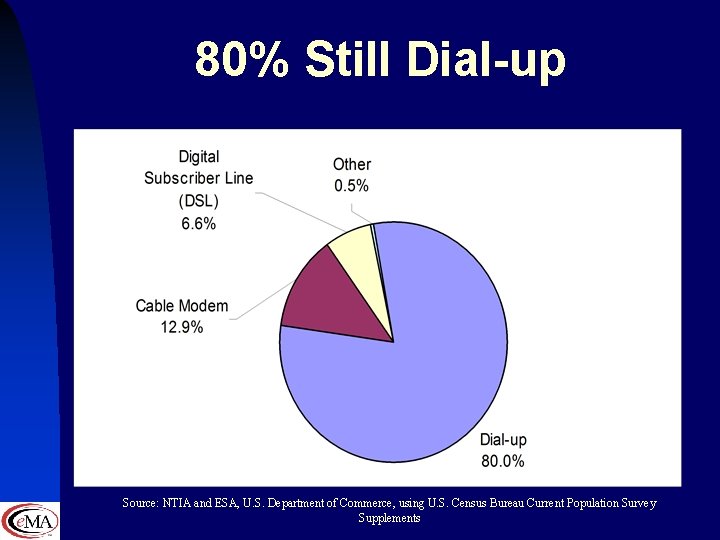
80% Still Dial-up Source: NTIA and ESA, U. S. Department of Commerce, using U. S. Census Bureau Current Population Survey Supplements
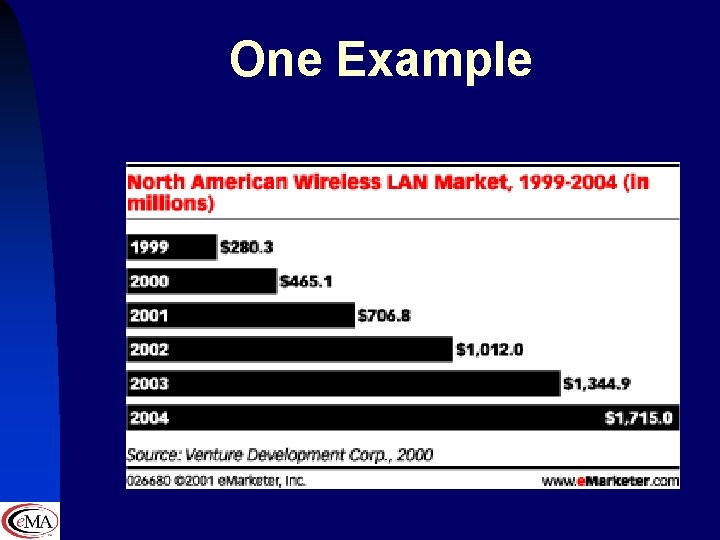
One Example
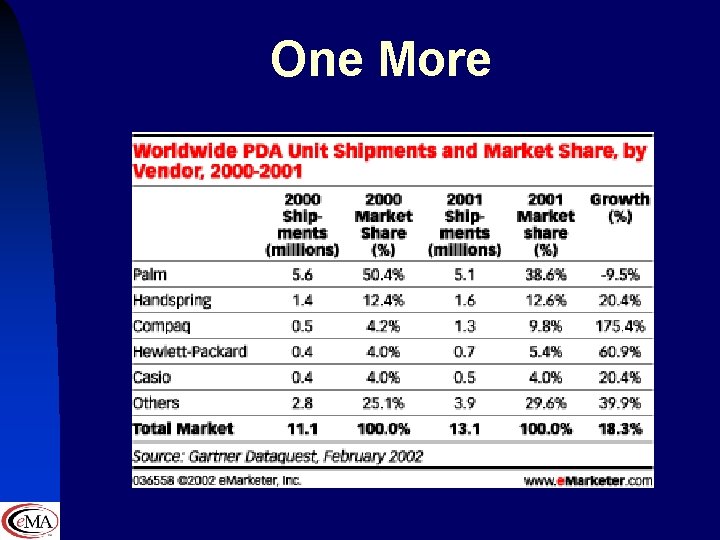
One More

u. Digital innovations become an integral part of life u. Breaks u. Offers down logistical barriers greater flexibility and power u. Shrinks time and business u. Simplifies complex business processes u. Enables effective communication and collaboration u. Opens up new markets
The 21 st Century n n n Explosive increase in innovation Extraordinary dynamism of technology Exceptional increases in productivity Myriad new forms of business activity Expanding opportunities Level playing field
- Slides: 48