
The Potential of Zonal Heating Control to Reduce
- Slides: 1
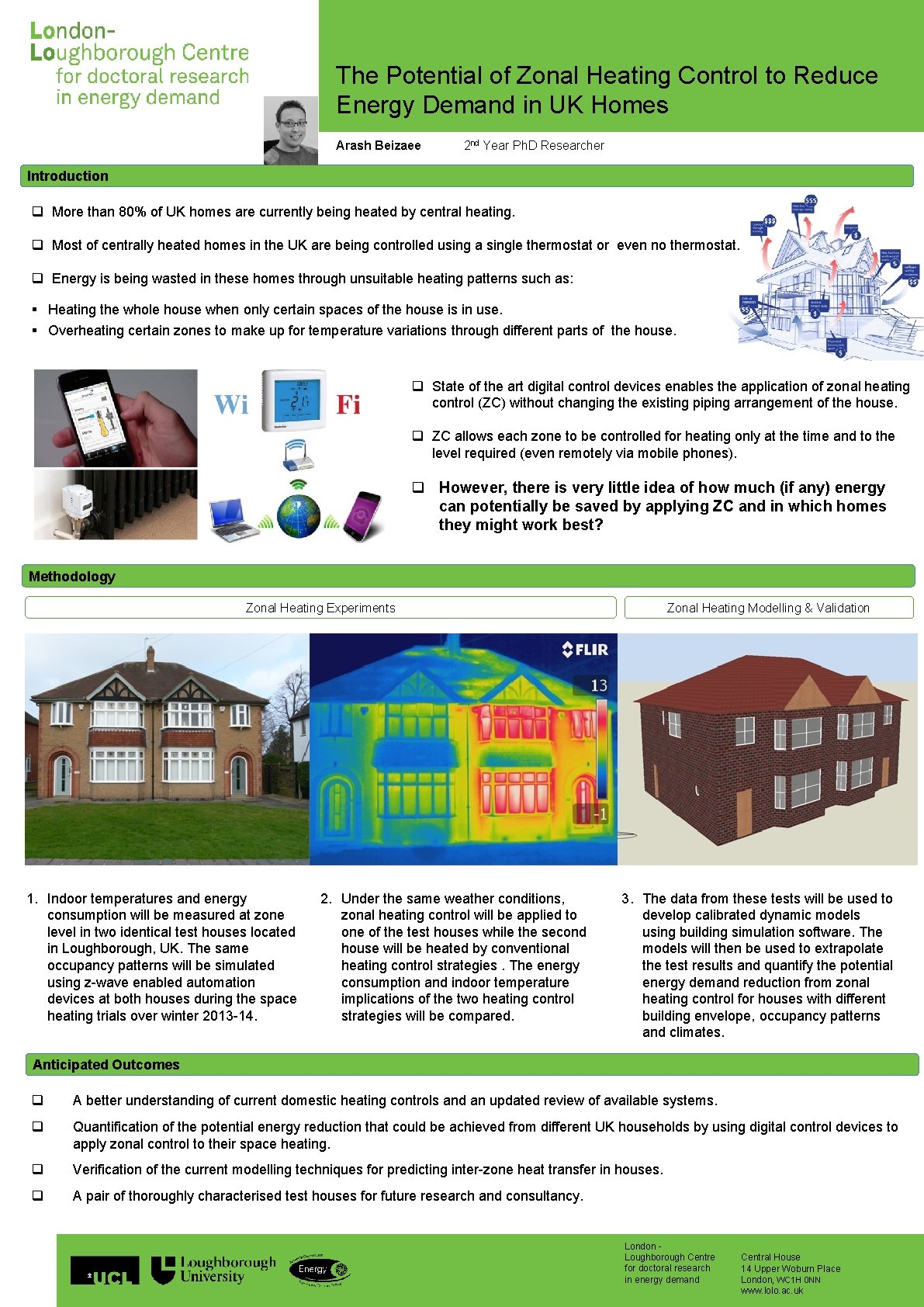
The Potential of Zonal Heating Control to Reduce Energy Demand in UK Homes Arash Beizaee 2 nd Year Ph. D Researcher Introduction q More than 80% of UK homes are currently being heated by central heating. q Most of centrally heated homes in the UK are being controlled using a single thermostat or even no thermostat. q Energy is being wasted in these homes through unsuitable heating patterns such as: § Heating the whole house when only certain spaces of the house is in use. § Overheating certain zones to make up for temperature variations through different parts of the house. q State of the art digital control devices enables the application of zonal heating control (ZC) without changing the existing piping arrangement of the house. q ZC allows each zone to be controlled for heating only at the time and to the level required (even remotely via mobile phones). q However, there is very little idea of how much (if any) energy can potentially be saved by applying ZC and in which homes they might work best? Methodology Zonal Heating Experiments 1. Indoor temperatures and energy consumption will be measured at zone level in two identical test houses located in Loughborough, UK. The same occupancy patterns will be simulated using z-wave enabled automation devices at both houses during the space heating trials over winter 2013 -14. 2. Under the same weather conditions, zonal heating control will be applied to one of the test houses while the second house will be heated by conventional heating control strategies. The energy consumption and indoor temperature implications of the two heating control strategies will be compared. Zonal Heating Modelling & Validation 3. The data from these tests will be used to develop calibrated dynamic models using building simulation software. The models will then be used to extrapolate the test results and quantify the potential energy demand reduction from zonal heating control for houses with different building envelope, occupancy patterns and climates. Anticipated Outcomes q A better understanding of current domestic heating controls and an updated review of available systems. q Quantification of the potential energy reduction that could be achieved from different UK households by using digital control devices to apply zonal control to their space heating. q Verification of the current modelling techniques for predicting inter-zone heat transfer in houses. q A pair of thoroughly characterised test houses for future research and consultancy. London Loughborough Centre for doctoral research in energy demand Central House 14 Upper Woburn Place London, WC 1 H 0 NN www. lolo. ac. uk