
The Polytomous Unidimensional Rasch Model Understanding its Response

- Slides: 29
The Polytomous Unidimensional Rasch Model: Understanding its Response Structure and Process ACSPRI Social Science Methodology Conference, Sydney, December 2006 Mailing address David Andrich Murdoch University Murdoch 6150 Western Australia Email: andrich@murdoch. edu. au
Acknowledgements • The research was supported in part by an Australian Research Council Linkage grant with the Australian National Ministerial Council on Employment, Education, Training and Youth Affairs (MCEETYA) Performance Measurement and Reporting Task Force; UNESCO’s International Institute for Educational Planning (IIEP), and the Australian Council for Educational Research (ACER) as Industry Partners.
Ingredient 1 Invariance of comparisons • Rasch’s requirement for invariance of parameters estimates leads to models with sufficient statistics • The model for dichotomous responses is a special case
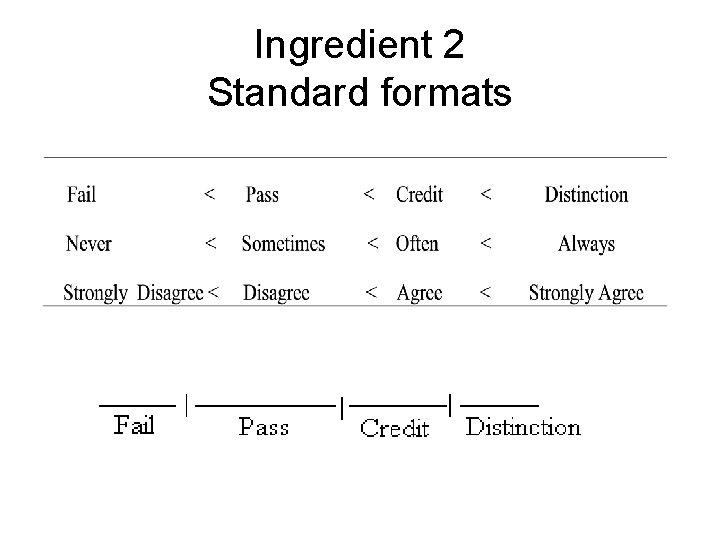
Ingredient 2 Standard formats
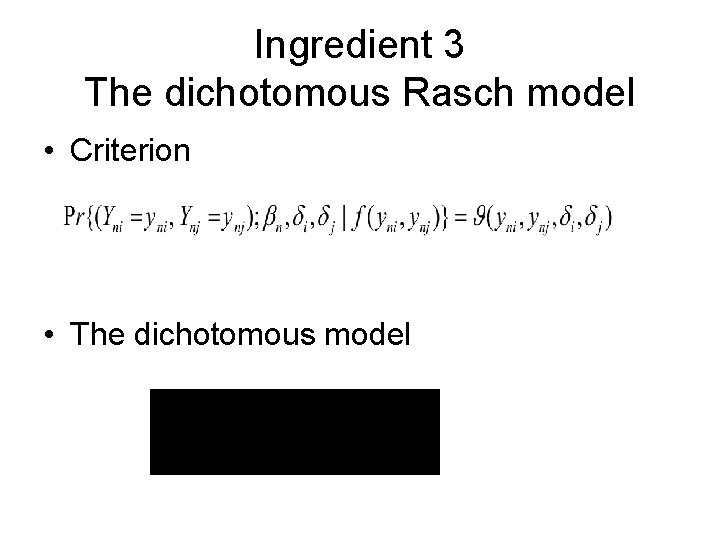
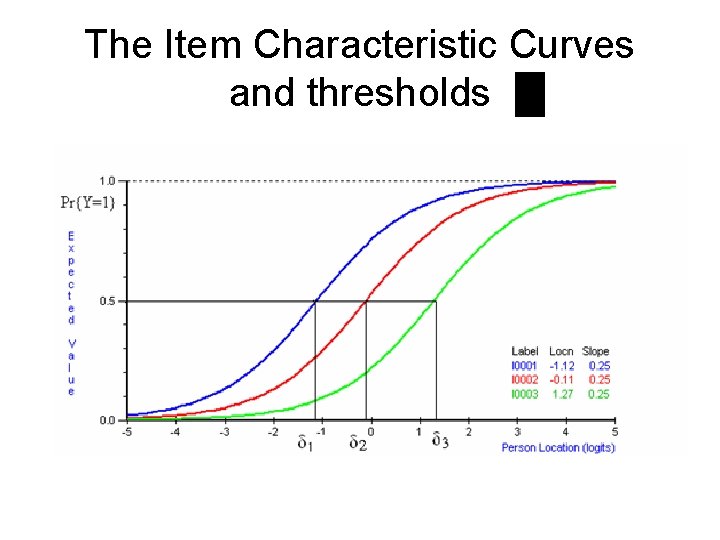
Ingredient 3 The dichotomous Rasch model • Criterion • The dichotomous model
The Item Characteristic Curves and thresholds
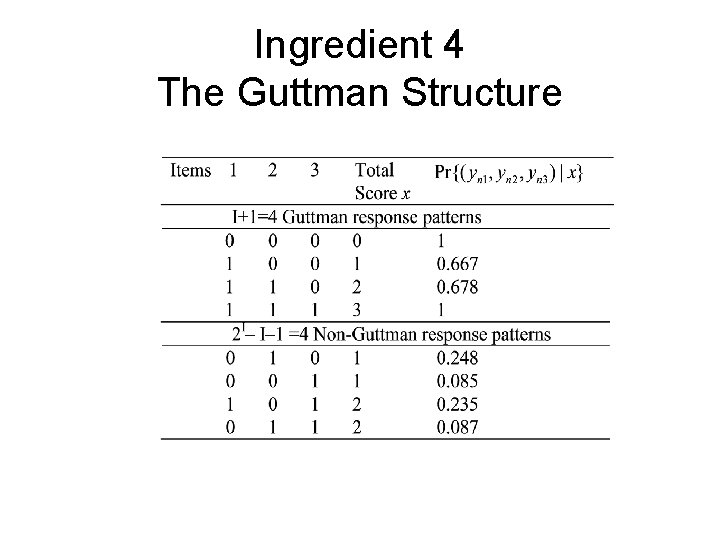
Ingredient 4 The Guttman Structure
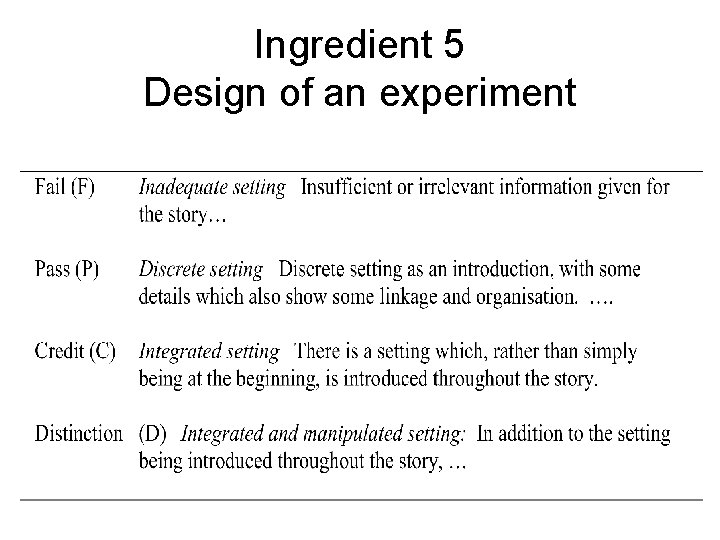
Ingredient 5 Design of an experiment
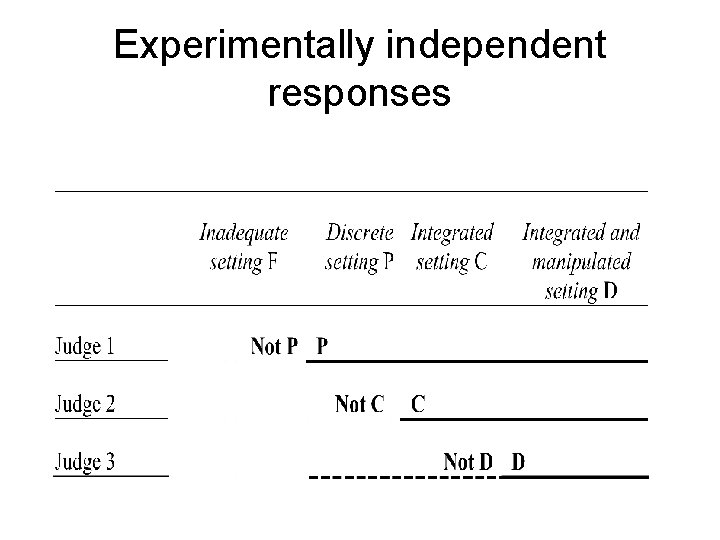
Experimentally independent responses
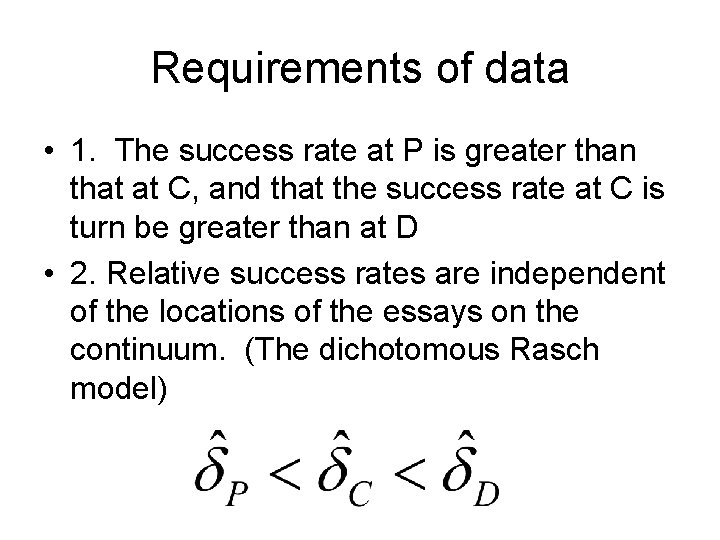
Requirements of data • 1. The success rate at P is greater than that at C, and that the success rate at C is turn be greater than at D • 2. Relative success rates are independent of the locations of the essays on the continuum. (The dichotomous Rasch model)
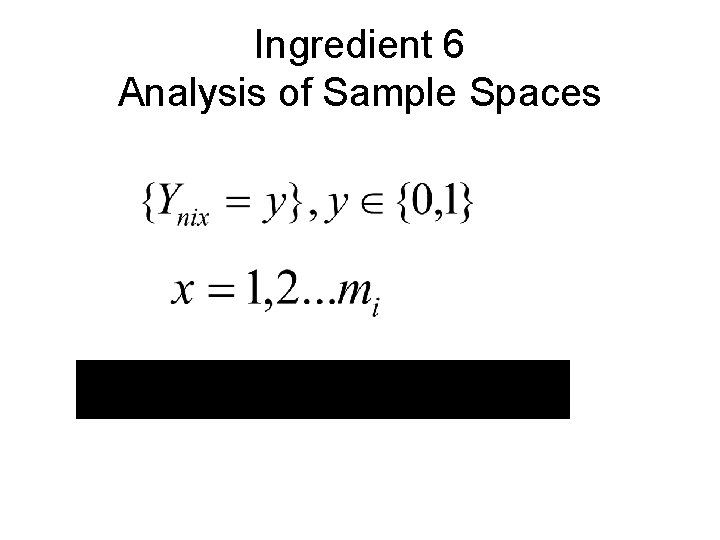
Ingredient 6 Analysis of Sample Spaces
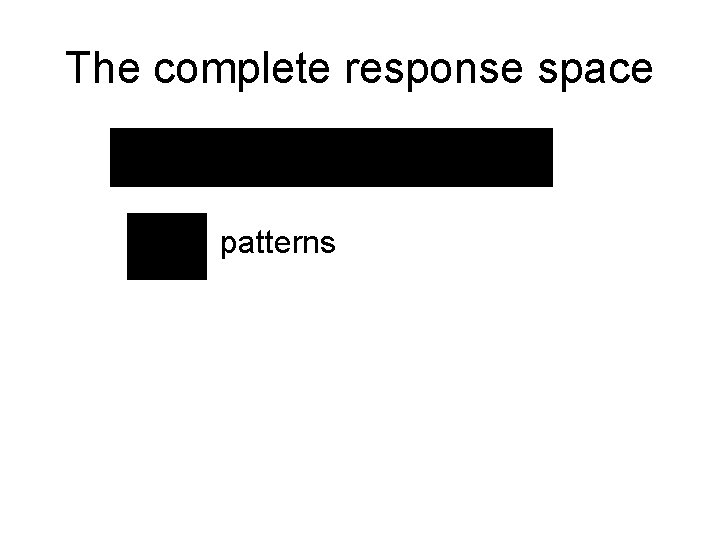
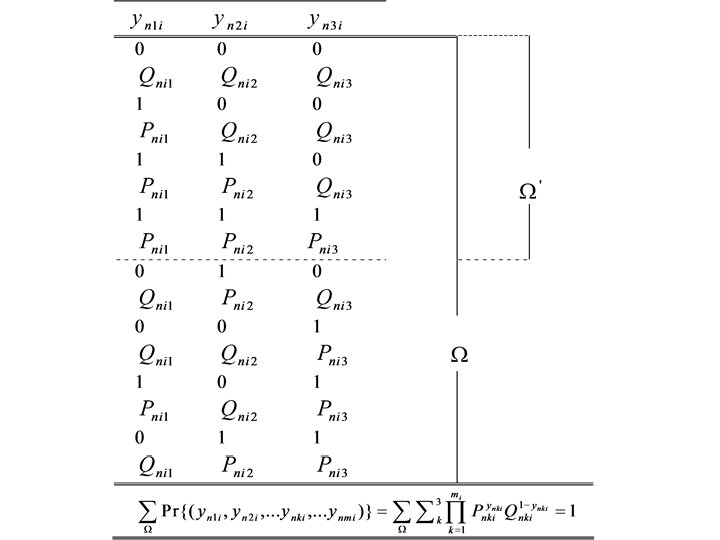
The complete response space patterns
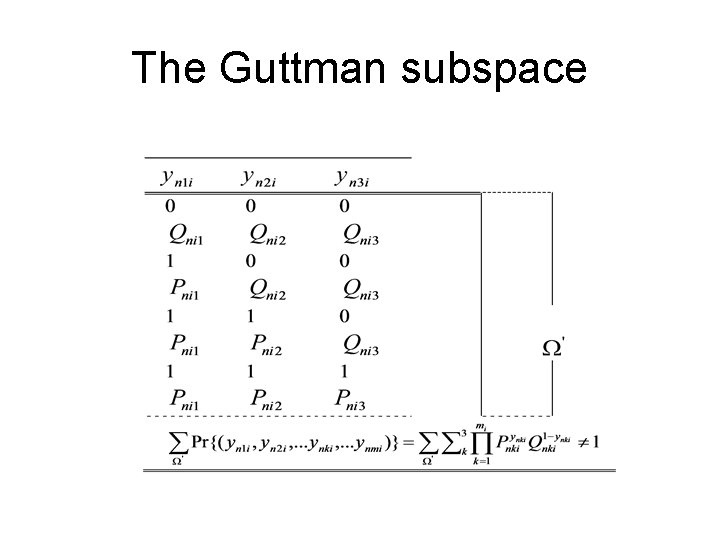
The Guttman subspace
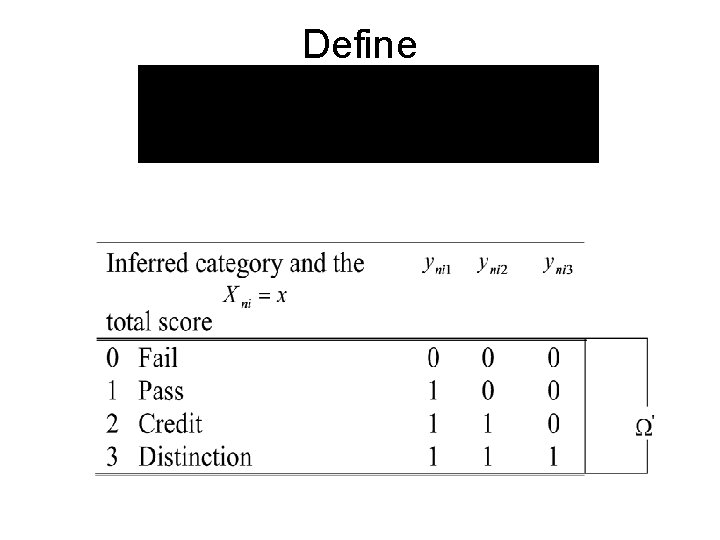
Define
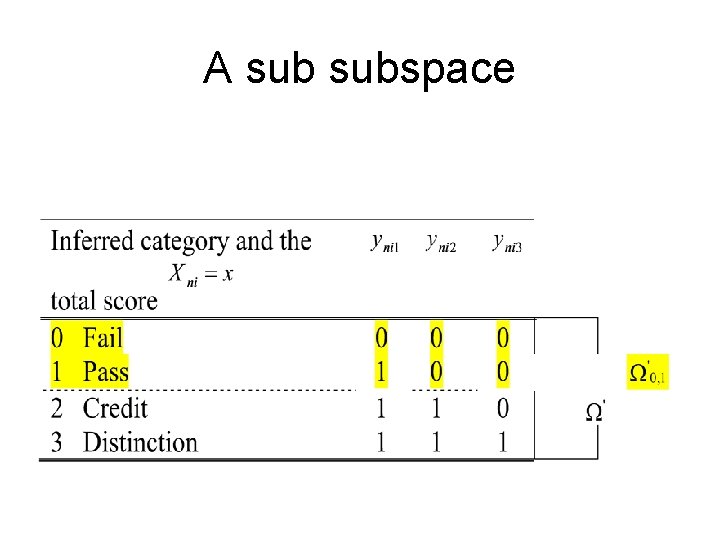
A subspace
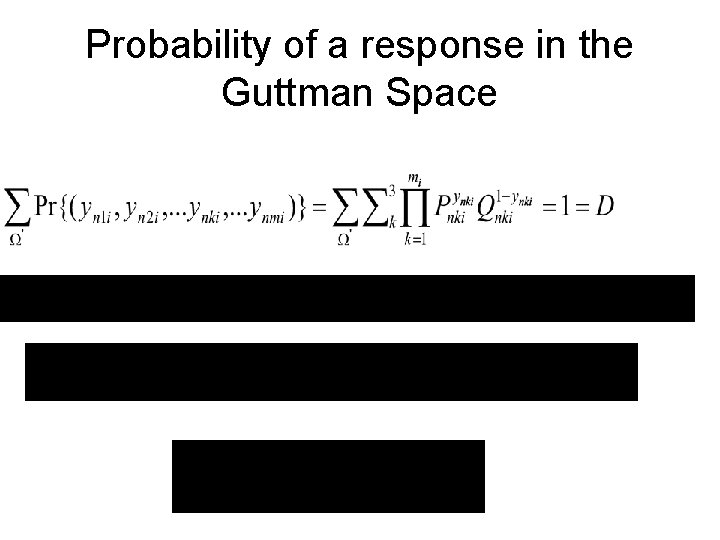
Probability of a response in the Guttman Space
The doubly conditioned outcome space
Reverse Process Let Define Then Indicating the model is the same
Inferring an experimentally independent outcome space • Given the Guttman space , we infer the existence of a complete space of which is a subspace. In this complete space we can infer experimentally independent responses.
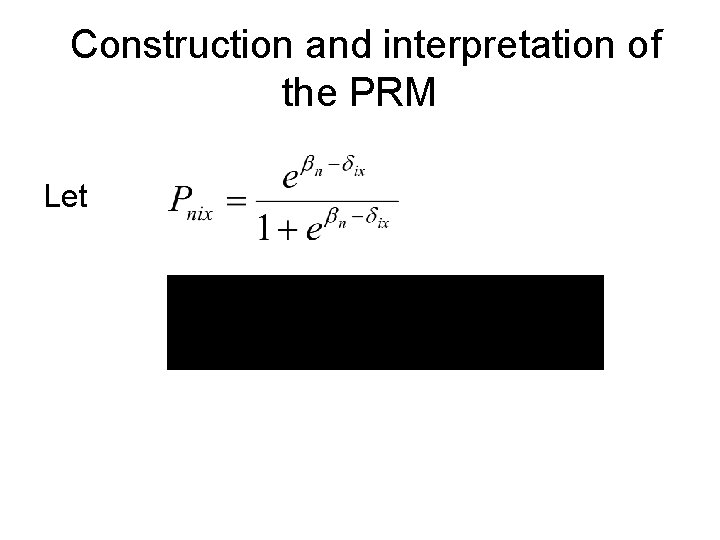
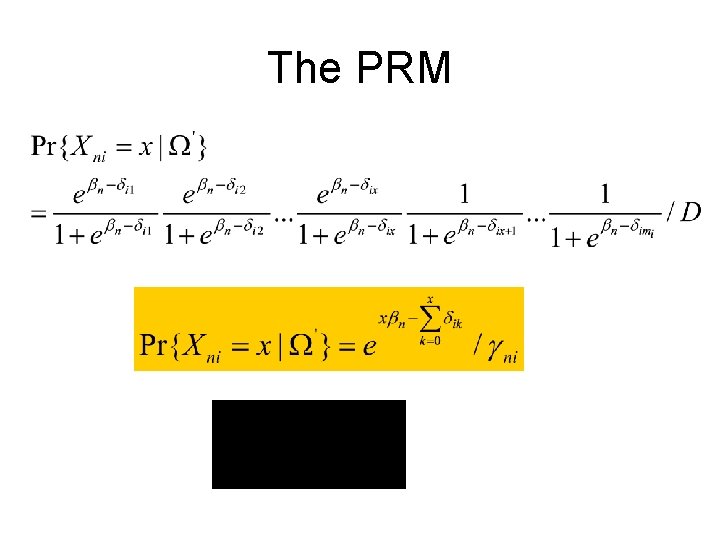
Construction and interpretation of the PRM Let
The PRM
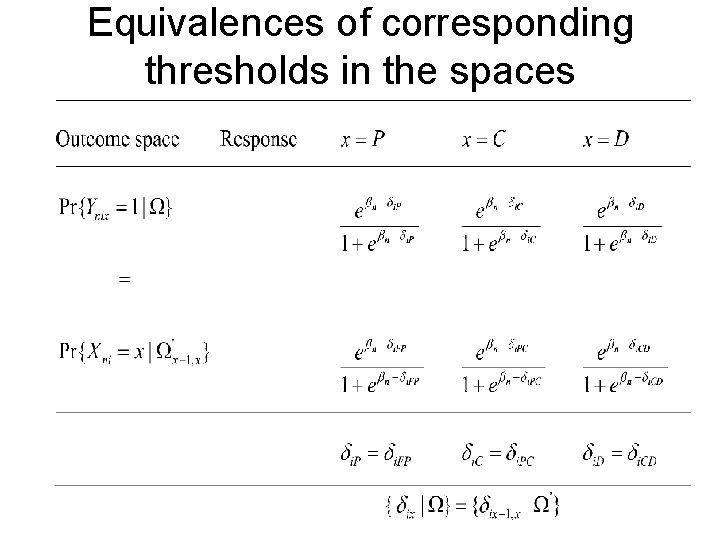
Equivalences of corresponding thresholds in the spaces
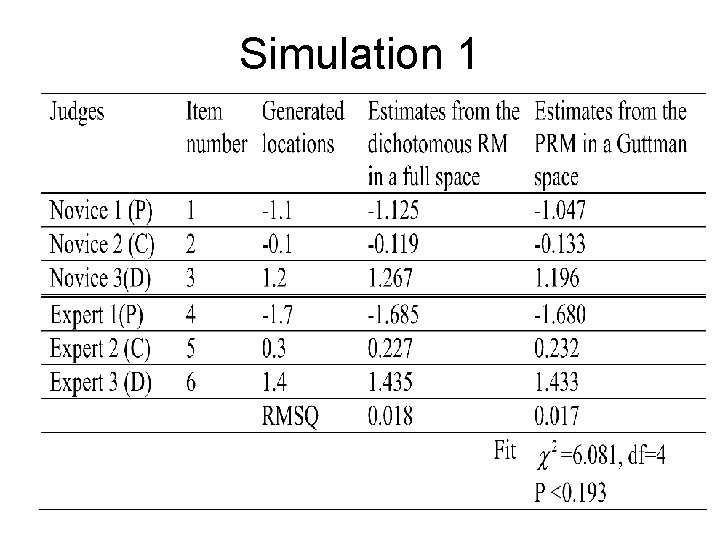
Simulation 1
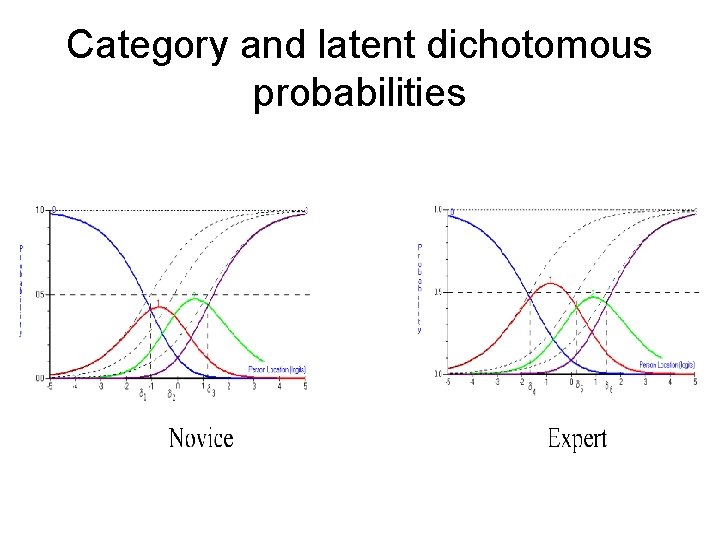
Category and latent dichotomous probabilities
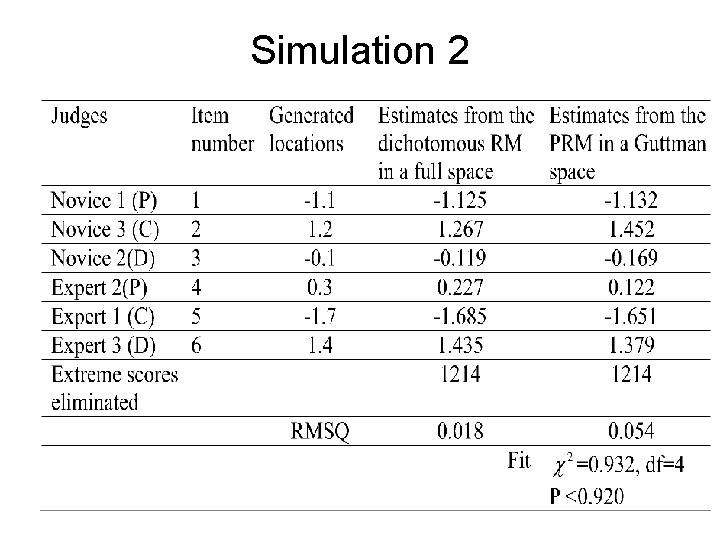
Simulation 2
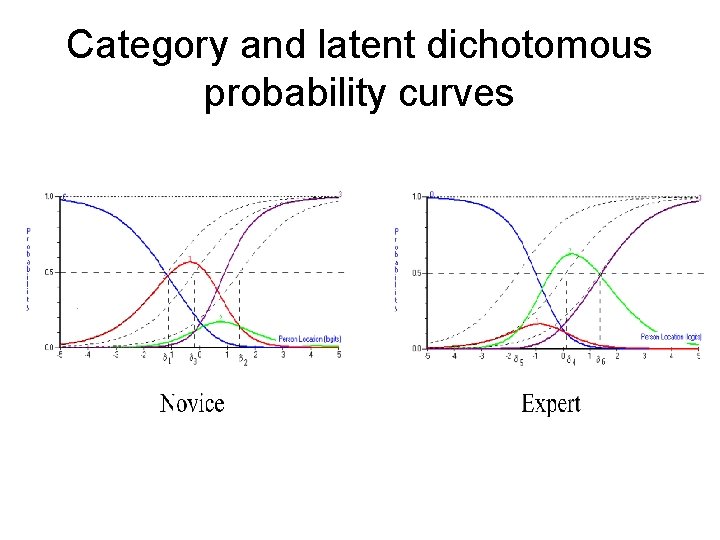
Category and latent dichotomous probability curves
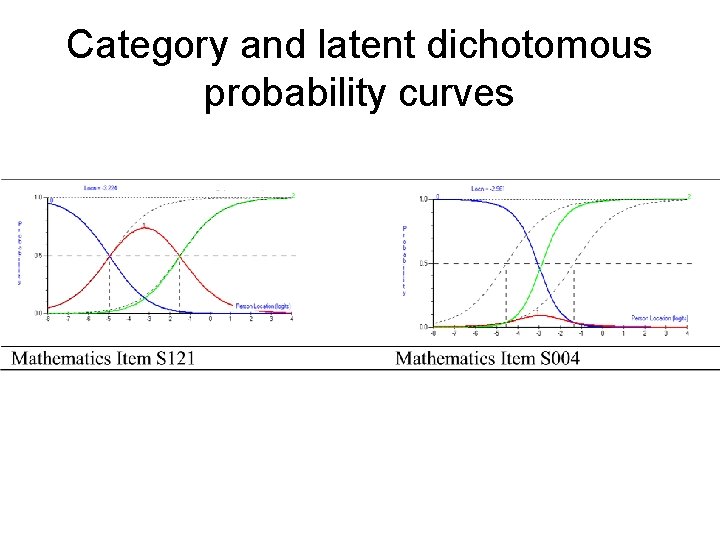
Category and latent dichotomous probability curves