
The Politics of the Gilded Age 1877 1900
- Slides: 20
The Politics of the Gilded Age, 1877 -1900 Period 6 (1865 -1898) Ch. 19 AP U. S. History
Third Party System (1854 -1896) ► Antebellum and Post War Issues(1854 -1877) ► Slavery and Emancipation ► Reconstruction policies ► Democrats § Platform ► States’ rights; laissez-faire § Factions ► Bourbon Democrats § Pro-business Democrats § Supported civil service reforms ► ► Post Reconstruction Issues (1877 -1896) ► Civil Service Reform ► Tariffs and Protectionism ► Gold Standard and Silver ► Republicans § Platform ► Radical Reconstruction ► Pro-business; tariffs; protectionism; laissez- faire § Factions ► § Preserve spoils system and machine politics Redeemer Democrats § Southern wing of Democrats § White supremacists § Coalition ► White Southerners, Catholics, Lutherans, Jews, Immigrants, working class ► Solid South Stalwarts ► Half-Breeds § Pursued civil service reform ► Mugwumps § Independents discouraged with corrupt GOP § Coalition ► Business, upper-class, middle-class, Northern WASPs, reformers, blacks, scalawags, carpetbaggers ► Northeast and West
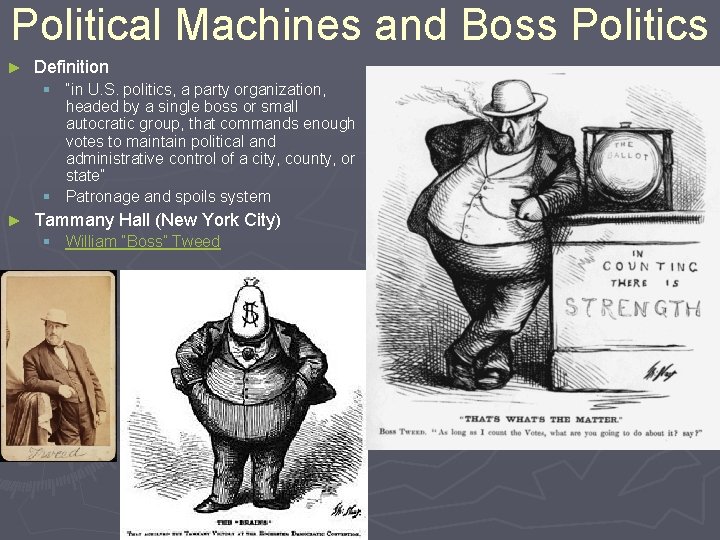
Political Machines and Boss Politics ► Definition § “in U. S. politics, a party organization, headed by a single boss or small autocratic group, that commands enough votes to maintain political and administrative control of a city, county, or state” § Patronage and spoils system ► Tammany Hall (New York City) § William “Boss” Tweed
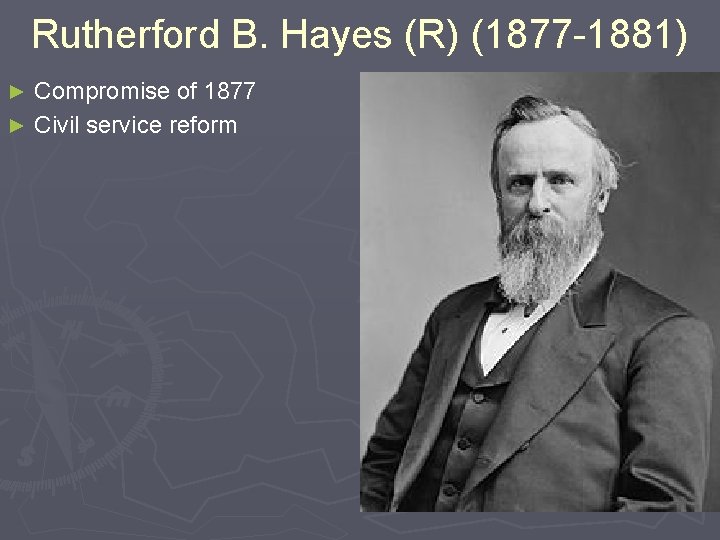
Rutherford B. Hayes (R) (1877 -1881) Compromise of 1877 ► Civil service reform ►
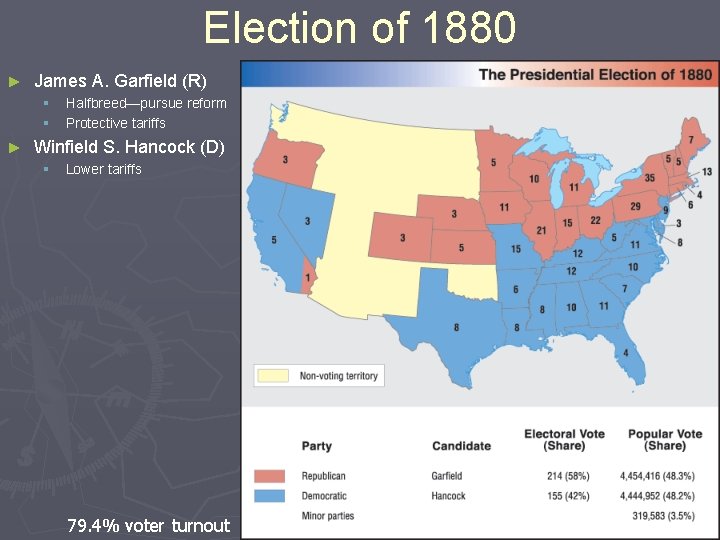
Election of 1880 ► James A. Garfield (R) § § ► Halfbreed—pursue reform Protective tariffs Winfield S. Hancock (D) § Lower tariffs 79. 4% voter turnout
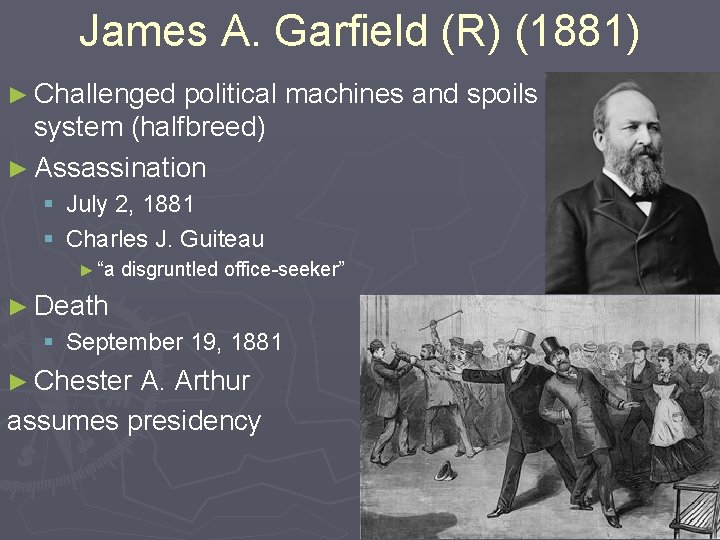
James A. Garfield (R) (1881) ► Challenged political machines and spoils system (halfbreed) ► Assassination § July 2, 1881 § Charles J. Guiteau ► “a disgruntled office-seeker” ► Death § September 19, 1881 ► Chester A. Arthur assumes presidency
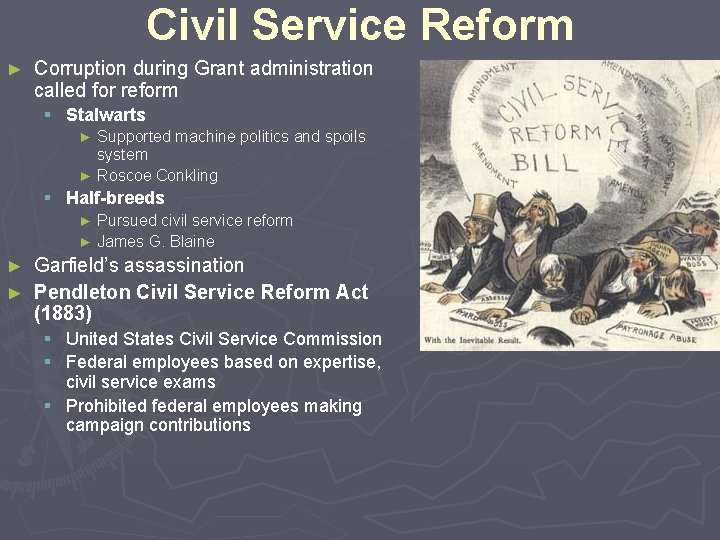
Civil Service Reform ► Corruption during Grant administration called for reform § Stalwarts Supported machine politics and spoils system ► Roscoe Conkling ► § Half-breeds Pursued civil service reform ► James G. Blaine ► Garfield’s assassination ► Pendleton Civil Service Reform Act (1883) ► § United States Civil Service Commission § Federal employees based on expertise, civil service exams § Prohibited federal employees making campaign contributions
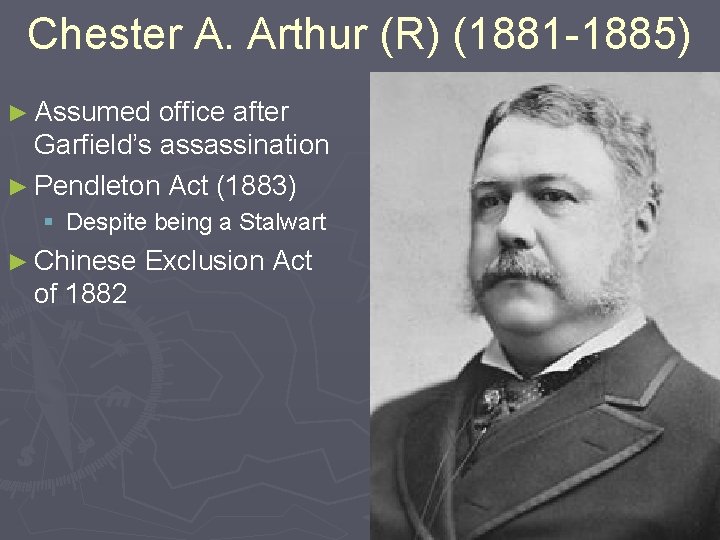
Chester A. Arthur (R) (1881 -1885) ► Assumed office after Garfield’s assassination ► Pendleton Act (1883) § Despite being a Stalwart ► Chinese Exclusion Act of 1882
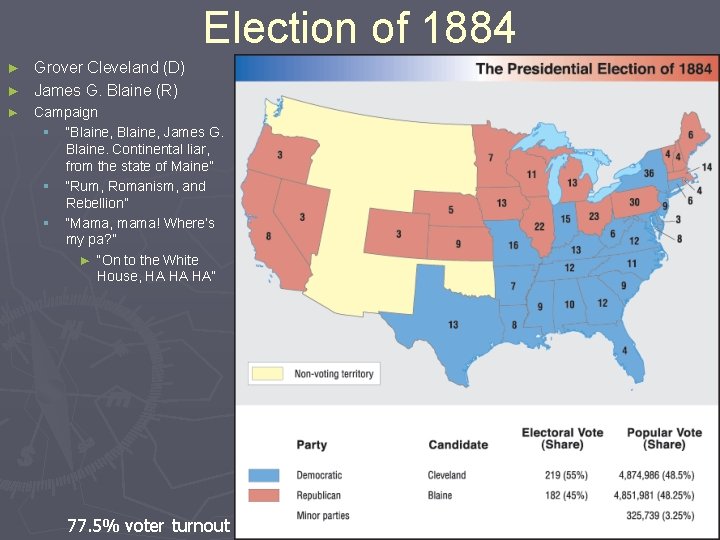
Election of 1884 Grover Cleveland (D) ► James G. Blaine (R) ► ► Campaign § “Blaine, James G. Blaine. Continental liar, from the state of Maine” § “Rum, Romanism, and Rebellion” § “Mama, mama! Where’s my pa? ” ► “On to the White House, HA HA HA” 77. 5% voter turnout
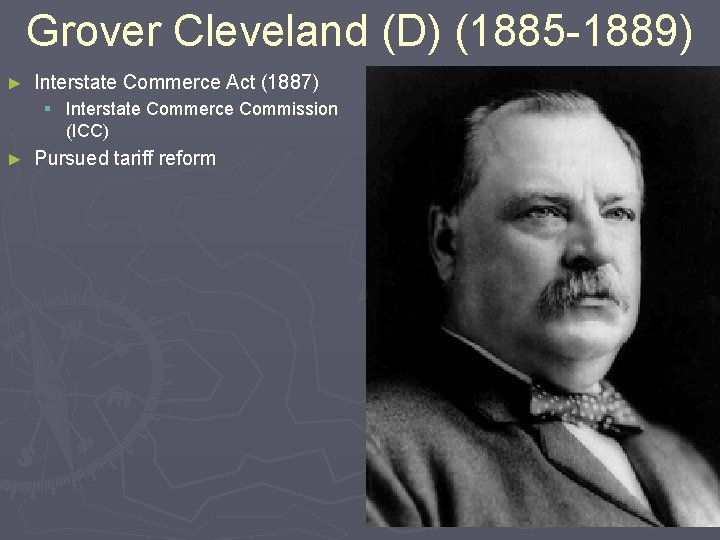
Grover Cleveland (D) (1885 -1889) ► Interstate Commerce Act (1887) § Interstate Commerce Commission (ICC) ► Pursued tariff reform
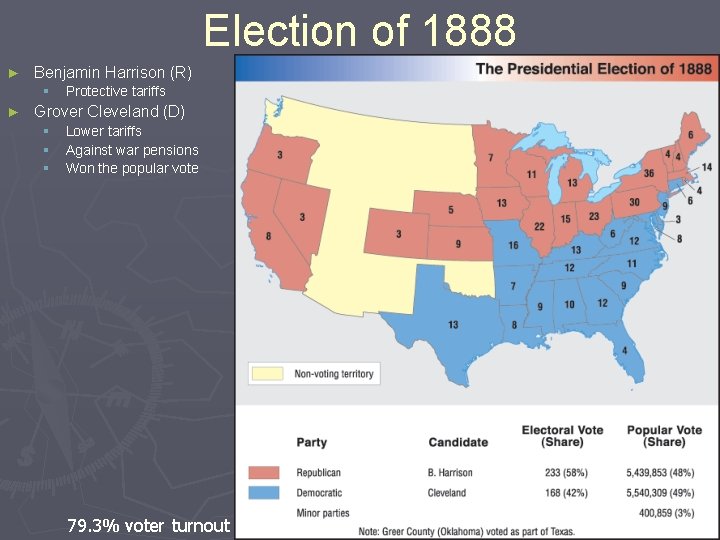
Election of 1888 ► Benjamin Harrison (R) § ► Protective tariffs Grover Cleveland (D) § § § Lower tariffs Against war pensions Won the popular vote 79. 3% voter turnout
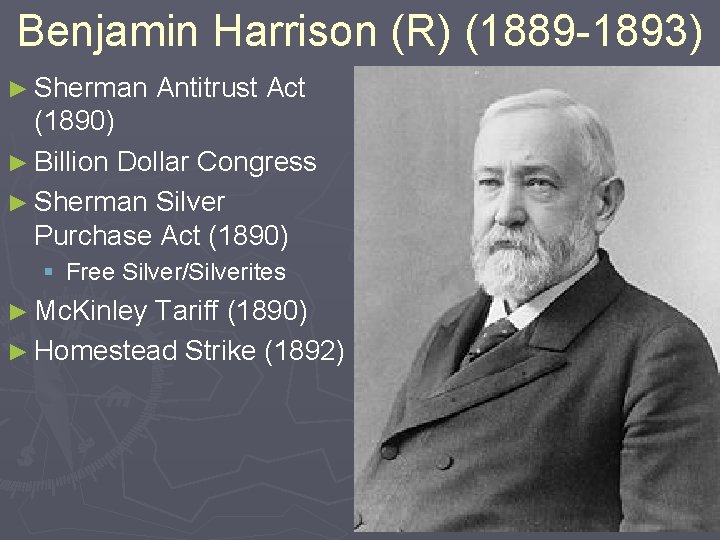
Benjamin Harrison (R) (1889 -1893) ► Sherman Antitrust Act (1890) ► Billion Dollar Congress ► Sherman Silver Purchase Act (1890) § Free Silver/Silverites ► Mc. Kinley Tariff (1890) ► Homestead Strike (1892)
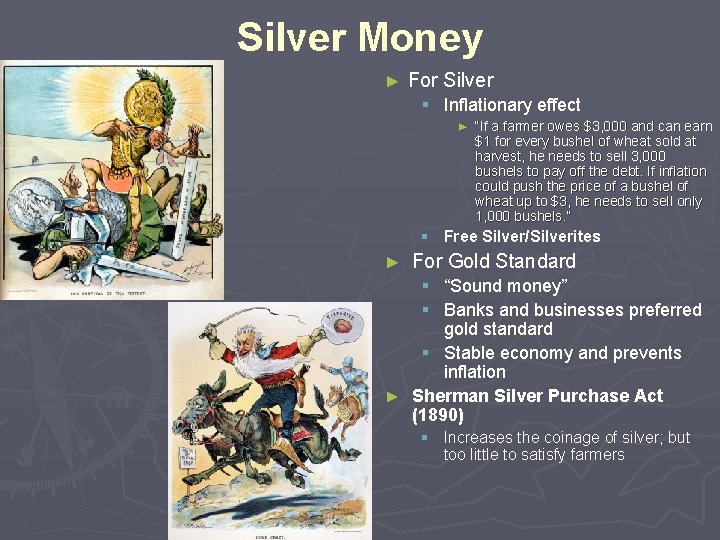
Silver Money ► For Silver § Inflationary effect ► “If a farmer owes $3, 000 and can earn $1 for every bushel of wheat sold at harvest, he needs to sell 3, 000 bushels to pay off the debt. If inflation could push the price of a bushel of wheat up to $3, he needs to sell only 1, 000 bushels. ” § Free Silver/Silverites ► For Gold Standard § “Sound money” § Banks and businesses preferred gold standard § Stable economy and prevents inflation ► Sherman Silver Purchase Act (1890) § Increases the coinage of silver; but too little to satisfy farmers
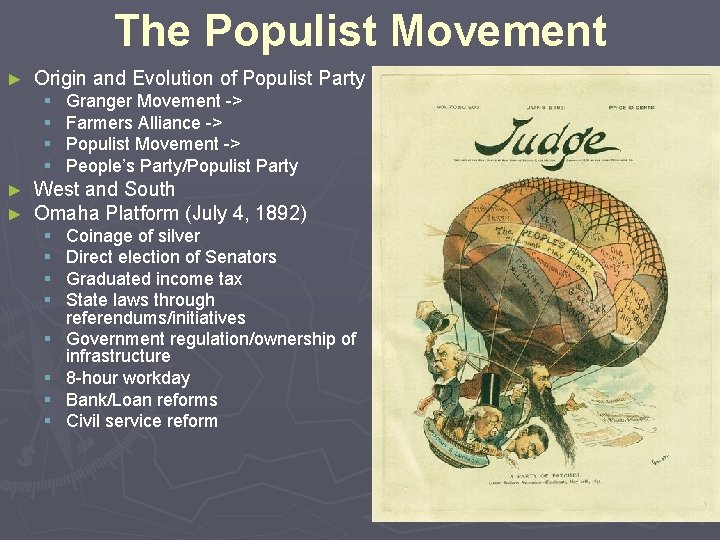
The Populist Movement ► Origin and Evolution of Populist Party § § ► ► Granger Movement -> Farmers Alliance -> Populist Movement -> People’s Party/Populist Party West and South Omaha Platform (July 4, 1892) § § § § Coinage of silver Direct election of Senators Graduated income tax State laws through referendums/initiatives Government regulation/ownership of infrastructure 8 -hour workday Bank/Loan reforms Civil service reform
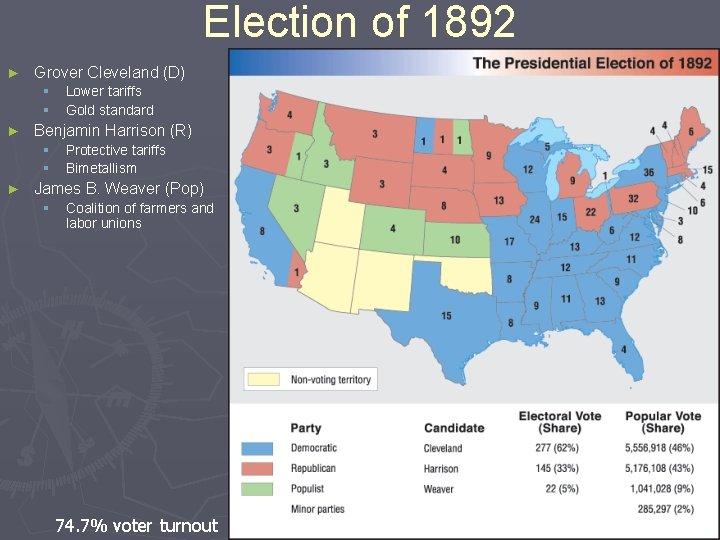
Election of 1892 ► Grover Cleveland (D) § § ► Benjamin Harrison (R) § § ► Lower tariffs Gold standard Protective tariffs Bimetallism James B. Weaver (Pop) § Coalition of farmers and labor unions 74. 7% voter turnout
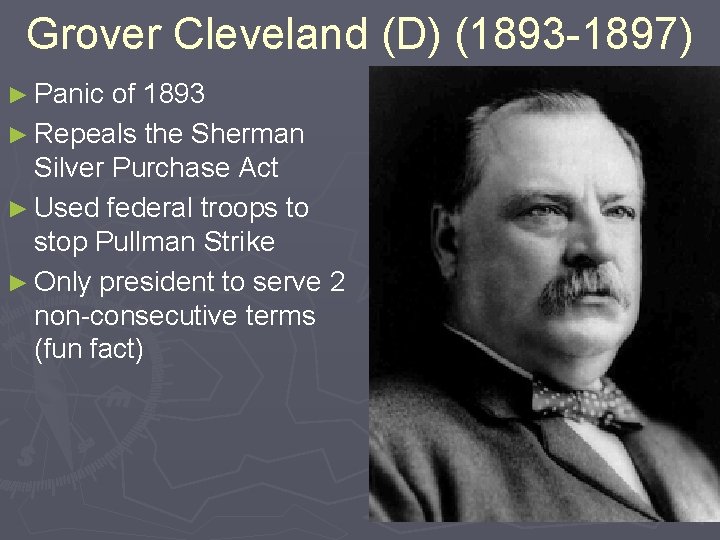
Grover Cleveland (D) (1893 -1897) ► Panic of 1893 ► Repeals the Sherman Silver Purchase Act ► Used federal troops to stop Pullman Strike ► Only president to serve 2 non-consecutive terms (fun fact)
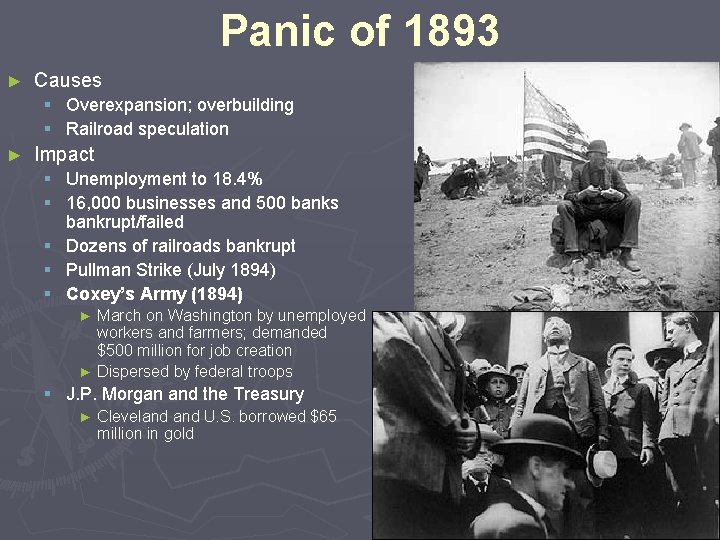
Panic of 1893 ► Causes § Overexpansion; overbuilding § Railroad speculation ► Impact § Unemployment to 18. 4% § 16, 000 businesses and 500 banks bankrupt/failed § Dozens of railroads bankrupt § Pullman Strike (July 1894) § Coxey’s Army (1894) March on Washington by unemployed workers and farmers; demanded $500 million for job creation ► Dispersed by federal troops ► § J. P. Morgan and the Treasury ► Cleveland U. S. borrowed $65 million in gold
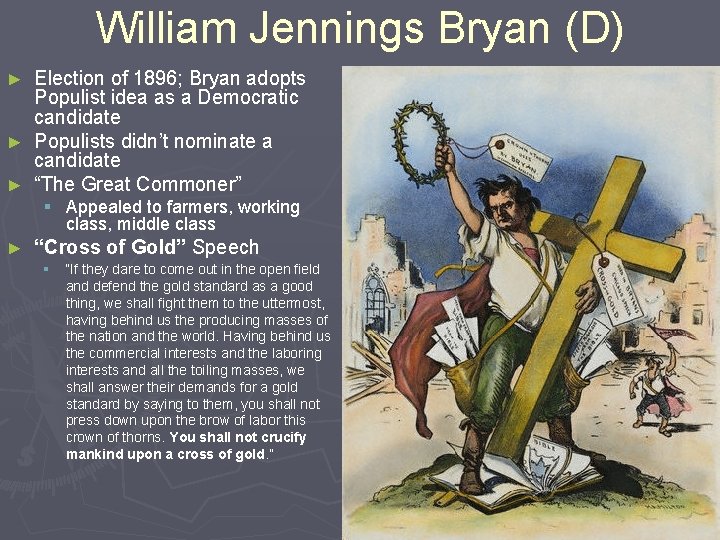
William Jennings Bryan (D) Election of 1896; Bryan adopts Populist idea as a Democratic candidate ► Populists didn’t nominate a candidate ► “The Great Commoner” ► § Appealed to farmers, working class, middle class ► “Cross of Gold” Speech § “If they dare to come out in the open field and defend the gold standard as a good thing, we shall fight them to the uttermost, having behind us the producing masses of the nation and the world. Having behind us the commercial interests and the laboring interests and all the toiling masses, we shall answer their demands for a gold standard by saying to them, you shall not press down upon the brow of labor this crown of thorns. You shall not crucify mankind upon a cross of gold. ”
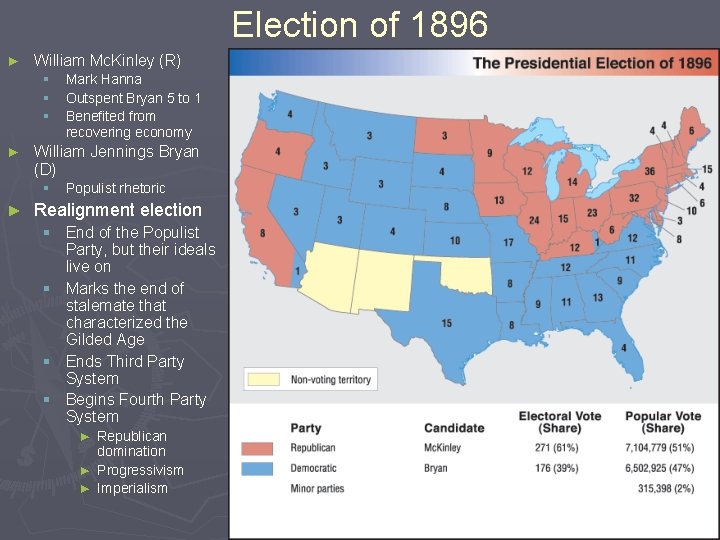
Election of 1896 ► William Mc. Kinley (R) § § § ► William Jennings Bryan (D) § ► Mark Hanna Outspent Bryan 5 to 1 Benefited from recovering economy Populist rhetoric Realignment election § End of the Populist Party, but their ideals live on § Marks the end of stalemate that characterized the Gilded Age § Ends Third Party System § Begins Fourth Party System ► Republican domination ► Progressivism ► Imperialism
Fourth Party System (1896 -1932) ► Republicans § Dominated the federal government during this era § Coalition ► Industrialists, corporations, upper-class, fundamentalists, Northeast § Nationalists and Imperialists The parties are not static; there will be deviations in both parties and what they believe in throughout this era. We will go over this info in Period 7. ► Democrats § Coalition ► Solid South, western farmers, urban immigrants, working class § Laissez-faire policies