
The Political System of Ancient Rome Main Contents
- Slides: 69
第三讲 古代罗马的政治制度 The Political System of Ancient Rome
Main Contents v I. The Setup of Ancient Rome v II. The Kingship and the setup of Republic of Ancient Rome v III. The Political system of Republic of Ancient Rome v IV. The Political system of the Empire of Ancient Rome
The Important and Difficult v 1. The military democracy of Kingship Age v 2. Reform of Servius Tullius v 3. Democratization at the beginning of the Republic v 4. Political system of Republic v 5. Political system of Empire
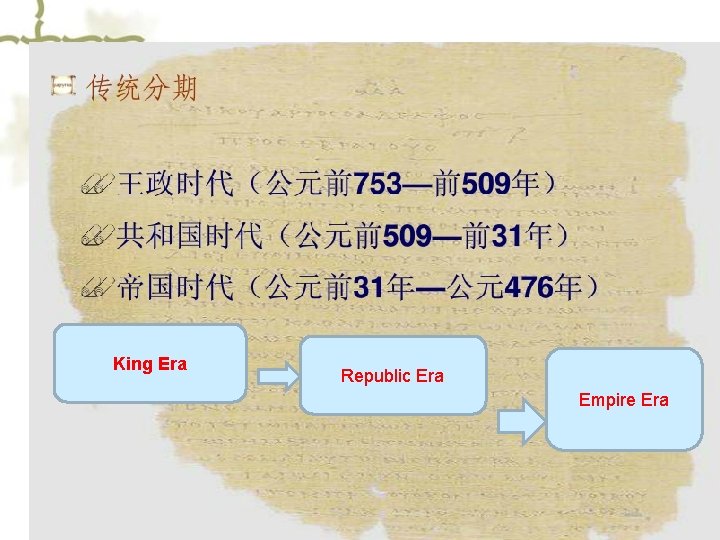
King Era Republic Era Empire Era
I. The Founding of the Old Rome v v 1. The Overview in the early Old Rome 2. The Tribe democracy in the early Old Rome
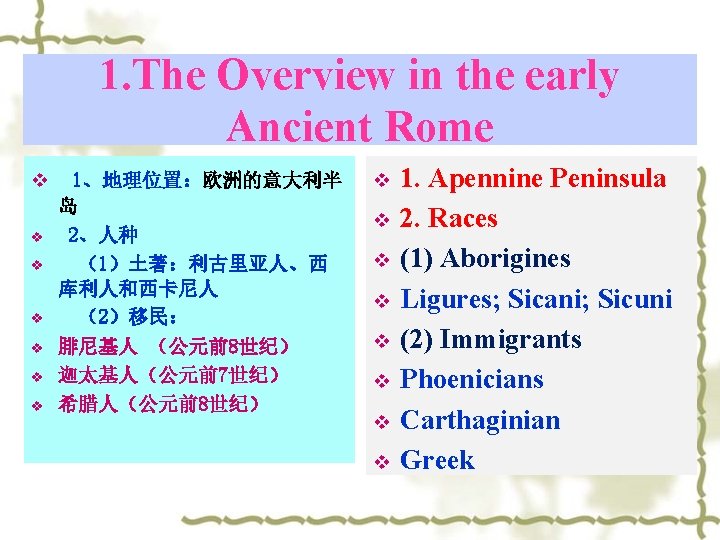
1. The Overview in the early Ancient Rome v v v v 1、地理位置:欧洲的意大利半 岛 2、人种 (1)土著:利古里亚人、西 库利人和西卡尼人 (2)移民: 腓尼基人 (公元前8世纪) 迦太基人(公元前7世纪) 希腊人(公元前8世纪) v v v v 1. Apennine Peninsula 2. Races (1) Aborigines Ligures; Sicani; Sicuni (2) Immigrants Phoenicians Carthaginian Greek
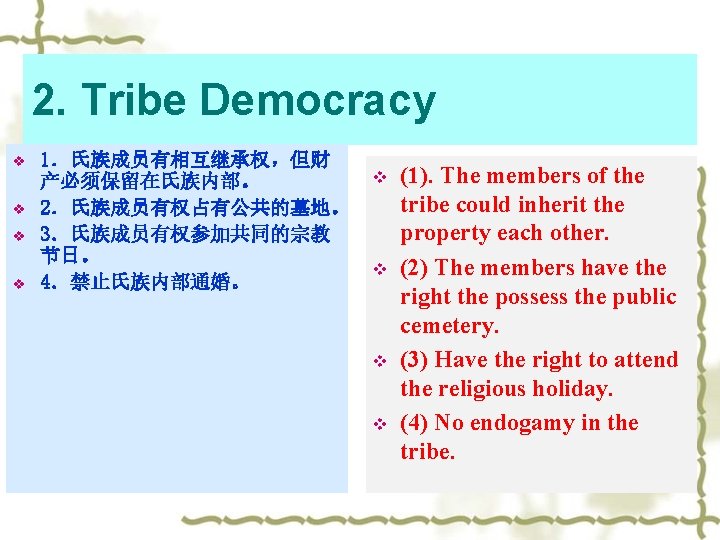
2. Tribe Democracy v v 1.氏族成员有相互继承权,但财 产必须保留在氏族内部。 2.氏族成员有权占有公共的墓地。 3.氏族成员有权参加共同的宗教 节日。 4.禁止氏族内部通婚。 v v (1). The members of the tribe could inherit the property each other. (2) The members have the right the possess the public cemetery. (3) Have the right to attend the religious holiday. (4) No endogamy in the tribe.
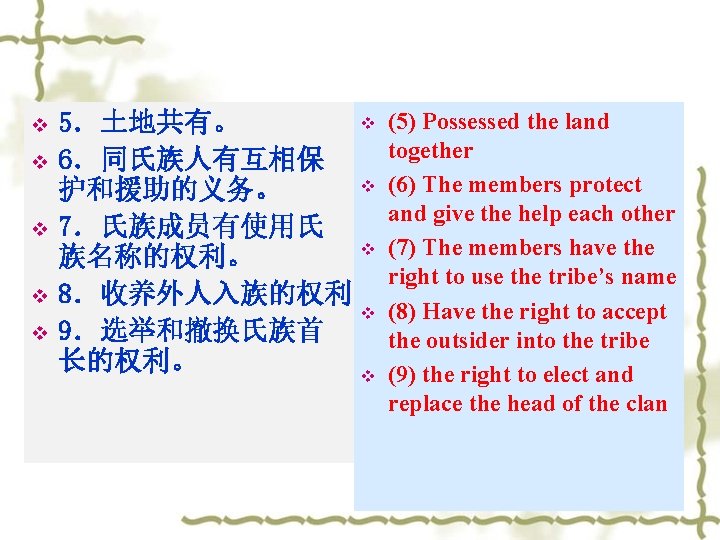
v v v (5) Possessed the land 5.土地共有。 together 6.同氏族人有互相保 v (6) The members protect 护和援助的义务。 and give the help each other 7.氏族成员有使用氏 v (7) The members have the 族名称的权利。 right to use the tribe’s name 8.收养外人入族的权利。 v (8) Have the right to accept 9.选举和撤换氏族首 the outsider into the tribe 长的权利。 v (9) the right to elect and replace the head of the clan
II. King System v 1. Military Democracy in King Era v 2. The differentiation of the Class in the later King Era v 3. Reform of Servius Tullius
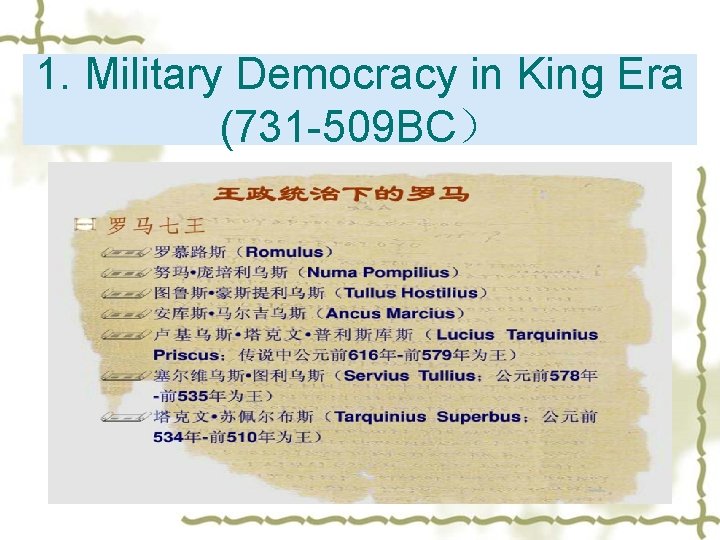
1. Military Democracy in King Era (731 -509 BC)
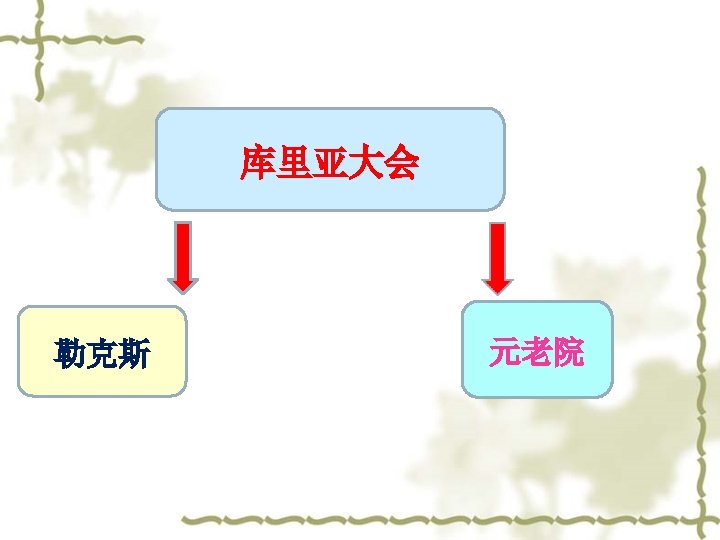
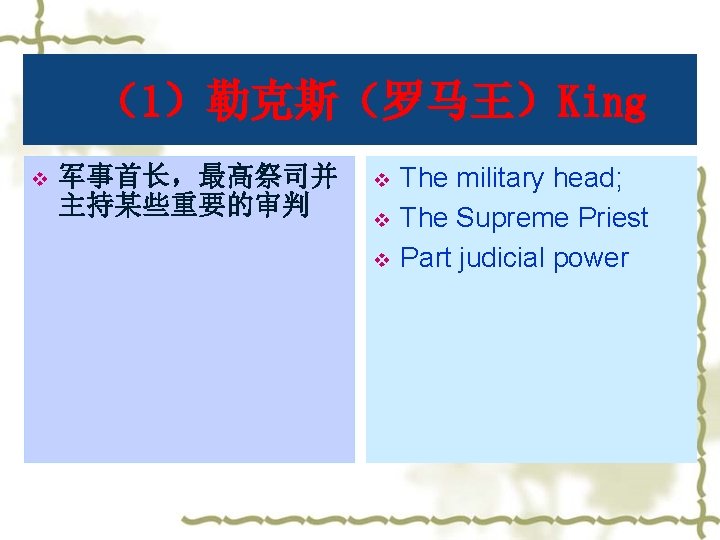
(1)勒克斯(罗马王)King v 军事首长,最高祭司并 主持某些重要的审判 v v v The military head; The Supreme Priest Part judicial power
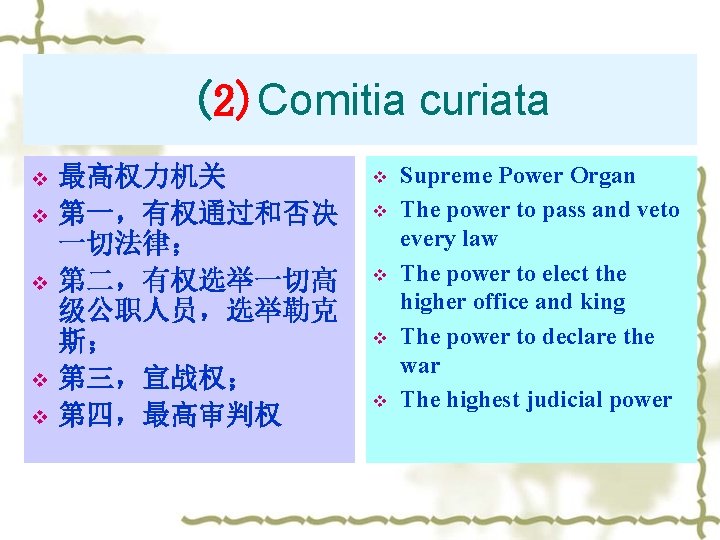
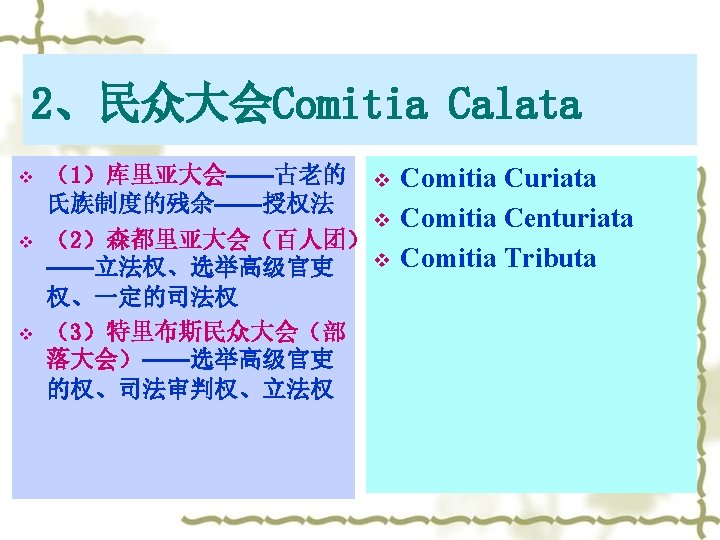
(2)Comitia curiata v v v 最高权力机关 第一,有权通过和否决 一切法律; 第二,有权选举一切高 级公职人员,选举勒克 斯; 第三,宣战权; 第四,最高审判权 v v v Supreme Power Organ The power to pass and veto every law The power to elect the higher office and king The power to declare the war The highest judicial power
(3)元老院 Curia v v 300名氏族贵族组成 第一,有权讨论并提出 新的法律,交由库里亚 大会通过 ; 第二,媾和权; 第三,处理罗马的公共 事务 v v 300 aristocrats The power to discuss and propose the law The power to make peace Deal with the public affairs
2. The Class differentiation in the late King Era v v (1)出现了奴隶制 (2)自由公民内部逐 渐形成贵族、被保护人 以及平民三个阶层 v v The slavery appeared Three class: aristocrats, protégé and Plebs
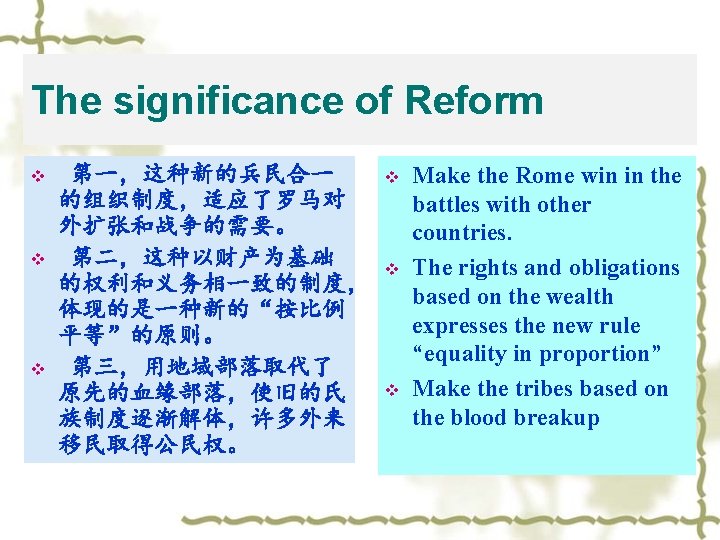
3. Reform of Servius Tullius (578 BC— 534 BC) v v 1、进行财产普查和划分财 产等级。 2、按照财产等级规定兵役 义务。 3、创立“森都里亚”大会 为新的民众大会,贵族平民 均可以参加。 4、打破原氏族制度的限制。 v v Carry out the general survey of wealth and divide the wealthy class Regulate the military service based on the wealthy class Set up new Centuria Break the limit of the original tribe system
II. Political System of Republic Era( 509 BC—— 28 BC) v 1. Democratization and the Struggle between the Plebs v 2. Political system of Republic v 3. Manage of Rome to the Conquered AREA
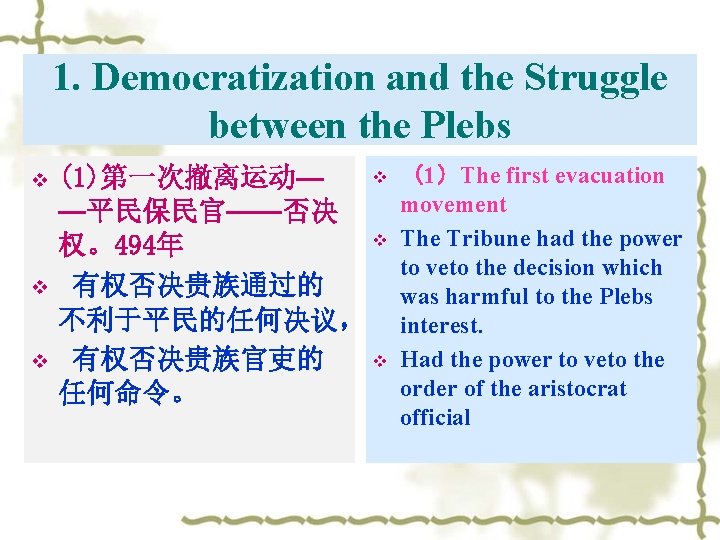
1. Democratization and the Struggle between the Plebs v v (1)第一次撤离运动— —平民保民官——否决 v 权。494年 有权否决贵族通过的 不利于平民的任何决议, v 有权否决贵族官吏的 任何命令。 (1)The first evacuation movement The Tribune had the power to veto the decision which was harmful to the Plebs interest. Had the power to veto the order of the aristocrat official
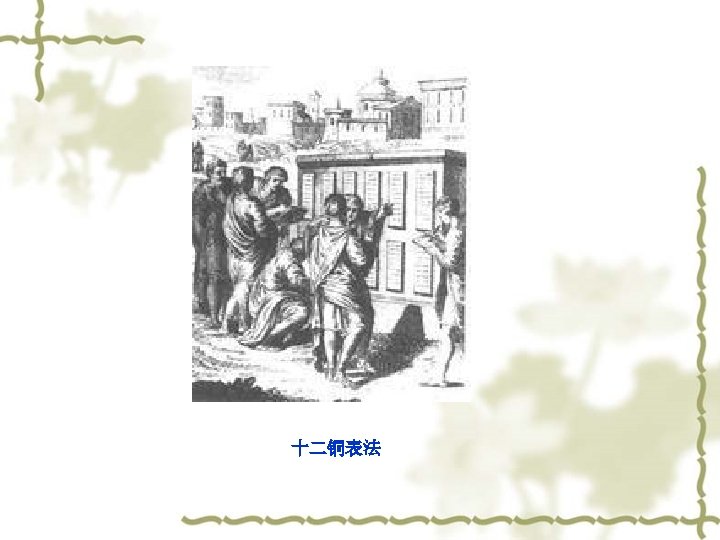
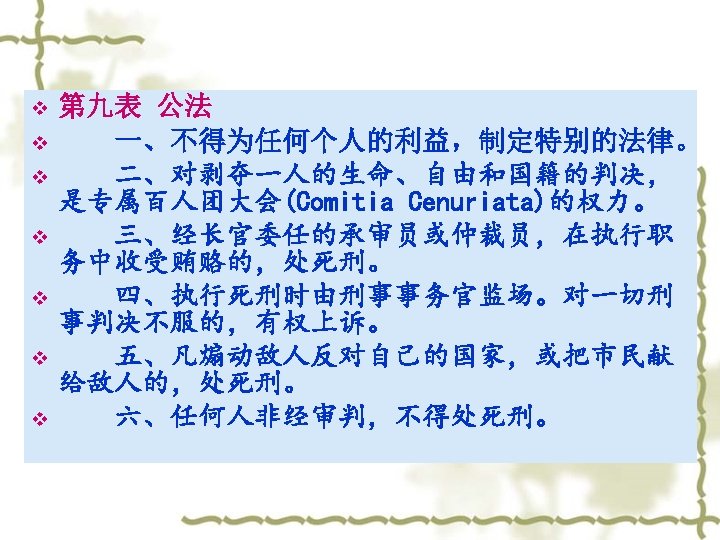
(3)The Third Evacuation Movement v 第三次撤离运动(公元 前449年)——十二表 法的公布。 v Twelve Tables
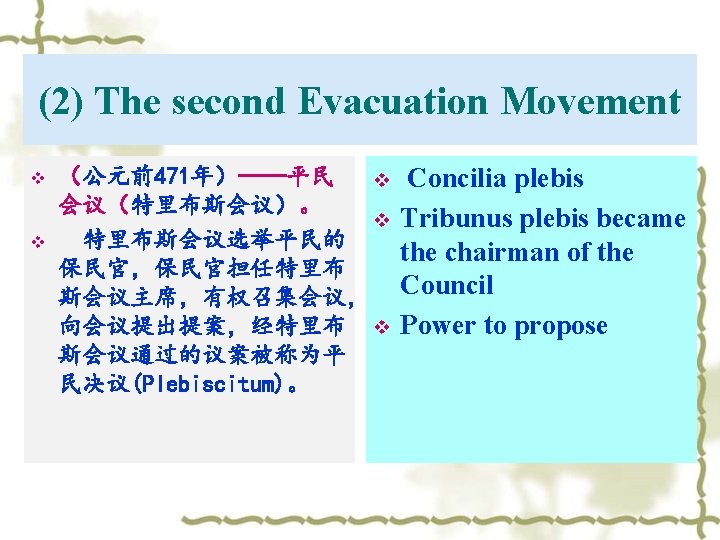
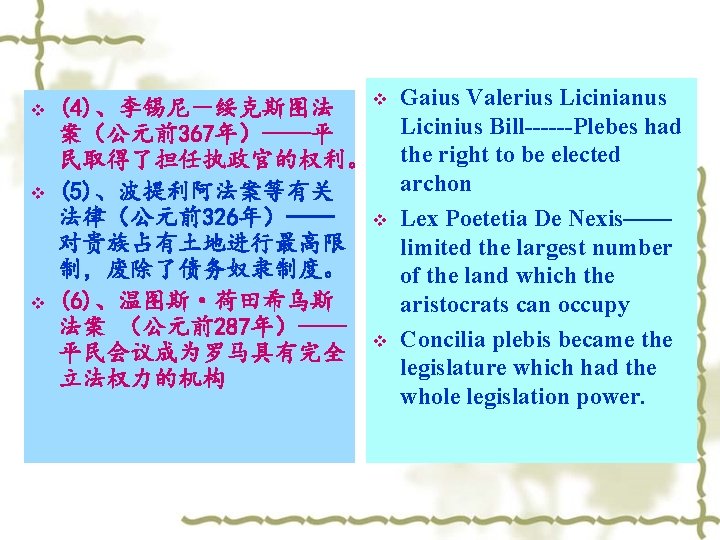
v v (4)、李锡尼-绥克斯图法 案(公元前367年)——平 民取得了担任执政官的权利。 (5)、波提利阿法案等有关 法律(公元前326年)—— v 对贵族占有土地进行最高限 制,废除了债务奴隶制度。 (6)、温图斯·荷田希乌斯 法案 (公元前287年)—— v 平民会议成为罗马具有完全 立法权力的机构 Gaius Valerius Licinianus Licinius Bill------Plebes had the right to be elected archon Lex Poetetia De Nexis—— limited the largest number of the land which the aristocrats can occupy Concilia plebis became the legislature which had the whole legislation power.
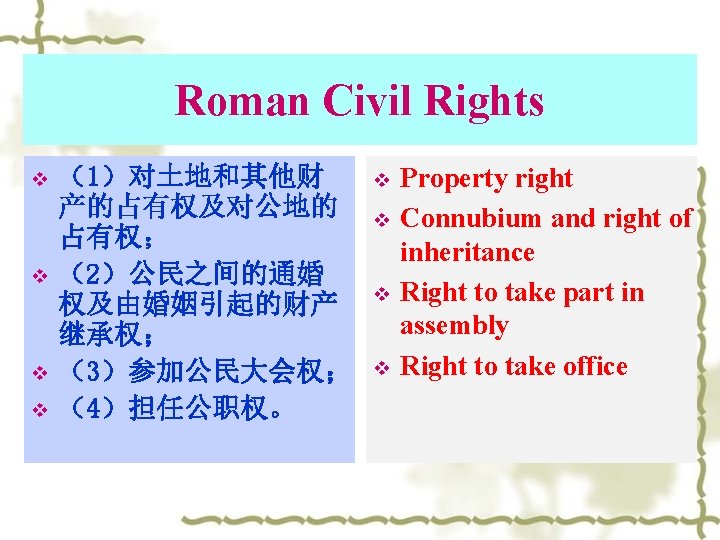
Roman Civil Rights v v (1)对土地和其他财 产的占有权及对公地的 占有权; (2)公民之间的通婚 权及由婚姻引起的财产 继承权; (3)参加公民大会权; (4)担任公职权。 v v Property right Connubium and right of inheritance Right to take part in assembly Right to take office
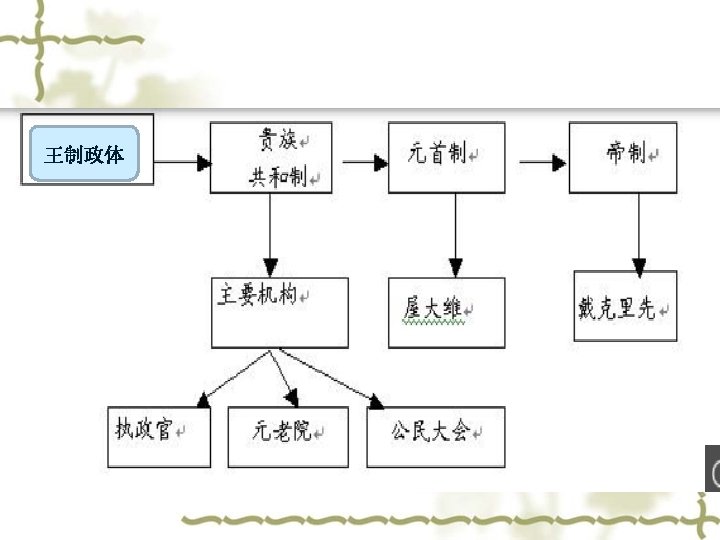
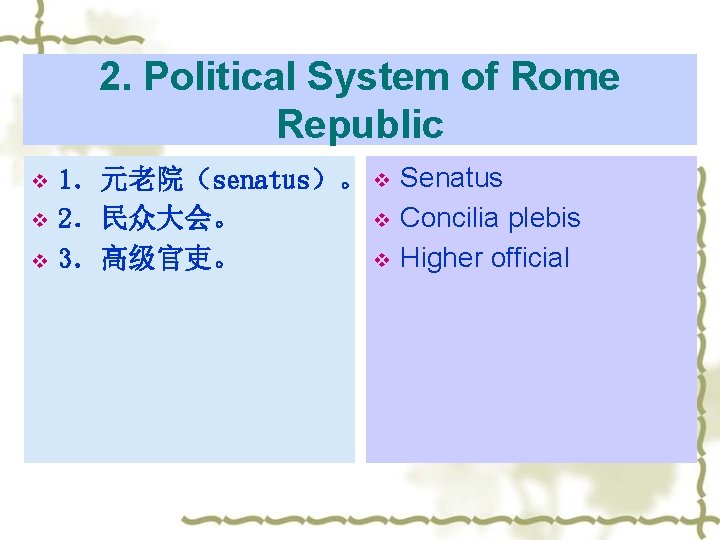
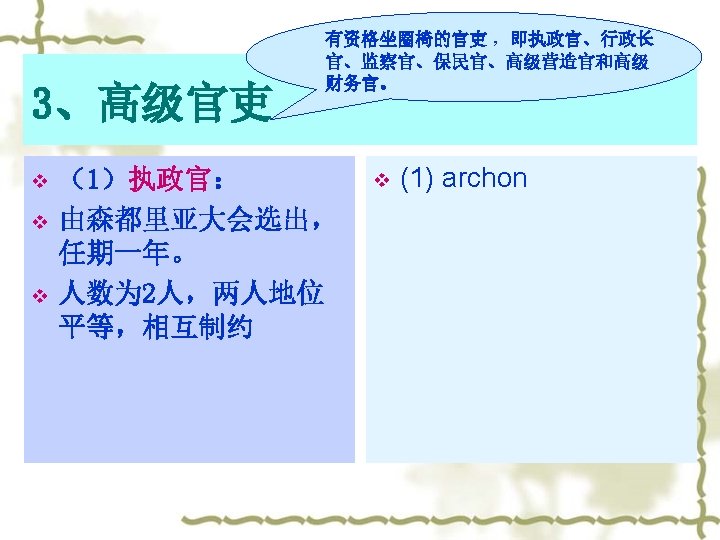
2. Political System of Rome Republic v v v 1.元老院(senatus)。 v Senatus v Concilia plebis 2.民众大会。 v Higher official 3.高级官吏。
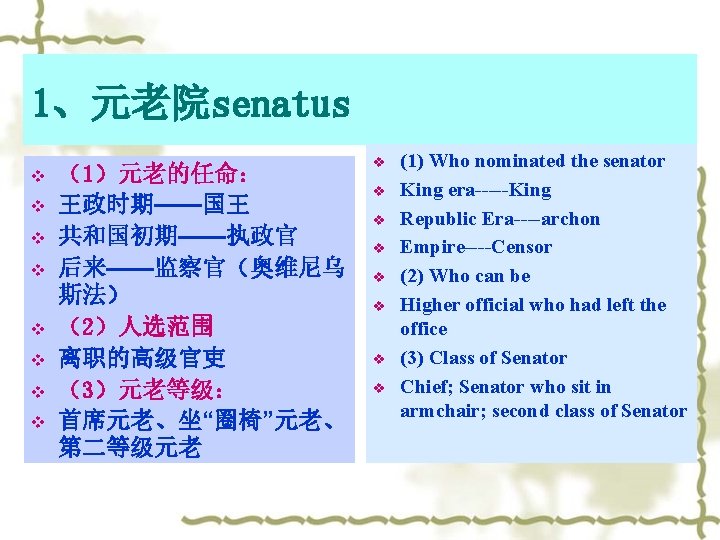
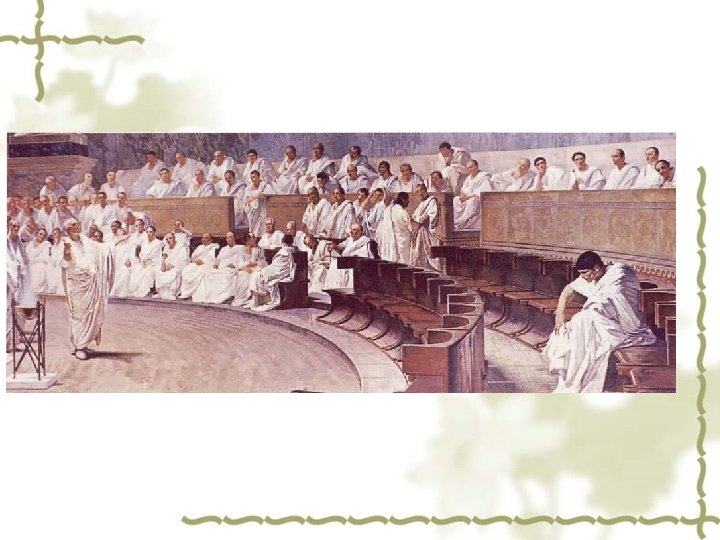
1、元老院senatus v v v v (1)元老的任命: 王政时期——国王 共和国初期——执政官 后来——监察官(奥维尼乌 斯法) (2)人选范围 离职的高级官吏 (3)元老等级: 首席元老、坐“圈椅”元老、 第二等级元老 v v v v (1) Who nominated the senator King era-----King Republic Era----archon Empire----Censor (2) Who can be Higher official who had left the office (3) Class of Senator Chief; Senator who sit in armchair; second class of Senator
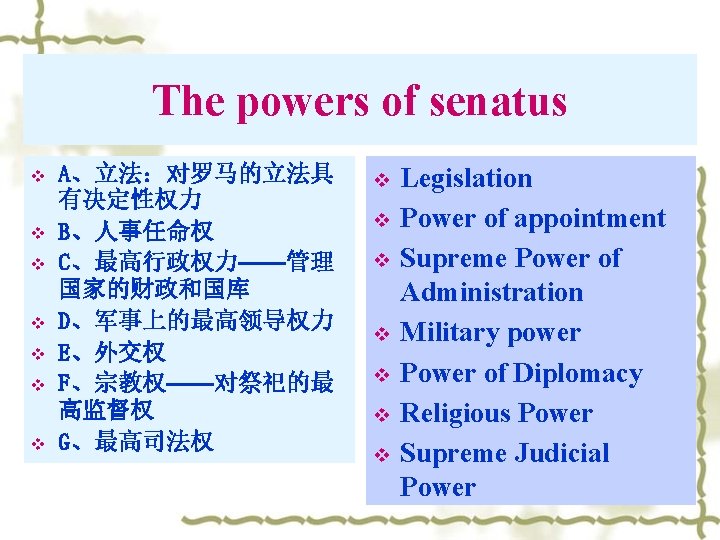
The powers of senatus v v v v A、立法:对罗马的立法具 有决定性权力 B、人事任命权 C、最高行政权力——管理 国家的财政和国库 D、军事上的最高领导权力 E、外交权 F、宗教权——对祭祀的最 高监督权 G、最高司法权 v v v v Legislation Power of appointment Supreme Power of Administration Military power Power of Diplomacy Religious Power Supreme Judicial Power
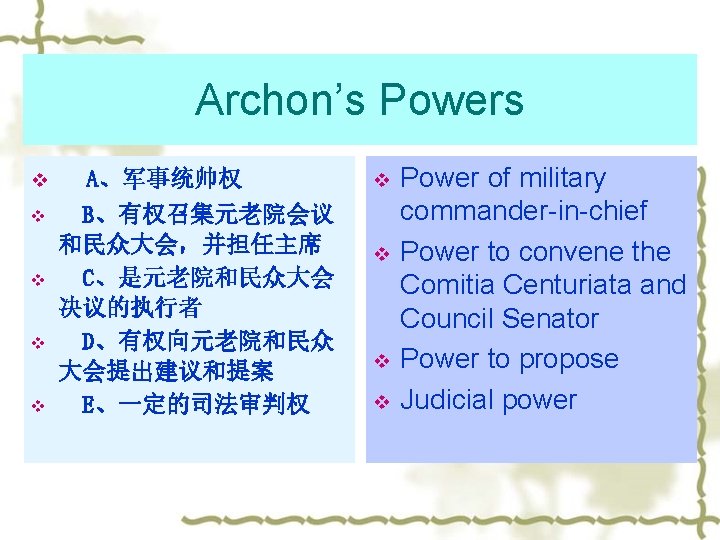
Archon’s Powers v v v A、军事统帅权 B、有权召集元老院会议 和民众大会,并担任主席 C、是元老院和民众大会 决议的执行者 D、有权向元老院和民众 大会提出建议和提案 E、一定的司法审判权 v v Power of military commander-in-chief Power to convene the Comitia Centuriata and Council Senator Power to propose Judicial power
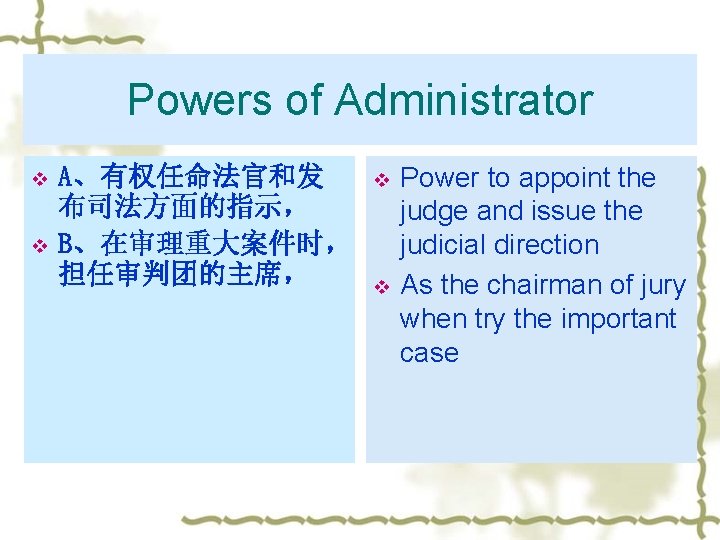
Powers of Administrator v v A、有权任命法官和发 布司法方面的指示, B、在审理重大案件时, 担任审判团的主席, v v Power to appoint the judge and issue the judicial direction As the chairman of jury when try the important case
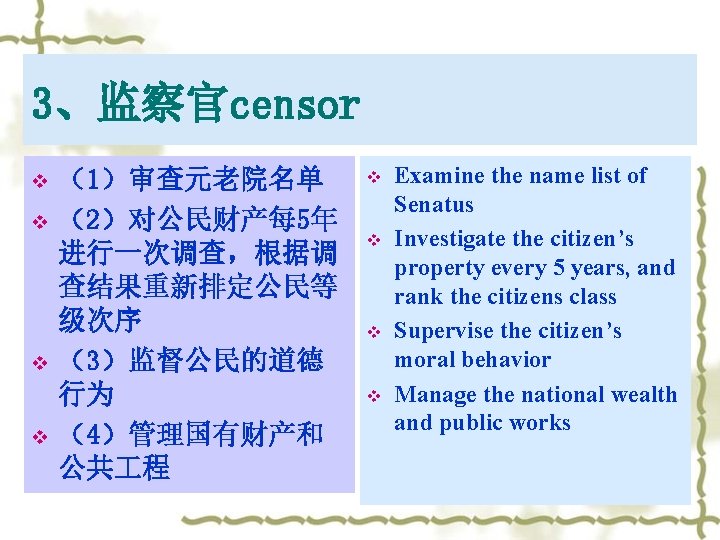
3、监察官censor v v (1)审查元老院名单 (2)对公民财产每 5年 进行一次调查,根据调 查结果重新排定公民等 级次序 (3)监督公民的道德 行为 (4)管理国有财产和 公共 程 v v Examine the name list of Senatus Investigate the citizen’s property every 5 years, and rank the citizens class Supervise the citizen’s moral behavior Manage the national wealth and public works
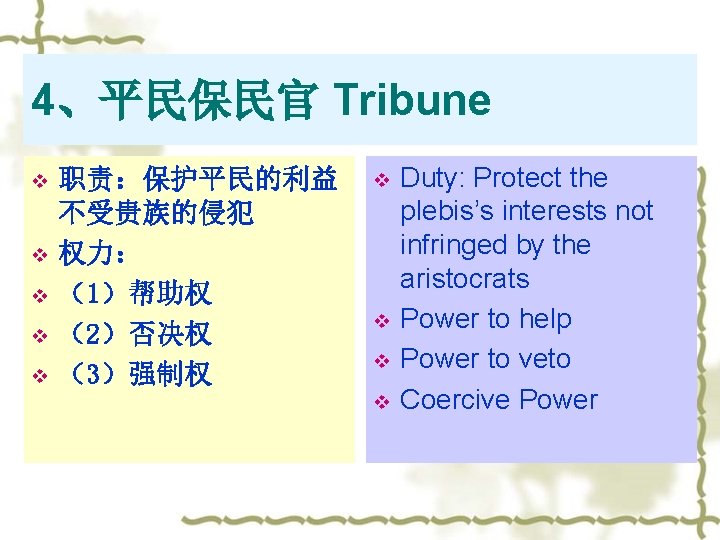
4、平民保民官 Tribune v v v 职责:保护平民的利益 不受贵族的侵犯 权力: (1)帮助权 (2)否决权 (3)强制权 v v Duty: Protect the plebis’s interests not infringed by the aristocrats Power to help Power to veto Coercive Power
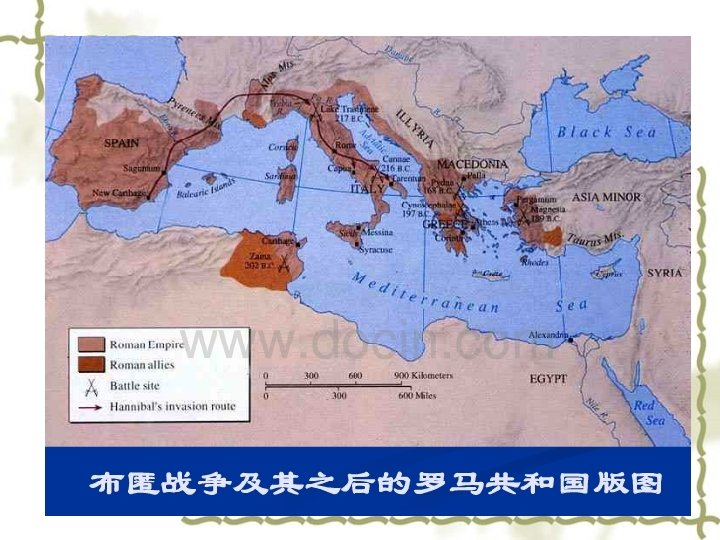
1. The transition from the Republic to Empire v (1)第二次布匿战争后, v Second Punic Wars---The bankrupt of the 罗马-意大利的经济社 会结构发生巨大变化— small farmer —小农破产
v (3)罗马骑士演化为一 种新社会等级。 v Knight become a new social rank
(4)Intensification of Class contradictions v v v A. 奴隶的大规模起义(公元前138 —前132年和公元前104—前101 年的两次西西里奴隶起义和公元 前73—前71年斯巴达克起义) B. 被征服地区的人民对罗马统治 的反抗和暴乱(公元前91年—— 88年意大利人的同盟战争) C. 罗马平民、无产者与罗马统治 者的矛盾使共和国长期陷于危机 之中 v v v The large-scale revolt of slave The rebellion from the citizens in the conquered area to the Rome The class contradictions between the Plebs, proletarian and ruler
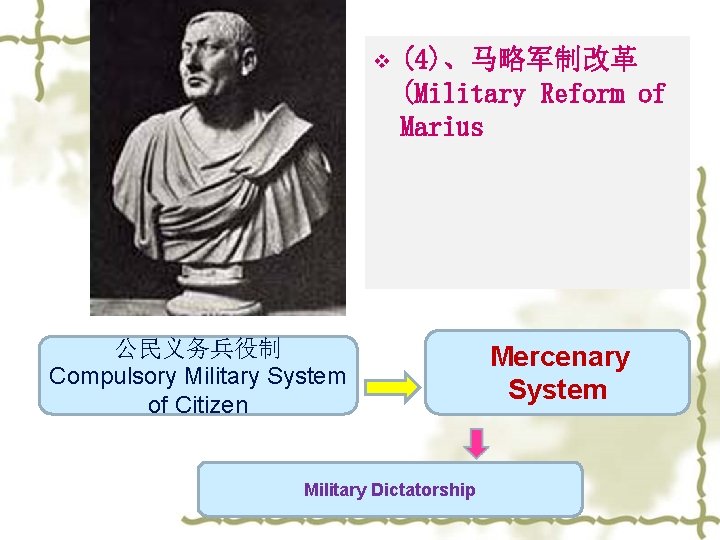
v (4)、马略军制改革 (Military Reform of Marius 公民义务兵役制 Compulsory Military System of Citizen Military Dictatorship Mercenary System
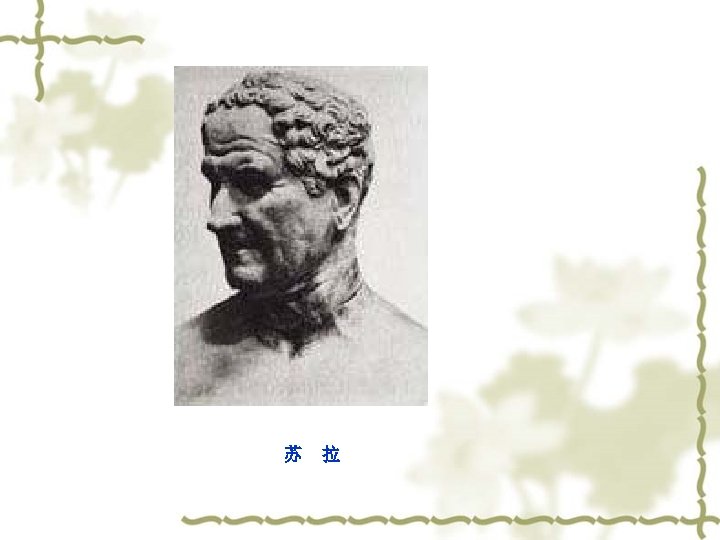
(5)、Reform of Saola v v v A. “公敌宣告法” B. 加强元老院的权力, 提高元老院地位。 C. 部分取消了保民官对 政府官吏的否决权 v v v Bill of Public enemy Strengthen the power of the Senatus Partly abolish the veto of the tribune
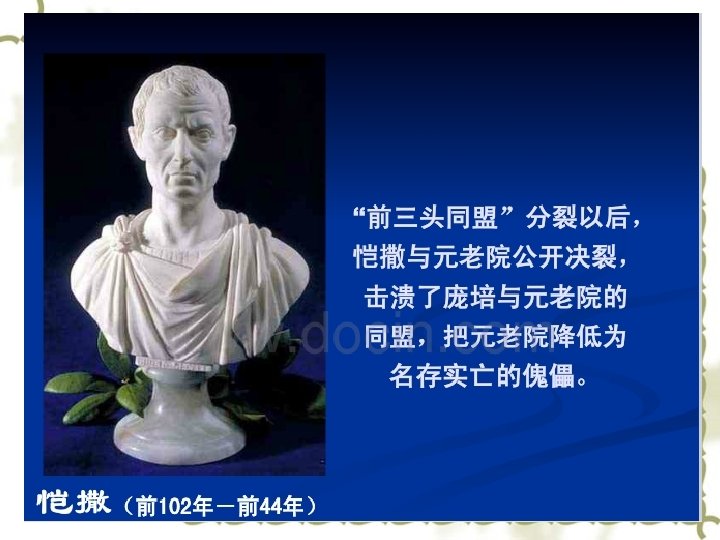
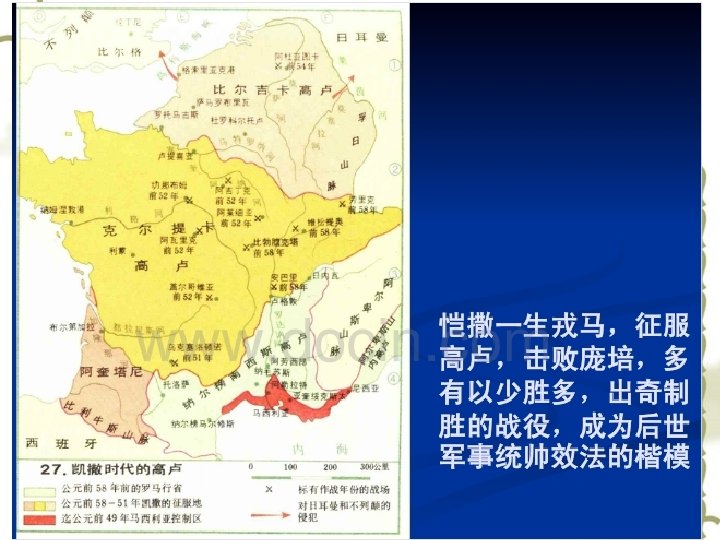
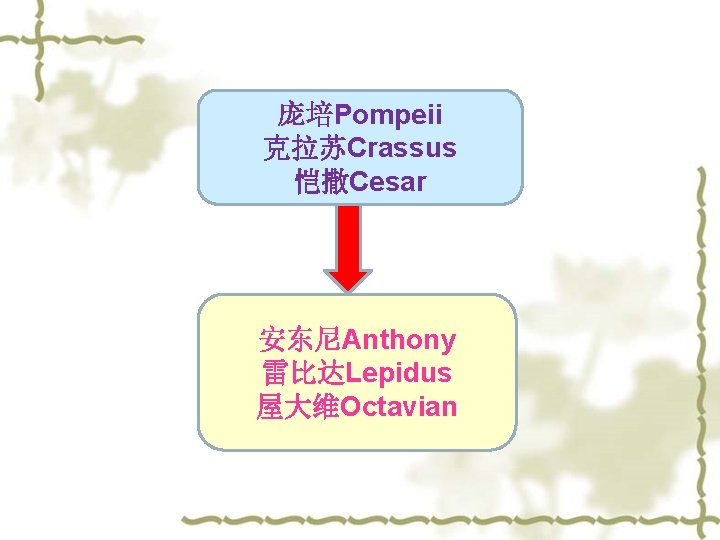
庞培Pompeii 克拉苏Crassus 恺撒Cesar 安东尼Anthony 雷比达Lepidus 屋大维Octavian
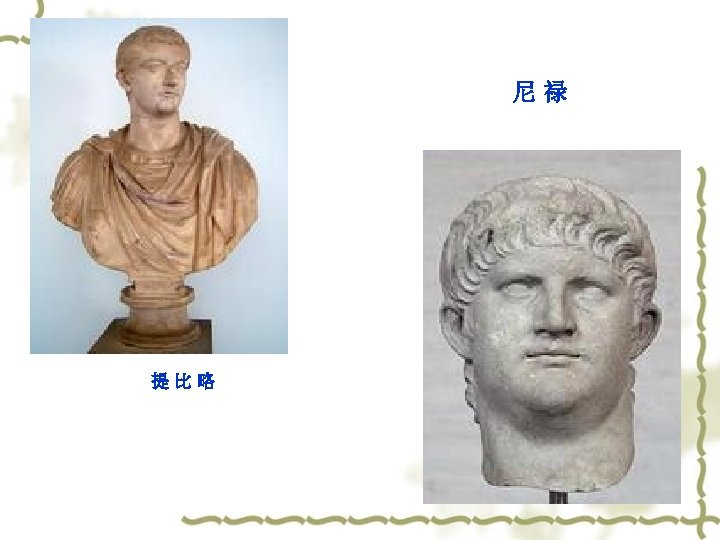
2. Political System of Augustus Principate Era v v A. Octavian B. Julio-Claudian dynasty
3. Political System of Dominatus Era v v A. 社会历史原因 (1)元首制的统治并没有能彻 底解决奴隶制度的矛盾 (2)新型的小农经济发展起来。 (3)罗马内部阶级斗争空前激 烈——军队扩张到空前的规模— —许多军事巨头形成——罗马统 治阶级内部争夺权力的内战 v v v The System of Augustus Principate could not deal with the social contradiction. New types of small farmer’s economy had developed. Fight for the powers inner the circle of rulers were fierce.
B. Aurelianus ‘s reform v v (270 -275年) (1)货币改革 (2)重修罗马城墙 (3)以军功完成了国 家的统一 v v v reform the system of monetary Rebuild the Rome Wall Realized the union of the country based on the military medals
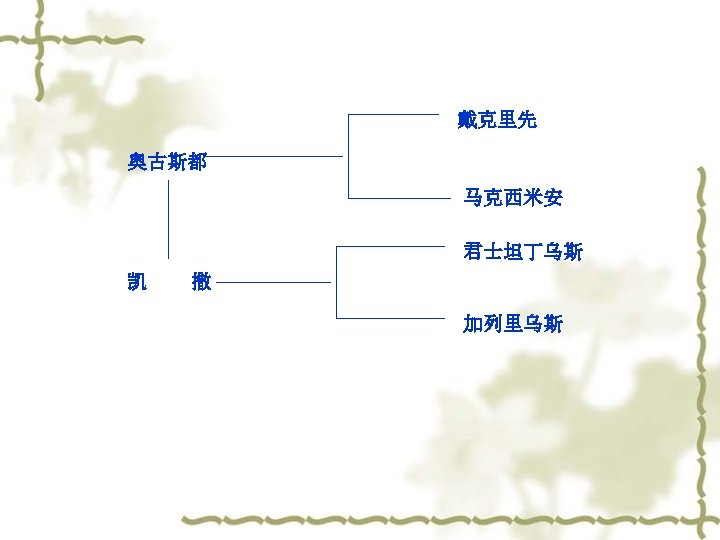
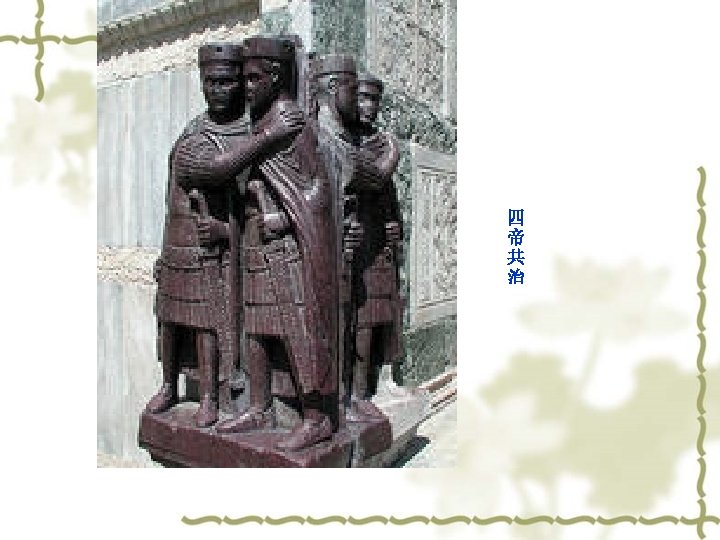
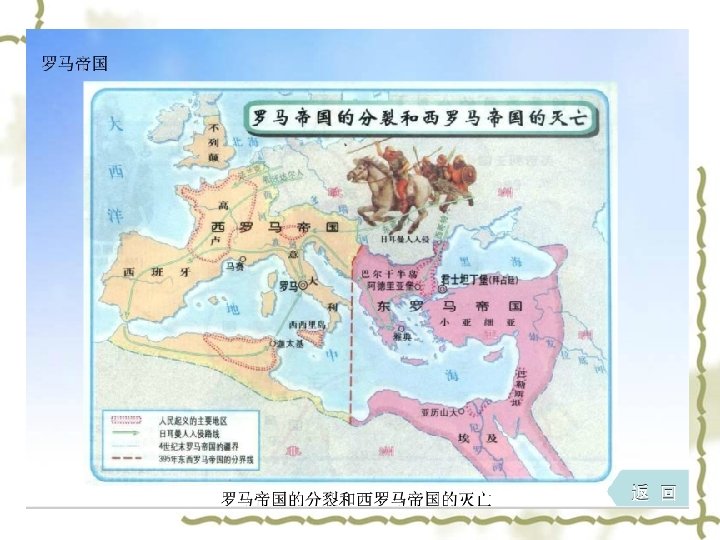
C. Diocletianus Reform v v v (1)军事改革 (2)划分东西罗马——四 帝共治模式 (3)重划行省和行政区 (4)建立帝国官僚体制 (5)建立专制司法体制 (6)强化希腊——罗马传 统宗教信仰 v v v Military reform Divide the Rome into TWO PARTS Reorganize the province Set up the bureaucracy system Set up the judicial system Strengthen the Greece. Rome religious