
The Polis Polis was the Greek word for
- Slides: 21
The Polis • Polis was the Greek word for “city-state”. • A polis was an independent city and its surrounding farmland. • Every polis had its own government and laws but the Greeks shared a common language and religion.
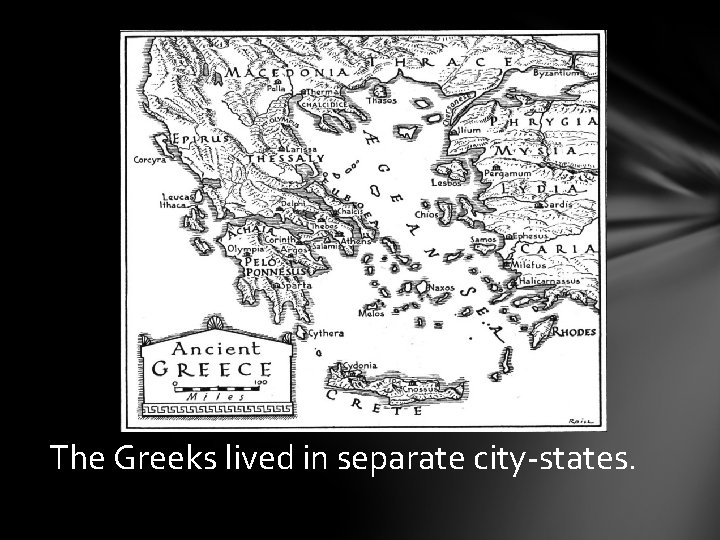
The Greeks lived in separate city-states.
The Polis • Polis was the Greek word for “city-state”. • A polis was an independent city and its surrounding farmland. • Every polis had its own government and laws but the Greeks shared a common language and religion. • The hilly terrain separated the Greeks. Though the Greeks shared a common language and religion, they never developed a unified system of government. • The Greeks lived in separate, independent city-states.
Greek Government • Tyranny – Seizing power by force • Democracy – Ruled by the people or the rule of many • Oligarchy – Ruled by a few,
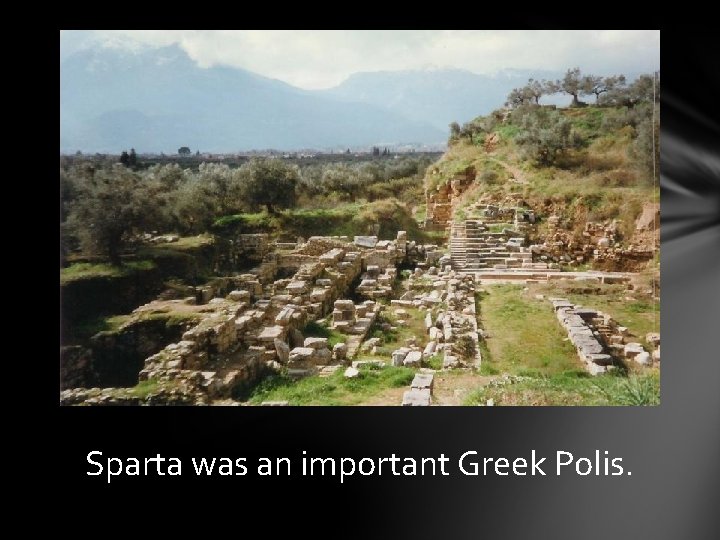
Sparta was an important Greek Polis.
Sparta • Sparta was a militaristic Polis • In Sparta, all men had to serve in the military • Weak or disabled babies were left to die.
Sparta • Two kings ruled the city • But a 28 -member 'council of elders' limited their powers. • Elders had to be 60 years of age or older • The only way to become a citizen of Sparta was to be a descendent of the original Doric invaders who settled the city
The Spartans were skilled soldiers.
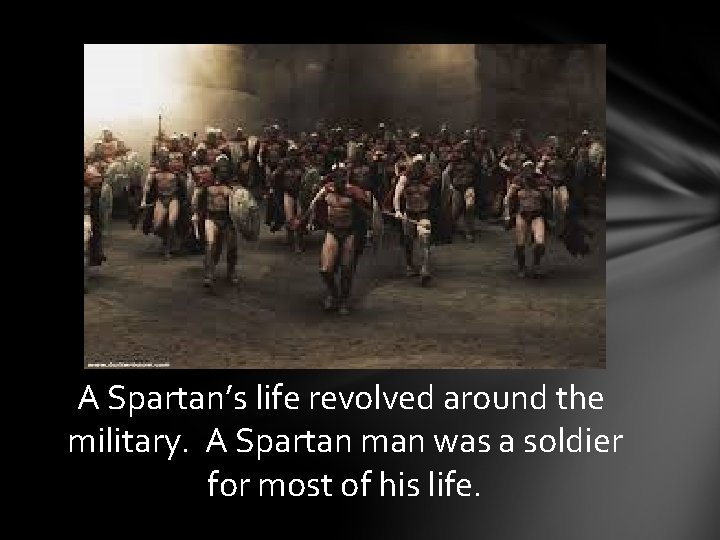
A Spartan’s life revolved around the military. A Spartan man was a soldier for most of his life.
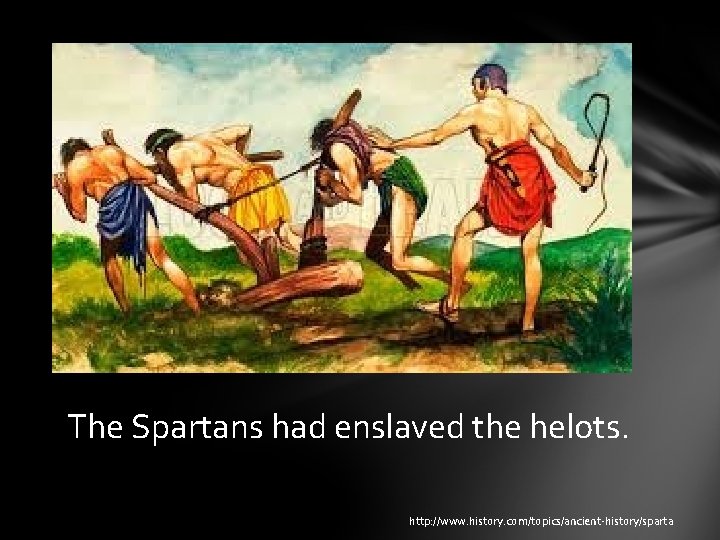
Helots • The Spartans had helots or slaves. • Helots were captured people from Spartan conquests. • The helots farmed for the Spartans. • While the helots farmed, the Spartans focused on military affairs.
The Spartans had enslaved the helots. http: //www. history. com/topics/ancient-history/sparta
Athens • Athens was an important Polis in ancient Greece. • The people of Athens developed democracy. • Democracy is a system of government where citizens vote or participate in government.
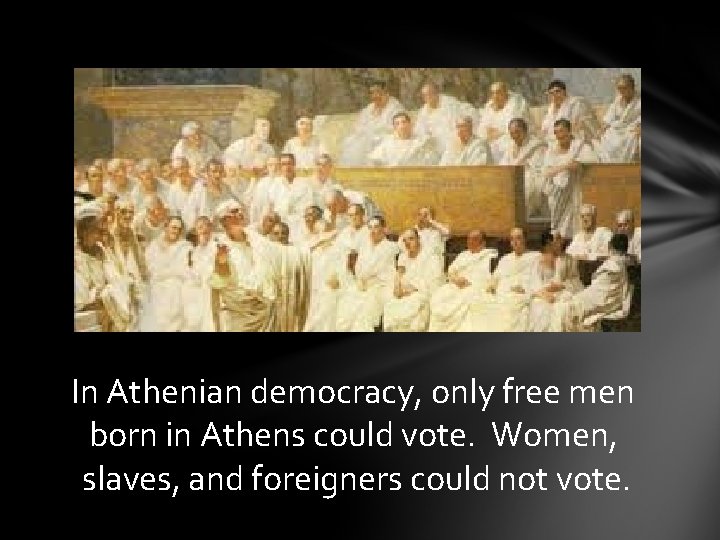
Athenian Democracy The ancient Greek city-state of Athens developed the first democratic government. A democracy is a system of government where citizens participate in government. Only free men born in Athens could be citizens. Women, slaves, and foreigners could not vote.
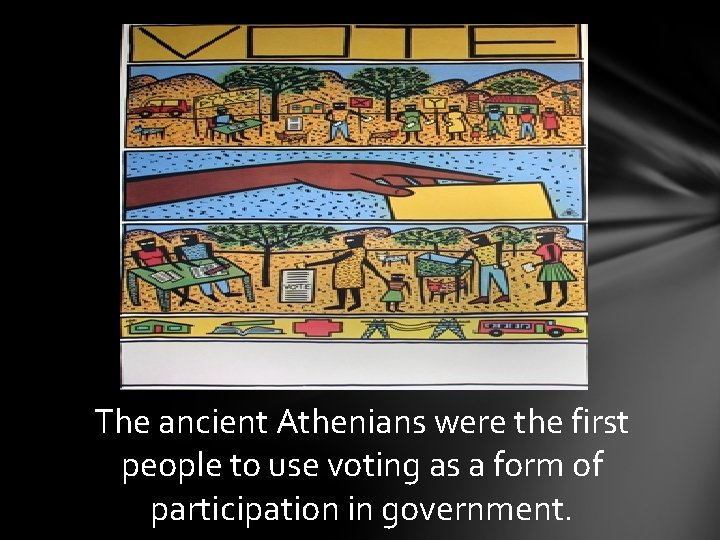
The ancient Athenians were the first people to use voting as a form of participation in government.
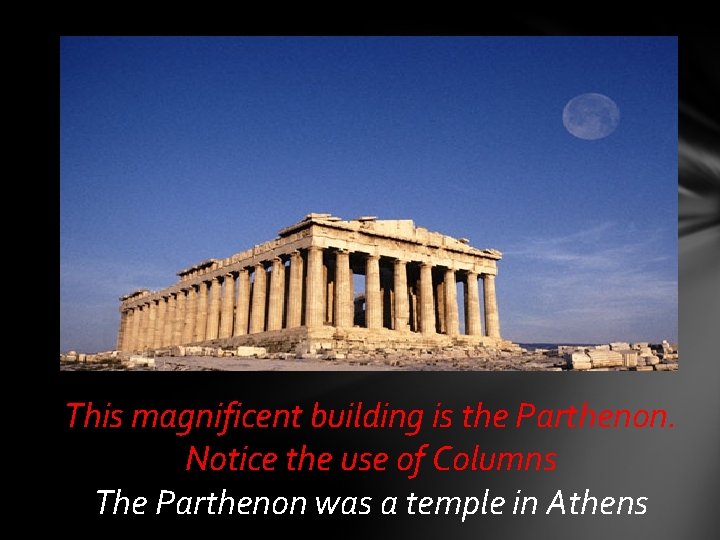
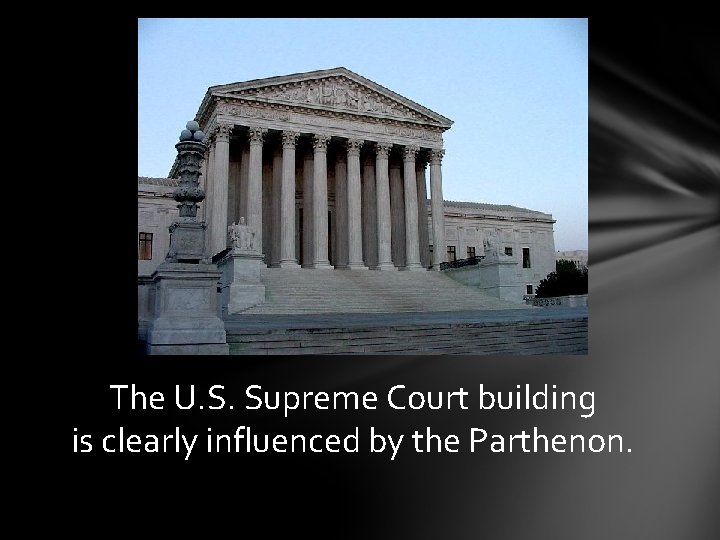
Architecture The Greeks built temples with beautiful columns. Greek architecture still influences people today. Many government buildings in the United States are modeled after Greek temples.
This magnificent building is the Parthenon. Notice the use of Columns The Parthenon was a temple in Athens
The U. S. Supreme Court building is clearly influenced by the Parthenon.
In Athenian democracy, only free men born in Athens could vote. Women, slaves, and foreigners could not vote.
The Golden Age of Athens experienced a golden age. A golden age is a time of peace, prosperity, and great achievements. The Athenians produced great works of literature, philosophy, and art. http: //www. watchknowlearn. org/Video. aspx? Video. ID=34989&Category. ID= 2945
Create a Venn Diagram describing the similarities and differences between Athens and Sparta.