
THE POLIS GREEK CITY STATE UNIT 2 UNIT


- Slides: 49
THE POLIS (GREEK CITY STATE) UNIT 2
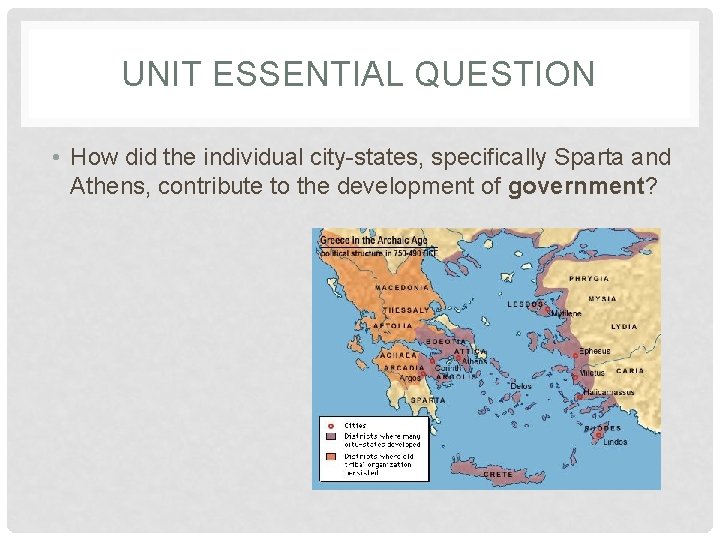
UNIT ESSENTIAL QUESTION • How did the individual city-states, specifically Sparta and Athens, contribute to the development of government?
UNIT VOCABULARY Directions: Define each vocabulary term in your notebook • • • Polis- a Greek city-state Acropolis- Fortified hill in ancient Greek cities Agora- Ancient Greek marketplace Aristocrats- Members of the upper class Helots- Enslaved people owned by city-states Perioeci- merchants and artisans in Spartan villages Oligarchy- Government in which a few people rule Constitution- written laws used to govern a state Democratic- Favoring the equality of all people Magistrates- Judges
ACTIVATOR • In your journals, list two advantages and two disadvantages of living in a modern city…
ACTIVATOR CONTINUED • Discussion: What did you come up with and why? • Greeks lived in city-states. • As we progress through this Unit of Inquiry, look for the advantages and disadvantages of life in the Greek citystates and write your thoughts down. • Whenever you come up with an advantage/disadvantage, you can add it to your list
LESSON ESSENTIAL QUESTION • How was the social and physical structure of a polis unique to each Greek citystate?
GREECE v. The Geography of Greece (mountainous and surrounded by the sea) kept the communities separated from one another. v. They had the same customs and spoke the same language but these people never united together into one country. v. People developed a loyalty to the community in which they lived.
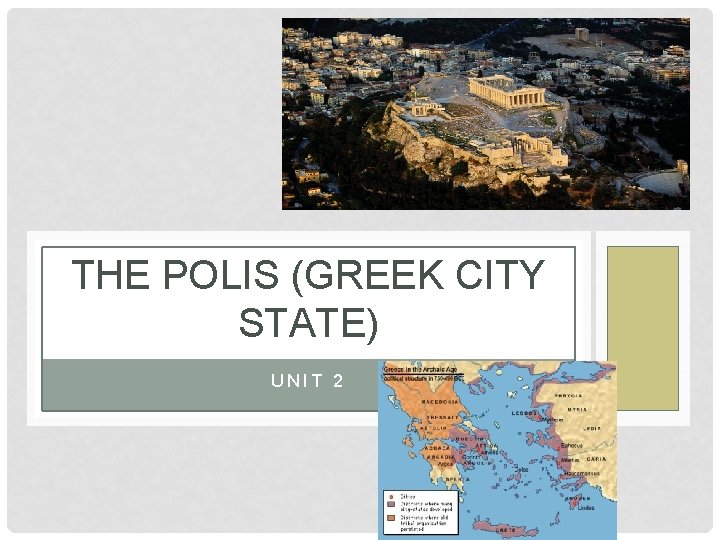
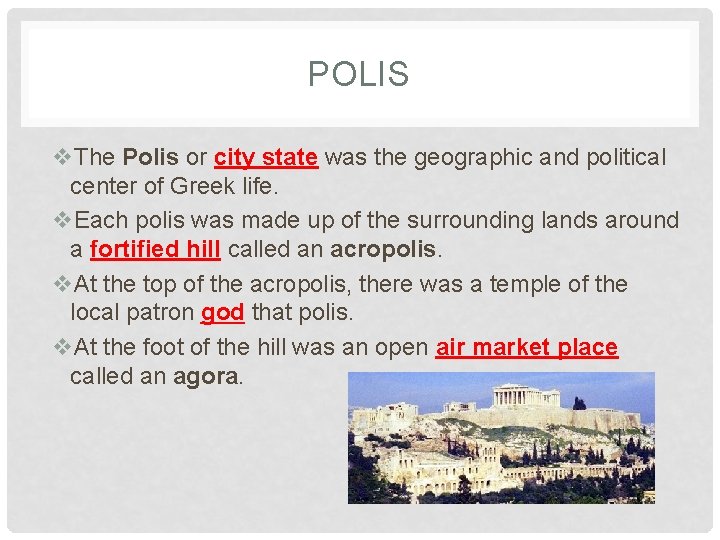
POLIS v. The Polis or city state was the geographic and political center of Greek life. v. Each polis was made up of the surrounding lands around a fortified hill called an acropolis. v. At the top of the acropolis, there was a temple of the local patron god that polis. v. At the foot of the hill was an open air market place called an agora.
CITY STATES v. The inner part of the polis became the city, the surrounding area farmed the city state. v. Each city state had its own government and laws.
CITIZENS v. Free men who lived in the polis were citizens. v. Workers who were NOT born in Greece, women, children, and slaves were not considered citizens of a polis. v. As a citizen, Men could: • • Vote Own property Hold public office Speak for themselves in court
CITIZENS v. Citizens were expected to: • Take part in government • Defend the polis in times of war v. Civic and personal honor were one in the same. The polis gave them a sense of belonging.
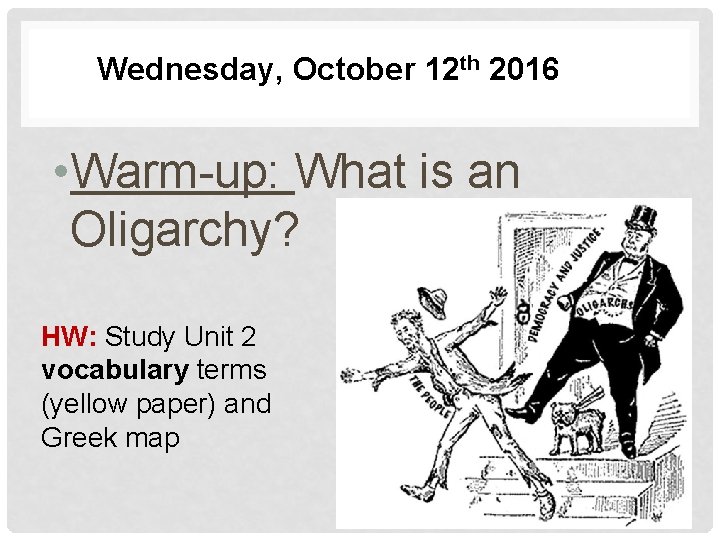
Wednesday, October 12 th 2016 • Warm-up: What is an Oligarchy? HW: Study Unit 2 vocabulary terms (yellow paper) and Greek map
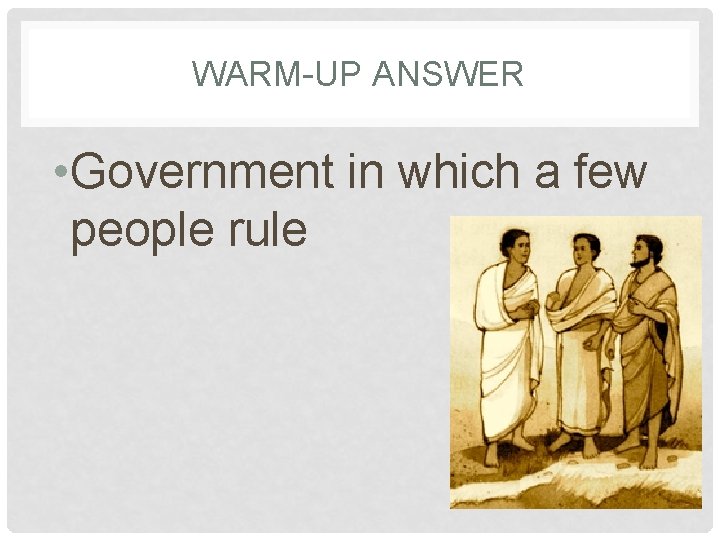
WARM-UP ANSWER • Government in which a few people rule
POLITICAL ANALYTICAL TOOLS • There are some unavoidable political questions… • What is Politics? • Political relationships- authority or rule exists- power • “Study of the shaping and sharing of power” • Politics, both a science and an art- Must understand World one lives in. Politics is necessarily controversial, uncertain. Aristotle- concept of self-sufficiency ***almost all associations have a political aspect (and more)
ACTIVATION • In your journals, brainstorm what rights and freedoms people would/should expect to have in a society. • When you have thought of a few things and have written them down, turn and share them with your neighbor • Next, we will categorize them as a right or a privilege. • Are there any differences in rights and privileges based on your gender, economic status, race, or any other factors? Are any of these issues controversial?
MONDAY, OCTOBER 17 TH 2016 • Warm-up: Using your vocabulary terms for this unit (yellow vocabulary sheet), explain the difference between aristocrats, helots, and perioeci in ancient Greek society. • HW: Creative Journal Writing assignment (due Wednesday)
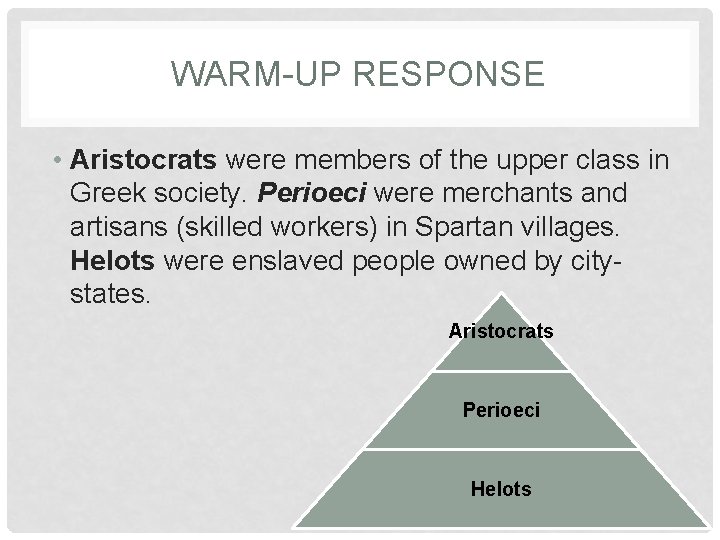
WARM-UP RESPONSE • Aristocrats were members of the upper class in Greek society. Perioeci were merchants and artisans (skilled workers) in Spartan villages. Helots were enslaved people owned by citystates. Aristocrats Perioeci Helots
LESSON ESSENTIAL QUESTION • How did the differences between Sparta and Athens influence Greek and world culture?
K-W-L CHART (THINK-PAIR-SHARE) TOPIC: SPARTA VS. ATHENS • What do you already Know about Sparta and Athens? • What do you Want to know about Sparta and Athens? • What did you Learn about Sparta and Athens? (This will be filled-in at the conclusion our lesson as our exit summary).
LESSON ESSENTIAL QUESTION • How did the differences between Sparta and Athens influence Greek and world culture?
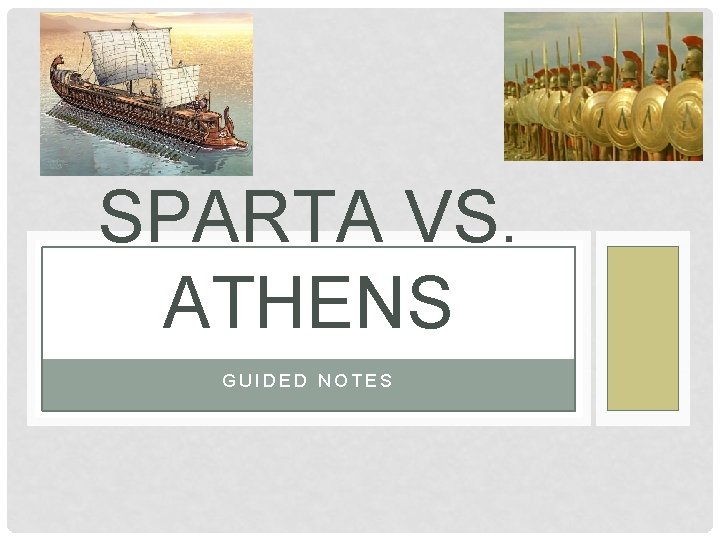
SPARTA VS. ATHENS GUIDED NOTES
LOCATION Sparta v. South-central region of Greece known as the Peloponnesus Athens v. Northeast of Sparta on the Aegean coast
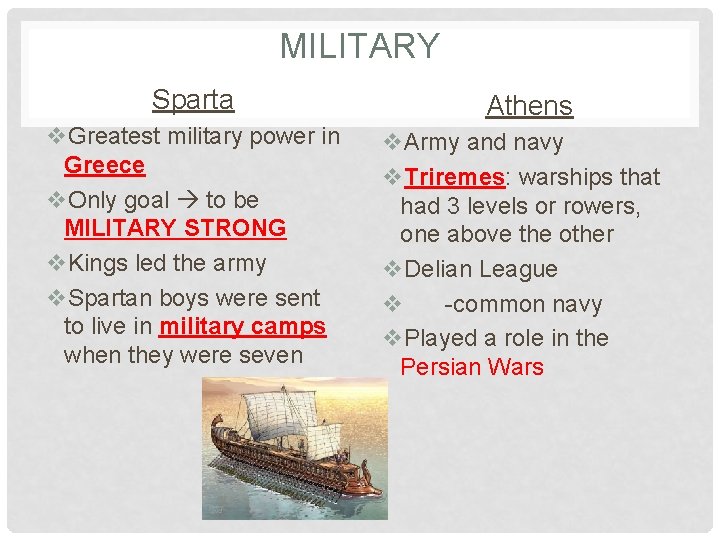
MILITARY Sparta v. Greatest military power in Greece v. Only goal to be MILITARY STRONG v. Kings led the army v. Spartan boys were sent to live in military camps when they were seven Athens v. Army and navy v. Triremes: warships that had 3 levels or rowers, one above the other v. Delian League v -common navy v. Played a role in the Persian Wars
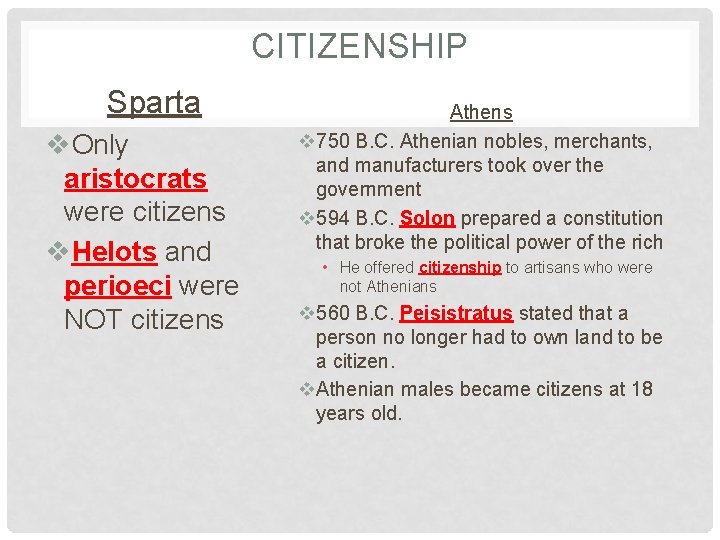
CITIZENSHIP Sparta v. Only aristocrats were citizens v. Helots and perioeci were NOT citizens Athens v 750 B. C. Athenian nobles, merchants, and manufacturers took over the government v 594 B. C. Solon prepared a constitution that broke the political power of the rich • He offered citizenship to artisans who were not Athenians v 560 B. C. Peisistratus stated that a person no longer had to own land to be a citizen. v. Athenian males became citizens at 18 years old.
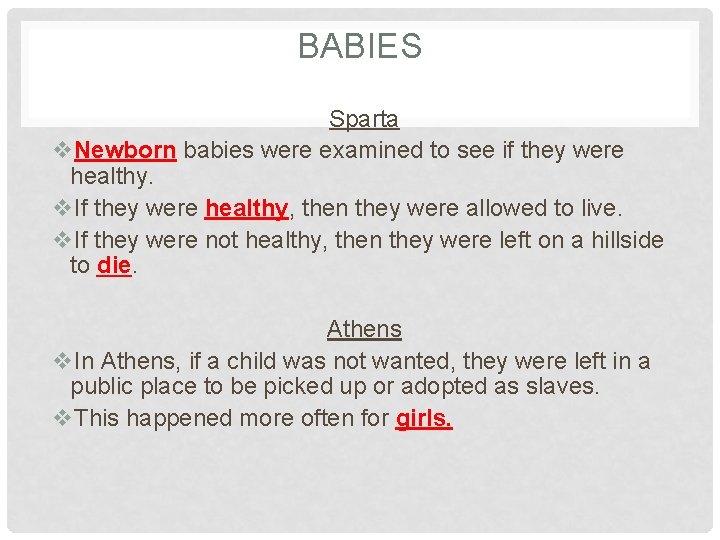
BABIES Sparta v. Newborn babies were examined to see if they were healthy. v. If they were healthy, then they were allowed to live. v. If they were not healthy, then they were left on a hillside to die. Athens v. In Athens, if a child was not wanted, they were left in a public place to be picked up or adopted as slaves. v. This happened more often for girls.
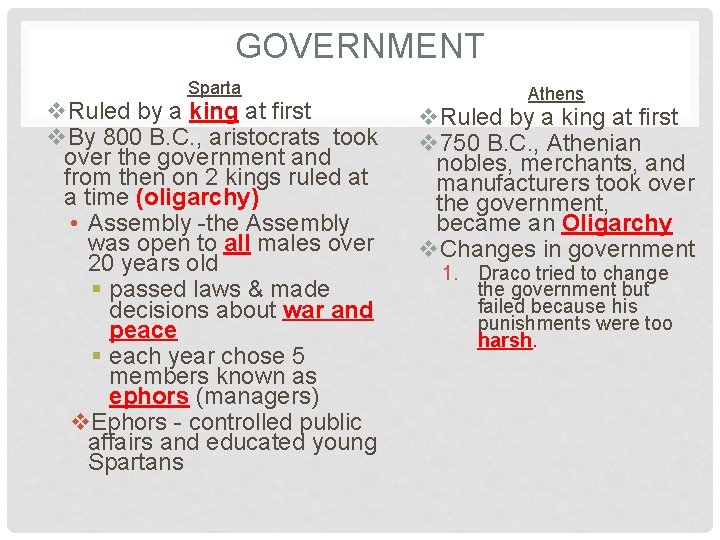
GOVERNMENT Sparta v. Ruled by a king at first v. By 800 B. C. , aristocrats took over the government and from then on 2 kings ruled at a time (oligarchy) • Assembly -the Assembly was open to all males over 20 years old § passed laws & made decisions about war and peace § each year chose 5 members known as ephors (managers) v. Ephors - controlled public affairs and educated young Spartans Athens v. Ruled by a king at first v 750 B. C. , Athenian nobles, merchants, and manufacturers took over the government, became an Oligarchy v. Changes in government 1. Draco tried to change the government but failed because his punishments were too harsh.
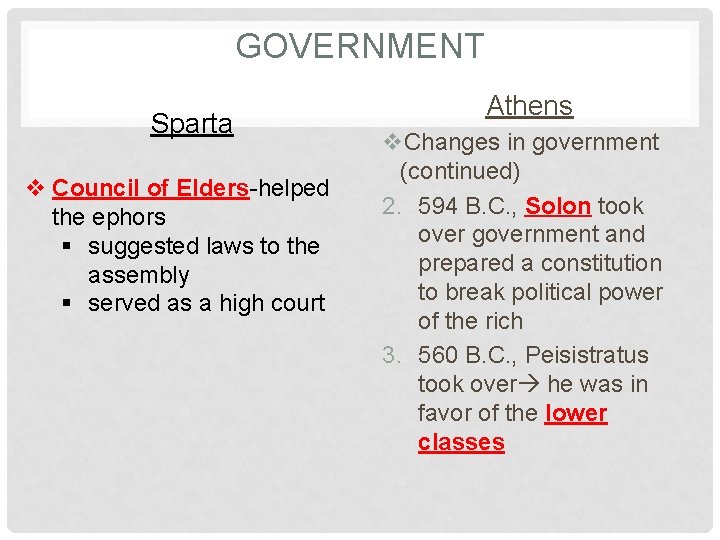
GOVERNMENT Sparta v Council of Elders-helped the ephors § suggested laws to the assembly § served as a high court Athens v. Changes in government (continued) 2. 594 B. C. , Solon took over government and prepared a constitution to break political power of the rich 3. 560 B. C. , Peisistratus took over he was in favor of the lower classes
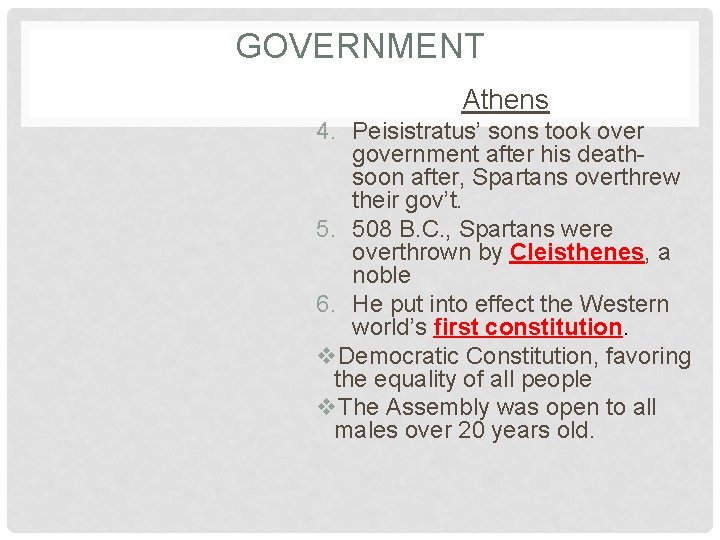
GOVERNMENT Athens 4. Peisistratus’ sons took over government after his deathsoon after, Spartans overthrew their gov’t. 5. 508 B. C. , Spartans were overthrown by Cleisthenes, a noble 6. He put into effect the Western world’s first constitution. v. Democratic Constitution, favoring the equality of all people v. The Assembly was open to all males over 20 years old.
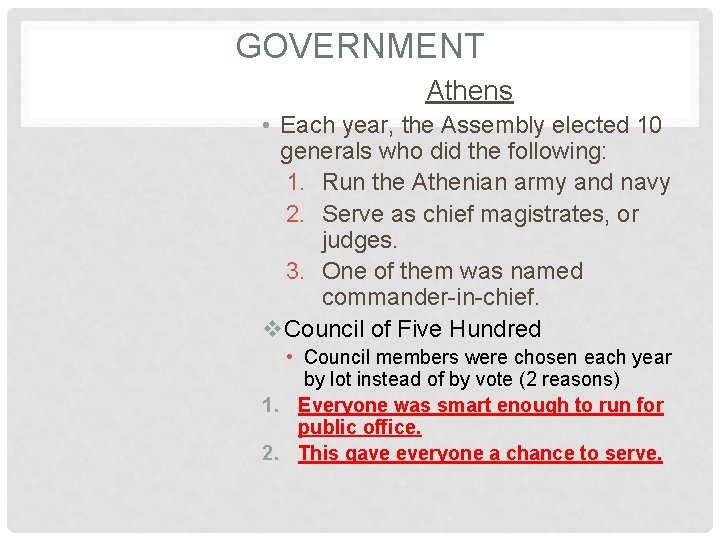
GOVERNMENT Athens • Each year, the Assembly elected 10 generals who did the following: 1. Run the Athenian army and navy 2. Serve as chief magistrates, or judges. 3. One of them was named commander-in-chief. v. Council of Five Hundred • Council members were chosen each year by lot instead of by vote (2 reasons) 1. Everyone was smart enough to run for public office. 2. This gave everyone a chance to serve.
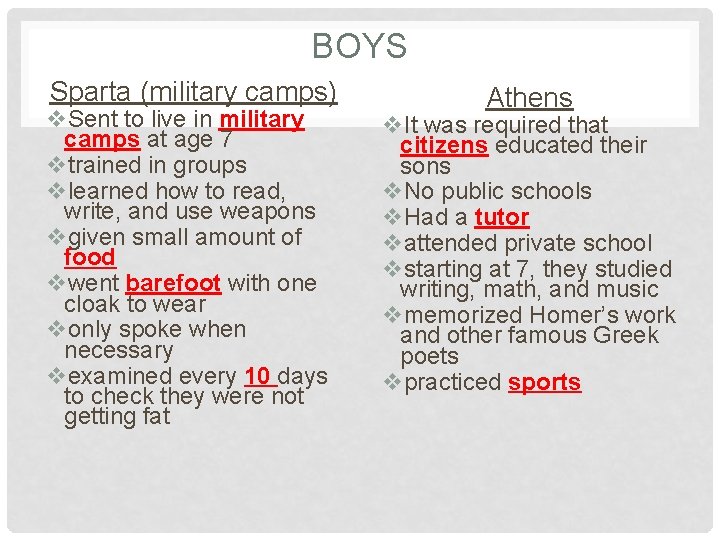
BOYS Sparta (military camps) v. Sent to live in military camps at age 7 vtrained in groups vlearned how to read, write, and use weapons vgiven small amount of food vwent barefoot with one cloak to wear vonly spoke when necessary vexamined every 10 days to check they were not getting fat Athens v. It was required that citizens educated their sons v. No public schools v. Had a tutor vattended private school vstarting at 7, they studied writing, math, and music vmemorized Homer’s work and other famous Greek poets vpracticed sports
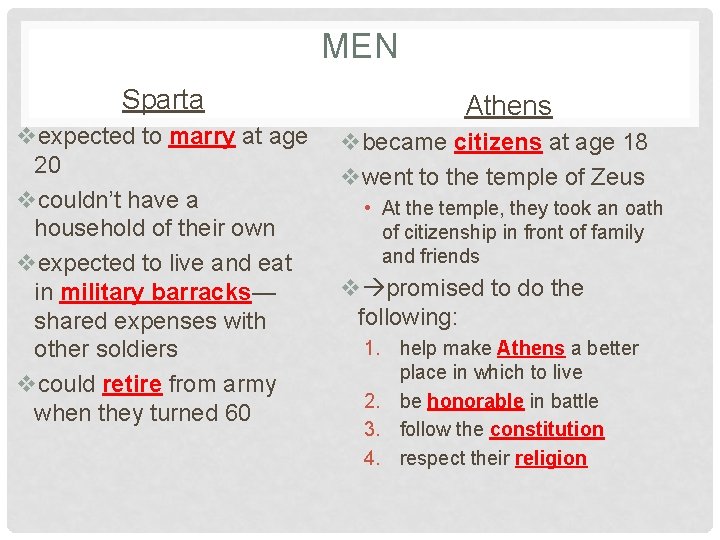
MEN Sparta vexpected to marry at age 20 vcouldn’t have a household of their own vexpected to live and eat in military barracks— shared expenses with other soldiers vcould retire from army when they turned 60 Athens vbecame citizens at age 18 vwent to the temple of Zeus • At the temple, they took an oath of citizenship in front of family and friends v promised to do the following: 1. help make Athens a better place in which to live 2. be honorable in battle 3. follow the constitution 4. respect their religion
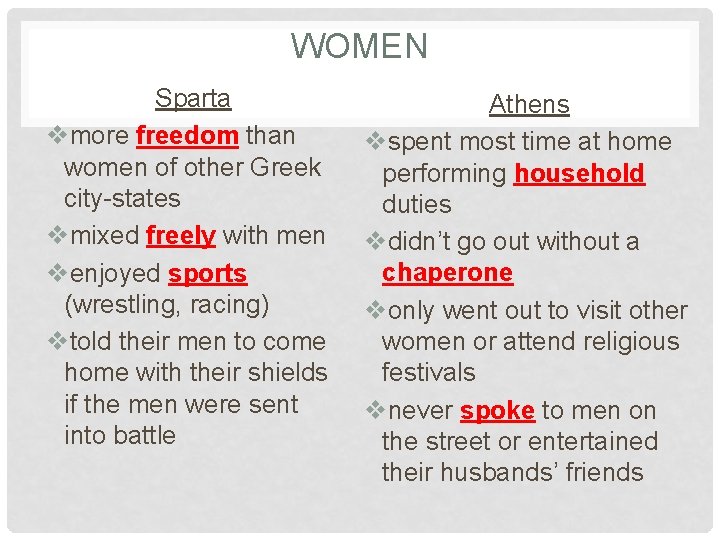
WOMEN Sparta vmore freedom than women of other Greek city-states vmixed freely with men venjoyed sports (wrestling, racing) vtold their men to come home with their shields if the men were sent into battle Athens vspent most time at home performing household duties vdidn’t go out without a chaperone vonly went out to visit other women or attend religious festivals vnever spoke to men on the street or entertained their husbands’ friends
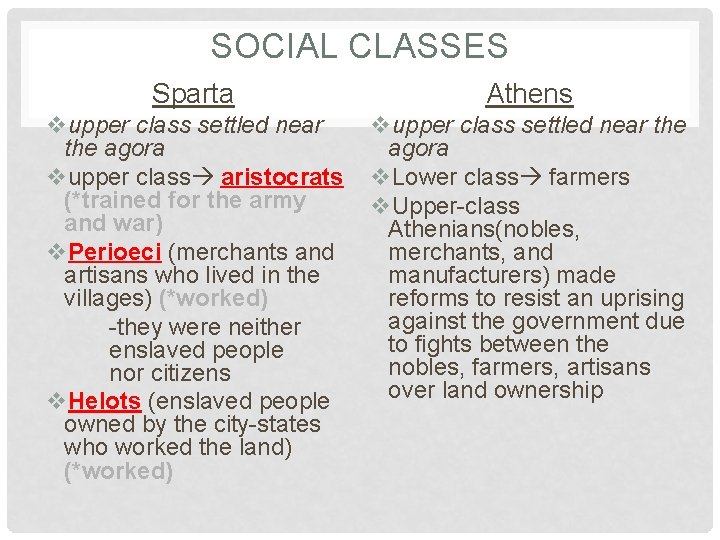
SOCIAL CLASSES Sparta Athens vupper class settled near the agora vupper class aristocrats (*trained for the army and war) v. Perioeci (merchants and artisans who lived in the villages) (*worked) -they were neither enslaved people nor citizens v. Helots (enslaved people owned by the city-states who worked the land) (*worked) vupper class settled near the agora v. Lower class farmers v. Upper-class Athenians(nobles, merchants, and manufacturers) made reforms to resist an uprising against the government due to fights between the nobles, farmers, artisans over land ownership
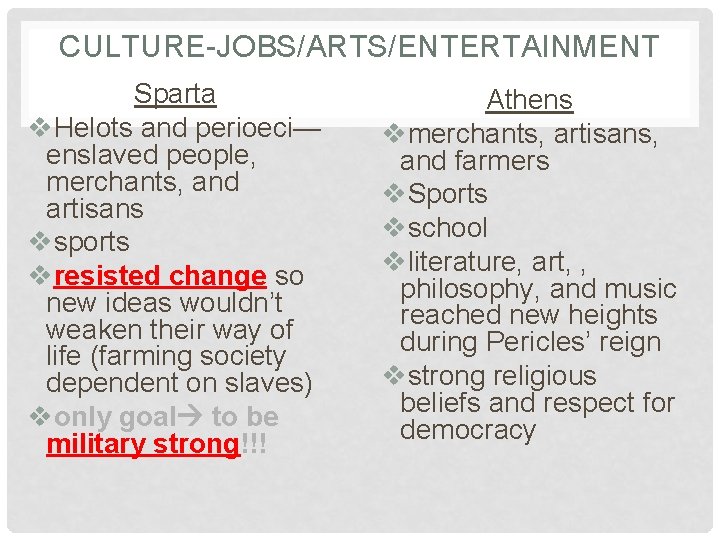
CULTURE-JOBS/ARTS/ENTERTAINMENT Sparta v. Helots and perioeci— enslaved people, merchants, and artisans vsports vresisted change so new ideas wouldn’t weaken their way of life (farming society dependent on slaves) vonly goal to be military strong!!! Athens vmerchants, artisans, and farmers v. Sports vschool vliterature, art, , philosophy, and music reached new heights during Pericles’ reign vstrong religious beliefs and respect for democracy
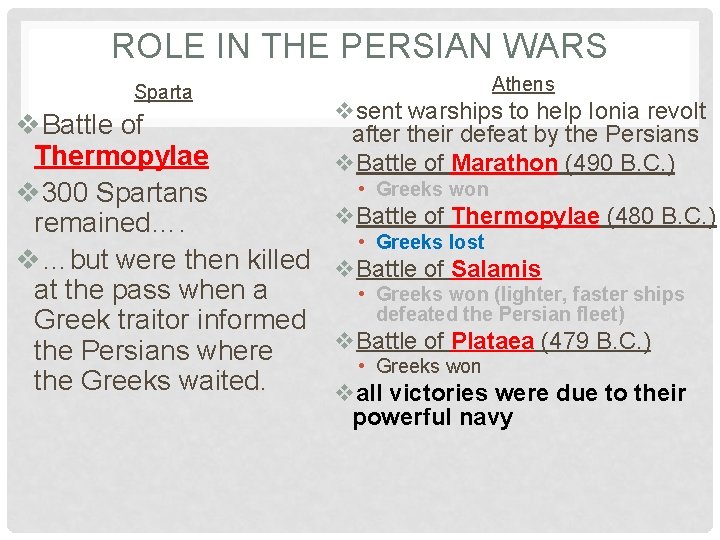
ROLE IN THE PERSIAN WARS Sparta v. Battle of Thermopylae v 300 Spartans remained…. v…but were then killed at the pass when a Greek traitor informed the Persians where the Greeks waited. Athens vsent warships to help Ionia revolt after their defeat by the Persians v. Battle of Marathon (490 B. C. ) • Greeks won v. Battle of Thermopylae (480 B. C. ) • Greeks lost v. Battle of Salamis • Greeks won (lighter, faster ships defeated the Persian fleet) v. Battle of Plataea (479 B. C. ) • Greeks won vall victories were due to their powerful navy
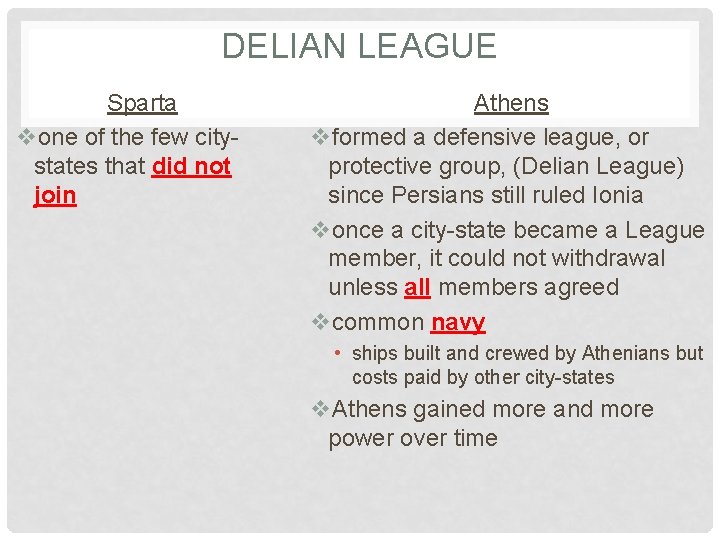
DELIAN LEAGUE Sparta vone of the few citystates that did not join Athens vformed a defensive league, or protective group, (Delian League) since Persians still ruled Ionia vonce a city-state became a League member, it could not withdrawal unless all members agreed vcommon navy • ships built and crewed by Athenians but costs paid by other city-states v. Athens gained more and more power over time
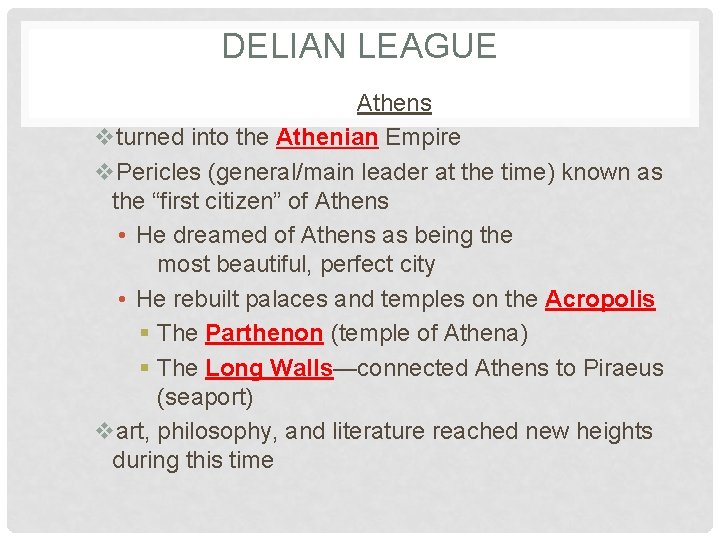
DELIAN LEAGUE Athens vturned into the Athenian Empire v. Pericles (general/main leader at the time) known as the “first citizen” of Athens • He dreamed of Athens as being the most beautiful, perfect city • He rebuilt palaces and temples on the Acropolis § The Parthenon (temple of Athena) § The Long Walls—connected Athens to Piraeus (seaport) vart, philosophy, and literature reached new heights during this time
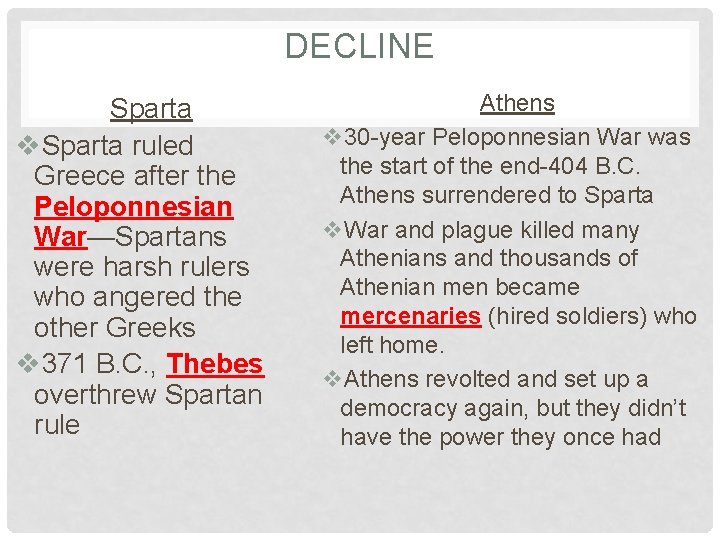
DECLINE Sparta v. Sparta ruled Greece after the Peloponnesian War—Spartans were harsh rulers who angered the other Greeks v 371 B. C. , Thebes overthrew Spartan rule Athens v 30 -year Peloponnesian War was the start of the end-404 B. C. Athens surrendered to Sparta v. War and plague killed many Athenians and thousands of Athenian men became mercenaries (hired soldiers) who left home. v. Athens revolted and set up a democracy again, but they didn’t have the power they once had
LESSON ESSENTIAL QUESTION • How did other Greek citystates contribute to the development of ancient Greece?
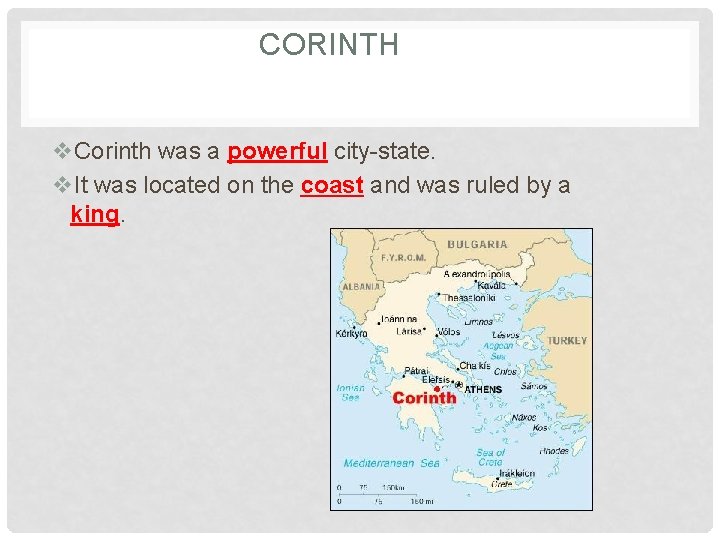
CORINTH v. Corinth was a powerful city-state. v. It was located on the coast and was ruled by a king.
CORINTH v. For a while, they had a huge problem with unemployment. v. They solved this problem by creating public works projects, by building aqueducts which were pipes that brought fresh water into the city. v. This put people to work, and solved another problem, the need for enough safe drinking water to provide to their growing population.
CORINTH v. They created their own coins. v. They opened places where people could trade their money for Corinthian money so they could pay for goods. v. This was not a free service. There was a charge for this. Corinth was one of the largest centers of trade in ancient Greece. v. So the city made a great deal of money from their money exchange program.
CORINTH v. Corinth felt their schools were as good as those in Athens. v All boys went to military school for at least two years after high school.
CORINTH v. Corinth worked at being a leader in the ancient Greek world v They were highly respected by other Greek city-states. v. The people of Corinth were very proud of their city-state.
ARGOS v. There was a harbor near the city-state of Argos, but Argos itself was built on a plain. v. It was very hot in the summer and cold in the winter. The soil was poor. v. They became leaders in trade. v. Because they traded with other Greek citystates, they invented their own coinage.
ARGOS v. Like all the Greek city-states (except for Sparta), the people of the city-state of Argos built sculptures of athletes with perfect bodies and huge muscles. v They wrote plays. v. They wrote poetry. v Their musicians performed in the open air arenas. v. They loved the arts.
ARGOS v. Most Greek citystates, like Argos, were ruled by a king.
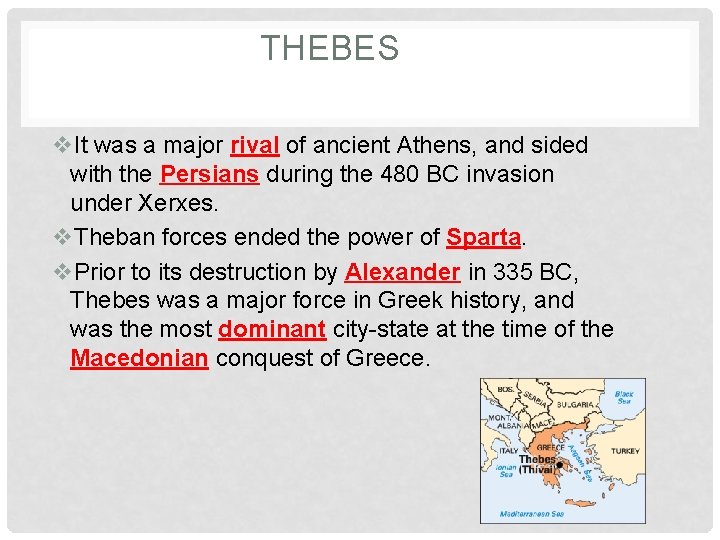
THEBES v. It was a major rival of ancient Athens, and sided with the Persians during the 480 BC invasion under Xerxes. v. Theban forces ended the power of Sparta. v. Prior to its destruction by Alexander in 335 BC, Thebes was a major force in Greek history, and was the most dominant city-state at the time of the Macedonian conquest of Greece.
POETRY FOR THOUGHT (THE GREEKS LOVED IT) A wise, old owl sat on an oak– The more he saw, the less he spoke, The less he spoke, the more he heard, Why can’t we all be like that wise, old bird? -Old English Poem, Circa 1875, origin unknown