
The Polis Government in Greece Polis Greek term
- Slides: 26
The Polis: Government in Greece
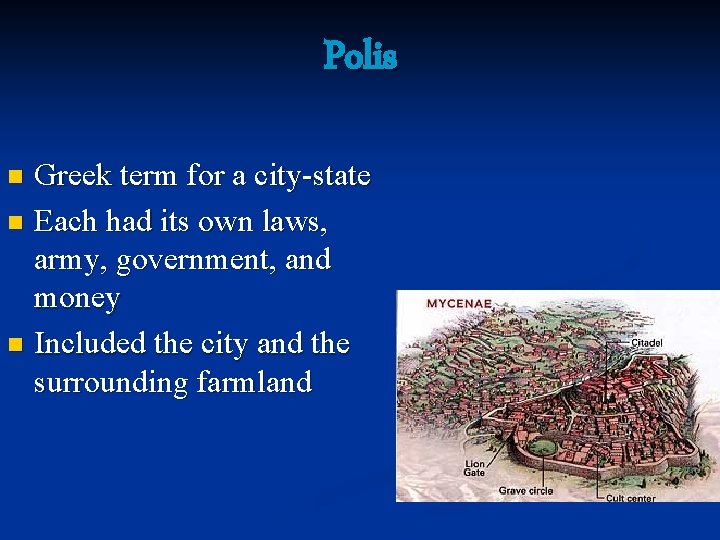
Polis Greek term for a city-state n Each had its own laws, army, government, and money n Included the city and the surrounding farmland n
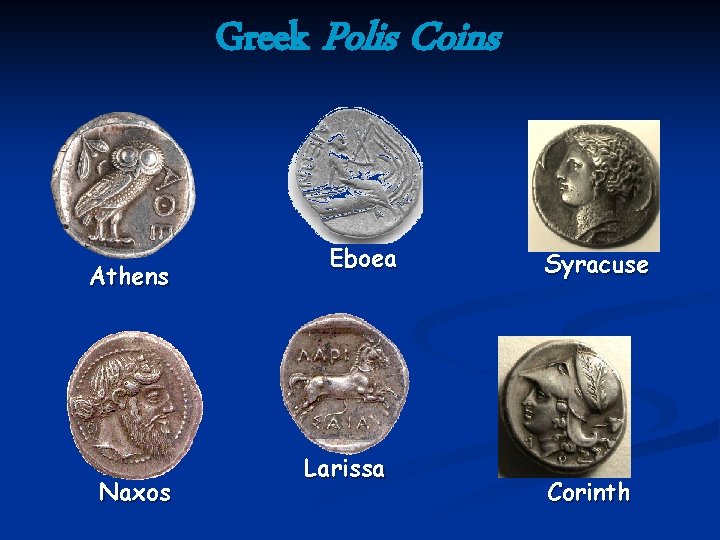
Greek Polis Coins Athens Naxos Eboea Larissa Syracuse Corinth
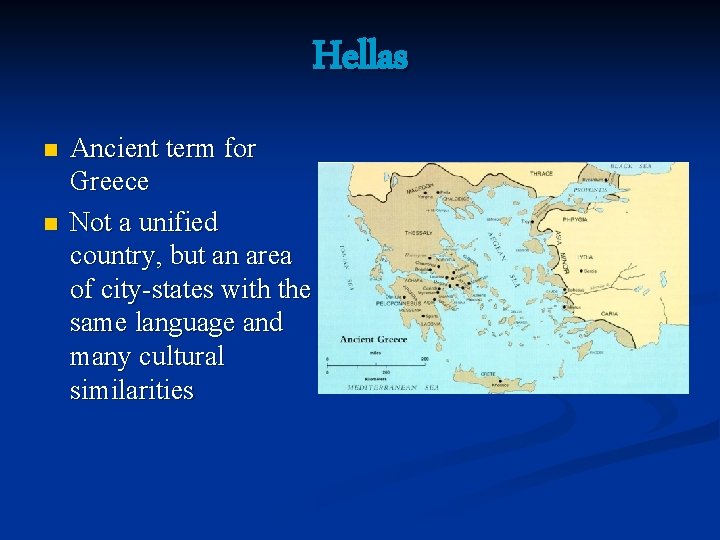
Hellas n n Ancient term for Greece Not a unified country, but an area of city-states with the same language and many cultural similarities
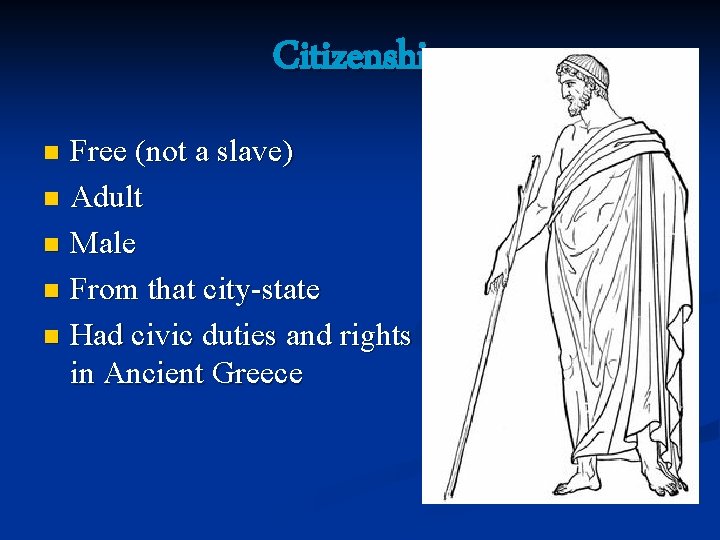
Citizenship Free (not a slave) n Adult n Male n From that city-state n Had civic duties and rights in Ancient Greece n
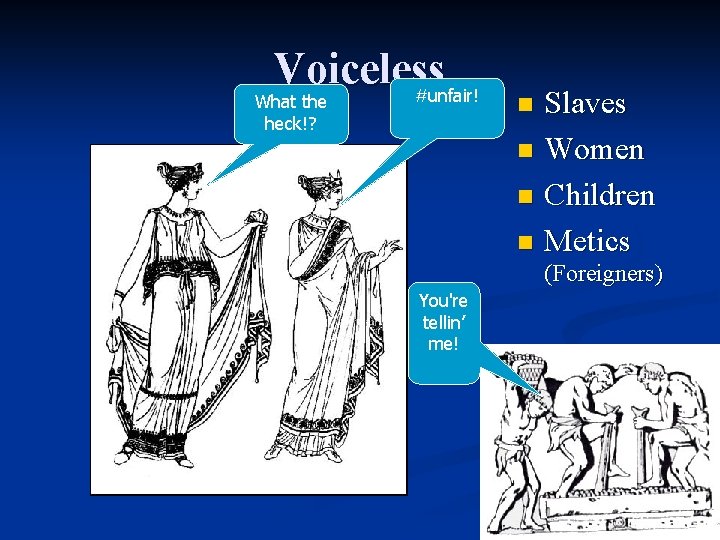
Voiceless #unfair! What the heck!? Slaves n Women n Children n Metics n (Foreigners) You're tellin’ me!
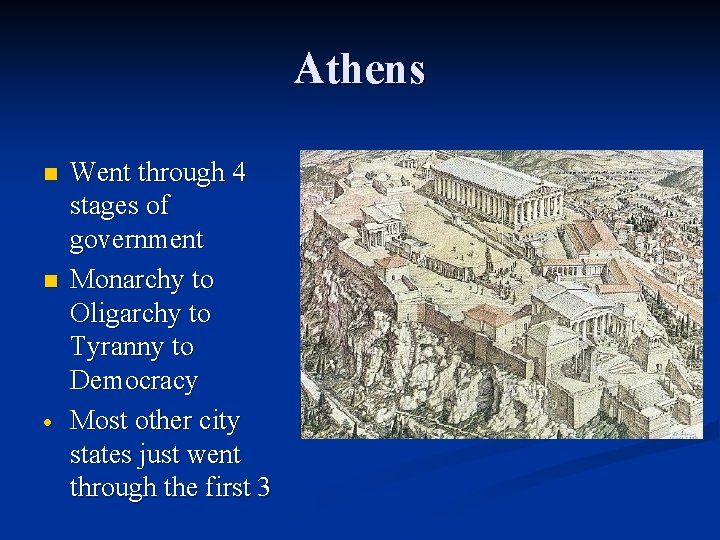
Athens n n Went through 4 stages of government Monarchy to Oligarchy to Tyranny to Democracy Most other city states just went through the first 3
Pandora Radio n Why might Pandora Radio be named after this Greek myth?
Monarchy n n n n One king One prince 5 Aristocrats King gets to pick the Pandora station Aristocrats can offer advice but king does not have to listen Prince gets to pick the Pandora station Aristocrats can offer advice but king does not have to listen
Monarchy in Greece 2000 BCE to 800 BCE most city-states had a hereditary monarchy n Definition: Power in the hands on one king n Monos: alone, -arkhein: to rule n Power passes through the family line n Kings made laws, acted as judges, and conducted religious ceremonies n Councils of aristocrats to advise but had little real power n n Aristocrats: literally “the best men” the rich, landowning upper class
Debrief Subjects: how did you feel during the round? n King and prince, how did you feel? n What are the advantages of a monarchy? n Disadvantages? n Why do you think it was the first form of government in Ancient Greece? n
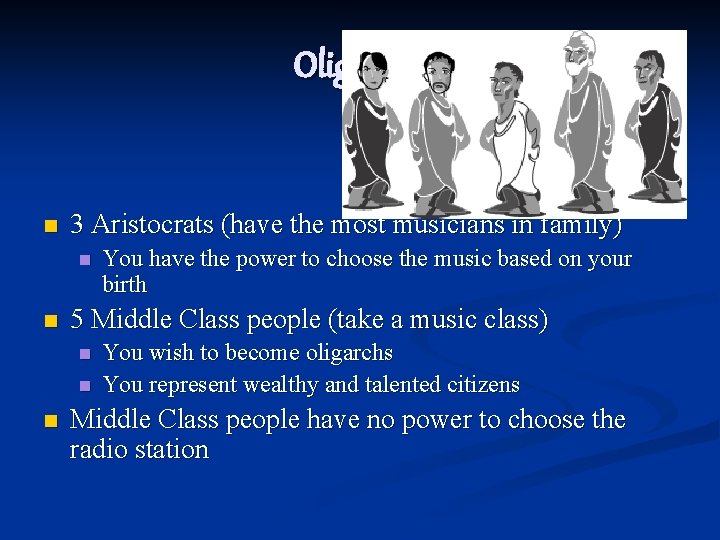
Oligarchy n 3 Aristocrats (have the most musicians in family) n n 5 Middle Class people (take a music class) n n n You have the power to choose the music based on your birth You wish to become oligarchs You represent wealthy and talented citizens Middle Class people have no power to choose the radio station
Oligarchy In Greece By 800 BCE most city-states were ruled by a small group of wealthy men called oligarchs n Definition: Power in the hands of a few people n Oligoi: ‘few’ + arkhein: ‘to rule. ’ n Most oligarchs were aristocrats who had inherited land from their families, some were wealthy merchants n Oligarchs tended to ignore the needs of the poor n Many of their laws protected themselves and their wealth n Eventually, the poor turned to leader who would help them n
Debrief Ordinary Citizens: How did you feel during this round? n Aristocrats? Middle Class? n Who makes the decisions in an oligarchy? n What are the advantages of oligarchy? n What are the disadvantages? n Why do you think a pattern of monarchies replaced by oligarchies developed? n
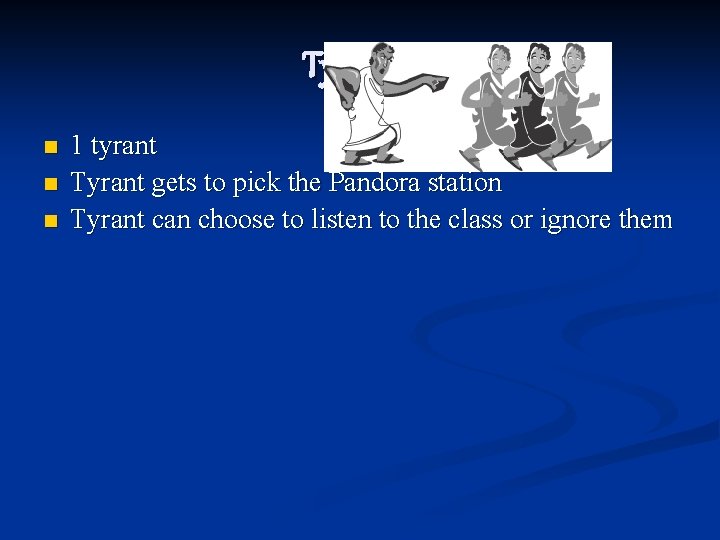
Tyranny n n n 1 tyrant Tyrant gets to pick the Pandora station Tyrant can choose to listen to the class or ignore them
Tyranny In Greece n n n During the mid-600 s BCE people in many city-states were turned to men who promised change called tyrants Definition: Power in the hands of someone who seized it illegally Unlike a monarchy because 1. 2. n n n Tyrants have no legal authority to rule Tyrants sons do not usually inherit power Usually take power by force and have a military background Promised people more rights Some did well by the people, some ruled as evil dictators
Debrief Ordinary Citizens: How did you feel during this round? n Aristocrats? Middle Class? Tyrant? n Who makes the decisions in a tyranny? n What are the advantages of tyranny? n What are the disadvantages? n Why do you think a pattern of oligarchies replaced by tyrannies developed? n
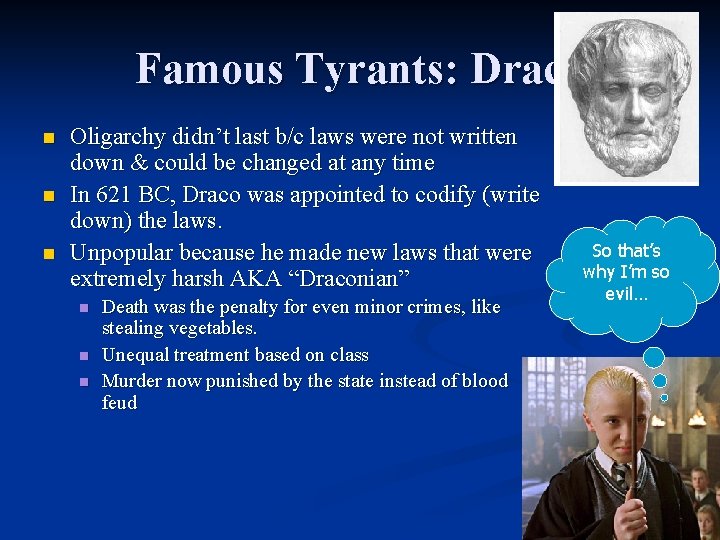
Famous Tyrants: Draco n n n Oligarchy didn’t last b/c laws were not written down & could be changed at any time In 621 BC, Draco was appointed to codify (write down) the laws. Unpopular because he made new laws that were extremely harsh AKA “Draconian” n n n Death was the penalty for even minor crimes, like stealing vegetables. Unequal treatment based on class Murder now punished by the state instead of blood feud So that’s why I’m so evil…
Famous Tyrants: Solon n 594 BC Threw out almost all of Draco’s laws Needed a balance between the rich & poor. n n n The poor could be sold into slavery if they were in debt to an aristocrat. The aristocrats wanted to prevent revolution & keep their $ (& their lives). Ended debt slavery
Democracy Only people with citizen cards can vote n Citizens can debate the station n Whichever station has the most votes wins n
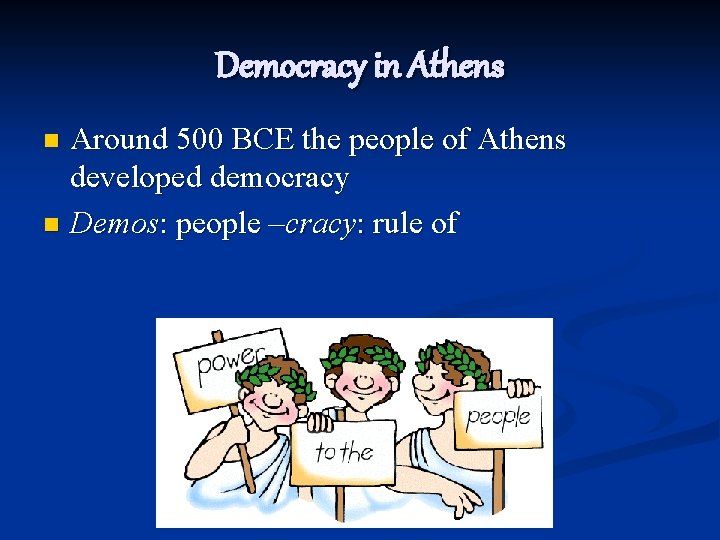
Democracy in Athens Around 500 BCE the people of Athens developed democracy n Demos: people –cracy: rule of n
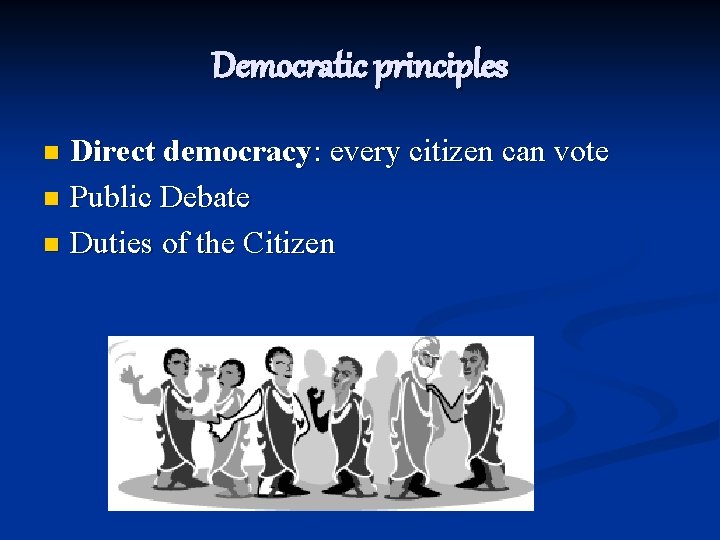
Democratic principles Direct democracy: every citizen can vote n Public Debate n Duties of the Citizen n
Assembly n n n Assembly: a group of citizens in ancient Athens with the power to pass laws, any citizen could attend Public Debate: Laws could be discussed here Downsides: n n n A persuasive speaker could convince people to vote unwisely Assembly reversed decision often Slow to make a decision
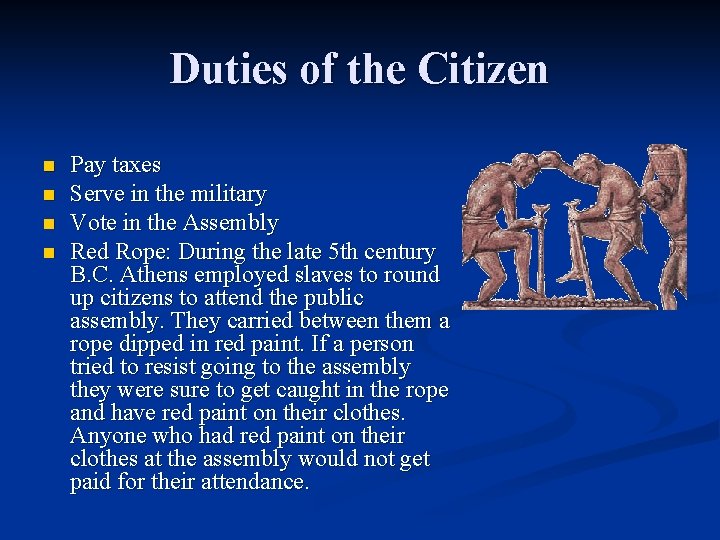
Duties of the Citizen n n Pay taxes Serve in the military Vote in the Assembly Red Rope: During the late 5 th century B. C. Athens employed slaves to round up citizens to attend the public assembly. They carried between them a rope dipped in red paint. If a person tried to resist going to the assembly they were sure to get caught in the rope and have red paint on their clothes. Anyone who had red paint on their clothes at the assembly would not get paid for their attendance.
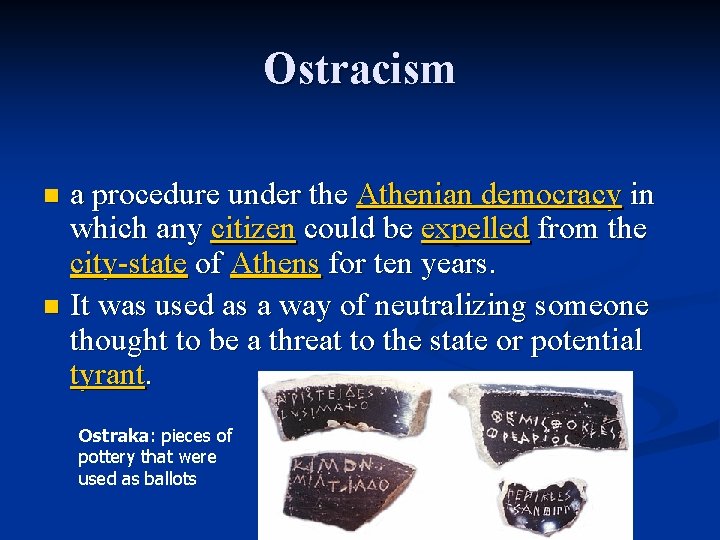
Ostracism a procedure under the Athenian democracy in which any citizen could be expelled from the city-state of Athens for ten years. n It was used as a way of neutralizing someone thought to be a threat to the state or potential tyrant. n Ostraka: pieces of pottery that were used as ballots