
The Plasma Membrane TSW understand the physical structure
The Plasma Membrane TSW understand the physical structure and functions of the cell membrane
What is the plasma membrane? �A flexible boundary between the cell and its environment which maintains HOMEOSTASIS within the cell � **Remember that HOMEOSTASIS is a state of balance/equilibrium within the cell.
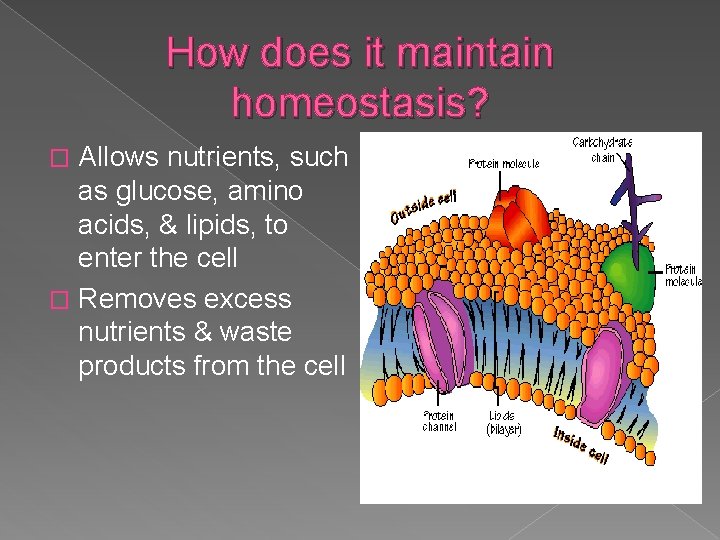
How does it maintain homeostasis? Allows nutrients, such as glucose, amino acids, & lipids, to enter the cell � Removes excess nutrients & waste products from the cell �
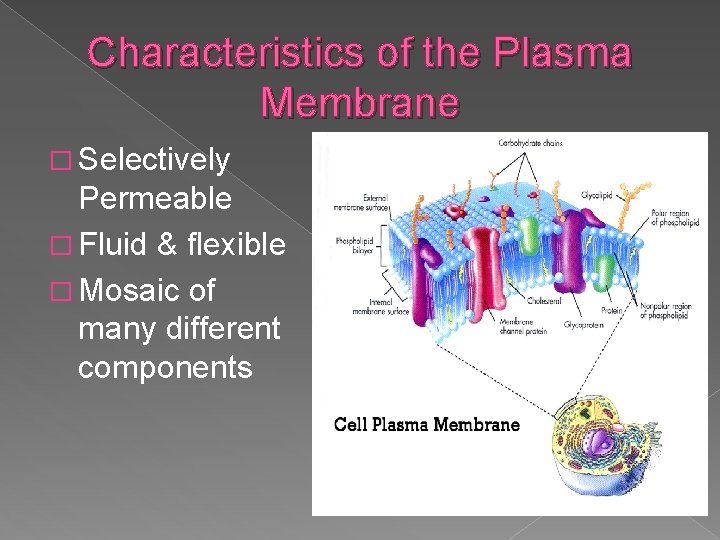
Characteristics of the Plasma Membrane � Selectively Permeable � Fluid & flexible � Mosaic of many different components
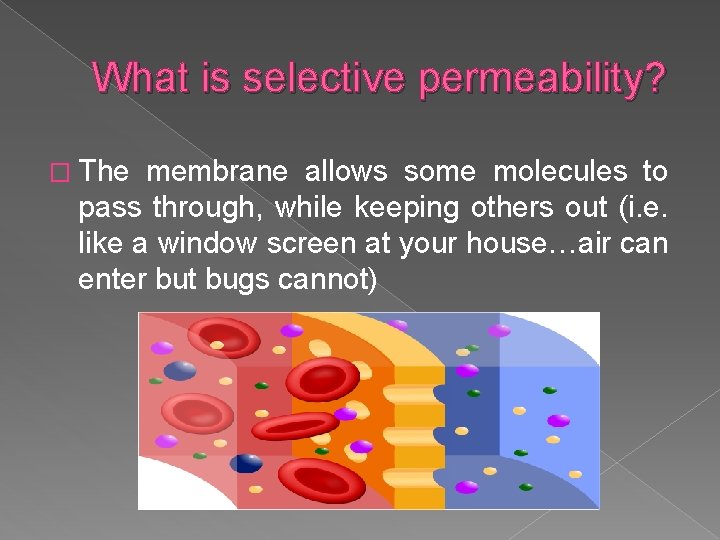
What is selective permeability? � The membrane allows some molecules to pass through, while keeping others out (i. e. like a window screen at your house…air can enter but bugs cannot)
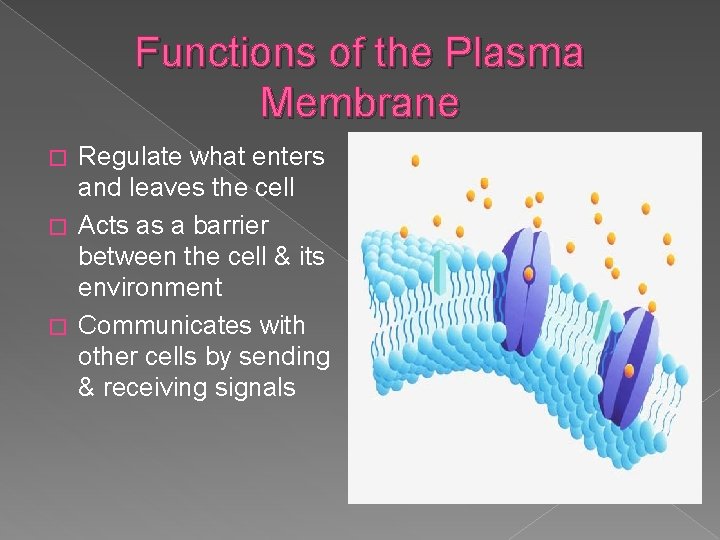
Functions of the Plasma Membrane Regulate what enters and leaves the cell � Acts as a barrier between the cell & its environment � Communicates with other cells by sending & receiving signals �
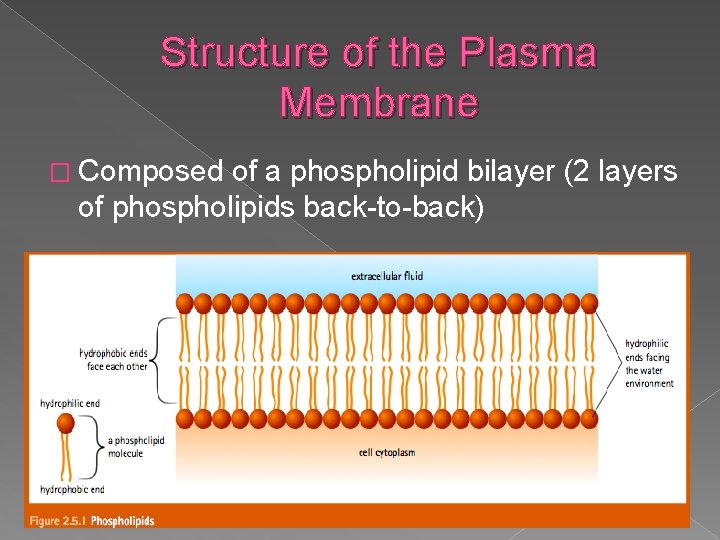
Structure of the Plasma Membrane � Composed of a phospholipid bilayer (2 layers of phospholipids back-to-back)
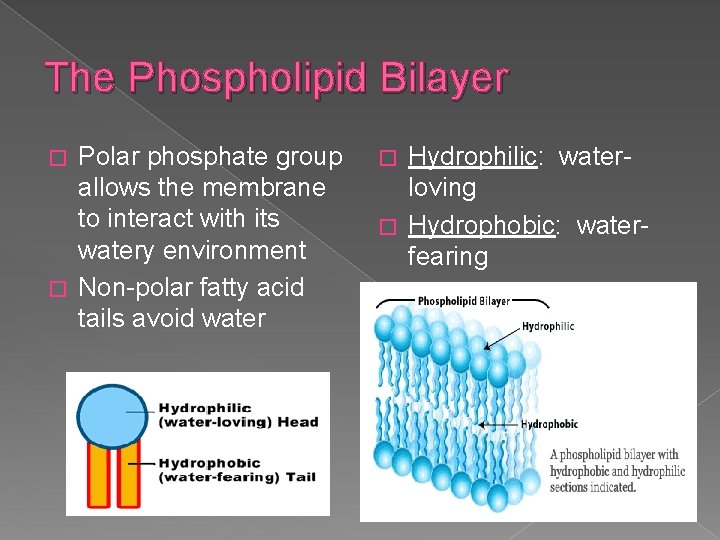
The Phospholipid Bilayer Polar phosphate group allows the membrane to interact with its watery environment � Non-polar fatty acid tails avoid water � Hydrophilic: waterloving � Hydrophobic: waterfearing �
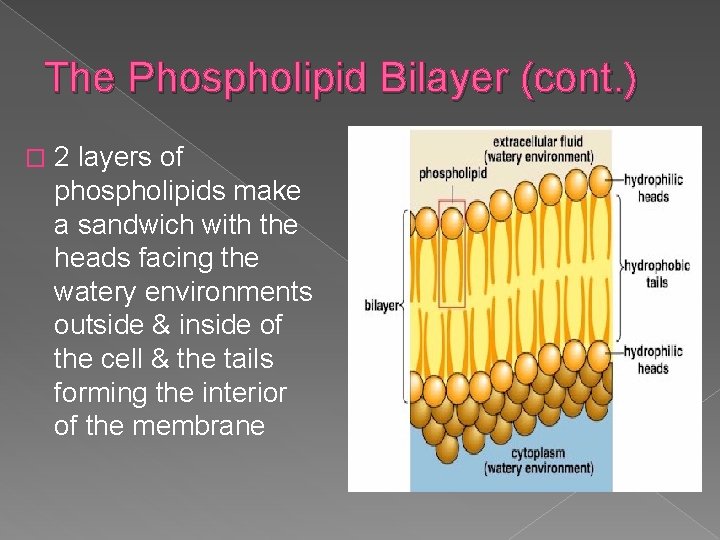
The Phospholipid Bilayer (cont. ) � 2 layers of phospholipids make a sandwich with the heads facing the watery environments outside & inside of the cell & the tails forming the interior of the membrane
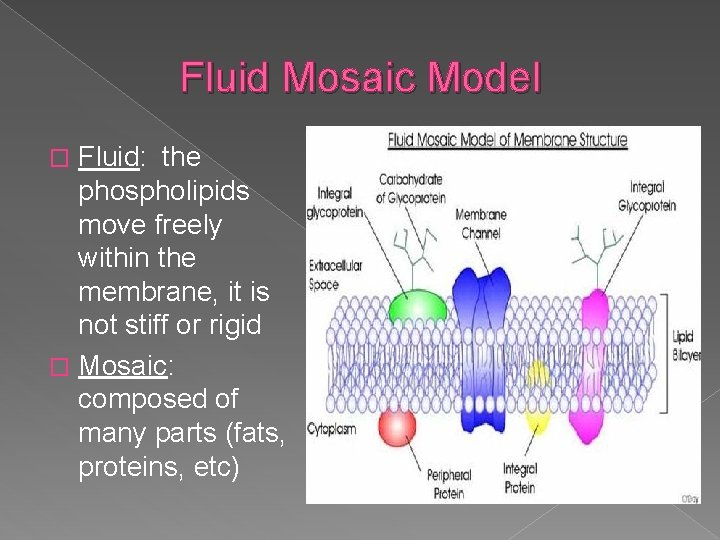
Fluid Mosaic Model Fluid: the phospholipids move freely within the membrane, it is not stiff or rigid � Mosaic: composed of many parts (fats, proteins, etc) �
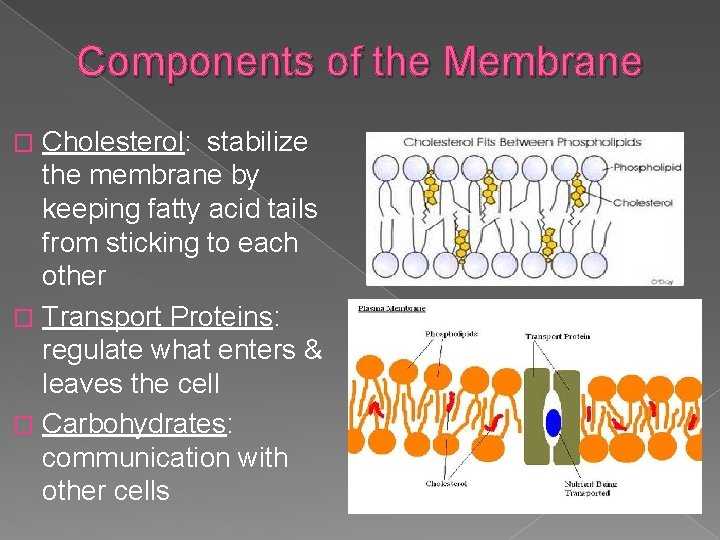
Components of the Membrane Cholesterol: stabilize the membrane by keeping fatty acid tails from sticking to each other � Transport Proteins: regulate what enters & leaves the cell � Carbohydrates: communication with other cells �
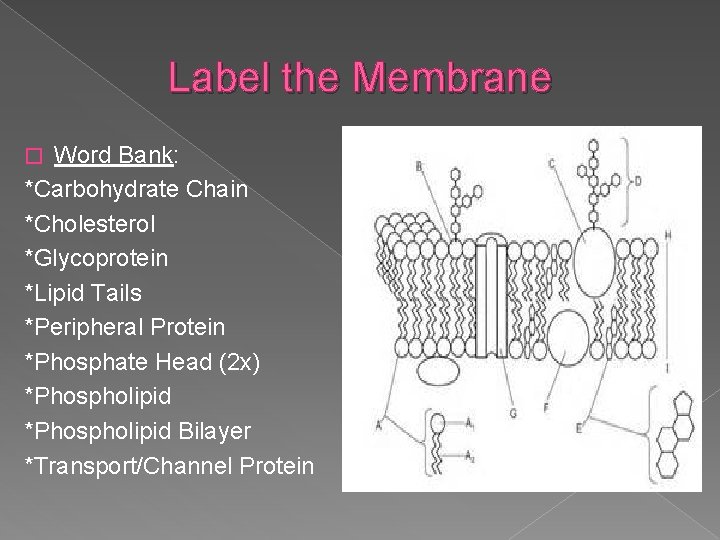
Label the Membrane Word Bank: *Carbohydrate Chain *Cholesterol *Glycoprotein *Lipid Tails *Peripheral Protein *Phosphate Head (2 x) *Phospholipid Bilayer *Transport/Channel Protein �
- Slides: 12