
The Plasma Membrane The Gateway to the Cell
The Plasma Membrane The Gateway to the Cell
GPS u SB 1. Students will analyze the nature of the relationships between structures and functions in living cells. – A. Explain the role of cell organelles for both prokaryotic and eukaryotic cells, including the cell membrane, in maintaining homeostasis and cell reproduction – D. Explain the impact of water on life processes (i. e. , osmosis, diffusion)
Recall that u The process of maintaining balance in an organism’s internal environment is called---homeostasis! u Essential to survival u One of the primary structures for this is the… u PLASMA MEMBRANE!
Vocabulary u Homeostasis u Cell or plasma membrane u Semipermeable u Phospholipid u Hypo-, Hyper-, Isotonic u Diffusion – Passive – Facilitated u Active transport
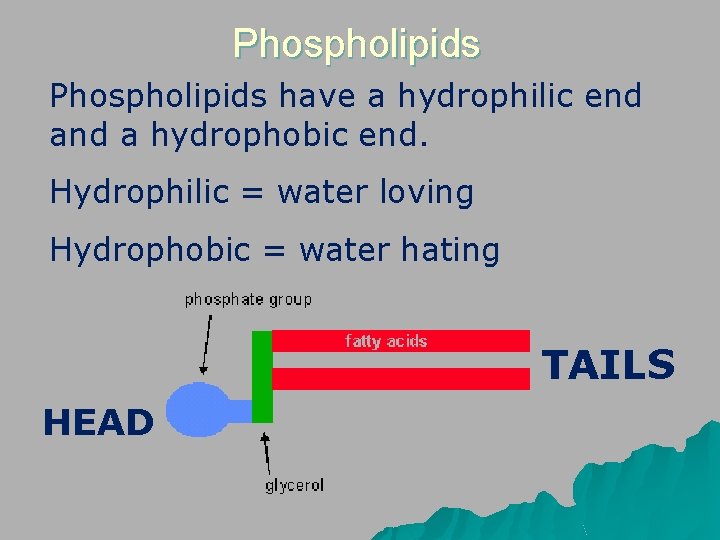
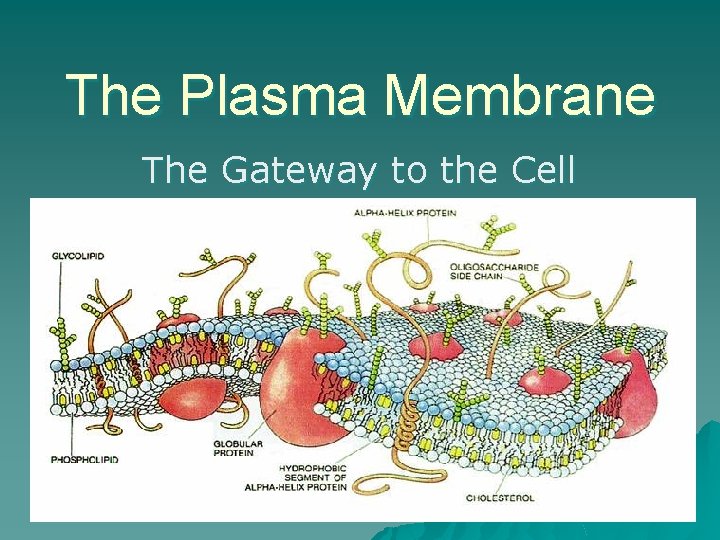
Phospholipids have a hydrophilic end a hydrophobic end. Hydrophilic = water loving Hydrophobic = water hating TAILS HEAD
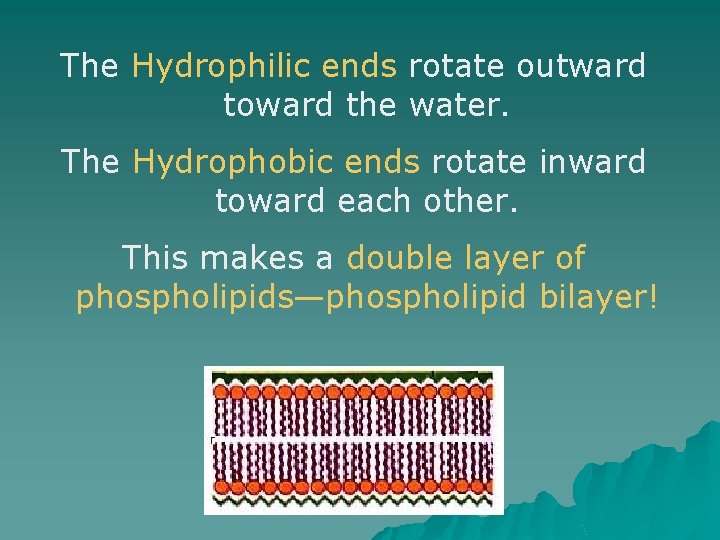
The Hydrophilic ends rotate outward toward the water. The Hydrophobic ends rotate inward toward each other. This makes a double layer of phospholipids—phospholipid bilayer!
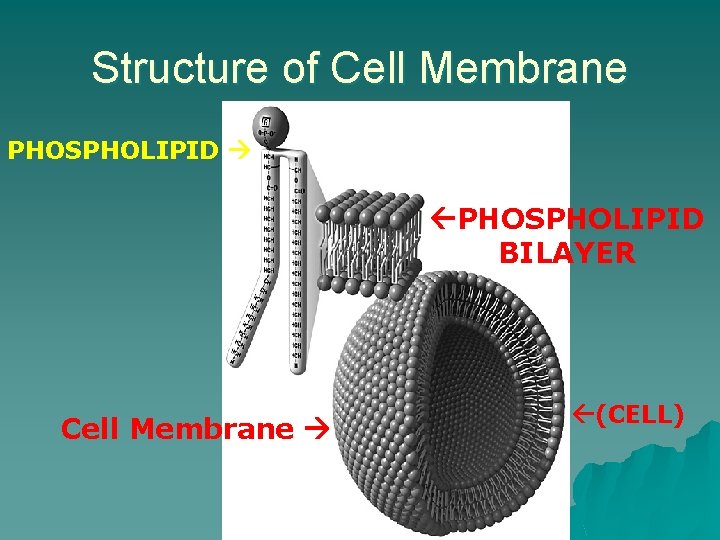
Structure of Cell Membrane PHOSPHOLIPID BILAYER Cell Membrane (CELL)
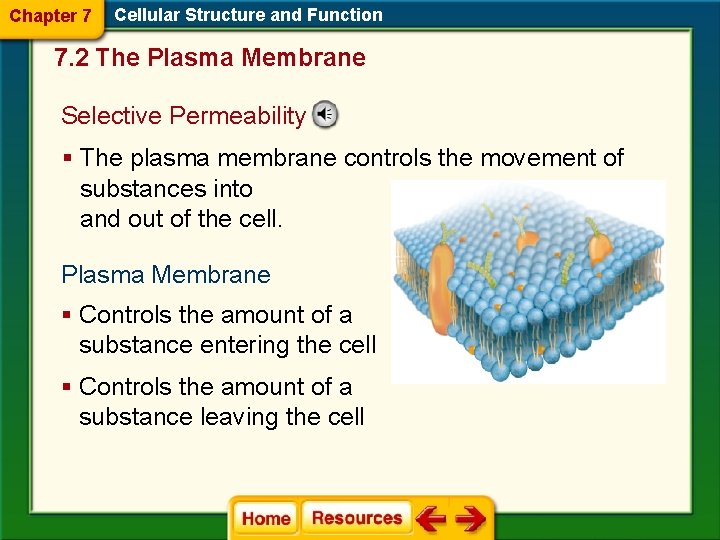
Chapter 7 Cellular Structure and Function 7. 2 The Plasma Membrane Selective Permeability § The plasma membrane controls the movement of substances into and out of the cell. Plasma Membrane § Controls the amount of a substance entering the cell § Controls the amount of a substance leaving the cell
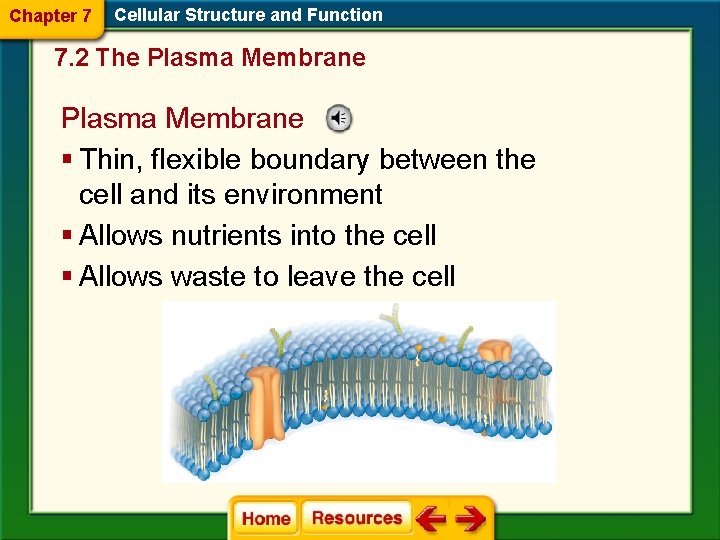
Chapter 7 Cellular Structure and Function 7. 2 The Plasma Membrane § Thin, flexible boundary between the cell and its environment § Allows nutrients into the cell § Allows waste to leave the cell
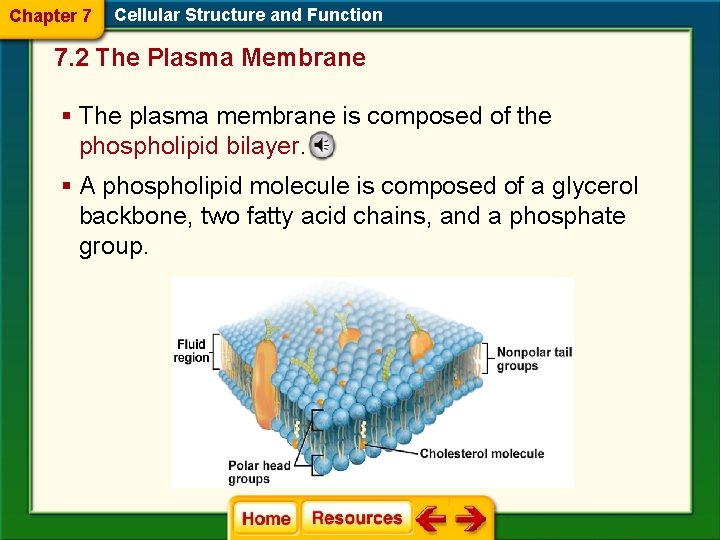
Chapter 7 Cellular Structure and Function 7. 2 The Plasma Membrane § The plasma membrane is composed of the phospholipid bilayer. § A phospholipid molecule is composed of a glycerol backbone, two fatty acid chains, and a phosphate group.
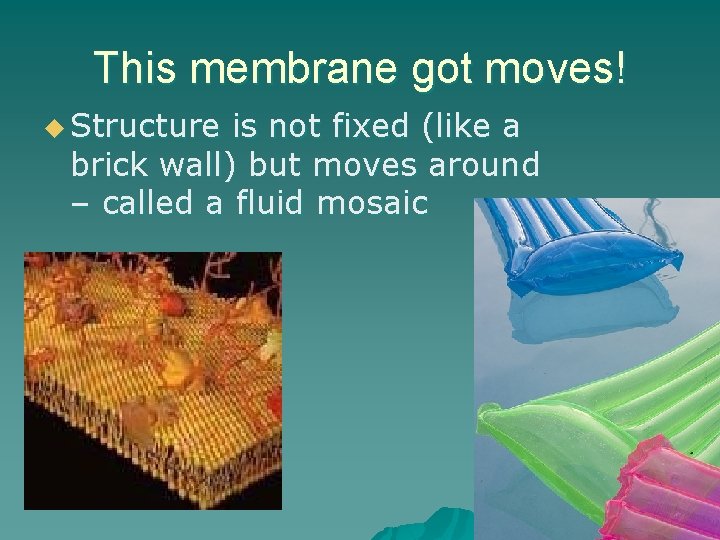
This membrane got moves! u Structure is not fixed (like a brick wall) but moves around – called a fluid mosaic
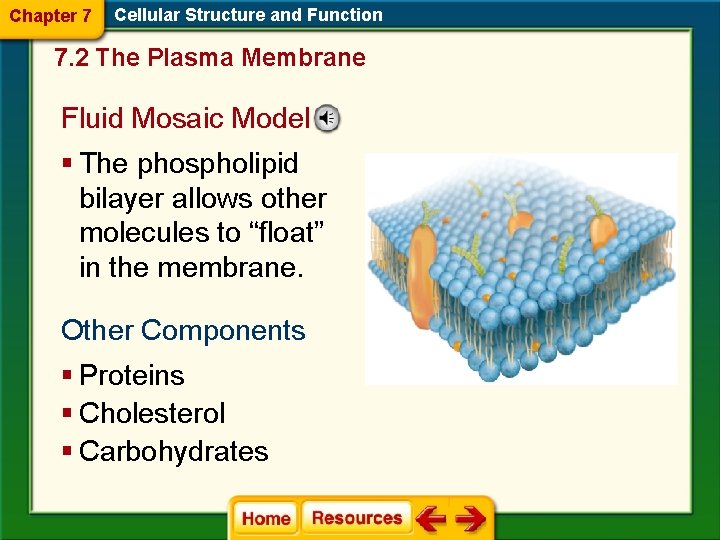
Chapter 7 Cellular Structure and Function 7. 2 The Plasma Membrane Fluid Mosaic Model § The phospholipid bilayer allows other molecules to “float” in the membrane. Other Components § Proteins § Cholesterol § Carbohydrates
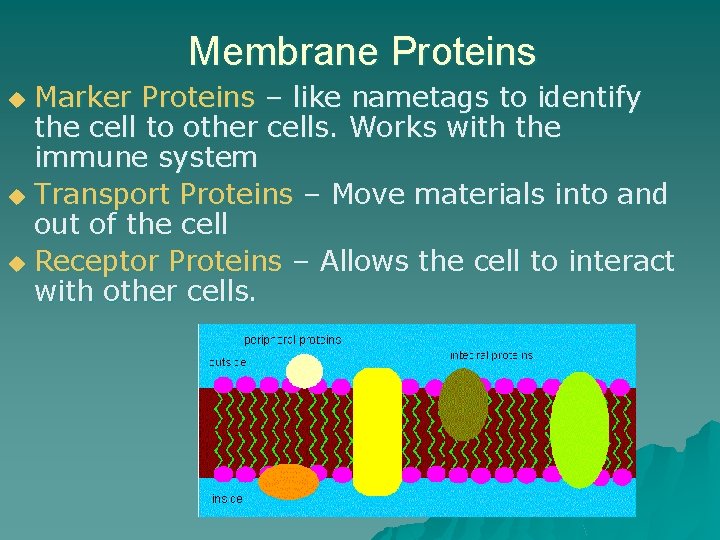
Membrane Proteins Marker Proteins – like nametags to identify the cell to other cells. Works with the immune system u Transport Proteins – Move materials into and out of the cell u Receptor Proteins – Allows the cell to interact with other cells. u
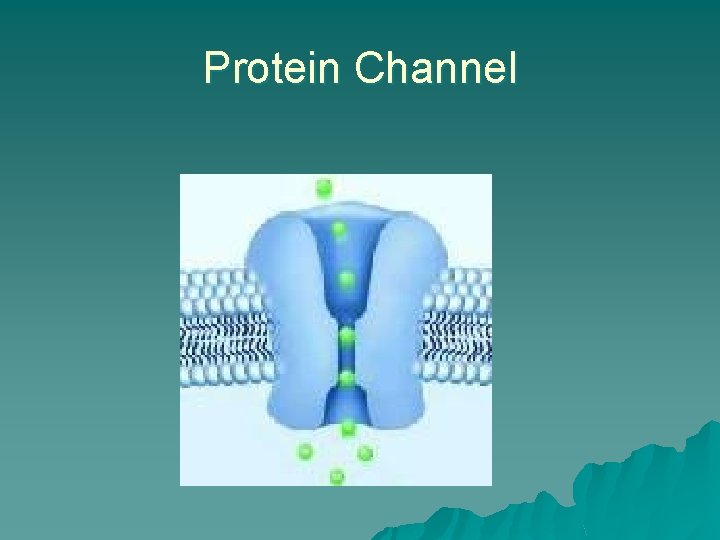
Protein Channel
Ok, recap!!! u Selective permeability allows the membrane to control what enters and leaves the cell u Plasma membrane composed of 2 layers of phospholipid molecules u Cholesterol and transport proteins aid in function of membrane u Fluid mosaic model describes it
Fill in the blanks u The axillary border of the scapula is ____ to the vertebral border. u The hips are _____ to the shoulders. u The knee is ______ to the ankle. u The cranium is _____ to the scalp.

How important is the receptor in a negative feedback system?
Sinoatrial (SA) node?
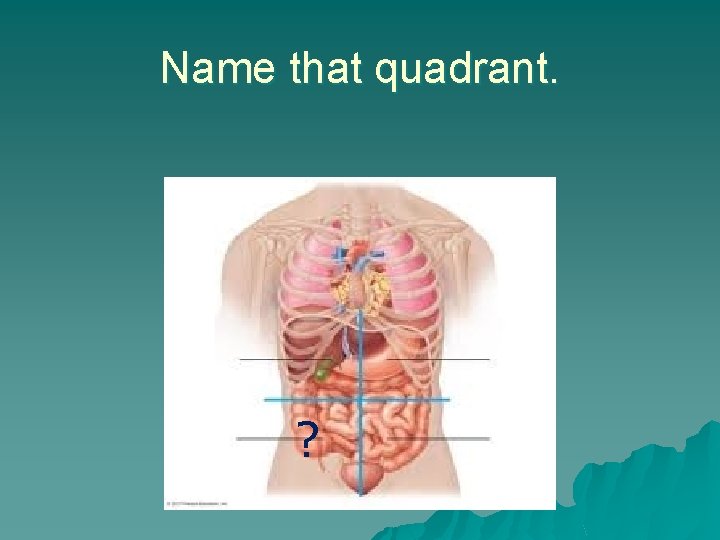
Name that quadrant. ?
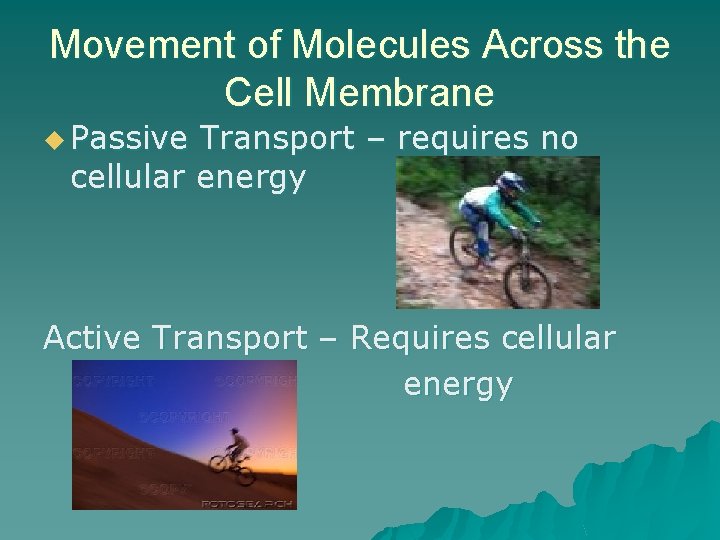
Movement of Molecules Across the Cell Membrane u Passive Transport – requires no cellular energy Active Transport – Requires cellular energy
Types of Passive Transport u Diffusion – – Molecules move with a Concentration Gradient, from high concentration to low concentration. – Requires no energy – Molecules continue to move until an equilibrium is reached
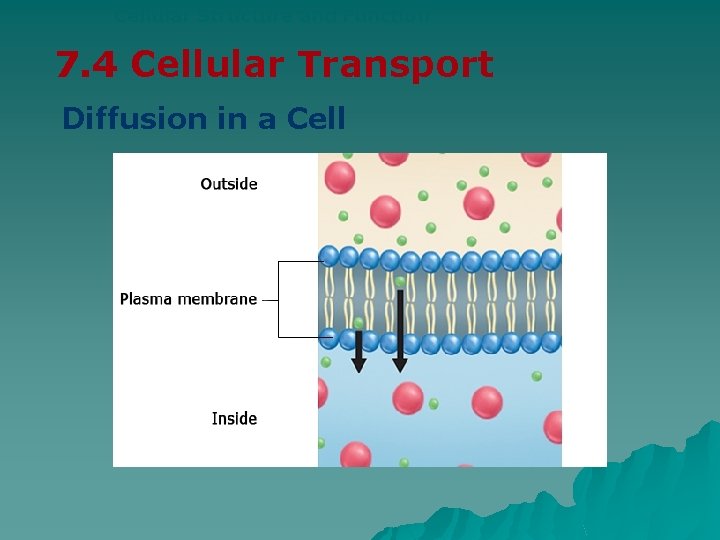
Cellular Structure and Function 7. 4 Cellular Transport Diffusion in a Cell
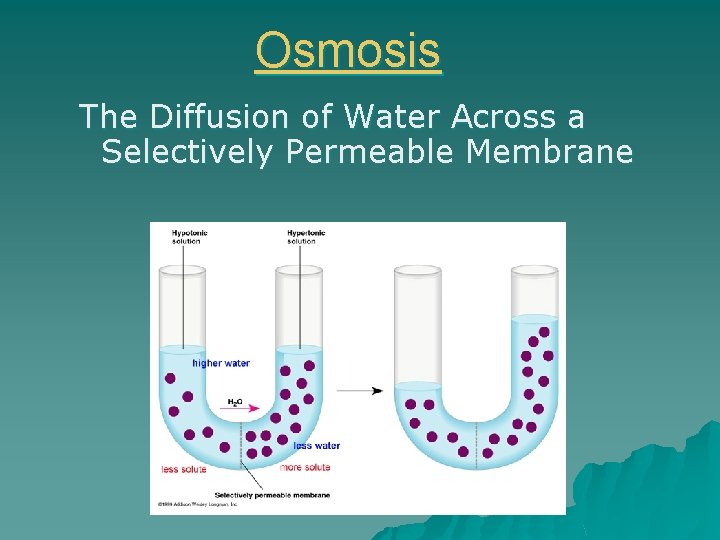
Osmosis The Diffusion of Water Across a Selectively Permeable Membrane
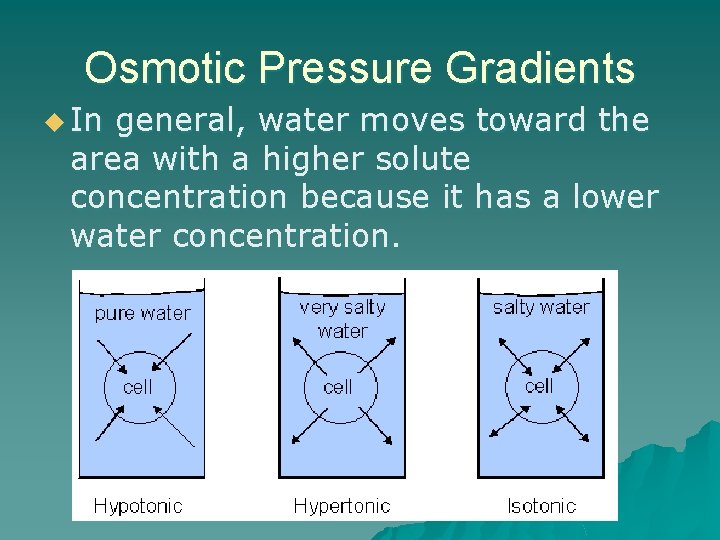
Osmotic Pressure Gradients u In general, water moves toward the area with a higher solute concentration because it has a lower water concentration.
Hypertonic Solutions u Contain a higher concentration of solute outside of the cell than inside of the cell. u When a cell is placed in a hypertonic solution, the water diffuses out of the cell, causing the cell to shrivel.
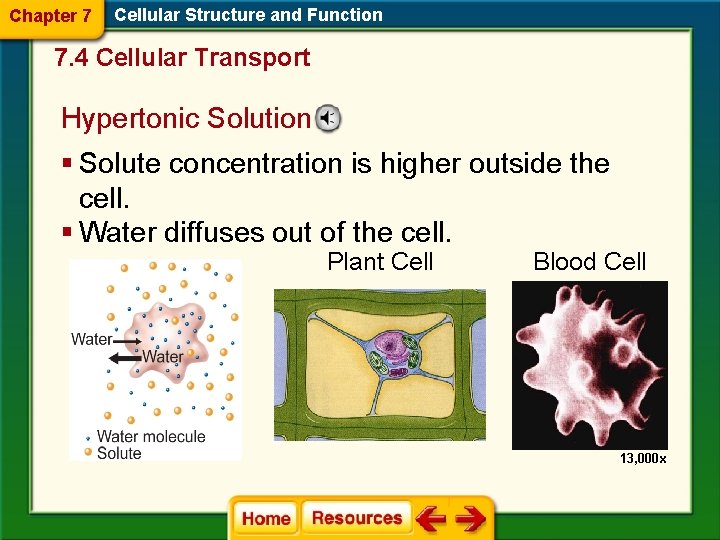
Chapter 7 Cellular Structure and Function 7. 4 Cellular Transport Hypertonic Solution § Solute concentration is higher outside the cell. § Water diffuses out of the cell. Plant Cell Blood Cell 13, 000 x
Hypotonic Solutions u Contain a low concentration of solute outside of the cell as compared to inside of the cell. u When a cell is placed in a hypotonic solution, the water diffuses into the cell, causing the cell to swell and possibly explode.
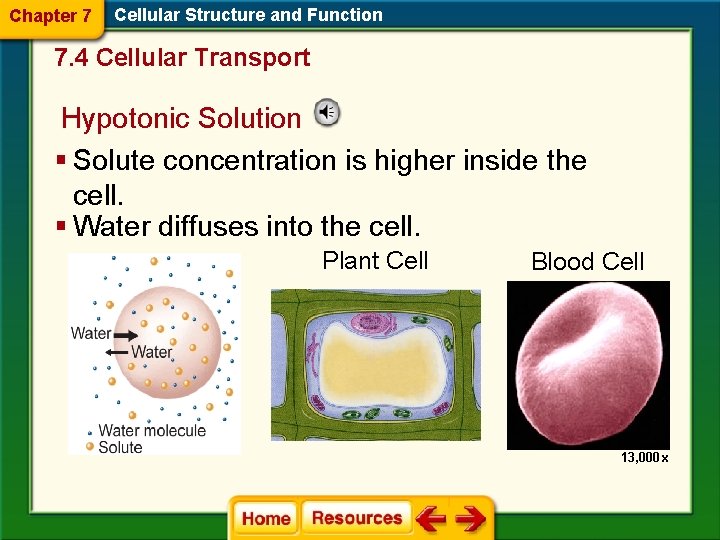
Chapter 7 Cellular Structure and Function 7. 4 Cellular Transport Hypotonic Solution § Solute concentration is higher inside the cell. § Water diffuses into the cell. Plant Cell Blood Cell 13, 000 x
Isotonic Solution u The concentration of solute inside of the cell is equal the concentration of solute outside of the cell. Therefore, water move equal into and out of the cell.
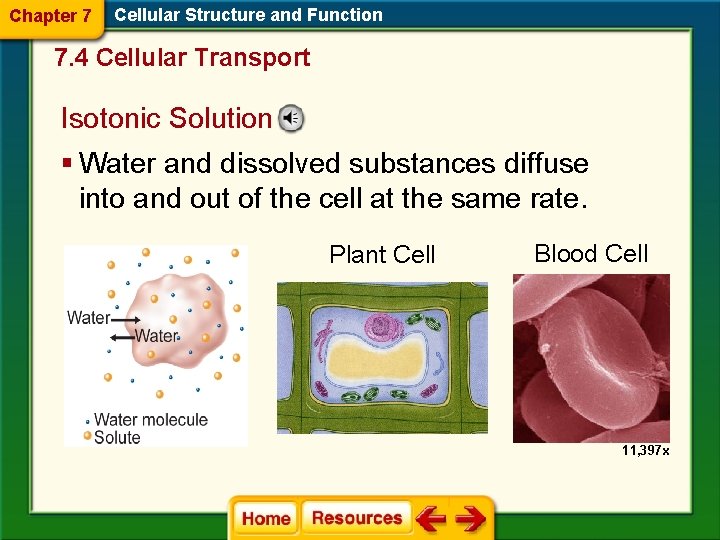
Chapter 7 Cellular Structure and Function 7. 4 Cellular Transport Isotonic Solution § Water and dissolved substances diffuse into and out of the cell at the same rate. Plant Cell Blood Cell 11, 397 x
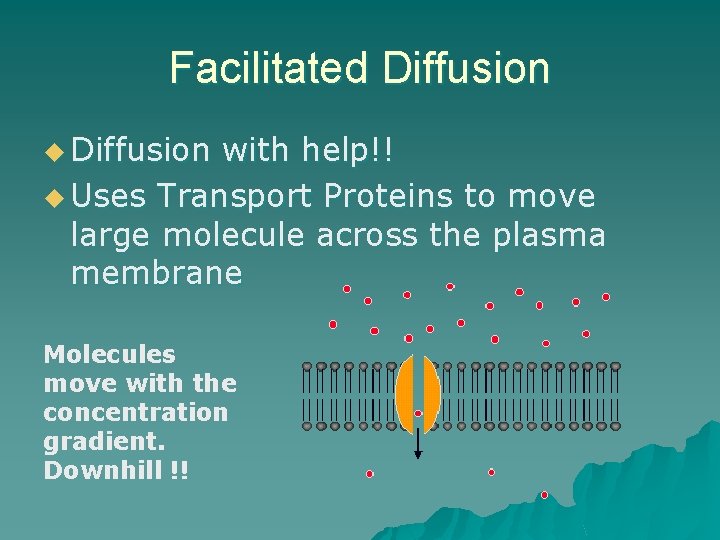
Facilitated Diffusion u Diffusion with help!! u Uses Transport Proteins to move large molecule across the plasma membrane Molecules move with the concentration gradient. Downhill !!
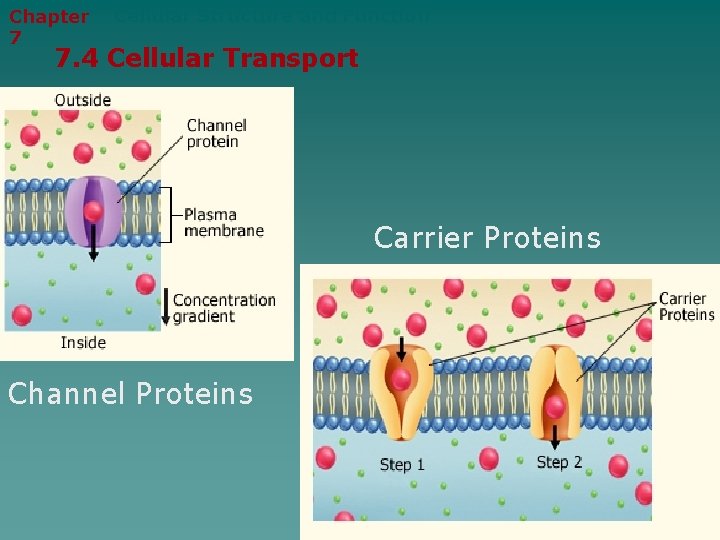
Chapter 7 Cellular Structure and Function 7. 4 Cellular Transport Carrier Proteins Channel Proteins
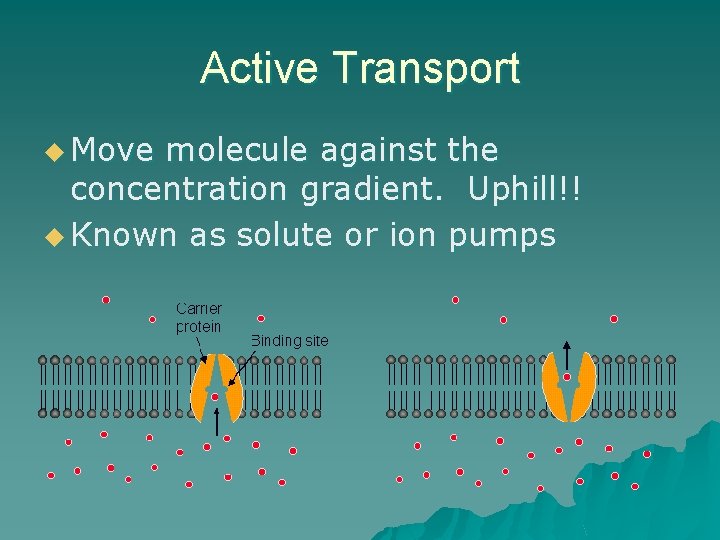
Active Transport u Move molecule against the concentration gradient. Uphill!! u Known as solute or ion pumps
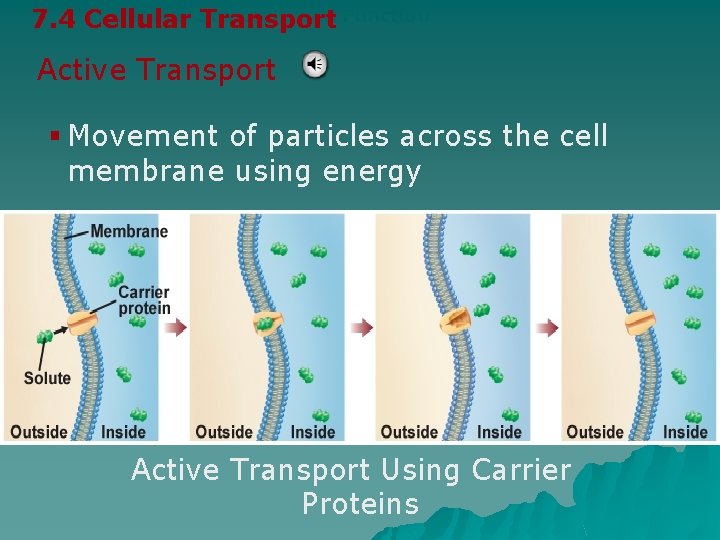
Cellular Structure and Function 7. 4 Cellular Transport Active Transport § Movement of particles across the cell membrane using energy Active Transport Using Carrier Proteins
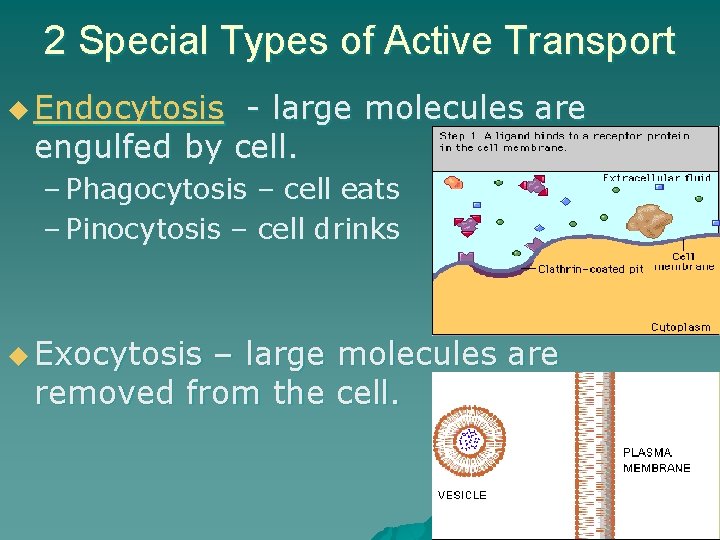
2 Special Types of Active Transport u Endocytosis - large molecules are engulfed by cell. – Phagocytosis – cell eats – Pinocytosis – cell drinks u Exocytosis – large molecules are removed from the cell.
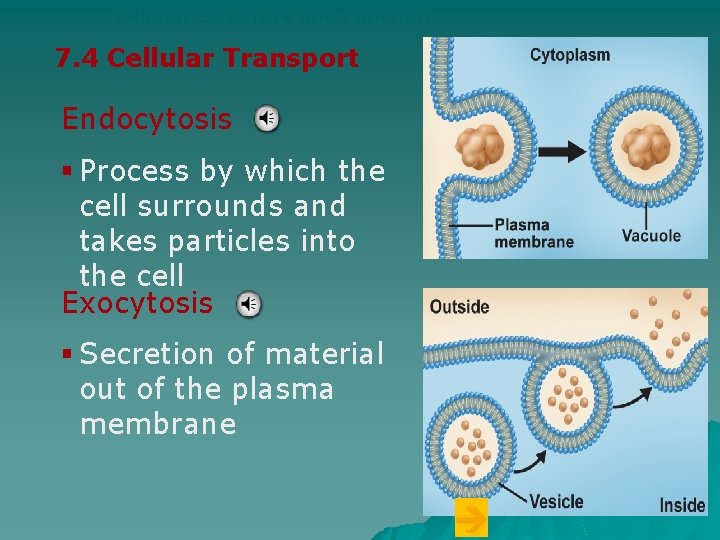
Cellular Structure and Function 7. 4 Cellular Transport Endocytosis § Process by which the cell surrounds and takes particles into the cell Exocytosis § Secretion of material out of the plasma membrane
- Slides: 36