
The Plasma Membrane Gateway to the Cell copyright
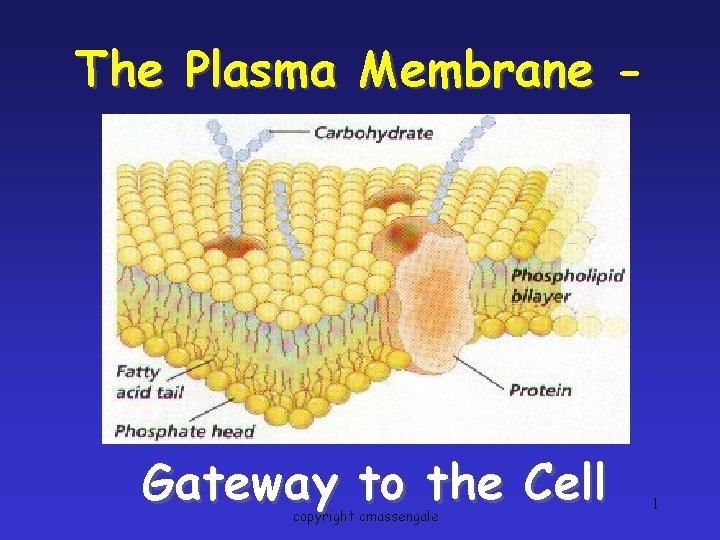
The Plasma Membrane - Gateway to the Cell copyright cmassengale 1
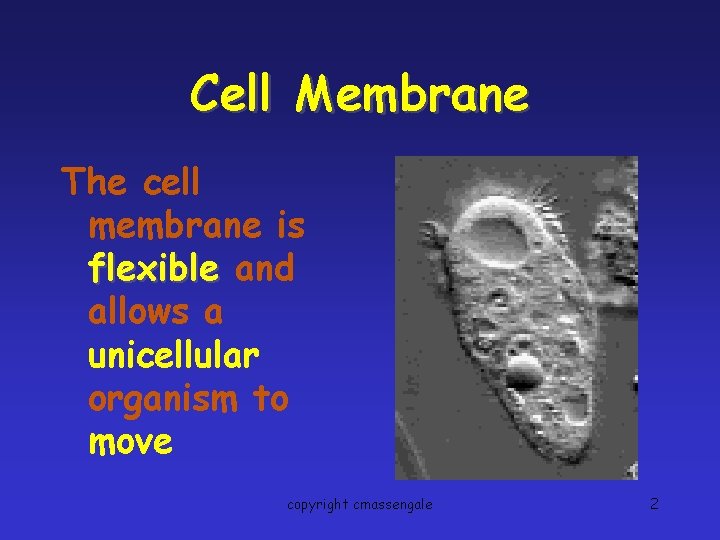
Cell Membrane The cell membrane is flexible and allows a unicellular organism to move copyright cmassengale 2
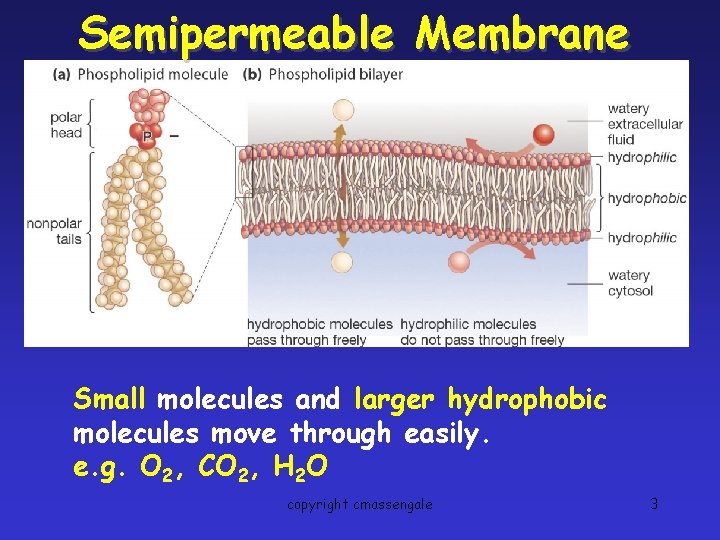
Semipermeable Membrane Small molecules and larger hydrophobic molecules move through easily. e. g. O 2, CO 2, H 2 O copyright cmassengale 3
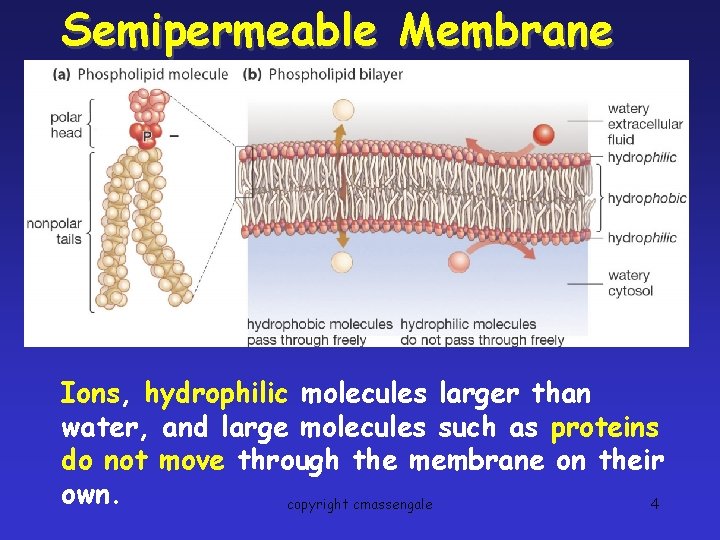
Semipermeable Membrane Ions, hydrophilic molecules larger than water, and large molecules such as proteins do not move through the membrane on their own. copyright cmassengale 4

Concentration Gradient • A difference in the concentration of a substance across a space. copyright cmassengale 5
Homeostasis • Balanced internal condition of cells • Also called equilibrium • Maintained by plasma membrane controlling what enters & leaves the cell copyright cmassengale 6
Types of Transport Across Cell Membranes copyright cmassengale 7
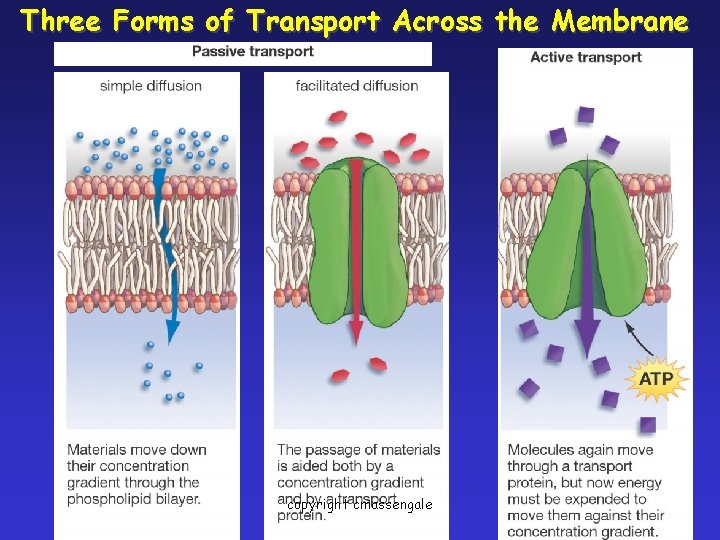
Three Forms of Transport Across the Membrane copyright cmassengale 8
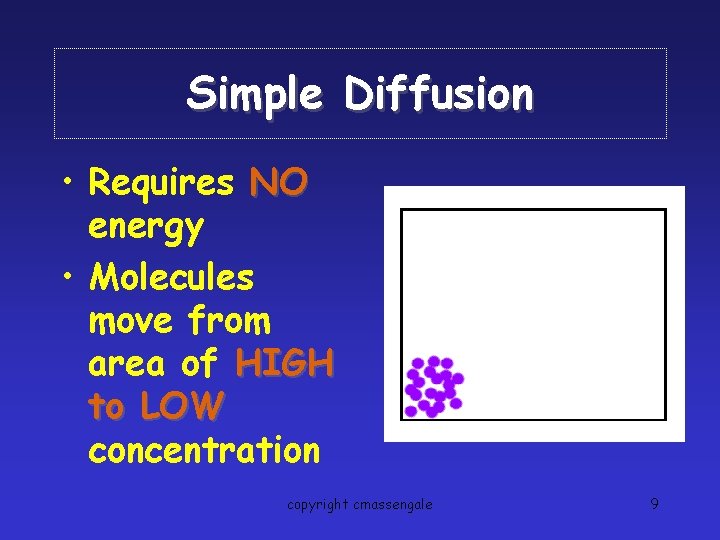
Simple Diffusion • Requires NO energy • Molecules move from area of HIGH to LOW concentration copyright cmassengale 9
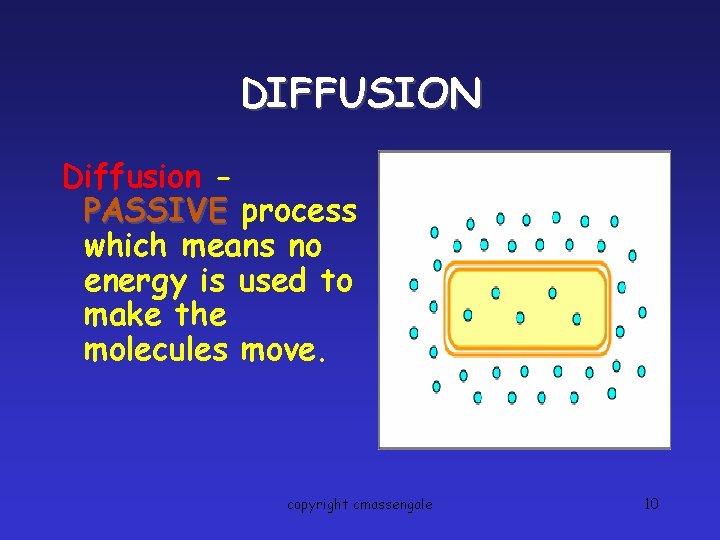
DIFFUSION Diffusion PASSIVE process which means no energy is used to make the molecules move. copyright cmassengale 10
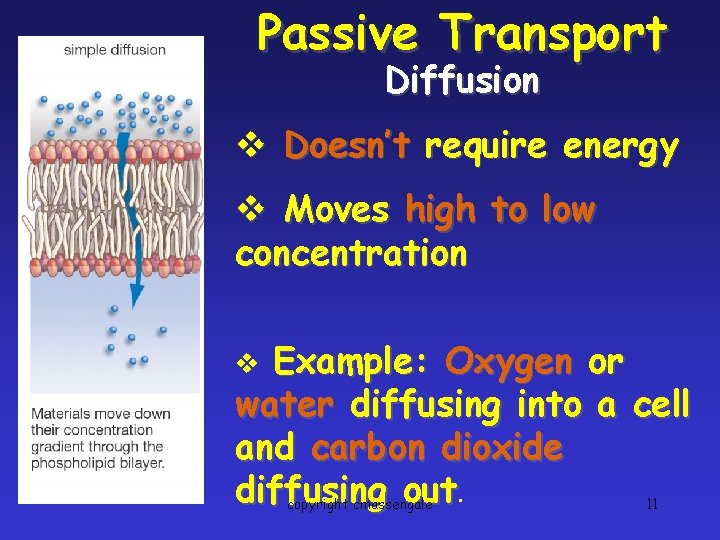
Passive Transport Diffusion v Doesn’t require energy v Moves high to low concentration Example: Oxygen or water diffusing into a cell and carbon dioxide diffusing out. v copyright cmassengale 11
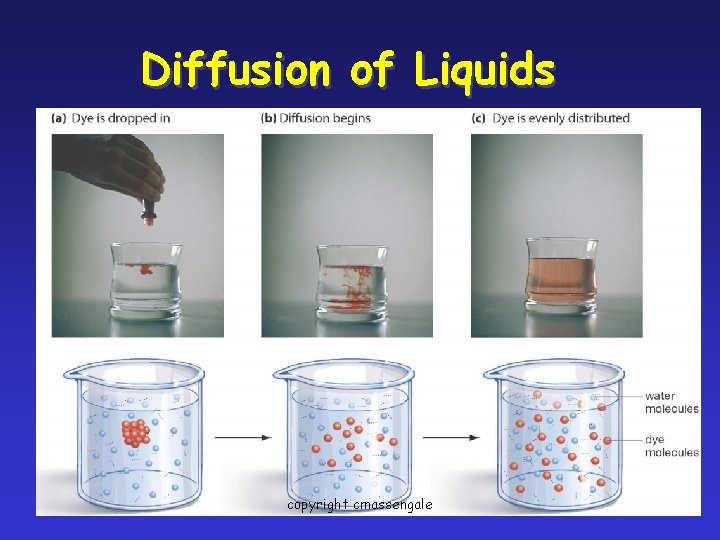
Diffusion of Liquids copyright cmassengale 12
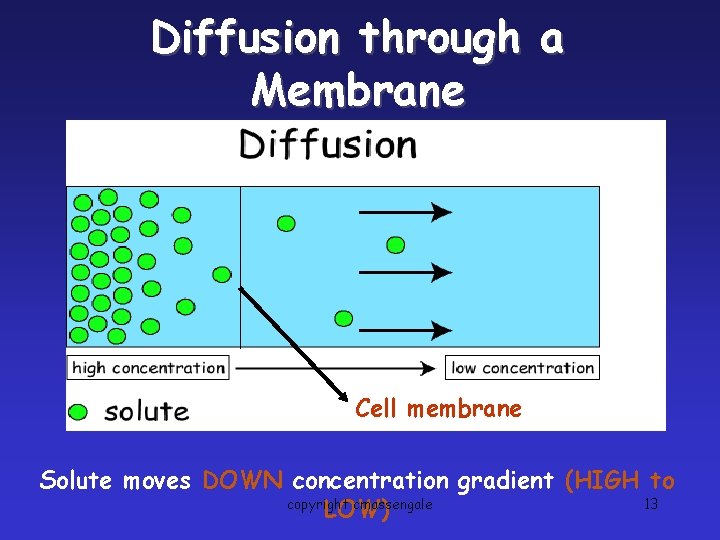
Diffusion through a Membrane Cell membrane Solute moves DOWN concentration gradient (HIGH to copyright cmassengale 13 LOW)

Osmosis • Diffusion of water across a membrane • Moves from HIGH water potential (low solute) to LOW water potential (high solute) Diffusion across a membrane copyright cmassengale Semipermeable membrane 14

Diffusion of H 2 O Across A Membrane High H 2 O potential Low solute concentration copyright cmassengale 15 High solute concentration

Aquaporins • Water Channels • Protein pores used during OSMOSIS WATER MOLECULES copyright cmassengale 16

Water Movement 1. Isotonic – Fluid outside the cell has the same concentration of particles as the cytoplasm. No net water movement. 2. Hypotonic – Fluid outside the cell has a lower concentration of particles than the cytoplasm. Water diffuses into the cell. 3. Hypertonic – The fluid outside of the cell has a higher concentration of particles than the cytoplasm. Water diffuses out of copyright cmassengale 17 the cell.
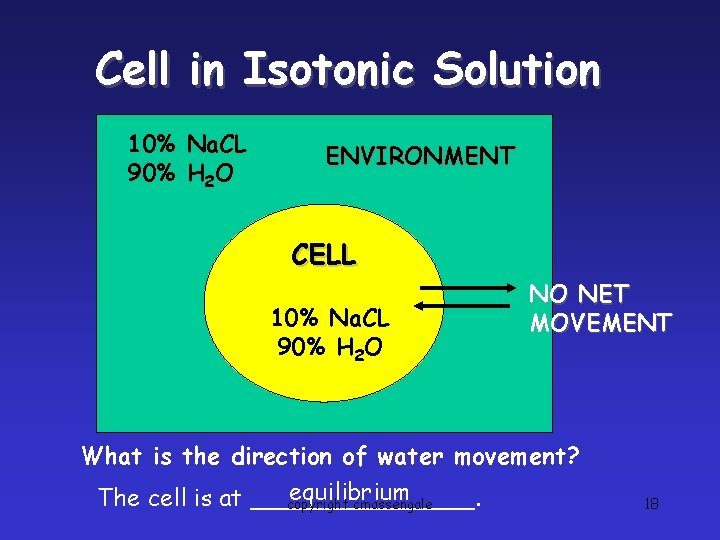
Cell in Isotonic Solution 10% Na. CL 90% H 2 O ENVIRONMENT CELL 10% Na. CL 90% H 2 O NO NET MOVEMENT What is the direction of water movement? equilibrium The cell is at ________. copyright cmassengale 18
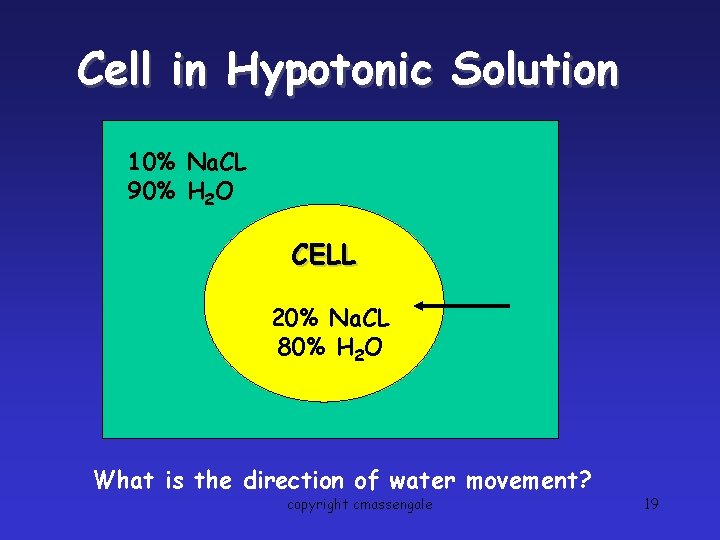
Cell in Hypotonic Solution 10% Na. CL 90% H 2 O CELL 20% Na. CL 80% H 2 O What is the direction of water movement? copyright cmassengale 19
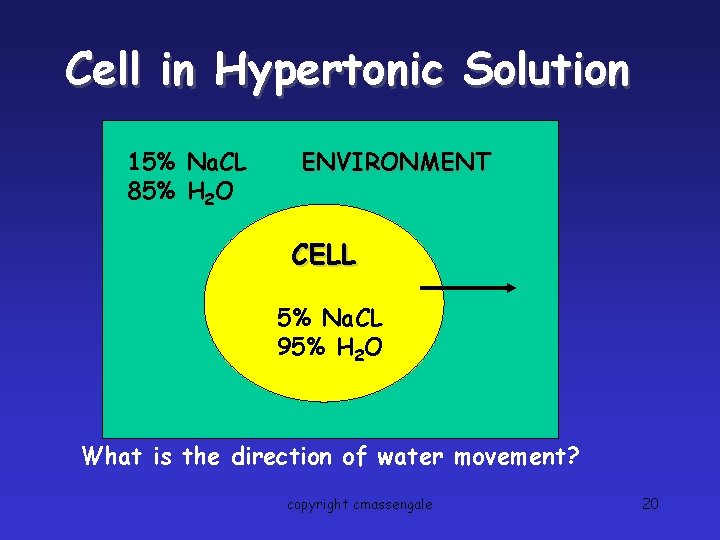
Cell in Hypertonic Solution 15% Na. CL 85% H 2 O ENVIRONMENT CELL 5% Na. CL 95% H 2 O What is the direction of water movement? copyright cmassengale 20
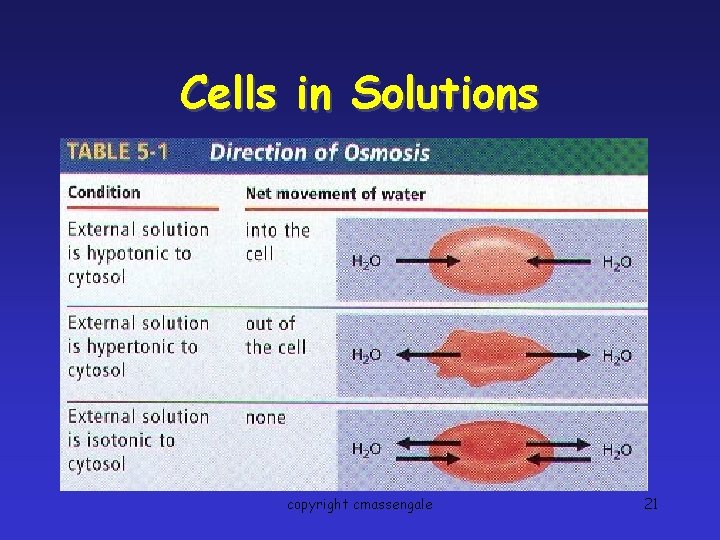
Cells in Solutions copyright cmassengale 21
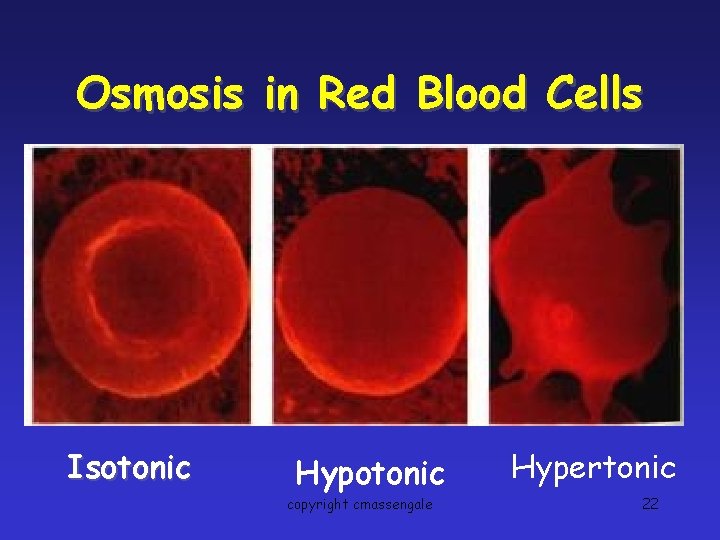
Osmosis in Red Blood Cells Isotonic Hypotonic copyright cmassengale Hypertonic 22
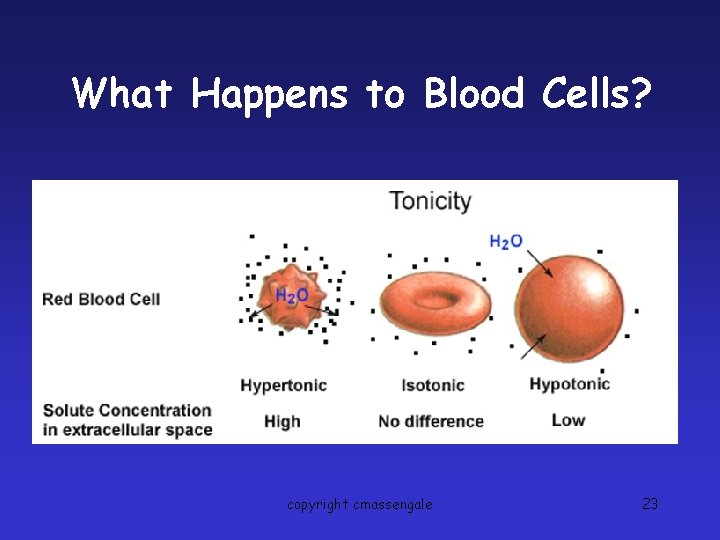
What Happens to Blood Cells? copyright cmassengale 23
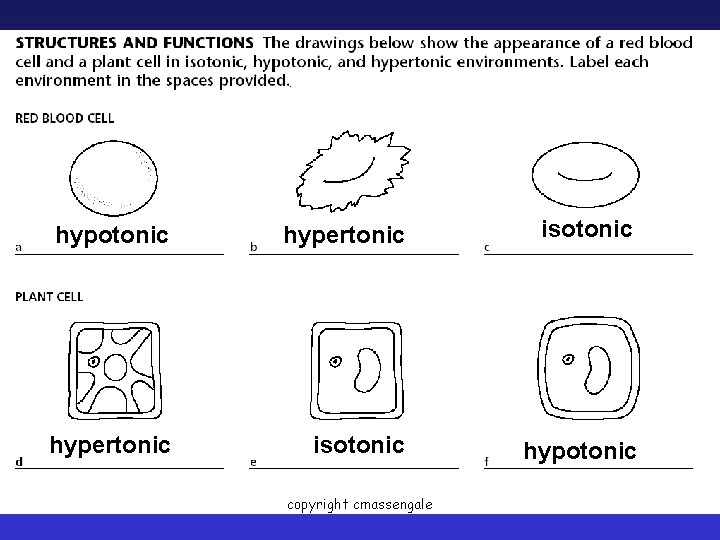
hypotonic hypertonic isotonic hypotonic copyright cmassengale 24
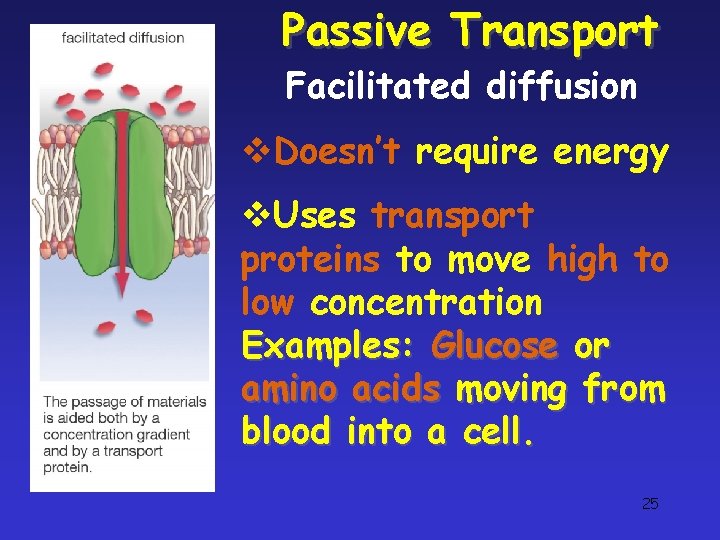
Passive Transport Facilitated diffusion v. Doesn’t require energy v. Uses transport proteins to move high to low concentration Examples: Glucose or amino acids moving from blood into a cell. 25
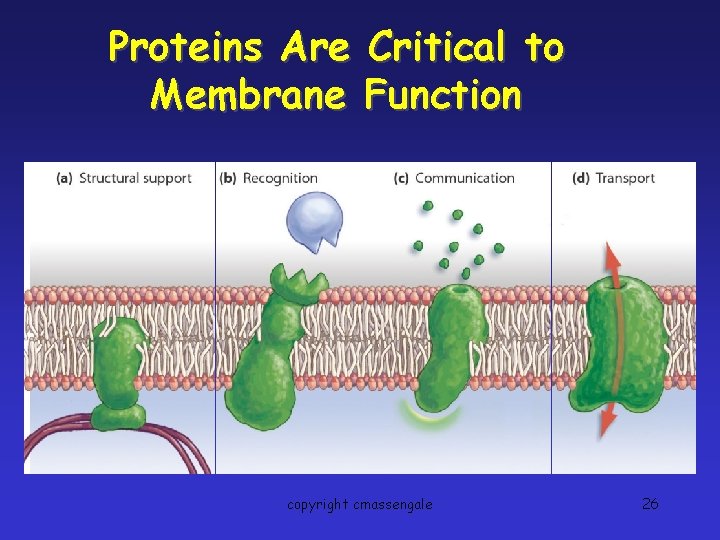
Proteins Are Critical to Membrane Function copyright cmassengale 26
Types of Transport Proteins 1. Ion Channel 2. Carrier Proteins copyright cmassengale 27
Types of Transport Proteins 1. Ion Channels are embedded in the cell membrane & have a pore for materials to cross http: //bcs. whfreeman. com/thelifewire/content/chp 05/0502001. html copyright cmassengale 28
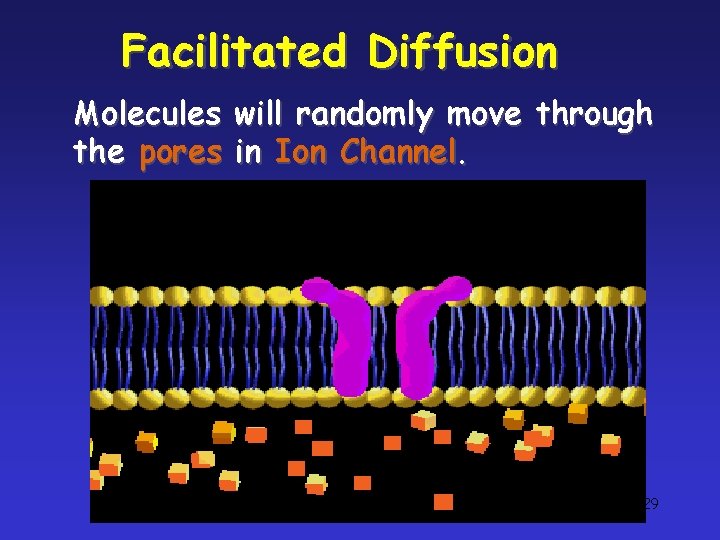
Facilitated Diffusion Molecules will randomly move through the pores in Ion Channel. copyright cmassengale 29

Types of Transport Proteins 2. Carrier proteins can change shape to move material from one side of the membrane to the other http: //bcs. whfreeman. com/thelifewire/content/chp 05/0502001. html copyright cmassengale 30
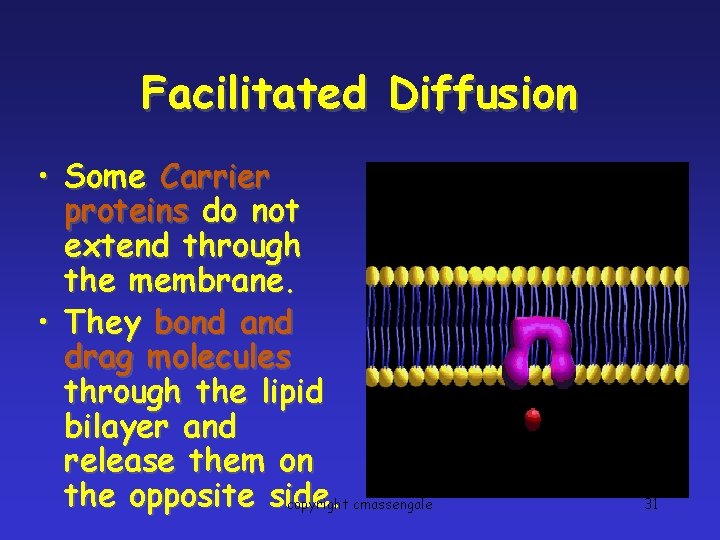
Facilitated Diffusion • Some Carrier proteins do not extend through the membrane. • They bond and drag molecules through the lipid bilayer and release them on the opposite side. copyright cmassengale 31
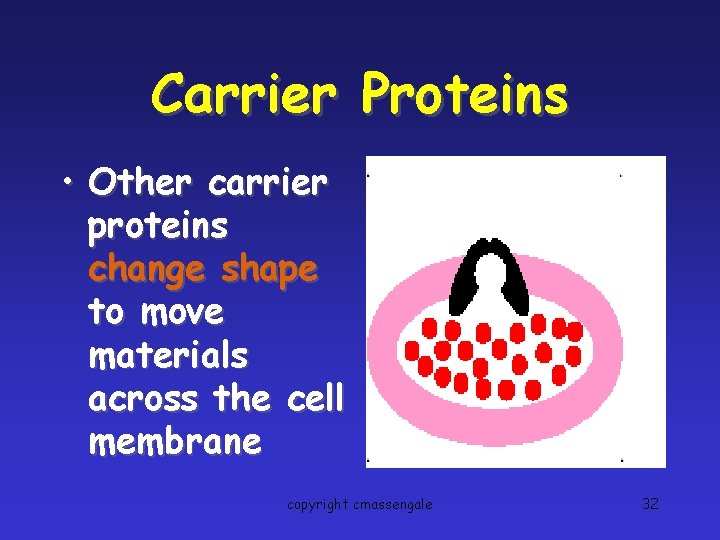
Carrier Proteins • Other carrier proteins change shape to move materials across the cell membrane copyright cmassengale 32
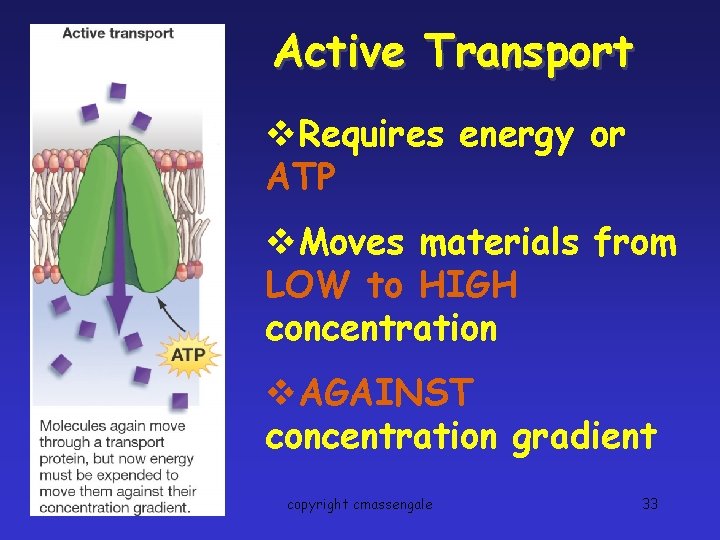
Active Transport v. Requires energy or ATP v. Moves materials from LOW to HIGH concentration v. AGAINST concentration gradient copyright cmassengale 33
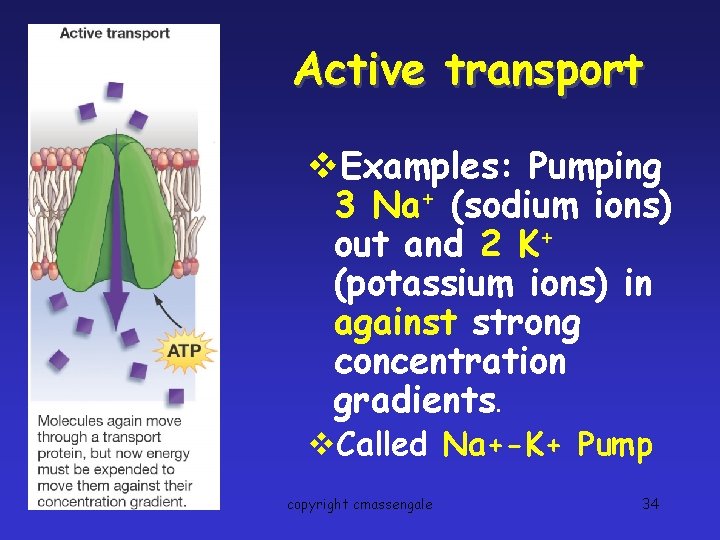
Active transport v. Examples: Pumping 3 Na+ (sodium ions) out and 2 K+ (potassium ions) in against strong concentration gradients. v. Called Na+-K+ Pump copyright cmassengale 34
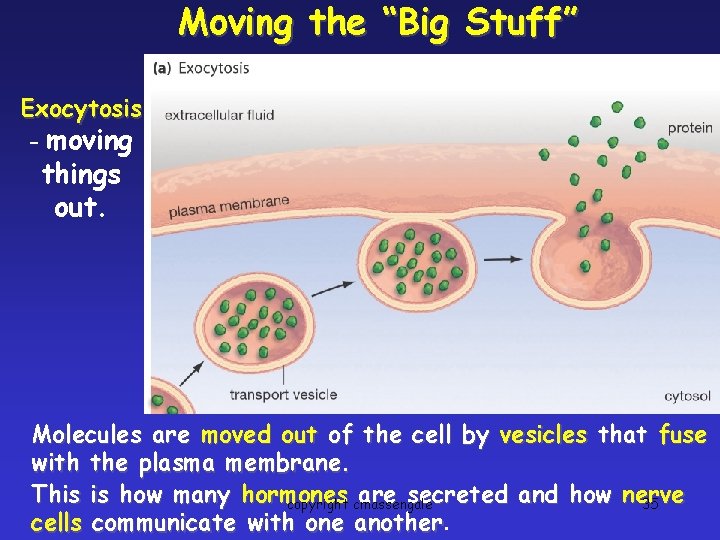
Moving the “Big Stuff” Exocytosis - moving things out. Molecules are moved out of the cell by vesicles that fuse with the plasma membrane. This is how many hormones are secreted and how nerve copyright cmassengale 35 cells communicate with one another
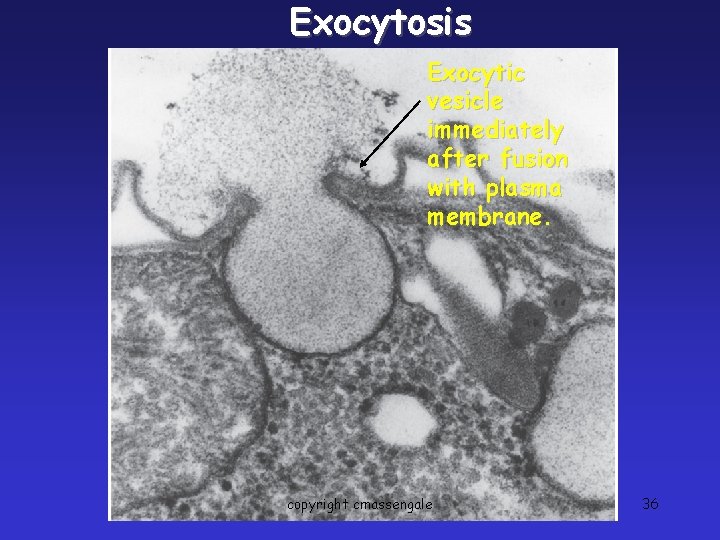
Exocytosis Exocytic vesicle immediately after fusion with plasma membrane. copyright cmassengale 36
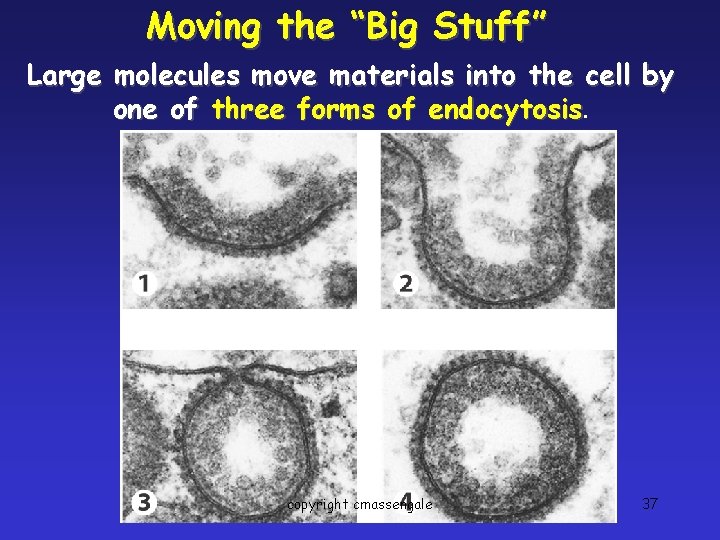
Moving the “Big Stuff” Large molecules move materials into the cell by one of three forms of endocytosis copyright cmassengale 37
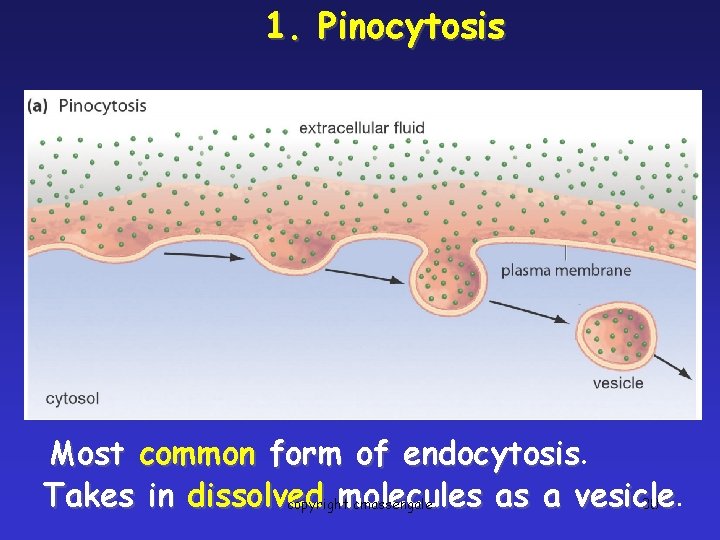
1. Pinocytosis Most common form of endocytosis Takes in dissolved molecules as a vesicle copyright cmassengale 38.

Pinocytosis • Cell forms an invagination • Materials dissolve in water to be brought into cell • Called “Cell Drinking” copyright cmassengale 39
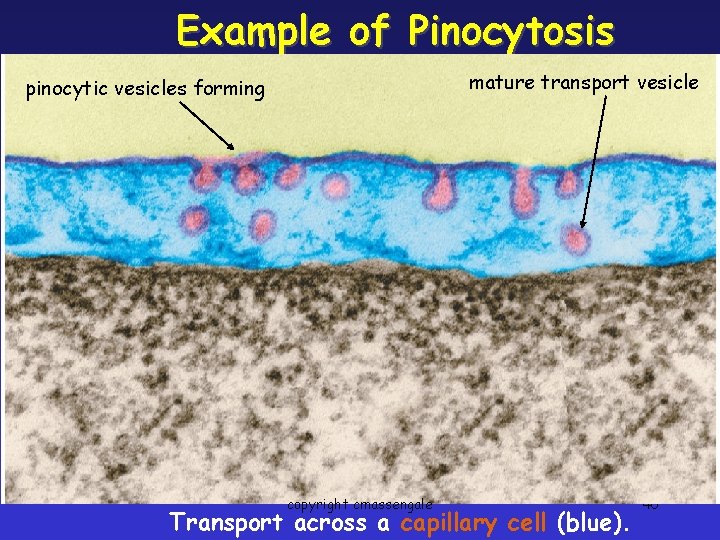
Example of Pinocytosis mature transport vesicle pinocytic vesicles forming copyright cmassengale Transport across a capillary cell (blue). 40
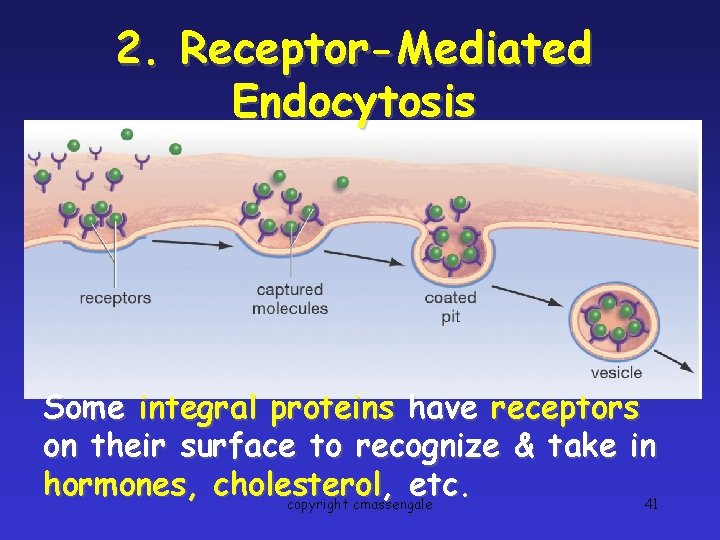
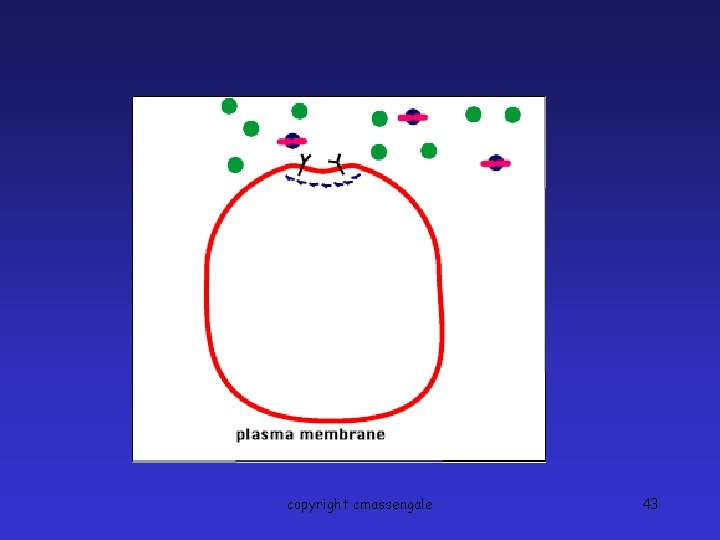
2. Receptor-Mediated Endocytosis Some integral proteins have receptors on their surface to recognize & take in hormones, cholesterol , etc. copyright cmassengale 41
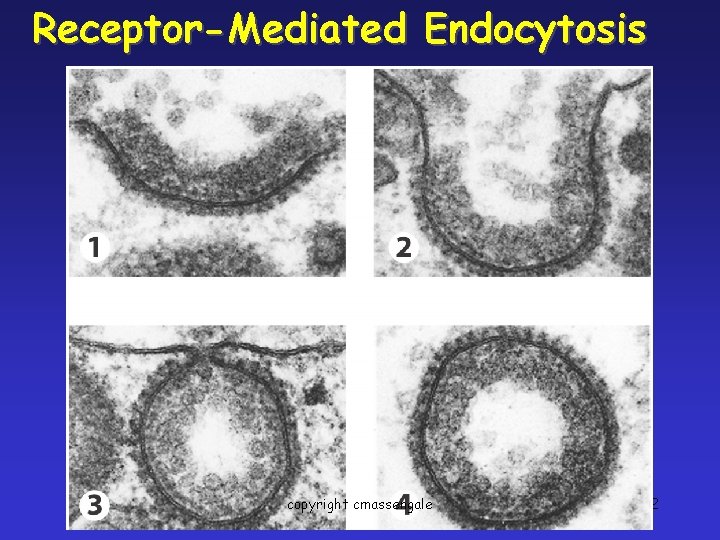
Receptor-Mediated Endocytosis copyright cmassengale 42
copyright cmassengale 43

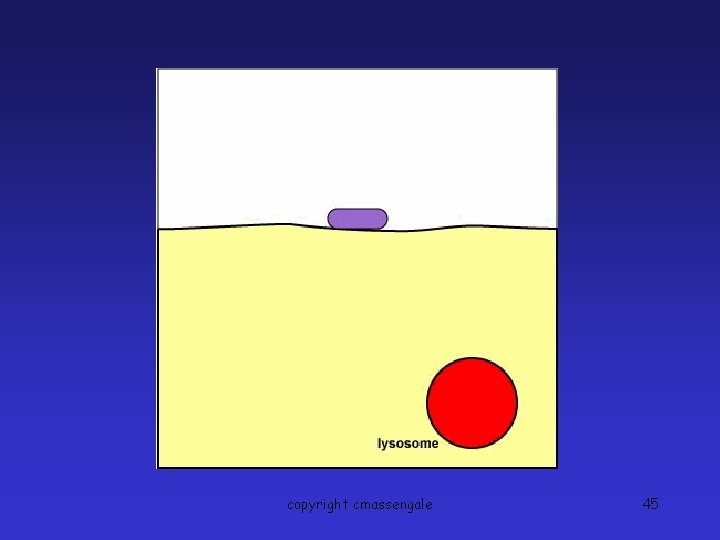
3. Phagocytosis Used to engulf large particles such as food, bacteria, etc. into vesicles Called “Cell Eating” copyright cmassengale 44
copyright cmassengale 45
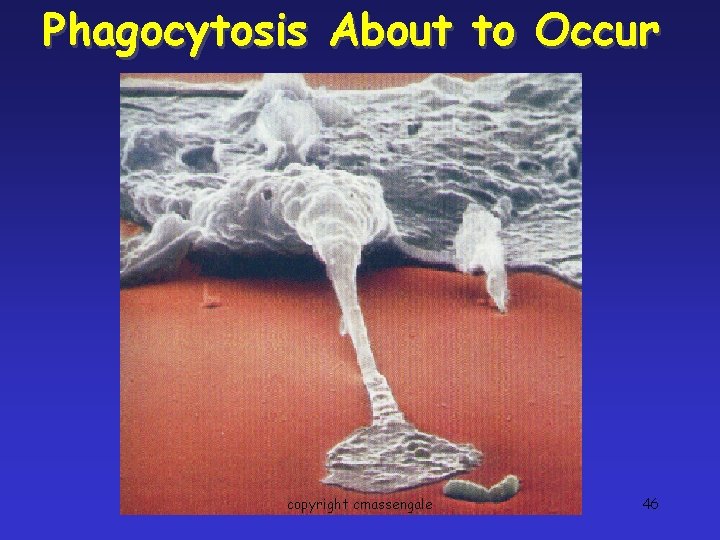
Phagocytosis About to Occur copyright cmassengale 46
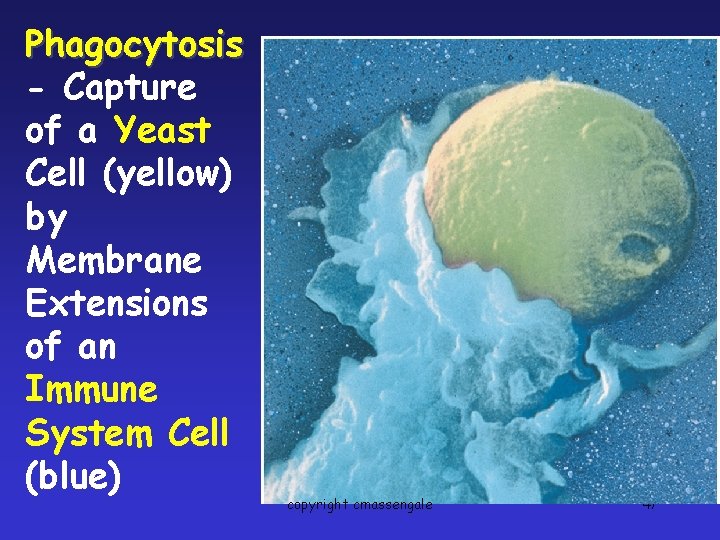
Phagocytosis - Capture of a Yeast Cell (yellow) by Membrane Extensions of an Immune System Cell (blue) copyright cmassengale 47
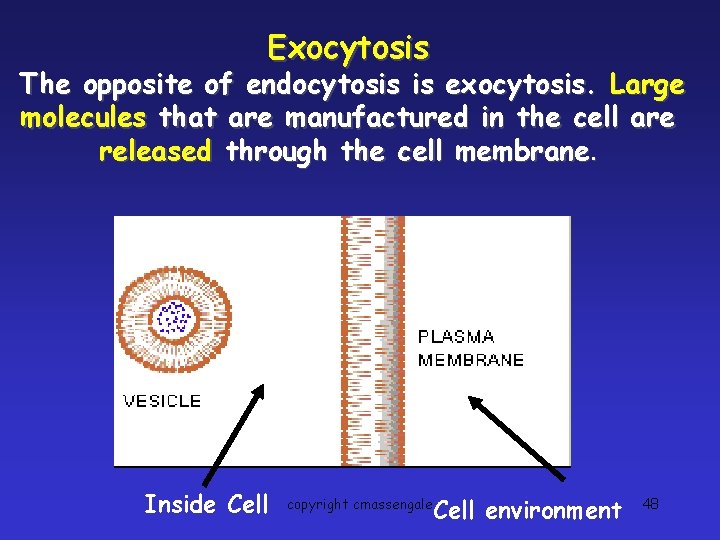
Exocytosis The opposite of endocytosis is exocytosis. Large molecules that are manufactured in the cell are released through the cell membrane. Inside Cell copyright cmassengale Cell environment 48

copyright cmassengale 49
- Slides: 49