
The plant of the day Musa acuminata Musa
- Slides: 26
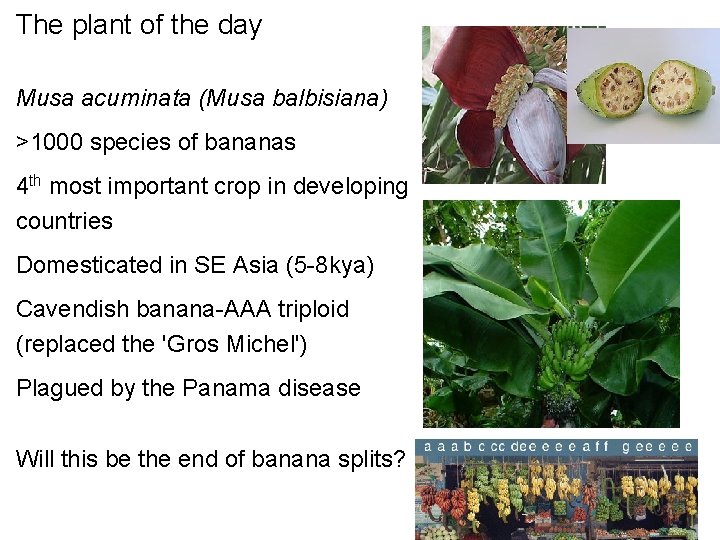
The plant of the day Musa acuminata (Musa balbisiana) >1000 species of bananas 4 th most important crop in developing countries Domesticated in SE Asia (5 -8 kya) Cavendish banana-AAA triploid (replaced the 'Gros Michel') Plagued by the Panama disease Will this be the end of banana splits?
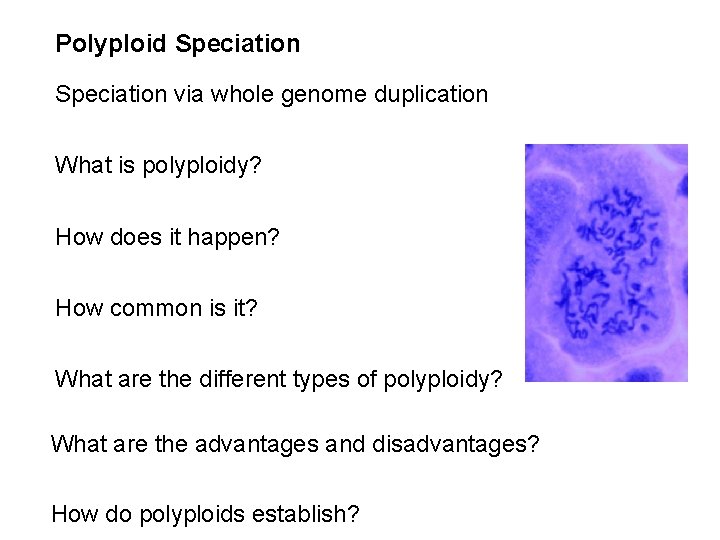
Polyploid Speciation via whole genome duplication What is polyploidy? How does it happen? How common is it? What are the different types of polyploidy? What are the advantages and disadvantages? How do polyploids establish?
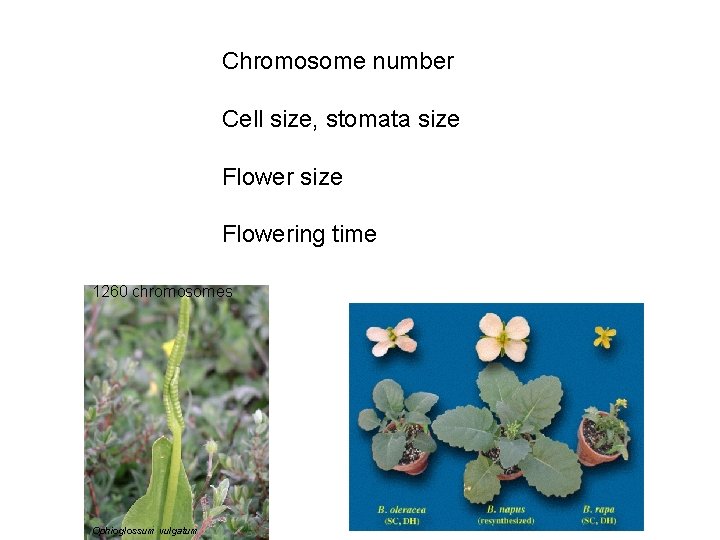
Chromosome number Cell size, stomata size Flowering time 1260 chromosomes Ophioglossum vulgatum
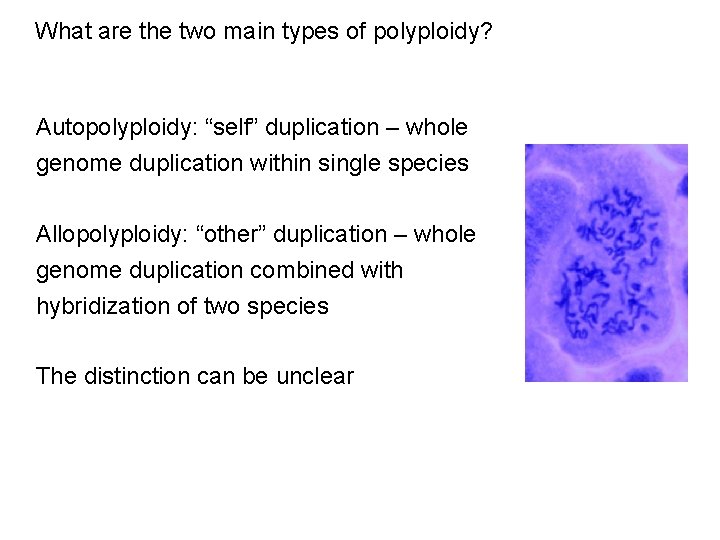
What are the two main types of polyploidy? Autopolyploidy: “self” duplication – whole genome duplication within single species Allopolyploidy: “other” duplication – whole genome duplication combined with hybridization of two species The distinction can be unclear
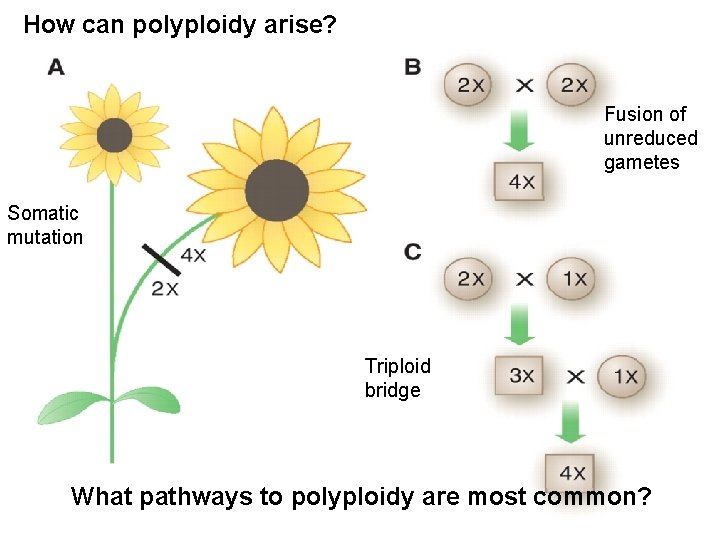
How can polyploidy arise? Fusion of unreduced gametes Somatic mutation Triploid bridge What pathways to polyploidy are most common?
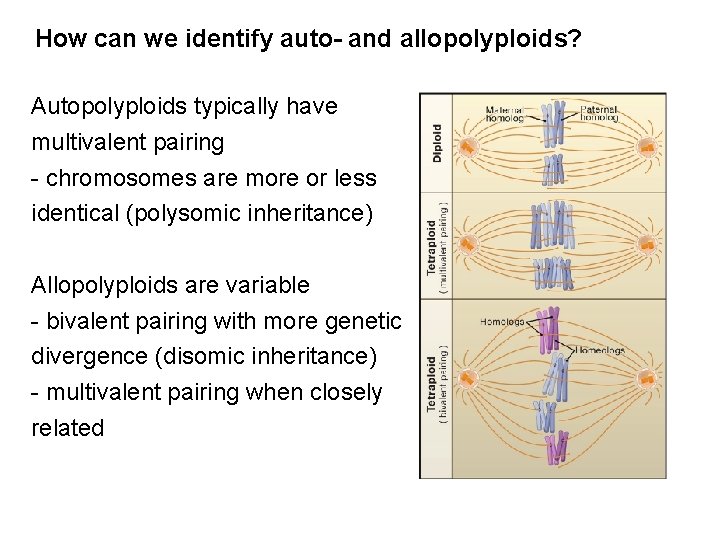
How can we identify auto- and allopolyploids? Autopolyploids typically have multivalent pairing - chromosomes are more or less identical (polysomic inheritance) Allopolyploids are variable - bivalent pairing with more genetic divergence (disomic inheritance) - multivalent pairing when closely related
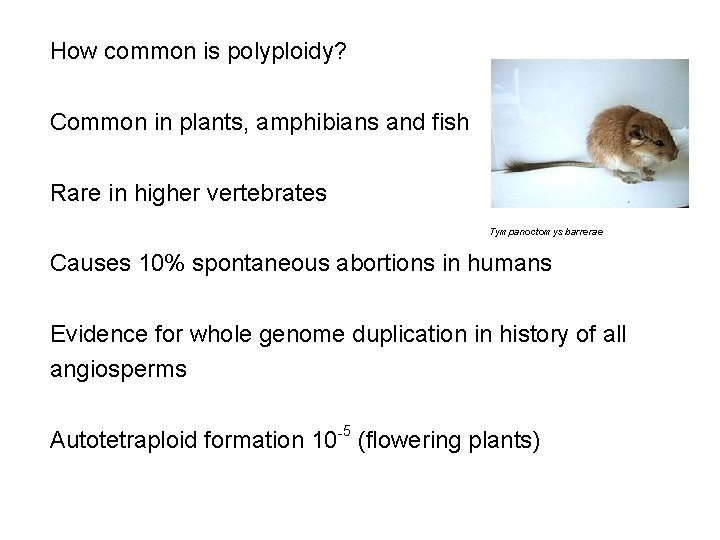
How common is polyploidy? Common in plants, amphibians and fish Rare in higher vertebrates Tympanoctomys barrerae Causes 10% spontaneous abortions in humans Evidence for whole genome duplication in history of all angiosperms Autotetraploid formation 10 -5 (flowering plants)
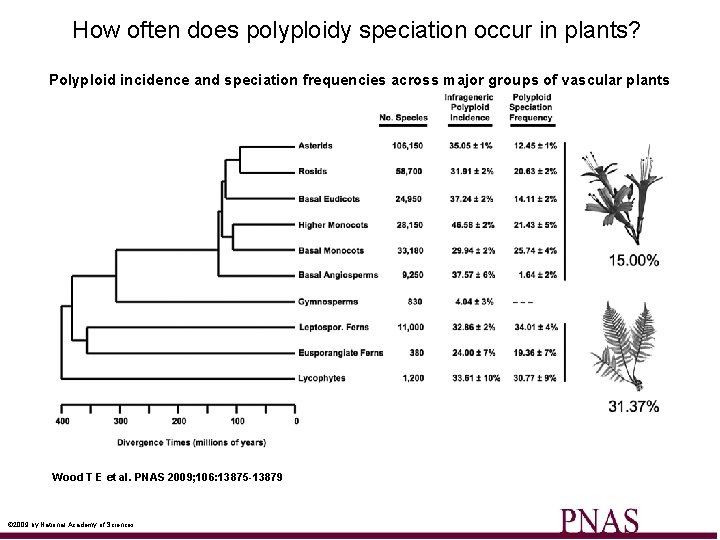
How often does polyploidy speciation occur in plants? Polyploid incidence and speciation frequencies across major groups of vascular plants Wood T E et al. PNAS 2009; 106: 13875 -13879 © 2009 by National Academy of Sciences
What is the frequency of auto- vs allopolyploid speciation? Hard to assess - autopolyploids often cryptic and undescribed - 8 – 9 % of plant species contain multiple cytotypes Bioinformatic analysis suggests 86% of polyploids are allopolyploids
What are some advantages of polyploidy? Heterosis Gene redundancy Selfing and asexuality (often associated)
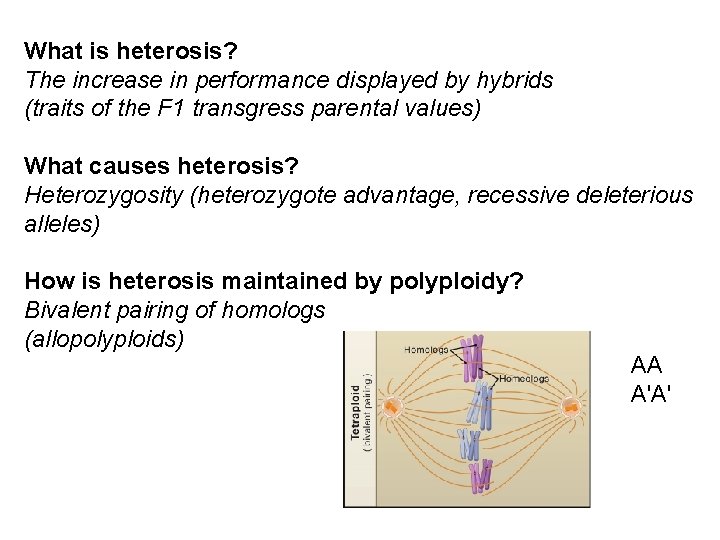
What is heterosis? The increase in performance displayed by hybrids (traits of the F 1 transgress parental values) What causes heterosis? Heterozygosity (heterozygote advantage, recessive deleterious alleles) How is heterosis maintained by polyploidy? Bivalent pairing of homologs (allopolyploids) AA A'A'
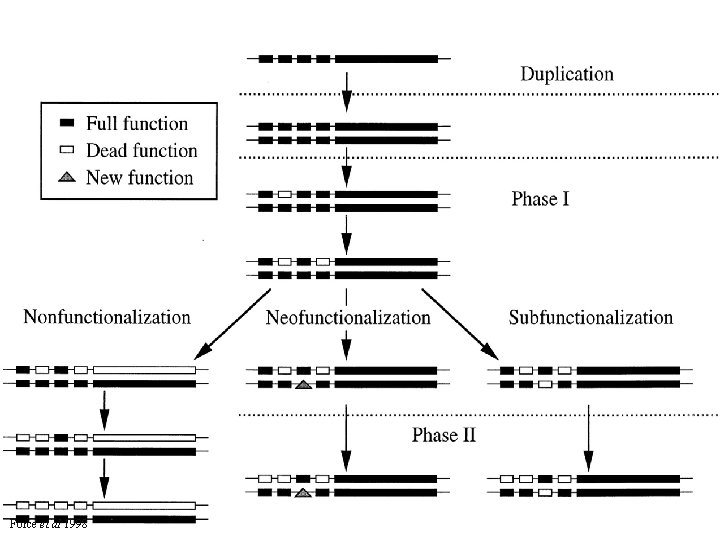
Gene redundancies and genetic buffering More than one copy of each allele in gametes Changes in function of duplicated genes
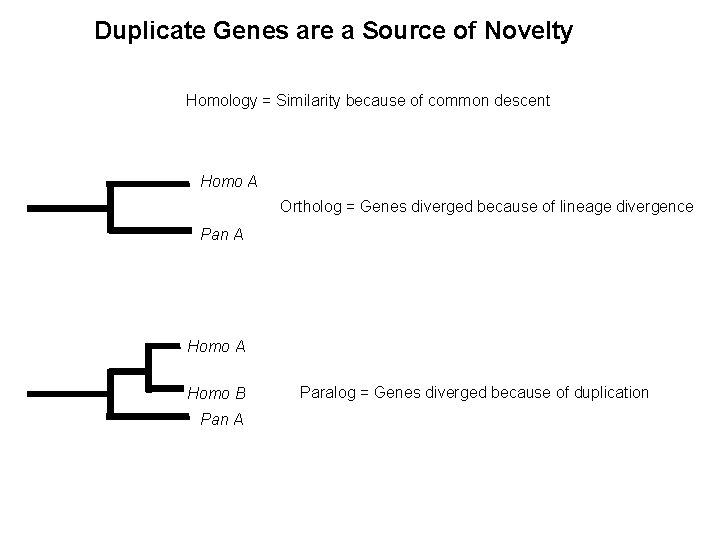
Duplicate Genes are a Source of Novelty Homology = Similarity because of common descent Homo A Ortholog = Genes diverged because of lineage divergence Pan A Homo B Pan A Paralog = Genes diverged because of duplication
Force et al 1998
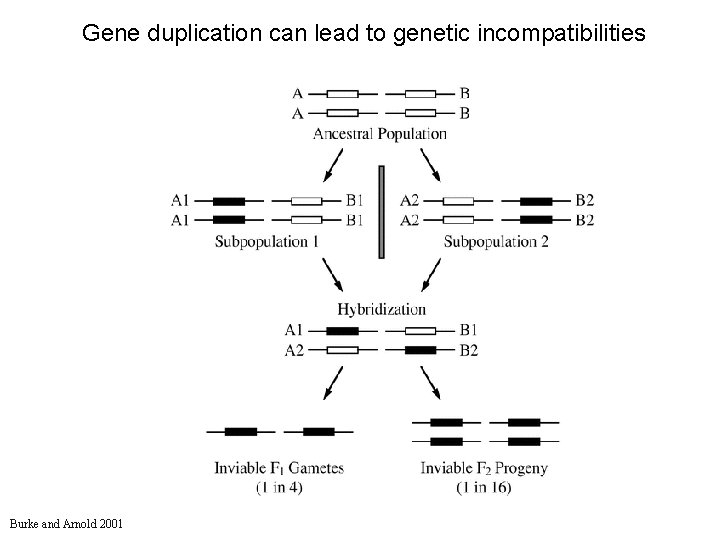
Gene duplication can lead to genetic incompatibilities Burke and Arnold 2001
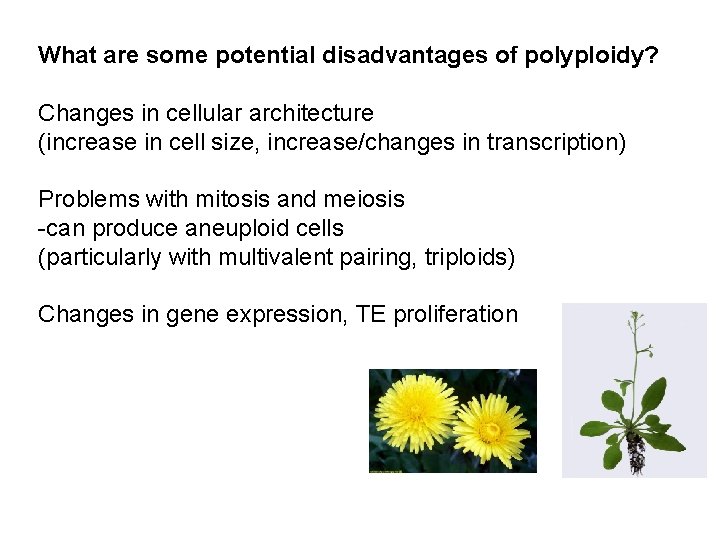
What are some potential disadvantages of polyploidy? Changes in cellular architecture (increase in cell size, increase/changes in transcription) Problems with mitosis and meiosis -can produce aneuploid cells (particularly with multivalent pairing, triploids) Changes in gene expression, TE proliferation
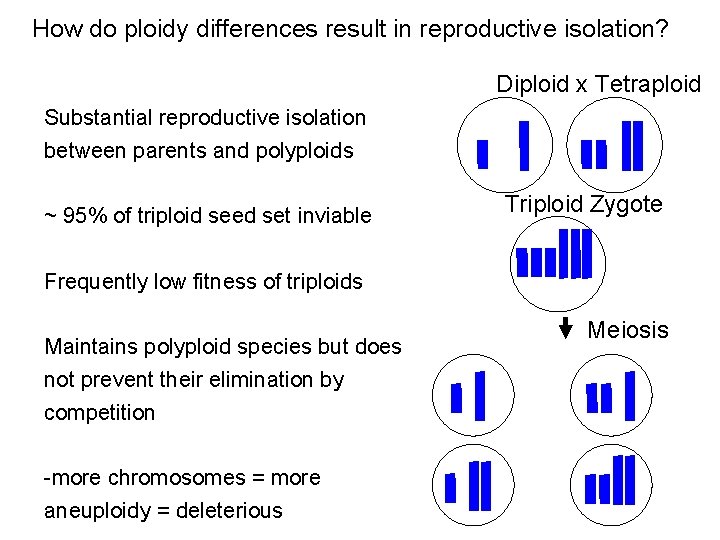
How do ploidy differences result in reproductive isolation? Diploid x Tetraploid Substantial reproductive isolation between parents and polyploids ~ 95% of triploid seed set inviable Triploid Zygote Frequently low fitness of triploids Maintains polyploid species but does not prevent their elimination by competition -more chromosomes = more aneuploidy = deleterious Meiosis
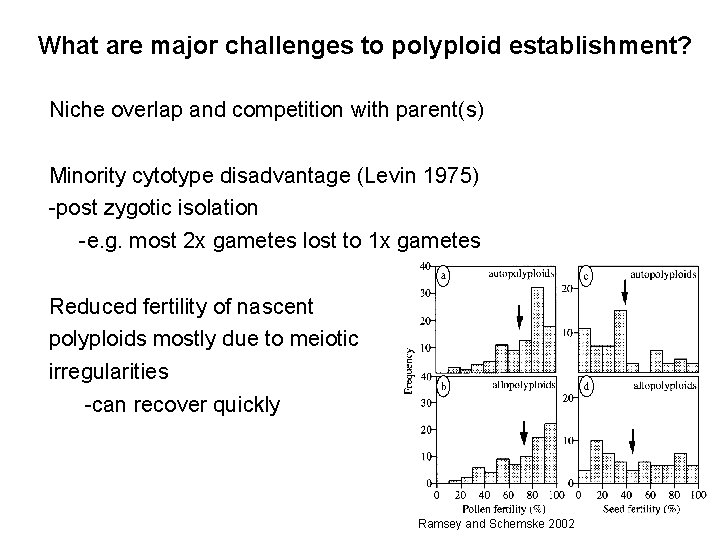
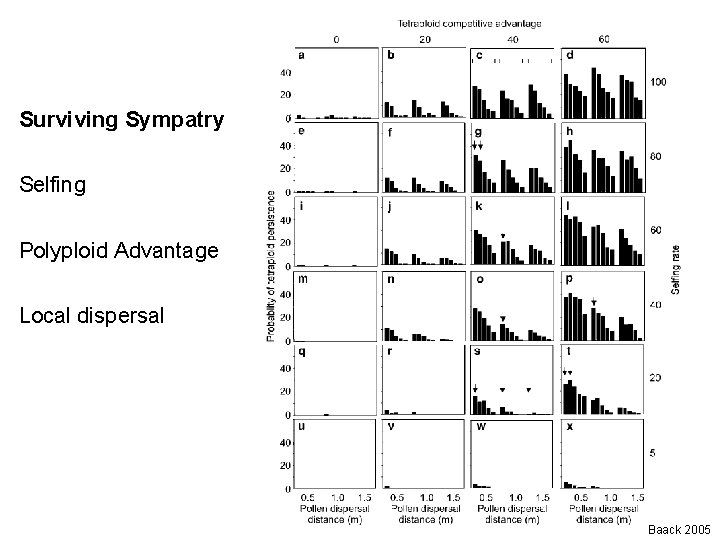
What are major challenges to polyploid establishment? Niche overlap and competition with parent(s) Minority cytotype disadvantage (Levin 1975) -post zygotic isolation -e. g. most 2 x gametes lost to 1 x gametes Reduced fertility of nascent polyploids mostly due to meiotic irregularities -can recover quickly Ramsey and Schemske 2002
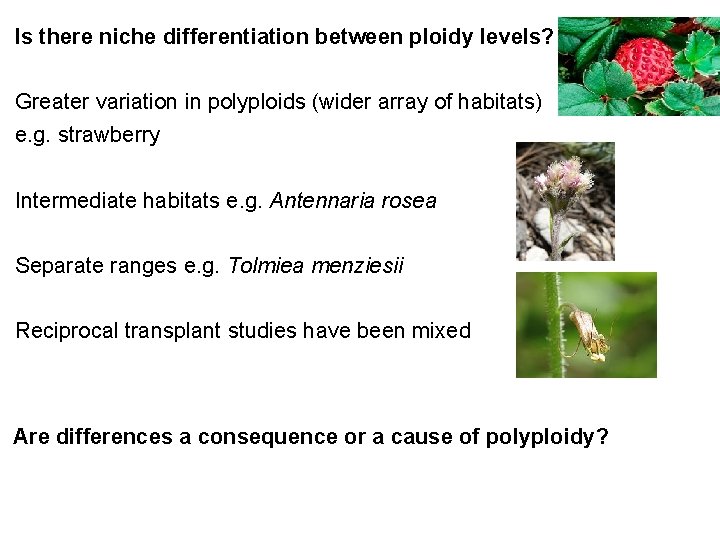
Is there niche differentiation between ploidy levels? Greater variation in polyploids (wider array of habitats) e. g. strawberry Intermediate habitats e. g. Antennaria rosea Separate ranges e. g. Tolmiea menziesii Reciprocal transplant studies have been mixed Are differences a consequence or a cause of polyploidy?
How do polyploids overcome the numerical disadvantage? Parents sometimes contribute to polyploid gene pool Recurrent polyploid formation increases population size and genetic diversity Uniparental reproduction Fertility also increases over time with genomic stabilization
Surviving Sympatry Selfing Polyploid Advantage Local dispersal Baack 2005
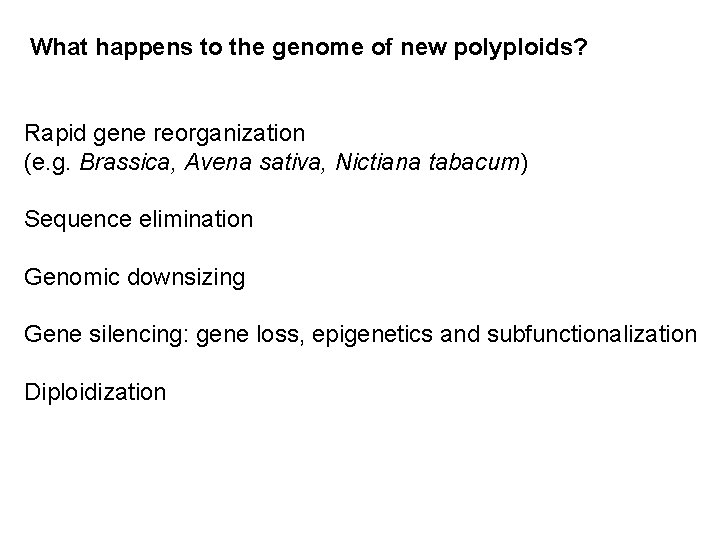
What happens to the genome of new polyploids? Rapid gene reorganization (e. g. Brassica, Avena sativa, Nictiana tabacum) Sequence elimination Genomic downsizing Gene silencing: gene loss, epigenetics and subfunctionalization Diploidization
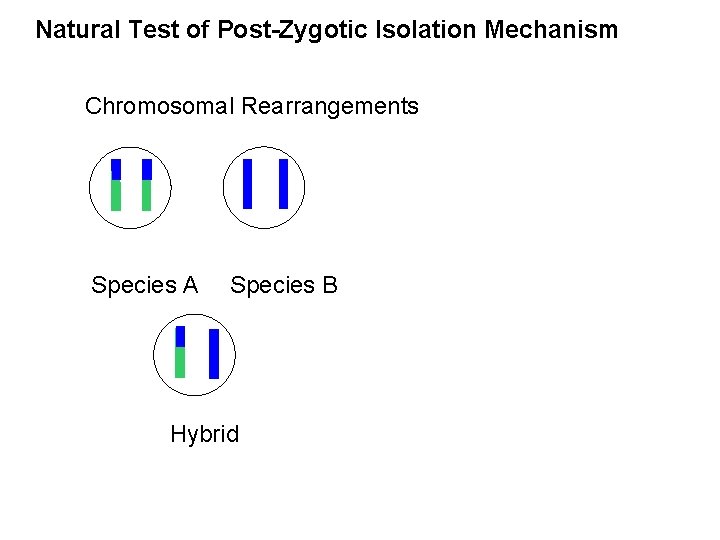
Natural Test of Post-Zygotic Isolation Mechanism Chromosomal Rearrangements Species A Species B Hybrid
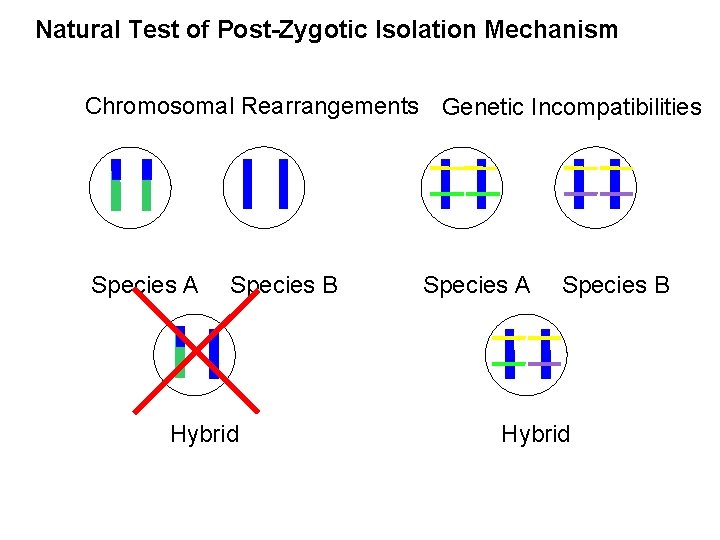
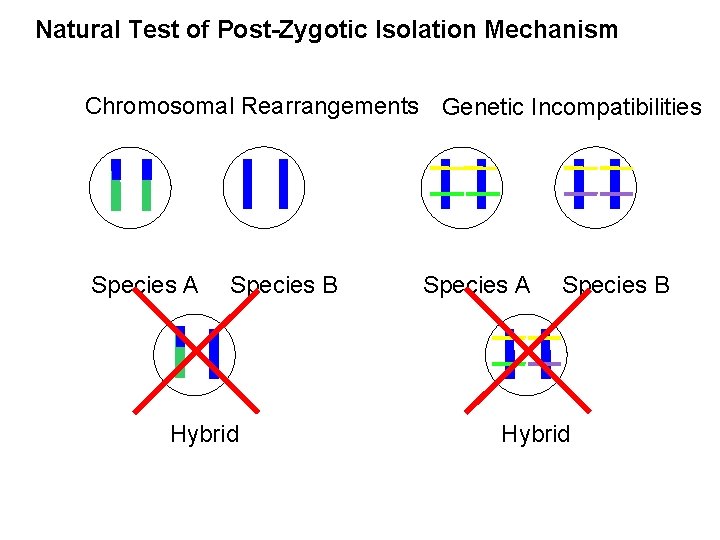
Natural Test of Post-Zygotic Isolation Mechanism Chromosomal Rearrangements Genetic Incompatibilities Species A Species B Hybrid
Natural Test of Post-Zygotic Isolation Mechanism Chromosomal Rearrangements Genetic Incompatibilities Species A Species B Hybrid
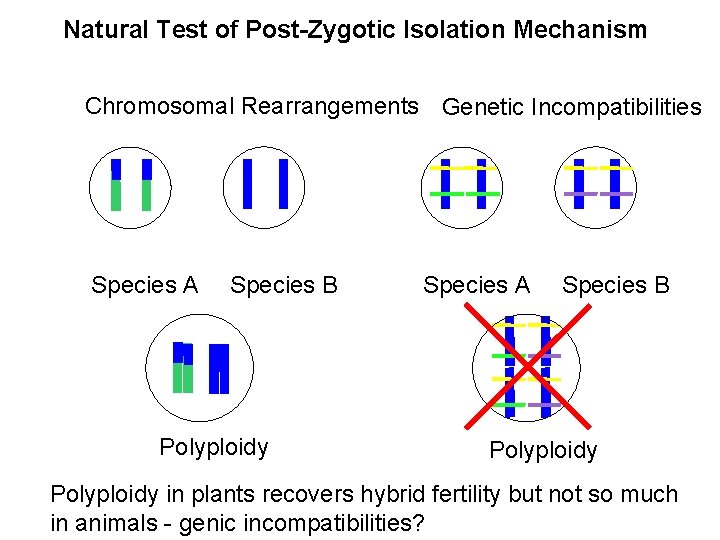
Natural Test of Post-Zygotic Isolation Mechanism Chromosomal Rearrangements Genetic Incompatibilities Species A Species B Polyploidy in plants recovers hybrid fertility but not so much in animals - genic incompatibilities?