
The Plant Cell A Plant Cell Contains Nucleus
- Slides: 13
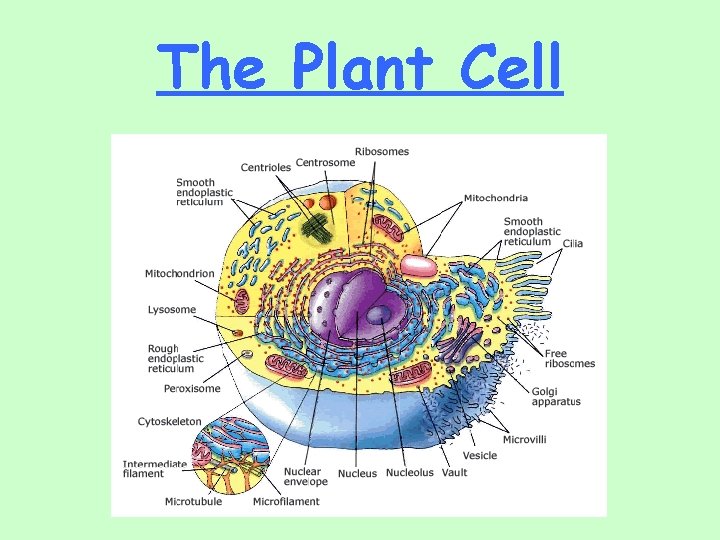
The Plant Cell
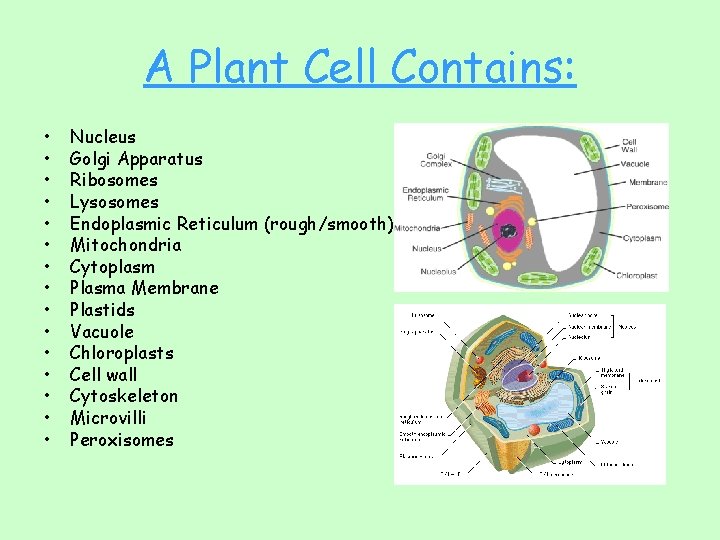
A Plant Cell Contains: • • • • Nucleus Golgi Apparatus Ribosomes Lysosomes Endoplasmic Reticulum (rough/smooth) Mitochondria Cytoplasm Plasma Membrane Plastids Vacuole Chloroplasts Cell wall Cytoskeleton Microvilli Peroxisomes
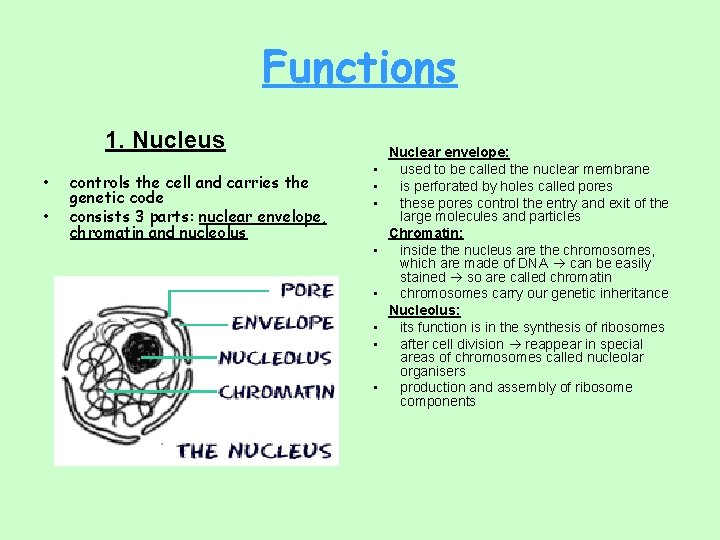
Functions 1. Nucleus • • controls the cell and carries the genetic code consists 3 parts: nuclear envelope, chromatin and nucleolus • • Nuclear envelope: used to be called the nuclear membrane is perforated by holes called pores these pores control the entry and exit of the large molecules and particles Chromatin: inside the nucleus are the chromosomes, which are made of DNA can be easily stained so are called chromatin chromosomes carry our genetic inheritance Nucleolus: its function is in the synthesis of ribosomes after cell division reappear in special areas of chromosomes called nucleolar organisers production and assembly of ribosome components
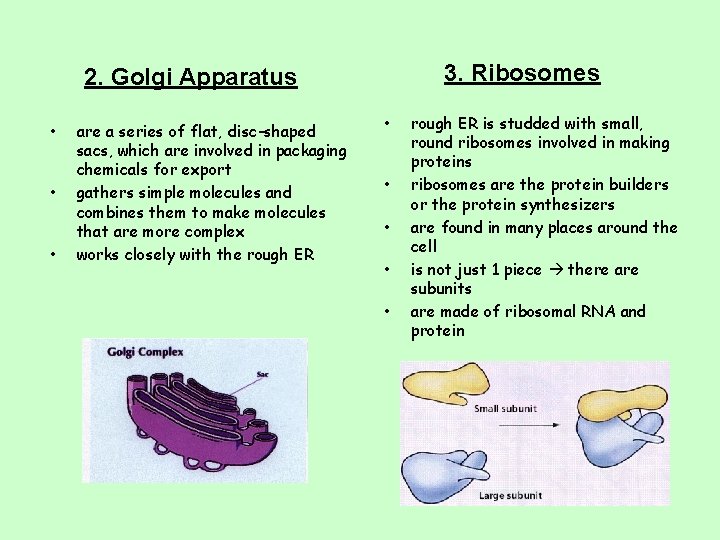
3. Ribosomes 2. Golgi Apparatus • • • are a series of flat, disc-shaped sacs, which are involved in packaging chemicals for export gathers simple molecules and combines them to make molecules that are more complex works closely with the rough ER • • • rough ER is studded with small, round ribosomes involved in making proteins ribosomes are the protein builders or the protein synthesizers are found in many places around the cell is not just 1 piece there are subunits are made of ribosomal RNA and protein
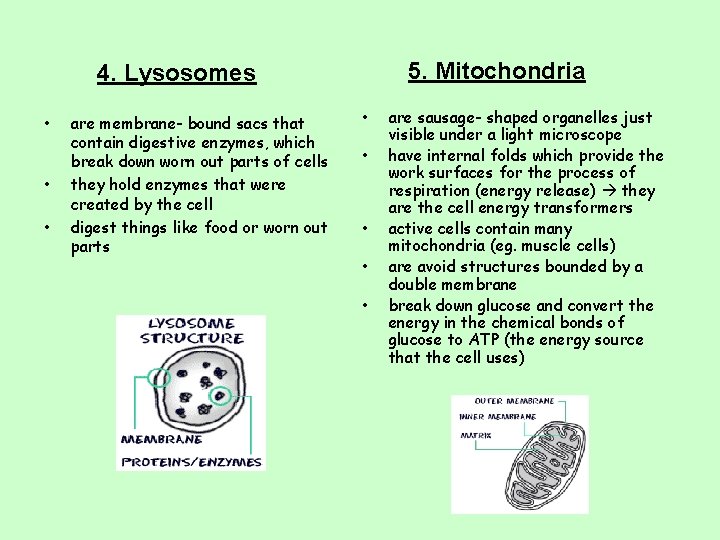
5. Mitochondria 4. Lysosomes • • • are membrane- bound sacs that contain digestive enzymes, which break down worn out parts of cells they hold enzymes that were created by the cell digest things like food or worn out parts • • • are sausage- shaped organelles just visible under a light microscope have internal folds which provide the work surfaces for the process of respiration (energy release) they are the cell energy transformers active cells contain many mitochondria (eg. muscle cells) are avoid structures bounded by a double membrane break down glucose and convert the energy in the chemical bonds of glucose to ATP (the energy source that the cell uses)
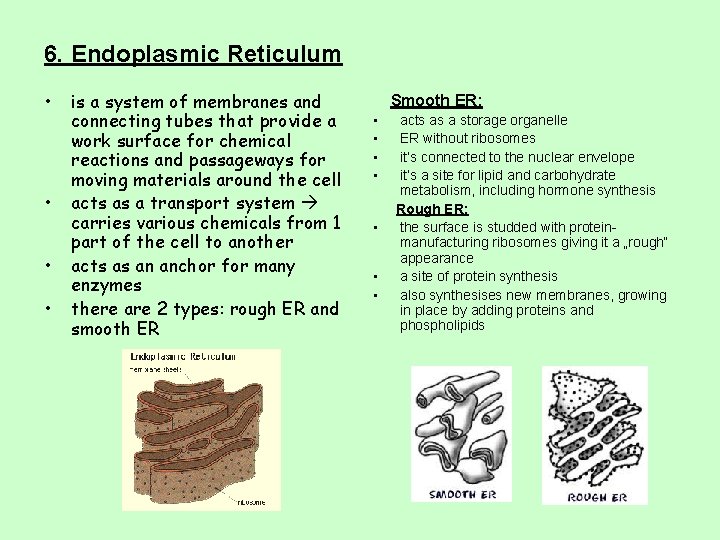
6. Endoplasmic Reticulum • • is a system of membranes and connecting tubes that provide a work surface for chemical reactions and passageways for moving materials around the cell acts as a transport system carries various chemicals from 1 part of the cell to another acts as an anchor for many enzymes there are 2 types: rough ER and smooth ER Smooth ER: • • acts as a storage organelle ER without ribosomes it‘s connected to the nuclear envelope it‘s a site for lipid and carbohydrate metabolism, including hormone synthesis Rough ER: the surface is studded with proteinmanufacturing ribosomes giving it a „rough“ appearance a site of protein synthesis also synthesises new membranes, growing in place by adding proteins and phospholipids
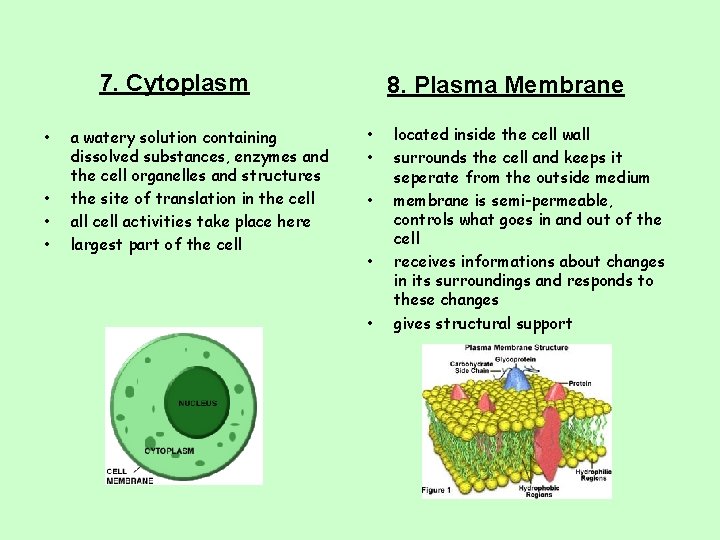
7. Cytoplasm • • a watery solution containing dissolved substances, enzymes and the cell organelles and structures the site of translation in the cell all cell activities take place here largest part of the cell 8. Plasma Membrane • • • located inside the cell wall surrounds the cell and keeps it seperate from the outside medium membrane is semi-permeable, controls what goes in and out of the cell receives informations about changes in its surroundings and responds to these changes gives structural support
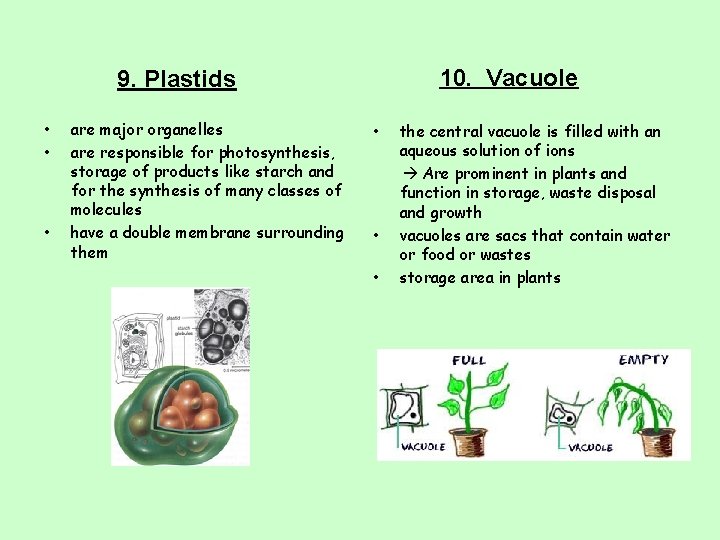
10. Vacuole 9. Plastids • • • are major organelles are responsible for photosynthesis, storage of products like starch and for the synthesis of many classes of molecules have a double membrane surrounding them • • • the central vacuole is filled with an aqueous solution of ions Are prominent in plants and function in storage, waste disposal and growth vacuoles are sacs that contain water or food or wastes storage area in plants
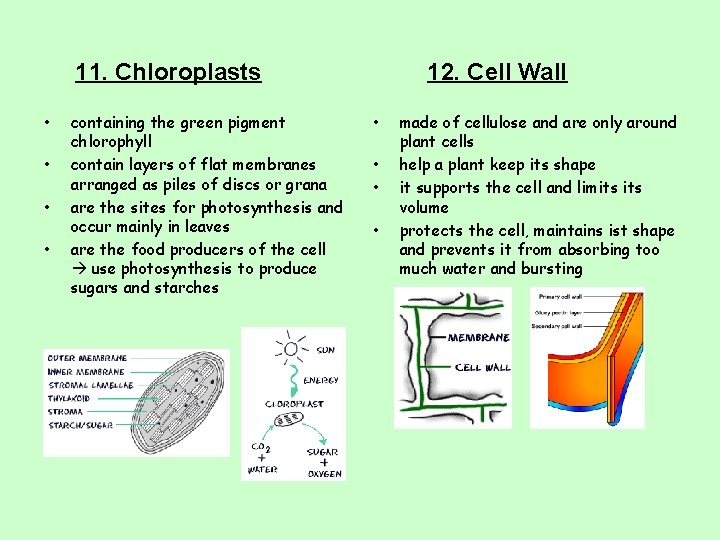
11. Chloroplasts • • containing the green pigment chlorophyll contain layers of flat membranes arranged as piles of discs or grana are the sites for photosynthesis and occur mainly in leaves are the food producers of the cell use photosynthesis to produce sugars and starches 12. Cell Wall • • made of cellulose and are only around plant cells help a plant keep its shape it supports the cell and limits volume protects the cell, maintains ist shape and prevents it from absorbing too much water and bursting
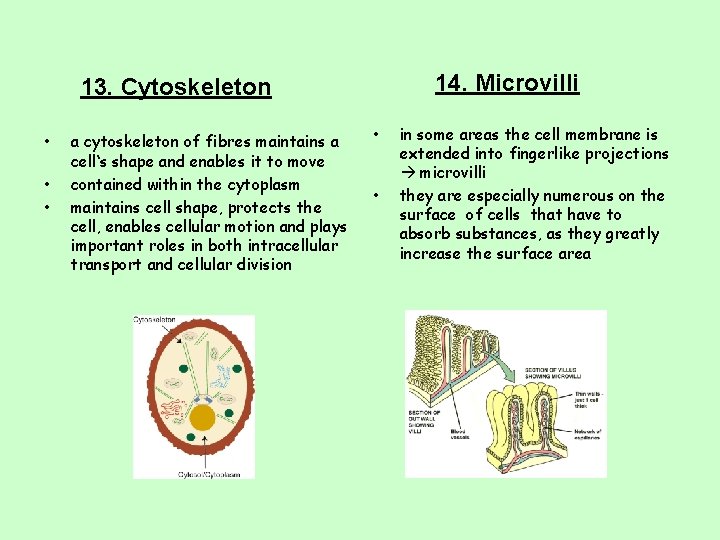
14. Microvilli 13. Cytoskeleton • • • a cytoskeleton of fibres maintains a cell‘s shape and enables it to move contained within the cytoplasm maintains cell shape, protects the cell, enables cellular motion and plays important roles in both intracellular transport and cellular division • • in some areas the cell membrane is extended into fingerlike projections microvilli they are especially numerous on the surface of cells that have to absorb substances, as they greatly increase the surface area
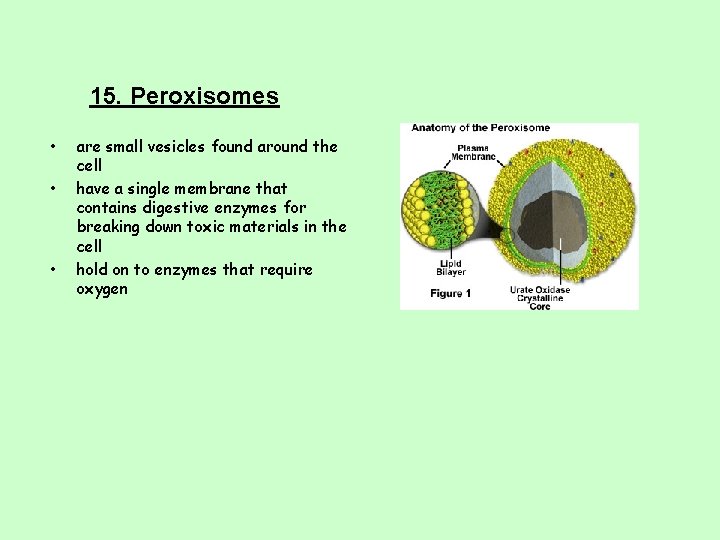
15. Peroxisomes • • • are small vesicles found around the cell have a single membrane that contains digestive enzymes for breaking down toxic materials in the cell hold on to enzymes that require oxygen
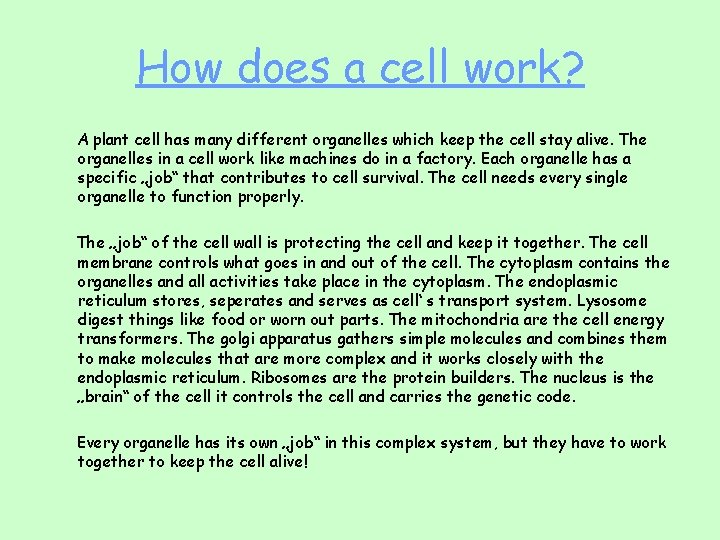
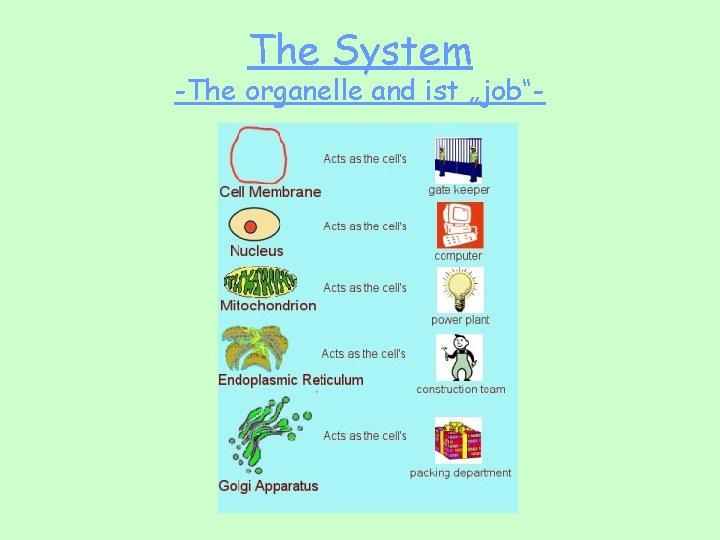
How does a cell work? A plant cell has many different organelles which keep the cell stay alive. The organelles in a cell work like machines do in a factory. Each organelle has a specific „job“ that contributes to cell survival. The cell needs every single organelle to function properly. The „job“ of the cell wall is protecting the cell and keep it together. The cell membrane controls what goes in and out of the cell. The cytoplasm contains the organelles and all activities take place in the cytoplasm. The endoplasmic reticulum stores, seperates and serves as cell‘ s transport system. Lysosome digest things like food or worn out parts. The mitochondria are the cell energy transformers. The golgi apparatus gathers simple molecules and combines them to make molecules that are more complex and it works closely with the endoplasmic reticulum. Ribosomes are the protein builders. The nucleus is the „brain“ of the cell it controls the cell and carries the genetic code. Every organelle has its own „job“ in this complex system, but they have to work together to keep the cell alive!
The System -The organelle and ist „job“-